
Reviewed · MEIJI SHRINE TOURS
Tokyo: Meiji Shrine Walking Tour — Shinto & Imperial System
Tokyo’s Meiji Shrine can feel like a different world from the Harajuku streets outside. Within minutes, city noise gives way to birdsong, towering trees, and a long shaded approach to one of Japan’s best-known Shinto shrines. The tour’s most useful feature is its small group of up to 10 people, which gives you room to ask questions and follow the customs without feeling lost.
I like two things especially: the guide explains what you are doing before you reach each sacred point, and the history connects Emperor Meiji’s era to Japan’s shift from samurai rule to a modern state. Guides such as Keiko, Yuuka, Ayaka, and Yuki are often praised for clear English, patience, and a warm manner. The main consideration is pace: the walk lasts 90 to 135 minutes, and you will spend much of it on foot.
Key points at a glance
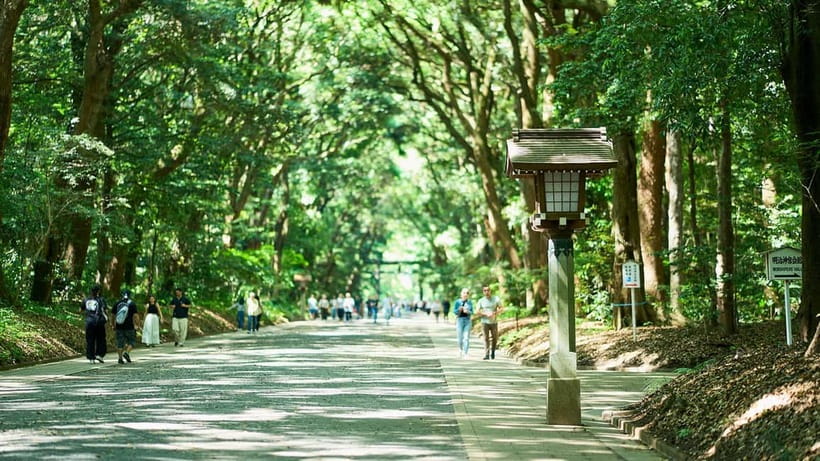
- A quiet forest in central Tokyo: About 100,000 trees create a surprisingly calm approach from Harajuku.
- The 12-meter Big Torii: The gate is made from a 1,500-year-old Taiwanese cypress and marks the change from city street to sacred ground.
- Practical Shinto guidance: You learn where to walk, how to approach the shrine, and how to make an offering respectfully.
- History beyond the shrine: The tour links Emperor Meiji, the imperial system, samurai-era Japan, and modernization.
- Personal help with shrine items: Your guide can explain omamori charms and the Omigokoro poems connected with Emperor Meiji and Empress Shoken.
- A gentle finish at Mori no Terrace: Japanese tea, light snacks, and a gift shop provide an easy pause after the walk.
Why Meiji Shrine feels far from Harajuku
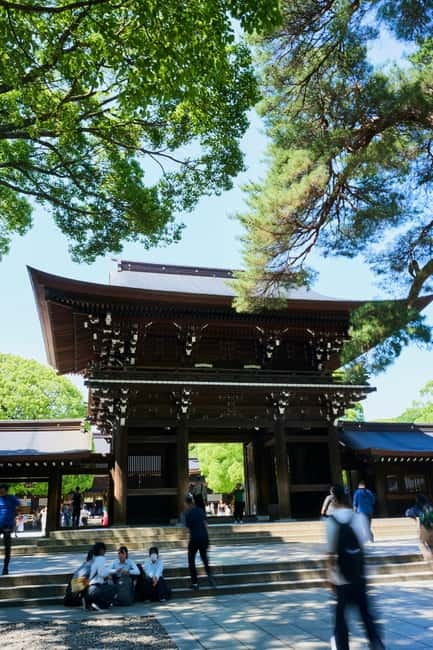
The meeting point is at or near Harajuku Station, with the exact spot depending on the option you book. That location makes the tour easy to fit into a Tokyo day, especially if you are already visiting Harajuku, Takeshita Street, or nearby Shibuya.
The first surprise is the forest. Meiji Shrine is surrounded by approximately 100,000 trees, and the broad walking route quickly muffles the sounds of the city. I like this opening because it gives the tour a natural rhythm. You are not pushed straight into a lecture. You first notice the change in air, sound, and space.
Your guide uses the walk to explain what makes a Shinto shrine different from a Buddhist temple. That distinction matters, since the buildings may look unfamiliar and the customs are easy to copy incorrectly if nobody explains them. A guide can point out the meaning behind the route and help you feel comfortable rather than cautious.
The path is mostly an easy walk, but it is not a short photo stop. You should wear shoes suited to walking and allow enough time to keep pace with the group.
More Meiji Shrine tours in Tokyo:
- Tokyo: Meiji Shrine, Asakusa, Skytree Bus Tour and Cruise
★ 4.7 · 1,986 reviews - Tokyo Panoramic 1 Day: Meiji Shrine, Asakusa, Odaiba and SKYTREE®
★ 4.5 · 1,222 reviews - Tokyo: Meiji Jingu Shrine and Shinto Culture Walking Tour
★ 5.0 · 245 reviews
Crossing the Ichino Torii and entering sacred ground
The first major point is Meiji Jingu Ichino Torii, the initial gate on the approach. A torii marks the boundary between ordinary space and a Shinto sacred area. Your guide explains that the central line, called seichu, is traditionally reserved for deities, so you walk along one side rather than directly through the middle.
This is a small detail, but it is exactly the sort of thing that improves the rest of your Japan trip. Once you understand the custom, you can enter other shrines with more confidence. The tour is not only showing you Meiji Shrine. It is giving you a basic set of habits that you can use elsewhere.
The gate and path make good early photo stops, though the tour is not built around constant picture-taking. If you want long stretches for photography, you may need to use your free time at the shrine or return later on your own.
Sake barrels, wine barrels, and the story they tell
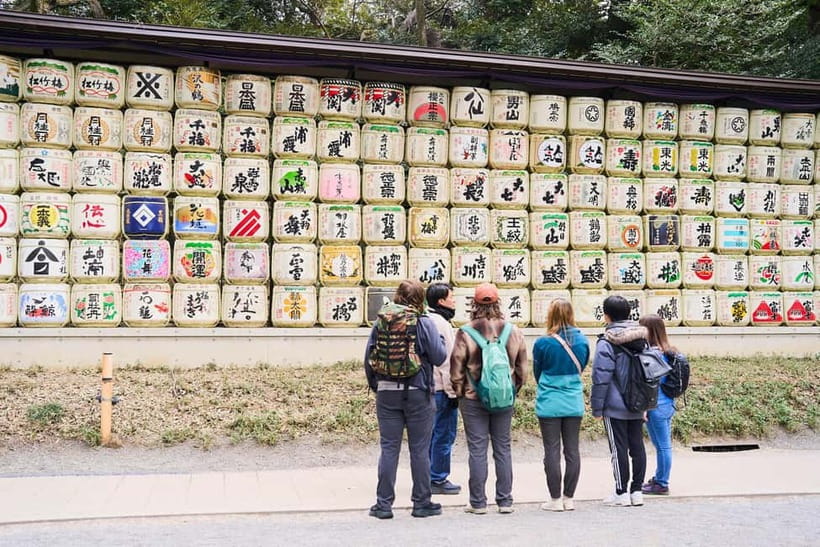
Along the route, the guide stops at the consecrated wine barrels and sake barrels. These displays are among the shrine’s most recognizable details, and they are easy to pass without context.
The sake barrels connect the shrine to traditional offerings and to the role of sake in Japanese religious and cultural life. The wine barrels offer a different clue about the Meiji period, when Japan was adopting selected ideas and products from abroad while reshaping itself as a modern nation.
This is where the tour’s history theme becomes useful. You are not simply looking at decorative barrels. You are seeing reminders of a country negotiating tradition and modernization at the same time.
Some stops last only five or 10 minutes. That keeps the walk moving, but it also means you should ask questions while the guide is with you. Guides including Yuuka have used old photographs to show what the area looked like before the shrine was built, which can make the setting easier to understand.
The Big Torii and the power of scale
The Big Torii is the visual high point of the approach. At 12 meters tall, it gives the route a strong sense of arrival. The gate was crafted from a 1,500-year-old Taiwanese cypress, a detail that makes its age and material part of the experience rather than a footnote.
I like this stop because the scale does much of the talking. Even if you know little about Shinto, the gate makes the transition into the shrine feel deliberate. The guide adds the cultural context, including how to pass through respectfully and why the center of the path is treated differently.
It is worth remembering that this is an active religious site, not simply a scenic park. You may see people visiting for personal reasons, ceremonies, or seasonal customs. A guide helps you observe without turning worship into a performance.
More Tokyo walking tours:
- Tokyo Tsukiji Fish Market Food and Culture Walking Tour
★ 5.0 · 3,184 reviews - Tokyo: Imperial Palace and Shogun Historical Walking Tour
★ 5.0 · 2,251 reviews - Tokyo: Shinjuku Local Bar and Izakaya Guided Walking Tour
★ 4.9 · 1,794 reviews - Tokyo: Tsukiji Fish Market Food and Walking tour
★ 5.0 · 1,724 reviews
Emperor Meiji, Empress Shoken, and modern Japan

The tour’s central history lesson focuses on the imperial system and the Meiji period. Japan’s imperial tradition is presented as approximately 2,600 years old, while Meiji Shrine itself honors Emperor Meiji and Empress Shoken.
The important point is not memorizing a date. It is understanding the transition from a samurai-led order to the modern Japanese state. The Meiji era brought major political, social, and technological changes, and the shrine gives you a place to connect those broad changes with two people who became symbols of the period.
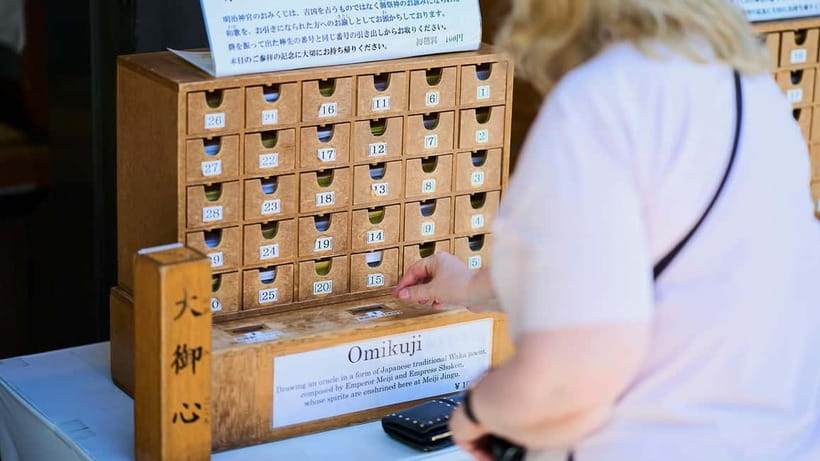
The imperial poetry stop adds a quieter, more personal layer. The Omigokoro fortunes use poems written by Emperor Meiji and Empress Shoken, with English translations available. If you enjoy cultural details, this is more meaningful than a standard fortune printed only as a short prediction.
The historical explanation can also help you read later sights around Tokyo. After hearing how the Meiji period reshaped Japan, government buildings, railways, military references, and modern city planning may make more sense.
Inside Meiji Shrine: customs, offerings, and free time
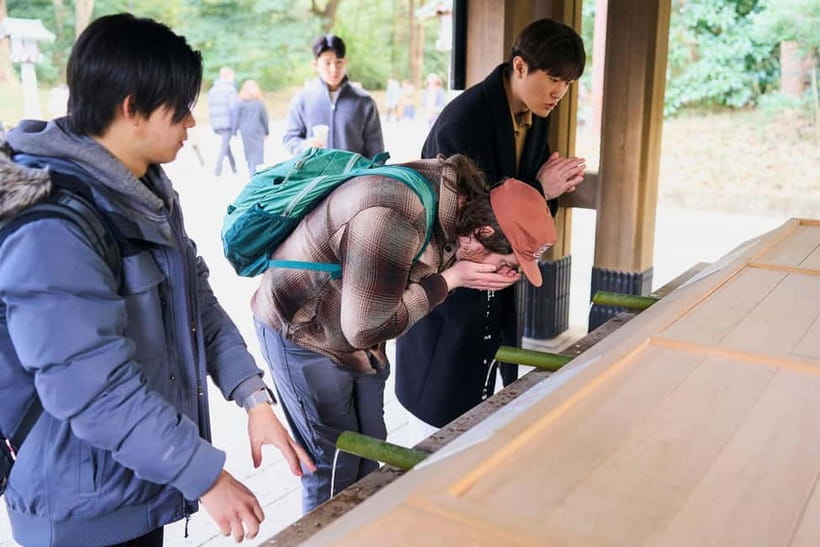
The main Meiji Shrine visit receives the longest portion of the tour, about 45 minutes. This is the part where the guide’s practical instruction matters most.
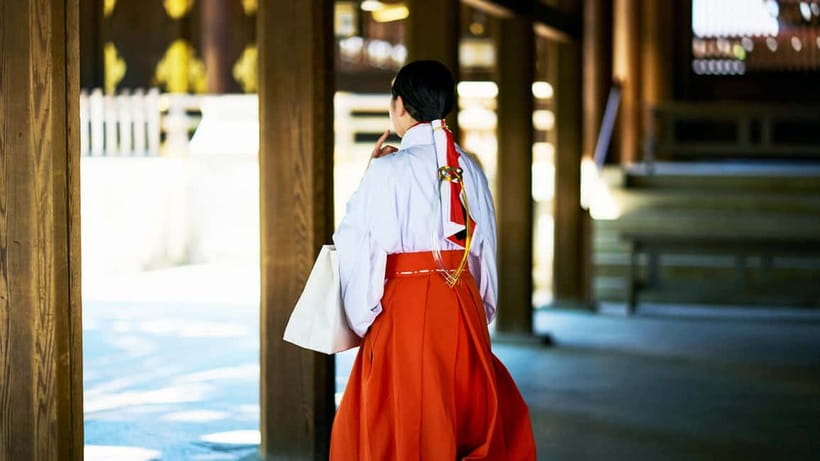
You learn how to approach the shrine, where to stand, and how to pay your respects. One useful touch from the guiding team is helping with small details such as offering coins. A guide has even provided coins when visitors did not have suitable change, which can save an awkward moment and keep the focus on the custom.
You may have time to purchase omamori, or protective charms. These are popular keepsakes, but they also have a religious purpose, so the guide can explain what you are looking at rather than leaving you to choose by appearance alone.
The Omigokoro poems are another worthwhile option. English translations make them accessible, and they give you a more direct link to the imperial figures honored at the shrine. If you receive a result that concerns you, your guide can explain the local custom connected with fortunes.
This part is not rushed into a single group routine. The schedule includes free time for shopping, photos, and shrine activities. That balance is important. Too much explanation would make the visit feel like a classroom, while too little would leave you guessing.
You may also see a wedding or another ceremony, though the tour does not promise one. If a ceremony is taking place, treat it as something to observe quietly and from a respectful distance.
Finishing at Café Mori no Terrace
After the shrine, the tour heads to Forest Terrace Meiji Jingu and Café Mori no Terrace. The listed break lasts about 15 minutes, so think of it as a short pause rather than a full meal.
Japanese tea and light snacks are available, and the setting gives you time to absorb what you have seen. After a walk through the forest and shrine grounds, this change of pace is welcome.
The gift shop offers mementos that are less ordinary than generic Tokyo souvenirs. Examples include eco-blocks made from fragrant Japanese camphor and miniature barrels of sacred sake. These are compact choices if you want something connected to Meiji Shrine without buying a large item.
The café and shop are useful, but they are not the main reason to book the tour. If you prefer to spend every minute inside the shrine grounds, the break may feel like a slight interruption. If you like a built-in pause and a chance to discuss the visit, it works well.
How the small-group format affects the experience
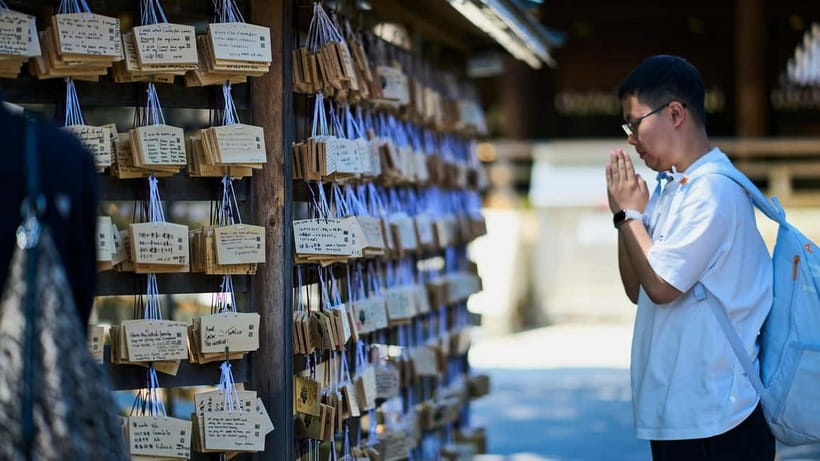
The group is limited to 10 participants. That is small enough for questions, personal assistance, and a more flexible pace, yet it is still a shared tour rather than a private guide.
The English-only format is important. Japanese language support is not available, so book this only if you can comfortably follow an English explanation. The guiding team includes people such as Tomo, Keiko, Yuuka, Ayaka, Yuki, Nonoka, Nono, and Mayuko, with repeated praise for clear speech, friendliness, and patience.
The strongest part of the guiding is the practical help. Guides have taken photos, explained how to write wishes, clarified the difference between shrine and temple customs, and answered questions about Shinto and the imperial system. That support can be especially useful on your first day in Japan.
The tour can also adapt when the group is very small. One person received what felt like a private experience, with the guide shaping the discussion around personal interests. You should not assume every departure will be private, but the small limit gives the guide more room to respond to the group.
Is $23 a fair price?
At $23 per person, the tour is reasonably priced for a 90 to 135-minute English walking experience in central Tokyo. Meiji Shrine itself is easy to enter and explore independently, so you are paying mainly for interpretation, etiquette instruction, historical context, and help using the shrine respectfully.
That value depends on how you travel. If you are content to walk through the forest, take photos, and observe other people, you can visit without a guide. If you want to understand why the path is arranged as it is, what the barrels mean, how Shinto customs work, and how the shrine fits into modern Japanese history, the fee is easier to justify.
I would especially consider it good value early in a Japan trip. The lessons about shrine behavior can help you at later sites, and the history gives you a framework for understanding the Meiji period elsewhere.
The tour allows cancellation up to 24 hours before departure for a full refund, and you can reserve now and pay later. Starting times vary, so check the available departure when planning your day.
Who should book this walk?
This experience suits first-time visitors who want cultural context without committing to a long museum tour. It is also a good choice if you have already visited Meiji Shrine and felt you saw the beauty but missed the meaning.
Families may appreciate the short stops and practical demonstrations, though the walk still requires attention and steady movement. History fans will enjoy the samurai-to-modern Japan theme, while first-time shrine visitors will value the etiquette guidance.
It may not suit you if you want a completely private experience, a fast photo tour, or a Japanese-speaking guide. The tour is conducted in English only, and the forest approach and shrine grounds require walking.
My recommendation
I would book this tour if Meiji Shrine is on your Tokyo list and you want more than a quick look at the torii and main buildings. The forest, sake barrels, imperial poems, and shrine rituals create a well-shaped introduction to Shinto and modern Japanese history.
The best reason to choose it is the combination of setting and instruction. You get the quiet walk through the trees, then practical help with customs that you can use for the rest of your trip. At $23, that is a sensible way to turn a beautiful stop into a more understandable one.
Skip it only if you prefer exploring alone or already have a strong grasp of Japanese shrine etiquette and the Meiji period. For most first-time visitors, the small group and English guidance make the extra cost worthwhile.
FAQ
Where does the Meiji Shrine walking tour start?
The tour has two listed starting location options at Harajuku Station, written as 原宿駅 in Japanese. The exact meeting point may vary depending on the option you book.
Where does the tour finish?
The listed drop-off options are Harajuku Station and 原宿駅.
How long does the tour last?
The experience lasts between 90 and 135 minutes, depending on the departure and option available.
How many people can join the group?
The group is limited to 10 participants.
Is the tour conducted in English?
Yes. The live tour guide and activity are conducted in English only. Japanese language support is not available.
Does the tour visit Meiji Shrine itself?
Yes. The itinerary includes a guided visit and free time at Meiji Shrine, with time for sightseeing, shopping, photos, and shrine activities.
Will the guide explain Shinto customs?
Yes. The tour covers Shinto, shrine etiquette, the sacred central route, offerings, and respectful ways to approach the shrine.
Can I buy protective charms at Meiji Shrine?
Yes. The shrine visit includes an opportunity to purchase omamori, which are protective charms.
What is the Omigokoro fortune?
Omigokoro is a type of shrine fortune featuring poems written by Emperor Meiji and Empress Shoken. English translations are available.
Is there a break during the tour?
Yes. The itinerary includes a break at Café Mori no Terrace in Forest Terrace Meiji Jingu, where Japanese tea and light snacks are available.
Newly reviewed around Tokyo
- Tokyo Asakusa:Calligraphy & Make T-shirt Activity★ 5.0 · 62 reviews
- Intercity Shuttle, Tokyo to Haneda /Narita /Yokohama /Makuhari★ 5.0 · 5 reviews
- 1 Hour Travel around Tokyo with a Professional Photographer★ 5.0 · 3 reviews
- Travel Tokyo with Your Own Personal Photographer★ 5.0 · 43 reviews
- Train in Samurai Swordsmanship and Defeat the Demon in Tokyo★ 5.0 · 5 reviews
- Shuttle Van 6hr Tokyo Tour to-and-from Tokyo, Yokohama and Narita★ 5.0 · 9 reviews
- Kickboxing & Body Training with EX-Pro Fighter★ 5.0 · 4 reviews
- Traditional Japanese Knife Sharpening Class★ 5.0 · 18 reviews
Meiji Shrine Tours, compared.

Meiji Shrine, Asakusa, Skytree Bus Tour and Cruise
Read our review →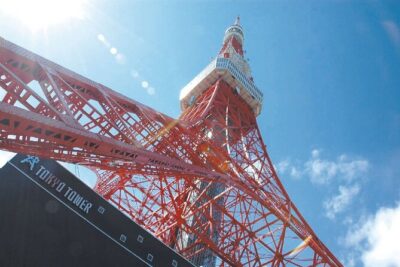
Tokyo Panoramic 1 Day: Meiji Shrine, Asakusa, Odaiba and SKYTREE®
Read our review →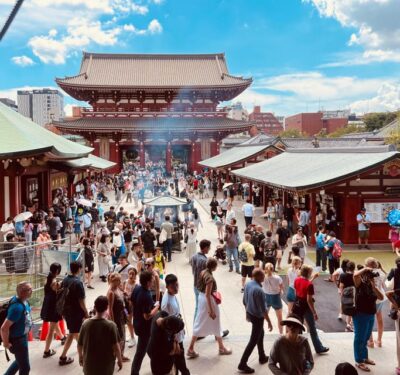
Meiji Jingu Shrine and Shinto Culture Walking Tour
Read our review →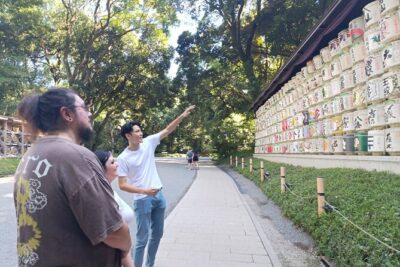
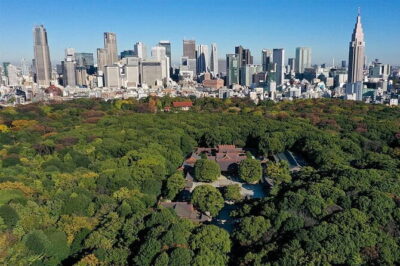
Meiji Shrine Walking Tour — Shintoism & Imperial System
Read our review →
1 Day Bus Tour with Meiji-Jingu,Odaiba,lunch&Skytree
Read our review →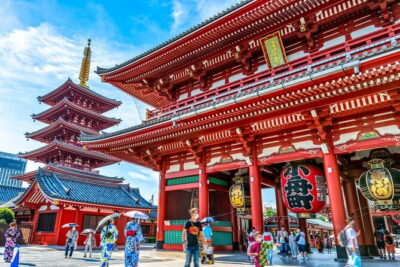
Tokyo Morning Tour : Meiji Shrine, Asakusa and Fish Market
Read our review →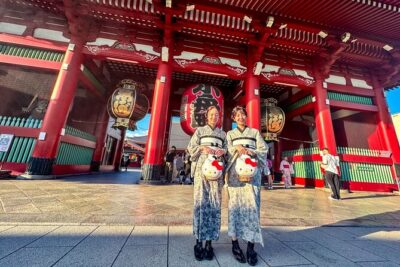
Full Tokyo: Meiji Shrine, Imperial Palace, Asakusa & Skytree
Read our review →Browse the lists this tour appears in