
Reviewed · TOKYO WALKING TOURS
Old and Nostalgic Tokyo: Half-Day Yanaka Walking Tour
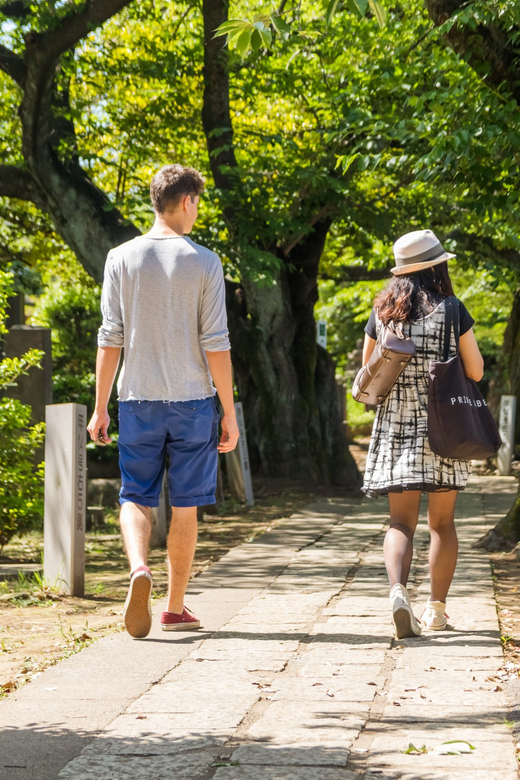
Yanaka gives you a Tokyo of quiet lanes, small homes, temple grounds, and shopfronts rather than towering buildings and neon. The walk begins at JR Nippori Station and leads through a part of the city that feels far removed from modern Tokyo, even though you are still inside the capital.
I like the small group of up to eight, which makes it easier to ask questions and follow a guide through narrow streets. I also like the mix of places: the 7,000-tombstone Yanaka Cemetery, the 1706 Nezu Shrine, Tennōji Temple, and Yanaka-Ginza’s food stalls and sweets. The main consideration is the amount of walking. This is a moderate 210-minute outing, not a quick sightseeing stop.
Key points to know before booking
- A quieter side of Tokyo: Yanaka’s lanes and low-rise streets offer a sharp change from the city’s busiest districts.
- A cemetery with cultural meaning: Yanaka Reien has about 7,000 tombstones and is also known for spring cherry blossoms.
- A major shrine stop: Nezu Shrine dates to 1706 and was built by the fifth Tokugawa shogun.
- Food is part of the fun: You can sample local foods and sweets along Yanaka-Ginza, but food and drinks cost extra.
- Guides make the difference: Michiko, Kaori, Arika, Yoshimi, Rie, Sumiko, and Mikko have led this walk, with strong praise for their warmth and local knowledge.
- Plan for a real walk: Wear comfortable shoes and meet at the north gate of JR Nippori Station.
Why Yanaka feels unlike modern Tokyo
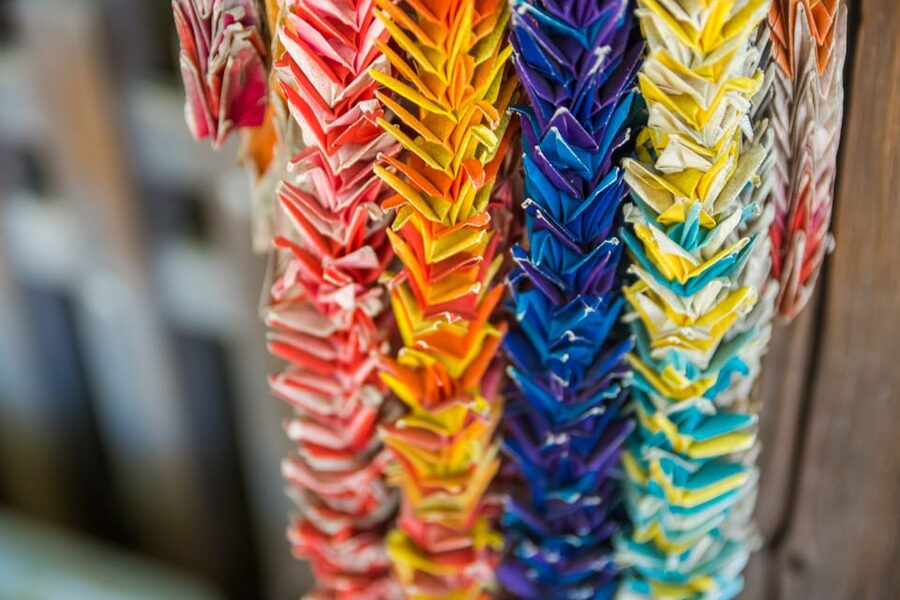
Tokyo can be loud, polished, and fast. Yanaka is a useful correction to that picture. It is part of Yanesen, the combined historic area of Yanaka, Nezu, and Sendagi, where older streets and traditional buildings remain part of daily life.
The area was selected among Japan’s top 100 beautiful and historic natural features. That description makes more sense once you leave Nippori Station and begin following the smaller roads. You will see a maze of paths, slopes, temples, gardens, and modest homes. From higher ground, the view stretches over the winding lanes below and gives you one of those rare Tokyo moments where the city seems to slow down.
I like that this tour is not built around a single grand monument. Instead, it shows how temples, graves, shops, food, and ordinary streets fit together. You get a better sense of old Tokyo as a lived-in place, not a museum display.
The area also attracted Japanese writers over the years. The quiet corners and changing views offered material for people looking for inspiration. Your guide can help connect the streets to that older cultural life, while also answering everyday questions about Japanese customs and local life.
More old Tokyo walks around Yanaka:
- The Old Quarter of Tokyo – Yanaka Walking Tour
★ 4.5 · 590 reviews - Yanaka Walking Tour: Historic and Traditional District of Tokyo
★ 5.0 · 530 reviews - Tokyo: Old Quarter Yanaka Walking Tour
★ 4.8 · 406 reviews
Starting at Nippori Station
Your meeting point is the north gate of JR Nippori Station, written as 北改札. This detail matters because Nippori is a busy station with several exits and gates. Give yourself time to find the correct one, especially if you are arriving with luggage or navigating Tokyo’s rail system for the first time.
The tour ends back at Nippori Station. That makes the walk easy to fit into a day of sightseeing. You can continue elsewhere in Tokyo afterward without arranging a separate return transfer.
There is no hotel pickup or drop-off. The guide meets you at the station, so you need to handle your own journey to and from Nippori. The compact group, limited to eight people, is a real advantage here. A guide can keep the group together on small streets and give more personal attention than a large coach tour.
Tennōji Temple and the first taste of old Tokyo
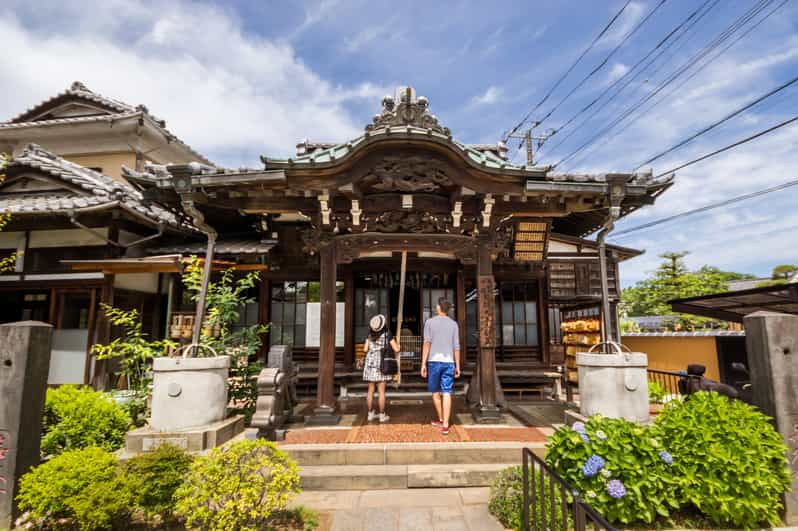
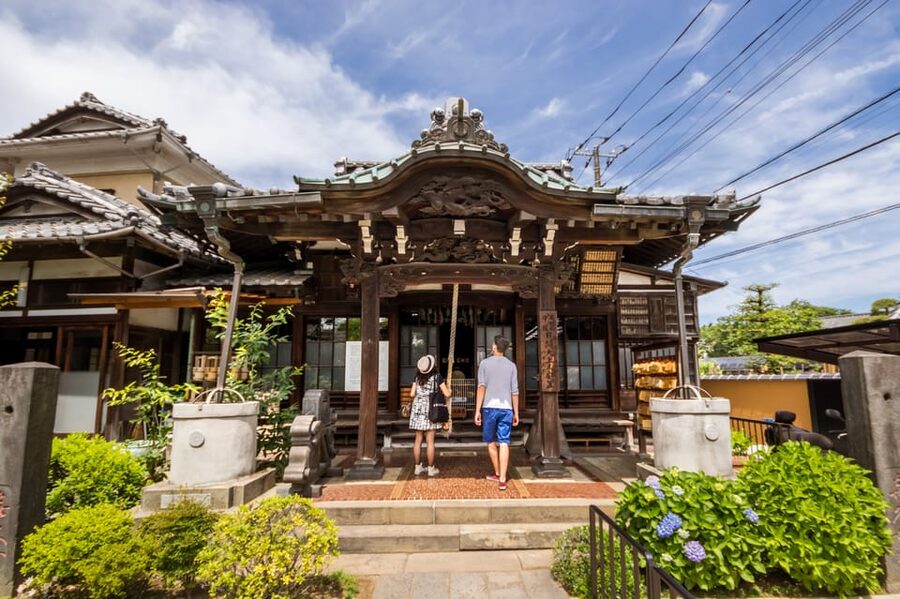
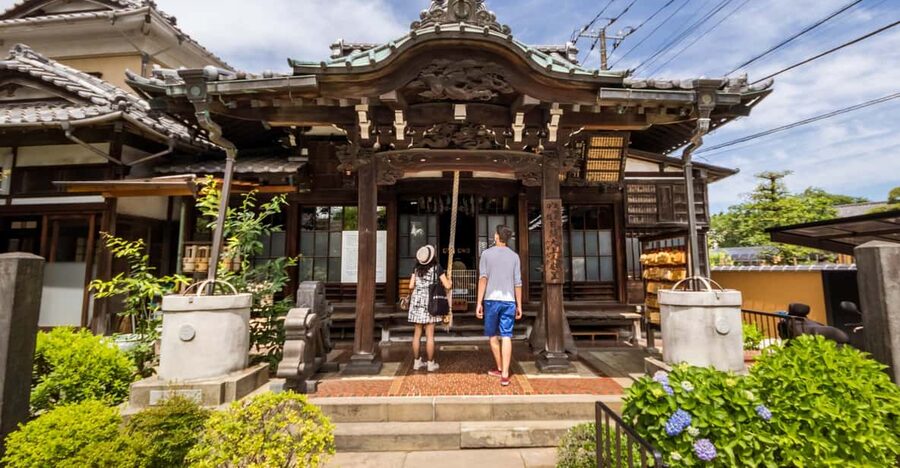
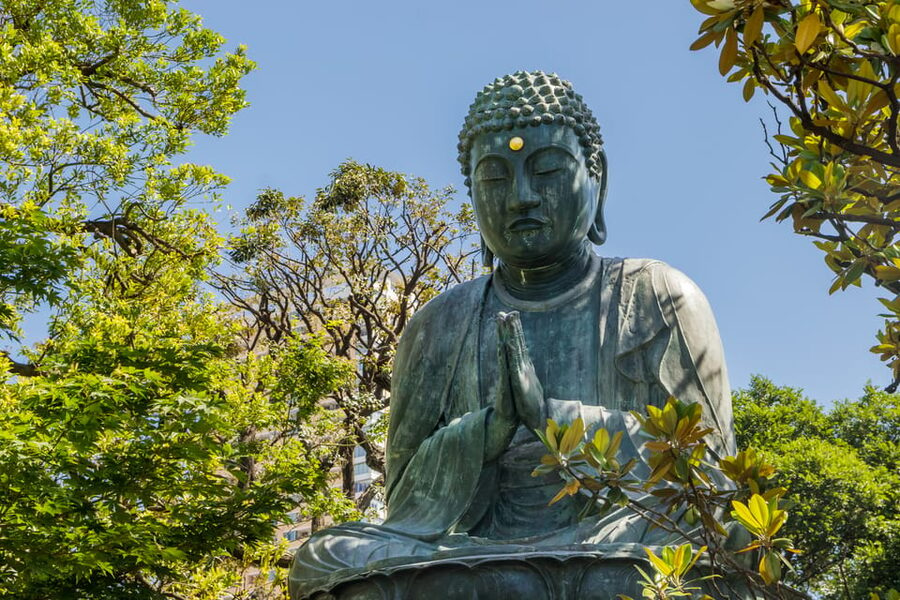
Tennōji Temple is listed as a 20-minute visit, giving you a clear early stop rather than a quick glance while passing by. The temple helps establish the character of Yanaka: religious sites are not isolated attractions here, but part of the neighborhood’s pattern of streets and homes.
I would use this stop to ask your guide how temples function in local life and how they differ from shrines. The distinction is useful throughout the tour, since you will later visit Nezu Shrine as well. This is also a good point to settle into the walking pace before the route reaches the cemetery and shopping streets.
Do not expect a large theatrical presentation. The value lies in the guide’s explanations and in seeing a calm religious site in its neighborhood setting. The visit is brief, so the tour keeps moving rather than spending most of the morning at one temple.
Yanaka Cemetery and the grave of a shogun
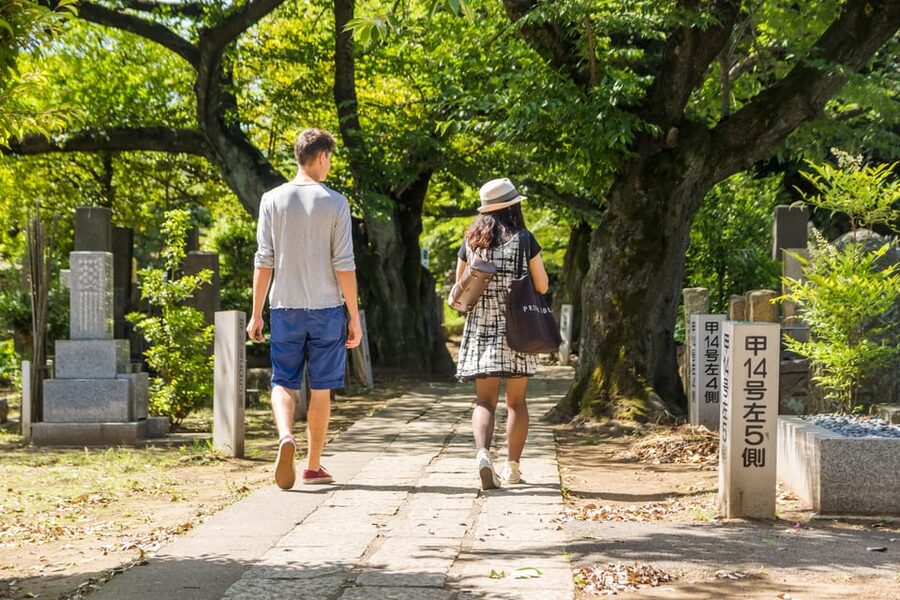
Yanaka Cemetery, or Yanaka Reien, is one of the tour’s strongest stops. It contains around 7,000 tombstones and is famous as a place to see cherry blossoms in spring. It is also a setting for quiet reflection, with paths leading between graves and trees.
One especially notable point is the grave of the last shogun, which guides have included on the walk. That gives the cemetery a direct connection to Japan’s political past, but the site is not presented only as a historical exhibit. It remains a working cemetery and should be treated with care.
You will want comfortable shoes here. The route involves walking through cemetery paths, along slopes, and between different parts of Yanaka. The setting can be peaceful, but it is not designed as a perfectly flat sightseeing route. If you have heart problems or another serious medical condition, the operator does not recommend this activity.
Spring adds another reason to visit. Cherry blossoms can change the mood of the cemetery, turning the tree-lined paths into one of Yanaka’s best-known seasonal views. Outside spring, the cemetery still earns its place on the route because of its scale, atmosphere, and links to Tokyo’s past.
More Tokyo walking tours:
- Tokyo Tsukiji Fish Market Food and Culture Walking Tour
★ 5.0 · 3,184 reviews - Tokyo: Imperial Palace and Shogun Historical Walking Tour
★ 5.0 · 2,251 reviews - Tokyo: Shinjuku Local Bar and Izakaya Guided Walking Tour
★ 4.9 · 1,794 reviews - Tokyo: Tsukiji Fish Market Food and Walking tour
★ 5.0 · 1,724 reviews
Nezu Shrine and the 1706 connection
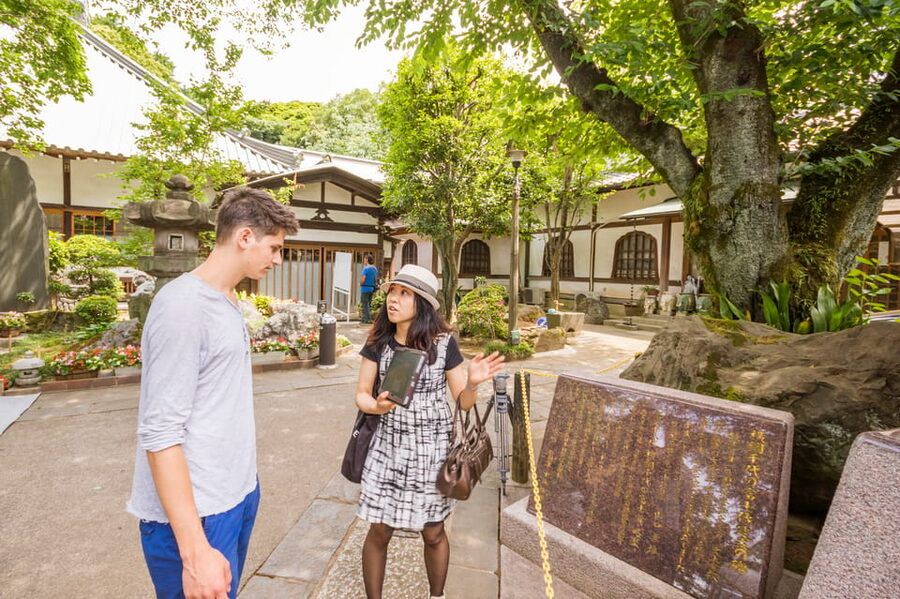
Nezu Shrine brings a different kind of visual and cultural experience. It was built in 1706 by the fifth Tokugawa shogun, placing it firmly in the Edo-period story that shapes much of Yanaka.
The shrine is especially worthwhile when seasonal flowers are in bloom. One spring visit included azaleas in full bloom, a detail that shows why timing can matter here. The tour does not promise a particular flower display on every date, so treat the seasonal scenery as a bonus rather than the main reason to book.
This is where a good guide adds real value. You can look at a shrine on your own, but an English-speaking guide can explain what you are seeing and answer questions about Japanese culture. Guides such as Rie and Sumiko were praised for making the tour easy to follow and for taking time with questions. Michiko was also singled out for her energy and kindness with children.
The shrine stop helps balance the cemetery visit. One is quiet and reflective, while the other gives you a more ceremonial sense of traditional Japan. Together with Tennōji, they make the route more than a simple neighborhood stroll.
Yanaka-Ginza, local foods, and sweets
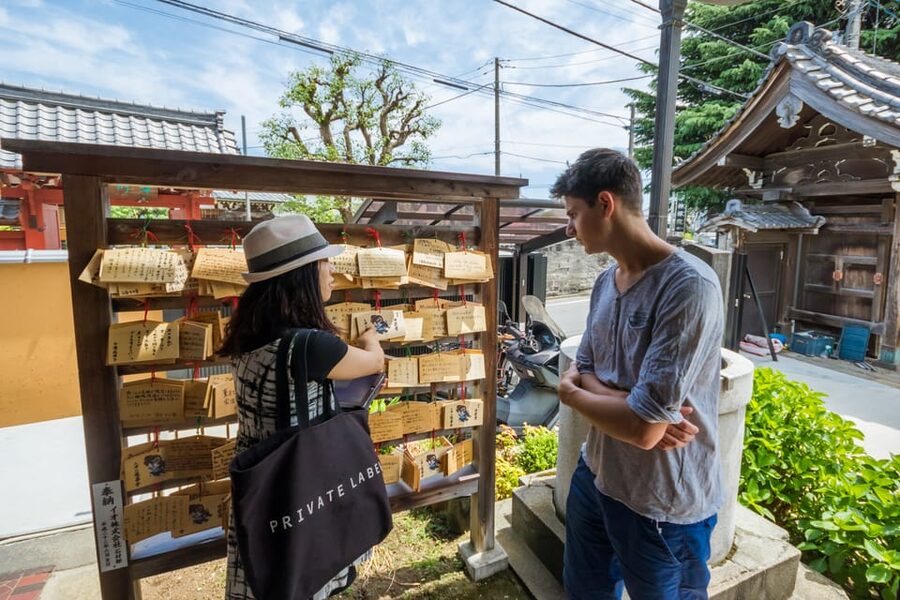
Yanaka-Ginza is the most casual and tasty part of the walk. This shopping street preserves the feel of an older local market area, with small shops and food sellers rather than the grand department stores found elsewhere in Tokyo.
The experience includes chances to sample different local foods and sweets. Food and drinks are not included in the $83 price, so bring some extra yen or a payment method accepted by the shops. This is not a formal meal, and the exact samples can vary. Think of it as a chance to try several small things while walking through the neighborhood.
Past food stops have included opportunities to buy bread, pastries, and pottery. That makes the shopping street useful even if you are not especially interested in sweets. You can pick up a snack, browse household items, or simply watch local life move around you.
I like this part because it connects the larger historical story to ordinary pleasures. A shrine tells you about religion and power. A food street tells you how the neighborhood works day to day. You get both on one route.
If you have dietary restrictions, ask the guide before buying anything. The tour information does not list specific food options or allergy arrangements, so you should not assume that every stall will suit you.
The value of the guide
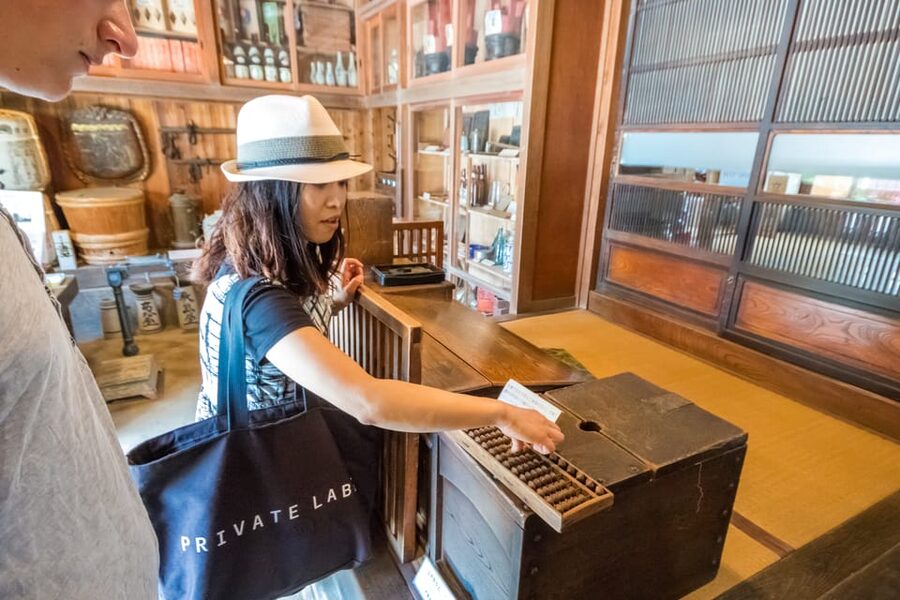
The price is $83 per person, which is fair if you want context, conversation, and a carefully planned route through an area that can be confusing on your own. You are paying for 3.5 hours with an English-speaking professional guide, not for transportation, meals, or entrance to a major paid attraction.
The value is strongest when you enjoy asking questions. Guides including Yoshimi, Arika, Rie, Sumiko, Mikko, Kaori, and Michiko have been praised for their warmth, clear English, local knowledge, and personal approach. Mikko, who lived in the area, was able to add a resident’s view of the streets. That kind of connection can make the route feel less like a checklist.
The price is less attractive if you prefer to wander alone, avoid organized activities, or only want a quick look at Yanaka-Ginza. You can visit the neighborhood independently, but you may miss the links between the cemetery, temples, shrine, writers, and shopping street.
The group limit of eight is important. It is small enough for personal interaction, but the tour still requires a minimum of two people per booking. If you are looking for a private tour, this is not advertised as one.
How the 210-minute schedule feels
Three and a half hours gives the tour enough time to move beyond a station-area walk. You have time for temple grounds, cemetery paths, shrine architecture, street views, food stops, and questions.
The tradeoff is that the schedule is not highly flexible. With several sights to cover, you should expect steady movement. A stop that catches your eye may receive only limited time, especially if the group needs to stay on schedule.
The route includes slopes and a moderate amount of walking. Comfortable shoes are essential. Avoid bringing oversized luggage, bikes, or other bulky items that make narrow streets harder to manage. Pets, drones, alcohol, and drugs are not allowed, and the activity also prohibits noise and indoor shoes in relevant settings.
The accessibility limits are strict. The experience is not suitable for wheelchair users, including people using non-folding or electric wheelchairs. The published information also lists several weight restrictions ranging from 110 to 159 kilograms, so check the booking conditions carefully if that may apply to you.
Who will enjoy this walk most
I would recommend this tour to you if you want to see a calmer, older side of Tokyo and prefer explanation over simply taking photographs. It works especially well early in a Tokyo visit, when you are still trying to understand how temples, shrines, neighborhoods, and food streets fit together.
Families can enjoy it too. Michiko was praised for being especially kind and engaging with children, but remember that young children still need to manage a long walk. Anyone who likes food browsing, local shopping, cemeteries, architecture, or Japanese cultural traditions should find plenty to hold their attention.
The tour is less suitable for you if you have limited mobility, serious heart concerns, or dislike walking for several hours. It is also not the best pick if your main goal is modern Tokyo, nightlife, skyscrapers, or famous shopping centers.
You can cancel up to 24 hours before the start for a full refund, and the reserve-now, pay-later option keeps your plans flexible. Starting times depend on availability, so check the schedule before building the rest of your day around it.
Should you book the Yanaka walk?
Book it if you want a thoughtful introduction to old Tokyo, with a small group, an English-speaking guide, and a mix of temples, graves, seasonal scenery, local food, and quiet streets. The strongest reasons are the 7,000-tombstone cemetery, Nezu Shrine’s Edo-period setting, and the chance to ask a guide about places you might otherwise pass without understanding.
Skip it if you want a short, flat outing or a tour centered on Tokyo’s headline attractions. For everyone else, $83 buys a useful half-day in a part of the city that feels genuinely different from the bright, crowded center.
FAQ
How long does the Yanaka walking tour last?
The tour lasts 210 minutes, or about 3.5 hours.
Where does the tour meet?
Meet at the north gate of JR Nippori Station, marked 北改札.
Where does the tour end?
The tour returns to JR Nippori Station.
Is the tour conducted in English?
Yes. The tour has a live English-speaking guide.
How large is the group?
The group is limited to eight participants, with a minimum of two people required per booking.
Is food included in the price?
No. Food and drinks are not included, although the route includes opportunities to sample and buy local foods and sweets.
What should I bring?
Wear comfortable shoes because the tour involves a moderate amount of walking.
Is the tour suitable for wheelchair users?
No. The activity is not suitable for wheelchair users, including people using non-folding or electric wheelchairs.
Can I cancel for a full refund?
Yes. You can cancel up to 24 hours before the activity for a full refund.
More half-day trips in Tokyo
- Half-day Tokyo Afternoon Tour by Hato Bus
★ 4.0 · 269 reviews - Tokyo: A Half-Day Trip Bus Tour in the Morning
★ 4.6 · 236 reviews - Half-day Tokyo Morning Tour by Hato Bus
★ 4.0 · 220 reviews - Tokyo Private Half-Day Tour with a Local – Secrets & Highlights
★ 5.0 · 53 reviews
Newly reviewed around Tokyo
- Tokyo Asakusa:Calligraphy & Make T-shirt Activity★ 5.0 · 62 reviews
- Intercity Shuttle, Tokyo to Haneda /Narita /Yokohama /Makuhari★ 5.0 · 5 reviews
- 1 Hour Travel around Tokyo with a Professional Photographer★ 5.0 · 3 reviews
- Travel Tokyo with Your Own Personal Photographer★ 5.0 · 43 reviews
- Kickboxing & Body Training with EX-Pro Fighter★ 5.0 · 4 reviews
- Train in Samurai Swordsmanship and Defeat the Demon in Tokyo★ 5.0 · 5 reviews
- Shuttle Van 6hr Tokyo Tour to-and-from Tokyo, Yokohama and Narita★ 5.0 · 9 reviews
- Traditional Japanese Knife Sharpening Class★ 5.0 · 18 reviews
Tokyo Walking Tours, compared.
Tokyo Tsukiji Fish Market Food and Culture Walking Tour
Read our review →
Imperial Palace and Shogun Historical Walking Tour
Read our review →
Shinjuku Local Bar and Izakaya Guided Walking Tour
Read our review →
Asakusa Walking Tour with Sensoji Temple Visit
Read our review →
Tokyo Castle & Imperial PalaceーShogun Walking Tour
Read our review →
Browse the lists this tour appears in