
Reviewed · TOKYO COOKING CLASSES
Tokyo: Night Cooking Class: 5 Home-Cooked Japanese Dishes
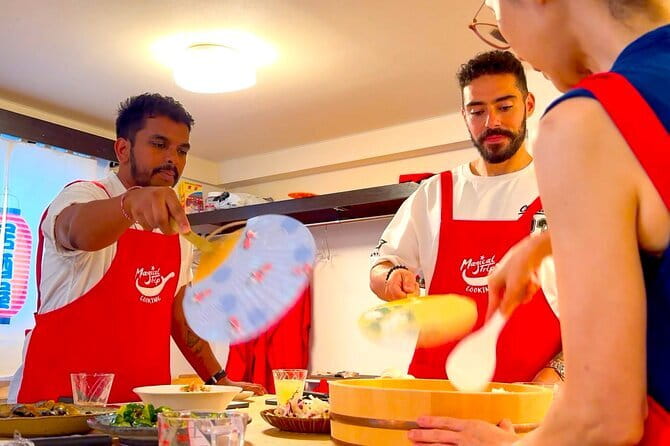
Tokyo’s best food lessons do more than show you how to make sushi. This three-hour evening class introduces Japanese home drinking culture, with small dishes made for sake, beer, or soft drinks. You prepare hand-roll sushi, wagyu or tofu steak, rolled egg, and eggplant with miso, then sit down to enjoy what you made.
I like the small group of six, which gives you a fair chance to handle the food rather than watch from the back. I also like the practical recipes, since the ingredients are chosen so you can repeat the dishes at home. Guides such as Alice, Masae, and Fuji have brought warmth and clear instruction to past classes.
The main caution is dietary and physical access. Vegetarian cooking can be arranged, but vegan and gluten-free diets are not supported, allergy-free food cannot be promised, and some parts are not suitable for wheelchairs or strollers. Children can attend from age six, but knife and hot-stove work is limited to those 12 and over.
Key points at a glance
- A night built around izakaya food: Prepare several small plates meant to accompany drinks, rather than one large formal meal.
- Four named hands-on dishes: Make sushi hand rolls, wagyu or tofu steak, Japanese rolled egg, and grilled eggplant with miso sauce.
- Three drinks included: Choose alcoholic drinks or soft drinks, with alcohol limited to people aged 20 and above.
- A genuinely small class: The group is capped at six, so you should receive direct help at the counter.
- Useful for home cooks: Recipes and familiar ingredients make it easier to repeat the meal after returning home.
- A local meeting point: Find the FamilyMart beside Gindako and Doutor Coffee at Iriya Station Exit 2, not the other FamilyMart nearby.
What this Tokyo night class is really about
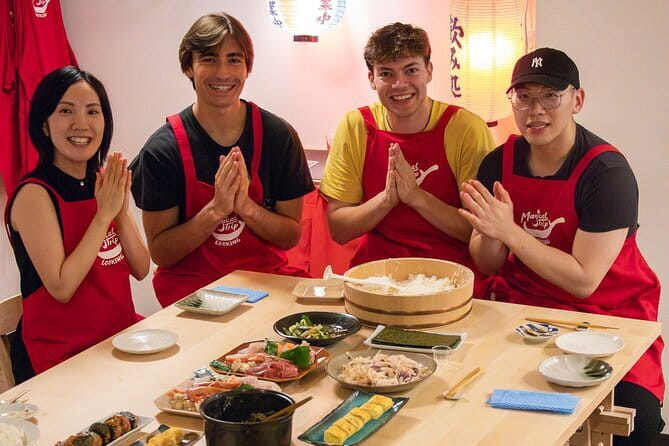
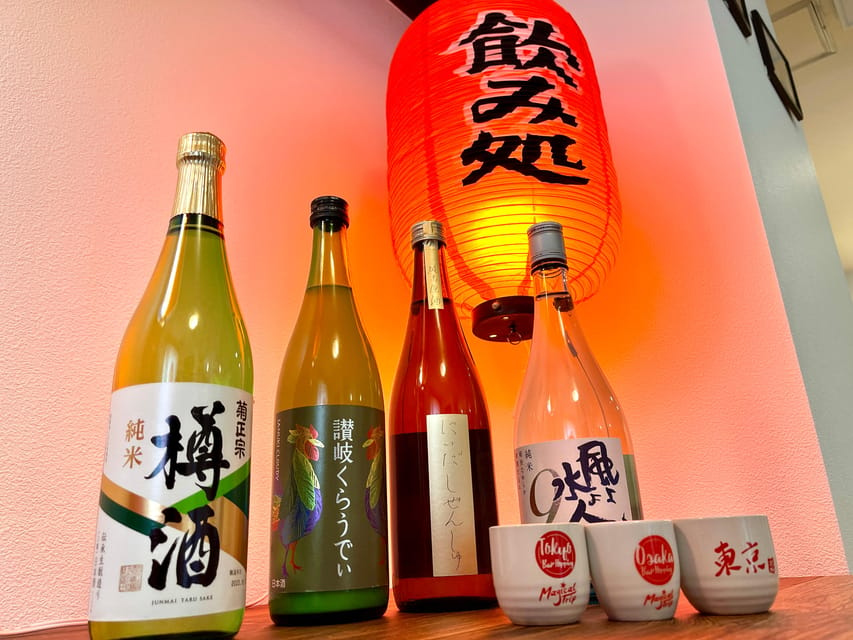
This is less a polished restaurant lesson and more a shared Japanese evening around food and drinks. The focus is nomikai, the Japanese custom of meeting for drinks, and the class uses an izakaya-style format: several modest portions, different flavors, and a drink that fits each bite.
That format matters. Japanese home cooking is not only about technical precision. It is also about making food that works well at a table with friends. A salty or savory dish may suit beer, while a lighter preparation can work better with sake. You are learning that social rhythm as much as you are learning recipes.
The class lasts three hours, which gives the evening room to move at an easy pace. You should expect instruction, hands-on preparation, eating, and conversation rather than a rushed demonstration followed by a quick taste.
The experience is conducted in English and is limited to six people. That small size is a real advantage for a beginner. You can ask how to handle a particular ingredient, get help with heat or timing, and see the guide’s technique up close.
More Tokyo cooking classes:
- Tokyo: Roll and Authentic Sushi Making Class in Asakusa
★ 4.9 · 1,957 reviews - Tokyo Shinjuku Chopsticks Making Class
★ 5.0 · 1,763 reviews - Tokyo: Sushi Making Class in a Happi Coat near a Famous Spot
★ 4.9 · 1,377 reviews
Meeting the guide near Iriya Station
The meeting point is in front of the FamilyMart beside Gindako takoyaki shop and Doutor Coffee near Iriya Station Exit 2. This detail matters because there are two FamilyMart stores at Iriya Station. Use the Gindako and Doutor landmarks, not just the convenience-store name.
There is no hotel pickup or drop-off, so you handle your own way to the station. Allow enough time to identify the correct shop before the start. A night cooking class is a poor place to arrive flustered, especially when the meeting point is close to another store with the same name.
The guide is part of the value here. Alice has led a lively evening with clear food knowledge, while Fuji has worked as both guide and cooking instructor. Masae has also taken the class beyond recipes, including a stop at a local supermarket before welcoming the small group into the cooking studio.
That supermarket visit is not guaranteed for every session, so do not treat it as a fixed part of the schedule. Still, it shows the sort of local context the class can offer when time and group arrangements allow.
The cooking starts with small dishes, not one big meal
The class presents an assortment of food designed for sharing. The named preparations include sushi hand rolls, wagyu or tofu steak, Japanese-style rolled egg, and grilled eggplant with miso sauce. The wider lesson also introduces the kinds of savory skewers, crisp tempura, and tangy pickles that fit an izakaya table.
The exact balance may vary, so I would not book this expecting a rigid restaurant menu. The useful point is the range of techniques. You handle raw or prepared ingredients for hand rolls, work with heat for steak and eggplant, and practice the controlled rolling needed for Japanese omelette.
Sushi hand rolls are a good starting point because they are social and forgiving. Instead of forming the neat pieces associated with restaurant sushi, you assemble and roll the ingredients yourself. That makes the dish suitable for a home gathering, where people can build their own portions.
The wagyu steak provides the special-occasion element. If you do not eat meat, tofu can be used instead. Having that choice makes the class more flexible for vegetarians, though it does not make the class suitable for vegans.
The Japanese rolled egg is one of the more useful skills to take home. It looks simple, but getting a tidy roll takes attention to heat, timing, and movement. It is the kind of dish that shows how Japanese cooking can turn a few familiar ingredients into something with a distinct texture and shape.
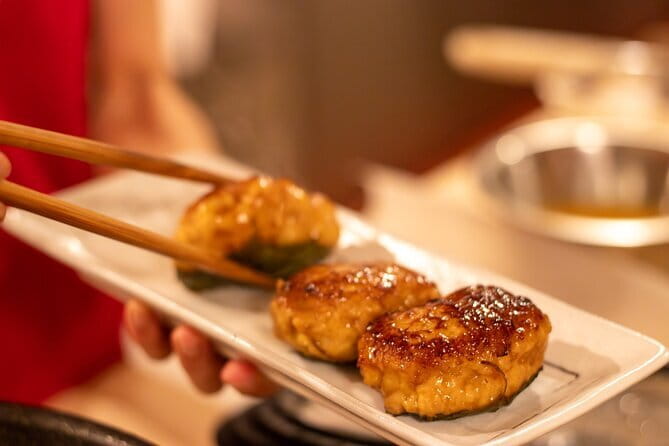
Grilled eggplant with miso sauce brings a different character to the table. The sweet-salty miso topping gives a plain vegetable a stronger role, and the dish fits the class theme well because it works as a small plate rather than a main course.
Learning how drinks shape the meal
Three cans of alcoholic or soft drinks are included. If you are at least 20, the legal drinking age in Japan, you can taste alcoholic options. Younger participants receive soft drinks instead.
The class is not simply an evening where drinks happen to be present. You are shown how different dishes pair with different beverages. That gives the meal a clearer purpose: each plate becomes part of a table conversation, not just a cooking exercise.
For a sake fan, this is one of the strongest reasons to book. You can connect the food to Japan’s drinking customs while learning dishes that are practical outside a restaurant. Beer drinkers should also find the format natural, especially with salty, crisp, or grilled foods.
You are not required to drink alcohol. The soft-drink option makes the evening workable for people who do not drink, and the class can still be enjoyed for its cooking and cultural content.
A completely different kind of day in Tokyo:
- Mt Fuji and Hakone 1-Day Bus Tour Return by Bullet Train
★ 5.0 · 26,383 reviews - 1-Day Tokyo Bus Tour
★ 5.0 · 14,250 reviews - Tokyo: teamLab Planets TOKYO Digital Art Museum Entry Ticket
★ 4.6 · 9,779 reviews - Mt Fuji & Hakone Cruise, Drum Show Bullet Train 1 Day from Tokyo
★ 4.0 · 7,413 reviews
Why the small group changes the lesson
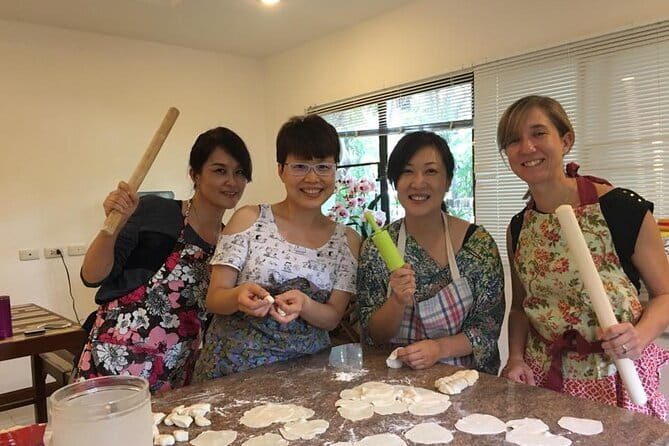
A six-person limit makes this different from a large demonstration class. You should have enough access to the cooking equipment to take part rather than simply observe. That matters most when working with a rolled egg, hot oil, or a steak that needs attention at the right moment.
The small setting also helps solo visitors and couples meet people without the pressure of a formal group tour. One couple had a session with only three people, which allowed for a more personal pace. You may not get a private class, but the cap keeps the group from becoming unwieldy.
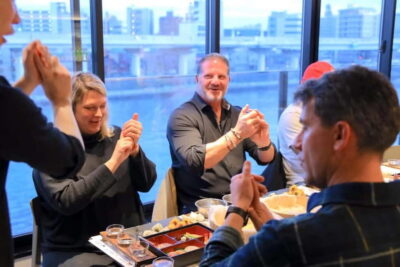
There is a social side to the evening. You cook, drink, and eat together, which fits the nomikai idea better than a quiet instructional workshop. If you want a completely private lesson or prefer to work alone, this format may feel more communal than you want.
The guides also shape the mood. Alice has been praised for making the night fun, while Masae’s warmth helped turn the class into a cultural exchange as well as a meal. Those personal qualities are hard to guarantee, but the small group gives a good guide room to use them.
What you take home besides a full stomach
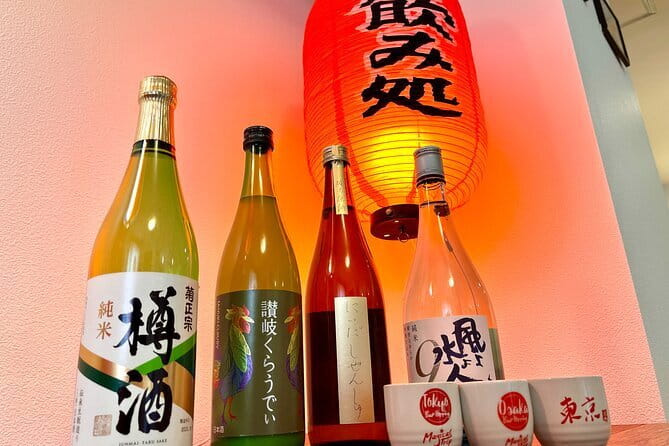
You receive recipes to use after the class. That is a major advantage over food tours built only around tasting. The dishes are selected with ingredients available in your home country, so you do not need to hunt down every item at a specialist shop.
You also take home a better sense of how Japanese meals are assembled. The lesson is not only about following steps. It shows how several small portions can create variety in flavor, texture, and temperature.
The recipes may be especially useful for a casual dinner with friends. Hand rolls invite people to assemble their own food, while eggplant, omelette, steak, tofu, and pickles can be served in small portions. The class is teaching a style of hosting, not just a list of dishes.
Tour photos are included as well. That is a modest extra, but it gives you a record of the evening and may help you remember the techniques you practiced.
Price, timing, and what the $103 covers
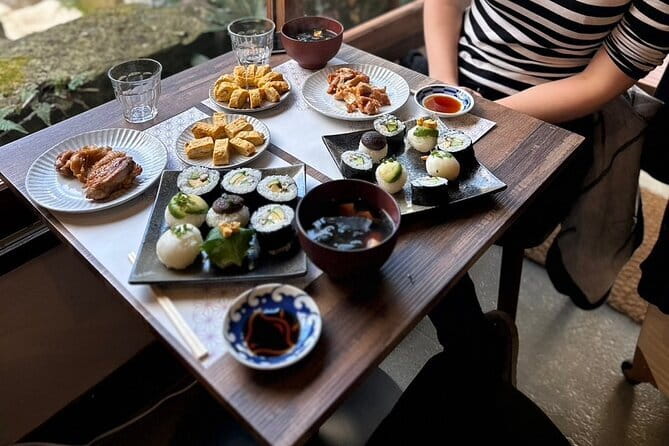
At $103 per person, the price is not a bargain basement cooking lesson. I think the value depends on how much you want from the evening.
You are paying for three hours, a live English-speaking guide, all ingredients, cooking equipment, four named cooking components plus the broader five-dish format, three drinks, recipes, and photos. You also receive direct support in a class capped at six people. In Tokyo, that combination can make sense if you want both a meal and a cultural activity.
The price is less convincing if you mainly want a cheap dinner. You could eat for less elsewhere, and the class requires you to spend part of the night preparing your food. Its value comes from learning, conversation, and the chance to repeat the recipes later.
The reserve-now, pay-later option is useful when your Tokyo schedule is still shifting. Free cancellation is available up to 24 hours before the start for a full refund. Check the available start times when booking, since the class is specifically designed as a nighttime activity.
Who should book, and who should think twice
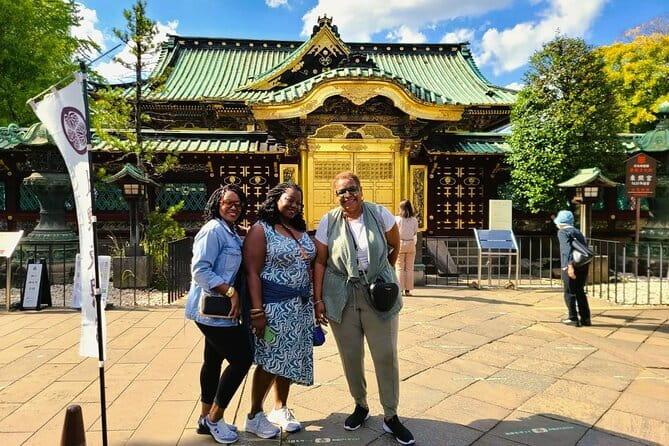
I would recommend this class to couples, friends, solo visitors, and families who want a social night with a practical result. It suits beginners because the guide leads the process, but experienced home cooks should also find enough variety in the dishes and pairings to keep the evening worthwhile.
It is especially well suited to people who enjoy Japanese drinks. The class gives sake and beer a proper role, instead of treating them as an afterthought. It also works for vegetarians, since wagyu can be replaced with tofu and ingredients and cooking steps can be arranged.
Families need to read the age rules carefully. The activity is open to people aged six and above, but knife and heat tasks are allowed only for those aged 12 and over with a parent or guardian supervising. The practical guidance says it is not suitable for children under 12, so families with younger children should confirm arrangements before booking. A kids’ playroom is available, but that does not remove the cooking-safety limits.
This is not a good fit for vegans or people who require gluten-free food. The kitchen cannot guarantee allergy-free preparation, and substitutions may not always be possible. Pregnant women are also listed as unsuitable for the activity.
Wheelchair and stroller users should take care before booking because some parts of the route and activity are not accessible. Smoking is not allowed.
Final call: a warm, useful night for food-minded visitors
I would book this if you want more than a standard Tokyo meal and like the idea of learning food you can make again. The six-person limit, drink pairings, and recipes give the class a clear purpose, while the home-drinking theme offers a look at everyday social life rather than only restaurant cooking.
I would skip it if you need strict allergy control, vegan or gluten-free food, full wheelchair access, or a quiet private lesson. For everyone else, $103 is a fair price for three hours of cooking, eating, and conversation, especially when a strong guide such as Alice, Masae, or Fuji is leading the room.
FAQ
Where does the cooking class meet?
Meet in front of the FamilyMart beside Gindako takoyaki shop and Doutor Coffee at Iriya Station Exit 2. There are two FamilyMart stores at Iriya Station, so use those nearby shops as landmarks.
How long does the class last?
The class lasts three hours and takes place at night. Starting times depend on availability.
What food will I prepare?
The hands-on class includes sushi hand rolls, wagyu or tofu steak, Japanese-style rolled egg, and grilled eggplant with miso sauce. The experience is presented as a five-dish izakaya-style cooking class, and the wider format includes small plates such as skewers, tempura, and pickles.
Are drinks included?
Yes. Three cans of alcoholic or soft drinks are included. Alcoholic drinks and sake are available only to people aged 20 and over.
Can vegetarians join the class?
Yes. Vegetarian participants are welcome, and tofu can be arranged in place of wagyu. The class is not available for people who are vegan or gluten-free.
Can children attend?
The activity is open to participants aged six and above, but knife and hot cooking steps are limited to those aged 12 and over with a parent or guardian supervising. The activity is listed as unsuitable for children under 12.
More Tokyo night tours
- Tokyo Night Foodie Tour in Shinjuku – Seasonal Sushi, Wagyu Beef
★ 5.0 · 1,161 reviews - Tokyo: Daikoku JDM Car Meet & Night Car Culture Tour
★ 4.8 · 626 reviews - Tokyo After 5: Authentic Japanese Food & Drink Night Tour
★ 4.5 · 560 reviews - Tokyo: Samurai Entertainment Night Show in Kanda Shrine
★ 4.6 · 417 reviews
More hands-on classes and workshops in Tokyo
- Sushi Making Tokyo Roll and Authentic Japanese Sushi Class
★ 5.0 · 3,971 reviews - Chopstick Making Workshop in Ginza
★ 4.8 · 1,366 reviews - Tokyo Sushi Making Class in Tsukiji with Professional Chef
★ 5.0 · 1,177 reviews - Ramen & Gyoza Cooking Class in Tokyo with Local Supermarket Visit
★ 5.0 · 823 reviews
Newly reviewed around Tokyo
- Tokyo Asakusa:Calligraphy & Make T-shirt Activity★ 5.0 · 62 reviews
- Intercity Shuttle, Tokyo to Haneda /Narita /Yokohama /Makuhari★ 5.0 · 5 reviews
- 1 Hour Travel around Tokyo with a Professional Photographer★ 5.0 · 3 reviews
- Travel Tokyo with Your Own Personal Photographer★ 5.0 · 43 reviews
- Train in Samurai Swordsmanship and Defeat the Demon in Tokyo★ 5.0 · 5 reviews
- Shuttle Van 6hr Tokyo Tour to-and-from Tokyo, Yokohama and Narita★ 5.0 · 9 reviews
- Kickboxing & Body Training with EX-Pro Fighter★ 5.0 · 4 reviews
- Traditional Japanese Knife Sharpening Class★ 5.0 · 18 reviews
Tokyo Cooking Classes, compared.
Roll and Authentic Sushi Making Class in Asakusa
Read our review →
Sushi Making Class in a Happi Coat near a Famous Spot
Read our review →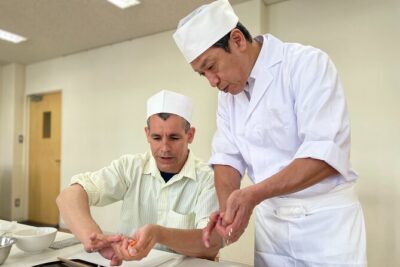
Tokyo Sushi Making Class in Tsukiji with Professional Chef
Read our review →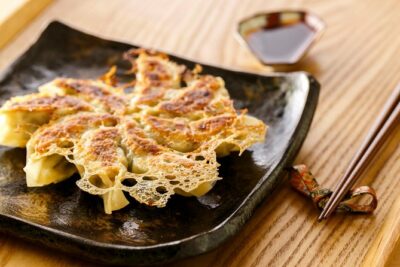
Ramen & Gyoza Cooking Class in Tokyo with Local Supermarket Visit
Read our review →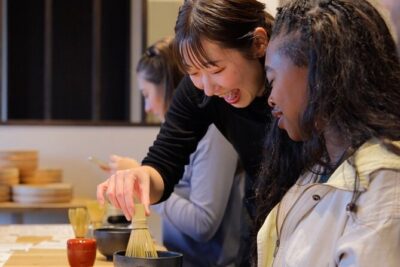
Matcha Making Class in Tokyo with Authentic Japanese Sweets Set
Read our review →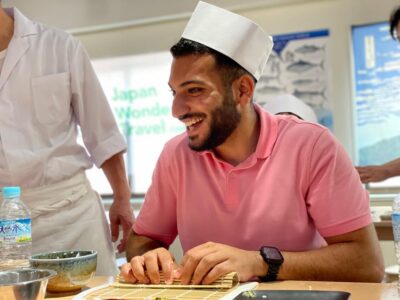
Tsukiji Fish Market Sushi Making Class with Pro Chef
Read our review →
Browse the lists this tour appears in