
Reviewed · TOKYO IMPERIAL PALACE TOURS
Tokyo: Edo Castle & East Garden of the Imperial Palace Tour
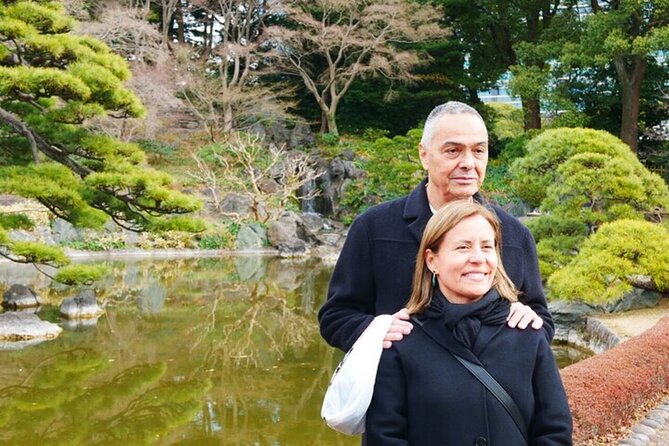
The most interesting part of this tour is the setting: Tokyo’s Imperial Palace East Gardens occupy the former grounds of Edo Castle, where shoguns once ruled Japan. You walk past old stone walls, castle remains, ponds, trees, and carefully arranged gardens while your guide connects each place to the people who used it.
I like the easy two-hour pace and the human touch from guides such as Hitoshi, Naoko, Shigeru, and Masahito. Several guides use pictures, stories, and cultural details to make the ruins easier to understand, and some have helped visitors reach a subway station afterward. The main drawback is clear: you do not enter the Imperial Palace itself, and the garden closes on Mondays and Fridays.
Key points to know before booking
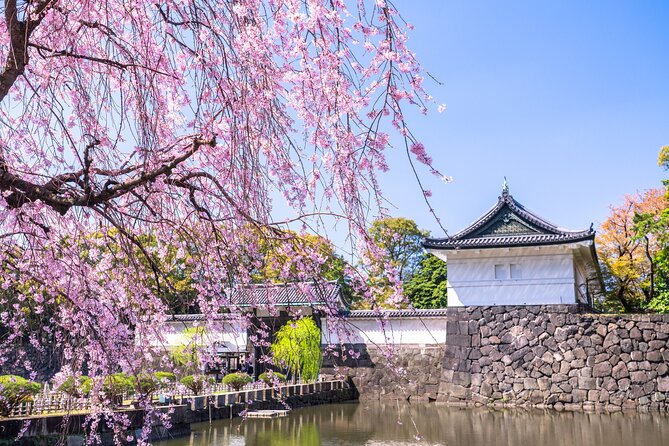
- Edo Castle grounds: Walk through the former center of shogun power, with surviving walls and building remains.
- Wadakura meeting point: Find your guide by the fountain, holding a Gotcha sign.
- English guidance: Expect a live English-speaking guide, with history, customs, stories, and visual aids.
- A calm Tokyo break: The garden offers open space and a slower outing away from the city streets.
- Koi and garden details: Look for the unusual koi fish and ask about the plants, ponds, and design.
- Important limits: The inner palace is closed to this tour, and East Gardens are closed Mondays and Fridays.
Why Edo Castle’s East Garden is worth your time
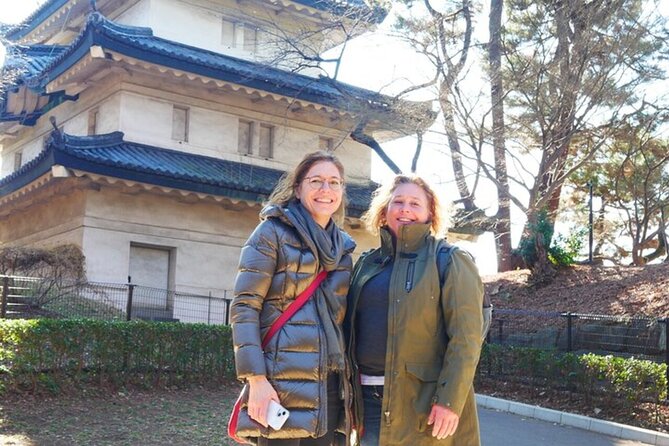
Tokyo can feel like a city of trains, towers, shops, and crowds. The East Gardens give you a different view. Here, broad paths and clipped greenery sit inside the old defensive lines of Edo Castle, creating a quiet place where Japan’s political past is still visible.
The castle was not just a residence. It was the headquarters of the shogun, the military ruler who controlled Japan for centuries. The Imperial Palace now occupies the wider site, but the East Gardens let you walk through areas connected with that earlier power structure.
Without a guide, you can still enjoy the trees, walls, and water. The challenge is knowing what you are looking at. A stone base may seem like a simple ruin until someone explains which major building once stood there, how the castle was defended, or how the shogun’s government worked.
That context is the main reason to pay for this outing. You are not paying for a special palace entrance. You are paying for a person who can turn scattered remains into a story.
More Imperial Palace tours in Tokyo:
- Tokyo: Imperial Palace and Shogun Historical Walking Tour
★ 5.0 · 2,251 reviews - Tokyo: Imperial Palace Japanese History Walking Tour
★ 4.9 · 987 reviews - Tokyo: Imperial Palace and Shogun Walking Tour
★ 4.9 · 935 reviews
Meeting at Wadakura Fountain Park
The tour begins at the fountain in Wadakura Fountain Park. Your guide holds a sign marked Gotcha, which makes the meeting point easier to identify in the broad palace district.
Allow time to reach the fountain without rushing. The instructions are simple, but large Tokyo sites can be confusing when you are watching train connections, street crossings, and maps. Once you find the guide, the walk starts from a practical and attractive place rather than from inside the garden gates.
The group then heads toward the East Gardens. At the entrance, visitors are subject to a baggage inspection. This matters if you are carrying something that could be treated as a weapon.
The warning about Japanese knives is especially useful. If you plan to shop for knives or similar items at Tsukiji, Asakusa, or elsewhere before the tour, place them in a coin locker or another secure location first. Do not arrive at the palace grounds with those purchases in your bag.
Following the old castle walls
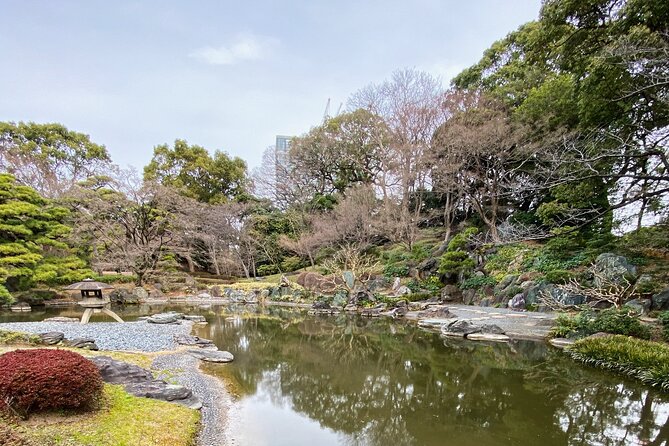
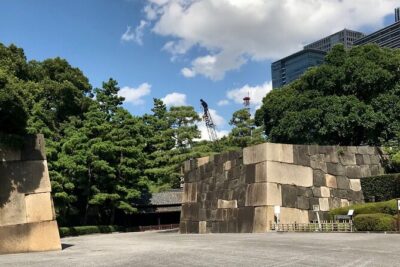
The East Gardens were built on the main grounds of Edo Castle, so the walk is best understood as a castle visit with gardens around it. You see the remaining walls and foundations, then use the guide’s explanation to picture the buildings that no longer survive.
Guides often bring printed pictures or other visual material. This helps bridge the gap between a grassy site and a huge wooden castle complex that once filled the area. Naoko, for example, has been praised for using pictures and visual explanations, while other guides have focused on architectural details and the lives of shoguns, daimyo, and ninjas.
I like this approach because it does not pretend that every part of Edo Castle is still standing. You get the remains that exist today, then a careful explanation of what they meant. That is more useful than simply being told that the site is old.
The walk also covers the transition from shogun rule to the imperial period. You hear about Japanese history and culture in broad strokes, with the garden acting as the setting rather than as a collection of unrelated photo stops.
The garden itself, with ponds, plants, and koi
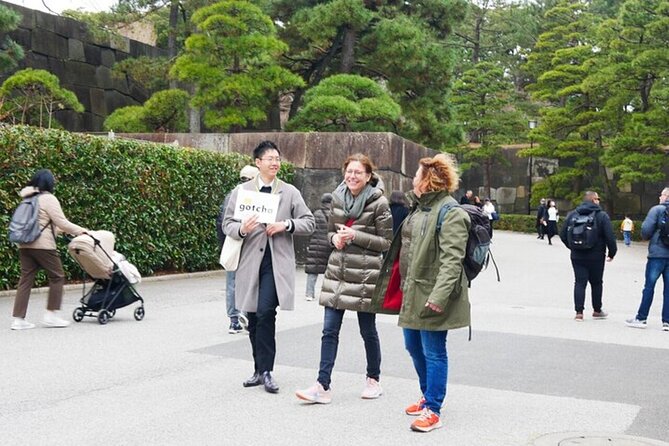
The garden is not merely a backdrop for castle history. Its trees, ponds, paths, and open lawns give the tour a softer rhythm after the stone defenses and political stories.
The guides point out plants and garden features that you might pass without noticing. The value here is small-scale detail: how a tree contributes to the view, why a pond matters, or how the garden’s design reflects Japanese taste and care.
Keep watch for the koi fish, one of the activity’s unusual talking points. The description calls them a one-of-a-kind magical breed, but the practical point is simpler: the koi are a memorable feature, and your guide can help you spot them and explain why they are worth noticing.
The garden can also make this tour appealing for families. One guide was praised for making the visit understandable and interesting for a nine-year-old child. The history is serious, but the format is a walk with stories, pictures, plants, animals, and old walls rather than a formal lecture.
A completely different kind of day in Tokyo:
- Mt Fuji and Hakone 1-Day Bus Tour Return by Bullet Train
★ 5.0 · 26,383 reviews - 1-Day Tokyo Bus Tour
★ 5.0 · 14,250 reviews - Tokyo: teamLab Planets TOKYO Digital Art Museum Entry Ticket
★ 4.6 · 9,779 reviews - Mt Fuji & Hakone Cruise, Drum Show Bullet Train 1 Day from Tokyo
★ 4.0 · 7,413 reviews
What the guide adds to the two-hour walk
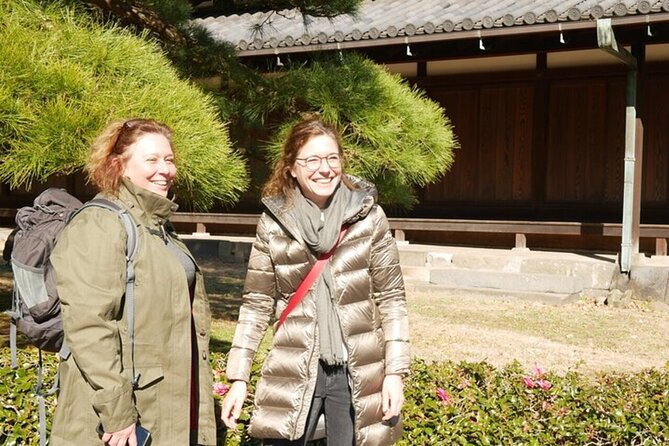
The quality of this experience depends heavily on your guide. The available guide pool includes people such as Hitoshi, Naoko, Shigeru, Masahito, Mikio, Ayako, Yoshikawa, Hirashima, and Miho.
Many guides are praised for clear English and patient explanations. Hitoshi has been especially appreciated for his broad knowledge of Japanese history, his careful pace, and his willingness to answer questions. Shigeru has helped visitors with photographs, explained the site clearly, and even given an origami crane on one occasion.
That does not mean every tour follows an identical script. One guide may focus more on the imperial family, another on the Edo period, architecture, gardens, or everyday culture. This is worth remembering when you book: the guide is a major part of what you are buying.
The best guides make room for questions. They also adjust the pace when needed. Visitors traveling with older parents have found the walk manageable, and one guide took particular care with a person using a wheelchair. Another visitor appreciated a slower pace with frequent short stops.
You should still think of this as a walking tour, not a seated sightseeing trip. Comfortable shoes and a willingness to walk through a large garden area will make the experience easier.
What you will not see inside the palace
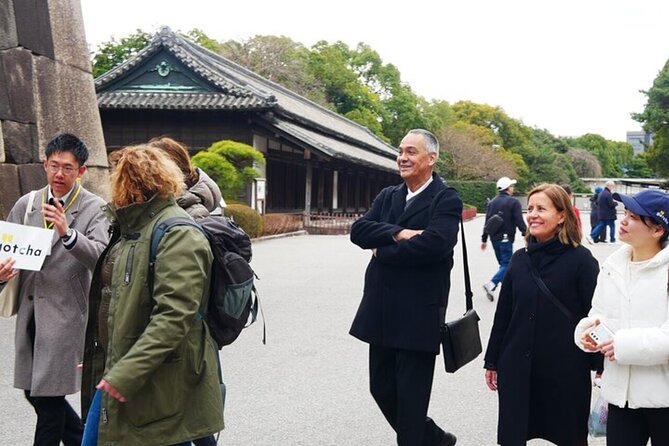
The name can cause confusion. This is a tour of the Imperial Palace East Gardens, not a tour inside the emperor’s residence.
The inner palace is not open to this activity, and you do not enter the private or restricted areas. You see the East Gardens, the former castle grounds, historic remains, and the surrounding garden setting.
That limitation is not a surprise if you read the details carefully, but it changes the value calculation. If your main goal is to see palace interiors, ceremonial rooms, or private imperial spaces, this is not the right choice. If you want the setting, the old castle remains, and an explanation of how the site fits into Japanese history, it makes much more sense.
You may also see the palace area from outside, but the focus remains on the East Gardens. Think of this as a historical garden walk rather than a palace-room visit.
Is $42 fair for two hours?
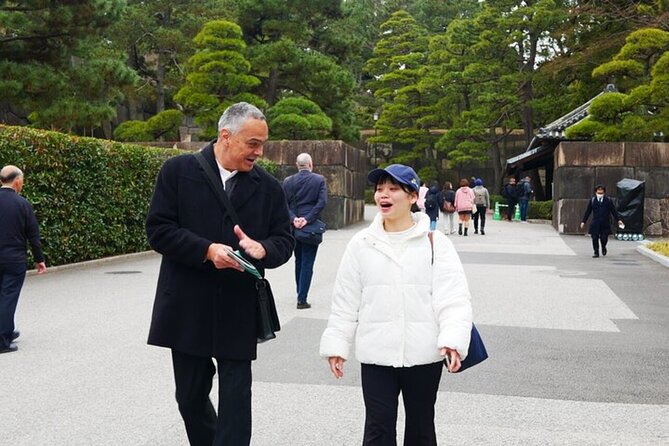
The price is $42 per person. Entry to the garden itself is free, so the fee is almost entirely for the guided service.
That means the tour is not the cheapest way to walk through the site. You can enter the garden without paying for a guide, and visitors who enjoy reading signs or researching as they go may prefer to explore independently.
I think the price is reasonable if you want an efficient introduction to Edo Castle and Japanese history. Two hours is long enough to cover the major parts without turning the visit into an all-day commitment. You also avoid spending your first hour wondering which wall, foundation, or gate matters most.
The value is strongest for first-time visitors to Tokyo, families, older travelers who prefer a measured pace, and anyone who wants to ask questions in English. It is weaker for people who already know the site well or who only want a quick garden stroll.
One visitor compared the price with full-day trips to Nikko or Mount Fuji and felt unsure about the cost. That is a fair comparison. This is a short city tour, not a full-day excursion with distant scenery. Its advantage is convenience and focus, not quantity.
Weather, pace, and practical comfort
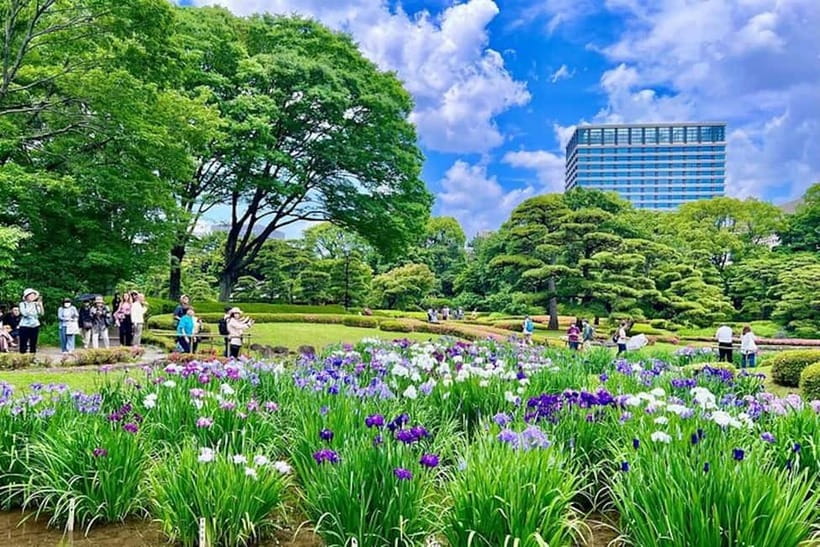
The garden is open-air, so weather affects the mood. Rain did not stop some people from enjoying the walk, but a wet day can make any garden visit less comfortable. Bring suitable clothing and shoes for the forecast.
The pace is generally relaxed. Several guides have been praised for giving people enough time, stopping when needed, and not rushing through the main points. Still, the garden covers a large site, and you should expect to be on your feet for most of the two hours.
The experience can work for older visitors, but individual mobility matters. One guide adapted well for a wheelchair user, and other guides have slowed down for seniors. If your group has specific mobility needs, tell the operator in advance rather than assuming every route or surface will suit everyone.
The walk returns to Wadakura Fountain Park. Some guides have gone beyond the formal finish by helping visitors reach a subway station or their next activity. Treat that as helpful guide service, not as a guaranteed part of the tour.
Who will enjoy this tour most?
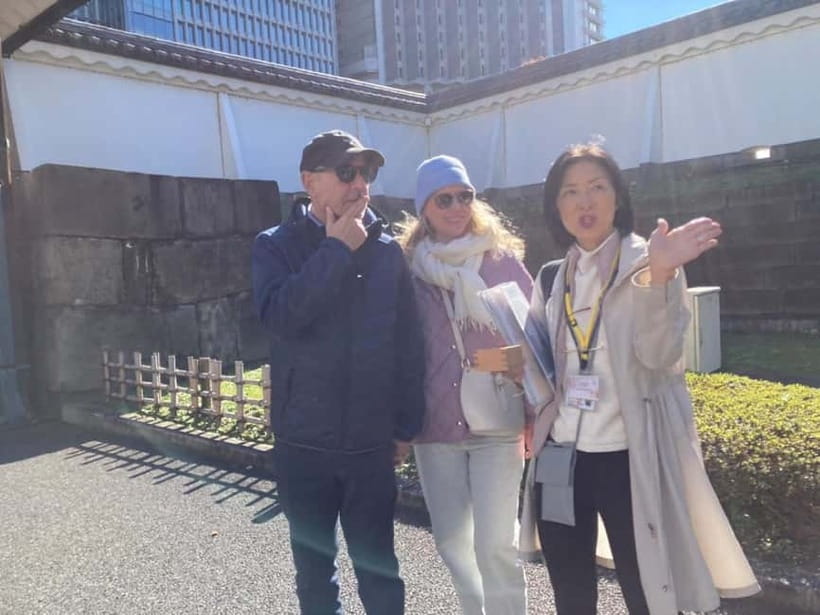
I would choose this tour for you if you want a clear first look at Tokyo’s political and imperial past. It works especially well early in a Japan trip because it gives you useful background for other castles, temples, museums, and historic districts.
Families can benefit from the stories and pictures. The garden also gives children something to look at beyond a long spoken explanation, including koi, open paths, trees, and old castle remains.
It is also a good fit for visitors who prefer a gentle cultural outing. You do not need to commit to a full-day trip outside Tokyo, yet you still get a substantial lesson in the city’s past.
Independent history fans should weigh the cost. The East Gardens are free, and you can explore on your own. But if you want a guide who explains the old buildings, answers questions, takes photographs, and helps connect the site to Japanese culture, the fee buys more than simple entry.
Booking advice and final verdict
Book this tour if you want the East Gardens to make sense, not just look pretty. The strongest part is the guide’s interpretation of Edo Castle, especially when supported by pictures and stories.
Do not book it expecting palace interiors. Also check the day carefully, since the East Gardens are closed on Mondays and Fridays. Leave knives and similar purchases in a locker before meeting the guide, and allow enough time to find the fountain at Wadakura Fountain Park.
At $42, this is a focused two-hour lesson in one of Tokyo’s most important historic settings. I would recommend it to first-time visitors, families, older groups, and anyone who values clear English guidance. If you only want free gardens or a grand palace interior, save your money and choose another activity.
FAQ
Where does the tour meet?
Meet your guide in front of the fountain at Wadakura Fountain Park. The guide will hold a sign that says Gotcha.
How long does the tour last?
The guided walk lasts two hours and returns to Wadakura Fountain Park.
Is the tour offered in English?
Yes. The activity includes a live English-speaking guide.
Does the tour enter the Imperial Palace?
No. The tour visits the East Gardens and does not go inside the Imperial Palace or inner palace.
What are the East Gardens built on?
The East Gardens were built on the main grounds of Edo Castle, the former seat of shogun rule.
Are the East Gardens open every day?
No. The garden is closed on Mondays and Fridays.
Is the garden entry fee included?
The tour includes the guided walking tour of the East Gardens. One activity comment notes that the park is free to enter, so the $42 price mainly covers the guide and organized walk.
Is there a baggage inspection?
Yes. Visitors are subject to a baggage inspection when entering the Imperial Palace grounds.
Can I bring a Japanese knife purchased before the tour?
You should not bring Japanese knives or similar items that could be used as weapons into the palace grounds. Leave them in a coin locker or another secure place before meeting the guide.
Newly reviewed around Tokyo
- Tokyo Asakusa:Calligraphy & Make T-shirt Activity★ 5.0 · 62 reviews
- Intercity Shuttle, Tokyo to Haneda /Narita /Yokohama /Makuhari★ 5.0 · 5 reviews
- 1 Hour Travel around Tokyo with a Professional Photographer★ 5.0 · 3 reviews
- Travel Tokyo with Your Own Personal Photographer★ 5.0 · 43 reviews
- Train in Samurai Swordsmanship and Defeat the Demon in Tokyo★ 5.0 · 5 reviews
- Shuttle Van 6hr Tokyo Tour to-and-from Tokyo, Yokohama and Narita★ 5.0 · 9 reviews
- Kickboxing & Body Training with EX-Pro Fighter★ 5.0 · 4 reviews
- Traditional Japanese Knife Sharpening Class★ 5.0 · 18 reviews
Tokyo Imperial Palace Tours, compared.

Imperial Palace and Shogun Historical Walking Tour
Read our review →

Imperial Palace East Garden and Edo Castle Walking Tour in Tokyo
Read our review →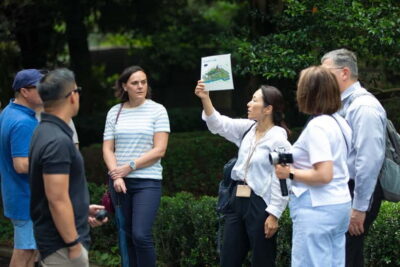
Imperial Palace, Sensō-ji Temple, & Tokyo Tower Tour
Read our review →
Tokyo Castle, Imperial Palace, Shogun & Garden Walking Tour
Read our review →
Tokyo Private Tour! Edo Castle & Imperial Palace East Gardens
Read our review →Browse the lists this tour appears in