
Reviewed · TOKYO SUSHI MAKING CLASSES
AKEMI’s SUSHiKiTCHEN: A fun sushi cooking lesson in Tokyo
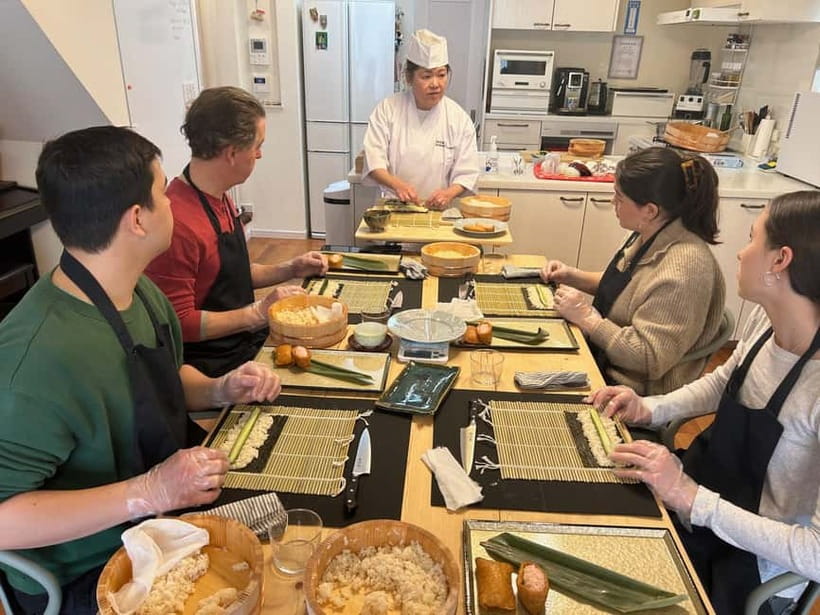
Tokyo has plenty of polished food tours, but this one brings you into Akemi Castellano’s home kitchen for a hands-on lesson with a real family feel. You prepare four types of sushi, hear how Edo-style sushi developed, and then sit down to eat what you made.
I like the small group limit of six, which gives Akemi time to correct your technique. I also like the care given to the ingredients, from the vinegar rice to the seafood neta. The main drawback is the fixed menu: you cannot choose which sushi styles you will make, and the kitchen cannot accommodate food or animal allergies.
Key points at a glance
- Four sushi styles in one lesson: Make inari, gunkan, maki-sushi, and traditional nigiri.
- A true home setting: You learn in Akemi and Dan’s house rather than a large cooking school.
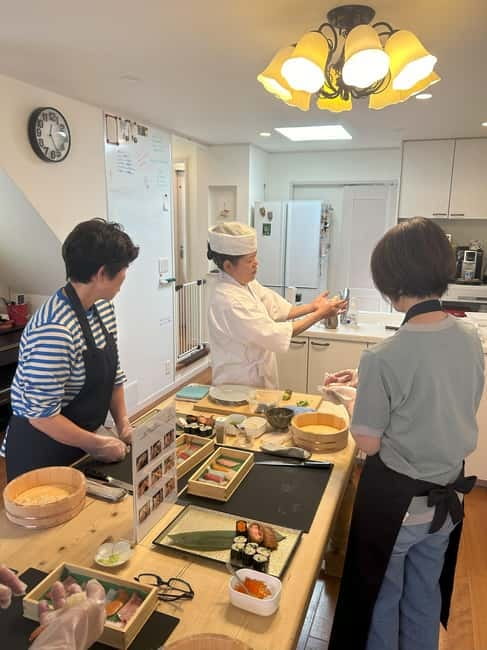
- A useful lesson in sushi basics: The class begins with vinegar rice and includes a fish-preparation demonstration.
- A meal at the end: Eat your handmade sushi with Japanese sake, drinks, dessert, and matcha tea.
- Easy Tokyo access: The house is reachable from Shinjuku and Shibuya, with optional station pickup.
- Best for older children and adults: The minimum age is 10, and the class runs for three hours.
Entering Akemi’s Tokyo kitchen
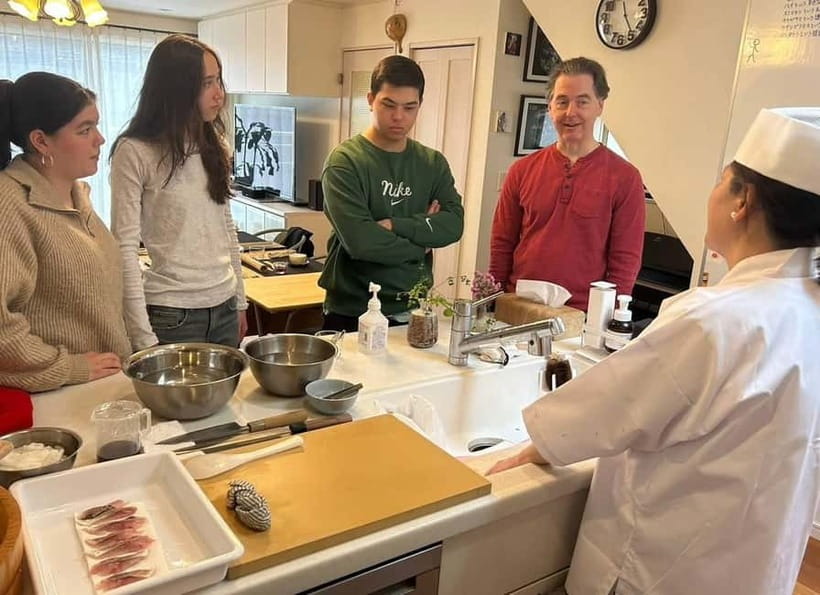
The tone here is informal from the start. You can find the house using Google Maps or a similar app, or ask Akemi to meet you at the nearest train station. From the station, the walk takes about 10 minutes through a residential neighborhood, a pleasant change from Tokyo’s crowded central streets.
Akemi’s husband, Dan, helps host the class. Together, they create the sort of setting that makes the lesson feel personal rather than staged. You are not being moved through a commercial kitchen with a large crowd. With no more than six people, you can ask questions and receive small corrections as you work.
English and Japanese instruction is available. English-speaking visitors have found the explanations clear, including the practical details that matter when you are handling rice, seaweed, tofu pockets, and fish for the first time.
A welcome drink may be served before the lesson begins. One particularly memorable option is a Sakura drink, which adds a small seasonal touch without turning the class into a formal ceremony.
More Tokyo sushi making classes:
- Sushi Making Tokyo Roll and Authentic Japanese Sushi Class
★ 5.0 · 3,971 reviews - Tokyo: Roll and Authentic Sushi Making Class in Asakusa
★ 4.9 · 1,957 reviews - Make Sushi and Create Unforgettable Memories in Tokyo
★ 5.0 · 1,413 reviews
Starting with rice, vinegar, and sushi culture
Akemi begins with the foundation of the meal: sushi rice. This is important because sushi is not simply raw fish placed on ordinary rice. The seasoning, texture, and handling of the rice affect every piece you make afterward.
You learn how vinegar is mixed into the rice and why the rice needs to be prepared and handled with care. The class also covers Japanese food culture and the origins of Edo sushi, the style associated with Tokyo. That background gives you a better sense of why nigiri is shaped by hand and why each piece is designed to be eaten neatly.
I like this order. Starting with rice lets you understand the technique before you tackle the more visual parts of sushi making. It also gives you a useful skill to take home. You may not reproduce every detail of Akemi’s method immediately, but you will understand that properly seasoned rice is the backbone of the meal.
The experience includes a demonstration of how fish are prepared for sushi. The information provided does not promise that you will personally fillet the fish, so think of this as a close look at the preparation rather than a full fish-cutting workshop.
Four kinds of sushi, four different techniques
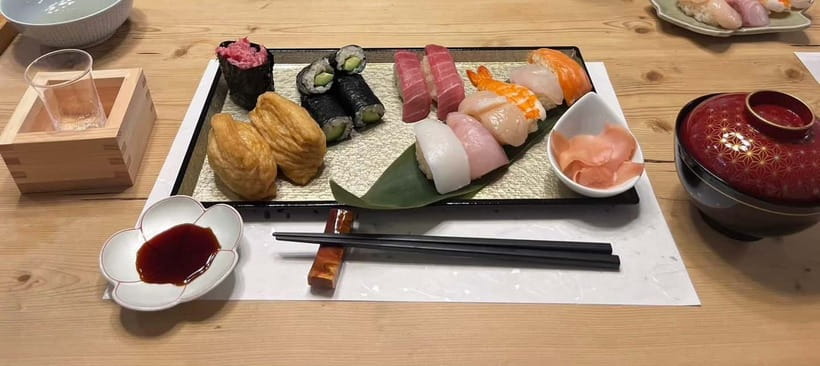
The menu is set, but the four styles offer a good range of skills. You are not repeating one simple roll for three hours. Each type calls for a different shape, filling, or hand movement.
Nigiri sushi
Nigiri is the classic hand-pressed form: a small mound of seasoned rice topped with seafood. Akemi shows you how to form the rice without crushing it and how to place the topping so the piece holds together.
This is likely the most demanding style in the lesson. The rice needs to be compact enough to stay intact, but not packed into a heavy block. Your first pieces may look uneven, which is part of the fun. The small group format helps here because Akemi can offer individual guidance.
Nigiri also gives you the clearest connection to sushi as a craft. A good piece is small, balanced, and easy to eat. You begin to notice how much technique sits behind something that can appear simple on a restaurant plate.
More Tokyo cooking classes:
- Tokyo Shinjuku Chopsticks Making Class
★ 5.0 · 1,763 reviews - Tokyo: Sushi Making Class in a Happi Coat near a Famous Spot
★ 4.9 · 1,377 reviews - Tokyo Sushi Making Class in Tsukiji with Professional Chef
★ 5.0 · 1,177 reviews - Ramen & Gyoza Cooking Class in Tokyo with Local Supermarket Visit
★ 5.0 · 823 reviews
Maki-sushi
Maki-sushi is rolled sushi, made with seaweed, rice, and fillings. You learn how to spread the rice and roll the ingredients into a firm cylinder before cutting it into portions.
This is often the most familiar style for beginners, but it still takes practice. Too much rice makes the roll bulky. Too little filling can leave it loose. Akemi’s step-by-step instruction helps you see how the pressure of the rolling mat affects the final shape.
Maki is also a good choice for people who are not yet comfortable with raw fish. The set menu includes several sushi forms, and the activity offers a vegetarian option, but the exact vegetarian selections are not specified. State your preference when booking.
Gunkan, or battleship sushi
Gunkan sushi is shaped like a small boat or battleship, with a strip of seaweed wrapped around the rice to hold a topping in place. It has a different structure from both nigiri and maki.
The name makes sense once you see the form. The seaweed wall keeps softer ingredients from sliding away, while the rice provides the base. This style adds variety to the lesson and shows that sushi shapes are practical, not just decorative.
Inari sushi
Inari uses fried tofu pockets filled with sushi rice. This is a useful surprise for many people because the texture and flavor are quite different from fish-based sushi.
It is also a strong vegetarian-friendly option, though you should confirm your needs with the provider because the kitchen cannot accommodate food or animal allergies. The tofu pocket is sweet and soft, while the rice gives it structure. Several class details point to inari as a memorable part of the meal, especially for people who want to try something beyond the usual raw-fish choices.
The ingredients matter more than the spectacle
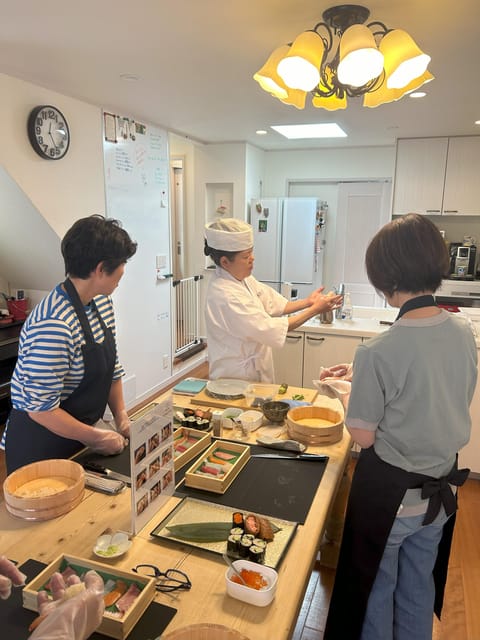
Akemi selects the rice, vinegar, and seafood neta carefully. Neta is the sushi term for the topping or ingredient placed on the rice. You learn not only how to assemble the pieces, but also how the quality and preparation of each part affect the finished food.
This is not a market visit or a seafood-shopping tour. You will not spend the morning choosing fish at Tsukiji or Toyosu. Instead, the value comes from learning how selected ingredients are treated once they reach the kitchen.
That focus suits anyone who already likes sushi and wants to understand it better. You begin to pay attention to the rice temperature, the balance of vinegar, the cut of the fish, and the way each piece is shaped. The lesson is practical, but it also gives you a stronger appreciation for sushi restaurants afterward.
The fixed menu has one clear advantage: Akemi can prepare the ingredients and structure the class around a reliable sequence. The trade-off is choice. You cannot request a different list of sushi styles, so this is not the right activity if you want to design your own menu.
Lunch or dinner made by your own hands
The class lasts three hours and can be booked as a morning lesson with lunch or an afternoon lesson with dinner. The meal at the end is more than a tasting. You sit down with the sushi you prepared yourself.
That final meal gives the class a satisfying rhythm. First you learn, then you work, then you eat. It also lets you compare your pieces and see how much the shape and texture improve as the lesson progresses.
Japanese sake is included for adults, while other drinks may be provided for younger participants. Dessert and matcha tea are also part of the meal. The exact dessert is not specified, but the extra drinks, ice cream dessert, and tea help make this feel like a complete food experience rather than a short demonstration.
The sake is a nice fit with the subject, but you do not need to drink alcohol to enjoy the class. If your group includes children, remember that the minimum age is 10. The activity is therefore better suited to older children, teenagers, and adults than to families with very young children.
Why the home setting works
A home kitchen changes the mood. You are learning in a place where the hosts live, not in a purpose-built room designed to process one class after another. That can make the experience feel more relaxed and personal.
Akemi and Dan work as a team, with Akemi leading the sushi instruction and Dan helping with the welcome and hosting. Their friendly approach is especially useful if you are nervous about making mistakes. Sushi can look precise and intimidating, but the class is designed to let you try each form under guidance.
The home setting also gives you a glimpse of ordinary residential Tokyo. The walk from the station passes through a neighborhood rather than a major sightseeing district. That does not add a landmark to your itinerary, but it does provide a quieter sense of the city between the station and the kitchen.
There is one practical point to remember: a home setting may not offer the same space or equipment as a professional cooking studio. The supplied details do not specify the exact kitchen layout, so do not book this expecting a large commercial classroom. The advantage is intimacy. The possible limitation is that personal space may be tighter than in a formal school.
Getting there from Shinjuku or Shibuya
The house has access from two of Tokyo’s main transport hubs, Shinjuku and Shibuya. You can use Google Maps or another map app to reach the address, then walk about 10 minutes from the nearest station.
If you prefer not to navigate a residential area, ask Akemi to meet you at the station. This is especially helpful after a long flight, for families, or if you are unsure about reading local station signs. Confirm the meeting arrangement ahead of time, since station pickup is offered on request rather than presented as the only meeting method.
Build a little spare time into your journey. Tokyo’s rail network is easy to use once you understand it, but large stations can be confusing, and a three-hour class is not something you want to reach in a rush.
Is $103 a fair price?
At $103 per person, this is not the cheapest meal you can buy in Tokyo. You can find sushi for much less, and you can also find cooking demonstrations that cost less if you only want to watch.
The value comes from the combination of instruction, food, a small group, and a private-home setting. You learn four distinct forms of sushi, practice the rice preparation, watch a fish-preparation demonstration, and eat lunch or dinner afterward. Sake, dessert, and matcha add to the meal.
For a small group of up to six, the price is easier to justify than it would be for a large class. You are paying for personal attention as well as ingredients. If you are serious about sushi or interested in Japanese food culture, the lesson gives you something more lasting than a meal alone.
The price may feel high if you mainly want to eat sushi and have no interest in making it. In that case, a good sushi restaurant will offer better value for the food itself. Book this activity for the combination of learning and hospitality, not simply for the amount of sushi on the plate.
Who will enjoy this lesson most?
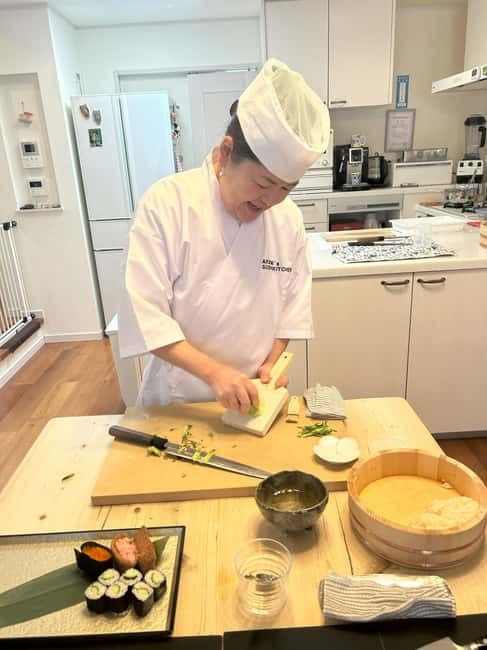
I would recommend it to adults, couples, families with children aged 10 and older, and anyone who wants a slower food experience in Tokyo. It is especially suitable for people who enjoy learning by doing.
You will get the most from it if you like asking questions, trying a technique more than once, and accepting that your first nigiri may not look restaurant-perfect. You do not need professional cooking experience. The lesson is designed to guide you from rice preparation through the final meal.
Sushi enthusiasts will appreciate the attention to technique and ingredients. Beginners will like the clear progression from simple preparation to several finished forms. Vegetarians can request the vegetarian option, but people with allergies should choose another activity because the kitchen cannot accommodate food or animal allergies.
The class is less suitable if you want a flexible menu, a large sightseeing component, or a very quick cooking activity. It also will not suit children under 10.
Booking and cancellation details
The experience runs for three hours, with starting times depending on availability. You can reserve now and pay later, which helps if your Tokyo schedule is still changing.
Free cancellation is available up to 24 hours in advance for a full refund. Mention any dietary preference when you book, especially if you want the vegetarian option. Allergy requests are a separate matter, since food and animal allergies cannot be accommodated.
Should you book AKEMI’s SUSHiKiTCHEN?
Book it if you want to understand sushi from the inside, not just order it from a menu. Akemi’s lesson gives you rice technique, four sushi forms, food culture, a fish-preparation demonstration, and a home-cooked setting in one three-hour visit.
The strongest reasons to choose it are the small class size, the warm hosting from Akemi and Dan, and the chance to eat a meal you helped prepare. Skip it if you need allergy accommodation, want complete control over the menu, or prefer a simple restaurant meal.
For most older children and adults who enjoy Japanese food, this is a thoughtful use of half a day in Tokyo. Bring a little patience, follow Akemi’s instructions, and expect your handmade sushi to taste better than it looks at first.
FAQ
How long does AKEMI’s SUSHiKiTCHEN experience last?
The lesson lasts three hours.
Where does the sushi lesson take place?
The class takes place in Akemi and Dan’s home in Tokyo, on Honshu, Japan.
Which types of sushi will I learn to make?
You will learn to make inari, gunkan, maki-sushi, and traditional nigiri sushi.
Is lunch or dinner included?
Yes. A morning lesson includes lunch, while an afternoon lesson includes dinner. You eat the sushi you prepare yourself.
Is a vegetarian option available?
Yes, a vegetarian option is available. Indicate your preference when placing your order.
Can the kitchen accommodate food allergies?
No. The kitchen cannot accommodate customers with food or animal allergies. You should inform the provider about allergies beforehand.
How many people are in the class?
The class is limited to six participants.
Can children join the lesson?
Children under 10 are not permitted to join. The activity can include drinks for children, but the minimum age remains 10.
Is instruction available in English?
Yes. The instructor languages are English and Japanese.
Can I be met at the train station?
Yes. You may find the house using Google Maps, or ask Akemi to meet you at the nearest train station.
What is included in the price?
The experience includes the sushi lesson, a demonstration of fish preparation, vinegar-rice instruction, practice making four kinds of sushi, and the lunch or dinner you prepare.
Can I cancel for a refund?
Yes. You can cancel up to 24 hours in advance for a full refund.
More hands-on classes and workshops in Tokyo
- Chopstick Making Workshop in Ginza
★ 4.8 · 1,366 reviews - Matcha Making Class in Tokyo with Authentic Japanese Sweets Set
★ 5.0 · 744 reviews - Tokyo: Samurai Sword & Archery Class from Samurai Descendant
★ 5.0 · 603 reviews - Tokyo: Tsukiji Fish Market Sushi Making Class with Pro Chef
★ 4.9 · 506 reviews
Newly reviewed around Tokyo
- Tokyo Asakusa:Calligraphy & Make T-shirt Activity★ 5.0 · 62 reviews
- 1 Hour Travel around Tokyo with a Professional Photographer★ 5.0 · 3 reviews
- Travel Tokyo with Your Own Personal Photographer★ 5.0 · 43 reviews
- Intercity Shuttle, Tokyo to Haneda /Narita /Yokohama /Makuhari★ 5.0 · 5 reviews
- Train in Samurai Swordsmanship and Defeat the Demon in Tokyo★ 5.0 · 5 reviews
- Shuttle Van 6hr Tokyo Tour to-and-from Tokyo, Yokohama and Narita★ 5.0 · 9 reviews
- Kickboxing & Body Training with EX-Pro Fighter★ 5.0 · 4 reviews
- Traditional Japanese Knife Sharpening Class★ 5.0 · 18 reviews
Tokyo Sushi Making Classes, compared.
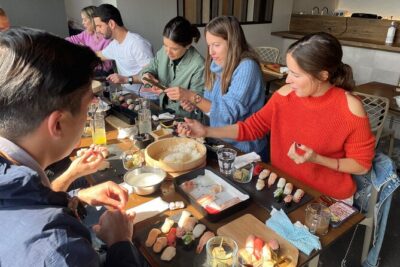
Sushi Making Tokyo Roll and Authentic Japanese Sushi Class
Read our review →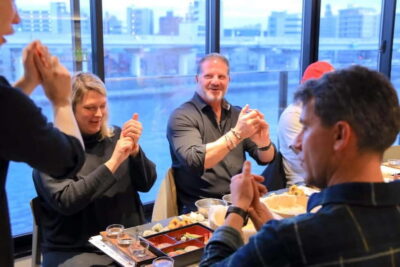
Roll and Authentic Sushi Making Class in Asakusa
Read our review →
Make Sushi and Create Unforgettable Memories in Tokyo
Read our review →
Sushi Making Class in a Happi Coat near a Famous Spot
Read our review →
Tokyo Sushi Making Class in Tsukiji with Professional Chef
Read our review →
Tsukiji Fish Market Guided Tour and Sushi Making with Pro Chef
Read our review →
Tsukiji Fish Market Sushi Making Class with Pro Chef
Read our review →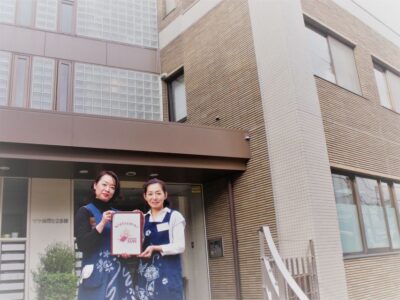
Browse the lists this tour appears in