
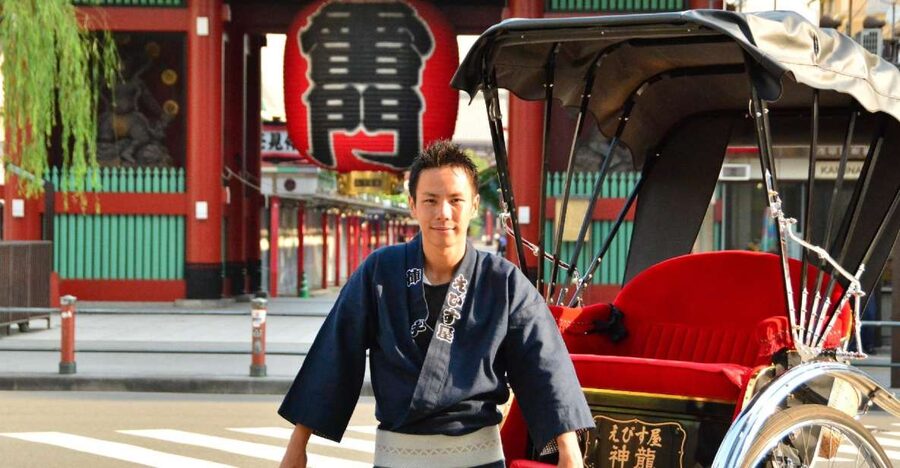
Reviewed · ASAKUSA AND SENSOJI TOURS
Tokyo: Asakusa Sightseeing Tour by Rickshaw
Asakusa is one of the few parts of Tokyo where a rickshaw ride feels like more than a novelty. You roll past temples, narrow old streets, small shrines, gardens, and the Sumida River while your guide explains the customs unfolding around you. It is a pleasant way to see a lot without fighting Tokyo foot traffic.
I like the private format, which lets you ask questions and adjust the route to your interests. I also like the guides’ personal touch. Masa, Kazu, Shima, Taku, and others have been praised for their clear English, humor, local tips, and ability to take good photos. The main drawback is simple: the carriage is only 74 centimeters wide, and summer heat or a long uphill pull can make the ride less comfortable.
Key points to know before you book
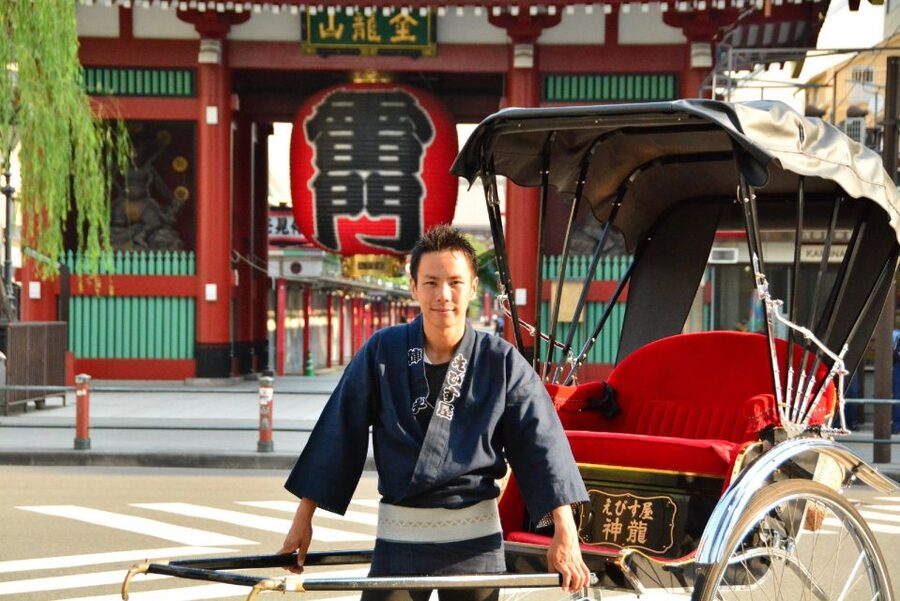
- The route mixes famous sights with ordinary Asakusa streets, including temples, shrines, shopping lanes, and the old Rokku entertainment district.
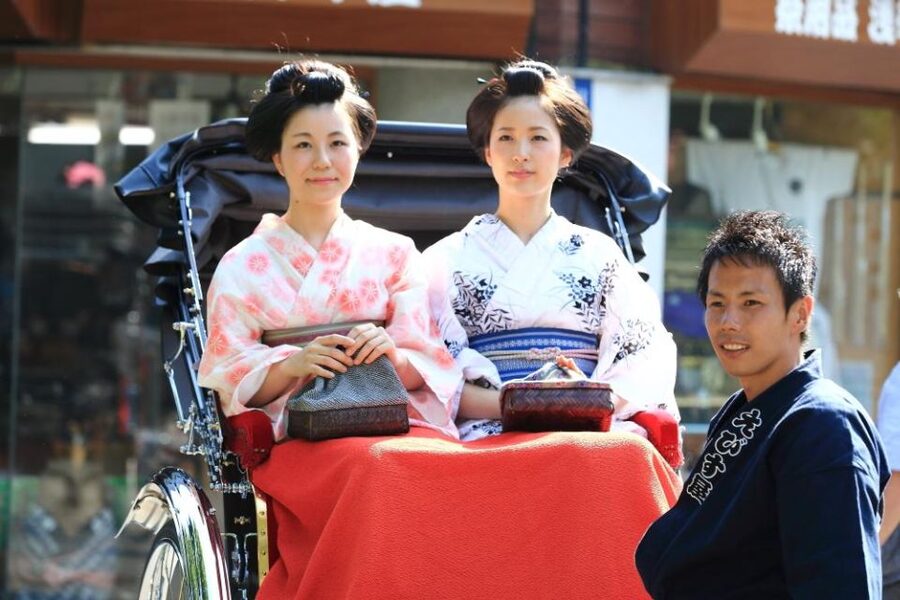
- You ride in a private rickshaw, with a maximum of two adults per carriage.
- The guide is part of the experience, providing explanations, taking photos, and sometimes tailoring the route to your interests.
- The 30-minute option is a quick introduction, while longer rides allow time for quieter temples, gardens, and streets beyond the main temple area.
- Spring brings cherry blossoms to Sumida Park, while summer can be hot and humid in the open carriage.
- Meet at the correct Asakusa Station, outside Exit 1 of the Tokyo Metro Ginza Line, not another station with the same name.
Why a rickshaw works so well in Asakusa
Asakusa is easy to visit on foot, but it is also spread across several different pockets. The main temple grounds can be crowded, Denpoin Street has a very different mood, and the Sumida River area opens up into parks and broad views. A rickshaw connects these places without making you spend your morning checking maps at every corner.
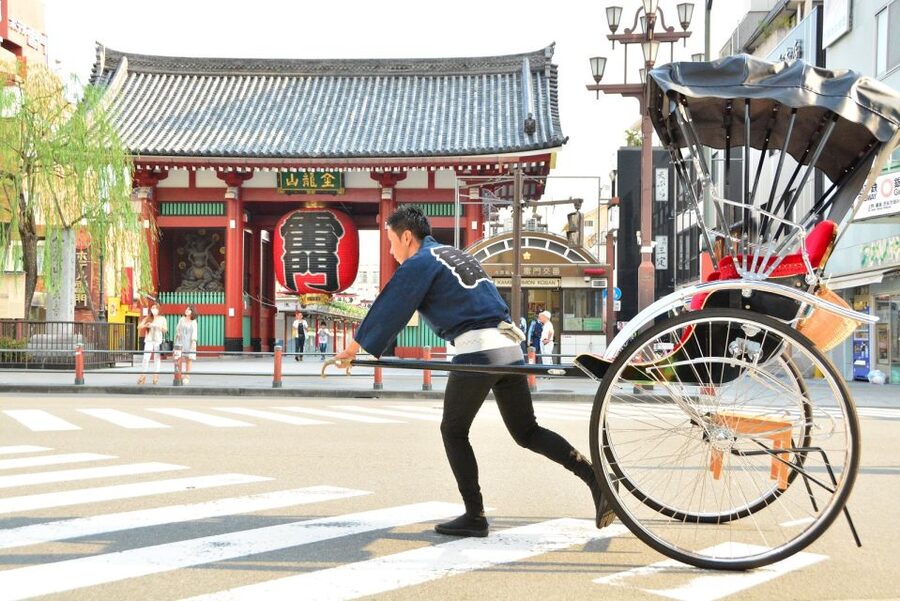
You sit above the road in an open carriage, so you get a clear view of shop signs, roofs, trees, and passing pedestrians. The pace is slow enough for your guide to point things out, yet fast enough to cover more ground than you would on foot.
The guides are the heart of the ride. They do more than pull the carriage and name landmarks. They explain how to wash your hands and mouth at a shrine, why visitors burn incense, and how to draw the smoke toward the body. Guides such as Masa, Kazu, Shima, Taku, Yusuke, and Koko have been praised for mixing local facts with jokes and conversation.
That personal approach is especially useful on your first Tokyo visit. You can ask where to eat, what to try, which streets are worth returning to, and how to make sense of the religious buildings you are seeing.
More Asakusa and Sensoji tours:
- Tokyo: Japanese Dance Cabaret Theater Asakusa-Kaguwa Ticket
★ 4.8 · 2,270 reviews - Tokyo: Meiji Shrine, Asakusa, Skytree Bus Tour and Cruise
★ 4.7 · 1,986 reviews - Tokyo: Roll and Authentic Sushi Making Class in Asakusa
★ 4.9 · 1,957 reviews
Sensoji, Asakusa Shrine, and the rituals of the temple district
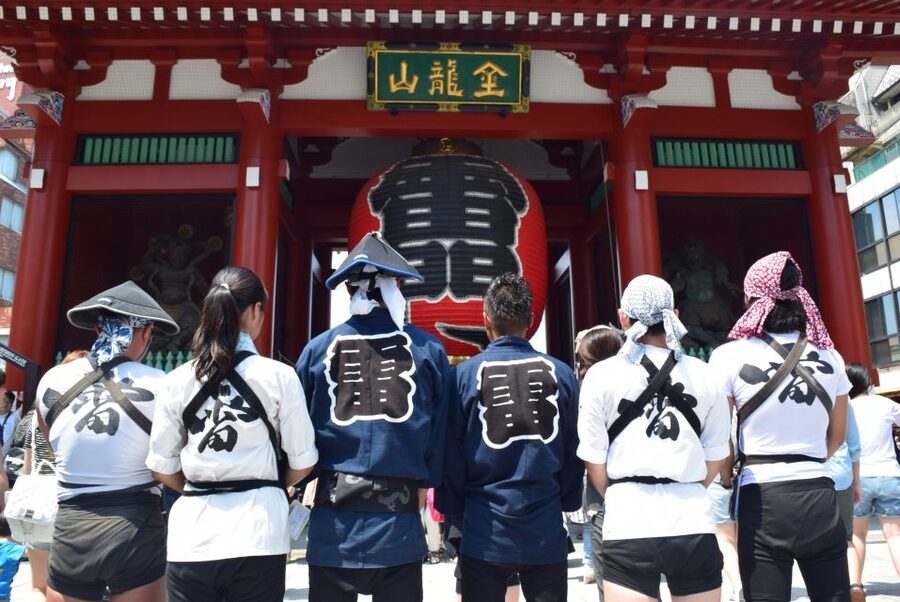
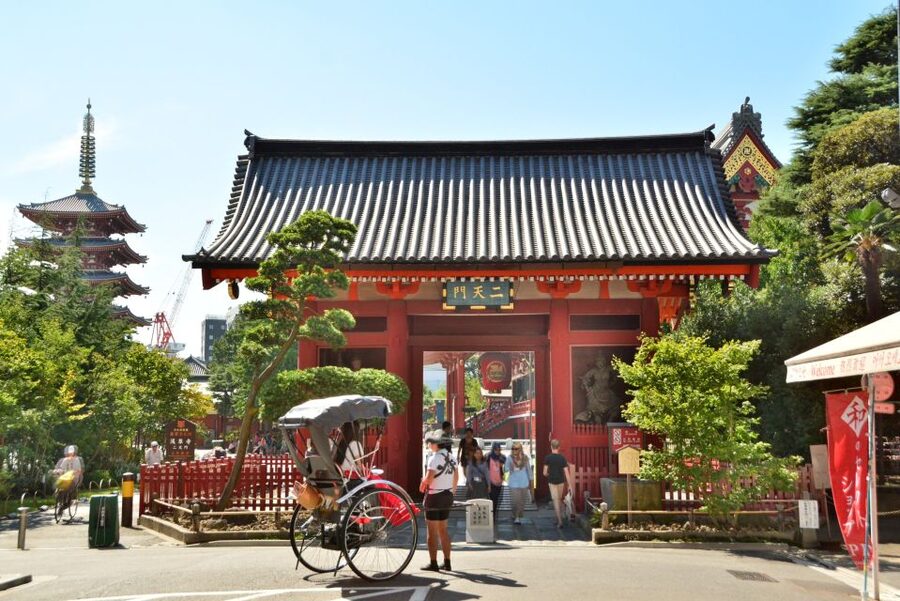
The classic ride begins near Asakusa’s best-known religious sights. Sensoji, Tokyo’s oldest temple, draws a steady stream of people to its gates and halls. Right beside it, Asakusa Shrine adds a Shinto presence to the same historic area.
You may not spend the whole tour inside the temple grounds. The rickshaw is designed to show you the wider neighborhood, but the guide can explain what you are seeing and pause for photographs. Smaller temples and shrines may also appear on longer or customized routes.
One useful part of the explanation is learning how to behave at a Japanese religious site. You may be shown the water basin used to rinse your hands and mouth, and the incense ritual in which people waft smoke toward themselves. These details turn a quick photo stop into something you can use for the rest of your trip.
Bentendo Hall is another possible point of interest. Its position among trees and water gives you a quieter contrast to the busy temple approach. The exact route can vary, so treat the named sights as likely highlights rather than a fixed list for every departure.
Sumida Park and the river views
The ride can continue toward Sumida Park, a welcome change from the shop-lined streets. The park is especially attractive in spring, when thousands of cherry trees bloom. Even outside blossom season, the open space and riverfront give you a chance to see a calmer side of Asakusa.
A rickshaw is useful here because you can cover the river area without making a long walk from the temple district. Your guide may stop for pictures, and the open carriage gives you a good angle for family photographs.
Spring is the clear seasonal favorite for this part of the route, but it is also likely to be the busiest time. If you visit during summer, expect heat and humidity. One ride in July was described as a welcome way to catch a breeze, but another practical point is that the people pulling the carriage are working hard in the same weather.
Cold weather is not automatically a deal breaker. Heated seat pads and blankets have been provided on winter rides, including one in rainy and snowy conditions. Still, dress for the forecast, since this is an open-air activity.
Hanakawado, Denpoin Street, and the old local streets
The ride is not just a parade of major monuments. Hanakawado is known for shoe shopping, and passing through it gives you a look at a practical commercial side of Asakusa. You can note shops and return later if you want to browse on foot.
Denpoin Street offers a different kind of appeal. The street has retained much of its older appearance, with a feel that recalls Tokyo before and around the postwar period. It is a good place to notice the scale of the neighborhood: narrow lanes, low buildings, traditional details, and small businesses rather than giant city avenues.
Rokku, once a major entertainment area, adds another layer. The district is associated with theaters, including adult theaters, and with Hanayashiki, Japan’s oldest amusement park. You may only pause for a photograph of the amusement park, but the stop helps explain why Asakusa has long attracted both religious pilgrims and people looking for entertainment.
Tanuki-doori brings another quirky street to the route. These places are valuable because they show Asakusa as a lived-in district, not only as a backdrop for Sensoji photos.
A completely different kind of day in Tokyo:
- Mt Fuji and Hakone 1-Day Bus Tour Return by Bullet Train
★ 5.0 · 26,383 reviews - 1-Day Tokyo Bus Tour
★ 5.0 · 14,250 reviews - Tokyo: teamLab Planets TOKYO Digital Art Museum Entry Ticket
★ 4.6 · 9,779 reviews - Mt Fuji & Hakone Cruise, Drum Show Bullet Train 1 Day from Tokyo
★ 4.0 · 7,413 reviews
What the longer rides add
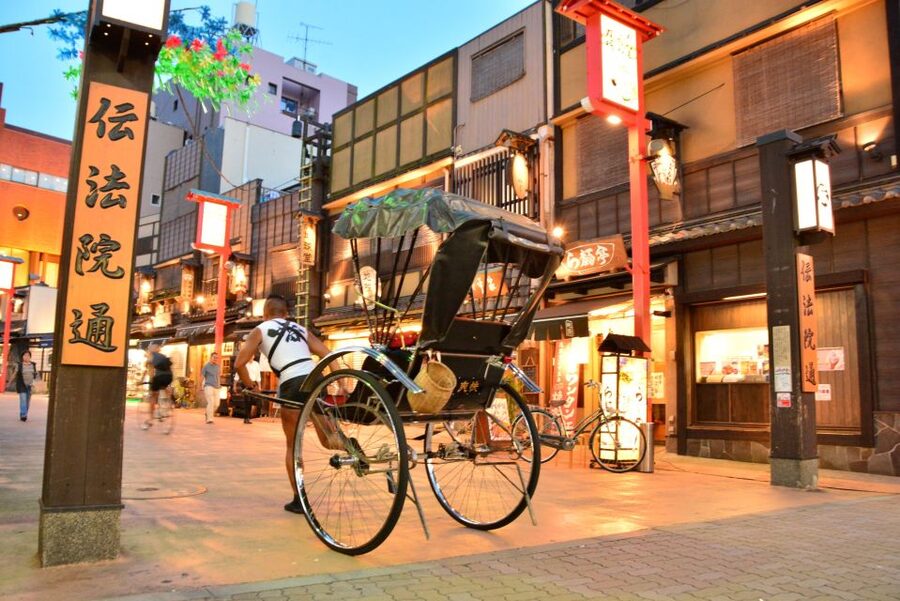
The shortest 30-minute ride is best for a taste of the experience. It gives you the elevated view, a few explanations, and photo stops without taking much time from a packed Tokyo schedule. It can also work well for solo visitors, since the private setup does not require you to join a large group.
A 70-minute ride gives the guide more room to connect the temple area with streets, parks, and smaller religious sites. This is probably the most useful middle choice for many people. You get a proper introduction without committing half a day.
The 90-minute option allows a more relaxed pace. One family found that time passed quickly because the guide mixed stories, humor, and stops through back streets and temple grounds. If you want local context rather than a quick loop, this length makes sense.
The longest options can run to 190 minutes. The extended ride is designed for visitors who want a broader look at Asakusa and more freedom to shape the route. A three-hour booking also includes a choice of a special Hello Kitty doll or an original T-shirt as a memorial gift.
Longer is not automatically better. Tokyo has plenty to do, and sitting in the same carriage for several hours may feel tiring if you prefer to walk. I would choose 30 minutes for a tight schedule, 70 to 90 minutes for a first visit, and the longest option only if Asakusa is a major focus of your day.
The private carriage, comfort, and practical limits
Each rickshaw carries up to two adults. Children aged five and under can ride free on an adult’s lap, with one child per adult. A five-year-old who needs their own seat must pay the adult fare.
At 74 centimeters wide, the carriage is narrow. Two adults can fit, but you may find separate rickshaws more comfortable, especially on a longer ride or if you prefer extra space. Private does not mean spacious.
The activity is wheelchair and stroller friendly, but you should still discuss your needs when booking. The carriage itself is narrow, so the practical arrangement may depend on the equipment and the transfer. Selfie sticks are not allowed.
Pregnant guests should take particular care. The activity is not recommended during the first 16 weeks of pregnancy and is listed as unsuitable for pregnant women. If that applies to you, choose a different Asakusa outing.
The ride can be customized around your interests. You might ask for more temples, more old streets, family-friendly stops, anime-related places, or photo opportunities. Do not assume every named sight appears on every route. Tell the guide what matters most before the carriage sets off.
Guide quality and the value of the experience
The $35 price is attractive if it applies to the short option, though the final cost depends on the duration and booking choice. In value terms, you are paying for transport, a private setting, interpretation, and help with photographs rather than simply hiring a ride.
That matters in Asakusa. A map can tell you that a temple is old, but a good guide can show you how to participate respectfully and explain why people gather at the incense burner. A guide can also point out a small shrine or garden that you would likely pass without noticing.
The strongest part of the service is the human connection. English speaking guides have included Masa, Kazu, Shima, Taku, Yusuke, Nene, Koko, and others. The standard appears high, but English ability can vary, and one less favorable experience specifically asked for clearer explanations and more history.
You should also remember that the guide is physically pulling the carriage. The ride is smooth, but hills and hot weather add effort. Several guides have been praised for staying cheerful and attentive, yet tipping or treating the staff with basic courtesy is sensible even when it is not listed as part of the booking.
The carriage is a good place for photographs. Guides regularly help with pictures at the rickshaw, temples, gardens, and streets. Bring your phone, but not a selfie stick, and ask for a particular shot if you have one in mind.
Where to meet and how to avoid the station mix-up
Meet at the rickshaw stand just outside Exit 1 of Asakusa Station on the Tokyo Metro Ginza Line. You still need to walk a few meters from the exit to the stand.
This detail matters because Tokyo has more than one station called Asakusa, served by different subway lines. Do not simply enter Asakusa Station into your navigation app and assume you are in the right place. Check that you are heading to the Ginza Line station and Exit 1.
Arrive with a little spare time. The district has many exits, and some are far apart. One group reached the wrong exit and was helped by the staff, but relying on that rescue is not the best plan, especially if your booking time is tight.
Snacks and drinks are not included. Eat beforehand or plan a stop afterward, particularly if you choose the longer ride. The tour itself is private, and the guide speaks English or Japanese.
Who should book this Asakusa ride?
I would recommend it to first-time visitors who want an easy introduction to one of Tokyo’s most interesting districts. It is also useful during a short layover, since a 30-minute ride can give you a quick look at temples, old streets, and river scenery.
Families are a strong match. Children can enjoy the unusual carriage, the old amusement park, the stories, and the chance to see Tokyo without walking every minute. Guides have also adapted their conversation for teenagers, including anime references and even singing along with a young passenger.
Solo visitors should not dismiss it. The private format means you can still enjoy a personal route and conversation rather than being left out of a family group.
You may prefer to skip it if you want a quiet, self-guided temple visit, dislike open-air rides, or feel uncomfortable with the narrow carriage. It also may not suit anyone who is pregnant or wants a fully climate-controlled activity.
Should you book the Asakusa rickshaw tour?
Book it if you want local explanation, easy sightseeing, and good photos in one compact experience. The 70 or 90-minute choices offer the best balance for most visitors, while the 30-minute ride is a smart sampler if your schedule is crowded.
Choose the longer ride when you want smaller temples, older streets, and more control over the route. Pick spring for Sumida Park’s cherry blossoms, prepare for heat in summer, and confirm the correct Ginza Line meeting point.
I would not book this as a substitute for exploring Asakusa on foot. Use it as your introduction, then return to the lanes, shops, temple grounds, and riverfront that catch your eye. That combination gives you both the guide’s local perspective and time to wander at your own pace.
FAQ
Where does the rickshaw tour meet?
It meets at the rickshaw stand just outside Exit 1 of Asakusa Station on the Tokyo Metro Ginza Line. Walk a few meters from the exit to reach the stand.
How long does the tour last?
Available durations range from 30 to 190 minutes. You should check the available starting times and duration choices when booking.
Is the tour private?
Yes. The activity is offered as a private group experience, so you ride with your own party and guide.
How many adults can ride in one rickshaw?
A maximum of two adults can ride in one rickshaw. Each carriage is 74 centimeters wide, so separate rickshaws may be more comfortable for some passengers.
Can young children ride for free?
Children aged five and under can ride free on an adult’s lap, with one child per adult. A five-year-old who needs their own seat must book and pay as an adult.
Is the tour wheelchair and stroller accessible?
Yes, the activity is wheelchair and stroller friendly. The carriage is narrow, so discuss your specific needs when arranging the booking.
What languages are available?
The guides speak English or Japanese. The activity includes a live guide.
Newly reviewed around Tokyo
- Tokyo Asakusa:Calligraphy & Make T-shirt Activity★ 5.0 · 62 reviews
- Intercity Shuttle, Tokyo to Haneda /Narita /Yokohama /Makuhari★ 5.0 · 5 reviews
- 1 Hour Travel around Tokyo with a Professional Photographer★ 5.0 · 3 reviews
- Travel Tokyo with Your Own Personal Photographer★ 5.0 · 43 reviews
- Shuttle Van 6hr Tokyo Tour to-and-from Tokyo, Yokohama and Narita★ 5.0 · 9 reviews
- Kickboxing & Body Training with EX-Pro Fighter★ 5.0 · 4 reviews
- Train in Samurai Swordsmanship and Defeat the Demon in Tokyo★ 5.0 · 5 reviews
- Traditional Japanese Knife Sharpening Class★ 5.0 · 18 reviews
Asakusa and Sensoji Tours, compared.
Japanese Dance Cabaret Theater Asakusa-Kaguwa Ticket
Read our review →
Meiji Shrine, Asakusa, Skytree Bus Tour and Cruise
Read our review →
Roll and Authentic Sushi Making Class in Asakusa
Read our review →
Asakusa Walking Tour with Sensoji Temple Visit
Read our review →
Tokyo Panoramic 1 Day: Meiji Shrine, Asakusa, Odaiba and SKYTREE®
Read our review →
Tokyo Go Kart: Asakusa, Skytree, and Akihabara **IDP MUST**
Read our review →
Asakusa, Skytree & Akhihabara Go-Kart City Experience
Read our review →Browse the lists this tour appears in