
Reviewed · TSUKIJI AND TOYOSU FISH MARKET TOURS
Inside Tokyo’s Kitchen: Tsukiji Market, Food & Culture Tour
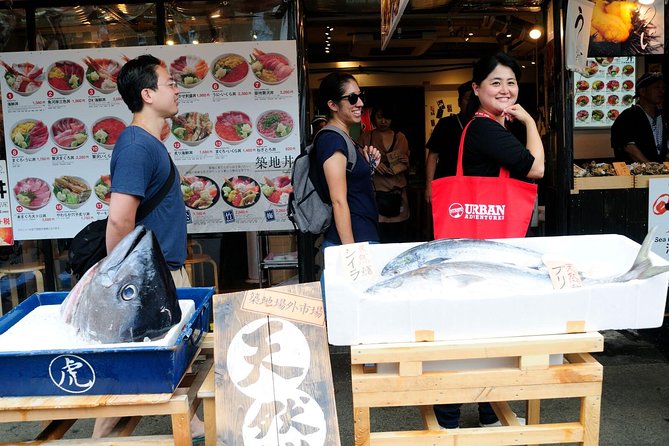
Tsukiji is easiest to enjoy with someone who knows which lane to take and what the Japanese labels mean. This three-hour walk combines fresh sushi and market snacks with stops at two small shrines, so you get food, local customs, and a little Tokyo history in one morning.
I like the tiny group, capped at six, and the chance to taste more than sushi. You might try tamagoyaki, fish cake, tuna in several cuts, wagashi sweets, or even fresh wasabi grated at the table. The main drawback is that the food portions and timing can vary, and some tastings may come from prepared items rather than food made right in front of you.
Key points at a glance
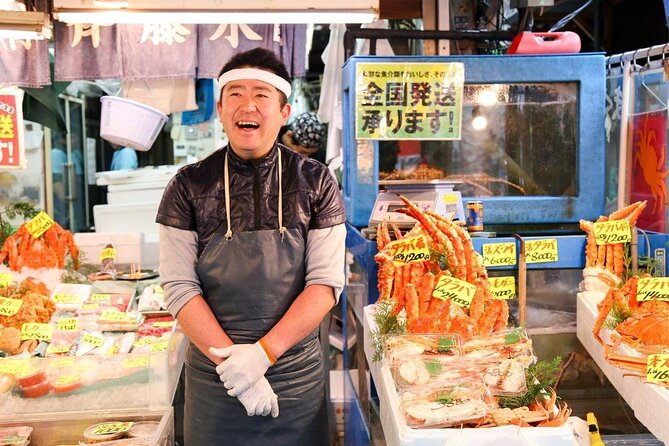
- Small group of six: You can ask questions, keep up in narrow lanes, and get help with translation.
- A broad tasting menu: Possible samples include sushi, sashimi, tamagoyaki, fish cake, wagashi sweets, dried anchovies, and other local snacks.
- Two cultural stops: Kabuki Inari Shrine begins the walk, while Namiyoke Inari Shrine closes it near Tsukiji Station.
- A useful first morning in Tokyo: The 8 a.m. start puts you in the market early, before a day of sightseeing.
- Vegetarian and vegan options exist: The choice is limited, so this tour is better suited to flexible eaters.
- Wear practical shoes: Market floors can be wet, and sneakers with closed toes are recommended.
Why Tsukiji is better with a guide
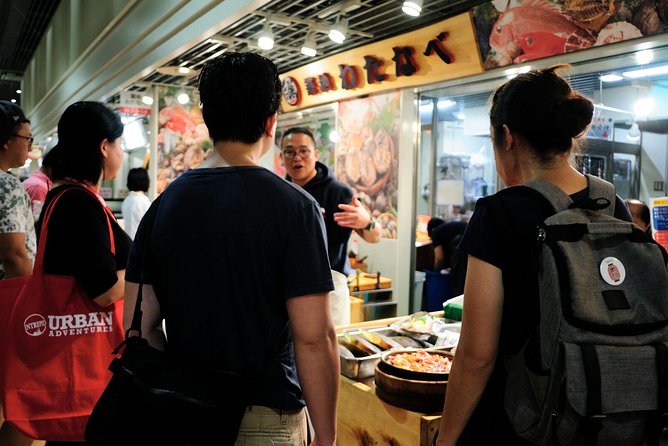
Tsukiji Outer Market is not one tidy hall with a clear entrance and exit. It is a web of narrow streets, food shops, seafood counters, stalls, and small businesses spread around the market district. You can wander here alone, but it is easy to miss the best stops or lose time trying to understand what you are looking at.
A guide gives the morning some shape. You walk through the market while learning what different fish and foods are used for, how to order, and what belongs to everyday Japanese cooking. Translation help matters here, since signs and shop conversations may not be easy to follow.
The group size is one of the tour’s strongest features. With no more than six people, your guide can answer questions without turning the outing into a lecture. A small group also works better in tight market lanes, where a large crowd would block the way.
The tour is not only about eating. That is important because Tsukiji can otherwise become a quick sequence of snacks with little context. The shrines and the explanation of Japanese food customs give the market a stronger sense of place.
More Tsukiji and Toyosu fish market tours:
- Tokyo Tsukiji Fish Market Food and Culture Walking Tour
★ 5.0 · 3,184 reviews - Tokyo: Tsukiji Fish Market Food and Walking tour
★ 5.0 · 1,724 reviews - Tokyo: Tsukiji Fish Market Guided Walking Tour
★ 4.9 · 1,397 reviews
Meeting Kabuki Inari Shrine at 8 a.m.
The morning begins in front of Kabuki Inari Shrine beside Kabukiza in Ginza. Give yourself time to find the meeting point. One person missed the group after walking past the location, so this is not a place to arrive at the last second, especially if Tokyo is new to you.
The shrine sits by the Kabuki Theatre, whose distinctive architecture gives you an immediate introduction to one of Japan’s traditional performing arts. Your guide explains kabuki, a form that combines drama and dance, before the group heads toward Tsukiji.
This opening stop lasts about 10 minutes. It is short, but useful. You get a cultural reference before entering the food district, rather than treating the market as a simple place to buy lunch.
The start time also shapes the experience. At 8 a.m., you are making the market your first major activity of the day. That means an early alarm, but it leaves your afternoon open for museums, neighborhoods, or another meal. If you prefer slow mornings, this schedule may feel demanding.
Reading Tsukiji Outer Market one bite at a time
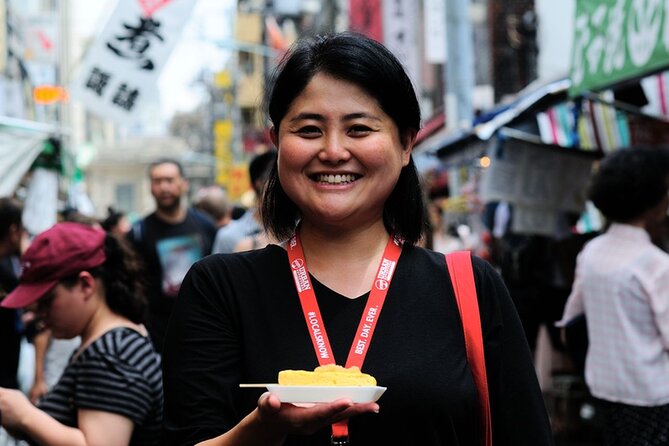
The main market walk takes about two hours. This is where most of the value sits. You move through narrow alleys lined with seafood, vegetables, prepared foods, sweets, and cooking ingredients while your guide explains what you are seeing.
The food is not limited to a single sushi meal. That variety makes the tasting more useful. You may encounter tuna sushi or sashimi, including lean, medium-fatty, and fatty cuts, along with sea eel rolls. Other possible samples include Satsuma-age fish cake, tamagoyaki, dried anchovies, sweetened rice balls, white strawberries, and kawaii wagashi.
Wagashi are Japanese sweets designed with care, often in small shapes and seasonal colors. Here, they add a different texture and flavor to a seafood-heavy morning. The result is closer to a guided food walk than a restaurant visit.
The best food moments can be quite hands-on. One guide, Yuri, brought real wasabi and a tool for grating it, allowing the group to taste it with sushi. That kind of detail gives you a better understanding of how fresh ingredients change the meal.
Another group happened to see a large tuna being prepared for sushi. That sort of sight is not guaranteed, but it shows why a market walk can offer more than a fixed restaurant menu. What is happening around you changes from morning to morning.
What the tastings really include
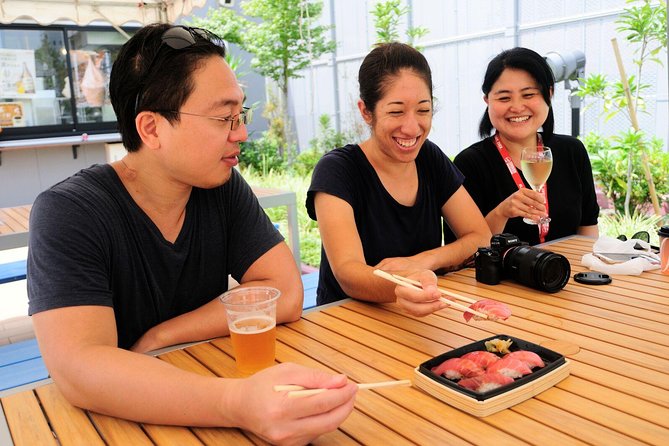
The experience includes freshly made sushi, local snacks, and wagashi, but you should not expect every item to be prepared directly in front of you. This distinction matters. One experience included packaged tuna sushi, fried tuna, and food from an indoor barbecue place, while the participant had hoped to eat rolls made on the spot in the market.
The provider addressed that concern, but the practical advice is simple: treat this as a guided tasting route, not a guaranteed sushi-counter meal. The exact food can depend on shop availability, timing, and what is being served that morning.
Some groups received a generous spread and left with full stomachs. Samples included sashimi, sake, fish-broth omelette on a stick, dried anchovies, and sweets. Another group praised a meal that included sushi, wagyu beef, and an all-you-can-eat snack bar, although those items should not be treated as fixed promises for every departure.
Drinks and extra food are not included. Bring money if you want to buy something additional or return to a favorite stall after the tour. You may also want a light breakfast strategy: eat enough to function at 8 a.m., but leave room for several tastings.
More Tokyo food tours:
- Tokyo: Shinjuku Food Tour (13 Dishes at 4 Local Eateries)
★ 5.0 · 6,603 reviews - Tokyo: Shinjuku Food Tour (15 Dishes and 4 Eateries)
★ 4.9 · 2,033 reviews - Best of Shinjuku: Izakaya Food Tour (4 Stops, 14+ Tastings)
★ 5.0 · 1,863 reviews - Eat and Drink Like a Local: Tokyo Ueno Food Tour-Taverns&Ramen
★ 5.0 · 957 reviews
The food culture behind the fish
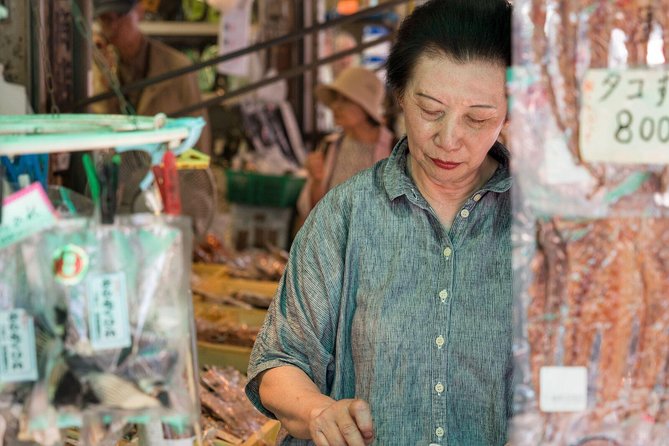
A good market guide explains why an ingredient matters, not just what it is called. The tour is designed to connect seafood with Japanese food habits, cooking methods, and local customs.
That can mean comparing different cuts of tuna, learning how tamagoyaki is made, or understanding why a small sweet has such careful shape and color. It can also mean learning how fish cakes, dried anchovies, and sashimi fit into ordinary eating patterns.
The market can feel overwhelming if you try to process every stall at once. Your guide narrows the focus. Instead of asking you to remember the entire district, the walk gives you a few foods to taste and a few ideas to carry into the rest of your time in Tokyo.
This is especially helpful if you do not speak Japanese. The guide can assist with translation and explain what you are buying. You still see the market as a working place, but you have a bridge into it.
A pause at Namiyoke Inari Shrine
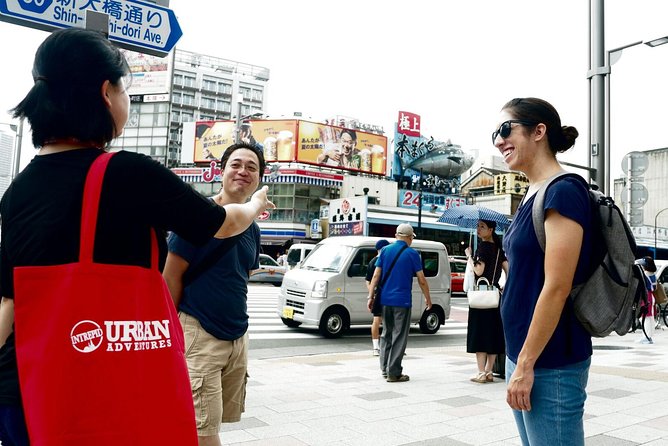
After the market walk, the group visits Namiyoke Inari Shrine. The stop lasts about 10 minutes and offers a quieter finish after the close lanes and constant food activity.
The shrine is near Tsukiji Fish Market, and the tour ends after a walk of about 10 minutes to the nearest station. Tsukiji Station on the Hibiya Tokyo Metro Line is the useful reference point for continuing your day.
I like this ending because it prevents the experience from becoming food-only. The shrine gives you a calm place to pause and reflect on the district’s connection to the sea, work, and daily life, without adding a long detour.
Do not expect a major temple complex or a long formal visit. This is a brief cultural stop, best understood as part of the walking route rather than a separate attraction requiring a full morning.
Is $83.35 a fair price?
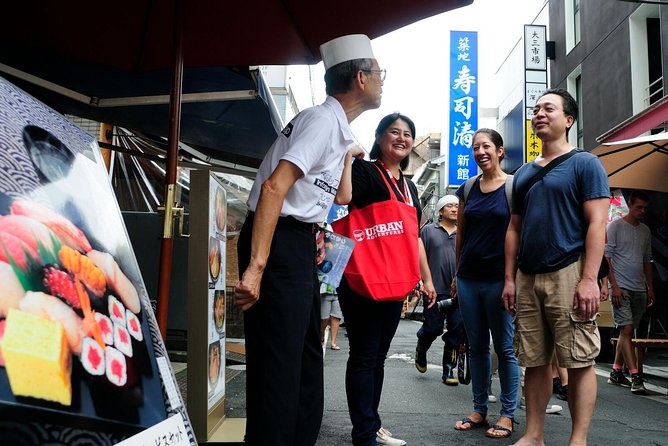
At $83.35 per person, the value depends on what you want from Tsukiji. If your goal is simply to buy one sushi breakfast, you can spend less by going alone. The tour earns its price through the guide, translation help, route planning, cultural explanation, and several tastings.
The six-person limit helps. You are not paying for a large group operation where the guide has to shout or rush everyone past a stall. You are paying for a more personal walk through a place that can be confusing on a first visit.
Food totals may not feel equal on every departure. Some people receive enough samples for a full belly, while others find the food limited or oddly timed. Consider the cost partly as a guided market lesson and partly as breakfast, rather than as a fixed-value restaurant meal.
The tour is a stronger deal for first-time visitors who want structure. If you already know Tsukiji well, speak Japanese, and enjoy choosing your own stalls, the added value may be smaller.
Who will enjoy this morning most?
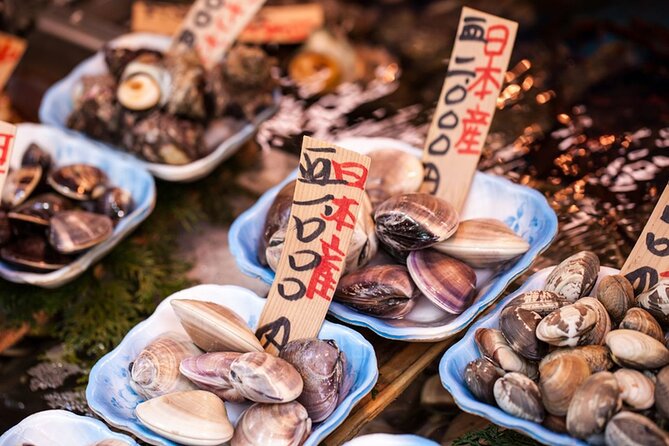
This tour suits first-time Tokyo visitors who want an easy introduction to Tsukiji without having to plan every stop. It also fits people who like trying small portions of many foods instead of sitting down for one long meal.
Fish lovers will have plenty to explore, but you do not need to be devoted to seafood. The route includes sweets, vegetables, omelette, fish cake, and other snacks. Still, fish is central, so anyone who strongly dislikes seafood should choose a different food walk.
Families can join, and children under six may participate free. The narrow market lanes and wet floors mean parents should keep young children close and choose sturdy shoes.
Vegetarians and vegans can join, but the choices are limited. If you follow a strict diet, confirm that the available food will work for you before booking. The experience is much better suited to flexible eaters who can adapt to the morning’s options.
Timing, clothing, and small practical points
Wear closed-toe shoes. Sneakers are the sensible choice because inner market floors can be wet. This is a walking tour, not a polished indoor tasting, so comfort matters more than appearance.
The experience lasts about three hours. The market portion takes roughly two hours, with about 10 minutes at each shrine. You finish near Tsukiji Station rather than returning to Kabukiza, which makes it easy to continue sightseeing from there.
The tour is confirmed at booking, and most people can take part. It is near public transportation, but the first meeting point still deserves careful attention. Save the Kabuki Inari Shrine location and allow extra time to reach Kabukiza.
Cancellation is free if you cancel at least 24 hours before the start time. Changes or cancellations made inside that window are not accepted for a refund.
Should you book Inside Tokyo’s Kitchen?
Book it if you want a guided first look at Tsukiji, a small group, and a mix of sushi, sweets, snacks, and cultural stops. The guides can make the market easier to understand, and the best outings add memorable details such as freshly grated wasabi, several tuna cuts, or a glimpse of tuna being prepared.
Book with realistic expectations about the food. The exact selection can vary, and not every tasting will be made directly in front of you. If you want a guaranteed sit-down sushi meal or a large amount of food, this is not the right format.
For an early Tokyo morning that combines eating with useful cultural context, the tour offers a practical introduction. I would choose it on a first visit, especially if you want help navigating Tsukiji and prefer a small group to wandering alone.
FAQ
Where does the tour begin?
It begins at Kabuki Inari Shrine in front of Kabukiza, at 4 Chome-12 Ginza, Chuo City, Tokyo 104-0061, Japan.
What time does the tour start?
The tour starts at 8:00 a.m.
Where does the tour end?
It ends at Tsukiji Outer Market near Tsukiji Fish Market. Tsukiji Station on the Hibiya Tokyo Metro Line is accessible from the ending area.
How many people can join the group?
The group has a maximum of six participants.
What food is included?
The included tastings are freshly made sushi, local snacks, and wagashi sweets. Food examples associated with the experience include sashimi, tuna sushi, tamagoyaki, fish cake, sea eel rolls, dried anchovies, sweetened rice balls, and white strawberries.
Are vegetarian and vegan options available?
Yes, vegetarian and vegan options are available, but the selection is limited.
What should I wear?
Wear closed-toe shoes. Sneakers are recommended because some inner market floors may be wet.
More Tokyo markets and shopping streets
- Tsukiji Fish Market Guided Tour and Sushi Making with Pro Chef
★ 5.0 · 775 reviews - Tokyo: Tsukiji Fish Market Food and Culture Walking Tour
★ 4.7 · 757 reviews - Tsukiji Fish Market: Street Food & Culture Walking Tour
★ 5.0 · 669 reviews - Tsukiji Fish Market Small-Group Food Walking Tour
★ 5.0 · 621 reviews
Newly reviewed around Tokyo
- Tokyo Asakusa:Calligraphy & Make T-shirt Activity★ 5.0 · 62 reviews
- Intercity Shuttle, Tokyo to Haneda /Narita /Yokohama /Makuhari★ 5.0 · 5 reviews
- 1 Hour Travel around Tokyo with a Professional Photographer★ 5.0 · 3 reviews
- Travel Tokyo with Your Own Personal Photographer★ 5.0 · 43 reviews
- Train in Samurai Swordsmanship and Defeat the Demon in Tokyo★ 5.0 · 5 reviews
- Shuttle Van 6hr Tokyo Tour to-and-from Tokyo, Yokohama and Narita★ 5.0 · 9 reviews
- Kickboxing & Body Training with EX-Pro Fighter★ 5.0 · 4 reviews
- Traditional Japanese Knife Sharpening Class★ 5.0 · 18 reviews
Tsukiji and Toyosu Fish Market Tours, compared.
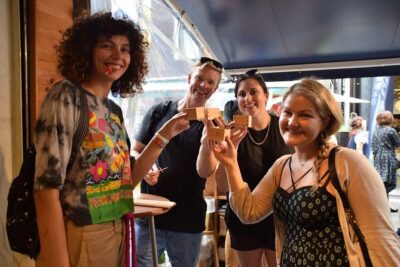
Tokyo Tsukiji Fish Market Food and Culture Walking Tour
Read our review →
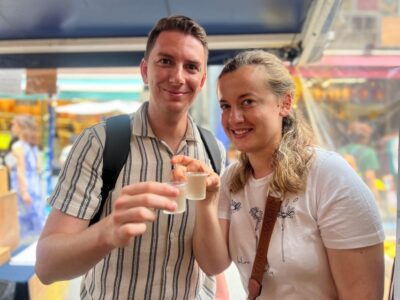
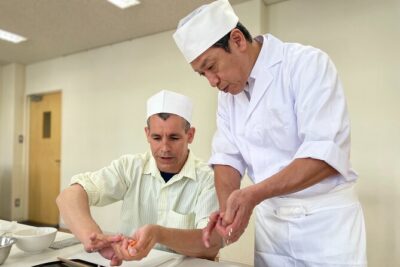
Tokyo Sushi Making Class in Tsukiji with Professional Chef
Read our review →
Tsukiji Fish Market Guided Tour and Sushi Making with Pro Chef
Read our review →Tsukiji Fish Market Food and Culture Walking Tour
Read our review →
Tsukiji Fish Market: Street Food & Culture Walking Tour
Read our review →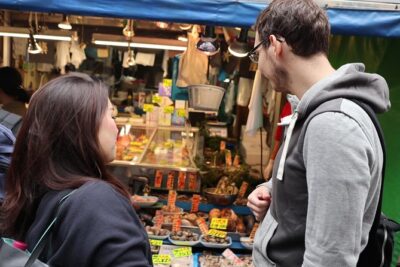
Tsukiji Fish Market Small-Group Food Walking Tour
Read our review →Browse the lists this tour appears in