
Reviewed · TOKYO TEA CEREMONY EXPERIENCES
Dynamic Tokyo: Tokyo Tower, Tea Experience, Bay Cruise Day Tour
Tokyo is a hard city to grasp in one day, but this tour gives you several useful views of it: imperial grounds, an old Buddhist temple, a tea ritual, modern waterfront districts, and a high lookout. The tea-making session and Tokyo Tower’s 150-meter view are the two strongest reasons to book. You get culture and scenery, not just a parade of photo stops.
I also like the included buffet lunch and the air-conditioned coach, especially when Tokyo’s heat or rain makes long train rides less appealing. The catch is simple: this is a full day with many moving parts. The Imperial Palace stop is brief, the cruise can feel ordinary, and traffic may push the ending well past the planned time.
Key points to know before booking
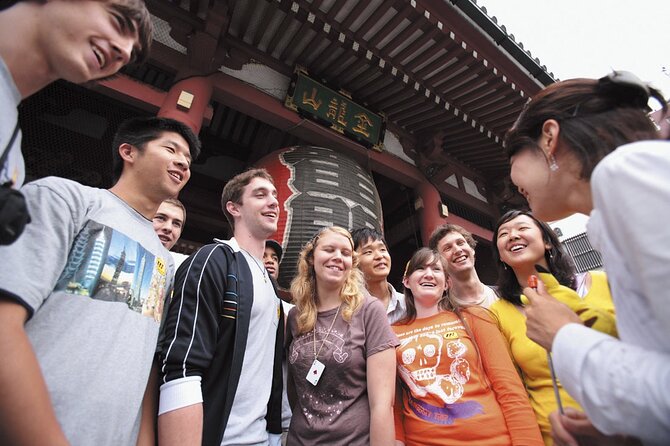
- Tea is hands-on, not a formal ceremony: You prepare matcha yourself after watching an explanation of the process.
- Six very different Tokyo stops: Imperial grounds, Senso-ji, tea, lunch, a cruise, and Tokyo Tower create a broad first-day introduction.
- The guide makes a major difference: Mina, Aki, Hiro, Yokosan, Izumi, Makoto, and others receive strong praise for history, humor, and personal care.
- Lunch is a substantial buffet: International food, coffee or tea, and a generous break are included, but vegetarian requests cannot be accommodated.
- The cruise is scenic but not the main event: You pass under 12 bridges, though commentary and weather conditions can vary.
- Expect a moderate walking day: Wear easy walking shoes and prepare for a quick pace, stairs, and time on your feet.
Why this nine-hour Tokyo tour works for first-time visitors
At $99.10 per person, this is a useful package if you want Tokyo’s main sights arranged for you. The fee covers transport by coach, the tea experience, buffet lunch, cruise fare, and Tokyo Tower’s Main Observatory. Buying each piece separately could take more planning, and you would need to connect several distant areas by train.
The bigger value is orientation. Tokyo can feel like a collection of separate cities, each with its own mood. This route links the Imperial Palace area, Asakusa, Odaiba and the bay, the Sumida River, and Tokyo Tower. Your guide fills the long road sections with explanations about Japanese history, daily life, and the city’s development.
You should not expect a slow, intimate tour. The maximum group size is 40, although some departures have been much smaller. Odd-numbered parties may share seats with other customers, and the day runs on a fixed schedule. If you like independent wandering, parts of the tour may feel managed. If you have only one or two days in Tokyo, that structure is the point.
More Tokyo Tower tickets and tours:
- Tokyo: ‘Red Tokyo Tower’ Digital Amusement Park Ticket
★ 4.1 · 398 reviews - Tokyo: Imperial Palace, Sensō-ji Temple, & Tokyo Tower Tour
★ 4.5 · 339 reviews - Tokyo Dinner Cruise & Tradition Show & Drinks & Tokyo Tower
★ 4.7 · 315 reviews
Imperial Palace gardens: a short look at old Edo
The first stop focuses on the Imperial Palace grounds and the view of Nijubashi Bridge. You will see the stone foundations associated with Edo Castle and walk through part of the East Garden, formerly connected with the imperial family’s private grounds.
Allow about 30 minutes. That is enough for a look and a few photographs, but not enough for a long garden visit. The palace itself is not open for a general interior tour on this route, so keep your expectations realistic. You are seeing an exterior area and historic remnants, not touring the emperor’s residence.
I find this stop useful as a quick opening chapter. Your guide can explain how Edo became Tokyo and how the imperial center fits into the modern city. Still, some people may find the stop too brief, particularly if gardens are a major interest. One practical advantage is that you do not need to work out the palace area on your own at the start of a busy day.
Senso-ji and Nakamise: Tokyo’s oldest temple district
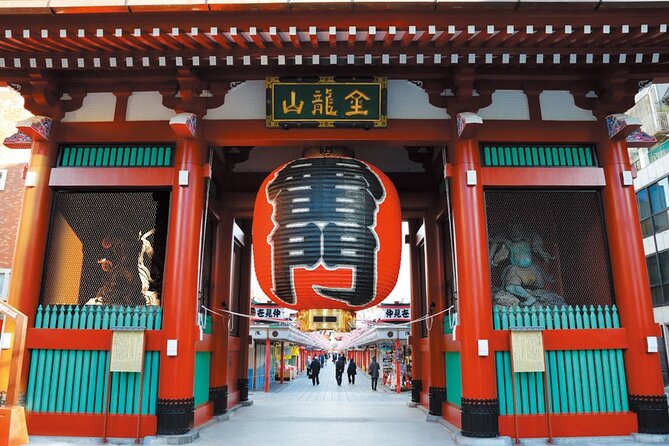
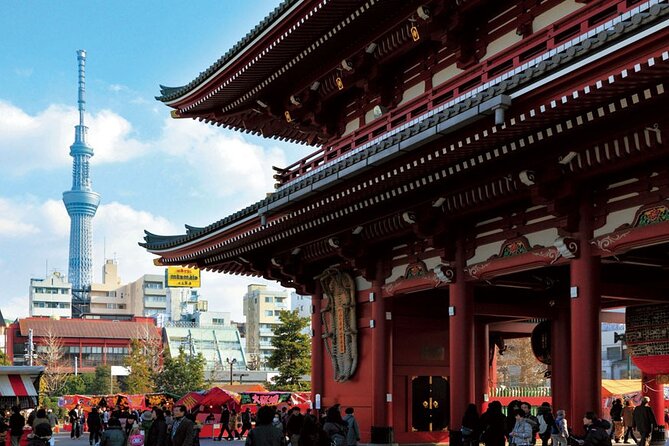
The tour gives you about an hour around Senso-ji and Nakamise. This is one of Tokyo’s essential stops, and the route includes the bright red Kaminarimon Gate, the thunder god statue, the five-story pagoda, temple buildings, and the shopping street leading toward the main hall.
Nakamise is lined with food sellers, small souvenirs, and traditional-style goods. It is a lively place to sample a snack or browse, though much of the merchandise is aimed at sightseers. You will see plenty of typical gifts rather than a quiet local market, so do not spend your entire shopping budget here.
Senso-ji matters because it connects present-day Tokyo with nearly 1,300 years of Buddhist tradition. Your guide can explain the relationship between temples, shoguns, and the emperor, which adds meaning to the gates and statues. You also get some free time, though the schedule may not satisfy anyone hoping to explore every side street in Asakusa.
The river cruise later approaches this area, which gives you a second view of Asakusa from the water. That repetition is helpful for orientation, though it also means the day returns to the same district instead of adding another major neighborhood.
The matcha session: the cultural highlight
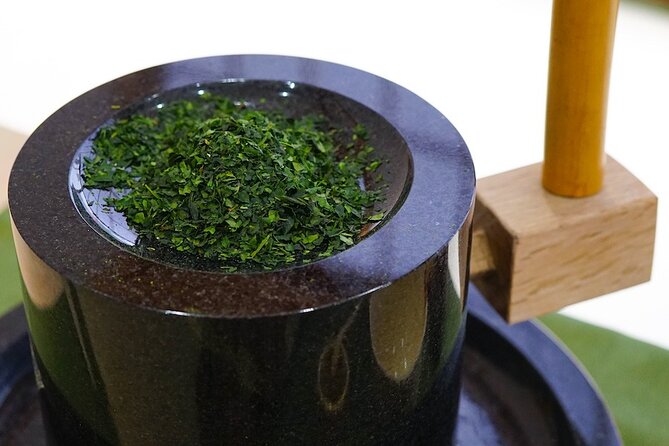
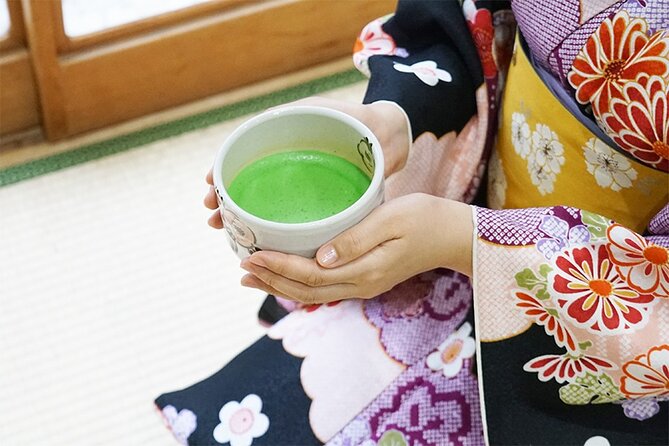
The tea portion is one of the most appealing parts of the day. At Kaminari Issa in Asakusa, you watch a video explaining matcha preparation and then make your own green tea. The setting is designed for a casual tasting experience, not a strict, formal tea ceremony conducted in silence.
That distinction matters. If you expect a full ceremonial performance with every movement explained in a traditional tea room, you may be disappointed. If you want to understand how matcha is prepared and try the motions yourself, the session is more rewarding.
The tea stop is scheduled for about an hour. Accounts of the experience also describe beautiful garden settings, bonsai trees, carefully preserved Edo-period architecture, and, on some versions of the tour, a lunch and tea visit connected with Hotel Chinzanso Tokyo. Since the supplied schedule identifies Kaminari Issa in Asakusa, confirm the exact venue shown with your booking before you go.
The bonsai element is especially memorable. One account describes a bonsai tree said to be 525 years old, a detail that gives the garden visit real weight. You may not get a long period to wander independently, since the group needs to stay together for the tea activity, but the stop offers a welcome change from temples, traffic, and coach travel.
Guides have been central to the success of this part of the day. A good guide explains the tools, the order of preparation, and the manners involved without making you feel tested. Mina, Aki, Izumi, Makoto, and others have been praised for making the cultural details easy to follow.
More Tokyo tea ceremonies:
- Matcha Making Class in Tokyo with Authentic Japanese Sweets Set
★ 5.0 · 744 reviews - Tokyo: Traditional Tea Ceremony with a Tea Master
★ 5.0 · 528 reviews - Tokyo: Matcha Making Experience with Mochi Sweets in Asakusa
★ 4.9 · 388 reviews - Tokyo: Matcha and Kimono Experience
★ 4.7 · 219 reviews
Buffet lunch: a generous break in the middle
Lunch is included at the Sheraton Grande Tokyo Bay Hotel, with about 70 minutes set aside. The buffet offers international food, coffee or tea, and, according to the supplied details, a luxurious selection. Some tour accounts describe a Japanese barbecue-style meal with beef or pork cutlets, vegetables, and dessert, so the exact buffet selection may depend on the operating date or venue arrangement.
This is more than a quick sandwich stop. After a morning of walking and sightseeing, a seated meal gives you time to rest, use the facilities, and recharge before the waterfront portion. Several descriptions single out the lunch as a strong part of the value.
There is one clear limitation: vegetarian meal requests cannot be accommodated because the lunch is a buffet. If you have dietary restrictions, check before paying rather than assuming the restaurant can adjust the menu. Children aged four and five incur a meal charge of ¥2,700 at the restaurant, while children aged zero to five can join without a bus seat unless you book the child rate.
Rainbow Bridge and the water route beneath 12 bridges
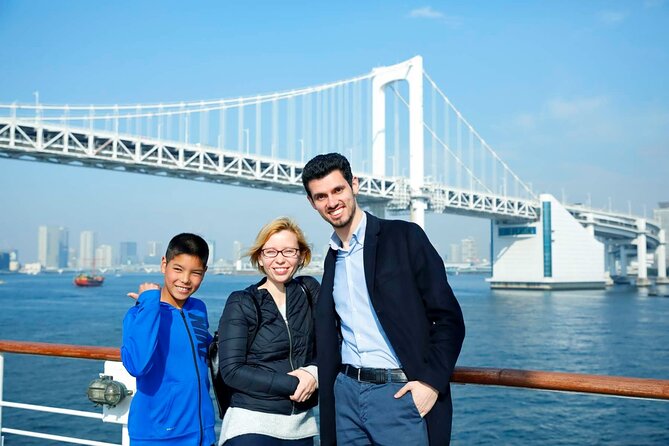
The coach crosses Rainbow Bridge before the cruise segment. This gives you a moving look at Tokyo’s newer waterfront districts and the contrast between the old temple quarter and the modern bay.
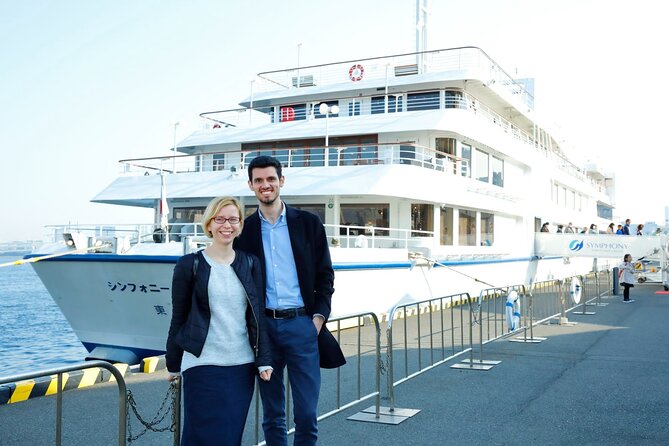
The cruise departs around 3:00 p.m. and runs from Hinode Pier toward Asakusa, with about 50 minutes on the water. A serving of coffee or tea is included. The route passes beneath 12 bridges, giving you changing views of the riverbanks, bridges, and city buildings.
This is a pleasant rest in a busy schedule. You can sit down, look outward, and let the guide’s earlier explanations settle. Do not book the tour solely for the boat ride, though. Some people find it relaxing and scenic, while others find it less interesting than the temple or tea stop. There is not always a reserved group section, and commentary may be limited depending on the boat and seating.
Weather affects the experience. In poor conditions, the boat may stay close to shore, and hot weather can make the cabin uncomfortable if the air conditioning is not working well. On a clear day, it is a good way to see Tokyo from another angle. On a gray or rainy day, it becomes mainly a break between stops.
Tokyo Tower at 150 meters: the best final view
The final stop is Tokyo Tower, one of the city’s most recognizable structures. Your ticket covers the Main Observatory at 150 meters, where you get a broad view across Tokyo. There is also a transparent-floor lookout window for a direct look down, if you are comfortable with heights.
The tower is a strong ending because it turns the day’s scattered stops into a single mental map. You can look toward the bay, the central districts, and the broad urban spread beyond. After seeing Tokyo from street level and from the river, the high viewpoint completes the three-angle idea of the tour.
You have about 45 minutes here. That is enough for the main deck and photographs, but not for a long visit to every level or attraction. The Special Observatory at 250 meters costs extra and is not included. If the higher deck is important to you, budget for the additional admission and allow for the fact that the group schedule still controls your time.
Tokyo Tower can be crowded, and weather makes a big difference. Rain or heavy cloud may block distant views, as happened on some departures. Even then, the tower gives you a clear sense of Tokyo’s density and scale.
Guides, group size, and the pace of the day
This tour depends heavily on the guide. Strong guides such as Hiro, Mina, Aki, Yokosan, Miyata-san, Kik Koo, and Izumi have been praised for clear English, humor, historical detail, and personal attention. Aki is noted for learning names and taking photographs, while Mina is described as both funny and easy to understand.
The guide also helps with practical matters. One guide explained how to use Tokyo’s transit system after the tour, which is useful because the day ends near Tokyo Station and you may continue independently. If your guide is engaging, the coach rides become part of the experience rather than dead time.
The pace is steady. You will walk through temple grounds, shopping streets, gardens, and tower areas, then return to the coach or boat. Heat, rain, and stairs can make the day tiring, so wear comfortable shoes and bring weather protection. The tour requires moderate physical fitness.
Road conditions can change the order of stops and delay the ending. Traffic near the Imperial Palace or entry restrictions can even affect departure arrangements. The coach is air-conditioned and heated, and an environmentally friendlier hybrid bus is generally used, though the vehicle can change for maintenance or other practical reasons.
Meeting point, timing, and cancellation terms
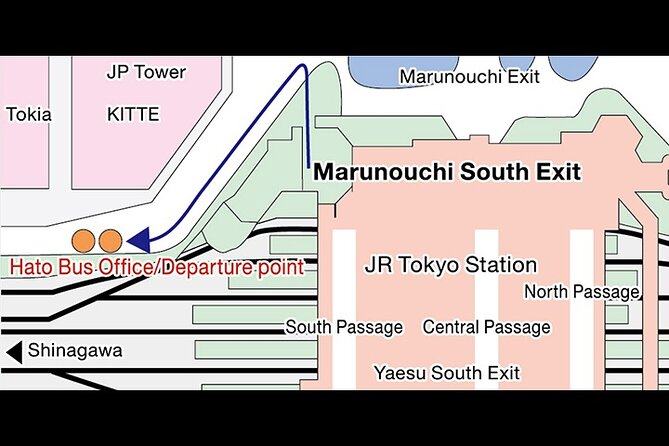
The day begins and ends near Tokyo Station’s Marunouchi South Entrance, at 1 Chome-9 Marunouchi. The precise meeting instructions deserve close attention. A few people have found the pickup confusing, especially when directions referred to a bus station annex or a nearby landmark rather than the exact place to collect a ticket.
Plan to arrive early. Your confirmation should arrive within 48 hours, subject to availability, and you need the correct mobile ticket or booking information at departure. One payment-related booking problem caused a passenger to arrive without a name on the list, so check your confirmation carefully rather than assuming a payment notice is the boarding pass.
Free cancellation is available up to 24 hours before the start time. Changes or cancellations inside that window are not accepted for a refund. The tour ends near Tokyo Station, which is convenient for onward rail connections, but it does not function like a hotel drop-off service.
Who should book this tour?
I would choose this for a first visit, a short stay, or a first full day before exploring Tokyo independently. It gives you a useful foundation: imperial symbolism, Buddhist tradition, matcha preparation, a large meal, waterfront views, and a city panorama.
It also suits families and visitors who prefer a guide and coach to managing several train changes. The day is organized, the major admission costs are included, and the tea activity gives the route more character than a standard bus loop.
I would hesitate if you want long stretches of free time, a formal tea ceremony, serious shopping, or a focused visit to one neighborhood. The palace stop is short, Nakamise can feel touristy, and the river cruise is pleasant rather than essential. Vegetarians should also investigate the lunch arrangement before booking.
Final verdict: a smart one-day Tokyo sampler
At $99.10, this is good value for a full nine-hour route with lunch, transport, cruise fare, tea, and Tokyo Tower admission. Its strongest feature is variety. You move from imperial grounds to a historic temple, from matcha preparation to a buffet, from the river to a high observation deck.
Book it if you want a well-guided introduction and accept a busy schedule. Skip it if you prefer to set your own pace or already know Tokyo well. For many first-time visitors, the combination of an excellent guide, a hands-on tea session, and the Tokyo Tower view makes this a practical first-day plan.
FAQ
How long does the Tokyo tour last?
The tour lasts approximately nine hours, though traffic, weather, road conditions, and entry restrictions can affect the ending time.
What is included in the price?
The price includes the Western-style buffet lunch with coffee or tea, Tokyo Bay cruise fare, Tokyo Tower Main Observatory admission at 150 meters, and transport by air-conditioned and heated tour bus.
Is the tea activity a formal Japanese tea ceremony?
No. The experience is a casual matcha activity in which you watch an explanation and prepare your own tea. It is not presented as a formal tea ceremony.
Does the tour include Tokyo Tower’s highest observatory?
No. Admission covers the Main Observatory at 150 meters. The Special Observatory at 250 meters requires an additional fee paid separately.
Where does the tour start and finish?
The tour starts near Tokyo Station at 1 Chome-9 Marunouchi, Chiyoda City. It ends near Tokyo Station’s Marunouchi South Entrance.
Is lunch suitable for vegetarians?
Vegetarian meal requests cannot be accommodated because lunch is served as a buffet. Check the food arrangements before booking if you have dietary requirements.
Is the cruise always able to travel its full route?
The cruise may remain near the shore in poor weather. The scheduled cruise time is approximately 3:00 p.m. to 3:50 p.m.
Are children allowed on the tour?
Children aged zero to five may participate free of charge without a bus seat. A child-rate booking is required if you want a bus seat, and children aged four and five also incur a ¥2,700 meal charge at the restaurant.
Can I cancel for a full refund?
Yes. You can cancel at least 24 hours before the experience starts for a full refund. Cancellations or changes made less than 24 hours before the start time are not accepted.
More Tokyo boat trips and river cruises
- Flagship 2-Hours Official Street Go-Kart Tour – Tokyo Bay Shop
★ 5.0 · 4,974 reviews - Sumida River: Japanese Traditional Yakatabune Dinner Cruise
★ 4.6 · 779 reviews - Tokyo Bay Yakatabune Dinner/Day Cruise with Japan Show and Drinks
★ 4.5 · 473 reviews - Official Japan Go-Kart Through Tokyo Bay / Ginza (IDP Required)
★ 4.5 · 71 reviews
Newly reviewed around Tokyo
- Tokyo Asakusa:Calligraphy & Make T-shirt Activity★ 5.0 · 62 reviews
- Intercity Shuttle, Tokyo to Haneda /Narita /Yokohama /Makuhari★ 5.0 · 5 reviews
- 1 Hour Travel around Tokyo with a Professional Photographer★ 5.0 · 3 reviews
- Travel Tokyo with Your Own Personal Photographer★ 5.0 · 43 reviews
- Train in Samurai Swordsmanship and Defeat the Demon in Tokyo★ 5.0 · 5 reviews
- Shuttle Van 6hr Tokyo Tour to-and-from Tokyo, Yokohama and Narita★ 5.0 · 9 reviews
- Kickboxing & Body Training with EX-Pro Fighter★ 5.0 · 4 reviews
- Traditional Japanese Knife Sharpening Class★ 5.0 · 18 reviews
Tokyo Tea Ceremony Experiences, compared.
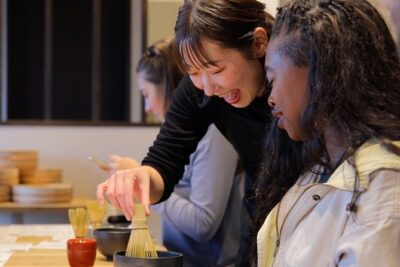
Matcha Making Class in Tokyo with Authentic Japanese Sweets Set
Read our review →
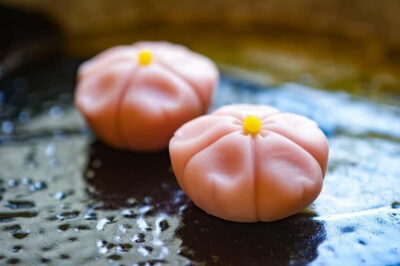
Matcha Making Experience with Mochi Sweets in Asakusa
Read our review →
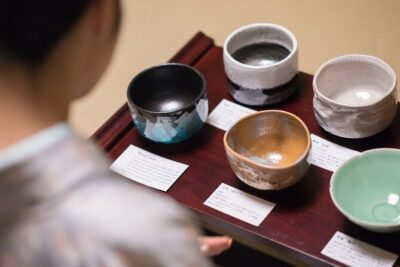
Tea Ceremony Workshop in Tokyo by the Experienced Instrucor
Read our review →
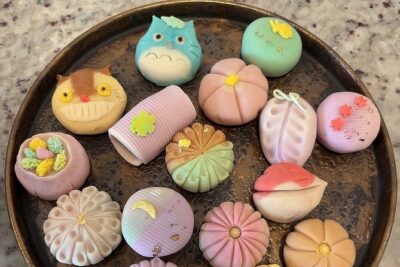
Make Traditional Nerikiri Sweets & Matcha experience in Shibuya
Read our review →Browse the lists this tour appears in