
Reviewed · TOKYO WALKING TOURS
The Old Quarter of Tokyo – Yanaka Walking Tour
Tokyo’s polished towers and crowded crossings tell only part of the story. This three-hour walk through Yanaka takes you past temples, a cemetery, old wooden homes, quiet lanes, and a local shopping street where daily life still feels close at hand. It is a useful change of pace from Ginza, Omotesando, and the city’s major sights.
I especially like the way the route connects Buddhist and Shinto customs with ordinary neighborhood life. I also like the small group, capped at 10 people, and the chance to finish at Yanaka Ginza, where you can choose your own snack or meal. The main drawback is simple: you walk outdoors for about three hours, and food, drinks, and temple or shrine fees where applicable are not included.
Key points about the Yanaka walk
- Old Tokyo atmosphere: See wooden homes, temples, shrines, and residential lanes in one of Tokyo’s quieter historic districts.
- A useful religious introduction: Learn how Buddhist temples and Shinto shrines differ, including basic customs and etiquette.
- Small-group format: With a maximum of 10 people, it is easier to ask questions and stay connected with the guide.
- Excellent local guides: Aya, Junko, Rei, Mei, Kiyo, Mami, and Polina are among the guides praised for clear English, patience, humor, and local insight.
- A practical finish: The route ends at Yanaka Ginza Shopping Street, a good place to try local sweets and street food at your own cost.
- Good value at $40: The price covers a guided half-day walk with an English-speaking local expert, but not food, drinks, or personal expenses.
Why Yanaka feels different from modern Tokyo
Yanaka gives you a calmer view of Tokyo without requiring a long trip outside the city. The district has temples, shrines, small shops, and older homes packed into a walkable area. Some wooden buildings survived the bombings of World War II, as well as earlier fires and disasters, so the streets offer a feel that is hard to find around Tokyo’s newer commercial centers.
I like this tour because it does not treat Yanaka as a collection of isolated photo stops. The guide helps connect the buildings to the way people live. You learn about Buddhist and Shinto practice, old Japanese houses, local customs, and the small details of neighborhood life.
Do not expect a grand, sweeping procession of major monuments. The pleasure here is quieter. You might pause beside a temple, turn into a residential back street, see a small shrine, and then stop at a bakery in a renovated wooden building. The route works best if you enjoy context and ordinary details as much as famous sights.
More old Tokyo walks around Yanaka:
- Yanaka Walking Tour: Historic and Traditional District of Tokyo
★ 5.0 · 530 reviews - Tokyo: Old Quarter Yanaka Walking Tour
★ 4.8 · 406 reviews - Tokyo:Stroll in Old traditional culture towns~Yanaka & Nezu
★ 4.9 · 186 reviews
Starting at Nippori Station and Tennoji Temple
The meeting point is outside Nippori Station at 2 Chome-19 Nishinippori. The tour ends at Yanaka Ginza, at 3-chōme-13-1 Yanaka, so you do not return to the starting point. That matters when planning your day. You can continue shopping and eating at the end rather than backtracking.
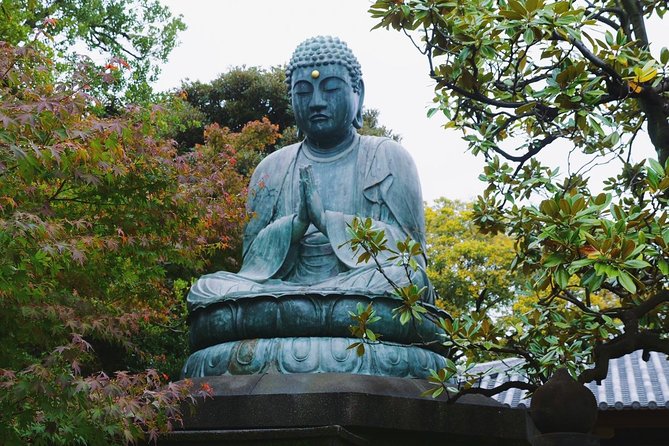
The first listed stop is Tennoji Temple, where you see the Yanaka Buddha, created in 1690. The stop lasts about 15 minutes and admission is free. This is a short introduction, but it gives the guide a useful starting point for explaining Japanese religious traditions and the role of temples in the neighborhood.
The value of this stop comes from the explanation rather than the amount of time spent there. A temple can look peaceful and simple if you do not know what you are seeing. With a guide, you can ask about the Buddha, the temple setting, and the customs tied to Japanese religion.
Walking through Yanaka Cemetery
From Tennoji, the route continues into Yanaka Cemetery for about 15 minutes. You learn what a Japanese cemetery is like and about customs followed by local people. This is not a dramatic attraction, and that is part of its value. It shows a piece of Japanese life that many sightseeing routes skip.
The cemetery also helps explain why Yanaka feels less like a commercial district and more like a lived-in neighborhood. The walk is likely to be quiet, but you should treat the area with respect. Keep your voice down, follow the guide’s instructions, and remember that this is a functioning cemetery, not simply a photo stop.
For some people, this will be one of the most interesting parts of the morning. For others, cemeteries are not a preferred holiday sight. The tour gives it limited time, so you are not committed to a long visit.
A break at Ueno-Sakuragi Atari
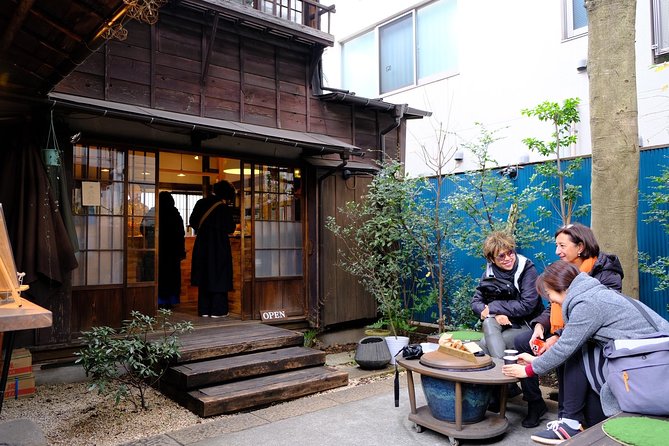
The route pauses at Ueno-Sakuragi Atari, a group of roughly 80-year-old wooden houses converted into a café, bakery, and beer hall. The buildings now work as a community space for local people. The stop lasts about 15 minutes, and purchases are not included.
This is a smart stop because it shows how old buildings can be used in present-day Tokyo. You see traditional wooden construction, but you also see a café and bakery operating inside those structures. It is a small example of the balance between preserving an older neighborhood and keeping it useful.
You may have time to look around or buy something, but do not count on a full meal here. The tour has a planned route and continues after the break. Bring a little cash or another accepted payment method if you want food or a drink, though the supplied details do not specify payment options.
The itinerary also points out a 100-year-old cider tree, described as a symbol of Yanaka. This is the kind of modest local detail that can be easy to miss on your own. It may not take long to see, but it gives the guide a chance to explain how a single old tree can become part of a district’s identity.
More Tokyo walking tours:
- Tokyo Tsukiji Fish Market Food and Culture Walking Tour
★ 5.0 · 3,184 reviews - Tokyo: Imperial Palace and Shogun Historical Walking Tour
★ 5.0 · 2,251 reviews - Tokyo: Shinjuku Local Bar and Izakaya Guided Walking Tour
★ 4.9 · 1,794 reviews - Tokyo: Tsukiji Fish Market Food and Walking tour
★ 5.0 · 1,724 reviews
Enju-ji Temple and the god of strong legs
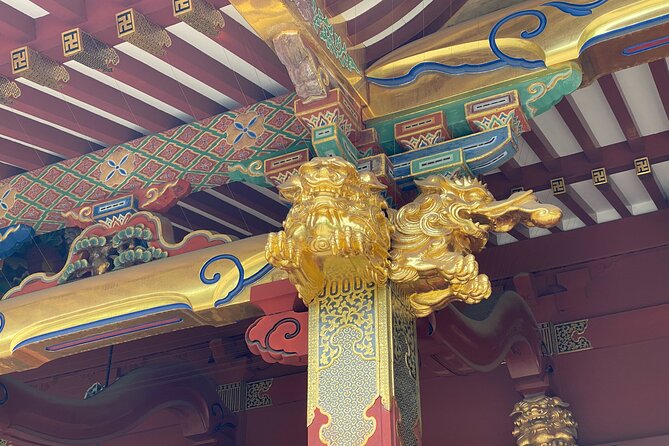
Enju-ji Temple is a very brief stop, about five minutes. Its unusual feature is the deity associated with strong legs rather than the more familiar Buddhist figures many visitors expect. Wooden boards carrying wishes from people with foot problems can be seen at the temple.
This stop is short, but it adds humor and human feeling to the route. People come to religious sites with very specific hopes, and the boards make those hopes visible. The tour also gives you a chance to see that Japanese religious practice is not always easy to fit into simple categories.
An admission fee may apply here, and the tour price does not cover it. The supplied information does not state the amount, so keep a little money available for optional costs.
Nezu Shrine and its red torii gates
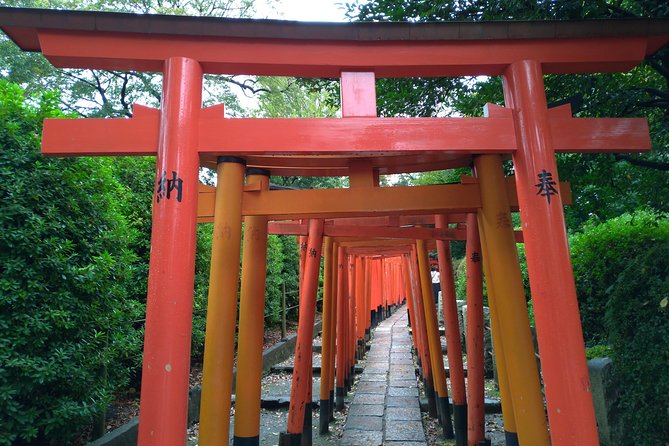
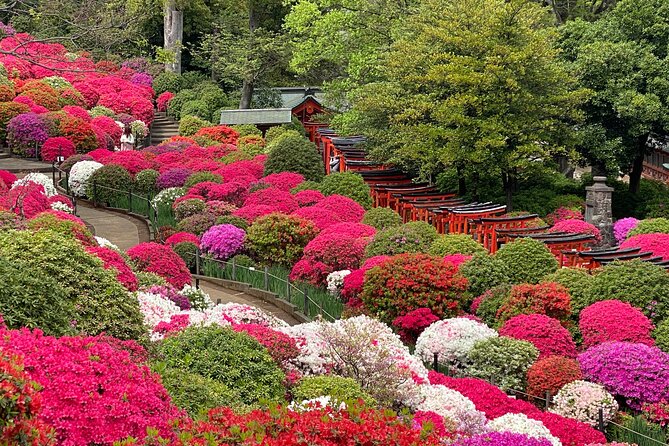
Nezu Shrine receives about 20 minutes, making it one of the longer stops. It is known for rows of red torii gates that recall the famous Fushimi Inari Shrine in Kyoto. You can take photographs, but the guide also explains shrine etiquette.
This is likely to be one of the tour’s most photogenic sections. The red gates create a clear visual contrast with the surrounding neighborhood, and the shrine offers a stronger sense of formal Shinto space than the ordinary residential streets nearby.
The etiquette lesson is especially useful if this is your first shrine visit. You can learn how to behave respectfully rather than simply copying people around you. The short stop will not cover every detail of Shinto practice, but it gives you a sound foundation for later visits around Japan.
Nezu Shrine may also be the point where the tour feels most like a standard sightseeing outing. That is not a problem, since it is balanced by the cemetery, back streets, houses, and shopping street. Still, if you want only famous monuments, the rest of the Yanaka route may feel more understated.
Hebimichi and the view of everyday life
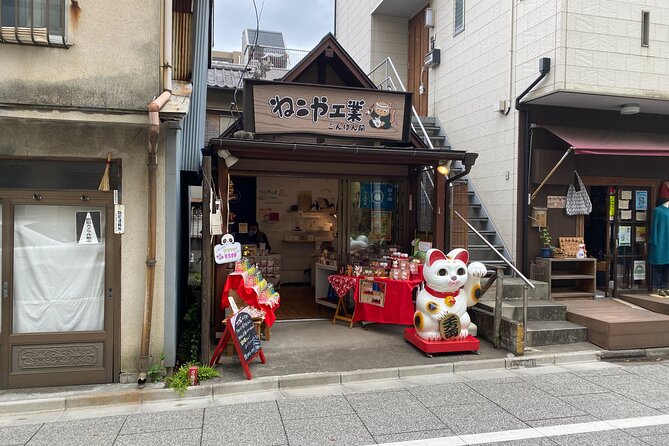
After the shrine, the walk turns toward Hebimichi, a back street in a residential area. The route is meant to show Japanese daily life up close. You might see the quiet design of ordinary homes, narrow lanes, and the rhythm of a neighborhood away from the main attractions.
This is one of the strongest reasons to take a guided walk here. Independent visitors can certainly wander around Yanaka, but they may not know which lane has local importance or what details deserve attention. A guide can point out features that would otherwise pass without explanation.
The route does involve walking through residential space, so this is a place for considerate behavior. Avoid blocking narrow paths, follow the guide, and ask before taking pictures of people or private homes. The charm depends on the area remaining a real neighborhood, not becoming a stage set.
Yanaka Ginza, the tour’s tasty finish
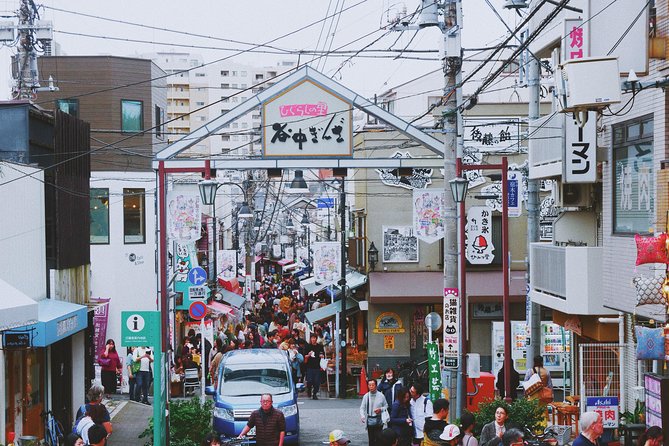
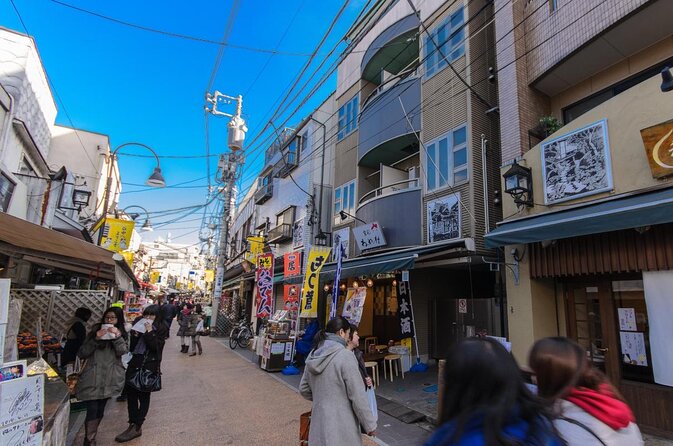
The final stop is Yanaka Ginza Shopping Street, where the guide explains the shops and the normal Japanese shopping routine. You can buy local foods and sweets, but food is not included in the $40 price.
Ending here is practical. After a morning of temples, shrines, and quiet lanes, you have a chance to choose something that suits you. You might prefer a small sweet, a snack, or a more substantial meal. The guide can point out places to try, and one guide was specifically praised for showing the group good street-food options.
This is not a fixed tasting tour. The price covers the walk and guiding, not a series of included samples. That keeps the base price reasonable, but you should budget extra if food is part of your plan.
Yanaka Ginza also gives you a useful look at local commerce. The street is more personal and neighborhood-focused than Tokyo’s major department-store districts. It is a good place to linger after the formal tour ends, though the activity itself concludes there.
How the guides shape the experience
The guide is central to the value of this tour. Guides named in the available information include Aya, Junko, Rei, Mei, Kiyo, Mami, and Polina. Their strengths are consistent: clear English, patient answers, local familiarity, and an ability to explain both historical subjects and modern daily life.
Several guide styles appear in the feedback. Aya used laminated photographs to clarify points and took time with questions. Junko was described as living in the area, which can add a personal connection to the streets. Rei was praised for handling questions and keeping a group of nine people together at a comfortable pace. Polina was noted for sharing folk stories and local experience.
The exact guide is not guaranteed, so book this for the route and format rather than for one named person. Still, the range of strong guide comments suggests that the operator places real weight on personal explanation. A maximum of 10 people helps too. You are less likely to get lost in a crowd, and asking a question is easier.
Pace, weather, and what to wear
The route lasts about three hours and is taken on foot. One particularly useful practical point is to wear comfortable shoes and bring sun protection or a hat. A past walk took place in 35-degree heat and high humidity, which shows how demanding Tokyo weather can make even a moderate city walk.
There is a break at Ueno-Sakuragi Atari, but this is not a seated bus tour. You should be ready to walk between several stops and spend much of the time outdoors. In hot weather, water and light clothing will make a real difference. The tour requires good weather, and poor conditions can lead to a different date or a full refund.
The pace has been described as comfortable, with enough time for explanations and questions. That makes the walk suitable for many visitors, but anyone who dislikes outdoor walking should consider the format carefully.
Is $40 a fair price?
At $40 per person, the tour sits in a reasonable range for a three-hour small-group experience in Tokyo. You are paying for an English-speaking local guide, route planning, cultural explanation, and a group capped at 10. The price also saves you from spending time trying to work out which temples, lanes, and shops fit together.
The value is strongest if you want interpretation. Yanaka’s streets are free to walk, and you could visit Nezu Shrine, Yanaka Cemetery, and Yanaka Ginza independently. What you cannot easily reproduce is the steady explanation of religious customs, local stories, old homes, and neighborhood details.
The price does not include food, drinks, personal expenses, optional admission fees, or gratuities. If you plan to eat at Yanaka Ginza, treat that as extra spending. Free cancellation is available up to 24 hours before the start time. Changes or cancellations within 24 hours are not accepted for a refund.
Who should book this walk?
I would choose this tour if you have already seen some of Tokyo’s major commercial districts and want a quieter counterpoint. It suits people who enjoy temples, local customs, architecture, street food, and ordinary neighborhoods more than fast-moving sightseeing.
It is also a good first walking tour for anyone who wants help understanding the difference between Shinto shrines and Buddhist temples. Families and older visitors may appreciate the small group and moderate pace, though the supplied information does not give a precise accessibility rating beyond stating that most people can participate. Service animals are allowed, and the route starts near public transportation.
You may want to skip it if your Tokyo schedule is very tight, if you want a food tour with included tastings, or if you prefer large famous sights over residential streets. The route is rewarding because it is modest. That same quality will not suit everyone.
Should you book the Yanaka walking tour?
Book it if you want old Tokyo in everyday form, with temples, wooden houses, a cemetery, shrine gates, back streets, and a local market tied together by a guide. At $40, the strongest value is the explanation and small-group attention, not included food or major-ticket attractions.
I would place it early in a Tokyo visit if you want cultural context for later shrine and temple visits. Wear good shoes, protect yourself from the sun, and save room in your budget for Yanaka Ginza. If that sounds like your kind of afternoon, this is a sensible and personal way to see a side of Tokyo that is easy to miss.
FAQ
How long does the Yanaka walking tour last?
The tour lasts approximately three hours.
Where does the tour start?
It starts at Nippori Station, at 2 Chome-19 Nishinippori, Arakawa City, Tokyo 116-0013, Japan.
Where does the tour end?
The tour ends at Yanaka Ginza Shopping Street, at 3-chōme-13-1 Yanaka, Taito City, Tokyo 110-0001, Japan.
What is the maximum group size?
The tour has a maximum of 10 participants.
Is food included in the tour price?
No. Food, drinks, and personal expenses are not included. You can buy local foods and sweets at Yanaka Ginza at your own cost.
Is the tour conducted in English?
Yes. The experience includes an English-speaking local guide.
Are admission tickets included?
Admission is free at Tennoji Temple, Yanaka Cemetery, and Nezu Shrine. The provided information lists admission as not included at Ueno-Sakuragi Atari and Enju-ji Temple, so optional costs may apply.
What happens if bad weather cancels the tour?
If poor weather causes cancellation, you will be offered a different date or a full refund. You can also cancel up to 24 hours before the start time for a full refund.
Newly reviewed around Tokyo
- Tokyo Asakusa:Calligraphy & Make T-shirt Activity★ 5.0 · 62 reviews
- Intercity Shuttle, Tokyo to Haneda /Narita /Yokohama /Makuhari★ 5.0 · 5 reviews
- 1 Hour Travel around Tokyo with a Professional Photographer★ 5.0 · 3 reviews
- Travel Tokyo with Your Own Personal Photographer★ 5.0 · 43 reviews
- Train in Samurai Swordsmanship and Defeat the Demon in Tokyo★ 5.0 · 5 reviews
- Shuttle Van 6hr Tokyo Tour to-and-from Tokyo, Yokohama and Narita★ 5.0 · 9 reviews
- Kickboxing & Body Training with EX-Pro Fighter★ 5.0 · 4 reviews
- Traditional Japanese Knife Sharpening Class★ 5.0 · 18 reviews
Tokyo Walking Tours, compared.
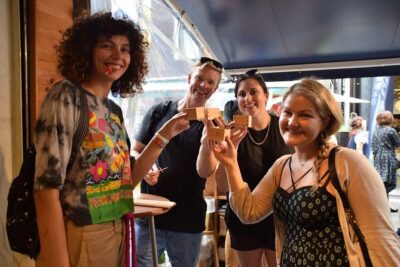
Tokyo Tsukiji Fish Market Food and Culture Walking Tour
Read our review →
Imperial Palace and Shogun Historical Walking Tour
Read our review →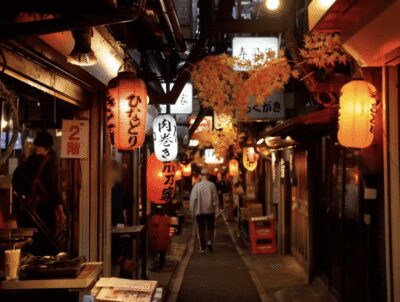
Shinjuku Local Bar and Izakaya Guided Walking Tour
Read our review →
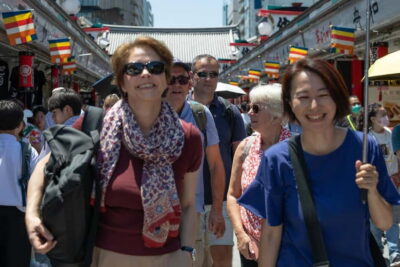
Asakusa Walking Tour with Sensoji Temple Visit
Read our review →
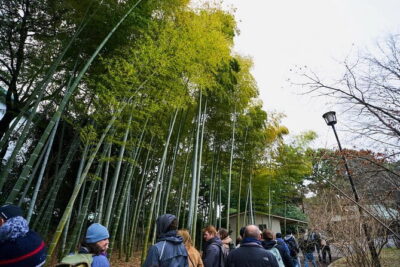
Tokyo Castle & Imperial PalaceーShogun Walking Tour
Read our review →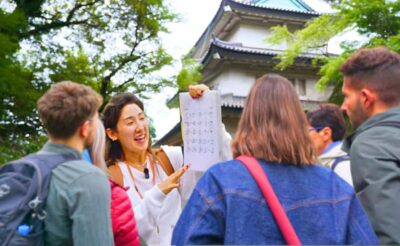
Browse the lists this tour appears in