
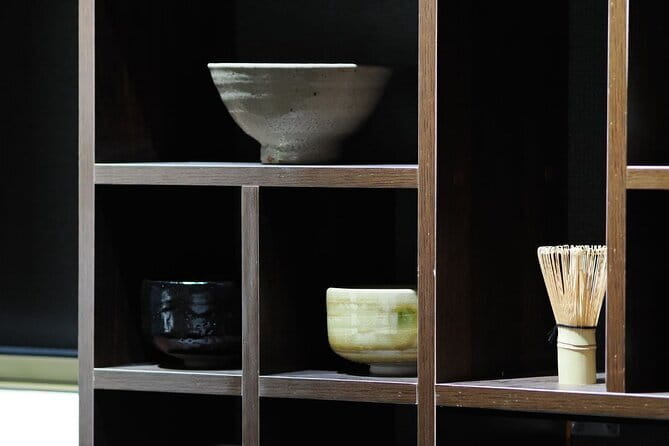
Reviewed · TOKYO TEA CEREMONY EXPERIENCES
Tokyo Traditional Tea Ceremony with a Japanese Tea Master
The most interesting part of this one-hour visit is the range of teas. You begin with Japanese black tea from Shizuoka, taste high-grade gyokuro with seasonal sweets, make your own matcha, and finish with roasted-rice genmaicha. I like that the session shows how much Japanese tea can vary in flavor and preparation. I also like the hands-on matcha lesson, which gives you more to do than simply watch.
The main thing to understand is that this is not a long, formal ceremony with a geisha serving tea while you sit in silence. It is a small-group tea class and tasting, held at Ocharu across from Tokyo University. One past booking also reported an English-language problem, so confirm the language arrangements if clear spoken instruction matters to you.
Key points at a glance
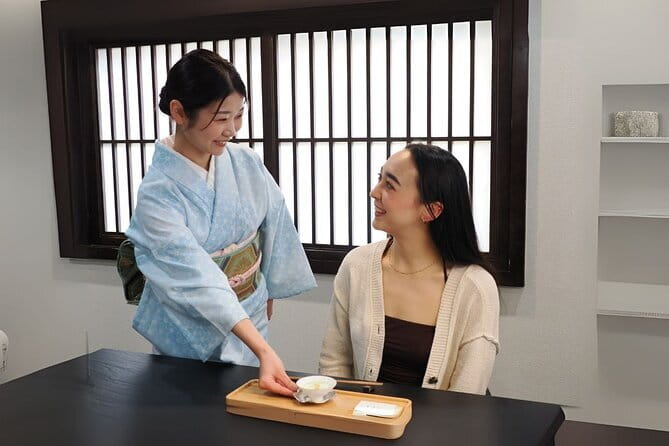
- Four distinct tea moments: Taste wakocha, gyokuro sencha, matcha, and genmaicha in one compact session.
- You make your own matcha: A tea master demonstrates the method, then you whisk your own cup with traditional tools.
- Seasonal sweets are part of the lesson: Enjoy tea cake and wagashi from Ougiya, a long-established confectioner.
- Small group, maximum 12 people: The size leaves room for questions and personal guidance.
- A useful Tokyo location: Ocharu is at 6-chōme-2-10 Hongō in Bunkyo, across from Tokyo University and near public transportation.
- Keepsakes are included: You receive a completion certificate and a photo of your group.
What this Tokyo tea experience really is
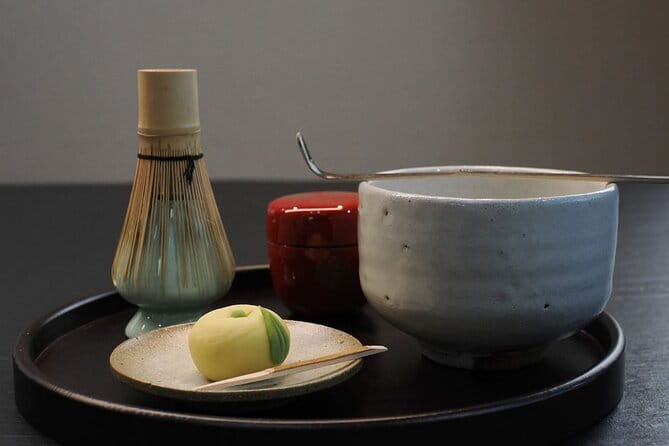
Japanese tea culture has several layers, and this session gives you a short, friendly introduction to many of them. You are not simply handed a cup and told what it is. The tea master explains how different teas are made, how water temperature affects them, and how sweets fit into the tasting.
That makes the visit useful for anyone who wants context along with refreshment. I like the way the tasting moves from a fruity and floral wakocha to the more refined gyokuro, then lets you prepare matcha yourself before ending with comforting genmaicha.
Still, you should book it for the right reason. The title may suggest a highly formal tea ceremony, but the actual format is more relaxed and instructional. You will learn about tea preparation and taste several styles. You should not expect a full ceremonial performance, a geisha appearance, or an extended ritual on tatami.
The maximum group size is 12. That is small enough for questions without making the session feel like a large demonstration. The short length also works well in Tokyo, where you may want to fit a cultural activity between museums, shopping, and sightseeing.
More Tokyo tea ceremonies:
- Matcha Making Class in Tokyo with Authentic Japanese Sweets Set
★ 5.0 · 744 reviews - Tokyo: Traditional Tea Ceremony with a Tea Master
★ 5.0 · 528 reviews - Dynamic Tokyo: Tokyo Tower, Tea Experience, Bay Cruise Day Tour
★ 4.5 · 521 reviews
Starting with Shizuoka wakocha and cake
The session opens with wakocha, Japanese black tea from Shizuoka. Japanese tea is often associated with green tea, so starting with a black tea gives you an immediate surprise. The tea is described as having fruity and floral notes, and it comes with a tea cake.
This first cup sets up an important point: Japanese tea is not one single flavor or style. Wakocha has a different character from the green teas that follow, and the cake gives you a simple way to notice how sweetness changes the taste of the tea.
I find this opening especially useful for people who do not usually drink tea. You get a gentle introduction before moving into more specialized teas. The cake also makes the beginning feel welcoming rather than overly solemn.
The welcome tea and cake are included in the price. Extra souvenirs and gifts are not included, so you should not assume that additional sweets or tea products come with the standard booking.
Watching gyokuro sencha being prepared
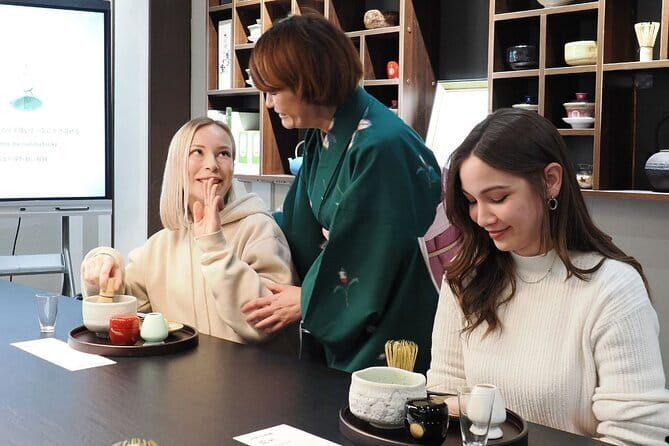
Next comes gyokuro sencha, described as the highest grade of green tea. This is the point where preparation becomes especially important. The tea master brews it for the group, giving you a chance to watch rather than rushing straight into your own turn.
You also taste the tea leaves. That is an unusual detail and a practical one. Most people think of tea as the liquid in the cup, but tasting the leaves makes the process more tangible. It gives you another way to notice texture and flavor.
Seasonal wagashi sweets from Ougiya accompany this part of the session. Ougiya has been making these Japanese confectionery treats for generations, and the sweets are meant to be enjoyed with the tea. Their seasonal character adds a cultural element that a standard tea tasting might skip.
This section may be the best part for anyone interested in Japanese food. The pairing shows that sweets are not an afterthought. They help prepare your palate for the tea and add a visual and seasonal touch to the presentation.
Making matcha with traditional tools
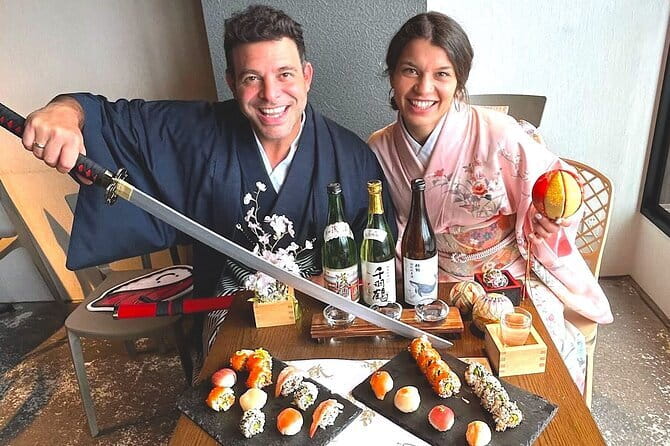
The matcha portion is the most hands-on part of the visit. After watching the tea master, you use traditional tools to whisk your own matcha. The instruction covers the basic method, including the importance of preparation and water temperature.
I like this because it changes your role. You are no longer only tasting what someone else prepared. You must handle the tools, follow the method, and see how much care goes into a cup that can look simple at first glance.
Do not worry about producing a perfect bowl. The value is in learning the process and understanding why matcha is whisked rather than brewed like ordinary loose-leaf tea. The activity also gives families and first-time visitors something concrete to do.
This is where the difference between the advertised title and the actual format matters most. If you want to learn how to make matcha, this should suit you well. If you want to sit quietly while a host performs a complete formal ceremony, you may find the session too casual.
A completely different kind of day in Tokyo:
- Mt Fuji and Hakone 1-Day Bus Tour Return by Bullet Train
★ 5.0 · 26,383 reviews - 1-Day Tokyo Bus Tour
★ 5.0 · 14,250 reviews - Tokyo: teamLab Planets TOKYO Digital Art Museum Entry Ticket
★ 4.6 · 9,779 reviews - Mt Fuji & Hakone Cruise, Drum Show Bullet Train 1 Day from Tokyo
★ 4.0 · 7,413 reviews
Ending with Niigata genmaicha
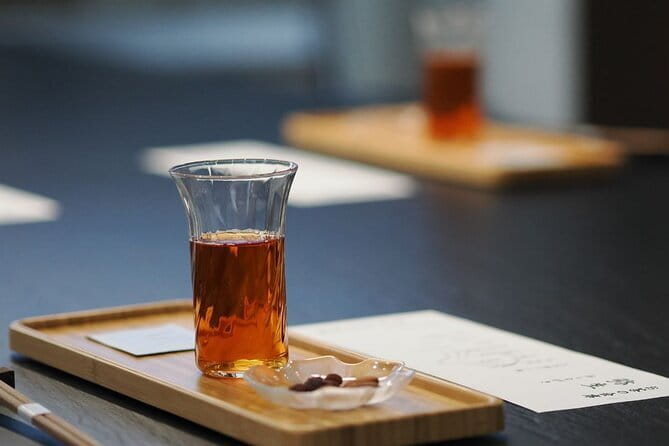
The final tea is genmaicha, a blend of sencha and roasted rice from Niigata Prefecture. After the stronger focus of gyokuro and the hands-on work of matcha, genmaicha provides a mild, familiar finish.
The roasted rice gives this tea a comforting character. It is an easy way to close the session because it feels less formal and less demanding than the earlier tasting. You finish with one more example of how regional ingredients and blending can change the style of Japanese tea.
The sequence is well planned for a one-hour activity. You begin with a welcoming tea, move into a more specialized tasting, prepare matcha yourself, and finish with a soothing cup. The pace should keep the class from feeling drawn out, though anyone wanting a long meditation-style ceremony will need to book something else.
Why the small group matters
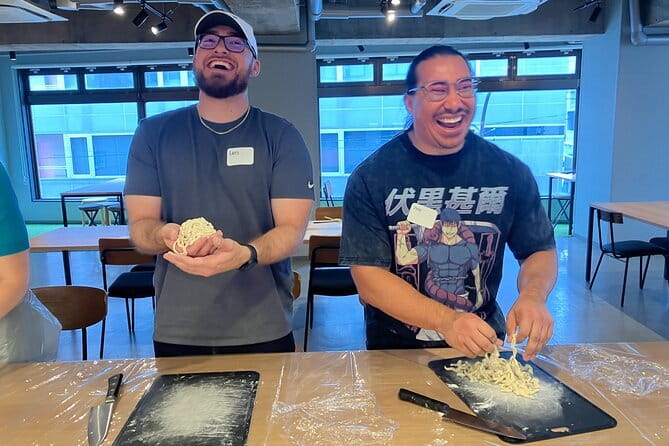
The maximum group size is 12, and that number matters here. Tea preparation involves small details, from holding the tools to paying attention to brewing temperature. In a crowded room, it would be harder to ask questions or see what the tea master is doing.
The small format also makes the activity suitable for families. One especially positive account described the experience as comfortable and educational for a family group. The class is not built around advanced tea knowledge, so you can arrive as a beginner.
You should still keep your expectations realistic. A group of 12 is small, but it is not private. If you want a fully personal lesson, ask about custom arrangements before booking. Special requests and customizations beyond the standard activity are not included.
Language is worth checking in advance. The experience is presented as an instructional activity, and many people have found the explanations useful. However, one booking reported that the leader did not speak English and that the group had to read material from a screen. If you need spoken English throughout, confirm this before you pay rather than assuming it.
Ocharu in Bunkyo, across from Tokyo University
The meeting point is Ocharu at 6-chōme-2-10 Hongō, Bunkyo City, Tokyo 113-0033. The tea room is directly across from Tokyo University, which gives you a clear area landmark and makes the activity easy to pair with time in Bunkyo.
The location is near public transportation, but travel to and from the tea room is not included. Plan your route before the start time and allow enough margin to find the entrance. One person reported waiting outside for 30 minutes when the session did not take place, so checking the confirmation details and meeting instructions on the day is sensible.
The activity ends back at the same meeting point. That makes it easy to continue sightseeing nearby or return to another part of Tokyo without arranging a separate pickup.
Is $33.03 a fair price?
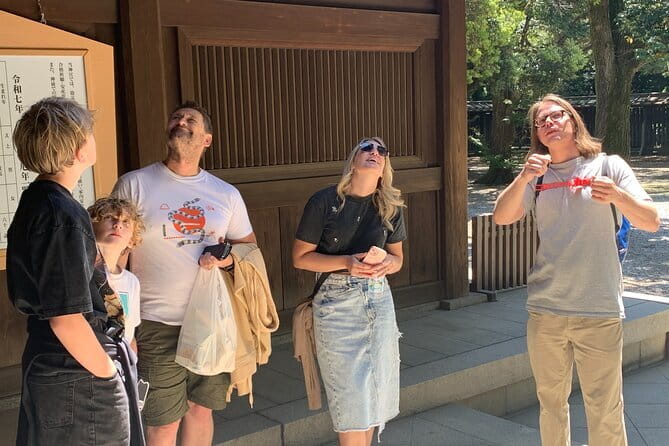
At $33.03 per person, this is a reasonable price for a one-hour cultural activity if you value instruction and variety. The fee includes the welcome tea and cake, sencha tasting, matcha-making session, genmaicha, access to the tea room, a certificate, and a group photo.
You are effectively paying for four tea moments, food pairings, equipment, and an explanation of the process. That is better value than a short photo opportunity with a single cup of matcha. The small group also helps justify the price because you get a chance to ask questions.
The value drops if you are booking it only for a formal ceremony. The activity is not designed as a complete traditional performance. It is closer to a guided tasting with a practical matcha lesson.
The certificate and photo are modest extras, but they may be useful if you want a physical reminder of the activity. They should not be the reason you book. The strongest value comes from tasting teas you might not otherwise order and learning how preparation changes the result.
Who should book this activity
I would recommend this experience to first-time visitors who want an easy introduction to Japanese tea. It also suits families, couples, and solo visitors who prefer a cultural class with conversation rather than a silent performance.
You will get the most from it if you enjoy trying new flavors, asking questions, and taking part in the preparation. The activity is also a good fit for a busy Tokyo schedule because it lasts about one hour and returns you to the starting point.
You may want to skip it if you have already studied Japanese tea in depth or if your main goal is a highly formal ceremony. You may also want to confirm the spoken language before booking if you cannot follow written explanations on a screen.
The 95 percent recommendation rate and 4.8 rating from 40 ratings suggest that the format works well for most people. Still, the lower ratings reveal the key risk: some people expected a traditional ceremony and felt they received a tea tasting instead. That is not a minor wording issue. It is the main booking decision.
Practical details before you go
Your confirmation is provided at booking, and the activity accepts a mobile ticket. The standard session has a maximum of 12 people and runs for about one hour.
The listed inclusions are:
- Welcome tea and cake
- Sencha tasting
- Matcha-making session
- Genmaicha
- Tea room access
- Certificate of completion
- Group photo
Souvenirs and gifts cost extra. Travel to Ocharu is also your responsibility. Free cancellation is available if you cancel at least 24 hours before the local start time. Inside that window, the payment is not refunded, and changes are not accepted.
I would arrive with the activity’s real purpose in mind: taste several Japanese teas, learn how they are prepared, and make matcha yourself. That simple adjustment will help you enjoy the session rather than comparing it with a ceremony it was never designed to provide.
Should you book the Ocharu tea session?
Book it if you want a friendly, compact lesson with several teas, seasonal sweets, and a hands-on matcha activity. The combination of wakocha, gyokuro, matcha, and genmaicha gives you a much broader picture of Japanese tea than a single-cup tasting.
Skip it if you want a full formal ceremony with a geisha-style host, extended etiquette, or a quiet performance. Before booking, confirm the language of instruction and double-check the meeting details.
For the price, the strongest reason to go is not the certificate or photo. It is the chance to understand what is in your cup, taste tea leaves and wagashi, and prepare matcha with your own hands in a small Tokyo group.
FAQ
How long does the tea experience last?
The activity lasts approximately one hour.
Where does the activity begin?
It begins at OCHARU, 6-chōme-2-10 Hongō, Bunkyo City, Tokyo 113-0033, Japan.
Where does the activity end?
It ends back at the Ocharu meeting point.
How many people can join the group?
The maximum group size is 12 people.
Which teas are included?
The session includes wakocha from Shizuoka, gyokuro sencha, matcha that you prepare yourself, and genmaicha made with sencha and roasted rice from Niigata Prefecture.
Is food included?
Yes. The experience includes a welcome tea with cake and seasonal wagashi with the gyokuro tasting.
Do I make my own matcha?
Yes. A tea master guides you as you use traditional tools to whisk and enjoy your own matcha.
Is this a formal geisha-style tea ceremony?
No. It is a relaxed tea tasting and matcha-making lesson. It is not presented as a long, formal ceremony with a geisha-style host.
Are a certificate and photo included?
Yes. You receive a certificate of completion and a photo of your group.
Can I cancel for a full refund?
Yes, if you cancel at least 24 hours before the experience start time. Cancellations or changes made within 24 hours are not refunded or accepted.
Newly reviewed around Tokyo
- Tokyo Asakusa:Calligraphy & Make T-shirt Activity★ 5.0 · 62 reviews
- Intercity Shuttle, Tokyo to Haneda /Narita /Yokohama /Makuhari★ 5.0 · 5 reviews
- 1 Hour Travel around Tokyo with a Professional Photographer★ 5.0 · 3 reviews
- Travel Tokyo with Your Own Personal Photographer★ 5.0 · 43 reviews
- Kickboxing & Body Training with EX-Pro Fighter★ 5.0 · 4 reviews
- Train in Samurai Swordsmanship and Defeat the Demon in Tokyo★ 5.0 · 5 reviews
- Shuttle Van 6hr Tokyo Tour to-and-from Tokyo, Yokohama and Narita★ 5.0 · 9 reviews
- Traditional Japanese Knife Sharpening Class★ 5.0 · 18 reviews
Tokyo Tea Ceremony Experiences, compared.
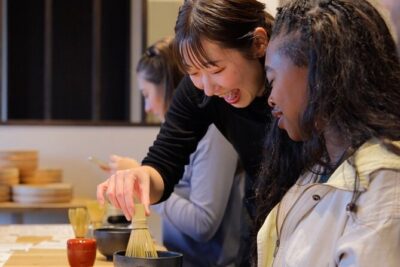
Matcha Making Class in Tokyo with Authentic Japanese Sweets Set
Read our review →
Dynamic Tokyo: Tokyo Tower, Tea Experience, Bay Cruise Day Tour
Read our review →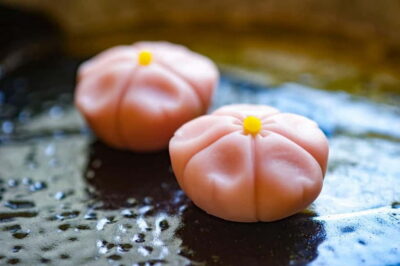
Matcha Making Experience with Mochi Sweets in Asakusa
Read our review →
Tea Ceremony Workshop in Tokyo by the Experienced Instrucor
Read our review →
Browse the lists this tour appears in