
Reviewed · TOKYO SUSHI MAKING CLASSES
Kid-Friendly Sushi Making Class in Tokyo (English-Led)
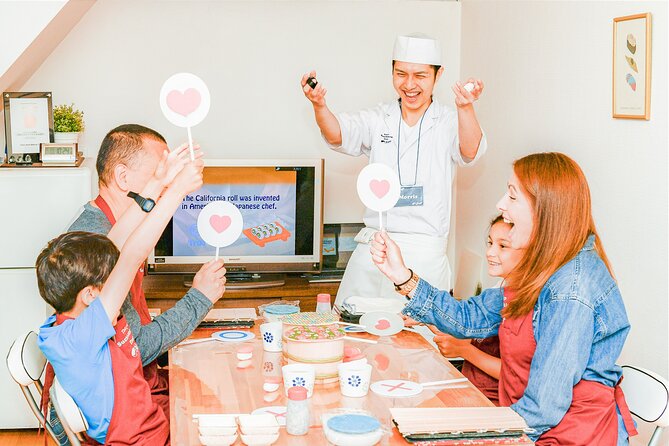
Making sushi here is less about watching a chef work and more about getting your hands busy. In roughly two and a half hours, you learn to season rice, shape four different sushi styles, test your etiquette knowledge, and eat what you make. The small group, capped at eight people, gives the instructor time to correct your technique.
I especially like the class’s mix of practical cooking and Japanese culture. The quiz, useful phrases, sushi history, and travel tips add context without turning the session into a lecture. I also like that children aged eight and up can take part. The main consideration is location: Kita-Senju is easy to reach from several popular Tokyo districts, but it is not in the center of the usual sightseeing circuit, so you need to allow time for the train ride.
Key points at a glance
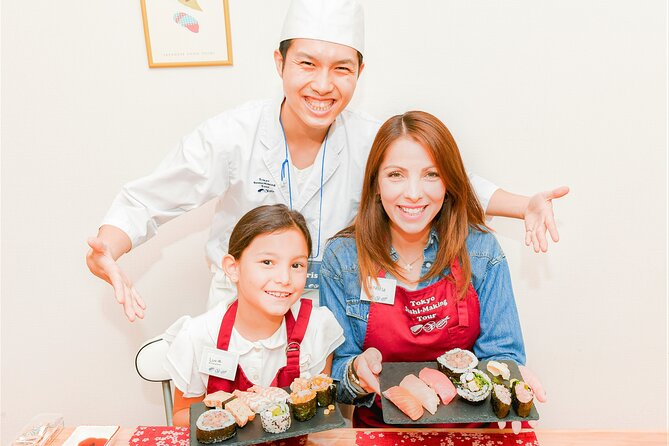
- Four sushi styles in one class: Make a decorative sushi roll, California roll, nigiri sushi, and battleship roll.
- A real hands-on lesson: You prepare vinegared rice and receive direct help from an English-speaking instructor.
- Good for children aged eight and up: The quiz and varied activities help keep younger cooks involved.
- Small groups of up to eight: The format allows for personal guidance rather than a large demonstration.
- Dietary choices are available: Non-raw fish, vegetarian, and gluten-free menus can be arranged if requested in advance.
- Kita-Senju meeting point: Meet at the East exit of Kita-Senju Station at 10:30 a.m., then return to the same meeting point.
Why this Tokyo sushi class feels different
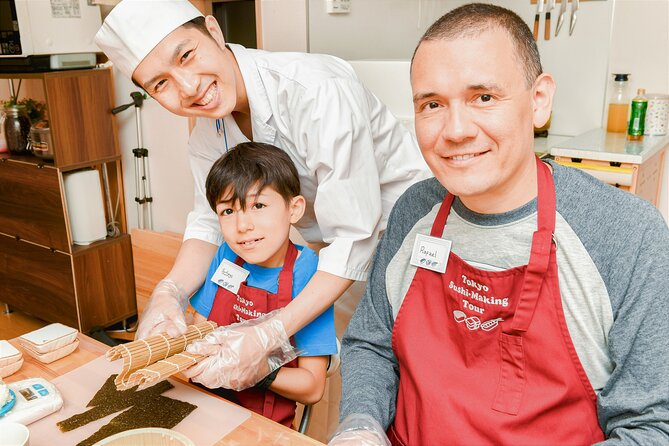
Many sushi lessons focus on one simple roll and a quick tasting. This class gives you a broader look at sushi preparation. You work with rice, fillings, seaweed, and shaping methods while learning why sushi is eaten and presented in particular ways.
The class also has a social rhythm. You begin with a quiz on sushi etiquette and trivia, move into preparation, then finish by arranging and eating your creations. That change of pace matters, especially for families. Children are not asked to sit still through a long explanation before they get to cook.
The group size is limited to eight people. That is small enough for an instructor to watch your hands, help with rolling, and answer questions. It also keeps the class from feeling like a food demonstration where you can see the chef but not much else.
English is used throughout. Nat has led sessions described as friendly, patient, and clear, while Morris has also taught families in the class. The exact instructor may vary, but the experience is designed for English-speaking participants and beginners.
More Tokyo sushi making classes:
- Sushi Making Tokyo Roll and Authentic Japanese Sushi Class
★ 5.0 · 3,971 reviews - Tokyo: Roll and Authentic Sushi Making Class in Asakusa
★ 4.9 · 1,957 reviews - Make Sushi and Create Unforgettable Memories in Tokyo
★ 5.0 · 1,413 reviews
Meeting at Kita-Senju at 10:30 a.m.
The meeting point is at the East exit of Kita-Senju Station, near 3-5 Senjuasahicho in Adachi City. The class begins at 10:30 a.m. and ends back at the meeting point after about two and a half hours.
Kita-Senju is not usually the first place people think of for a Tokyo food activity. That is part of the appeal. You are heading to a local neighborhood rather than staying beside the main tourist sights. The location is also practical from Asakusa, Akihabara, Ueno, and Ginza, though your exact travel time will depend on where you start.
Give yourself enough time to find the East exit and meet the group without rushing. The activity information specifically identifies the station exit as the meeting place, so it is wise to check your route before leaving your hotel. After the class, you return to the same point, making it easy to continue sightseeing or head back toward central Tokyo.
The morning start works well for a food class. You can learn, cook, and eat before the middle of the day, then still have an afternoon free. If you prefer late starts or want to combine the class with a slow breakfast, the 10:30 schedule may feel early.
Starting with sushi etiquette, trivia, and Japanese phrases
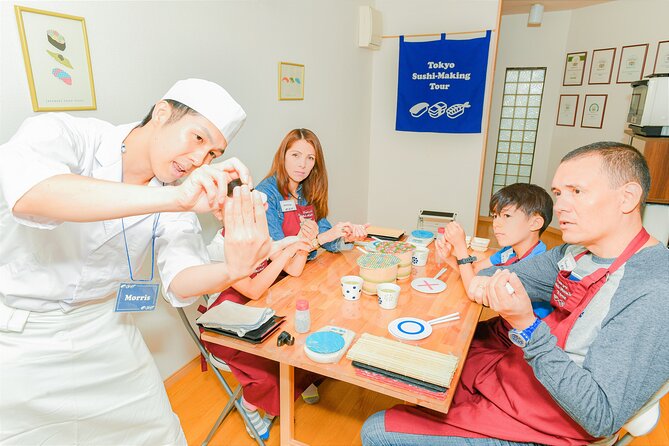
The first part of the session includes a fun quiz about sushi etiquette and trivia. This is more useful than it may sound. Sushi is not only about ingredients and knife work. How you handle soy sauce, wasabi, chopsticks, and nigiri can feel confusing when you are new to Japanese dining customs.
The quiz gives you a light way to learn without being put on the spot in a restaurant. You also hear about sushi’s history and pick up useful Japanese phrases. Travel tips are included, so the class has value beyond the meal you prepare that morning.
I like this opening because it gives the cooking some cultural context. You are not simply copying hand movements. You learn a little about the food you are making and gain information you can use during the rest of your time in Japan.
The class is intended for beginners, so you do not need previous cooking experience. The teacher explains each stage and gives hands-on guidance. If you are already comfortable making sushi at home, the value will come more from the Japanese context and the chance to make several styles in one sitting.
Preparing vinegared rice, the base of good sushi
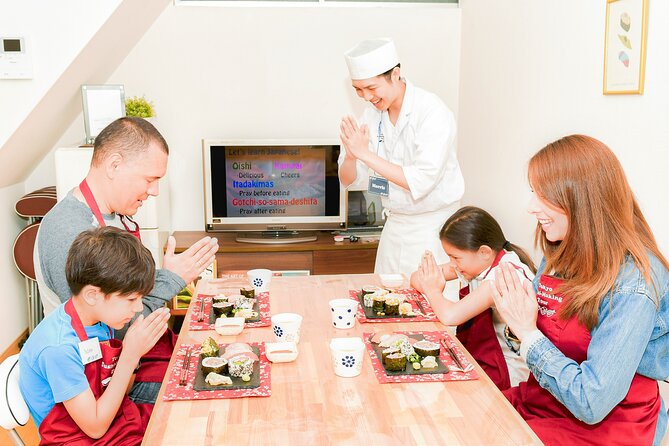
The class includes making vinegared rice, one of the most important steps in sushi. Rice that is too wet, too dry, too warm, or poorly seasoned can make the rest of the process difficult. Learning this foundation is more useful than being handed prepared rice and told to roll it.
You can expect the instructor to explain the role of the seasoning and show you how the rice should be handled. The supplied information does not specify every technique or ingredient measurement, so you should not expect a full written recipe unless the instructor provides one during the session.
This part may be less flashy than shaping a decorative roll, but it is where the class gives you a skill you can try again at home. The teaching focus includes professional tips and tricks for making sushi in your own kitchen. That makes the lesson practical, not just entertaining.
For children, rice preparation can be a good first task because it is simple to understand and connects directly to the food they will eat later. Adults may appreciate that the instructor does not skip the basic step that often determines whether homemade sushi holds together.
More Tokyo cooking classes:
- Tokyo Shinjuku Chopsticks Making Class
★ 5.0 · 1,763 reviews - Tokyo: Sushi Making Class in a Happi Coat near a Famous Spot
★ 4.9 · 1,377 reviews - Tokyo Sushi Making Class in Tsukiji with Professional Chef
★ 5.0 · 1,177 reviews - Ramen & Gyoza Cooking Class in Tokyo with Local Supermarket Visit
★ 5.0 · 823 reviews
Four sushi styles, four different techniques
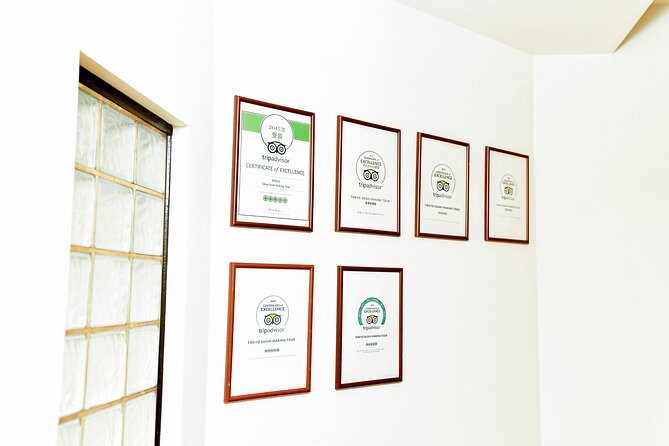
The main cooking section covers four types of sushi. Each one asks you to handle the ingredients in a different way, so the class does not become repetitive.
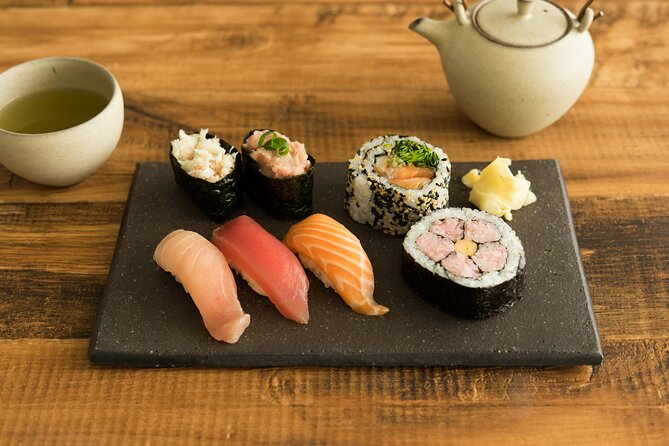
Decorative sushi roll: This is the most playful of the four. Ingredients are arranged so that a pattern appears when the roll is sliced. The reveal comes at the end, when you can finally see whether your design worked. It is a good activity for families because the result is visual and a little surprising.
California roll: This introduces the inside-out roll, with rice on the outside rather than seaweed. It adds a different rolling method and helps you understand why rice texture and pressure matter. You may find this easier or harder than a standard roll, depending on how comfortable you are with shaping food.
Nigiri sushi: Nigiri looks simple, but forming a neat rice base and placing the topping correctly takes care. It gives you a feel for the balance between rice and fish and shows why restaurant sushi can look so precise.
Battleship roll: Also called a gunkan-style roll, this sushi has a seaweed wrapper around a rice base with the topping held above it. Its shape is different from both a conventional roll and nigiri, so it rounds out the lesson well.
Working through all four styles makes the $68.97 price easier to assess. You are not paying for a short demonstration followed by a snack. You receive instruction, ingredients, cultural information, and a meal you prepare yourself. The value is strongest for first-time sushi makers and families who want a shared activity rather than another restaurant meal.
Still, this is not a professional chef-training course. Two and a half hours is enough to learn basic methods and useful tips, but not enough to master sushi making. Think of it as a well-organized introduction that you can build on at home.
Raw fish, vegetarian, and gluten-free options
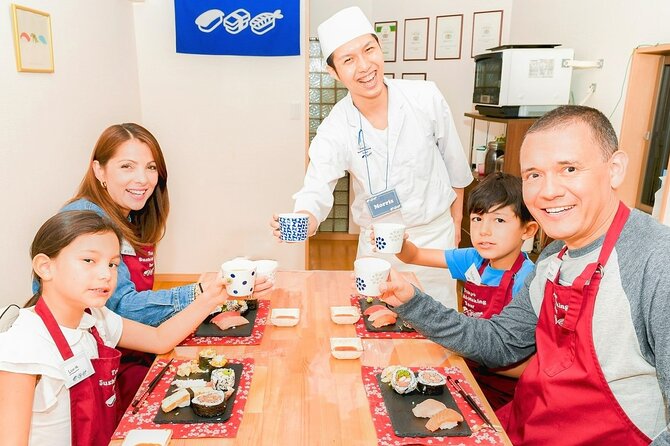
The standard ingredients typically include raw salmon and tuna. If you enjoy sushi but have concerns about raw fish, the class offers a non-raw fish menu. Vegetarian and gluten-free menus are also available.
You need to tell the provider about dietary restrictions in advance. Do not wait until you arrive. The information does not specify every substitute ingredient, so if you have a serious allergy, ask for clear confirmation before booking and repeat the concern ahead of the class.
This flexibility makes the activity more useful for mixed groups. One person can choose a vegetarian menu while another works with fish, rather than the whole party needing to follow one menu. Families should also make arrangements ahead of time for children who do not eat raw fish.
The class is still centered on sushi, so you should expect food preparation rather than a broad Japanese cooking lesson. If your main interest is ramen, tempura, or a full multi-course menu, this is not the right activity. It is focused and specific, which is an advantage if sushi is the food you want to understand.
A good pace for families and first-time cooks
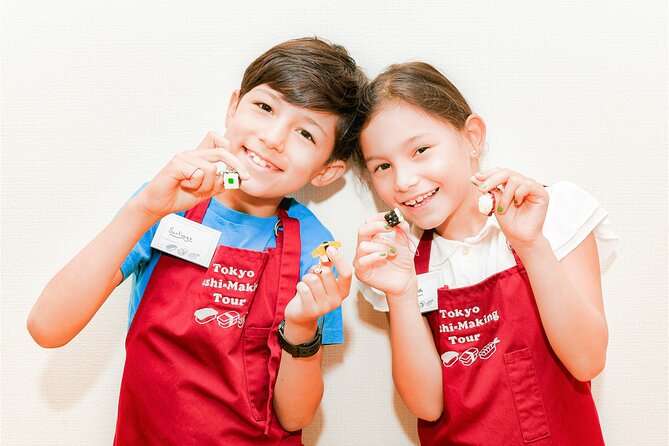
Children aged eight and up are welcome. The class combines short cultural lessons, a quiz, hands-on cooking, and eating, which creates a better rhythm for young participants than a long technical workshop.
Families with children aged 10 and 12 have found the four-style format easy to enjoy, with enough variety to keep the session moving. The instructor’s patience matters here. Nat is described as kind and patient, and Morris has also led a family class that included two young children.
Younger cooks may need help with rolling and shaping. That is where the small group matters. An instructor can step in when a roll loosens or a piece of nigiri becomes too large. You should still expect children to work carefully with food and follow directions.
Adults without children fit the class too. The English instruction, quiz, cultural details, and practical cooking tips give couples and solo participants plenty to do. The atmosphere is described as relaxed rather than formal, so you do not need to arrive with perfect technique or deep sushi knowledge.
What the strongest praise tells you
The most consistent positive points are the instructor’s clear English, the friendly teaching style, the mix of activities, and the chance to eat the sushi you make. Those details point to an experience where the human teaching matters as much as the food.
One especially useful sign is the praise for the pace. A class can be too slow for adults or too fast for children, but this format appears designed to keep changing tasks. The quiz, history, rice preparation, rolling, shaping, and meal give the session several distinct stages.
The practical side is also important. Participants have taken away skills they could use at home, not just photographs of attractive sushi. The class leader answers questions and explains why the food is handled in certain ways. That is more helpful than simply saying, do it like this.
Preparation has also been described as immaculate. Since the supplied details do not list the exact kitchen setup or cleaning procedures, I would treat that as a positive indication rather than a guarantee of a particular facility. The strongest evidence points to an organized class with careful preparation.
Price, group size, and overall value
At $68.97 per person, this is not the cheapest meal in Tokyo. It can still be good value if you want an activity, a lesson, and lunch in one package.
The price includes a two-and-a-half-hour experience with an English-speaking instructor, ingredients for four sushi styles, cultural information, and the sushi you make. The small group of up to eight adds value because you are more likely to receive direct help.
You should compare it with what you want from the day. If you only want to eat sushi, a restaurant will give you more choice and may cost less. If you want to learn a skill, spend time with family, and understand a little more about Japanese food customs, the class offers a fuller experience.
The fact that it is often booked around 40 days ahead is a useful planning signal. It does not guarantee that every date sells out, but families and visitors with fixed Tokyo schedules should reserve early. Confirmation is sent within 48 hours, subject to availability.
Free cancellation is available up to 24 hours before the start time for a full refund. Changes or cancellations made less than 24 hours before the class are not accepted for a refund, and the cut-off uses Tokyo local time.
Who should book this experience?
I would recommend it most strongly to families with children aged eight and up, first-time sushi makers, and visitors who want a cultural activity with a meal at the end. It also fits people who value English instruction and prefer a small group over a large cooking demonstration.
It is a good pick for a mixed group because raw fish is not the only option. Non-raw fish, vegetarian, and gluten-free menus can be arranged with advance notice.
I would pause if you have very limited time in Tokyo and are staying far from the northern part of the city. Kita-Senju is accessible from major areas, but the trip to the meeting point still takes planning. I would also choose another activity if you want advanced sushi knife skills, a professional kitchen course, or a wide survey of Japanese cooking.
Should you book the Kita-Senju sushi class?
Book it if you want to make your own lunch, learn four sushi styles, and share a relaxed activity with your family or a small group. The quiz, Japanese phrases, etiquette lessons, and practical rice tips give the class more substance than a simple roll-and-eat session.
The strongest reasons to choose it are the small group, English-speaking instruction, family-friendly pace, and dietary flexibility. Plan your train route carefully, notify the provider about food restrictions in advance, and reserve early if your dates are fixed.
FAQ
Where does the sushi-making class meet?
You meet at the East exit of Kita-Senju Station, near 3-5 Senjuasahicho in Adachi City, Tokyo.
What time does the class begin?
The class starts at 10:30 a.m.
How long does the experience last?
The sushi-making experience lasts approximately two hours and 30 minutes.
Where does the activity end?
The class ends back at the meeting point near Kita-Senju Station.
Is the class taught in English?
Yes. The class is led by English-speaking instructors.
How many people can join the class?
The activity has a maximum of eight participants.
Are children allowed to participate?
Yes. Children aged eight and up are welcome.
What kinds of sushi will I make?
You will make a decorative sushi roll, California roll, nigiri sushi, and battleship roll. You will also prepare vinegared rice.
Can I request a special menu?
Yes. Non-raw fish, vegetarian, and gluten-free menus are available, but you must inform the provider of your dietary needs in advance.
More hands-on classes and workshops in Tokyo
- Chopstick Making Workshop in Ginza
★ 4.8 · 1,366 reviews - Matcha Making Class in Tokyo with Authentic Japanese Sweets Set
★ 5.0 · 744 reviews - Tokyo: Samurai Sword & Archery Class from Samurai Descendant
★ 5.0 · 603 reviews - Tokyo: Tsukiji Fish Market Sushi Making Class with Pro Chef
★ 4.9 · 506 reviews
Newly reviewed around Tokyo
- Tokyo Asakusa:Calligraphy & Make T-shirt Activity★ 5.0 · 62 reviews
- Intercity Shuttle, Tokyo to Haneda /Narita /Yokohama /Makuhari★ 5.0 · 5 reviews
- 1 Hour Travel around Tokyo with a Professional Photographer★ 5.0 · 3 reviews
- Travel Tokyo with Your Own Personal Photographer★ 5.0 · 43 reviews
- Kickboxing & Body Training with EX-Pro Fighter★ 5.0 · 4 reviews
- Train in Samurai Swordsmanship and Defeat the Demon in Tokyo★ 5.0 · 5 reviews
- Shuttle Van 6hr Tokyo Tour to-and-from Tokyo, Yokohama and Narita★ 5.0 · 9 reviews
- Traditional Japanese Knife Sharpening Class★ 5.0 · 18 reviews
Tokyo Sushi Making Classes, compared.
Sushi Making Tokyo Roll and Authentic Japanese Sushi Class
Read our review →
Roll and Authentic Sushi Making Class in Asakusa
Read our review →
Make Sushi and Create Unforgettable Memories in Tokyo
Read our review →
Sushi Making Class in a Happi Coat near a Famous Spot
Read our review →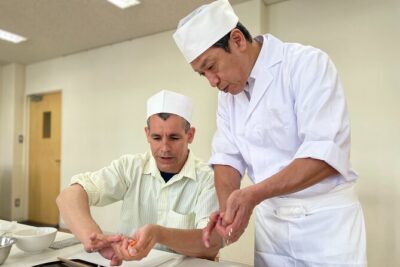
Tokyo Sushi Making Class in Tsukiji with Professional Chef
Read our review →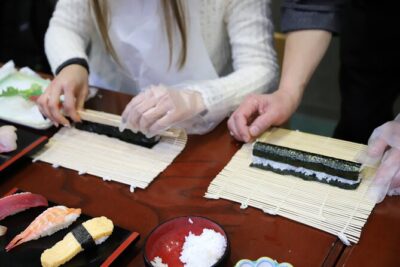
Tsukiji Fish Market Guided Tour and Sushi Making with Pro Chef
Read our review →
Tsukiji Fish Market Sushi Making Class with Pro Chef
Read our review →
Browse the lists this tour appears in