
Reviewed · TOKYO RAMEN TOURS AND CLASSES
Ramen and Gyoza Cooking Class in Tokyo
The best part of this Tokyo cooking class is that it teaches you more than a recipe. You learn why ramen changes from region to region in Japan, then put that lesson to work with miso ramen, homemade broth, toppings, and three styles of gyoza. I like the history lesson and the fact that the food is simple enough to make at home.
I also like the private format, the relaxed Yanaka setting, and the clear effort made for vegetarian and vegan diets. The main consideration is timing: 90 minutes gives you a focused introduction, not a long culinary workshop, and the class requires at least two people.
Key points at a glance
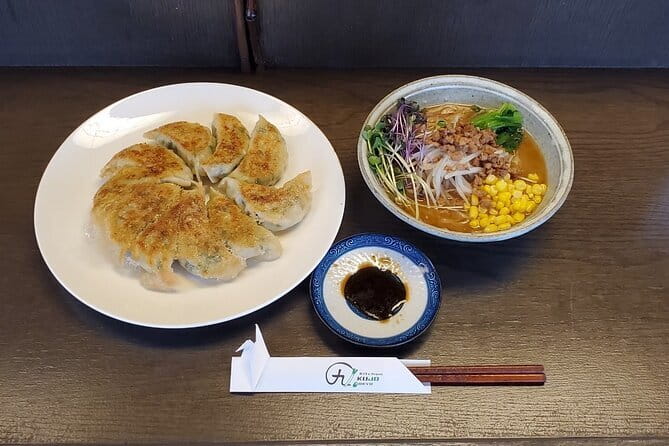
- Three gyoza fillings: Make regular fried dumplings, cheese gyoza, and kimchi gyoza in one session.
- Miso ramen with choice of broth: Use kelp with chicken or scallops, or a kelp and vegetable broth for a vegan version.
- Shoji and translation support: Shoji leads the class, with a translator available to help communication.
- A useful ramen lesson: Learn how noodles, broth, and regional habits shape ramen across Japan.
- Private Yanaka location: Only your group participates, in a Japanese-style house near Ueno and Nippori.
- Recipes you can repeat: The methods are designed to be practical when you return home.
Why this 90-minute class works well in Yanaka
Tokyo offers endless places to eat ramen and gyoza. A cooking class gives you something different: a way to understand those dishes before you order them again. This experience takes place in Yanaka, a quieter part of Taito City near Ueno and Nippori, rather than in a large commercial cooking studio.
You meet at 谷中スペース, at 1-chōme 2-10 Yanaka, Tokyo 110-0001. The class starts at 11 am and finishes at the same place. That makes it easy to pair with more sightseeing in the afternoon, especially if you want to spend time around Yanaka, Ueno, or Nippori afterward.
I like the choice of setting. A Japanese-style house gives the class a more personal feel than a busy school with several unrelated groups. Since the activity is private, you cook only with your own party. That is useful for families, couples, and small groups who want to ask questions without competing for the instructor’s attention.
The class lasts about an hour and a half. You should see that as a compact introduction rather than a full-day food course. The pace should suit you if you want hands-on work without giving up half a day of sightseeing.
More Tokyo ramen tours and classes:
- Eat and Drink Like a Local: Tokyo Ueno Food Tour-Taverns&Ramen
★ 5.0 · 957 reviews - Ramen & Gyoza Cooking Class in Tokyo with Local Supermarket Visit
★ 5.0 · 823 reviews - Tokyo: Ramen Tasting Tour with 6 Mini Bowls of Ramen
★ 4.9 · 432 reviews
The opening lesson: ramen is not one single dish
The class begins with a short lecture on the history of ramen and gyoza in Japan. Both foods came to Japan from elsewhere, then changed over time into dishes with distinctly Japanese forms and habits. That background matters because it helps explain why a bowl of ramen in one part of Japan can taste quite different from one served elsewhere.
The useful point is not just the origin story. You learn to pay attention to the parts of ramen that change: the noodles, the broth, and the regional style. Ramen can be a quick meal, but it reflects local ingredients and strong preferences about texture and seasoning.
This is where the experience becomes useful beyond the kitchen. After the class, you can look at a ramen menu with a better sense of what you are ordering. If you continue around Japan, the lesson gives you a simple framework for noticing how each bowl differs.
The lecture is brief, so do not expect a detailed food-history seminar. Its value comes from connecting the explanation to the cooking that follows. You hear about the dish, then immediately handle the ingredients and taste the result.
Making the miso ramen broth
The main ramen dish is miso ramen prepared with an original soup. The standard broth uses kelp together with chicken or scallops. For vegans, the broth uses kelp and vegetables instead.
That option is important because the class does not treat a vegan meal as an afterthought. The cooking format can accommodate vegan participants, and the provider notes that vegan participation is common enough to have shaped the way the food is taught. If you are vegan, make your dietary needs clear when booking so the suitable broth can be prepared.
Kelp gives the broth a basic Japanese savory character. Chicken or scallops add another layer, while vegetables provide the plant-based version. You get to see how a few basic ingredients can change the feel of the finished soup without turning the process into a difficult kitchen project.
You also prepare toppings for the ramen. The information provided does not specify every topping or the exact noodle type, so you should think of this as a guided miso ramen method rather than a fixed recipe with every detail spelled out in advance.
I like this approach for home cooks. A recipe that depends on rare ingredients or specialized equipment is hard to repeat after a trip. The class focuses on a soup and toppings you can use as a base, then adjust to your own kitchen and taste.
Folding and frying three kinds of gyoza

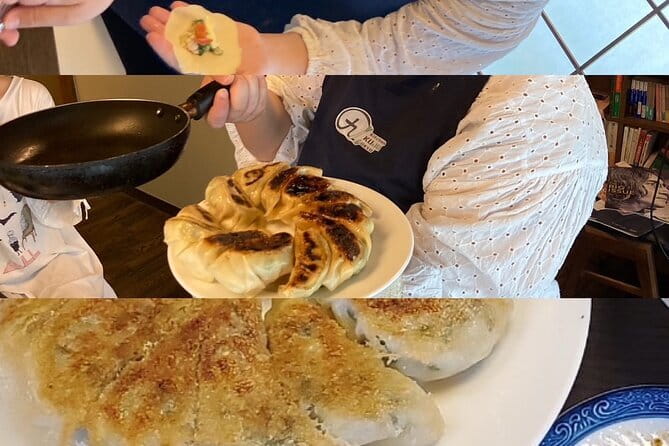
The gyoza portion gives you more variety than a single dumpling filling. You make regular fried gyoza, cheese gyoza, and kimchi gyoza.
The regular version gives you the basic idea of a Japanese fried dumpling. You learn the practical work of filling, folding, and cooking it. That is the part you will need if you want to recreate the dish at home.
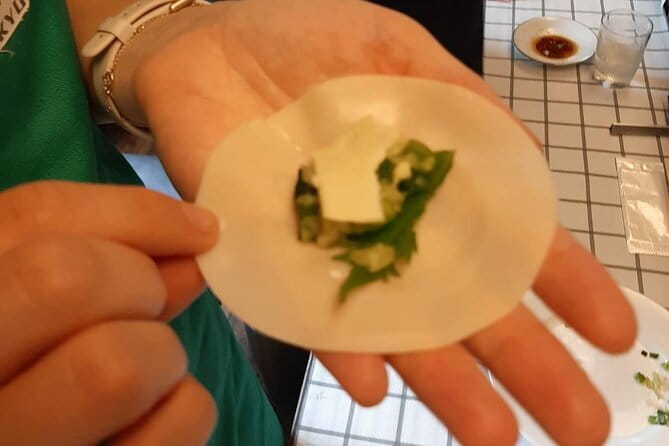
Cheese and kimchi show how flexible gyoza can be. Cheese changes the filling into something familiar and rich, while kimchi brings heat and a sharper fermented flavor. Making all three lets you compare the styles in the same sitting.
This variety also keeps the class lively. Instead of repeating one filling for a long time, you get three small experiments. You can decide which version works best for you and then adapt the method at home.
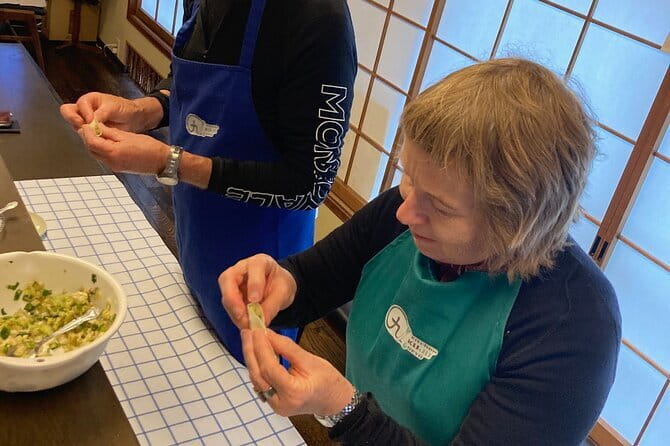
The cooking is hands-on, but beginners should not feel pressured to arrive with kitchen skills. The class is designed for people who want an introduction, and Shoji is described as patient and friendly. A translator assists with communication, which is especially helpful when the instructor needs to explain folding or cooking steps clearly.
More Tokyo cooking classes:
- Tokyo: Roll and Authentic Sushi Making Class in Asakusa
★ 4.9 · 1,957 reviews - Tokyo Shinjuku Chopsticks Making Class
★ 5.0 · 1,763 reviews - Tokyo: Sushi Making Class in a Happi Coat near a Famous Spot
★ 4.9 · 1,377 reviews - Tokyo Sushi Making Class in Tsukiji with Professional Chef
★ 5.0 · 1,177 reviews
What the instructors add to the experience
Shoji leads the class, and translation support is available. That combination is worth noting because cooking instruction depends on small details. A short explanation of how to shape a dumpling or judge the cooking stage can be hard to follow if communication is rushed.
The teaching style appears personal rather than formal. You are not simply handed ingredients and left to copy a demonstration. The format allows questions, and the private setup means your group can move at a comfortable pace.
The hosts also connect the food with daily life in Japan. One of the class themes is that ramen and fried dumplings have become Japanese foods in their own right, even though both began outside Japan. That is a useful way to think about food culture: dishes change when people make them part of local life.
The class also carries a practical message about Japanese agriculture and food supply. That topic is not the main event, but it adds context to the ingredients and to the value of cooking from basic components. If you enjoy learning how food connects to a country’s habits, the extra conversation should appeal to you.
Vegan, vegetarian, and family considerations
This is one of the stronger choices in Tokyo for a mixed-diet group. The vegan ramen uses kelp and vegetable broth, and vegetarian participation is specifically accommodated. The cooking format can also work for families in which some people eat vegan food and others do not.
You should still communicate your needs before the class. The supplied information confirms vegan options, but it does not list every ingredient in the gyoza fillings or toppings. Ask about the exact dumpling ingredients when you book if you have allergies or strict dietary rules.
The Japanese-style house suits a range of groups, from adults to families with children. A private class can be less stressful for children than a large group lesson, since your party does not need to match the pace of strangers.
The 90-minute duration is also reasonable for a family schedule. You get a complete food activity without committing to a long session. Still, cooking involves preparation, folding, and eating, so very young children may need close help from an adult.
Price and what you receive for $91.76

At $91.76 per person, this is not the cheapest way to eat ramen in Tokyo. A bowl of ramen and a plate of gyoza at a casual restaurant will cost much less.
The comparison changes when you count what is included. You receive instruction, a short cultural lesson, a private session, a full meal, several gyoza styles, and recipes you can use after Japan. You are paying for participation and context, not just lunch.
I see the best value here for people who enjoy cooking or want one food activity with a lasting payoff. If you only want to taste ramen, spend the money at a specialist shop. If you want to understand the dish and learn a method you can repeat, the price is easier to justify.
The private format also matters. A lower-priced group class may give you less time to ask questions or less room to work. Here, only your group takes part, which can make the cost worthwhile for a family or a small party that values personal attention.
The class is commonly reserved well ahead of time, with an average booking lead time of about 37 days. That suggests you should not leave it until the final few days of a Tokyo trip, especially if you need a vegan arrangement or are coordinating a larger family group.
Getting there and planning the rest of your day

The meeting point is in Yanaka, within reach of Ueno Station and Nippori. The activity is near public transportation, but the supplied details do not name a specific station exit or walking time. Check the exact route after booking and allow enough time to find the house before the 11 am start.
A mobile ticket makes entry simple. Keep the booking available on your phone, and confirm the meeting instructions when the reservation is approved. Confirmation is sent within 48 hours, subject to availability.
Because the class ends where it begins, you do not need to arrange a separate return transfer. You can continue exploring the neighborhood, head toward Ueno, or make your own lunch and sightseeing plans after the session.
The activity is not designed as a walking tour. Its main value comes from cooking and conversation, so wear something comfortable and suitable for working with food. No special clothing requirement is given, but a practical outfit is sensible.
The main limitation: a short, focused format
The class has many strengths, but the 90-minute schedule sets a firm limit. You get a history introduction, ramen preparation, three gyoza styles, cooking, and a meal in a short period. That means the instruction must stay focused.
You should not expect a slow, professional-chef workshop or a long visit through several stages of broth preparation. The description does not promise a full stock-making session from raw bones or a detailed tour of a market. Instead, it offers an approachable miso ramen recipe built around kelp and a selected protein or vegetable base.
That is not a flaw if you want a manageable activity. It could be a drawback if you already cook Japanese food often and want advanced knife work, long-fermented ingredients, or restaurant-level technique.
The class also requires a minimum of two participants. Solo visitors cannot assume they can book independently. If the minimum number is not met and the activity is canceled, you are offered another date or experience, or a full refund.
Who should book this Yanaka cooking class
I would recommend it most strongly to:
- First-time visitors who want a food activity with cultural context.
- Couples and families looking for a private class.
- Beginners who want recipes they can attempt at home.
- Vegan or vegetarian participants who need a clearly stated alternative.
- Ramen fans who want to understand regional differences across Japan.
- People staying near Ueno, Nippori, or Yanaka.
It is less suited to you if you want a long culinary course, a market visit, or a restaurant-focused ramen tasting. It is also not the right pick if your main goal is simply a cheap meal.
The strongest praise attached to the class centers on friendly instruction, clear communication, patient teaching, and food that feels possible to recreate at home. That last point is important. The experience is not just about eating what you make in Tokyo. It gives you a reason to keep making ramen and gyoza after you return.
Should you book it?
Book this experience if you want a private, practical food lesson rather than another restaurant meal. The combination of miso ramen, three gyoza fillings, a short history lesson, vegan support, and a relaxed Yanaka house gives you plenty to do in 90 minutes.
Think carefully if $91.76 feels high for a short activity or if you prefer advanced cooking instruction. For most first-time cooks, though, the useful recipes, personal teaching from Shoji, and chance to understand Japanese ramen styles make this a sensible addition to a Tokyo itinerary.
Free cancellation is available up to 24 hours before the local start time for a full refund. Changes or cancellations inside that window are not accepted or refunded, so keep your schedule firm once the class day approaches.
FAQ
Where does the ramen and gyoza class take place?
It takes place at 谷中スペース, 1-chōme 2-10 Yanaka, Taito City, Tokyo 110-0001. The location is near public transportation and close to Ueno Station or Nippori.
What time does the class start?
The class starts at 11 am.
How long does the experience last?
The cooking class lasts approximately 1 hour and 30 minutes.
Where does the class finish?
The activity ends back at the meeting point in Yanaka.
Is the class private?
Yes. Only your group participates in the activity.
Can vegans join the class?
Yes. Vegan participants can make miso ramen with kelp and vegetable broth.
What types of gyoza will I make?
You will make regular fried gyoza, cheese gyoza, and kimchi gyoza.
How many people are required to book?
A minimum of two people is required.
Can I cancel for a full refund?
Yes. You can cancel at least 24 hours before the local start time for a full refund. Cancellations or changes made less than 24 hours before the start time are not accepted or refunded.
More hands-on classes and workshops in Tokyo
- Sushi Making Tokyo Roll and Authentic Japanese Sushi Class
★ 5.0 · 3,971 reviews - Chopstick Making Workshop in Ginza
★ 4.8 · 1,366 reviews - Matcha Making Class in Tokyo with Authentic Japanese Sweets Set
★ 5.0 · 744 reviews - Tokyo: Samurai Sword & Archery Class from Samurai Descendant
★ 5.0 · 603 reviews
Newly reviewed around Tokyo
- Tokyo Asakusa:Calligraphy & Make T-shirt Activity★ 5.0 · 62 reviews
- Intercity Shuttle, Tokyo to Haneda /Narita /Yokohama /Makuhari★ 5.0 · 5 reviews
- 1 Hour Travel around Tokyo with a Professional Photographer★ 5.0 · 3 reviews
- Travel Tokyo with Your Own Personal Photographer★ 5.0 · 43 reviews
- Train in Samurai Swordsmanship and Defeat the Demon in Tokyo★ 5.0 · 5 reviews
- Shuttle Van 6hr Tokyo Tour to-and-from Tokyo, Yokohama and Narita★ 5.0 · 9 reviews
- Kickboxing & Body Training with EX-Pro Fighter★ 5.0 · 4 reviews
- Traditional Japanese Knife Sharpening Class★ 5.0 · 18 reviews
Tokyo Ramen Tours and Classes, compared.
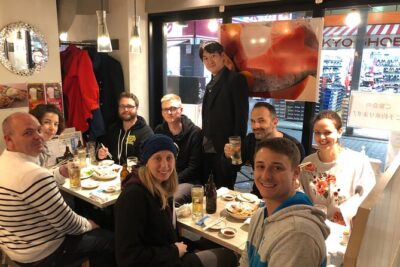
Eat and Drink Like a Local: Tokyo Ueno Food Tour-Taverns&Ramen
Read our review →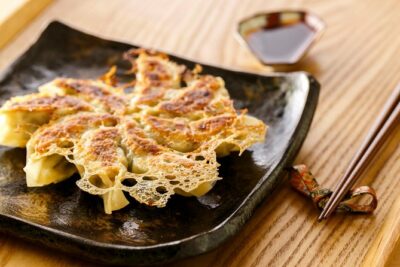
Ramen & Gyoza Cooking Class in Tokyo with Local Supermarket Visit
Read our review →
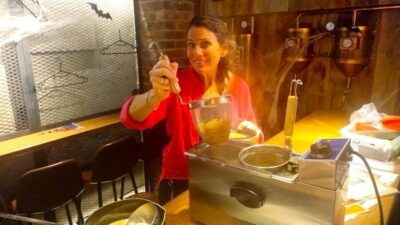
Easy Ramen Cooking Experience in Kabukicho, Shinjuku
Read our review →
Ramen and Sushi Cooking Class with Sake Pairing Set in Tokyo
Read our review →
Professional Ramen & Gyoza with Ramen Chef in a restaurant!
Read our review →
Ramen Dojo Tokyo | Make All 3 (Tonkotsu/Shoyu/Miso)
Read our review →Ramen Dojo Tokyo | Make All 3 (Tonkotsu/Shoyu/Miso)
Read our review →Browse the lists this tour appears in