
Reviewed · TOKYO WALKING TOURS
Private Ginza Architecture Walking Tour
Ginza is best understood by looking up. Behind the polished department stores and luxury labels, you’ll find bold facades, tiny shrines, a grand theater, a Buddhist temple, and older buildings that reward a slower look. This private walking tour links those pieces with a guide who can explain what you are seeing instead of leaving you to guess.
I like the personal pace and the range of stops. You can ask for more architecture, more history, or more local shopping, and guides such as Yoko, Yoshi, Mari, and urban planner Taka Yamamura have been praised for adjusting their explanations well. The short drink pause is another welcome touch. The main caution is that some stops are brief, and one English-language account found the opening section less focused on modern architecture than expected.
Key points at a glance
- Private group of up to five: You get direct access to one licensed local guide, with room to shape the conversation around your interests.
- A varied Ginza route: The walk includes Tsukiji Hongwanji Temple, Kabukiza Theater, luxury-brand buildings, shrines, and older architecture.
- Strong guide-led experience: Yoko, Yoshi, Mari, Eriko, Haruka, Makoto, and Taka Yamamura are among the guides praised for clear explanations and flexible pacing.
- About three to three and a half hours: The route is long enough to build a picture of Ginza without taking up an entire day.
- Several indoor visits: You go inside the temple, theater, Nicolas G. Hayek Center, Hermes forum, and Okuno Building, though exact access can depend on timing.
- Best for curious walkers: You need moderate physical fitness, and the tour works especially well for first-time Ginza visitors, repeat Tokyo visitors, and anyone interested in buildings.
Why Ginza works so well as an architecture walk
Ginza gives you a useful lesson in Tokyo’s changing face. The district mixes historic religious buildings and traditional performing arts with sleek towers and carefully designed boutiques. You can move from a temple to a theater, then turn a corner and find a tiny shrine squeezed into the commercial grid.
That variety makes this more than a parade of luxury shops. You’ll hear about architecture, Japanese culture, and the city’s past while walking between sites. I especially like the way the route asks you to notice details at eye level and above it: entrances, windows, signs, materials, and the way each building presents itself to the street.
The guide matters here. Ginza can look expensive and polished on a casual walk, but its best details are easy to miss. A private guide can explain why a building matters, point out small religious sites, and answer questions without holding up a larger group.
More things to do in Ginza:
- Chopstick Making Workshop in Ginza
★ 4.8 · 1,366 reviews - Tokyo: Art Aquarium Museum GINZA Entry Ticket
★ 4.5 · 278 reviews - Official Japan Go-Kart Through Tokyo Bay / Ginza (IDP Required)
★ 4.5 · 71 reviews
Starting near Tsukiji and walking toward Ginza
The meeting point is near Exit 1 of Tsukiji Station, at 3 Chome 15 in Tsukiji. That gives the tour a practical starting point outside Ginza’s main shopping streets and lets you approach the district on foot.
The itinerary allows about 40 minutes for walking between sites in total. That is important when judging the pace. This is not a bus tour with a quick photo stop at each building. You will spend a good part of the experience walking, looking around, and talking with your guide.
The nearby Tsukiji area also adds useful context. One route account included the Outer Market, and the tour’s opening section can include more than modern buildings alone. If your main goal is contemporary architecture, tell your guide early. If you enjoy seeing how food, religion, commerce, and design meet in central Tokyo, the broader opening makes sense.
Two departure times are offered, which helps you fit the walk around meals, shopping, or other sightseeing. The exact times are not given here, so check the available options when booking.
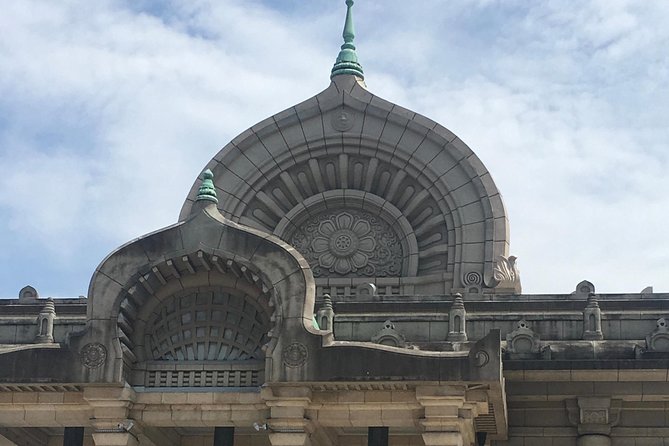
Tsukiji Hongwanji Temple: an early change of mood
The first named stop is Tsukiji Hongwanji Temple, where you go inside for about 10 minutes. The temple gives the tour an immediate contrast with Ginza’s commercial image.
This is a useful stop because it reminds you that the area is not only about branded storefronts and tall office buildings. Your guide can explain the temple’s place in local culture and help you notice its design rather than treating it as a quick backdrop for photos.
Ten minutes is not long. You should expect a focused visit, not a full temple tour. Still, it sets up one of the best ideas of the walk: Ginza and its surroundings contain several kinds of architecture within a short distance.
Kabukiza Theater and the role of performance
At Kabukiza Theater, the tour spends about 20 minutes inside to enjoy its features. Even if you do not attend a kabuki performance, the building gives you a clear connection between architecture and Japanese stage culture.
This stop should appeal to you if you like buildings that have a public role beyond their exterior appearance. A theater is designed around movement, audience attention, ritual, and performance. Your guide can put those features into a wider cultural setting.
The listing does not promise a performance ticket, so treat this as an architectural and cultural visit rather than a theater show. The 20-minute timing is enough to look around and ask questions, but not enough for an extended theater program.
More Tokyo walking tours:
- Tokyo Tsukiji Fish Market Food and Culture Walking Tour
★ 5.0 · 3,184 reviews - Tokyo: Imperial Palace and Shogun Historical Walking Tour
★ 5.0 · 2,251 reviews - Tokyo: Shinjuku Local Bar and Izakaya Guided Walking Tour
★ 4.9 · 1,794 reviews - Tokyo: Tsukiji Fish Market Food and Walking tour
★ 5.0 · 1,724 reviews
Modern Ginza through luxury-brand design
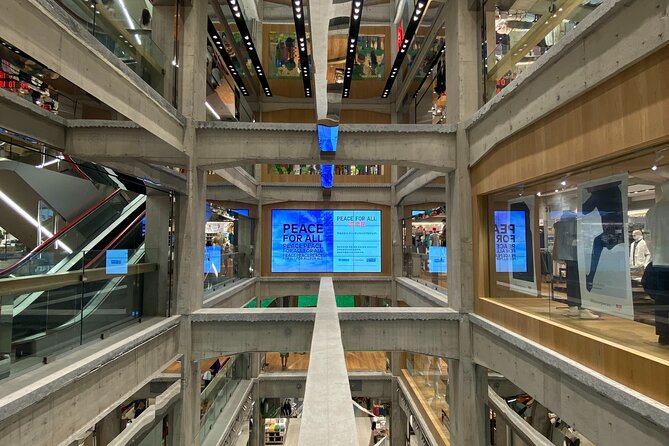
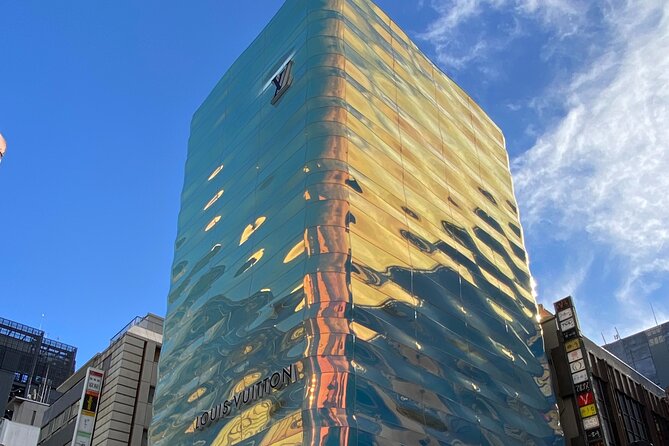
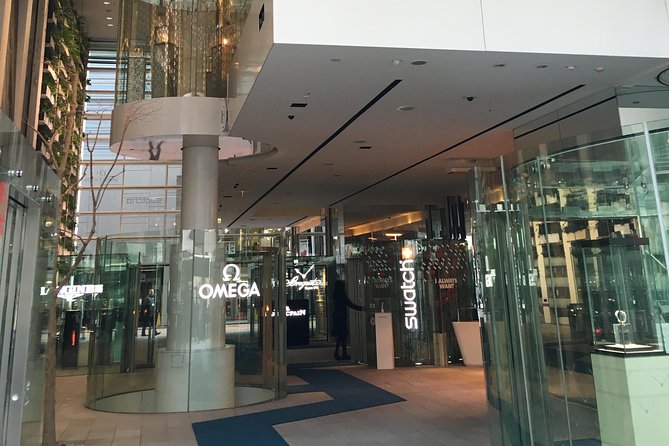
Several stops focus on Ginza’s modern commercial architecture. At the Nicolas G. Hayek Center, you go inside for about 15 minutes. The Ginza Maison Hermes Le Forum also receives about 15 minutes indoors.
These buildings matter because major brands have commissioned respected architects to make their stores part of the city’s visual identity. You are not simply being shown where to shop. You are being asked to notice how retail spaces use structure, glass, light, and form to create a public face.
I would listen closely here if your interest is contemporary design. A good guide can help you compare the different approaches instead of treating each building as an isolated stop. The tour is especially useful if you know little about architecture, since Yoshi has been praised for explaining ideas patiently to beginners.
Access is a practical consideration. The route says the group will go inside these locations, but the exact experience can vary with opening conditions and timing. Keep your expectations flexible, especially at commercial buildings.
Tiny shrines in a district of big statements
Toyoiwa Inari Shrine receives only about five minutes, but its short visit may be one of the most memorable. It is a small religious site within a dense commercial area, giving you a sharp contrast with Ginza’s large facades.
The short timing tells you what to expect: a quick look and an explanation, not a long ceremony or extended visit. Still, small stops often make a walking tour feel more local. They show how older practices remain part of the city’s everyday streets.
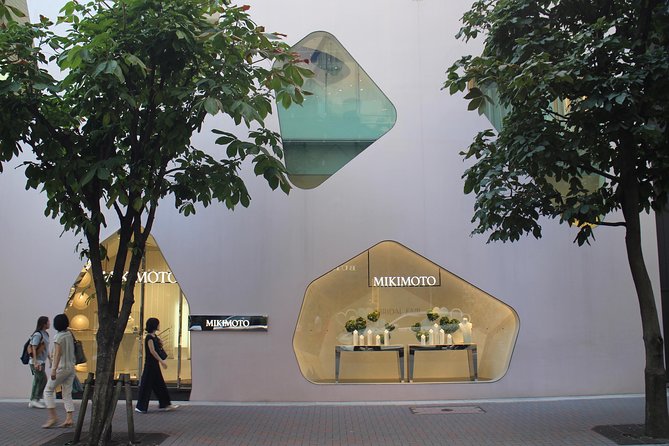
The Mikimoto Boutique in Ginza 2 Chome is another brief stop, listed at about five minutes if time allows. That if time allows matters. The route contains many stops, so this is one of the places most likely to be shortened if questions or walking take longer than planned.
Reading Ginza from the outside
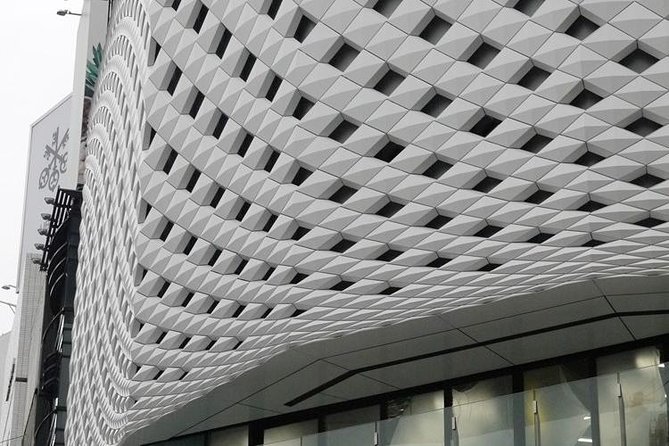
At UNIQLO Tokyo, you view the building from outside for about 10 minutes. The Mikimoto Ginza 4 Chome main store receives about five minutes outdoors, and Wako Ginza about 10 minutes.
These exterior stops are where you will need to slow down and look carefully. The guide can draw your attention to the way a building meets the street, how a brand presents itself, and how different structures shape the same district.
Wako is one of the key visual markers in Ginza, while the Mikimoto buildings show how jewelry retail uses architecture as part of its identity. UNIQLO offers another contrast, with a large global retailer contributing to the district’s design conversation.
Do not judge these stops only by their short durations. An exterior explanation can be worthwhile, but it depends heavily on the guide. One account specifically wished for more explanation at the most striking buildings. If you want detailed discussion of a particular facade, ask for it rather than assuming the guide will spend equal time everywhere.
Okuno Building and older Ginza character
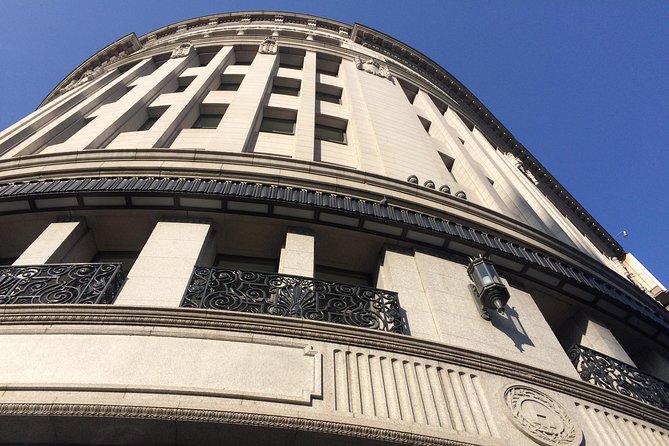
The final named stop is Okuno Building, where you go inside for about 10 minutes. This is a good closing point because it shifts the mood away from new luxury storefronts and toward older architectural character.
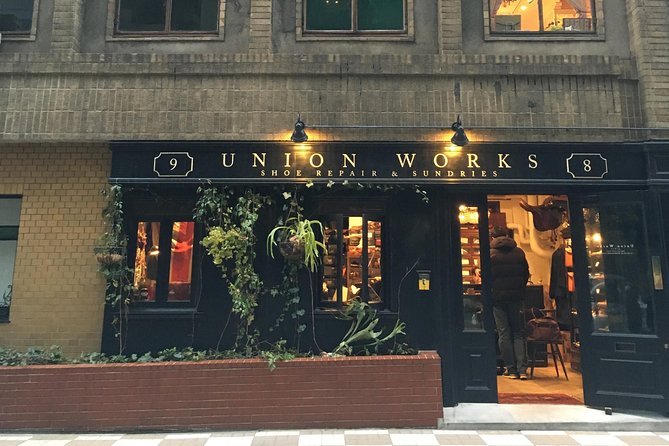
The building helps show that Ginza is not just a collection of recent showpieces. Its older structures add texture and make the district’s changes easier to understand. You can compare the scale, materials, and atmosphere of Okuno Building with the sleek commercial buildings visited earlier.
The tour finishes at the Ginza 4 Chome intersection, in front of Mitsukoshi department store. That is a convenient endpoint for continuing your own shopping or sightseeing, although hotel pickup and drop-off are not included.
The private format is the main advantage
The booking is limited to your group, with a maximum of five people. That changes the feel of the walk. You can ask a follow-up question, pause for a photograph, or tell the guide that you want more detail about modern design without waiting for a large group to catch up.
The guide can also adjust the level of the discussion. Haruka has been praised for adding historical context and insight into contemporary culture, while Makoto has been particularly good at responding to a visitor’s personal interests and finding less obvious local details. Eriko has even extended a tour beyond the planned time, though you should not count on extra time as part of the official schedule.
This flexibility is most useful for three types of visitors:
- You already know Tokyo and want a fresh angle on a familiar district.
- You are new to architecture and want clear explanations without academic jargon.
- Your small group has mixed interests, such as shopping, history, buildings, and photography.
The private setup is less useful if you simply want a fast list of famous Ginza sights. You are paying for interpretation and conversation, not just transportation between landmarks.
What the $132.10 price buys you
At $132.10 per person, this is not a cheap way to see Ginza. The value depends on your group size and your interest in guided explanation.
For one person, the cost is high for a three to three-and-a-half-hour walk. For two or three people, the private format becomes easier to justify because you share the guide’s time and can shape the route together. Group discounts are available, though the exact rate is not provided.
Your fee includes a licensed local guide and a comfortable drink pause along the way. There are no admission charges listed for the stops, and hotel transfers are not included. The real purchase is access to a guide who can connect the buildings, culture, and history in a way that is hard to get from a map or guidebook.
The tour has a 5 rating from 50 reviews and a 98 percent recommendation rate. The strongest pattern is clear: guides are praised for warmth, clear English, patience, and the ability to tailor the talk. The weaker point is also clear: the quality of the architectural explanation may depend on the individual guide and on how much detail you request.
Pace, footwear, and practical planning
Plan on moderate physical activity. You will walk from site to site for much of the experience, and the route lasts several hours. Comfortable shoes are a simple but important choice.
The tour is near public transportation, but hotel pickup and drop-off are not included. Meet near Tsukiji Station and expect to finish at Ginza 4 Chome, not back at your hotel.
Adult pricing applies to all participants, and the minimum age is 10. A booking can include no more than five people. The mobile ticket makes entry and meeting details easier to manage, but you should still check the meeting point carefully because the starting location is near a station exit rather than at a hotel or major attraction.
You can cancel for a full refund up to 24 hours before the start time. Changes or cancellations inside that window are not accepted for a refund, with cut-off times based on Tokyo local time.
Who should book this Ginza walk?
I would choose this tour for a small group that wants more than shopping in Ginza. It suits architecture fans, repeat Tokyo visitors, photographers, and curious families with children aged 10 or older.
It also works for beginners. You do not need an architecture background, and Yoshi in particular has been praised for making the subject approachable. At the same time, the private structure gives experienced visitors a chance to ask sharper questions about urban planning, branding, preservation, and design.
I would think twice if you want a tightly controlled modern-architecture itinerary. The route includes temples, shrines, kabuki, retail buildings, and older structures, and the opening section may feel broader than expected. Tell the guide your priorities at the start so the tour does not spend too much time on subjects that interest you less.
Should you book the Private Ginza Architecture Walking Tour?
Book it if you want to understand why Ginza looks the way it does, not just take photos of its most famous buildings. The mix of Tsukiji Hongwanji Temple, Kabukiza, Toyoiwa Inari Shrine, luxury-brand design, Wako, and Okuno Building gives you a useful cross-section of the district.
The best reason to book is the guide. Yoko, Yoshi, Mari, Haruka, Makoto, Eriko, and Taka Yamamura have all been praised for making the walk personal, clear, and friendly. Ask for more detail at the buildings that catch your eye, and say if modern architecture is your main goal.
Skip it if you prefer to wander alone, shop at your own speed, or keep costs low. For everyone else, especially a small group sharing the price, this is a thoughtful way to see Ginza with your eyes pointed upward.
FAQ
How long does the Private Ginza Architecture Walking Tour last?
The experience lasts approximately three to three and a half hours. The route includes about 40 minutes of walking between sites in total.
Where does the tour start?
It starts near Exit 1 of Tsukiji Station, at 3 Chome 15 in Tsukiji, Tokyo 104-0045.
Where does the tour finish?
The tour finishes at the Ginza 4 Chome intersection, in front of Mitsukoshi department store.
How many people can join one booking?
A maximum of five people can participate in one booking, and only your private group takes part.
What language is the tour conducted in?
The tour is conducted in English and includes architectural, cultural, and historical information.
Are entrance tickets included?
The listed stops show no admission ticket charges. The experience includes the licensed local guide and a drink pause, but hotel pickup and drop-off are not included.
Is the tour suitable for children?
The minimum age is 10, and adult pricing applies to all participants. A moderate level of physical fitness is recommended.
Can I cancel for a refund?
Yes. You can cancel at least 24 hours before the local start time for a full refund. Cancellations or changes made less than 24 hours before the start time are not accepted for a refund.
Newly reviewed around Tokyo
- Tokyo Asakusa:Calligraphy & Make T-shirt Activity★ 5.0 · 62 reviews
- Intercity Shuttle, Tokyo to Haneda /Narita /Yokohama /Makuhari★ 5.0 · 5 reviews
- 1 Hour Travel around Tokyo with a Professional Photographer★ 5.0 · 3 reviews
- Travel Tokyo with Your Own Personal Photographer★ 5.0 · 43 reviews
- Shuttle Van 6hr Tokyo Tour to-and-from Tokyo, Yokohama and Narita★ 5.0 · 9 reviews
- Kickboxing & Body Training with EX-Pro Fighter★ 5.0 · 4 reviews
- Train in Samurai Swordsmanship and Defeat the Demon in Tokyo★ 5.0 · 5 reviews
- Traditional Japanese Knife Sharpening Class★ 5.0 · 18 reviews
Tokyo Walking Tours, compared.
Tokyo Tsukiji Fish Market Food and Culture Walking Tour
Read our review →
Imperial Palace and Shogun Historical Walking Tour
Read our review →
Shinjuku Local Bar and Izakaya Guided Walking Tour
Read our review →
Asakusa Walking Tour with Sensoji Temple Visit
Read our review →
Tokyo Castle & Imperial PalaceーShogun Walking Tour
Read our review →
Browse the lists this tour appears in