
Reviewed · UENO TOURS
Private Workshop to Create Paper Last for 1,000 years in Ueno
The unusual pleasure here is that you do not simply decorate a sheet of finished paper. You follow washi from tree fiber to handmade page, including Hyouhitor, peeling bark, and Dakai, beating the fibers into pulp. By the end, you have four paper pieces made by your own hands.
I like the private format, which gives your group the instructor’s full attention, and I like the calm pause for kozo-leaf tea and local sweets while your work dries. The main drawback is the price: at $143.35 per person for about two and a half hours, this is a special-interest activity rather than a cheap craft stop.
Key points at a glance
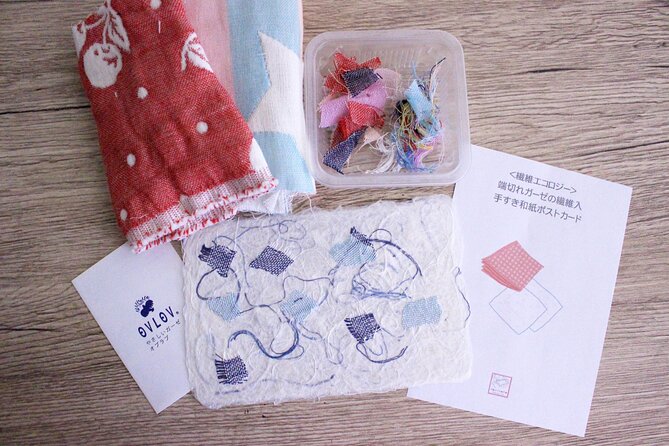
- Four finished paper products: Make two postcard designs, one Rakusui paper, and one A5 sheet.
- Hands-on washi from tree fiber: Try bark peeling, fiber beating, and sheet formation with a mold and deckle.
- A private workshop in Ueno: Only your group takes part, so the pace can stay personal and focused.
- Kozo-leaf tea: Drink an original tea made from kozo leaves, the same plant family used for the paper material.
- Local sweets and cat Kami: The workshop ends with sweets from a beloved local shop and a visit from the mascot cat.
- A 2.5-hour creative break: This works best when you want a slower Tokyo activity rather than another fast sightseeing stop.
Turning tree bark into Japanese washi
Japanese washi is often admired as a finished object, but this workshop lets you see the work behind it. The material begins with tree fiber, and your session includes the early steps that are usually hidden from view.
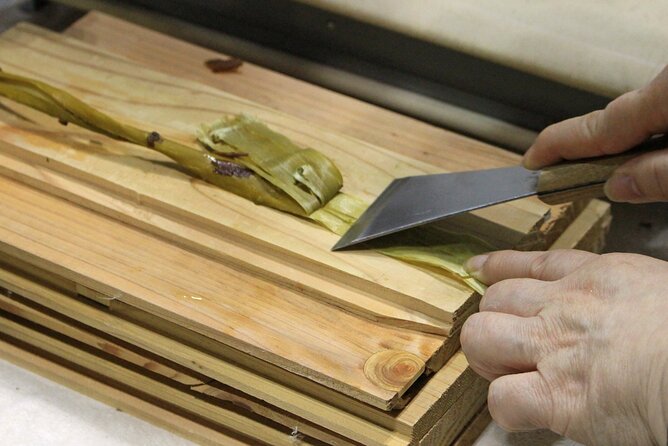
You start with a general explanation of how Japanese paper is made. Then you take part in Hyouhitor, peeling away the outer bark. This gives you a direct sense of how much preparation sits behind a simple sheet of paper.
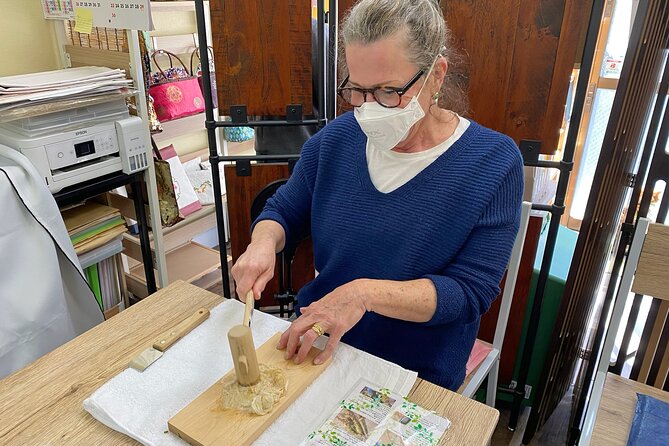
Next comes Dakai, the beating of the tree fibers. This is practical, physical work. It changes the fibers into a usable pulp and helps explain why handmade paper has a different feel from ordinary machine-made paper.
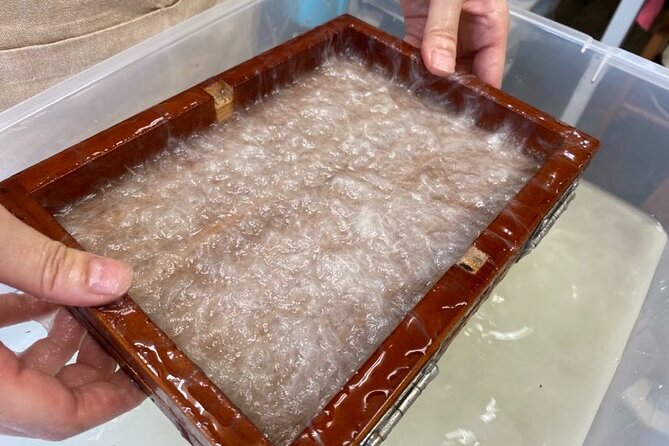
The instructor then shows you how to pour the raw material into a paper-making mold and deckle. You sift the solution so the fibers spread into an even, flat sheet. This is the part that calls for care. The paper has to form properly across the frame, and small differences in how you handle the material affect the final result.
You are not only watching a demonstration. You take part in the full chain, from plant material to paper. That makes the session useful for anyone interested in Japanese craft, natural materials, or the physical skills behind everyday objects.
More things to do in Ueno:
- Eat and Drink Like a Local: Tokyo Ueno Food Tour-Taverns&Ramen
★ 5.0 · 957 reviews - Tokyo: Food Tour in Ueno with 10+ Tastings of Japanese Classics
★ 5.0 · 303 reviews - Tokyo Ueno Food Tour Sushi Ramen and Local Favorites
★ 5.0 · 54 reviews
Four paper pieces you take home
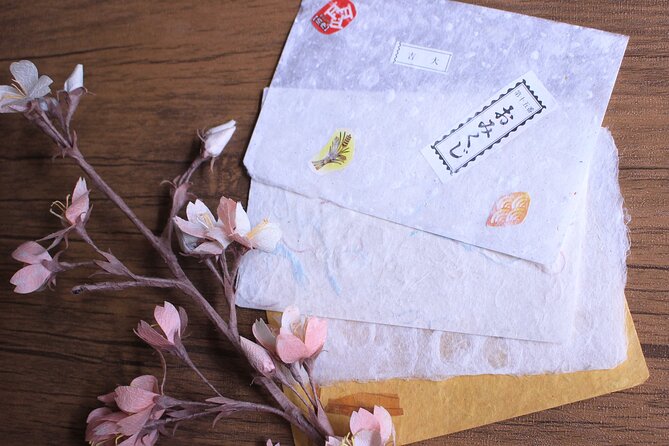
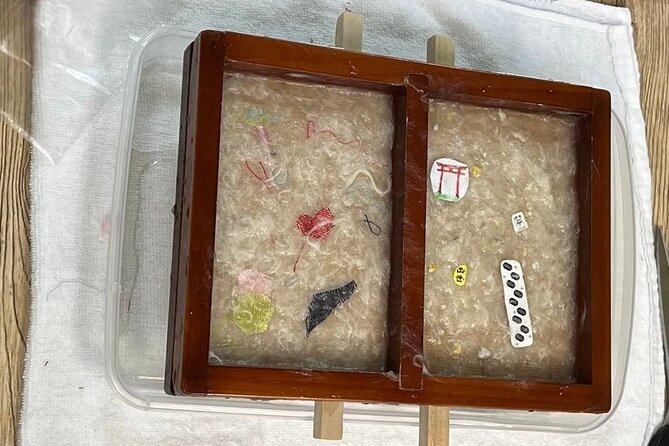
The workshop gives you a clear goal: four original paper products. You make two postcards with different designs, along with a Rakusui paper and an A5 paper.
The postcards are the most obvious choice if you want something useful after the workshop. You can keep them as souvenirs or use them as gift cards. Their value comes from the fact that your sheets are not factory copies. The fibers, texture, and design will be your own.
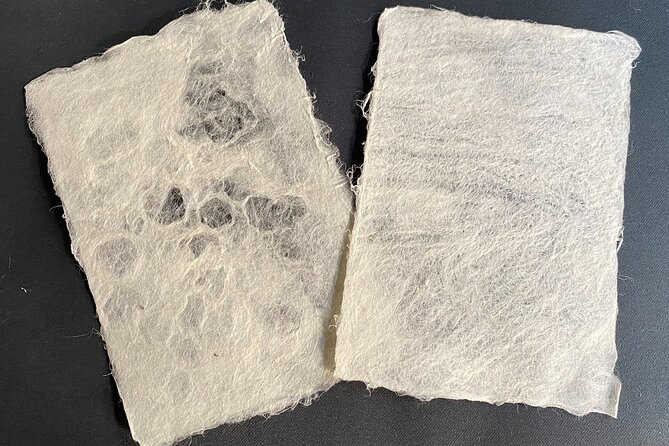
The Rakusui paper adds another format to the session, while the A5 sheet gives you a larger surface to appreciate the structure of the washi. Having several products to make also keeps the workshop active. You are not finished after one successful sheet, and you get more than one chance to understand the technique.
The instructor describes the washi as unique, and that is a fair way to think about handmade paper. Even if you follow the same steps twice, the fiber spread and surface may differ. Do not expect four perfectly uniform pieces. The small variations are part of what you are paying to make.
Your work is dried during the session. The available information does not promise that every item will be ready to use immediately in the same way, so ask the instructor about the best care and timing for your finished pieces. Handle them with care until they are fully dry.
A quiet pause with kozo-leaf tea
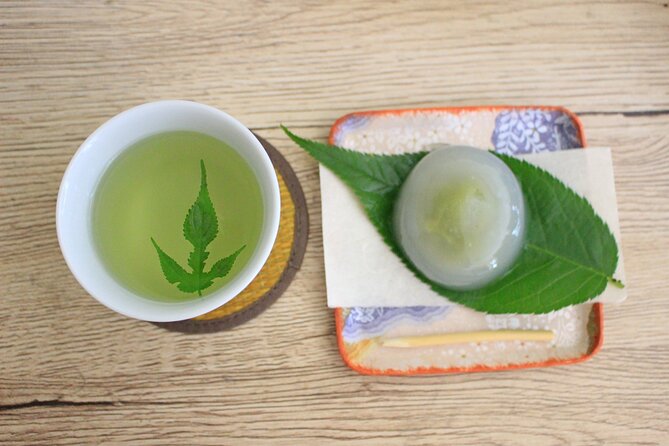
While the paper dries, the workshop shifts from making to tasting. You are served the provider’s original Japanese paper tea, made from kozo leaves. Kozo is the raw material associated with Japanese paper, so the drink connects the refreshment to the craft rather than feeling like a random break.
This is one of the activity’s most distinctive details. The tea is not presented as a standard sightseeing stop or ordinary café service. It gives you another way to think about the plant involved in washi production.
You also receive Japanese sweets from a local shop. The sweets add a small regional touch and make the drying period feel like part of the experience, not dead time. I like this pause because it gives you space to look at your work and talk with the instructor without rushing to the next step.
The description does not identify the tea’s flavor or list the sweets, so you should treat this as a tasting included with the workshop rather than a full meal. If you have food allergies, mention them before booking or before the session begins.
Meeting Kami, the workshop cat
A cat named Kami lives at the workshop and serves as its mascot. Kami may be a charming extra for cat lovers, especially during a quiet hands-on activity. The cat also gives the private studio a more personal feel than a large public craft class.
There is an important practical point here: a cat is present in the workshop. Tell the provider about allergies before you go. The supplied information does not explain the cat’s exact level of contact or where the animal stays during the class, so people with serious allergies should ask for more detail before booking.
For children, the cat may add interest, but the class still requires attention during the wet-paper steps. The activity is best for anyone who can follow instructions and handle the materials carefully.
More hands-on classes and workshops in Tokyo:
- Sushi Making Tokyo Roll and Authentic Japanese Sushi Class
★ 5.0 · 3,971 reviews - Tokyo: Roll and Authentic Sushi Making Class in Asakusa
★ 4.9 · 1,957 reviews - Tokyo Shinjuku Chopsticks Making Class
★ 5.0 · 1,763 reviews - Tokyo: Sushi Making Class in a Happi Coat near a Famous Spot
★ 4.9 · 1,377 reviews
Why the private format matters
This is a private activity, so only your group participates. That changes the feel of the lesson. You do not have to compete with a large class for access to the materials, and the instructor can focus on your group’s pace.
A private format is especially useful for a couple, family, or small group with different levels of craft experience. Someone who needs an extra explanation can get it without holding up a room full of people. You can also ask more direct questions about the paper-making process.
The experience lasts about two hours and 30 minutes. That is long enough to cover several stages and make four products, but short enough to fit into a day of sightseeing in Ueno. Plan for a focused session rather than a quick drop-in craft.
The workshop is near public transportation, and it begins and ends at the same meeting point in Taito City. The listed address is Japan, 110-0016 Tokyo, Taito City, Taito, 3-chome 30-2, Ichikawa Building. Check the exact map pin and building details before setting out, since a small studio can be easy to miss in Tokyo’s dense streets.
Is $143.35 a fair price?
At $143.35 per person, this is not the right pick if you only want a low-cost souvenir. You are paying for a private class, a long hands-on session, four handmade products, the materials, the instruction, the tea, and the sweets.
The price makes more sense if you value direct participation. A museum visit can show you Japanese paper, but it will not let you peel the bark, beat the fibers, or form the sheet yourself. A quick craft class may cost less, but it may also offer only one small finished item and a short demonstration.
The strongest value is the complete process. You learn why paper feels the way it does, see how plant fibers become a sheet, and leave with several personal objects. If your interest is simply in buying washi, the price will feel high. If you want a private cultural activity with something tangible to take home, it is easier to justify.
The average booking lead time is 31 days. That suggests you should reserve ahead, especially if your Tokyo dates are fixed. The activity has a rating of 4 from three reviews, with especially strong praise for the instructor’s patience and kindness. One detailed review singled out the teaching and the tea and sweets, which are useful signs for anyone worried about joining a craft activity without prior experience.
Who will enjoy this Ueno workshop?
I would recommend it most to adults, couples, families, and small groups who want an activity with a clear local connection. It suits people who enjoy making things and prefer a quiet studio to a crowded attraction.
It is also a good match for anyone who collects stationery, postcards, handmade paper, or small art objects. The four products give you more to remember the session by than a single souvenir bought from a shop.
Families should consider the child’s attention span and comfort around a cat. The supplied information says most people can participate, but it does not give a specific minimum age or detailed accessibility information. Ask the provider if you need those details.
This is less suitable if you want a polished, fast-paced sightseeing stop, a broad historical lecture, or a class where you can leave immediately with perfectly dry products. The focus is making, not covering many Tokyo sights.
How to prepare for the session
Book at least several weeks ahead if possible. The average booking point is 31 days before the activity, and private sessions can have limited availability.
Wear clothes you can move in and do not mind getting damp or marked by natural fiber material. The supplied information does not state that protective clothing is provided, so practical clothing is the sensible choice.
Allow the full two hours and 30 minutes. Do not schedule another activity so tightly that you need to leave before the paper-making, drying, tea, and sweets are finished.
Bring your booking confirmation on your phone. The ticket is mobile, and confirmation is sent when you book. Also check the meeting address before leaving your hotel, since the activity returns to the same place and does not include transport between attractions.
Free cancellation is available if you cancel at least 24 hours before the local start time. Changes or cancellations made inside that window are not refunded or accepted. The experience requires good weather, and if poor weather causes a cancellation, you are offered another date or a full refund.
The best reason to book
The best reason to book is the chance to understand washi through your hands. You do not just hear that Japanese paper has a long tradition. You see plant fiber become pulp, form it into a sheet, and create postcards and larger paper pieces that carry the marks of your own work.
The private setting, patient teaching, unusual kozo-leaf tea, local sweets, and mascot cat Kami add warmth without taking attention away from the craft. Those details make the session feel personal rather than like a generic souvenir class.
Book it if $143.35 fits your budget and you want a slow, creative Ueno experience with four handmade results. Skip it if your priority is low cost, a broad Tokyo tour, or a quick activity with no concern for the process.
FAQ
Where does the washi paper workshop take place?
It takes place in Ueno, at Japan, 110-0016 Tokyo, Taito City, Taito, 3-chome 30-2, Ichikawa Building.
How long does the activity last?
The workshop lasts approximately two hours and 30 minutes.
Is this a private activity?
Yes. Only your group participates in the workshop.
What paper products will I make?
You will make two postcard designs, one Rakusui paper, and one A5 paper.
Do I learn the full Japanese papermaking process?
Yes. The session includes Hyouhitor, peeling off the outer bark, Dakai, beating tree fibers, and forming paper with a mold and deckle.
Is food or drink included?
Yes. While your paper dries, you receive original Japanese paper tea made from kozo leaves and Japanese sweets from a local shop.
Is there a cat at the workshop?
Yes. The workshop has a mascot cat named Kami. Tell the provider if you have allergies.
Can most people participate?
The activity information says most people can participate and that the workshop is near public transportation. Specific accessibility details are not provided.
Can I cancel for a refund?
You can cancel for a full refund up to 24 hours before the local start time. Cancellations or changes made less than 24 hours before the start are not refunded or accepted. If poor weather cancels the activity, you are offered another date or a full refund.
Newly reviewed around Tokyo
- Tokyo Asakusa:Calligraphy & Make T-shirt Activity★ 5.0 · 62 reviews
- Intercity Shuttle, Tokyo to Haneda /Narita /Yokohama /Makuhari★ 5.0 · 5 reviews
- 1 Hour Travel around Tokyo with a Professional Photographer★ 5.0 · 3 reviews
- Travel Tokyo with Your Own Personal Photographer★ 5.0 · 43 reviews
- Train in Samurai Swordsmanship and Defeat the Demon in Tokyo★ 5.0 · 5 reviews
- Shuttle Van 6hr Tokyo Tour to-and-from Tokyo, Yokohama and Narita★ 5.0 · 9 reviews
- Kickboxing & Body Training with EX-Pro Fighter★ 5.0 · 4 reviews
- Traditional Japanese Knife Sharpening Class★ 5.0 · 18 reviews
Ueno Tours, compared.
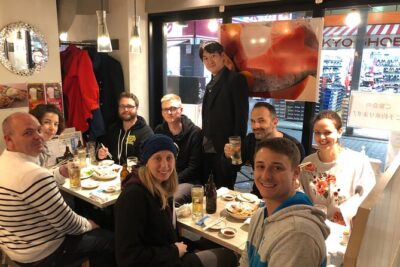
Eat and Drink Like a Local: Tokyo Ueno Food Tour-Taverns&Ramen
Read our review →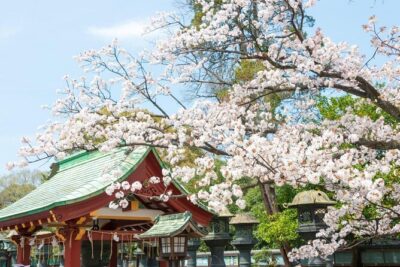
Food Tour in Ueno with 10+ Tastings of Japanese Classics
Read our review →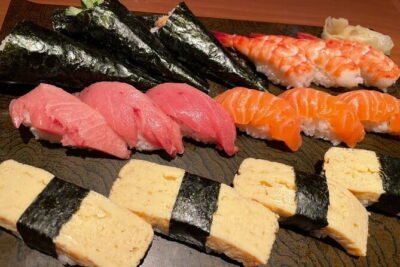
Tokyo Ueno Food Tour Sushi Ramen and Local Favorites
Read our review →
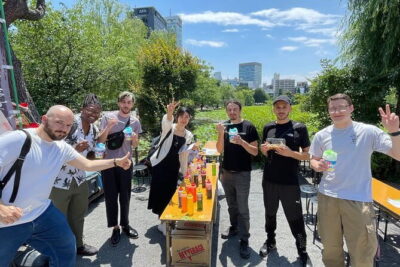
Tokyo Ueno Food & Nature & Localtown Tour: 10Dishes+ Drinks
Read our review →
Mini Origami Lamp and Mizuhiki knot Belt Workshop in Ueno
Read our review →Browse the lists this tour appears in