
Reviewed · ASAKUSA AND SENSOJI TOURS
This is Asakusa! A Tour Includes the All Must-Sees!
Asakusa packs old Tokyo, food streets, temple grounds, kitchen shops, river views, and Tokyo Skytree into one busy district. This private six-and-a-half-hour tour gives you a guide to sort the sights, explain the customs, and keep your party moving through the crowds. Guides such as Haruo, Macky, Walt, and Sayaka have been praised for their patience, cultural background, and care with personal requests.
I like the wide range: you move from Senso-ji and Asakusa Shrine to Hoppy Street and Kappabashi, then finish near Skytree. I also like the private format, which lets you ask about Buddhism, daily life, food, or shopping without holding up a large group. The main drawback is cost. At $137.29 per person, you still need to budget for transportation, food, admissions, and an optional experience.
Key points to know before booking
- Private guiding keeps the day personal: Only your party participates, so you can ask questions and request a different finishing point.
- The route covers both old and new Tokyo: Senso-ji, Asakusa Shrine, Kappabashi, Tokyo Skytree, and Solamachi all make the cut.
- Kappabashi is a practical stop: You can browse Japanese knives, tableware, and professional kitchen tools.
- The tour moves from Asakusa to Oshiage: You finish at Oshiage Station near Tokyo Skytree, not where you began.
- The listed price is not the full day’s cost: An estimated 4,880 yen per person is separate, including transportation, admissions, and a meal.
- Meeting-point details matter: Specify Asakusa Station clearly, since one booking had confusion over the exact station location.
Why this private Asakusa route works
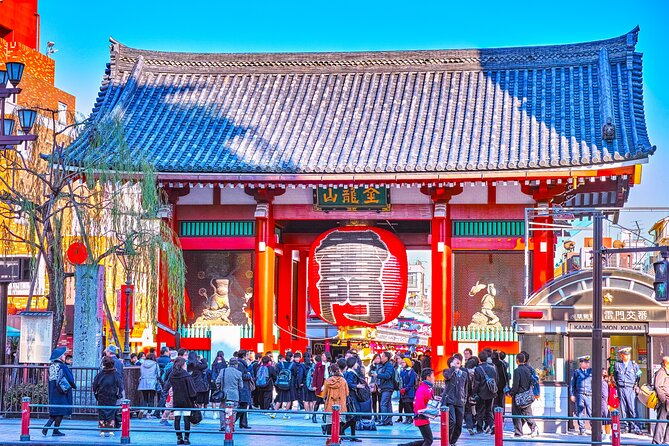
Asakusa can feel like several neighborhoods stitched together. One minute you are under the giant lantern at Kaminarimon and among temple visitors. Soon after, you are looking at plastic food displays, handmade soba, Japanese knives, and one of the world’s most recognizable modern towers.
That variety is the point of this tour. You do not spend six hours on one formal temple lecture. Instead, you get a guided walk through the places that make Asakusa useful for a first visit. Your guide can explain the difference between a Buddhist temple and a Shinto shrine, help you understand local customs, and answer the small questions that rarely appear on a sign.
The private setup matters most in a crowded district. You can pause for photographs, ask about an item in a shop, or spend less time somewhere that does not suit your interests. The guide also handles the route between stops, which saves you from repeatedly checking maps in a busy commercial area.
The day is not a quiet stroll. There is walking, public transportation, shopping, a restaurant stop, and an observation experience. You should be comfortable with a full schedule and changing surroundings.
More Asakusa and Sensoji tours:
- Tokyo: Japanese Dance Cabaret Theater Asakusa-Kaguwa Ticket
★ 4.8 · 2,270 reviews - Tokyo: Meiji Shrine, Asakusa, Skytree Bus Tour and Cruise
★ 4.7 · 1,986 reviews - Tokyo: Roll and Authentic Sushi Making Class in Asakusa
★ 4.9 · 1,957 reviews
Start with city views at the Asakusa Culture Tourist Information Center
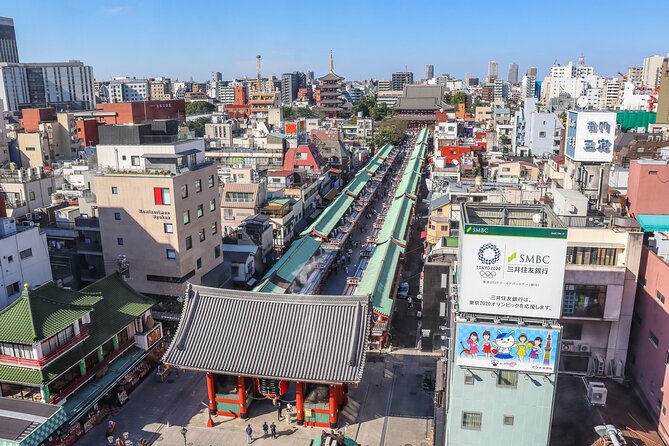
The tour begins near Asakusa Station and heads to the Asakusa Culture Tourist Information Center. The building is useful for more than maps and basic directions. Its observation terrace gives you a high view over Asakusa and offers a quick way to understand how the district fits together.
Allow about 15 minutes here. That may sound brief, but it is a sensible opening stop. You get your bearings before entering the temple area, and the elevated view gives your guide a chance to point out the neighborhood, the Sumida River, and the direction toward Tokyo Skytree.
You should confirm the exact Asakusa Station meeting point before the day begins. The stated starting address is 1-chome-1-3 Asakusa, Taito City, but one booking ran into trouble when a hotel directed a taxi to a train station without enough detail. Tell your hotel or driver that you need the Asakusa Station meeting point, not simply an address in Asakusa.
Senso-ji: Tokyo’s essential temple visit
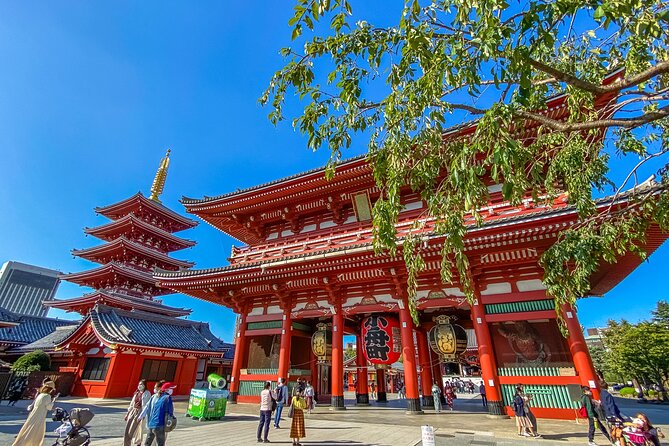
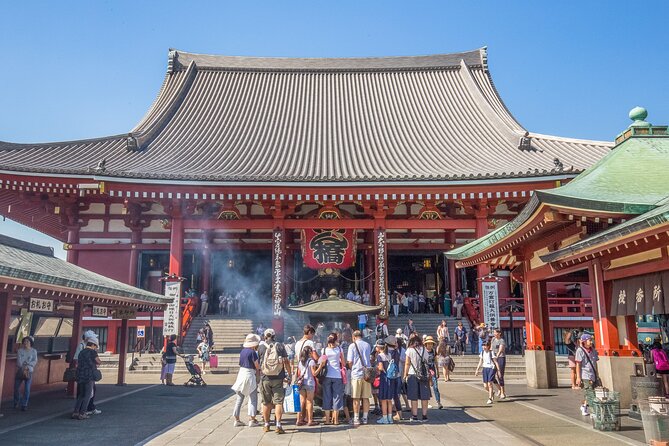
Senso-ji receives about an hour, and that is appropriate. This is Tokyo’s oldest temple and the center of Asakusa’s sightseeing area. Its large red lanterns and striking gates make it one of the city’s instantly recognizable views.
Your guide can give structure to what might otherwise be a fast photograph and exit. You can learn how the temple relates to Buddhism, what the major buildings represent, and how to behave respectfully in the grounds. The tour information specifically highlights Buddhist tradition and Japanese history as part of the explanation, so this is a good place to ask questions rather than simply follow the crowd.
Expect plenty of people here, especially around the main approach and temple buildings. A private guide does not remove the crowds, but it does make them easier to handle. You can stay focused on the important details instead of working out the route while surrounded by visitors.
The free admission is another advantage, but do not confuse free entry with a short visit. The value here comes from context. A guide who can explain the religious setting adds much more than a quick look at the red architecture.
Asakusa Shrine and the difference between temple and shrine
Asakusa Shrine is only about 15 minutes from the temple area, yet it adds an important layer to the visit. Shrines and temples are different religious institutions, and Asakusa Shrine gives you a clear chance to ask how Shinto practice differs from Buddhism.
The shrine is closely associated with Sanja Matsuri, one of Tokyo’s major festivals. Even if your visit does not coincide with the event, your guide can explain why the shrine matters to local life and why festival traditions remain important in the district.
This short stop works best as a conversation. You will not spend an hour here, so use the time to ask about purification, shrine etiquette, or the connection between the shrine and the surrounding community. The close distance from Senso-ji also makes it easy to compare the two religious sites while the details are fresh.
A completely different kind of day in Tokyo:
- Mt Fuji and Hakone 1-Day Bus Tour Return by Bullet Train
★ 5.0 · 26,383 reviews - 1-Day Tokyo Bus Tour
★ 5.0 · 14,250 reviews - Tokyo: teamLab Planets TOKYO Digital Art Museum Entry Ticket
★ 4.6 · 9,779 reviews - Mt Fuji & Hakone Cruise, Drum Show Bullet Train 1 Day from Tokyo
★ 4.0 · 7,413 reviews
Festival colors and cheap drinks on the way to Kappabashi
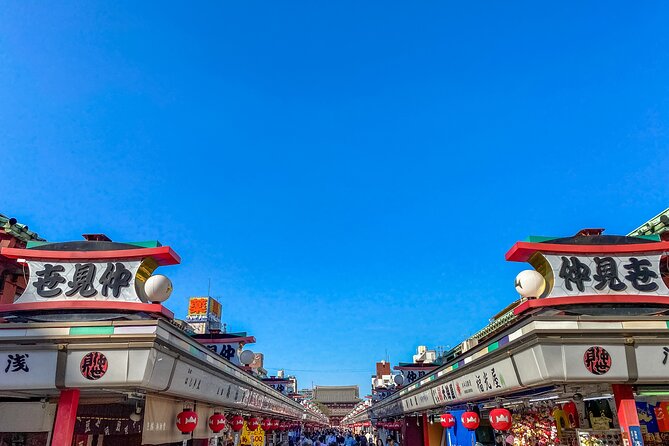
The route then shifts from sacred buildings to local shopping streets. Asakusa Nishi-Sando Shopping Street has festival-themed decorations and shops that blend traditional Japanese style with tourism. It is a brief 15-minute stop, but it helps show how Asakusa’s commercial side works.
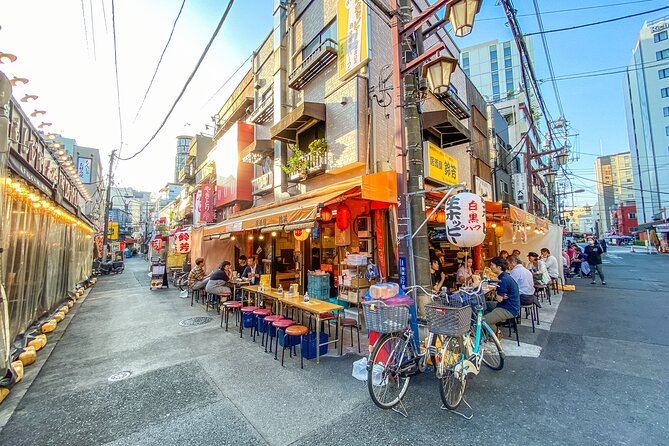
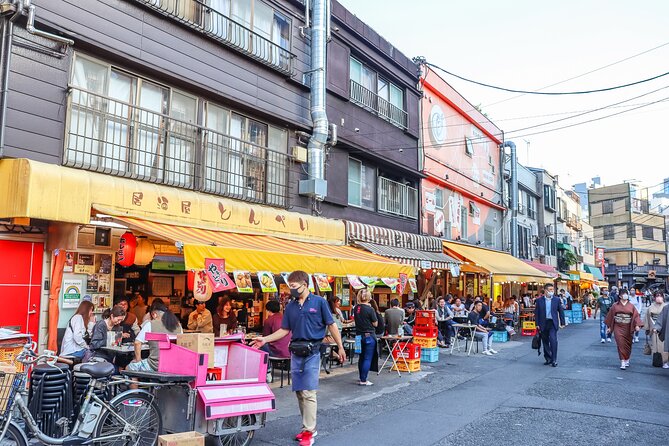
After that comes Hoppy Street, known for restaurants, outdoor tables, and reasonably priced drinks. The scheduled stop is just five minutes, so think of it as a quick look at the atmosphere rather than a full meal or drinking session. If you want to eat or linger here, ask your guide how that would affect the timing.
Hoppy Street is useful because it shows a more casual side of Asakusa. The temples bring formal tradition, while these restaurants and tables offer a social neighborhood setting. You get a better sense of the district by seeing both.
Kappabashi is the tour’s best shopping stop
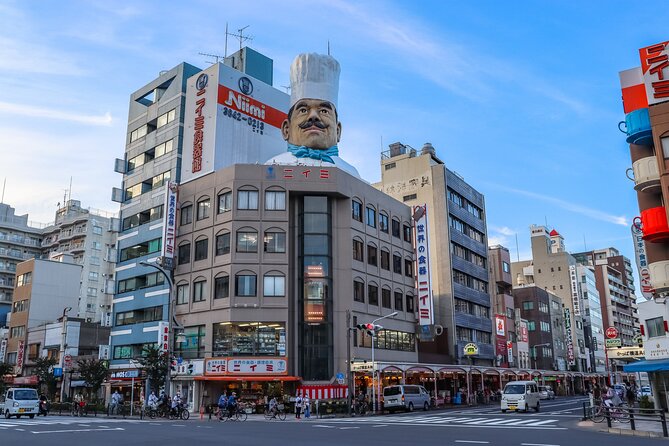
Kappabashi Street, also called Kappabashi Dogugai, is one of the most useful stops for shoppers. Its specialty stores sell knives, tableware, cooking tools, and other equipment used by professional kitchens.
The scheduled 30 minutes is enough for an introduction, but not necessarily enough for a long purchase. If you are serious about buying a Japanese kitchen knife, tell your guide early. A guide can help you navigate the shops and explain what you are looking at. One guide, Haruo, was especially helpful with a knife purchase, which shows why the private format can be worthwhile here.
This is not just a souvenir street. You might find items that are practical, well made, and difficult to compare without help, particularly if you do not read Japanese product descriptions. At the same time, do not assume every item suits your luggage or home cooking needs. Take your time with a purchase, and ask about care and transport before committing.
Kappabashi is also a good place to ask about Japan’s restaurant culture. The tools and displays connect directly to the food you see throughout Tokyo. For many people, this stop will be more memorable than another standard shopping mall.
Lunch at Gonpachi with a Sumida River view
The tour includes about 50 minutes at Gonpachi, a handmade soba restaurant at the foot of Azumabashi Bridge. Large windows look toward the Sumida River and Tokyo Skytree, giving you a scenic setting for the meal.
The meal cost is not included in the tour price. The estimated budget lists 1,200 yen per person for food, but actual spending can depend on what you order. The restaurant stop also adds a useful pause after several walking sections.
You should treat Gonpachi as a planned meal, not a free food tasting. If you have dietary needs, ask about them before the tour or at the start of the day. The supplied details identify the restaurant and the meal cost, but they do not promise a specific menu or special dietary arrangement.
The location helps connect the two halves of the tour. You begin in historic Asakusa and then look toward Skytree, the modern tower that dominates the next part of the route.
Tokyo Skytree changes the scale of the day
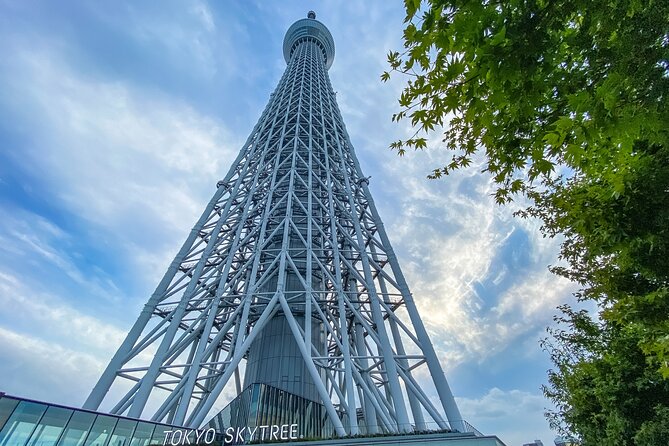
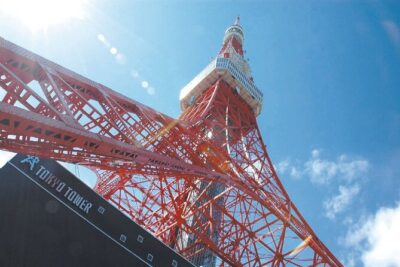
Tokyo Skytree is the tour’s big modern finale. At 634 meters, it is Japan’s tallest building and opened in 2012. The surrounding complex includes a mall, an aquarium, offices, and Tokyo Solamachi.
The scheduled time is about 1 hour and 10 minutes. The tour data lists admission fees separately, with an estimated 3,400 yen per person in the additional costs. Confirm what your specific booking covers, because entrance fees are not included in the main tour price.
Skytree gives you a very different view from the Asakusa Culture Tourist Information Center. The earlier terrace helps you read the neighborhood. Skytree lets you look across a much larger part of Tokyo. If weather is poor, the transport, destinations, or route may change, so the clearest views are not guaranteed.
A private guide can make this stop easier by helping with timing and the transition into the Skytree complex. Still, this is a popular attraction, and the guide cannot control weather or crowd levels. If the tower is your main reason for booking, confirm the admission arrangement before paying.
Tokyo Solamachi is more than an exit route
Tokyo Solamachi sits beside Skytree and receives about 30 minutes. It is a commercial complex with shopping, entertainment, dining, and other facilities built around the tower.
This stop is practical at the end of the tour. You can continue shopping, find food, or use the nearby Oshiage Station after the guide leaves. It also gives the day a softer landing than ending immediately after an observation deck visit.
Do not expect a traditional neighborhood here. Solamachi is modern and commercial, while Senso-ji and Asakusa Shrine provide the older religious setting. That contrast is one reason the route works for first-time visitors who want more than temples alone.
The real price: $137.29 plus about 4,880 yen
The advertised price is $137.29 per person. That covers the private guide, the private tour, and the guide’s necessary expenses during the day. It does not cover all your personal costs.
The estimated additional amount is 4,880 yen per person:
- 180 yen for transportation
- 3,400 yen for admission fees
- 1,200 yen for the meal
- 100 yen for an optional experience
The information also says that transportation, entrance fees, food, and drinks at visited locations are paid by the customer. Treat the 4,880 yen as a planning estimate, not a guaranteed final bill. Your actual cost may vary, especially if you buy food, drinks, kitchen goods, or extra admissions.
For a private tour, the price can make sense for a couple, family, or small group that wants direct attention. Group discounts are listed as a feature, so larger parties should compare the per-person cost carefully. If you are happy navigating Tokyo alone and only want to see Senso-ji, this is probably more service than you need.
The strongest value comes from the guide’s time. The day covers several districts and requires transitions that can be awkward on your own. It is also useful for anyone who wants cultural explanation instead of simply collecting photographs.
Guides and the personal touch
The named guides connected with strong praise include Haruo, Macky, Walt, and Sayaka. Haruo helped with route decisions, local shops, and a knife purchase. Macky was noted for building the day around personal needs and choosing a good restaurant. Walt focused on Buddhism, Japanese culture, and history. Sayaka was praised for polite service, regional knowledge, and fluent English.
You may not receive a particular guide, so do not book solely on the hope of meeting one name. The larger point is the kind of service the tour aims to provide: personal attention, polite communication, and room for questions.
Say what interests you at the beginning. If you want food, religion, shopping, photography, or local life, your guide can use the private format more effectively when your priorities are clear.
Timing, transport, and practical cautions
The full experience lasts about six hours and 30 minutes. The listed stop times add up to less than that, leaving time for walking, public transportation, transitions, and conversation.
The route begins at Asakusa Station and ends at Oshiage Station near Skytree. That one-way design is efficient if you plan to continue around Skytree or use Oshiage for your next journey. It is less convenient if you need to return to Asakusa immediately, so ask about changing the finish point before the tour begins.
The tour is near public transportation, and most people can participate. No special accessibility details are provided, so ask the operator directly if you have mobility concerns or need a slower pace.
Bad weather can change transportation, destinations, or routes. Temporary closures can also lead to alternative stops. Free cancellation is available up to 24 hours before the local start time, but changes or cancellations inside that window are not accepted.
Should you book this Asakusa tour?
Book it if you want one private day that covers temples, shrines, food streets, kitchen shopping, a restaurant, and Skytree without planning every connection yourself. It is especially well suited to first-time visitors, families, small groups, and anyone who wants to ask detailed questions about Japanese customs.
Skip it if you prefer a slow, unplanned neighborhood walk or if the extra costs push the day beyond your budget. Also skip it if you only want Senso-ji and Asakusa Shrine, since you can visit those areas without paying for a full private route.
For most first visits, I like the balance of old and new Tokyo. Just confirm the Asakusa Station meeting point, ask about the expected guide, and set aside more than the headline price for admissions, transport, food, and shopping.
FAQ
How long does the Asakusa tour last?
The tour lasts approximately 6 hours and 30 minutes.
Is this a private tour?
Yes. Only your party participates in the activity.
Where does the tour begin?
It begins at Asakusa Station, listed at 1-chōme-1-3 Asakusa, Taito City, Tokyo 111-0032, Japan.
Where does the tour finish?
It finishes at Oshiage Station near Tokyo Skytree, at 1-chōme-1-65 Oshiage, Sumida City, Tokyo 131-0045, Japan.
Can the finishing point be changed?
The tour information says you should tell your guide if you would like to change the finishing point.
Are transportation and admission fees included?
No. Transportation and entrance fees are paid by the customer. The estimated additional cost is 4,880 yen per person.
Is lunch included in the tour price?
No. Meal costs are not included. The estimated meal cost is 1,200 yen per person, and the itinerary includes a stop at Gonpachi.
Does the tour include Tokyo Skytree admission?
The main tour price does not include admission fees. An estimated 3,400 yen per person is listed for admission costs.
What happens if the weather is bad?
Transportation, destinations, and routes may change if the weather is poor.
Can I cancel for a full refund?
Yes, if you cancel at least 24 hours before the experience start time. Cancellations or changes made less than 24 hours before the start are not accepted for a refund.
Newly reviewed around Tokyo
- Tokyo Asakusa:Calligraphy & Make T-shirt Activity★ 5.0 · 62 reviews
- Intercity Shuttle, Tokyo to Haneda /Narita /Yokohama /Makuhari★ 5.0 · 5 reviews
- 1 Hour Travel around Tokyo with a Professional Photographer★ 5.0 · 3 reviews
- Travel Tokyo with Your Own Personal Photographer★ 5.0 · 43 reviews
- Train in Samurai Swordsmanship and Defeat the Demon in Tokyo★ 5.0 · 5 reviews
- Shuttle Van 6hr Tokyo Tour to-and-from Tokyo, Yokohama and Narita★ 5.0 · 9 reviews
- Kickboxing & Body Training with EX-Pro Fighter★ 5.0 · 4 reviews
- Traditional Japanese Knife Sharpening Class★ 5.0 · 18 reviews
Asakusa and Sensoji Tours, compared.
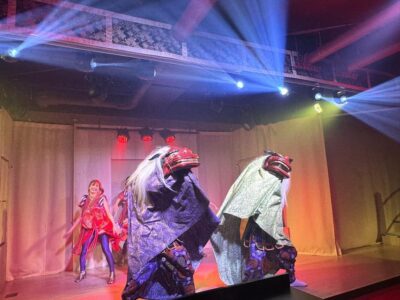
Japanese Dance Cabaret Theater Asakusa-Kaguwa Ticket
Read our review →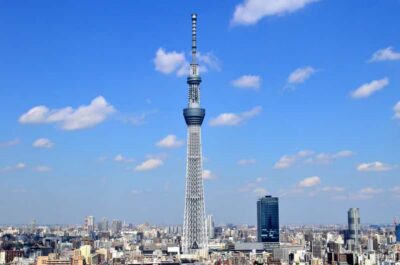
Meiji Shrine, Asakusa, Skytree Bus Tour and Cruise
Read our review →
Roll and Authentic Sushi Making Class in Asakusa
Read our review →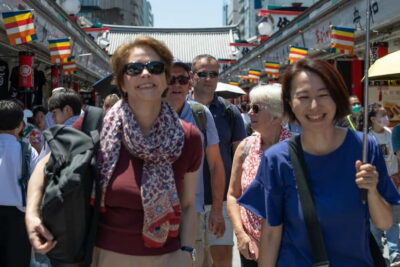
Asakusa Walking Tour with Sensoji Temple Visit
Read our review →
Tokyo Panoramic 1 Day: Meiji Shrine, Asakusa, Odaiba and SKYTREE®
Read our review →
Tokyo Go Kart: Asakusa, Skytree, and Akihabara **IDP MUST**
Read our review →
Asakusa, Skytree & Akhihabara Go-Kart City Experience
Read our review →Browse the lists this tour appears in