
Reviewed · TOKYO TEA CEREMONY EXPERIENCES
Japanese Traditional Sweets making and Tea Ceremony
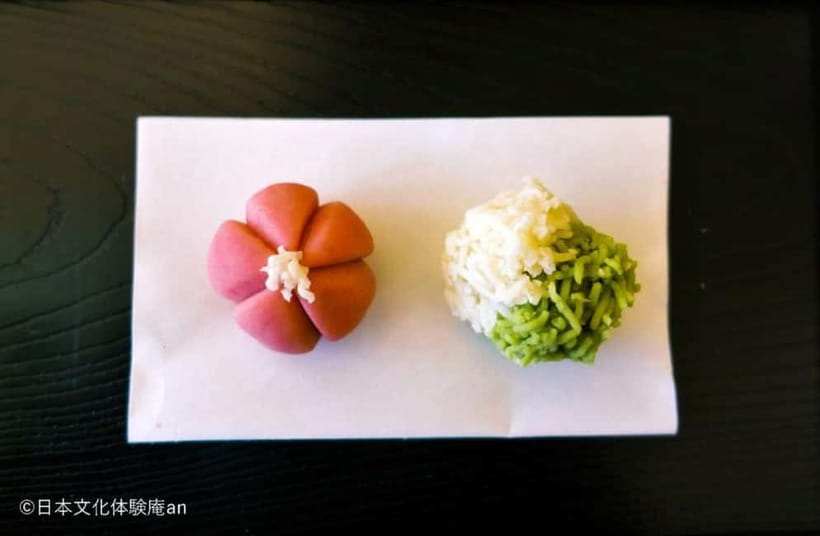
The best part of this 95-minute class is the hands-on work. You shape two seasonal nerikiri sweets from white and red bean paste supplied by long-established Kyoto shops, then eat them with your own Uji matcha. It turns a formal Japanese custom into something you can try with your own hands.
I like the creative sweet-making and the clear connection between sweet bean paste and bitter tea. I also like the price: at $18, this is an easy way to add a food and culture activity to a Tokyo day without spending half a day or a small fortune.
The main caution is communication and crowd size. The instructor speaks Japanese, and English translation is provided as much as possible. One recent session felt too crowded for a participant to hear the teacher clearly, so this works best if you are comfortable learning from demonstrations and keeping an eye on the instructor.
Key points to know before booking
- Two seasonal sweets: Make a flower-shaped nerikiri and a kinton nerikiri, with designs that change to match the season.
- Kyoto ingredients: The white and red bean pastes come from long-established Kyoto shops, while the tea is single-origin Uji matcha.
- A real hands-on format: You color the paste, shape the sweets, prepare matcha, and eat what you make.
- About 95 minutes: The schedule includes roughly 55 minutes of sweet-making, a short break, and a tea ceremony before the final eating time.
- English is limited: The instructor is Japanese, with English translation offered as much as possible. Demonstration matters here.
- Low entry price: At $18 per person, this is good value, though a take-home box costs another 100 JPY and a completion certificate costs 300 JPY.
Making Kyoto-style sweets in Tokyo
This experience gives you a taste of Kyoto food culture at a Tokyo meeting point, AN TOKYO Japanese Culture Experience. The setting is useful for visitors based in the capital who want something more focused than a quick snack and less formal than a full tea-school lesson.
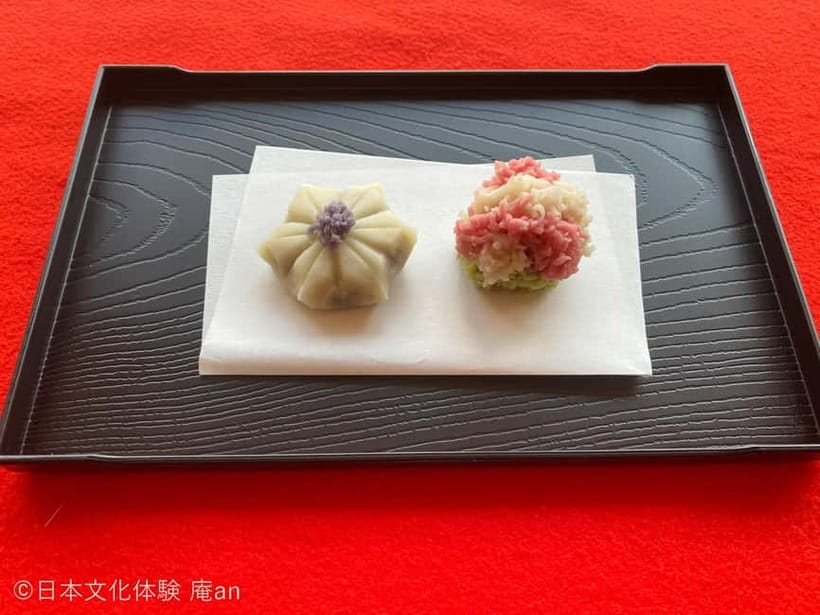
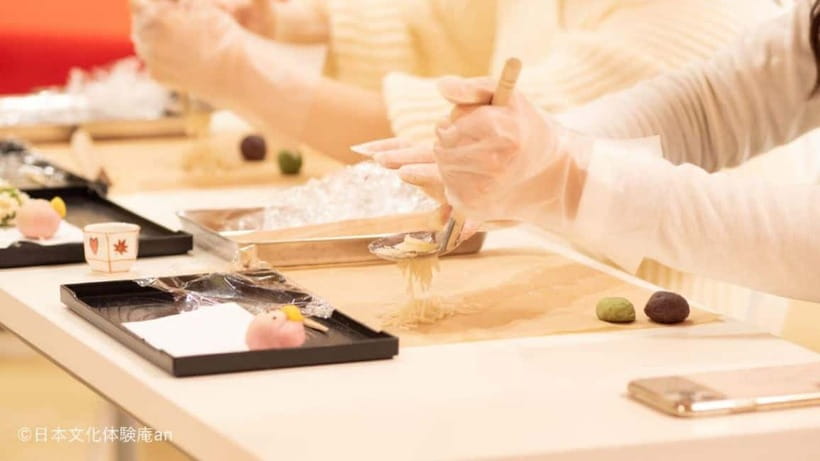
You begin with nerikiri, a high-grade Japanese sweet made from colored white bean paste. The paste is shaped into seasonal flowers or fruit forms, so the finished sweet is meant to look as good as it tastes. You are not simply watching a confectioner work. You color the paste and form the shapes yourself.
That distinction matters. Japanese sweets can look delicate and almost too neat to touch, but this class lets you see how much skill goes into that appearance. You also get room to make your own choices during the coloring and shaping. The result may not look exactly like the teacher’s example, which is part of the fun.
The ingredients are a strong point. The white and red bean pastes come from long-established Kyoto shops, giving the class a direct link to traditional wagashi production. The activity does not promise a full lesson in the history of wagashi, but the ingredients and methods give you a useful introduction to why these sweets are treated as more than ordinary dessert.
More Tokyo tea ceremonies:
- Matcha Making Class in Tokyo with Authentic Japanese Sweets Set
★ 5.0 · 744 reviews - Tokyo: Traditional Tea Ceremony with a Tea Master
★ 5.0 · 528 reviews - Dynamic Tokyo: Tokyo Tower, Tea Experience, Bay Cruise Day Tour
★ 4.5 · 521 reviews
The first 55 minutes: two seasonal nerikiri
The opening portion begins with an explanation of Japanese traditional sweets. You then make two different nerikiri types: a flower-shaped nerikiri and a kinton nerikiri.
The flower design is the more immediately recognizable piece. You work with colored bean paste and shape it into a seasonal form. The exact look depends on the time of year, so the class has a changing visual theme rather than one fixed design all year.
Kinton nerikiri gives you a second technique and a different finished texture or appearance. Making two sweets is a smart choice. One piece would introduce the idea, but two let you compare methods and improve after your first attempt.
I would pay close attention during the demonstration before touching the paste. The instructor may move ahead while explaining, and a participant in one session found it hard to hear when the room was crowded. If you miss a step, the visual demonstration is your best guide. Sit where you can see the instructor’s hands, and do not hesitate to watch first before beginning your own piece.
The class is suitable for beginners because the work is broken into simple stages: color, shape, and finish. Still, you should not expect a polished professional result. The pleasure comes from making something recognizable and edible, not from producing a perfect shop-window sweet.
Why the matcha pairing works
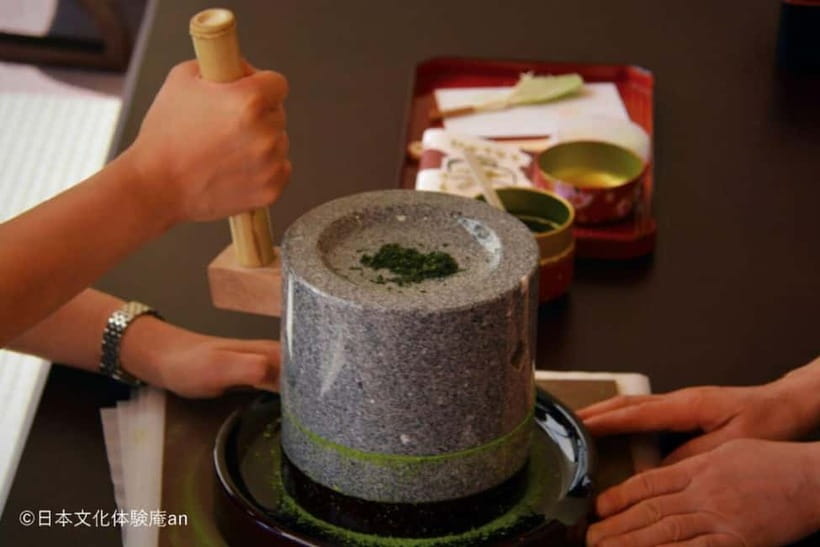
After the sweets, there is a break at about the 55-minute mark. The tea portion begins around 65 minutes with an explanation of the tea ceremony and a matcha-grinding demonstration.
The matcha is single-origin Uji matcha. Uji, near Kyoto, is one of Japan’s best-known tea-producing areas, and the tea gives this activity a direct connection to the same region linked to the bean paste. You are not just eating sweets and drinking a random green tea. The pairing has a purpose.
Matcha can taste bitter, grassy, and intense on its own. The sweetness of high-quality white and red bean paste balances that sharp flavor. This is one reason traditional Japanese sweets are often served with tea. The sweet is not merely an afterthought. It prepares your palate for the tea and makes the stronger matcha easier to enjoy.
The grinding demonstration also helps explain the tea’s texture and preparation. You then prepare your own matcha as part of the tea ceremony experience. The class does not appear to be a full formal training course in every rule of tea etiquette, so you should treat it as an introduction rather than certification in tea practice.
That makes the format approachable. You can learn the basic rhythm, take part, and enjoy the tea without needing previous knowledge. If you are hoping for a highly formal ceremony with a long explanation of every gesture, this short class may feel light. If you want to try the central actions yourself, it offers a good balance.
A short class with a clear rhythm
The timing is easy to understand:
- The first 55 minutes cover explanations and the two sweets.
- Around 55 minutes, you have a break.
- Around 65 minutes, the tea explanation and matcha demonstration begin.
- The tea ceremony and a picture period follow.
- At about 85 minutes, the experience ends as a program.
- You have until the 95-minute mark for eating, drinking, and leaving the room.
This schedule gives you enough time to make two sweets without turning the activity into an all-day commitment. You can fit it into a Tokyo itinerary before lunch, between sightseeing stops, or later in the afternoon.
The final eating and drinking period is important. You do not rush straight from shaping the sweets to the door. You get time to taste the finished nerikiri with your matcha and take pictures. The picture time is built into the program, so you can document the sweets before eating them.
The short duration also limits how much theory the instructor can cover. You will learn the basic process, but not every detail about tea schools, wagashi seasons, or Kyoto confectionery traditions. I see that as a fair trade at this price and length.
More Dessert Tours in Tokyo:
- Tokyo: Matcha Making Experience with Mochi Sweets in Asakusa
★ 4.9 · 388 reviews - Make Traditional Nerikiri Sweets & Matcha experience in Shibuya
★ 5.0 · 130 reviews - Private Mochi Sweets Making class near Shibuya area
★ 5.0 · 93 reviews - Tokyo Local Food Tour: Noodles, Skewers, Dumplings, Sweets
★ 5.0 · 48 reviews
English support and the role of the instructor
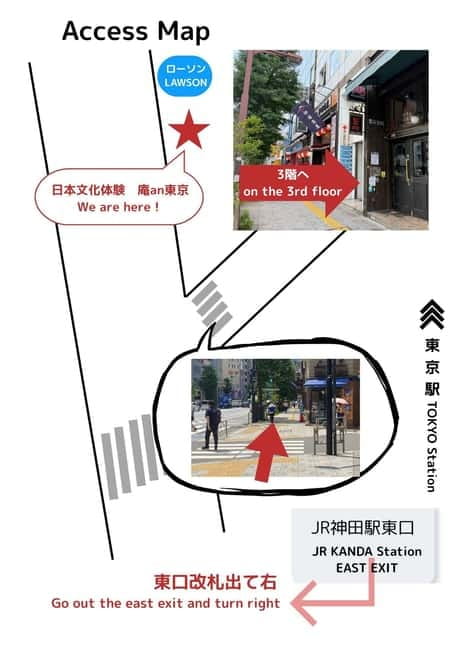
The official language is Japanese, with English translation provided as much as possible if requested. You should contact the provider in advance if you want English support added.
This is not the same as booking a fully English-speaking class. The instructor’s demonstrations carry much of the lesson. A recent participant found the instructor helpful and patient despite difficulty with English, and named Marie as a particularly good presenter. If Marie is leading your session, you may find the presentation especially easy to follow, but the information does not guarantee a particular instructor for every booking.
The teaching style matters here because sweet-making is visual. You can often understand where to press, roll, or shape the paste by watching closely. Tea preparation is also shown through movement, though verbal guidance is more useful for explaining the meaning behind each step.
If you need detailed spoken instruction in English, send a request before booking and arrive ready to ask for clarification. If you are comfortable following a demonstration, the language gap should be easier to manage.
Group size is worth considering even though a fixed maximum is not provided. One participant found the room too crowded and could not hear the instructor, who continued without waiting. That is the clearest weakness in the experience. A busy session may reduce the calm feeling you want from a tea ceremony.
What the $18 price really buys you
At $18 per person, this is a strong-value cultural activity. You receive instruction, ingredients, two sweets, matcha preparation, and the tea ceremony within 95 minutes. Comparable activities can cost much more when they include a private instructor, translation, or a longer formal presentation.
The value is best if you want participation rather than luxury. You are paying for the chance to make the sweets and prepare the tea, not for a quiet private room or a long guided lecture.
There are two small extras to know about. A sweets take-out box costs 100 JPY, so bring that option in mind if you want to save one of your creations. A completion certificate costs 300 JPY. If you want a certificate with your name printed on it, provide the names in advance. Otherwise, the name space will be left blank.
The take-home box is a useful add-on for families or anyone who wants to keep one sweet for later. The certificate is more of a souvenir than a serious qualification. Neither extra is required.
Who will enjoy this experience most
I would choose this activity if you want a compact cultural lesson with something edible at the end. It suits first-time visitors who want to understand the link between wagashi and matcha, as well as repeat visitors looking for a quieter food-centered activity.
It is especially good for:
- People curious about Japanese sweets and seasonal design
- Couples or friends who enjoy making things together
- Families with children old enough to follow a demonstration
- Visitors with only 95 minutes to spare
- Anyone interested in Kyoto ingredients while staying in Tokyo
Children under two who sit on a parent’s lap are free. Everyone else who takes part needs a reservation and payment. Children who do not participate cannot enter, so plan on having every member of your group included in the activity.
I would be more cautious if you need a fully English-language lesson, dislike group activities, or want a silent and highly formal tea ceremony. The class is hands-on and friendly, but it may not provide the calm, private atmosphere associated with a traditional tea room.
Practical timing and cancellation advice
The operating hours are 10:00 to 17:00. Reservations received after 17:00 are processed the next day, so do not expect a late-evening booking request to receive an immediate response.
Arrive early. The provider will not hold the event for late arrivals, no matter the reason. This is particularly important in Tokyo, where a short train delay or a wrong turn can cost you more time than expected. The meeting point is AN TOKYO Japanese Culture Experience at coordinates 35.6916541, 139.7715022.
You can reserve now and pay later, which helps if your daily schedule is still changing. Free cancellation is available up to 24 hours in advance for a full refund. After that point, a cancellation fee applies, and changing the date or time after the fee has been incurred can bring another specified charge.
The provider does not compensate you for transport costs if you cancel, so do not build a long cross-city journey around this one activity without allowing extra time.
Should you book the AN TOKYO class?
Book it if you want a reasonably priced, practical introduction to wagashi and matcha. The two seasonal sweets, Kyoto bean paste, Uji tea, and hands-on format give the class more substance than a simple tasting.
I would book with three expectations: the lesson is short, English support may be limited, and a busy session can make it harder to hear. Sit near the instructor, watch the demonstrations closely, and request English assistance ahead of time.
At $18, the risk is low and the cultural payoff is good. This is not the right pick for a private, highly formal tea ceremony. It is a better choice for you if you want to make something with your hands, learn the basic tea ritual, and eat a small piece of Japan that you shaped yourself.
FAQ
Where does the Japanese sweets and tea experience take place?
The meeting point is AN TOKYO Japanese Culture Experience in Honshu, Japan. The listed coordinates are 35.6916541, 139.7715022.
How long does the activity last?
The full program lasts 95 minutes. Sweet-making takes place during the first part, followed by a break, the tea portion, picture time, and final eating and drinking time.
What sweets will I make?
You will make two seasonal nerikiri sweets: a flower-shaped nerikiri and a kinton nerikiri.
What ingredients are used?
The class uses white and red bean paste produced by long-established shops in Kyoto. The tea is single-origin Uji matcha.
Is the experience offered in English?
The instructor is Japanese, and English translation will be provided as much as possible. Contact the provider in advance if you would like English support added.
How much does the experience cost?
The listed price is $18 per person. A take-out box costs 100 JPY, and an experience completion certificate costs 300 JPY.
Can I cancel for a full refund?
You can cancel up to 24 hours in advance for a full refund. Cancellation fees apply after that point.
Are young children free?
Children under two years old who sit on their parents’ laps are free. Anyone who does not participate in the experience cannot enter.
Newly reviewed around Tokyo
- Tokyo Asakusa:Calligraphy & Make T-shirt Activity★ 5.0 · 62 reviews
- Intercity Shuttle, Tokyo to Haneda /Narita /Yokohama /Makuhari★ 5.0 · 5 reviews
- 1 Hour Travel around Tokyo with a Professional Photographer★ 5.0 · 3 reviews
- Travel Tokyo with Your Own Personal Photographer★ 5.0 · 43 reviews
- Train in Samurai Swordsmanship and Defeat the Demon in Tokyo★ 5.0 · 5 reviews
- Shuttle Van 6hr Tokyo Tour to-and-from Tokyo, Yokohama and Narita★ 5.0 · 9 reviews
- Kickboxing & Body Training with EX-Pro Fighter★ 5.0 · 4 reviews
- Traditional Japanese Knife Sharpening Class★ 5.0 · 18 reviews
Tokyo Tea Ceremony Experiences, compared.
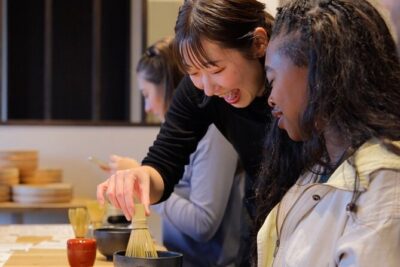
Matcha Making Class in Tokyo with Authentic Japanese Sweets Set
Read our review →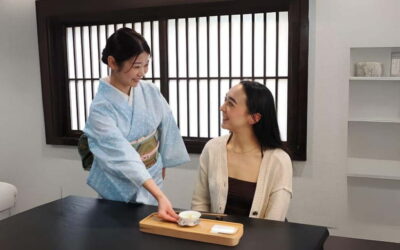
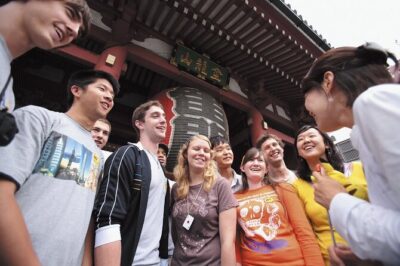
Dynamic Tokyo: Tokyo Tower, Tea Experience, Bay Cruise Day Tour
Read our review →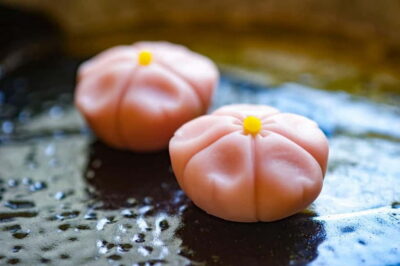
Matcha Making Experience with Mochi Sweets in Asakusa
Read our review →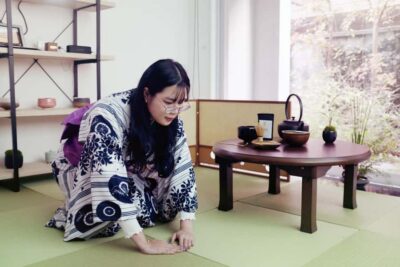
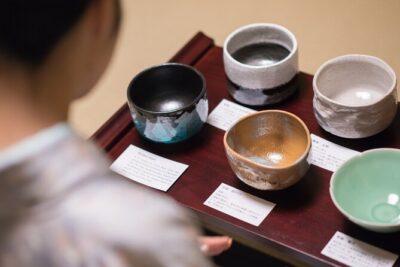
Tea Ceremony Workshop in Tokyo by the Experienced Instrucor
Read our review →
Browse the lists this tour appears in