
Reviewed · TOKYO TEA CEREMONY EXPERIENCES
Matcha Experience with of Japanese Tea Tasting in Tokyo
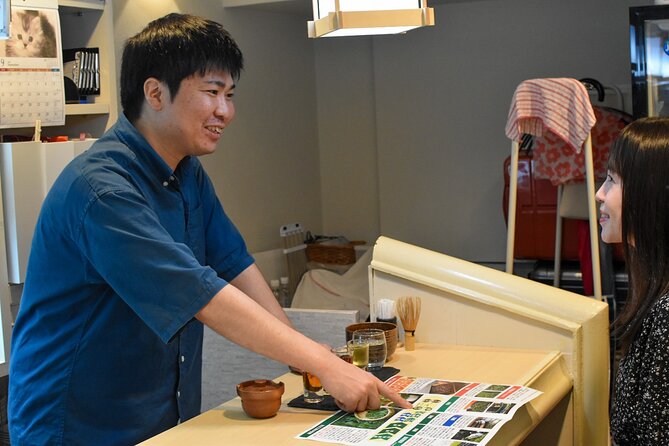
The most interesting part of this Tokyo tea class is that Chisei does not treat matcha as a trendy green powder. He explains how tea is grown and processed, drawing on six years as a tea farmer in Kyoto, then lets you taste the results side by side. You finish by whisking your own matcha with a bamboo chasen.
I like the small group of five because it leaves room for questions and makes the tasting feel personal. I also like the range: you compare shaded teas such as kabusecha and gyokuro with roasted hojicha, brown rice tea, Japanese black tea, matcha, and lattes. The one consideration is that this is a class, not a quick ceremonial photo opportunity, so tea newcomers should be ready to listen and taste carefully for 90 minutes.
Key points to know before booking
- A former tea farmer leads the class: Chisei explains cultivation and processing from first-hand experience in Kyoto.
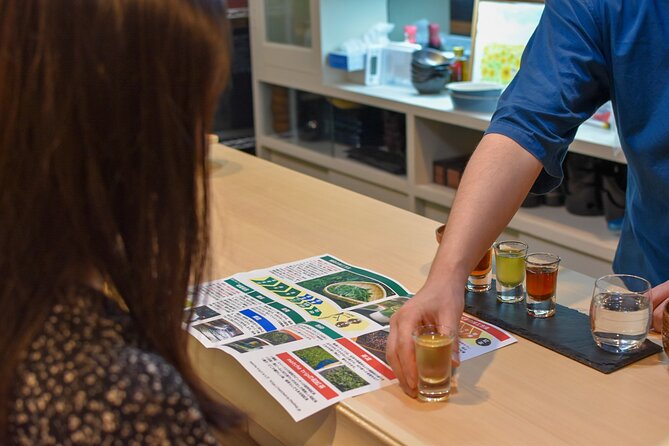
- You taste a broad set of teas: Expect sencha, kabusecha, gyokuro, deep-steamed sencha, hojicha, genmaicha, Japanese black tea, matcha, and tea lattes.
- The group is capped at five: This is a good setting for questions, especially if you want help noticing differences between teas.
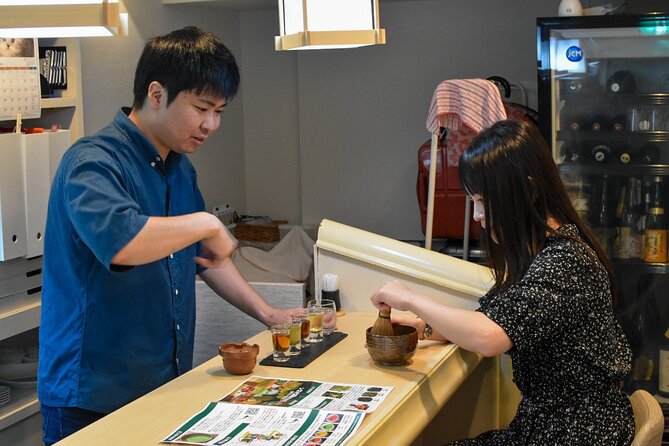
- You make your own usucha: The final matcha preparation uses a bamboo whisk, and you learn a method you can repeat at home.
- Homemade sweets are part of the experience: Rina prepares sweets to pair with Japanese black tea and other drinks.
- It is easy to fit into a Tokyo day: The class lasts about 90 minutes and returns to its meeting point in Taito City.
What makes this Tokyo matcha class different
Many Tokyo tea activities focus on the movements of a formal tea ceremony. This one takes a wider view. You learn the ceremony basics, but you also look at leaves, compare brewing methods, discuss cultivation, and taste tea styles that are often overlooked by first-time visitors.
That wider approach matters. Japanese tea is not one single flavor, and matcha is only one branch of the story. A lightly brewed sencha can taste very different from a shaded gyokuro. Roasting changes hojicha completely, while toasted rice gives genmaicha its familiar nutty note.
Chisei’s background gives the lesson a practical base. He grew tea in Kyoto for six years before working as a pharmacist, so the discussion connects farming, processing, preparation, and everyday use. He also uses diagrams and photographs to explain how growing conditions and production affect the finished drink.
Rina adds the food side of the session. Her homemade sweets are served with tea, and one memorable part of the class is tasting tea leaves with ponzu. That is the kind of small detail you are unlikely to get by ordering matcha at a café.
More Tokyo tea ceremonies:
- Matcha Making Class in Tokyo with Authentic Japanese Sweets Set
★ 5.0 · 744 reviews - Tokyo: Traditional Tea Ceremony with a Tea Master
★ 5.0 · 528 reviews - Dynamic Tokyo: Tokyo Tower, Tea Experience, Bay Cruise Day Tour
★ 4.5 · 521 reviews
Finding the meeting point in Taito City
The class begins at matcha tripJapan, at the Henn Na Hotel in Tokyo’s Taito City district. The listed address is 3 Chome 19 8 Kotobuki, with the meeting location on the second floor at Sports Bar Leaf.
You receive confirmation when you book, and the activity ends back at the same meeting point. That makes the experience simple to place between other plans. Still, allow a little extra time to find the hotel and reach the second floor, especially if you are unfamiliar with the area.
The location is near public transportation, but the information provided does not specify a particular station or walking time. Check the confirmation details before setting out rather than relying on a last-minute map search.
The class has a maximum of five participants. That limit is one of its strongest features. Tea tasting works better when you can ask why one cup tastes sweeter, lighter, roasted, or more savory without waiting behind a large group.
Step one: a seasonal welcome drink
The session starts with a seasonal welcome drink. While you have it, Chisei explains the teas you will taste and gives you a basic framework for the rest of the class.
This opening is useful because it sets up the vocabulary before the tasting begins. You are not simply handed one cup after another. You learn to consider the appearance of the leaves, the color of the infusion, the fragrance, and the taste.
The welcome drink may also help you settle into the pace. This is a guided tasting, not a rushed flight of samples. You have time to compare impressions and ask questions.
Step two: comparing six Japanese teas
The central section compares six tea types: sencha, kabusecha, gyokuro, deep-steamed sencha, genmaicha, and hojicha. The exact order can vary, but the purpose is clear: each tea is prepared in a way that brings out its best qualities.
You first look at the leaves. Their shape and color offer clues about how they were treated. Then Chisei brews each tea and serves it so you can compare the cup with the dry leaf.
More Tokyo food tours:
- Tokyo: Shinjuku Food Tour (13 Dishes at 4 Local Eateries)
★ 5.0 · 6,603 reviews - Tokyo Tsukiji Fish Market Food and Culture Walking Tour
★ 5.0 · 3,184 reviews - Tokyo: Shinjuku Food Tour (15 Dishes and 4 Eateries)
★ 4.9 · 2,033 reviews - Best of Shinjuku: Izakaya Food Tour (4 Stops, 14+ Tastings)
★ 5.0 · 1,863 reviews
Sencha
Sencha is one of the key reference points in Japanese tea. Tasting it early gives you a useful baseline for comparing the other styles. Pay attention to its balance of fresh aroma and savory taste.
Kabusecha
Kabusecha is shaded before harvest. That growing method changes the leaf and helps explain why Japanese producers treat shade as an important part of tea production.
Gyokuro
Gyokuro is another shaded tea, often associated with a fuller, more concentrated flavor. Here, you can compare it directly with sencha and kabusecha instead of trying to remember a cup from a different day.
Deep-steamed sencha
Deep steaming changes the leaf structure and the look of the brewed tea. This is a good example of why processing matters as much as the original plant.
Genmaicha
Brown rice tea, commonly called genmaicha, combines green tea with toasted rice. Its roasted aroma gives the tasting a clear change of pace after the greener styles.
Hojicha
Hojicha is roasted green tea. It has a warmer, toastier profile and is often easier for people who find grassy green tea too sharp. It also returns later as a latte, letting you compare the tea on its own with a milk-based drink.
The six-tea comparison is where the class earns much of its value. You are not just collecting samples. You are learning to connect a tea’s flavor with its farming and processing.
Step three: Japanese black tea and homemade sweets
The next part shifts to Japanese black tea with homemade sweets. Japanese tea culture is often presented only through green tea, so this inclusion broadens the lesson.
The tea is selected to work with the sweets, giving you a chance to notice how food changes your perception of a drink. A tea that seems brisk or dry by itself may feel rounder with something sweet.
Rina’s homemade treats are a major part of the experience. The food is not described as a full meal, so arrive having eaten if you need lunch. Think of the sweets as a thoughtful pairing, not a substitute for a meal.
The class also includes the unusual chance to eat tea leaves with ponzu. It is a small but memorable reminder that tea is a food plant, not only a beverage ingredient.
Step four: whisking your own matcha
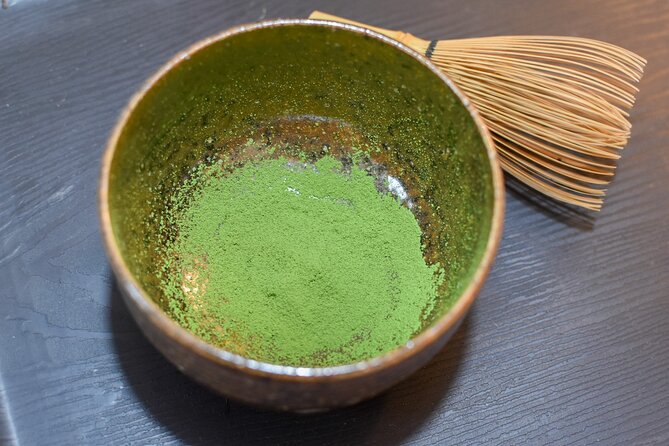
The hands-on portion comes near the end. You make usucha, the thinner style of matcha, with a bamboo whisk.
Chisei shows you how to use the whisk, and you prepare your own bowl rather than simply watching a demonstration. That makes the lesson practical. Once you return home, you have enough information to repeat the process instead of treating the experience as something that only works in Japan.
Do not expect a full formal tea ceremony with every traditional movement and piece of etiquette. The focus here is on understanding matcha and learning a usable preparation method. If you want a highly formal ceremony in a historic tea room, this may not be the right choice. If you want to understand what you are doing and practice it yourself, the format makes sense.
The session also includes two matcha types. Comparing them helps show that matcha can vary in purpose and flavor. One may be better suited to drinking on its own, while another works well in a latte.
Step five: matcha and hojicha lattes
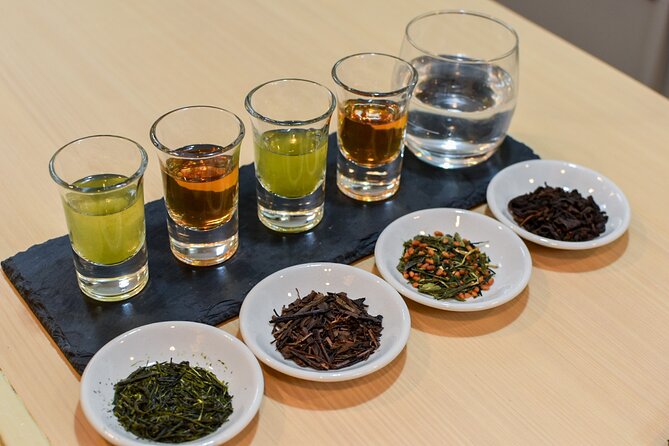
The final drinks include matcha latte and hojicha latte options. The supplied details describe three kinds of matcha latte and a hojicha latte, along with two types of matcha.
This is useful for anyone who likes the café side of Japanese tea. You can taste traditional preparations, then see how the same general ingredients work with milk. Hojicha is especially interesting in this setting because roasting gives it a softer, toastier character.
The lattes also make the class friendly to people who are not yet devoted to straight matcha. You do not need to enjoy every tea style to get value from the session. The range lets you find the flavors that suit you.
How much tea do you actually taste?
The description uses slightly different counts, so it helps to read the range rather than fixate on one number. You have a seasonal welcome drink, six comparison teas, Japanese black tea, two matcha types, and several latte options.
The included tea list names hojicha, sencha, kabusecha, gyokuro, deep-steamed tea, genmaicha, Japanese black tea, and matcha. In practical terms, expect a substantial tasting rather than one ceremonial bowl.
Because the class lasts about 90 minutes, the serving sizes are likely designed for comparison rather than large mugs. Pace yourself. You are tasting many styles, and the point is to notice differences instead of drinking each cup quickly.
The value of the $57.98 price
At $57.98 per person, this costs more than buying a matcha drink and a Japanese sweet at a café. But the comparison is not really café versus café. The price includes a guided lesson, several tea styles, matcha preparation, lattes, homemade sweets, and a very small group.
I see the best value here for someone who wants context. You learn why the teas differ, not just what they taste like. The former tea farmer background is especially useful because cultivation and processing are explained by someone who has worked with tea plants directly.
It is less compelling if you only want a quick cup of matcha, a polished ceremony performance, or a large food tasting. You are paying for instruction and variety. If you have little interest in tea, the 90-minute format may feel long.
The class may also save you from buying random tea souvenirs without knowing what you like. Some participants have purchased matcha, gyokuro, tea bowls, and other products to continue the practice at home. The supplied information does not require you to buy anything, so treat shopping as optional.
Who will enjoy this experience most?
I would recommend it to first-time visitors who want a clear introduction to Japanese tea without committing to a long course. The small group suits curious people who like asking questions and comparing flavors.
It is also a strong pick for tea drinkers who already know basic green tea and want to understand cultivation, shading, steaming, roasting, and matcha grades. The direct comparisons give experienced drinkers something to think about.
Families and mixed-interest groups may find the range helpful. One person can enjoy traditional tea, another can prefer lattes, and everyone can take part in whisking matcha. The homemade sweets and hands-on element keep the class from feeling like a lecture.
The experience is conducted for general participants. If your purpose is commercial, wholesale, or business-related, contact the provider before booking. The class is not intended for commercial discussions.
Practical details that matter
The experience accepts mobile tickets, and confirmation is provided at booking. Service animals are allowed, and the meeting point is near public transportation.
Free cancellation is available if you cancel at least 24 hours before the start time. Cancellations or changes made less than 24 hours ahead are not accepted for a refund, with cut-off times based on Tokyo local time.
The session ends where it begins, so you do not need to arrange a separate return transfer. Since the address is inside a hotel and the activity uses a second-floor venue, check your booking information closely before arrival.
Allergy questions are worth raising early. Chisei has been described as proactive about asking about allergy conditions, but the provided details do not list every ingredient in the sweets. Tell the hosts about allergies before you eat.
Should you book the matcha experience?
Book it if you want more than a photogenic bowl of green tea. The strongest reasons are Chisei’s farming background, the six-tea comparison, the five-person limit, and the chance to whisk matcha yourself.
Skip it if you want a formal ceremony with extensive traditional etiquette, a full meal, or a very short activity. This is a focused class with lots of tasting and explanation.
For most visitors, the $57.98 price is fair because it combines education, drinks, sweets, and hands-on practice in 90 minutes. I would place it early or midway through a Tokyo stay. You will still have time afterward to explore Taito City, and you will understand Japanese tea shops and menus better for the rest of your trip.
FAQ
How long does the matcha experience last?
The experience lasts approximately 1 hour and 30 minutes.
How many people can join the class?
The group is limited to a maximum of five participants.
Where does the experience meet?
It meets at matcha tripJapan, Henn Na Hotel, 2nd floor, Sports Bar Leaf, in Kotobuki, Taito City, Tokyo.
Where does the activity end?
The activity ends back at the meeting point.
Which Japanese teas are included?
The tasting includes sencha, kabusecha, gyokuro, deep-steamed sencha, hojicha, genmaicha or brown rice tea, Japanese black tea, and matcha. A seasonal welcome drink is also served.
Do I get to make matcha myself?
Yes. You make usucha, or thin matcha, with a bamboo tea whisk during the final hands-on portion.
Are sweets included?
Yes. Homemade sweets are served with Japanese tea, including Japanese black tea. Tea leaves with ponzu may also be part of the tasting.
Are tea lattes included?
Yes. The experience includes matcha latte options and hojicha latte. The included details also mention two types of matcha.
What is the cancellation policy?
You can cancel at least 24 hours before the start time for a full refund. Cancellations or changes made less than 24 hours before the activity are not accepted for a refund.
Newly reviewed around Tokyo
- Tokyo Asakusa:Calligraphy & Make T-shirt Activity★ 5.0 · 62 reviews
- Intercity Shuttle, Tokyo to Haneda /Narita /Yokohama /Makuhari★ 5.0 · 5 reviews
- 1 Hour Travel around Tokyo with a Professional Photographer★ 5.0 · 3 reviews
- Travel Tokyo with Your Own Personal Photographer★ 5.0 · 43 reviews
- Train in Samurai Swordsmanship and Defeat the Demon in Tokyo★ 5.0 · 5 reviews
- Shuttle Van 6hr Tokyo Tour to-and-from Tokyo, Yokohama and Narita★ 5.0 · 9 reviews
- Kickboxing & Body Training with EX-Pro Fighter★ 5.0 · 4 reviews
- Traditional Japanese Knife Sharpening Class★ 5.0 · 18 reviews
Tokyo Tea Ceremony Experiences, compared.
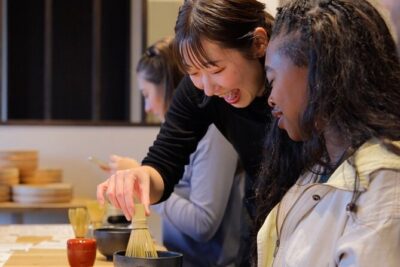
Matcha Making Class in Tokyo with Authentic Japanese Sweets Set
Read our review →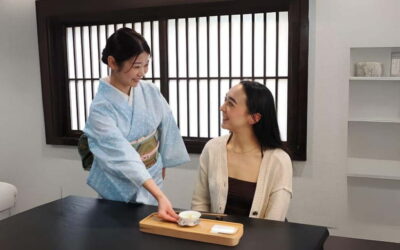
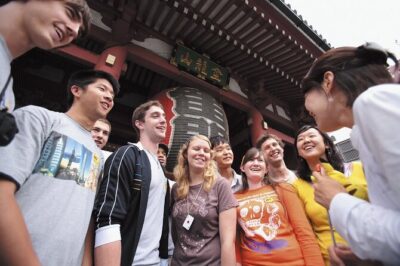
Dynamic Tokyo: Tokyo Tower, Tea Experience, Bay Cruise Day Tour
Read our review →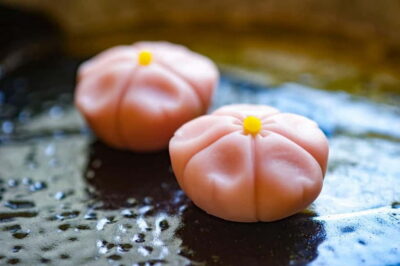
Matcha Making Experience with Mochi Sweets in Asakusa
Read our review →
Tea Ceremony Workshop in Tokyo by the Experienced Instrucor
Read our review →
Browse the lists this tour appears in