
Reviewed · AKIHABARA AND ANIME TOURS
Manga Lesson with a Professional Japanese Manga Artist in Nakano
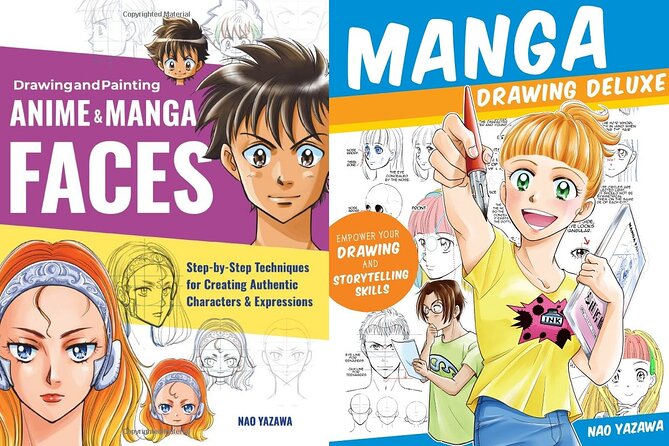
A professional manga artist guides you through the real production process in Nakano, from rough pencil work to inking, white highlights, and pasted screen tones. You do not simply sketch a cartoon and leave. You handle the tools used in traditional manga production and finish a piece on proper manga paper.
I like the step-by-step teaching, which lets beginners keep pace without leaving experienced artists bored. I also like the chance to use specialized nibs, dip pens, ink, and screen tones, materials many visitors would not normally get to try. The main drawback is practical: the school can be hard to locate, and the meeting instructions may need close attention.
Key points to know before booking
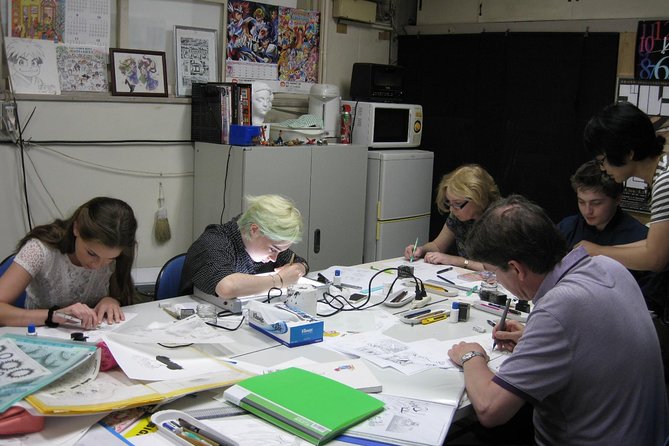
- Traditional manga tools: Try screen tones, manga paper, ink, white correction ink, and three types of specialized pen nibs.
- Professional instruction: Teachers such as Nao Yazawa adjust the lesson for children, adults, beginners, and practiced artists.
- A finished souvenir: You take home your completed manga-style character drawing at the end.
- Private teaching: Your booking is for your own party, with single-person tuition available for solo visitors.
- Two focused hours: The class moves through drawing, inking, corrections, black areas, highlights, and screen tones.
- Nakano location: The school is near public transportation, but you should allow time to find the exact building.
Why this Nakano manga lesson feels different
Tokyo offers plenty of pop-culture shopping, but this class asks you to put the pen down on paper yourself. That shift matters. You are not just buying a manga souvenir or looking at original art. You are learning how a manga artist builds an image one stage at a time.
The lesson takes place at Manga School Nakano, at 2-chōme 7-13 Arai, Nakano City, Tokyo. The setting is a working school rather than a large sightseeing attraction, so the experience feels focused and hands-on. You sit down with the teacher, receive the tools, and begin working instead of spending much of your time moving from one display to another.
I especially like the use of authentic manga references and original art from published manga. These examples help explain how the finished page gets its clean look. They also give you something concrete to study if you have never worked in the medium before.
The class is suitable for a wide age range. Children can work from references with close help, while adults and experienced artists can ask about technique, tools, and process. Several families have used the two hours as a shared activity, with parents, teenagers, and younger children all working at different levels.
More Akihabara and anime tours:
- Official Street Go-Kart Tour – Akihabara
★ 5.0 · 1,578 reviews - Tokyo Go Kart: Asakusa, Skytree, and Akihabara **IDP MUST**
★ 5.0 · 988 reviews - Akihabara Anime & Game Adventure Walking Tour (Group or Private)
★ 5.0 · 404 reviews
The two-hour lesson, from pencil draft to finished page
The class begins with a short introduction to manga technique and the development of manga. This section is brief, but useful. It gives you context before you start drawing and helps explain why manga production uses such a particular set of materials.
Next comes the drawing stage. You begin with a pencil draft, creating a manga-style character in a guided, step-by-step fashion. If you are new to drawing, you can choose from manga references and copy with the teacher’s help. This keeps the first stage manageable and prevents you from staring at a blank sheet with no idea where to begin.
The teacher checks your drawing as you go. That personal correction is one of the strongest parts of the class. Instead of receiving a general demonstration and being left alone, you get help with your own proportions, expressions, lines, and details.
The next stage is inking. You use manga pens and ink to trace the important lines, then erase the pencil marks. This is where the drawing begins to look like a finished manga image. The process can feel less forgiving than ordinary sketching, so having an instructor nearby is useful, particularly for a first attempt.
You also get to try different specialized pen nibs. The three nib types give you a feel for how artists create different line qualities. This is a small but valuable detail for anyone who draws regularly, since the tool affects the look of the finished character.
After inking, you add black areas and correct mistakes. White ink is used for highlights and repairs. These steps show you that traditional manga production is not simply about drawing a clean line on the first try. It is a process of building, cleaning, correcting, and refining.
The final stage is applying screen tones. These adhesive sheets create gray areas, textures, shadows, and effects. Screen tones are one of the most distinctive parts of traditional manga production, and using them yourself makes the finished image feel far more authentic than a simple pencil drawing.
At the end, you leave with your completed work. It is not a professionally published page, of course, but it is a personal souvenir made through the same broad sequence of draft, ink, correction, and tone.
Meeting artists such as Nao Yazawa
The instructor can make or break an art lesson, and this class receives especially strong praise for patient, clear teaching. Nao Yazawa is named by many participants as a teacher who explains the basics in a calm, direct way and adjusts her pace to the group.
Her professional background is a major draw. She is described as a successful manga artist and series creator, so you are learning from someone with practical experience rather than a general art instructor. The class also leaves room for conversation about manga and anime, which can make the session more personal for fans who already have favorite characters and series.
The teaching style suits mixed groups. A parent may need basic guidance, an experienced artist may want technical pointers, and a child may need help with nearly every step. The lesson can accommodate these differences because the teaching is adjusted to each person.
That does not mean the class is entirely self-directed. You should expect instruction and correction throughout the session. If you want a completely free drawing period, this may feel structured. If you want to learn a repeatable process and produce a finished piece, the structure is helpful.
Solo students can choose single-person tuition, while groups of two to four should select the matching group option. The group is private, so only your party participates. That is useful for families and friends who want to work at their own pace without sharing the teacher with strangers.
What you actually get to use
The tools are central to the value of this class. Your booking includes a professional manga artist and manga tools, so you do not need to assemble a supply kit before arriving.
You work with:
- Manga paper
- Pencil materials for the draft
- Manga pens and ink
- Three types of specialized pen nibs
- White ink for highlights and corrections
- Screen tones for gray areas, textures, and effects
- Manga references and examples of published original art
For a casual visitor, screen tones and dip pens may be the most memorable parts. These supplies are not always found in a standard drawing class, and they show how much traditional manga depends on physical production methods.
If you are already an artist, the class gives you a chance to test tools you may not normally use. One participant even received advice about where to buy supplies in Tokyo after the lesson. That can be useful if you want to continue practicing once you leave Japan.
Drinks are not included, so plan accordingly. The activity lasts about two hours, and the supplied details do not indicate that refreshments are part of the session.
More hands-on classes and workshops in Tokyo:
- Sushi Making Tokyo Roll and Authentic Japanese Sushi Class
★ 5.0 · 3,971 reviews - Tokyo: Roll and Authentic Sushi Making Class in Asakusa
★ 4.9 · 1,957 reviews - Tokyo Shinjuku Chopsticks Making Class
★ 5.0 · 1,763 reviews - Tokyo: Sushi Making Class in a Happi Coat near a Famous Spot
★ 4.9 · 1,377 reviews
Is $67.77 good value for two hours?
At $67.77 per person, this is not the cheapest creative activity in Tokyo. The price makes more sense when you consider what is included: private or party-based instruction, access to specialist tools, guidance from a professional artist, and a finished drawing to take home.
A basic tourist craft class might give you materials and a short demonstration. Here, the value is in the corrections and the full manga workflow. You are paying for help with your own drawing, not only for a seat and a set of supplies.
The value rises for manga fans, aspiring artists, and families with children who already enjoy drawing. A child who loves manga may remember the lesson long after a standard sightseeing stop has blurred together. Adults with little artistic confidence can also take part because the teacher can simplify the process and work from references.
The value is less clear if you only have a passing interest in manga or want a quick photo opportunity. Two hours is a serious block of time, and the activity asks you to concentrate. You should book it because you want to make something, not simply because it is near other Tokyo attractions.
The price is per person, so calculate the total carefully for a family. The private format is an advantage, but the cost can add up with four participants.
Who will get the most from this activity?
This class is a strong choice for manga fans, anime fans, young artists, and adults who want a hands-on Tokyo experience. It also works well for families because everyone can draw at a different level while sharing the same teacher and subject.
You do not need prior drawing ability. Beginners can copy from references and receive help at each stage. Several participants with little artistic experience still completed pieces they felt proud to take home.
Practiced artists can benefit too, though expectations should be realistic. The class is only about two hours, so it will not replace a long technical workshop. It can, however, introduce you to traditional materials and give you specific pointers on manga construction, line work, inking, and screen tones.
This is also a good pick for a solo visitor. Single-person tuition gives you a concentrated lesson, and the available feedback can be more useful than joining a large public class. You should mention your preferred departure time when booking, since the supplier confirms the exact activity time and may offer another slot if your first choice is unavailable.
Finding Manga School Nakano
The school is in Arai, Nakano City, at Japan, 165-0026 Tokyo, Nakano, Arai, 2-chōme 7-13, Nankoku Building. It is near public transportation, but the exact location has caused some confusion.
I would not leave this meeting point until the last minute. Check the address carefully, read the activity messages, and allow extra time to find the building. The supplier sends activity times and details through the Viator message system, and confirmation is subject to availability.
The activity ends back at the meeting point. No separate sightseeing stop is included, so you should treat the class as a focused two-hour visit rather than a neighborhood tour.
The location in Nakano is a sensible match for the subject. You are away from the most obvious central Tokyo tourist routes, and the school environment keeps attention on the art. Still, the less prominent setting means you need to be organized about arrival.
A few practical limits to keep in mind
The biggest concern is locating the school. One family found the directions difficult and felt that clearer instructions would help. Since the class starts at a set time, confusion at the building could reduce your drawing time.
The booking process also requires care. Confirmation is sent within 48 hours, subject to availability, and your preferred departure time should go in the special requirements field. If that slot has already been taken, the local supplier contacts you with alternatives.
The private format has advantages, but you must choose the correct party size. A solo visitor should select single-person tuition. A group of two to four should select the two-to-four-person option. The class is not a public drop-in group.
Free cancellation is available up to 24 hours before the local start time. Cancellations or changes made less than 24 hours ahead do not qualify for a refund, so check your Tokyo schedule before committing.
There has also been one reported payment mix-up involving an on-site charge after payment through Viator. The provided information does not show this as a general pattern, but I would keep your booking confirmation handy and clarify any payment question before starting the lesson.
How this compares with ordinary manga sightseeing
A visit to a manga shop or pop-culture district is easy to fit into a Tokyo day. You can browse, take photos, and move on. This lesson is slower and more demanding, but it gives you a skill and a physical piece of art.
The difference is participation. You handle the nib, spread the ink, erase the draft, add white highlights, and place screen tones. That sequence gives you a better sense of the labor behind the polished pages you see in books and on screens.
The experience also works across generations. Parents can help younger children, teenagers can discuss favorite characters with the instructor, and adults can enjoy the technical side of the craft. It is a rare Tokyo activity where a group can make one shared memory while producing separate finished pieces.
The trade-off is that your final drawing will depend on your own patience and ability. The instructor can guide and correct you, but cannot turn two hours into years of practice. Expect a meaningful handmade souvenir, not a professional illustration.
Should you book the Nakano manga lesson?
Book it if manga is more than a passing interest, if someone in your group loves to draw, or if you want an activity where you make something rather than only look at something. The combination of professional instruction, traditional tools, private teaching, and a finished drawing gives the $67.77 price solid value for the right person.
I would be especially keen to book this for a manga-loving child, a creative teenager, or a family with mixed experience levels. Nao Yazawa’s patient instruction and the ability to tailor the lesson are strong reasons to choose it.
Skip it if your schedule is too tight for a focused two-hour class, if you dislike structured instruction, or if you are unlikely to enjoy drawing. Also take the meeting-point issue seriously. Confirm the time, study the address, and arrive early enough to find the school without rushing.
For the right audience, this is a personal and practical Tokyo souvenir: not just a character on a screen, but one you build with your own hand.
FAQ
How long does the manga lesson last?
The lesson lasts approximately two hours, including instruction, practice, and time to complete your manga drawing.
Where does the activity take place?
It takes place at Manga School Nakano in Arai, Nakano City, Tokyo, at 2-chōme 7-13, Nankoku Building.
Is the lesson suitable for complete beginners?
Yes. Beginners can choose from manga references and receive step-by-step help from the instructor. The teacher adjusts the lesson to each student’s ability.
What manga materials are provided?
The class provides manga tools, including manga paper, pens, ink, specialized nibs, and screen tones. The lesson also covers white ink, corrections, and other parts of the traditional manga process.
Can solo visitors book the class?
Yes. Solo visitors should choose the single-person tuition option. Groups of two to four people should select the matching group tuition option.
Do I take my drawing home?
Yes. You finish a manga-style drawing during the lesson and take it home as a souvenir.
Can I cancel for a full refund?
You can cancel up to 24 hours before the experience’s start time for a full refund. Cancellations or changes made less than 24 hours before the start time are not refunded.
Newly reviewed around Tokyo
- Tokyo Asakusa:Calligraphy & Make T-shirt Activity★ 5.0 · 62 reviews
- Intercity Shuttle, Tokyo to Haneda /Narita /Yokohama /Makuhari★ 5.0 · 5 reviews
- 1 Hour Travel around Tokyo with a Professional Photographer★ 5.0 · 3 reviews
- Travel Tokyo with Your Own Personal Photographer★ 5.0 · 43 reviews
- Train in Samurai Swordsmanship and Defeat the Demon in Tokyo★ 5.0 · 5 reviews
- Shuttle Van 6hr Tokyo Tour to-and-from Tokyo, Yokohama and Narita★ 5.0 · 9 reviews
- Kickboxing & Body Training with EX-Pro Fighter★ 5.0 · 4 reviews
- Traditional Japanese Knife Sharpening Class★ 5.0 · 18 reviews
Akihabara and Anime Tours, compared.
Tokyo Go Kart: Asakusa, Skytree, and Akihabara **IDP MUST**
Read our review →
Akihabara Anime & Game Adventure Walking Tour (Group or Private)
Read our review →

Akihabara Tailor-made Private Tour for Anime Fans
Read our review →
Ramen Making from Scratch +Akihabara Tour –Tokyo Cooking Class
Read our review →Browse the lists this tour appears in