
Reviewed · TOKYO TRADITIONAL CRAFT WORKSHOPS
Kintsugi Experience: Art of Golden Joinery in Tokyo
Kintsugi turns a cracked ceramic plate into a small piece of art, using gold to highlight its breaks instead of hiding them. In Tokyo’s Minami-Aoyama neighborhood, you’ll learn both the hands-on method and the Japanese idea that an object’s repairs become part of its story.
I like the clear, beginner-friendly instruction and the fact that your finished plate comes home with you. I also like the small studio setting, where the teacher can look at each person’s work and offer help. The main catch is strict booking: this experience is non-refundable and date changes are not allowed.
Key points to know before booking
- Repair a studio-provided plate: Personal pottery cannot be used, but the supplied plate becomes your souvenir.
- Meet Master Taku at the 11:00am class: His presence depends on the scheduled session.
- Learn the idea behind the craft: The lesson covers kintsugi technique, Japanese aesthetics, and wabi-sabi.
- Expect a compact workshop: The class is planned for about one hour, with group sizes capped for a more personal feel.
- Find the studio carefully: TNCA Minami-Aoyama is near public transportation, but arriving early is wise.
- Check the age rule: Children under 6 cannot enter the atelier for safety reasons.
What the kintsugi lesson is really about
Kintsugi is often described as pottery repair with gold, but the gold is only part of the appeal. The central idea is that damage does not erase an object’s value. A break becomes part of the piece’s life, and the repair is made visible rather than covered up.
That makes this a useful Tokyo activity for anyone who wants more than another sightseeing stop. You are not simply watching an artisan work. You are handling a ceramic object, following a set process, and leaving with something that carries the marks of your own first attempt.
The workshop also introduces Japanese ideas connected with wabi-sabi, an appreciation for imperfection and change. The lesson is short, so you will not become a professional restorer in an hour. You will, however, gain a practical sense of why this craft matters and why Japanese design often gives beauty to things that are irregular, aged, or incomplete.
The tone appears to be friendly and accessible. The instructor gives demonstrations and clear directions, then checks each person’s work. English-language participants have been able to follow along comfortably, and the teaching style suits people who do not think of themselves as artistic.
More Tokyo craft workshops:
- Tokyo Shinjuku Chopsticks Making Class
★ 5.0 · 1,763 reviews - Chopstick Making Workshop in Ginza
★ 4.8 · 1,366 reviews - Tokyo Chopstick Making Workshop with Artisan
★ 5.0 · 466 reviews
Arriving at TNCA Minami-Aoyama
You make your own way to TNCA Minami-Aoyama at 3-chōme-8-2 Minamiaoyama, Minato City, Tokyo. The meeting point is near public transportation, with Omotesando listed as the itinerary stop and area reference.
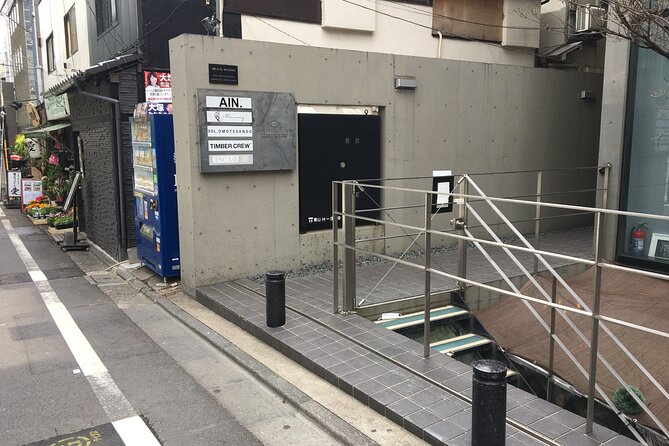
Give yourself time to find the atelier. One participant arrived only six minutes before the start and felt brushed aside on arrival, while the assistant was more welcoming. That is a useful warning, especially in Tokyo, where a quiet studio entrance can be easy to miss among office buildings and side streets.
I would aim to arrive early enough to locate the entrance without rushing. The booking rules are strict, so arriving late or going to the wrong place can quickly become an expensive mistake. The studio is in a central part of Tokyo, making it easy to pair with time around Omotesando, but the activity itself does not include hotel pickup or transportation.
The class is offered as a capped group experience. The main description places the group at no more than 10 people, while the additional information gives a maximum of 20 travelers. Since those figures differ, check the conditions shown for your selected date if group size matters to you.
Putting on a samue and meeting the teacher

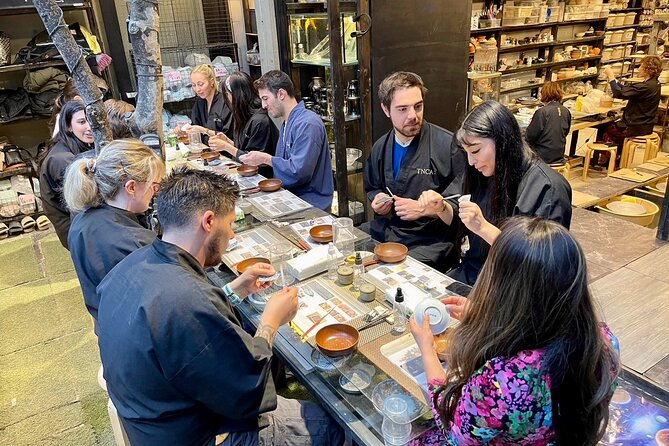
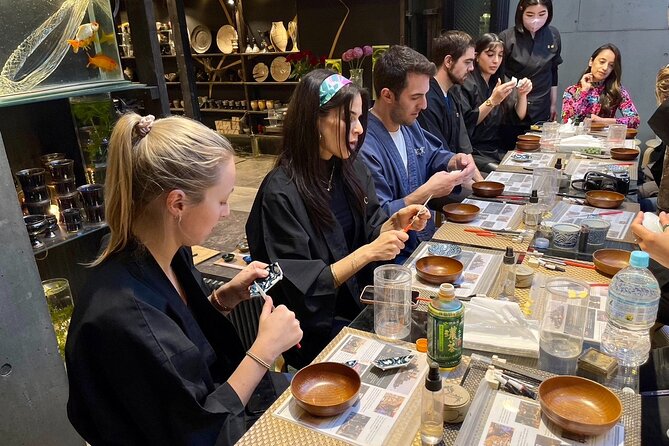
Once inside, you put on a samue, the traditional work clothing associated with Japanese craftspeople. It is a small but worthwhile touch. Instead of feeling like you are dropping into a generic craft class, you are given a visual connection to the workshop setting.
At the 11:00am class, you may have the chance to meet Master Taku. The experience is also taught by staff members, and the class format allows the instructor to move around and look at each person’s work. That personal attention matters because kintsugi involves small, careful actions rather than one big demonstration.
The strongest part of the teaching is its patience. The instructor explains the stages, shows examples, and offers support without taking over the piece. You can expect encouragement if your first attempt is not perfectly neat. In fact, a slightly uneven result fits the spirit of the craft better than a machine-perfect finish.
This is a hands-on lesson, not a formal studio tour. The focus stays on your own plate and the basic method. You will also hear about Japanese culture and traditional craft practice, giving the activity enough context to feel meaningful without turning the hour into a lecture.
Repairing the plate with lacquer and gold
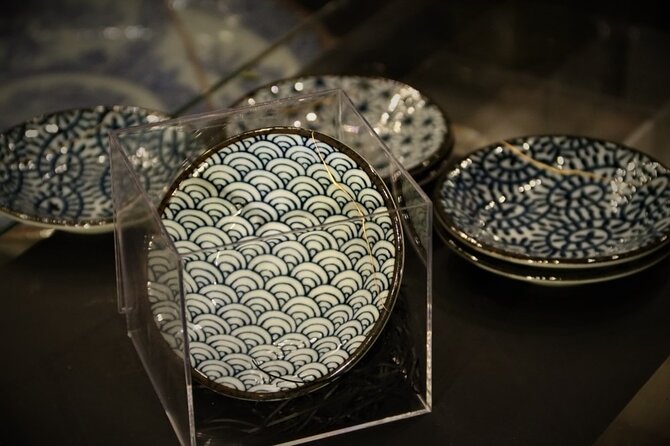
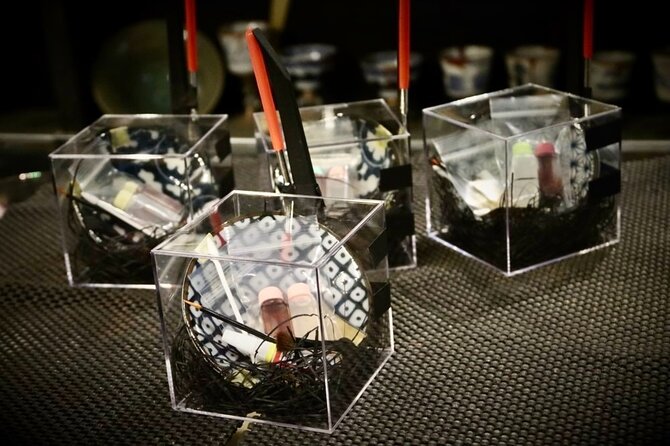
The studio supplies the ceramic plate, equipment, and materials. Personal items are not allowed, so do not bring a treasured mug or family bowl expecting to repair it here. That rule keeps the lesson predictable and avoids the risk of damaging something with sentimental value.
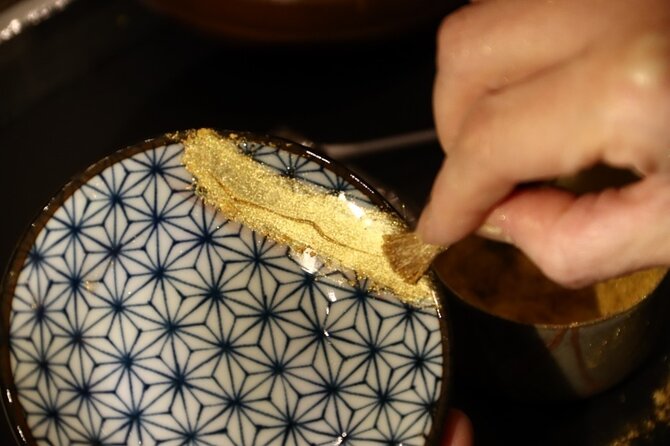
The technique uses lacquer mixed with gold to mark the repaired areas. You follow the teacher’s instructions as you work on the plate, with help available when you need it. The process is simple enough for beginners, but it still calls for concentration and a steady hand.
That balance is one reason the activity works well. You get a creative task that is more involved than painting a souvenir, but it is not presented as an advanced art course. People who describe themselves as non-artists have still found the workshop approachable and rewarding.
The class takes about one hour. That is long enough to learn the basic idea and make a plate, but short enough to fit into a busy Tokyo day. If you want a full ceramics course or a detailed lesson in professional restoration, this will feel limited. If you want a focused introduction and a keepsake, the length is sensible.
A completely different kind of day in Tokyo:
- Mt Fuji and Hakone 1-Day Bus Tour Return by Bullet Train
★ 5.0 · 26,383 reviews - 1-Day Tokyo Bus Tour
★ 5.0 · 14,250 reviews - Tokyo: teamLab Planets TOKYO Digital Art Museum Entry Ticket
★ 4.6 · 9,779 reviews - Mt Fuji & Hakone Cruise, Drum Show Bullet Train 1 Day from Tokyo
★ 4.0 · 7,413 reviews
Why the souvenir matters
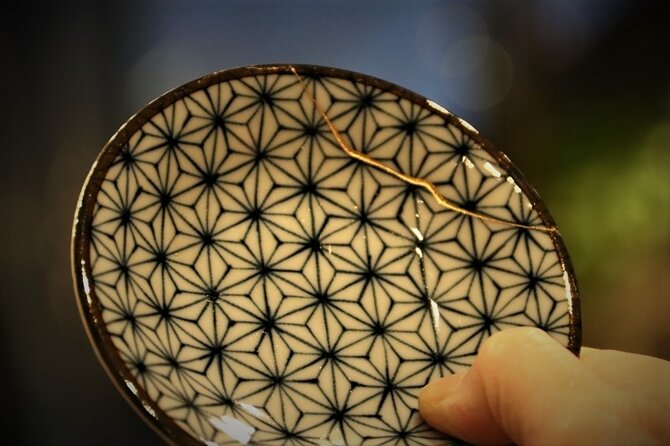
The finished plate is included in the price, and you take it home after the lesson. That gives the experience a lasting quality that a demonstration alone would not have. Your souvenir is not a mass-produced object bought in a department store. It records the design choices and small imperfections of your own class.
The studio also takes care with preparing the piece for travel. That is important because you may still have several days in Japan, followed by a flight home. The available feedback describes the repaired pottery as packaged well for transport, though you should still handle it carefully and pack it securely.
Do not expect a large serving plate or a museum-quality restoration. The supplied item is intended for a beginner workshop. Its value is personal: you learned the process, made the visible repair yourself, and gained a physical reminder of your time in Tokyo.
I especially like the way the souvenir reinforces the lesson. Every time you see the gold line, you can recall that the plate was not thrown away because it was broken. The flaw became the feature.
Price and value at $59.69
At $59.69 per person, this is not the cheapest one-hour activity in Tokyo. The price includes the lesson, the plate, all necessary equipment, taxes, fees, and handling charges. Food, drinks, hotel transfers, and transportation to the studio are not included.
The value depends on what you want from a short activity. If you judge it only by the amount of time, the price may feel high. If you count the instructor’s guidance, the materials, the traditional clothing, the cultural explanation, and the finished ceramic piece, it becomes easier to justify.
I would compare it with the cost of buying a craft souvenir and spending an hour in a museum or shopping district. Here, you are not just purchasing an item. You are making it, learning why the technique exists, and taking home an object tied to your own visit.
Group discounts are available, which may help couples, families with older children, or friends booking together. Children under 6 cannot enter the atelier for safety reasons, so this is not an activity for families with toddlers.
Who will enjoy this workshop most
This class suits you if you like creative activities, Japanese design, ceramics, or quiet tasks that require attention. It is also a good choice if you have already seen Tokyo’s major sights and want to spend an hour doing something with your hands.
Couples often fit the format well because each person creates a separate plate and can compare the results. Parents and older children can also enjoy it together, provided the children meet the age requirement and can follow careful instructions.
You do not need an art background. The teacher demonstrates the steps, and help is available as you work. The workshop has been designed for beginners, not trained ceramic artists.
It may not suit you if you want to repair a personal item, take a long class, or have complete control over every material and stage. You also need to be comfortable with the no-refund policy. A wrong date is not treated as a minor booking error here.
Practical details that affect your day
The activity starts and ends at the Minami-Aoyama meeting point. There is no hotel pickup or drop-off, and food and drinks are not included. Plan your own route and leave enough time to find the studio.
Confirmation is provided within 48 hours of booking, subject to availability. Since the experience requires a minimum number of participants, the provider may cancel if that minimum is not reached. In that case, you will be offered another date or experience, or receive a full refund.
The normal cancellation rule is much stricter: the experience is non-refundable and cannot be changed for any reason. Read the date and time carefully before paying. This is the single biggest practical drawback.
The atelier is not open to children under 6 for safety reasons. Most people can take part, and the workshop is near public transportation. If you have concerns about participating, the available information does not give detailed accessibility arrangements, so ask the provider before booking.
A calm change of pace in central Tokyo
Tokyo can fill your day with stations, shopping streets, temples, towers, and crowds. Kintsugi offers a different rhythm. For an hour, your attention narrows to a plate, a brush, a line of gold, and the teacher’s next instruction.
That quiet focus is part of the appeal. The task gives you something specific to do, while the philosophy gives the activity a little more weight than a standard souvenir workshop. You leave with a better sense of why repair can be valued in Japanese aesthetics.
The class is also social without requiring constant conversation. You work beside a small group, receive individual help, and see different results emerge from the same basic plate. The setting feels personal rather than like a large demonstration.
The 4.9 rating from 467 reviews and 98 percent recommendation rate match the strongest features of the experience: kind instruction, clear guidance, an appealing souvenir, and an easy introduction for beginners. There are also a few warnings about finding the studio and the unforgiving booking terms, so it pays to prepare.
Should you book the kintsugi experience?
Book it if you want a short, hands-on cultural activity in Tokyo and like the idea of bringing home something you made yourself. The combination of kintsugi philosophy, practical instruction, traditional clothing, and a finished plate gives the hour a clear purpose.
I would especially recommend it to couples, creative families with children over 6, and anyone who prefers local craft experiences to passive sightseeing. The 11:00am class is worth considering if meeting Master Taku matters to you.
Skip it if your main goal is to restore your own pottery, or if a rigid no-change policy makes you uneasy. Also plan your route carefully and arrive early, since the studio may take a little effort to find.
For the right kind of visitor, $59.69 buys more than a plate. It buys a small lesson in seeing damage differently, plus a souvenir that could not have been made anywhere but your own class.
FAQ
Where does the kintsugi experience take place?
The workshop takes place at TNCA Minami-Aoyama, 3-chōme-8-2 Minamiaoyama, Minato City, Tokyo 107-0062, Japan.
How long does the activity last?
The lesson lasts approximately one hour.
What does the price include?
The price includes the lesson fee, one plate for the activity and souvenir, all necessary equipment, and taxes, fees, and handling charges.
Can I bring my own broken pottery?
No. The studio provides the plate used in the lesson, and personal items are not allowed.
Can I take my repaired plate home?
Yes. The plate you use during the lesson is included and can be taken home afterward.
Is transportation included?
No. You make your own way to the studio. Hotel pickup and drop-off are not included.
Are food and drinks included?
No. Food and drinks are not included in the activity.
Can children attend?
Children under 6 cannot enter the atelier because of the establishment’s safety rules.
Can I cancel or change my booking?
No. This experience is non-refundable and cannot be changed for any reason. If the provider cancels because the minimum number of participants is not reached, you will be offered a different date or experience, or a full refund.
Newly reviewed around Tokyo
- Tokyo Asakusa:Calligraphy & Make T-shirt Activity★ 5.0 · 62 reviews
- Travel Tokyo with Your Own Personal Photographer★ 5.0 · 43 reviews
- Intercity Shuttle, Tokyo to Haneda /Narita /Yokohama /Makuhari★ 5.0 · 5 reviews
- 1 Hour Travel around Tokyo with a Professional Photographer★ 5.0 · 3 reviews
- Train in Samurai Swordsmanship and Defeat the Demon in Tokyo★ 5.0 · 5 reviews
- Shuttle Van 6hr Tokyo Tour to-and-from Tokyo, Yokohama and Narita★ 5.0 · 9 reviews
- Kickboxing & Body Training with EX-Pro Fighter★ 5.0 · 4 reviews
- Traditional Japanese Knife Sharpening Class★ 5.0 · 18 reviews
Tokyo Traditional Craft Workshops, compared.

Authentic Pure Gold Kintsugi Workshop with Master Taku in Tokyo
Read our review →
Private Handmade Ring Workshop Activity in Tokyo Shibuya
Read our review →
Kintsugi Workshop Class in Shibuya, Tokyo with mon cadeau
Read our review →Browse the lists this tour appears in