
Reviewed · TOKYO KIMONO EXPERIENCES
Kimono Photo Session Experience Japanese Culture Inside a Shrine
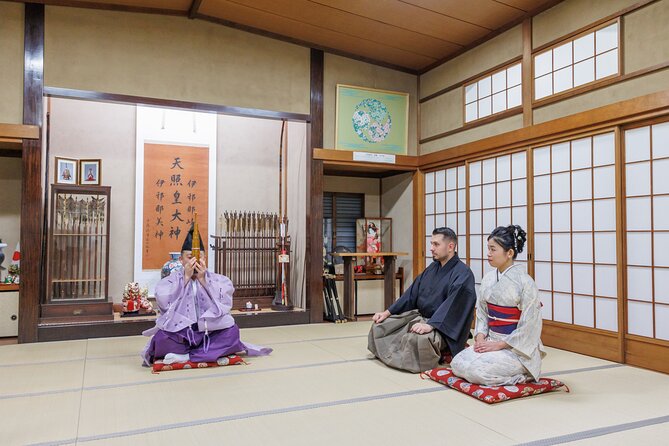
The unusual appeal here is access to a working Shinto shrine for a planned cultural session, not just a quick photo stop. You dress in kimono, learn how to behave at the shrine, pose with a professional photographer, then finish with tea, sweets, music, and a blessing for safe travel.
I like the small maximum of six people, which should make the dressing and photo time feel more personal. I also like that digital photo files, tea, sweets, shrine admission, and the blessing are included, so the $858.41 price covers much more than a costume rental.
The main drawback is cost. This is a premium three-and-a-half-hour activity, and the price may be hard to justify if you only want a few souvenir photos. The meeting point is in Kita City, not directly at Shinjuku Station, so check the route carefully before booking.
Key points to know before booking
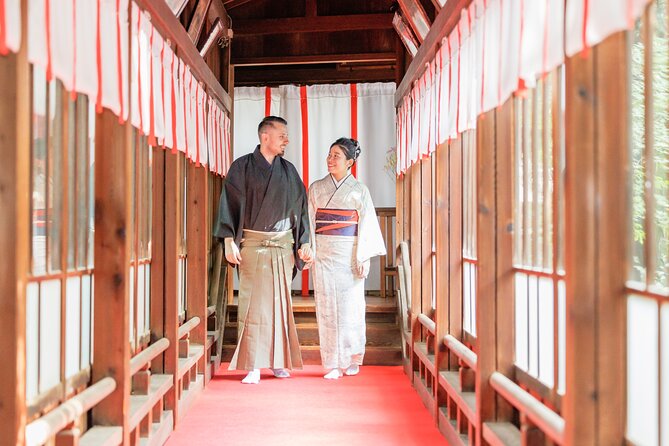
- A rare shrine photography setting: Photography at Japanese shrines often requires permission, and this experience arranges a formal session within the shrine grounds.
- A complete kimono experience: Kimono rental, dressing, hair styling, photography, and interpretation are part of the professional service.
- Tea with live Gagaku music: Traditional green tea and Japanese sweets are paired with a performance featuring one of Japan’s oldest musical traditions.
- A small group of up to six: The limited size should allow more attention during dressing, posing, and cultural explanations.
- A weather-proof plan: The session proceeds as scheduled in wet or dry weather, so bring suitable clothing and footwear for the conditions.
- A polished keepsake: You receive your finished photos as digital files, rather than paying only for the time spent at the shrine.
Why this shrine session feels different from a standard Tokyo photo shoot
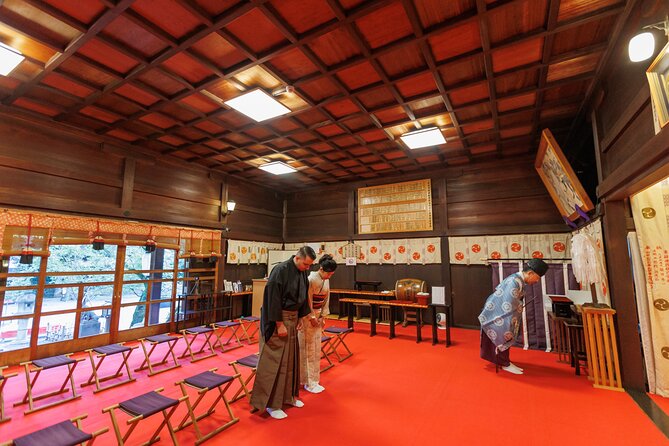
Many Tokyo photo sessions use a studio, a rented garden, or a busy public sightseeing area. This one takes place at 七社神社, commonly written as Shasha Shrine, in Nishigahara, Kita City. The setting gives the photos a stronger cultural connection, while the guided explanations help you understand why the shrine matters.
The experience is also built around proper access. Photography at shrines is not automatically allowed, and even Japanese-style weddings can have strict limits on cameras. That makes the arranged permission important. You are not simply wandering into a sacred place and taking pictures where you please.
I like this distinction because it changes how you approach the visit. You are being shown how to participate respectfully, not just dressed up against a Japanese-looking background. The session includes lessons about shrine history and manners, so you should leave with a better sense of what you are seeing.
The activity starts at 1:00 pm and lasts about three hours and 30 minutes. Since it ends back at the meeting point, you can plan the rest of your day from the shrine rather than arranging a separate pickup.
More Tokyo kimono experiences:
- Let’s make kimono !(Kimono is a gift for you
★ 5.0 · 252 reviews - Tokyo: Matcha and Kimono Experience
★ 4.7 · 219 reviews - Tokyo: Asakusa Kimono Dressing and Matcha Experience
★ 4.9 · 173 reviews
Meeting at Shasha Shrine in Kita City
You meet at the shrine itself, at 2-11-1 Nishigahara, Kita City, Tokyo, postal code 114-0024. The area is near public transportation, and the experience description notes that it remains accessible from Shinjuku Station, but you should not read that as meaning the shrine is beside Shinjuku Station.
Give yourself time to find the entrance and arrive ready for a 1:00 pm start. The provider does not include private transportation, so getting to the shrine is your responsibility. If your day begins in central Tokyo, allow extra time for the transfer and for finding the exact meeting spot.
The small group cap of six matters here. Kimono dressing is a hands-on process, and a smaller party usually means less waiting and more room for the photographer to work with each person. It also makes the cultural explanations easier to follow than they would be in a large bus group.
The session runs in rain or sunshine. That is useful for planning, but it also means you should not assume a bad-weather cancellation. Bring an umbrella or rain protection when needed, and wear something suitable for time outdoors and for changing into traditional clothing.
Kimono rental, dressing, and styling
The first major part is getting dressed in a rented kimono. The package includes the rental itself, along with professional kimono dressing and hair styling according to the experience details and the supplied feedback.
This is more valuable than simply picking up a costume from a shop. Proper dressing affects both comfort and appearance, and the layers, ties, and careful arrangement are part of the cultural experience. A professional team is involved in kimono dressing, hair styling, photography, and interpreting.
The practical question is comfort. A kimono is not everyday clothing, and you may find the fit and structure unfamiliar. The session lasts several hours, so anyone who dislikes formal clothing or being carefully arranged for photographs should think twice before paying a premium price.
Still, the dressing stage helps turn the afternoon into a full cultural activity. You are not rushing through a ten-minute rental. The clothing becomes part of the lesson, and the styling prepares you for photographs in a setting where presentation matters.
No individual staff names are supplied, so I would not book this expecting a named celebrity photographer or a particular interpreter. You can expect a professional team, including an English-speaking photographer based on the available feedback, but specific staff may vary.
Professional photographs indoors and outdoors
Once dressed, you take part in a photo session around different parts of the shrine property. The plan includes both indoor and outdoor photographs, giving you more variety than a single studio backdrop.
The shrine setting is the main reason to choose this activity over an ordinary kimono rental. You can pose in a place with religious purpose, traditional architecture, and established etiquette. The photographer’s job is not just to record your clothing, but to use the property in a respectful way.
A professional photographer also removes much of the pressure from taking your own pictures. You do not have to hand your phone to a stranger or spend the afternoon worrying about light, framing, and backgrounds. The supplied feedback specifically points to an English-speaking photographer and photo results that made the participant feel comfortable.
The exact number of images and delivery time are not stated, so ask about those details if they affect your decision. Digital photo files are included, but the package does not promise prints, albums, or a particular number of edited images.
This is one of the strongest parts of the value calculation. If you already plan to rent a kimono and pay separately for professional portraits, combining the clothing, setting, photographer, and cultural program may make the high price more reasonable. If photos are only a small extra for you, the cost will feel steep.
More Tokyo photo shoots:
- Tokyo Ryogoku Sumo Morning Practice + Photo Shoot with Wrestlers
★ 4.5 · 277 reviews - Tokyo Cyberpunk Street Photo Tour
★ 5.0 · 165 reviews - Tokyo Shinjuku Night Photo Tour with Pro Gota
★ 5.0 · 142 reviews - Tokyo Sumo Morning Practice Tour w/ Ring-Side Seat + Photo Shoot
★ 5.0 · 93 reviews
Tea, Japanese sweets, and Gagaku music
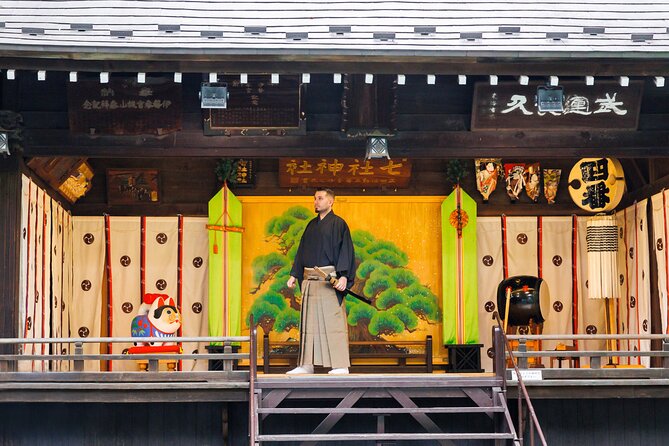
After the photo session, you enjoy Japanese green tea and sweets while listening to live Gagaku music. Gagaku is one of Japan’s oldest forms of traditional music, and its inclusion gives the afternoon a quieter, more ceremonial finish.
This part helps slow the pace. The photo session is active and carefully directed, while tea provides time to sit, observe, and absorb the setting. You are not only collecting images. You are also given a small taste of formal Japanese hospitality.
The tea and sweets are included in the price, as is the performance. The details of the menu and the specific instrument are not provided, so do not book this expecting a full tea ceremony or a long concert. It is best understood as a traditional refreshment and music segment within a larger shrine program.
I especially like this pairing because it keeps the activity from becoming a costume-only experience. Tea, sweets, and Gagaku connect the photographs to broader customs. They also give you something to remember beyond the final digital files.
Learning shrine manners and receiving a blessing
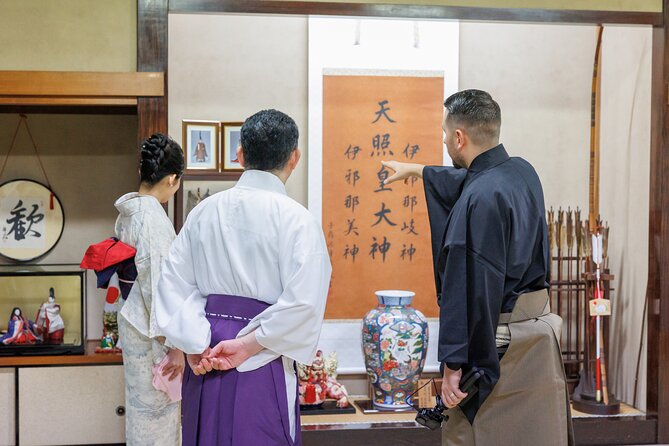
The program includes an explanation of shrine history and proper manners. That may cover how to conduct yourself on the grounds and how to approach the visit with respect, although the exact lesson content is not specified.
This guidance is useful even if you have visited Japanese shrines before. Customs can vary in detail, and it is easy for first-time visitors to copy what someone else is doing without understanding why. A short explanation helps you move through the space with confidence.
The final step is a shrine blessing for a safe journey. The blessing fee is included, and the activity notes that receiving a blessing carries a fee at many shrines in Japan. This is a meaningful close to the experience, especially if you see the session as more than a photo appointment.
Keep your expectations clear. A blessing is a religious and cultural act, not a theatrical finale designed only for pictures. You should be comfortable taking part respectfully. If you prefer to observe rather than participate in a religious setting, this may not be the right activity for you.
What the $858.41 price really includes
At $858.41 per person, this is expensive by Tokyo activity standards. The price needs to be judged as a bundled private-style cultural service rather than as a simple sightseeing ticket.
You receive:
- Kimono rental
- Professional photography
- Digital photo files
- Tea and Japanese sweets
- Shrine admission
- A shrine blessing
- Live Gagaku performance
- Cultural explanations about shrine history and manners
Private transportation is not included. You also need to make your own way to and from the shrine, and the details of the final photo package are limited.
I would consider the price easier to defend for someone marking a birthday, anniversary, honeymoon, family milestone, or once-in-a-lifetime Japan trip. The combination of formal clothing, arranged shrine access, professional photographs, music, and a blessing gives the afternoon a special-event feel.
For a budget-conscious visitor, though, I would compare it with a basic kimono rental and a shorter photo session. Those options may provide attractive pictures for far less money, but they will not necessarily include the shrine access, tea, Gagaku music, cultural instruction, and blessing.
The experience has only three available ratings, with an overall score of 5. That is encouraging, but it is still a small sample. I would treat the glowing feedback about hospitality, comfort, English-language photography, and photo quality as useful signs, not as a guarantee that every detail will match your personal taste.
Who should book this experience
I would recommend it most strongly to you if you want a polished cultural occasion rather than a quick activity between major Tokyo sights. It suits people who value professional images and want their photos connected to a real shrine setting.
It is also a good fit for first-time visitors who want help with shrine manners. The interpreter and cultural explanations reduce the worry of making an etiquette mistake, while the small group should keep the experience calm.
Couples, families, and solo visitors can all find value here. A couple may see it as a special portrait session. A family may appreciate having everyone photographed in traditional clothing. A solo visitor gets professional images without depending on a companion to take them.
I would be more cautious if you have a tight schedule, dislike formal clothing, or mainly want casual snapshots. The 1:00 pm start and three-and-a-half-hour duration take a meaningful part of your afternoon, and the experience proceeds even when the weather is poor.
Booking details worth checking
You receive confirmation within 48 hours of booking, subject to availability. Since the group is limited to six people, do not assume your preferred date is secured until that confirmation arrives.
The activity has free cancellation if you cancel at least 24 hours before the local start time. Cancellations or changes made less than 24 hours before the 1:00 pm start are not accepted for a refund.
The mobile ticket makes admission and booking details easier to carry, but it does not replace planning your route to Nishigahara. Save the meeting address and check public transportation before leaving your hotel.
Should you book the shrine kimono photo session?
Book it if you want a carefully arranged, photo-focused introduction to Japanese culture and can accept the premium price. The strongest reasons are the approved shrine photography setting, professional styling, English-language photography support, tea with Gagaku music, and the included blessing.
Skip it if your main aim is an inexpensive kimono rental or a few casual pictures. At $858.41, the value comes from the complete program and the formal setting, not from the clothing alone.
For the right occasion, this is a memorable way to spend an afternoon beyond Tokyo’s biggest sights. Go in expecting a structured cultural session, not a flexible sightseeing stop, and you will have a much clearer idea of what your money is buying.
FAQ
Where does the experience begin?
You meet at 七社神社, written as Shasha Shrine, at 2-11-1 Nishigahara, Kita City, Tokyo, postal code 114-0024.
What time does the experience start?
The scheduled start time is 1:00 pm.
How long does the activity last?
The experience lasts approximately three hours and 30 minutes.
Where does the experience end?
The activity ends back at the meeting point, the shrine.
Is transportation included?
No. Private transportation is not included, so you must arrange your own way to and from the shrine.
What is included in the price?
The price includes kimono rental, the photo session, digital photo files, tea and sweets, shrine admission, a Gagaku performance, and the shrine blessing.
Does the experience operate in bad weather?
Yes. The session proceeds as scheduled regardless of weather conditions.
How many people can join?
The maximum group size is six people.
Can I cancel for a full refund?
Yes, if you cancel at least 24 hours before the experience start time. Cancellations or changes made less than 24 hours before the local start time are not accepted for a refund.
Newly reviewed around Tokyo
- Tokyo Asakusa:Calligraphy & Make T-shirt Activity★ 5.0 · 62 reviews
- 1 Hour Travel around Tokyo with a Professional Photographer★ 5.0 · 3 reviews
- Travel Tokyo with Your Own Personal Photographer★ 5.0 · 43 reviews
- Intercity Shuttle, Tokyo to Haneda /Narita /Yokohama /Makuhari★ 5.0 · 5 reviews
- Train in Samurai Swordsmanship and Defeat the Demon in Tokyo★ 5.0 · 5 reviews
- Shuttle Van 6hr Tokyo Tour to-and-from Tokyo, Yokohama and Narita★ 5.0 · 9 reviews
- Kickboxing & Body Training with EX-Pro Fighter★ 5.0 · 4 reviews
- Traditional Japanese Knife Sharpening Class★ 5.0 · 18 reviews
Tokyo Kimono Experiences, compared.

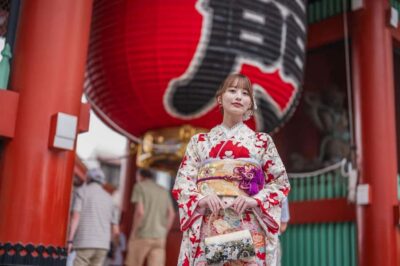
Tokyo Asakusa: Traditional Kimono Rental Experience at Wargo
Read our review →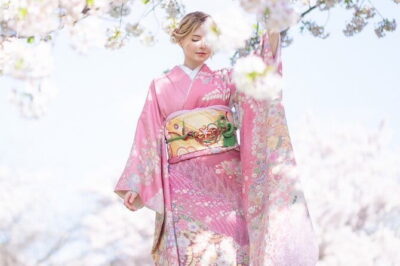
Tokyo Authentic Kimono Rental in Asakusa with Photography Option
Read our review →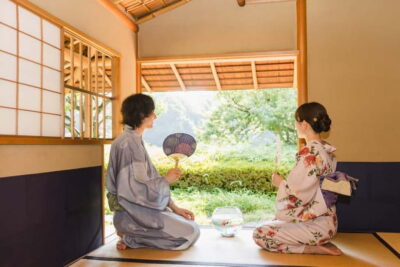
Kimono Rental inside Shinjuku Gyoen National Garden
Read our review →Browse the lists this tour appears in