
Reviewed · ASAKUSA AND SENSOJI TOURS
Hand-carved stamps made with craftsmen in Asakusa, Tokyo
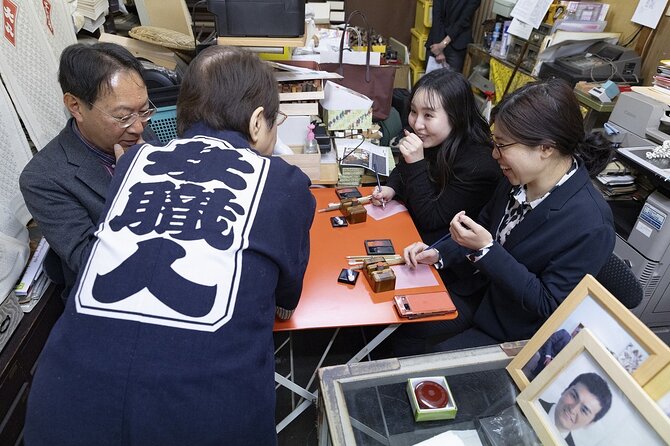
A small twig of Japanese wood, a carving tool, and your own design: that is the heart of this Asakusa workshop. You carve a personal Hanko seal, the traditional stamp used in Japan for names and signatures, then take it home with a vermilion inkpad.
I like the hands-on work and the kind, patient help from the artisan. I also like the keepsake itself: it is small, useful, and made by you rather than pulled from a souvenir shelf. The main drawback is value. At $93.33 per person, the cost feels high if you finish quickly or expect a long lesson in Japanese craft history.
Key Points
- Carve natural Japanese wood: Your seal is made from a small twig of wood such as sakura or sansho.
- Create a personal design: You can carve your name or an original pattern, with help choosing something manageable.
- Work privately: Only your group takes part, allowing the artisan to give close guidance.
- Meet a rare craft specialist: The workshop owner is described as one of the first female Hanko craftsmen.
- Plan for 90 to 120 minutes: Some people may finish sooner, especially with a simple design.
- Take home a complete souvenir: The package includes your carved Hanko, tools and materials during the session, plus a vermilion inkpad.
Carving Your Own Name Seal in Asakusa
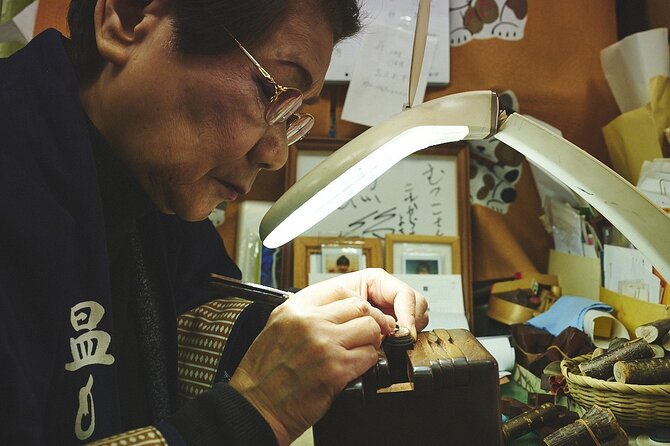
A Hanko is more than a rubber stamp. In Japan, personal seals have long been used in place of handwritten signatures for documents, bank matters, and everyday identification. This workshop gives you a small, approachable look at that tradition without asking you to sit through a formal museum talk.
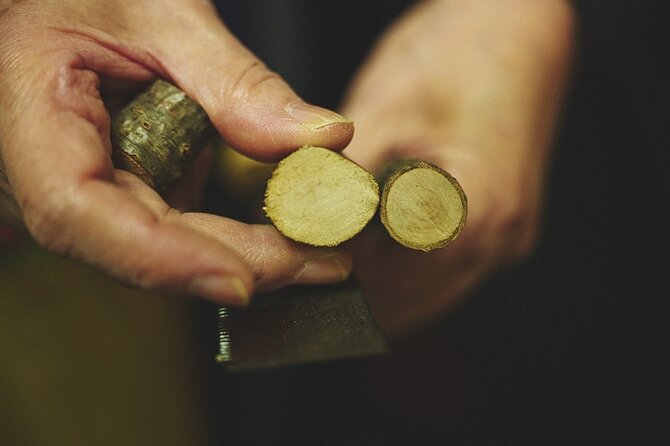
You begin with a short piece of natural wood, roughly 10 centimeters long. The material may be sakura or sansho, so the finished object has a more pleasing connection to Japan than a mass-produced plastic souvenir. You then decide what to carve into the end of the wood.
Your design can be your name, a character, or a simple original pattern. The artisan helps you shape the idea to fit the limited space and the time available. That advice matters. A complicated design may look good on paper but become frustrating when you are cutting it by hand onto a small surface.
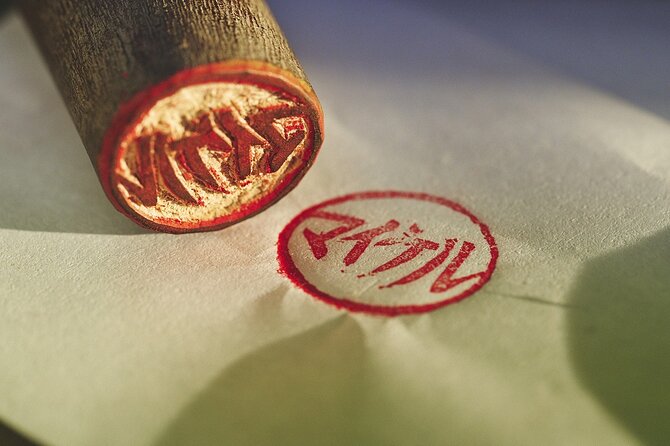
The finished stamp is not meant to look machine-perfect. Small irregularities are part of the point. You can see where your hand moved, where you made a correction, and how the image took shape under guidance. For a souvenir, that personal mark carries more meaning than a purchase made in a shop.
More Asakusa and Sensoji tours:
- Tokyo: Japanese Dance Cabaret Theater Asakusa-Kaguwa Ticket
★ 4.8 · 2,270 reviews - Tokyo: Meiji Shrine, Asakusa, Skytree Bus Tour and Cruise
★ 4.7 · 1,986 reviews - Tokyo: Roll and Authentic Sushi Making Class in Asakusa
★ 4.9 · 1,957 reviews
What Happens During the 90 to 120 Minutes
The activity takes place at 伊藤印房, at 1-chōme-19-4 Senzoku in Taito City. The meeting point is also the finishing point, so you do not need to arrange a separate pickup or find your way to another location afterward.
The session begins with an explanation of the seal and the carving process. You work with wooden tools, and the artisan shows you how to approach the surface. This is not a completely effortless craft. You need to pay attention to the direction of the cut and control your pressure, but you do not need previous experience.
From there, you transfer or develop your chosen design and begin carving. The artisan provides close help when a line is difficult or when your pattern needs simplifying. This private format is especially useful for children and first-time crafters, since you can ask for help without holding up a larger class.
Once the carving is finished, the seal can be tested with the included vermilion inkpad. That final step is satisfying because you see the design clearly for the first time. You leave with the Hanko you made, rather than only a photograph of the process.
The stated duration is 90 to 120 minutes, but the actual timing depends on your design and pace. One participant completed the work in about an hour after working efficiently. I would treat two hours as the upper estimate, not a promise that every minute will be filled with instruction.
The Artisan Makes the Difference
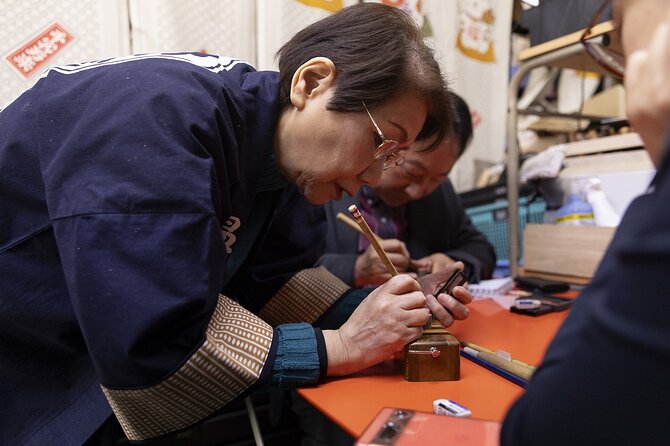
The strongest part of this experience is the direct contact with the workshop owner. The teaching style is described as friendly, polite, and patient, with enough help for both adults and children to complete a personal stamp.
The owner also has an unusual connection to the craft. She is described as one of the first female Hanko craftsmen, and her personal story adds interest beyond the basic act of cutting wood. You are not only copying a pattern from a worksheet. You are learning from someone who has made the craft part of her working life.
The English interpreter is included, which removes a major worry for many people. You can ask questions about the tools, the design, and the stamp-making process without relying on hand signals. The experience is still centered on making rather than on a long spoken presentation, so the interpretation supports the craft instead of taking over.
I would not book this expecting a detailed lecture on Japanese history. The practical teaching is the focus, and one participant felt that the historical explanation was limited. If you want a full cultural lesson, you may find the workshop brief. If you want a personal object and direct instruction, the balance works better.
Choosing a Design You Can Finish
Your design choice has a direct effect on both the difficulty and the value of the session. A simple name or compact symbol gives you a better chance of finishing comfortably within the allotted time. You can ask the artisan for guidance before you commit.
Complex patterns may not be possible in the session. Fine lines, crowded characters, or a design with many small sections can make the carving harder than expected. The artisan may need to simplify your idea, and that is good advice rather than a limitation to fight.
I would prepare a basic idea before arriving, but keep it flexible. You could use your name, initials, a favorite simple pattern, or a design connected to your trip. The supplied information does not promise a particular writing system or a specific set of design options, so plan to discuss what will fit the wood and the time.
This is also a useful activity for families with older children. Participants must generally be over 10 years old. Younger children may join only with separate confirmation, so do not assume a child under 10 can take part without checking first.
A completely different kind of day in Tokyo:
- Mt Fuji and Hakone 1-Day Bus Tour Return by Bullet Train
★ 5.0 · 26,383 reviews - 1-Day Tokyo Bus Tour
★ 5.0 · 14,250 reviews - Tokyo: teamLab Planets TOKYO Digital Art Museum Entry Ticket
★ 4.6 · 9,779 reviews - Mt Fuji & Hakone Cruise, Drum Show Bullet Train 1 Day from Tokyo
★ 4.0 · 7,413 reviews
Why the Natural Wood Matters
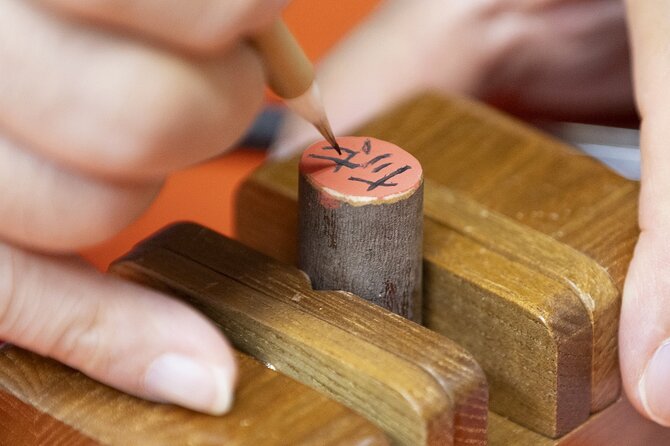
The wood is not just a convenient handle. The material gives the seal a warmer, more handmade quality than a factory-produced stamp. Small natural branches, including sakura or sansho, are used, and each piece can have its own grain and shape.
That means your finished Hanko will not be identical to a sample. The illustrated examples are only guides, and the actual pattern and appearance can vary. I see that as a positive for a handmade object, though anyone wanting a perfectly uniform souvenir should know what to expect.
The approximate length is 10 centimeters. That makes the seal easy to pack in luggage, and it is small enough to keep on a desk or give as a gift. The vermilion inkpad completes the set, so you can use the stamp rather than carrying home an unfinished craft.
You should not need to bring equipment. Tools and natural wood are included. If you are worried about wood shavings, bring your own apron. Casual clothes are recommended, and an apron is a sensible extra if you want to protect a favorite shirt.
A Private Format for Families and Small Groups
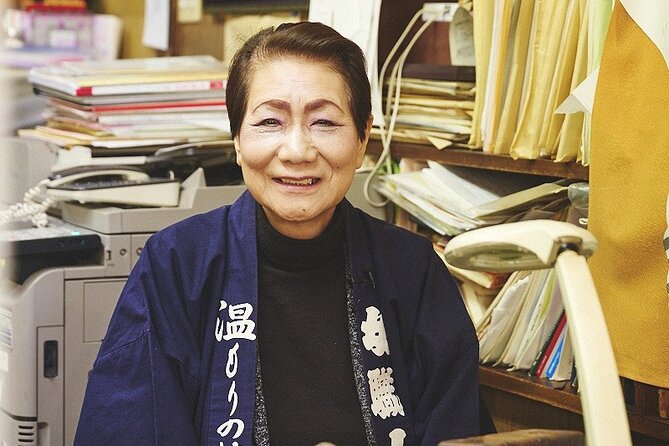
Only your group participates in the activity. That private setup gives the session a relaxed feel and lets the artisan adjust the amount of help to each person.
For a couple, the format can turn the craft into a shared souvenir-making activity. For a family, it means younger participants can receive extra instruction while adults work at their own pace. Group discounts may be available, so the per-person cost could work better for a larger booking than for one individual.
The private arrangement does not mean the lesson will be completely tailored from start to finish. The core process remains the same: choose a design, carve the wood, and test the seal. Its main benefit is personal attention and a quieter working space.
The craft also has a welcome advantage for mixed-age groups. You do not need to be athletic, and most people can participate. The work requires concentration and hand control, but no special craft background is listed as necessary.
Paying $93.33 for a Small Handmade Souvenir
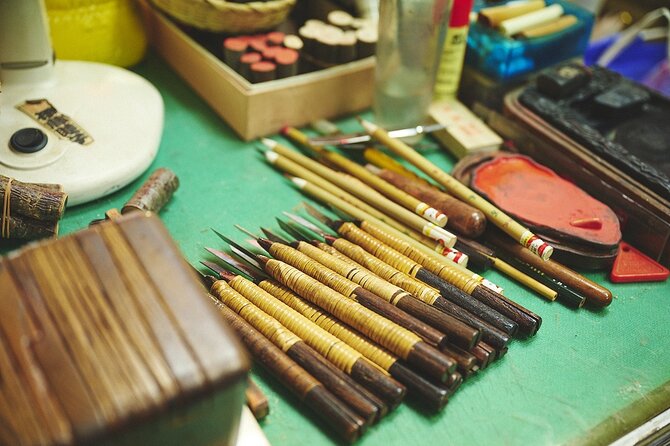
The price is $93.33 per person. That is a serious cost for an activity lasting about 90 to 120 minutes, especially if you complete your stamp in closer to one hour.
The price makes more sense when you count what is included: instruction, an English interpreter, natural wood, use of the tools, the finished Hanko, and a vermilion inkpad. You are paying for access to a specialist, not simply for the object.
Still, the value depends on what you want. If your priority is a cheap souvenir, this is not the right choice. You can find Japanese-themed gifts for far less. If you want the process, the personal guidance, and a keepsake made by your own hands, the cost is easier to defend.
I would also consider the craft’s place in your itinerary. A two-hour creative session can be a good change from sightseeing, particularly in a busy city. But if you are counting every yen or have only a short time in Tokyo, you should compare this with other hands-on activities before booking.
Getting to the Workshop and Planning the Visit
The workshop is near public transportation in Taito City, in the wider Asakusa area. You are responsible for getting to the meeting point, and transportation is not included in the price.
Use the full address when planning your route: 伊藤印房, 1-chōme-19-4 Senzoku, Taito City, Tokyo 111-0031, Japan. The activity ends at the same address, so you can continue your plans from there without arranging another transfer.
There is no toilet at the workshop. Use a restroom beforehand. A public restroom is about a one-minute walk away, which is helpful, but it is still better not to arrive needing a break in the middle of a careful carving task.
Wear casual clothes. Nothing special is required, but bring an apron if wood debris concerns you. You do not need to bring tools or materials.
Reservations are subject to availability, and confirmation is sent within 48 hours of booking. The activity is often booked about 38 days ahead, so I would not leave it until the last day of a Tokyo visit. The booking is non-refundable and cannot be changed, so confirm your schedule before paying.
Who Will Enjoy This Hanko Workshop
I would recommend this experience to you if you like making things, prefer small local workshops to large sightseeing tours, or want a souvenir with a personal story. It is also a good fit for families with children over 10 who can handle a carving tool carefully.
It works well for anyone who wants a quiet activity in Asakusa. You do not need to know Japanese craft techniques beforehand, and the English interpreter helps keep the instructions clear.
I would hesitate if you want a long cultural talk, a broad tour of Asakusa, or a guaranteed two-hour program. The history portion may be modest, and quick workers can finish early. The price is easier to accept when the making itself is your main reason for coming.
Should You Book It?
Book this Hanko workshop if you value personal instruction and a handmade keepsake more than low cost. The private setting, patient artisan, natural wood, and included inkpad make the final object feel connected to the time you spent making it.
Skip it if you are mainly looking for a budget souvenir or a detailed history lesson. At $93.33, the craft must be the attraction. Choose a simple design, allow for 90 to 120 minutes, and arrive ready to work with your hands. That is when this small Asakusa experience makes the most sense.
FAQ
Where does the Hanko-making experience take place?
It takes place at 伊藤印房, 1-chōme-19-4 Senzoku, Taito City, Tokyo 111-0031, Japan.
How long does the activity last?
The estimated duration is 90 to 120 minutes. The actual time can vary depending on your design and how quickly you work.
Is the workshop private?
Yes. Only your group participates in the activity.
What is included in the price?
The price includes the experience fee, tools, natural wood materials, the Hanko you make, an English interpreter, and a vermilion inkpad.
Do I need to bring anything?
Nothing is required. You may bring your own apron if you are concerned about wood shavings.
What should I wear?
Casual clothing is recommended.
Can children participate?
Participants should generally be over 10 years old. Children under 10 require separate confirmation.
Is transportation included?
No. You are responsible for transportation to and from the workshop.
Is there a toilet at the workshop?
No. You should use a restroom before arriving. A public restroom is about one minute away.
Can I cancel or change my booking?
No. The experience is non-refundable and cannot be changed for any reason after booking.
Newly reviewed around Tokyo
- Tokyo Asakusa:Calligraphy & Make T-shirt Activity★ 5.0 · 62 reviews
- Intercity Shuttle, Tokyo to Haneda /Narita /Yokohama /Makuhari★ 5.0 · 5 reviews
- 1 Hour Travel around Tokyo with a Professional Photographer★ 5.0 · 3 reviews
- Travel Tokyo with Your Own Personal Photographer★ 5.0 · 43 reviews
- Train in Samurai Swordsmanship and Defeat the Demon in Tokyo★ 5.0 · 5 reviews
- Shuttle Van 6hr Tokyo Tour to-and-from Tokyo, Yokohama and Narita★ 5.0 · 9 reviews
- Kickboxing & Body Training with EX-Pro Fighter★ 5.0 · 4 reviews
- Traditional Japanese Knife Sharpening Class★ 5.0 · 18 reviews
Asakusa and Sensoji Tours, compared.

Japanese Dance Cabaret Theater Asakusa-Kaguwa Ticket
Read our review →
Meiji Shrine, Asakusa, Skytree Bus Tour and Cruise
Read our review →
Roll and Authentic Sushi Making Class in Asakusa
Read our review →
Asakusa Walking Tour with Sensoji Temple Visit
Read our review →
Tokyo Panoramic 1 Day: Meiji Shrine, Asakusa, Odaiba and SKYTREE®
Read our review →
Tokyo Go Kart: Asakusa, Skytree, and Akihabara **IDP MUST**
Read our review →
Asakusa, Skytree & Akhihabara Go-Kart City Experience
Read our review →Browse the lists this tour appears in