
Reviewed · MEIJI SHRINE TOURS
Tokyo: Meiji Jingu Cultural Walking Tour with Japanese Historian
Meiji Jingu is easy to mistake for a peaceful green break from Tokyo. The better way to see it is as a living lesson in Japan’s connection to nature, ancestors, imperial history, and daily customs. This English-guided walk explains what you are looking at instead of sending you from one photo stop to the next.
I like the small private format, which gives you room to ask questions and keep a relaxed pace. I also like the guides’ clear focus on Shinto basics, from kami and sacred water to the purpose of a torii gate. The one caution is that the shrine walk is listed at about 1 hour 30 minutes, while the full experience is approximately two hours, so the exact timing may vary.
Key points at a glance
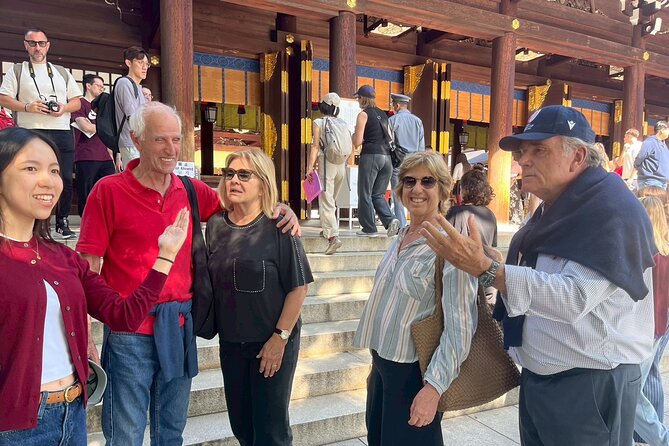
- Learn what Shinto means in daily life: The guide explains kami, nature, ancestors, rituals, and values rather than treating Shinto as a list of customs.
- Walk through one of Tokyo’s great forested shrines: Meiji Jingu offers a striking change of pace near Harajuku.
- Hear the story of Emperor Meiji and Empress Shoken: The shrine’s purpose makes more sense once you know whom it honors.
- Ask questions in a private setting: Only your group participates, so the walk can respond to your interests.
- Expect about two hours, with roughly 90 minutes at the shrine: The tour is long enough for context without taking up half your day.
- Pay about $19.55 per person: That is a modest price for a personal cultural introduction, especially if you are new to Japan.
Why Meiji Jingu makes a good first Tokyo culture stop
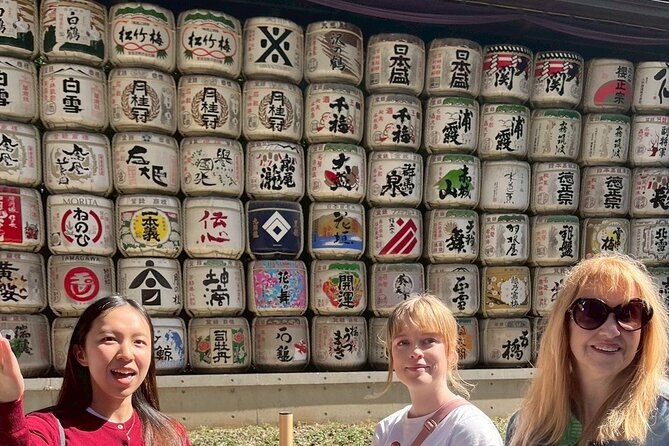
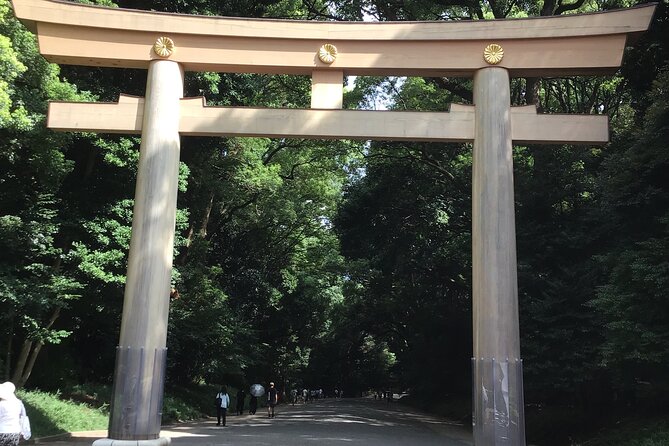
Meiji Jingu sits beside one of Tokyo’s best-known urban districts, yet the shrine grounds feel removed from the city. You enter through a grand torii and move into a broad wooded setting where the pace naturally slows. The contrast helps you notice how Japanese sacred places are not always separated from ordinary city life. They can be right beside shopping streets, railway stations, and busy neighborhoods.
A guide gives this setting a useful frame. Without one, you can admire the trees, wooden structures, barrels, gates, and streams of worshippers, but it is harder to understand how the pieces fit together. This walk introduces the basic role of a shrine, the ideas behind Shinto, and the reason Meiji Jingu remains important to Japanese people.
The focus is cultural rather than devotional. You are not expected to know Shinto terms or take part in anything beyond normal shrine etiquette. Instead, you learn how to look respectfully and why certain spaces, gestures, and objects matter.
This is especially useful on a first visit to Japan. Ideas such as kami do not map neatly onto the word god in English, and a shrine is not simply the Japanese version of a church. A student historian can explain those differences in plain language and help you avoid forcing familiar Western categories onto Japanese customs.
More Meiji Shrine tours in Tokyo:
- Tokyo: Meiji Shrine, Asakusa, Skytree Bus Tour and Cruise
★ 4.7 · 1,986 reviews - Tokyo Panoramic 1 Day: Meiji Shrine, Asakusa, Odaiba and SKYTREE®
★ 4.5 · 1,222 reviews - Tokyo: Meiji Shrine Walking Tour — Shinto & Imperial System
★ 4.9 · 266 reviews
Entering the grounds through Harajuku
The meeting point is at 1-chome-14-30 Jingumae in Shibuya, near public transportation. The tour ends back at the same meeting point, which makes the outing simple to fit into a day around Harajuku and Meiji Jingu.
The experience begins with the approach to the shrine. The entrance is one of the memorable parts of the walk, since the large torii marks a shift from ordinary city space to sacred ground. Your guide can explain what a torii represents and why passing beneath it is more than a convenient entrance.
Pay attention to the change in sound and pace. The point is not that Tokyo disappears, but that the shrine creates a different kind of space within it. The trees, paths, water, and architecture all help set the tone. The guide connects these features to Shinto ideas about nature and purity, giving you a better sense of why the setting matters.
This is not designed as a fast route through every possible photo angle. If you want a checklist of buildings and quick snapshots, a self-guided visit may be enough. If you want to understand why the entrance is arranged as it is, the guided walk offers more.
What the guide explains about Shinto
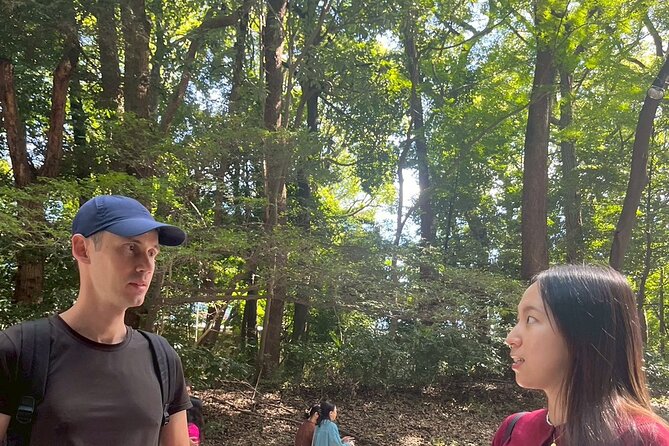
The tour’s strongest subject is Shinto, Japan’s native religious tradition. The guide covers kami, nature, and ancestors, which are central ideas for understanding shrines and the way many Japanese customs work.
You will learn that kami can refer to sacred presences connected with natural features, places, ancestors, and other forces worthy of respect. The idea is broader and more flexible than a simple one-to-one translation. That context helps explain why trees, water, mountains, and shrine grounds can carry spiritual meaning.
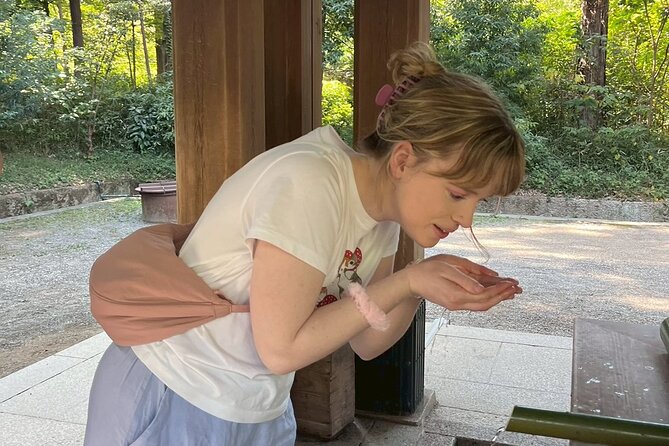
The walk also looks at purification and proper behavior. Shrine rituals can seem mysterious if you only copy what others do. With an explanation, gestures such as washing at a water basin, bowing, and approaching a main shrine building become part of a larger pattern of showing respect and preparing yourself.
The guide also links Shinto to everyday values. That is important because the tour does not present Shinto as something found only inside religious buildings. It explores how respect for nature, attention to ancestors, and social customs can shape Japanese life even for people who do not describe themselves as strongly religious.
You can ask questions as you go. That matters here because the most useful explanations often come from comparing Japanese customs with your own. A private setting makes it easier to ask about a ritual you do not understand without holding up a larger group.
The story of Emperor Meiji and Meiji Jingu
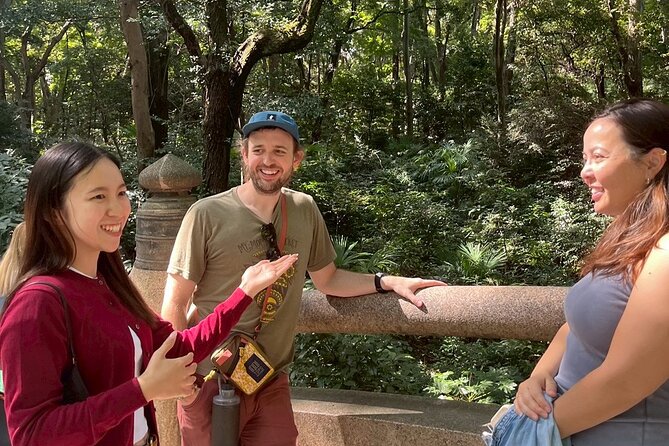
Meiji Jingu was built to honor Emperor Meiji and Empress Shoken. The shrine’s meaning becomes clearer when the guide places it within the story of modern Japan and the role of the imperial family.
The walk covers Emperor Meiji, the shrine’s origins, and the cultural significance of the site. You should expect more than a short biography. The point is to understand why this particular shrine was built and why it continues to draw people from across Japan and around the world.
This historical context also keeps the visit from becoming a vague lesson about ancient Japan. Meiji Jingu is not an untouched relic from a distant age. Its story is tied to a major period of change, and the shrine reflects the way Japan remembers important national figures.
The guide team includes Japanese student historians, and Noriko and Shota are named as guides for one session. Their role is useful because they can connect formal history with present-day cultural questions. Guide assignments may differ, but the experience is built around English explanations from Japanese guides with a strong interest in history and society.
One practical benefit is that you can ask how the shrine is understood today. That question is often more revealing than asking only when a building was completed. The tour aims to show why the place still matters, not just when it was established.
More Tokyo walking tours:
- Tokyo Tsukiji Fish Market Food and Culture Walking Tour
★ 5.0 · 3,184 reviews - Tokyo: Imperial Palace and Shogun Historical Walking Tour
★ 5.0 · 2,251 reviews - Tokyo: Shinjuku Local Bar and Izakaya Guided Walking Tour
★ 4.9 · 1,794 reviews - Tokyo: Tsukiji Fish Market Food and Walking tour
★ 5.0 · 1,724 reviews
Reading the architecture and sacred spaces
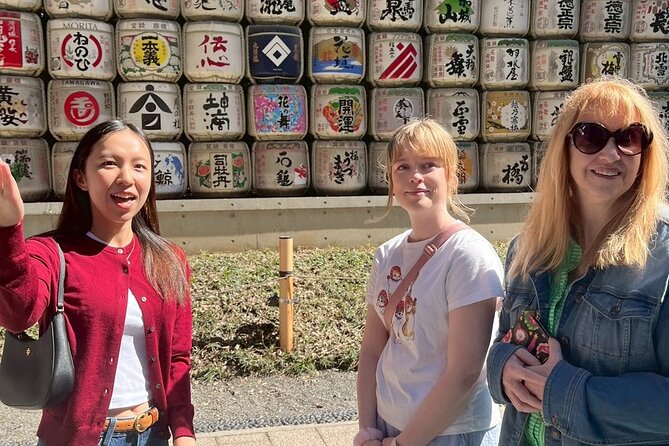
Meiji Jingu’s buildings and grounds are not decoration placed around a path. Their arrangement carries meaning, and the guide points out how architecture, entrances, water, and open areas shape the visit.
You will look at the role of a shrine, the purpose of its sacred spaces, and the meaning behind common features. This may include the torii, the approach, purification areas, and the main shrine area. The exact route and discussion can depend on the guide and the interests of your group.
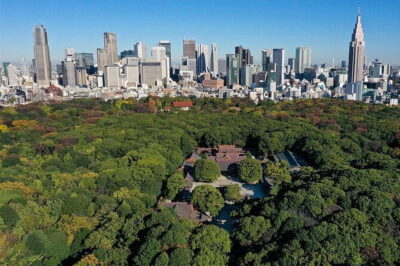
The walk also brings attention to the natural setting. The broad wooded grounds are one reason the visit feels different from most Tokyo sightseeing. The greenery is not merely a pretty backdrop. It supports the shrine’s connection with nature and gives the site a sense of separation from the surrounding city.
One of the more unusual details included in the walk is attention to pure water and the way water fits into shrine practice. You may also hear about rare museum exhibits connected with the site, though the supplied details do not say whether museum admission is part of every visit. Treat those exhibits as a possible topic rather than a guaranteed stop.
That distinction matters when planning. The included admission is for the shrine experience, and the advertised itinerary centers on the shrine grounds. Ask the guide or provider if a particular museum visit is important to you.
A private pace instead of a photo checklist
This is a private activity, so only your group takes part. That changes the feel of the walk. You can stop for an explanation, ask about something you have noticed, or spend less time on a subject that does not interest you.
The tour is also described as a small-group or private experience with a relaxed pace. The private format is particularly useful if your group has different levels of interest. One person can ask about architecture, another can ask about Japanese history, and the guide can connect both questions.
The approach is not built around collecting photographs. You will certainly have opportunities to take pictures, but the main purpose is understanding. The guide explains what you are seeing and why it matters, so the visual details stay with you after the visit.
This format suits curious first-time visitors best. If you already know a great deal about Shinto and Meiji-era history, you may find the introduction too basic in places. On the other hand, the chance to ask personal questions can still make it worthwhile.
The student guides are a major part of the experience. Reports about the guides point to clear English, warm hosting, energy, and useful advice for the rest of a Japan trip. That does not mean every session will feel identical, but it does suggest that the human element is central to the tour rather than an afterthought.
How long the walk takes
The full experience lasts approximately two hours. The shrine portion is listed as 1 hour 30 minutes, so allow a little flexibility around the stated duration.
Two hours is a sensible length for this subject. A shorter walk could explain a few rituals but leave out the larger ideas. A much longer tour might feel heavy if you are still adjusting to the terms and customs.
You will spend the time walking through the shrine grounds, listening to explanations, and stopping for discussion. Wear shoes suitable for a walking tour and plan your day so you do not have to rush away at a fixed minute. Those are simple precautions, but they make a difference when the route includes a large shrine area.
The tour begins and ends at the listed meeting point. Since it is near public transportation, you can pair it with time in Harajuku or the wider Shibuya area. The tour itself does not include a separate transfer between sightseeing sites.
Is $19.55 a fair price?
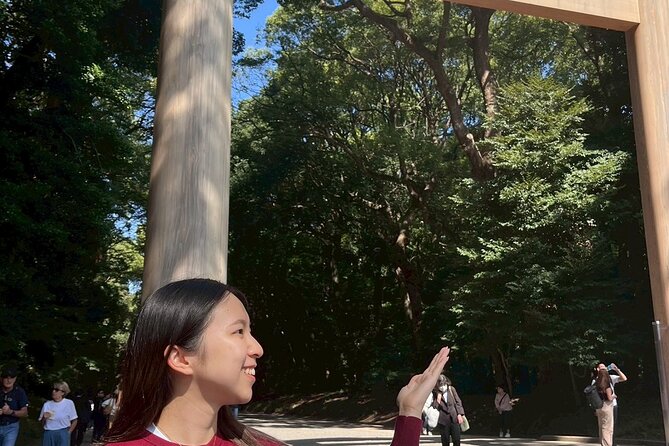
At about $19.55 per person, this is priced as an accessible introduction rather than a luxury private tour. The value comes from the explanation and the chance to ask questions, not from expensive transport or special access.
If you are already planning to visit Meiji Jingu, the added cost is modest for a guide who can explain the site in English. You are paying to understand the grounds, not simply to enter them. That is especially useful for first-time visitors who may otherwise leave with attractive photographs but little sense of the shrine’s role.
The price looks strongest for a private group. If several people in your party share the cost, you get a personal conversation for a relatively small amount per person. Solo visitors should compare the price with their interest in guided cultural context, since the benefit depends on how much you want to ask and learn.
The experience is booked, on average, 42 days in advance. That suggests you should plan ahead if you have fixed dates, even though the format is simple. Confirmation is provided at booking, and the ticket is mobile, so you do not need to manage a printed voucher.
Free cancellation is available up to 24 hours before the start time. Changes or cancellations inside that window are not accepted for a refund, and the cut-off uses Tokyo local time.
Who will get the most from this walk?
I would choose this tour if you are visiting Japan for the first time and want a clear introduction to Shinto without committing to a full-day history program. It also suits anyone interested in Japanese society, tradition, identity, or the imperial story behind Meiji Jingu.
It is a good match for you if:
- You want an English explanation of shrine rituals and etiquette.
- You prefer questions and conversation to a scripted group lecture.
- You want to understand the link between nature, ancestors, and kami.
- You are staying near Harajuku or Shibuya and want a short cultural activity.
- You like history but do not want a museum-only experience.
I would be more cautious if your main goal is a quiet, unstructured visit. A guide will add information throughout the walk, and that may reduce the solitude some people seek at a shrine. You should also confirm the day’s details if museum exhibits are a priority, since the listed experience focuses on the shrine grounds.
Should you book the Meiji Jingu walk?
Book it if you want meaning behind the scenery. The tour explains the torii, sacred spaces, rituals, natural setting, shrine origins, and the story of Emperor Meiji in one manageable visit.
The best reason to choose it is the private, question-friendly format. Noriko and Shota are among the named guides, and the guide team is presented as Japanese student historians who can discuss both history and present-day culture in English.
Skip it if you only want to walk through Meiji Jingu at your own speed or if you already have a strong understanding of Shinto and the shrine’s history. For everyone else, $19.55 is a reasonable way to turn a beautiful stop in Tokyo into a much more thoughtful one.
FAQ
Where does the Meiji Jingu tour start?
The meeting point is at 1-chōme-14-30 Jingūmae, Shibuya, Tokyo 150-0001, Japan.
Where does the tour end?
The activity ends back at the meeting point.
How long does the experience last?
The full experience lasts approximately two hours. The shrine portion is listed as 1 hour 30 minutes.
Is the tour conducted in English?
Yes. The walk is English-guided.
Who leads the tour?
Japanese student historians lead the experience. Noriko and Shota are named among the guides, and the itinerary also describes the guide as a certified volunteer trained by Meiji Jingu.
Is this a private tour?
Yes. Only your group participates in the activity.
What does the tour explain?
The guide explains Shinto, kami, nature, ancestors, shrine rituals, architecture, sacred spaces, Meiji Jingu’s origins, and the history of Emperor Meiji.
Is admission included?
Admission for the Meiji Jingu Shrine stop is included.
Is the tour close to public transportation?
Yes. The meeting area is near public transportation.
Can I cancel for a full refund?
Yes, if you cancel at least 24 hours before the experience start time. Cancellations or changes made less than 24 hours before the start time are not refunded or accepted.
Newly reviewed around Tokyo
- Tokyo Asakusa:Calligraphy & Make T-shirt Activity★ 5.0 · 62 reviews
- Intercity Shuttle, Tokyo to Haneda /Narita /Yokohama /Makuhari★ 5.0 · 5 reviews
- 1 Hour Travel around Tokyo with a Professional Photographer★ 5.0 · 3 reviews
- Travel Tokyo with Your Own Personal Photographer★ 5.0 · 43 reviews
- Shuttle Van 6hr Tokyo Tour to-and-from Tokyo, Yokohama and Narita★ 5.0 · 9 reviews
- Kickboxing & Body Training with EX-Pro Fighter★ 5.0 · 4 reviews
- Train in Samurai Swordsmanship and Defeat the Demon in Tokyo★ 5.0 · 5 reviews
- Traditional Japanese Knife Sharpening Class★ 5.0 · 18 reviews
Meiji Shrine Tours, compared.
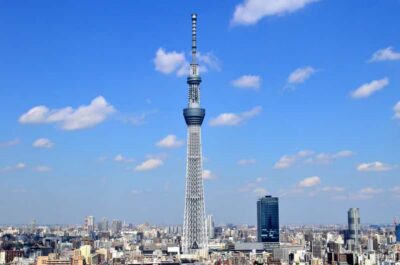
Meiji Shrine, Asakusa, Skytree Bus Tour and Cruise
Read our review →
Tokyo Panoramic 1 Day: Meiji Shrine, Asakusa, Odaiba and SKYTREE®
Read our review →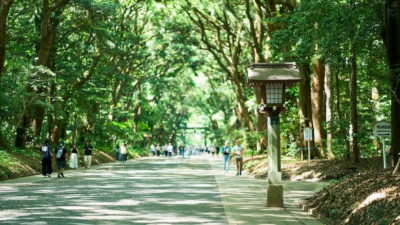
Meiji Shrine Walking Tour — Shinto & Imperial System
Read our review →
Meiji Jingu Shrine and Shinto Culture Walking Tour
Read our review →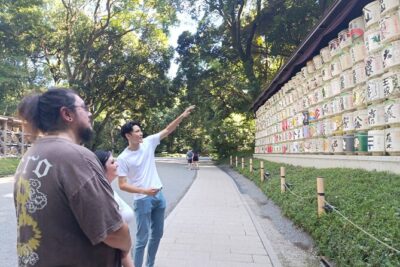
Meiji Shrine Walking Tour — Shintoism & Imperial System
Read our review →
1 Day Bus Tour with Meiji-Jingu,Odaiba,lunch&Skytree
Read our review →
Tokyo Morning Tour : Meiji Shrine, Asakusa and Fish Market
Read our review →Browse the lists this tour appears in