
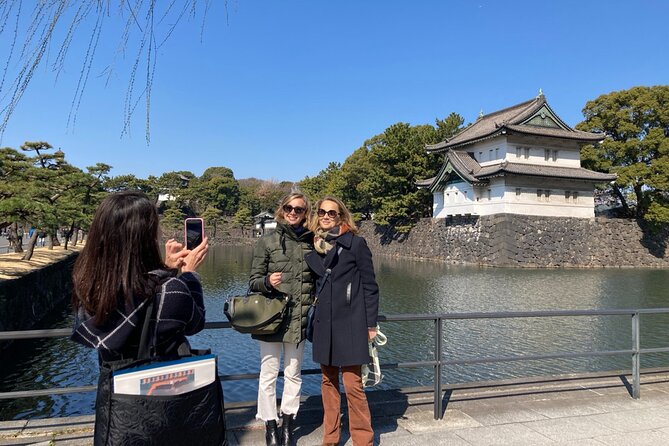
Reviewed · TOKYO IMPERIAL PALACE TOURS
Tokyo Private Tour! Edo Castle & Imperial Palace East Gardens
Tokyo’s Imperial Palace East Gardens give you a rare pause in central Tokyo: old castle stones, quiet paths, formal Japanese gardens, and reminders of the shoguns all sit beside the modern city. This private two-hour walk focuses on Edo Castle ruins, Ote-mon Gate, Ninomaru Garden, and the palace grounds.
I like two things right away. First, a guide gives the stones and gardens a story instead of leaving you to guess what you are seeing. Second, your group gets a private outing, so the pace can be adjusted and questions are welcome. The main catch is important: you do not enter the Inner Palace, and the East Gardens themselves are free to visit.
- Edo Castle in the heart of Tokyo: See surviving walls, foundations, gates, and traces of the former seat of shogunal power.
- A private two-hour walk: Only your group participates, with a guide handling the route and explanations.
- Ninomaru Garden and seasonal plants: Enjoy a carefully arranged Japanese garden and ask about flowers, trees, and garden design.
- History made personal: Guides such as Naoko, Mikio, Shigeru, Ishida, and Yoshiko have been praised for clear explanations and warm conversation.
- A useful meeting point: Begin at Wadakura Fountain National Park, near public transportation, and return there at the end.
- A clear limitation: This tour covers the East Gardens and surrounding grounds, not the Inner Palace.
What This Tokyo Palace Walk Actually Covers
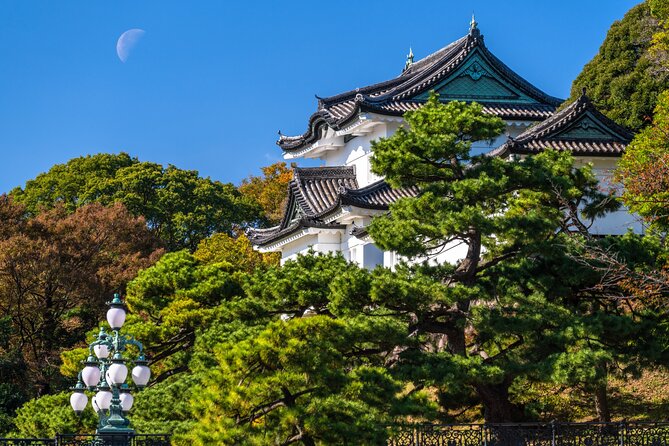
The name can create confusion, so let’s make the boundaries clear. You walk through the Imperial Palace East Gardens and nearby palace grounds. You do not tour the private or central Inner Palace buildings, and admission to that area is not included.
That is not a minor technical point. If your main goal is to see the residence interiors of Japan’s imperial family, this is not the right experience. If you want Edo Castle remains, gardens, bridges, gates, and a guided look at the wider palace site, the tour fits much better.
The East Gardens are especially useful for first-time visitors because the site combines several layers of Tokyo history in one walk. You can look at a garden, then turn toward a castle foundation, then hear about the imperial family and the city’s transformation into modern Japan.
The tour lasts about two hours. That is long enough for useful context without taking over your day. You return to the starting point, so you can continue to another part of Tokyo afterward.
Starting at Wadakura Fountain National Park
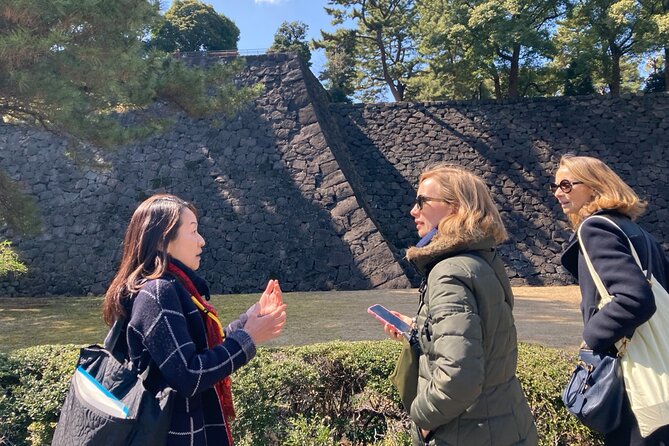
The meeting point is Wadakura Fountain National Park at 3-1 Kōkyogaien in Chiyoda City. This gives you a calm place to begin before entering the palace grounds, and it is near public transportation.
Your guide takes care of the route. That matters here because the palace area is broad, with several gates, paths, gardens, and historical remains. You will spend less time checking maps and more time looking at the site.
At the entrance, visitors are subject to a baggage inspection. Leave yourself a little time for this. One very practical warning concerns shopping: if you plan to buy Japanese knives or other objects that could be treated as weapons at Tsukiji, Asakusa, or elsewhere, place them in a coin locker before the meeting.
The tour is private, meaning only your party participates. That does not necessarily mean a completely customized itinerary, but it does make questions and pace changes much easier than on a large group walk.
More Imperial Palace tours in Tokyo:
- Tokyo: Imperial Palace and Shogun Historical Walking Tour
★ 5.0 · 2,251 reviews - Tokyo: Imperial Palace Japanese History Walking Tour
★ 4.9 · 987 reviews - Tokyo: Imperial Palace and Shogun Walking Tour
★ 4.9 · 935 reviews
Ote-mon Gate: Your First Lesson in Castle Power
Ote-mon Gate is one of the natural starting points for understanding Edo Castle. Gates were not simple entrances. They helped control movement into one of the most important political centers in Japan.
Your guide can explain how the castle worked and why its defenses mattered. Even when only parts of the original complex remain, the scale and position of the gates help you picture a much larger fortress than the quiet garden setting suggests today.
This is where a guide earns the fee most clearly. A free garden walk can show you the gate, but it may not explain the difference between a castle remnant, a palace facility, and a public garden within the larger Imperial Palace area.
The exact amount of time spent at each point can vary. The supplied details describe a walk around the grounds rather than a fixed minute-by-minute schedule, so tell your guide if you want more time for photographs, plants, or military history.
Edo Castle Ruins and the Shogun’s Former Stronghold
The Edo Castle ruins are the historical center of the experience. Edo Castle was tied to the Tokugawa shogunate, the military government that ruled Japan for centuries. The remaining stonework and foundations are not a complete castle, but they give the site a physical link to that period.
One especially useful part of the walk is the chance to imagine what the area looked like during the Edo period. A guide can connect the surviving structures to the buildings and spaces that once filled the grounds.
Several guides are praised for making this period easier to understand. Shigeru is noted for detailed explanations, including the gardens and plants. Akiyoshi is described as discussing Japanese life, history, and the current role of the imperial family. Taka is praised for bringing the palace grounds to life through his perspective.
Those details matter because the site can otherwise feel like a collection of walls and open lawns. You are not only looking at what remains. You are being helped to picture the political and social world that once operated here.
Ninomaru Garden and the Softer Side of the Palace Grounds
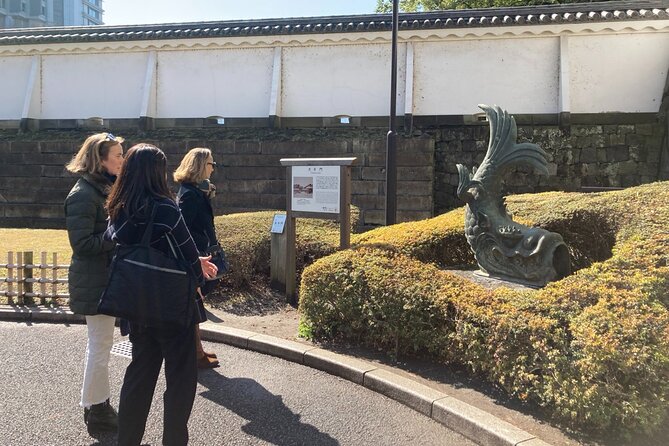
Ninomaru Garden changes the mood. After castle walls and historical discussion, you move into a carefully arranged Japanese garden with water, plants, paths, and a more peaceful rhythm.
The garden is a good place to slow down. It also gives you a chance to ask about design and seasonal changes. One guide, Shigeru, is praised for plant knowledge, and the gardens can look different depending on the time of year. Cherry blossoms are especially notable in March and April.
The garden is not just decoration. In a former castle complex, gardens also shaped how people moved, rested, and experienced power. A thoughtful explanation can show why a pond, bridge, tree, or viewing point was placed where it is.
If you care more about flowers and garden style than castle politics, say so at the start. If you prefer history, ask your guide to spend more time on the Edo period and the castle remains. The private format gives you a better chance of matching the walk to your interests.
More private tours in Tokyo:
- Tokyo 6hr Private Tour with Government-Licensed Guide
★ 5.0 · 3,902 reviews - Private Tour to Mt. Fuji and Hakone (Fully Licenced Operator)
★ 5.0 · 1,910 reviews - Tokyo Customized Private Tour (Must See Places in 1 Day)
★ 5.0 · 1,499 reviews - Mount Fuji Full-Day Private Tour from Tokyo (Customizable)
★ 4.9 · 1,470 reviews
Bridges, Nature, and Palace Views
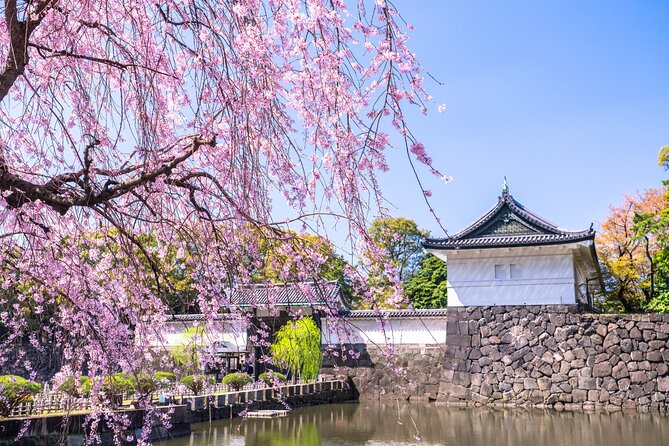
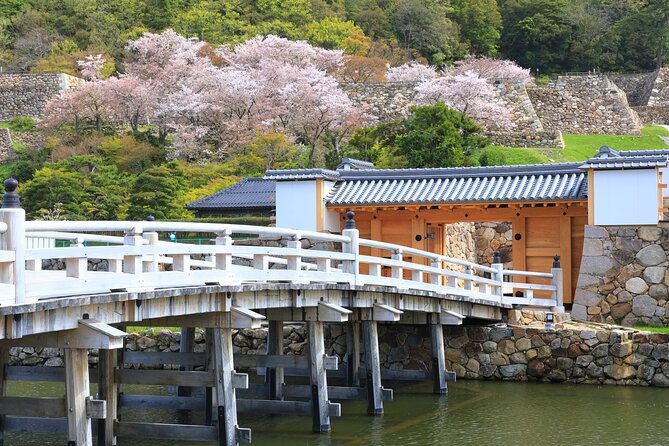
The route includes an old bridge, beautiful nature, historical buildings, and views connected with the palace grounds. These parts provide the visual variety that makes the two hours pass quickly.
The setting is also a useful reminder of Tokyo’s contrasts. You are in one of the world’s biggest cities, yet the gardens offer shade, open space, and a quieter atmosphere. The experience is not a wilderness walk, of course, but it can feel like a welcome change from Tokyo’s crowded commercial streets.
Bring your camera. The gardens, stone walls, bridges, and gate structures offer more varied photographs than a simple palace exterior. Since the tour begins and ends at the same point, you can carry on with your day without arranging separate transport from the final stop.
The route is outdoors, and summer conditions can be demanding. A past tour included umbrellas and neck coolers during weather around 35 degrees Celsius. Do not assume those items are always supplied, but do plan for heat and sun if you visit in warm weather.
The Guide Makes the Biggest Difference
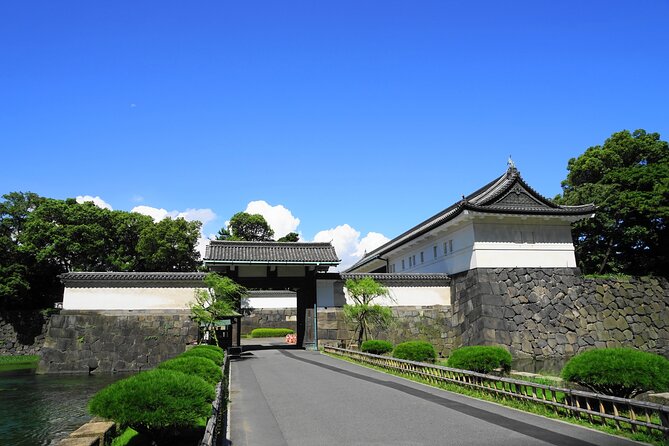
The strongest part of this experience is the human element. The best guides do more than recite dates. They answer questions about Japanese life, explain the imperial family’s current role, discuss plants, and connect the castle site to modern Tokyo.
Naoko is described as lively, friendly, and very clear in English. Mikio is praised for his warm manner, strong English, and ability to answer questions. Ishida is noted for clear explanations of Japanese history and excellent English. Yoshiko is praised for keeping the walk enjoyable even in hot sun.
Shigeru also receives especially strong praise for detailed answers and plant knowledge. One Spanish-speaking participant appreciated a small paper craft souvenir made during the tour, though you should not expect this as a standard inclusion.
There is one communication warning. One booking ended early because the guide’s English was difficult for the group to understand. The overall rating is very high at 4.9 from 105 ratings, and 98 percent recommend the experience, but language ability can vary by guide and day. If precise English communication is vital to you, contact the provider before booking and ask about the assigned guide.
Is $65.41 a Fair Price?
At $65.41 per person, the price is not paying for entry to a major paid attraction. The East Gardens are free, and the tour does not include admission to the Inner Palace.
You are paying for private guiding, route planning, historical explanation, and the ability to ask questions in your own group. That can be good value if you want context and dislike sorting out the site alone. It is less compelling if you are happy reading signs, following a map, and exploring independently.
The value improves for families and small groups that can use a group discount. A private walk also helps if people in your party have different interests. One person can ask about castle warfare, another about plants, and another about the imperial family without holding up a large tour.
Think of the price as a fee for interpretation rather than admission. That distinction should guide your decision.
Who Will Enjoy This Best?
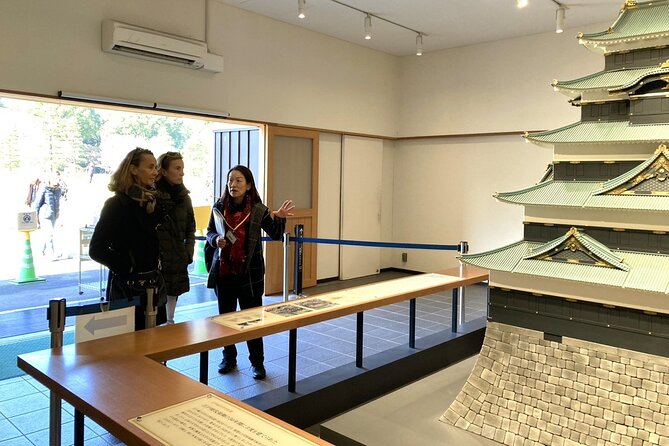
I would choose this for a first visit to Tokyo, especially if you want a compact introduction to Japanese history. The combination of Edo Castle remains, gardens, bridges, and imperial context gives you several useful reference points for the rest of your trip.
It also suits families. The walk is only about two hours, and a private guide can adjust the pace. A family interested in plants may enjoy Shigeru’s style of explanation, while a group focused on history may prefer to ask about the shogunate and castle defenses.
It is a good match for visitors who want more than photographs. You will leave with a better sense of how Edo Castle, the shogunate, the imperial family, and modern Tokyo connect.
I would hesitate if you want palace interiors, a long formal garden tour, or a guaranteed specialist in one narrow subject. I would also think twice if your English needs are exact and you cannot confirm the guide’s language level in advance.
Practical Details Before You Book
The activity uses a mobile ticket, and confirmation is provided at booking. It is near public transportation, and most people can participate.
Wear comfortable shoes. The experience is a walking tour through outdoor grounds, and the weather can affect your comfort. In hot months, bring water, sun protection, and a hat. An umbrella may help with both sun and rain.
Allow time for the baggage inspection. Do not arrive carrying newly purchased knives or similar objects. Store them before meeting the guide.
Free cancellation is available when you cancel at least 24 hours before the start time. Changes or cancellations inside that window are not refunded, and the activity requires a minimum number of participants. If that minimum is not met and the tour is canceled, you are offered another date or experience, or a full refund.
Should You Book the Imperial Palace East Gardens Tour?
Book it if you want a private, history-focused walk through one of Tokyo’s most important sites, and if you understand that the East Gardens are the destination, not the Inner Palace.
The tour’s strongest points are its compact length, private format, and guides who can connect castle ruins, Japanese gardens, imperial history, and modern life. The free grounds do not make the guide unnecessary. They simply mean you should decide if interpretation is worth $65.41.
My practical call: choose this for context, questions, and a well-organized first look at Edo Castle. Skip it if you only want to stroll the gardens independently or expect access inside the palace.
FAQ
How long does the Tokyo Imperial Palace East Gardens tour last?
The tour lasts approximately two hours.
Where does the tour begin?
It begins at Wadakura Fountain National Park, 3-1 Kōkyogaien, Chiyoda City, Tokyo 100-0002, Japan.
Where does the tour end?
The activity ends back at the meeting point.
Is admission to the Imperial Palace included?
The tour includes a guide, but admission to the Inner Palace is not included. The tour does not go inside the Imperial Palace.
What parts of the grounds will I see?
The walk includes the Edo Castle ruins, Ninomaru Garden, Ote-mon Gate, an old bridge, historical buildings, and other parts of the East Gardens and surrounding palace grounds.
Is this a private tour?
Yes. Only your group participates in the private activity.
Are the East Gardens free to enter?
The activity information lists admission as free for the Imperial Palace stop. You are paying for the private guide and tour service, not a standard entrance ticket.
Do visitors go through a baggage inspection?
Yes. Visitors are subject to a baggage inspection when entering the Imperial Palace grounds.
Can I cancel for a full refund?
Yes, if you cancel at least 24 hours before the experience start time. Cancellations or changes made less than 24 hours in advance are not refunded.
Newly reviewed around Tokyo
- Tokyo Asakusa:Calligraphy & Make T-shirt Activity★ 5.0 · 62 reviews
- Intercity Shuttle, Tokyo to Haneda /Narita /Yokohama /Makuhari★ 5.0 · 5 reviews
- 1 Hour Travel around Tokyo with a Professional Photographer★ 5.0 · 3 reviews
- Travel Tokyo with Your Own Personal Photographer★ 5.0 · 43 reviews
- Train in Samurai Swordsmanship and Defeat the Demon in Tokyo★ 5.0 · 5 reviews
- Shuttle Van 6hr Tokyo Tour to-and-from Tokyo, Yokohama and Narita★ 5.0 · 9 reviews
- Kickboxing & Body Training with EX-Pro Fighter★ 5.0 · 4 reviews
- Traditional Japanese Knife Sharpening Class★ 5.0 · 18 reviews
Tokyo Imperial Palace Tours, compared.

Imperial Palace and Shogun Historical Walking Tour
Read our review →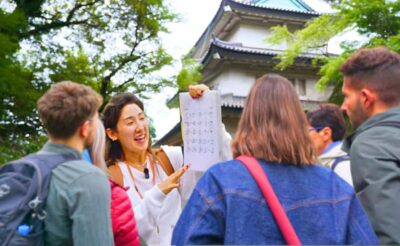
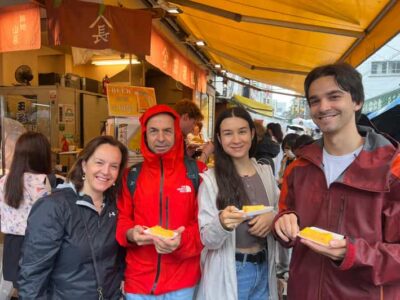
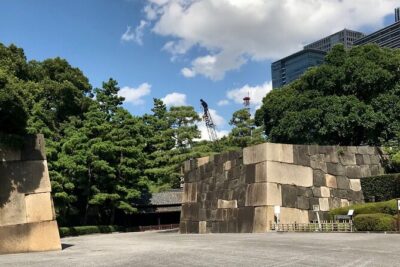
Imperial Palace East Garden and Edo Castle Walking Tour in Tokyo
Read our review →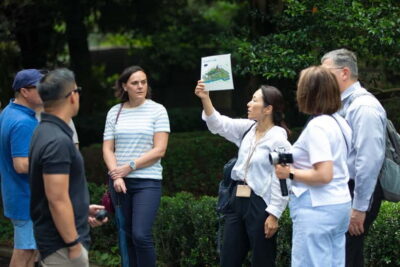
Imperial Palace, Sensō-ji Temple, & Tokyo Tower Tour
Read our review →
Tokyo Castle, Imperial Palace, Shogun & Garden Walking Tour
Read our review →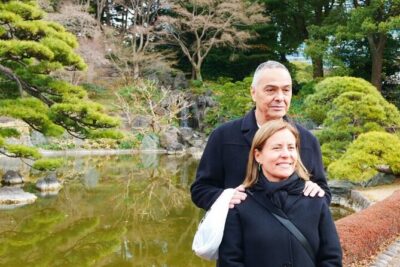
Edo Castle & East Garden of the Imperial Palace Tour
Read our review →Browse the lists this tour appears in