
Reviewed · TOKYO TEA CEREMONY EXPERIENCES
Tokyo: Two Types of Japanese Sweets Making and Tea Ceremony
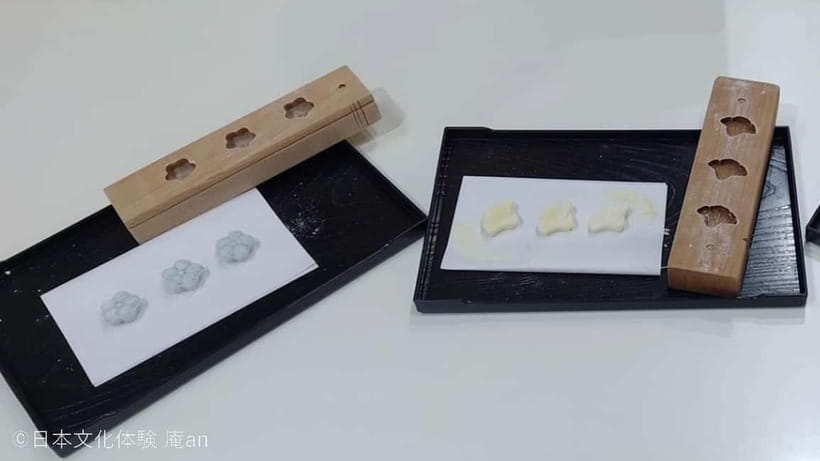
Tokyo’s AN TOKYO class combines three small Japanese traditions in one sitting: Wasanbon Ohigashi, two seasonal Nerikiri sweets, and a casual tea ceremony. You work with white and red bean paste from long-established Kyoto shops, then grind and whisk single-origin Matcha.
I especially like the change of pace between the sweets. Ohigashi is simple and tidy, while Nerikiri takes a lighter touch and more patience. I also like that you make the tea yourself instead of merely watching a ceremony. The main consideration is language: the instructor is Japanese, and English translation is provided as much as possible, not guaranteed at every moment.
- Three Japanese skills in 125 minutes: Make Ohigashi, two Nerikiri designs, and Matcha.
- Kyoto-made bean paste: White and red bean paste comes from long-established Kyoto shops.
- Seasonal sweets: The Nerikiri designs change to match the time of year.
- Wasanbon sugar: Shape traditional dried sweets from fine Japanese sugar.
- Single-origin Matcha: See a grinding demonstration, then whisk your own bowl.
- Small paid extras: A take-out box costs 100 yen, added color costs 200 yen, and a completion certificate costs 300 yen.
Three Japanese Traditions in One Tokyo Class
At $28 per person, this is a reasonably priced way to spend just over two hours indoors in Tokyo. You are not paying for a meal or a long sightseeing route. You are paying for instruction, ingredients, tools, and a chance to make food that has a clear place in Japanese culture.
The class is held at AN TOKYO Japanese Culture Experience in Tokyo, on Honshu. The stated duration is 125 minutes, with operating hours from 10:00 to 17:00. Since the session follows a timed program, arrive promptly. The instructor cannot hold the event for late arrivals, and no compensation is provided for transport costs if you miss it.
The format suits you best if you enjoy doing rather than simply watching. You will handle the sugar and bean paste, shape the sweets, learn about tea, and whisk Matcha. It is also a useful choice on a rainy day, during a break from sightseeing, or for anyone who wants a gentle cultural activity without committing to a full formal tea ceremony.
Starting with Wasanbon Ohigashi
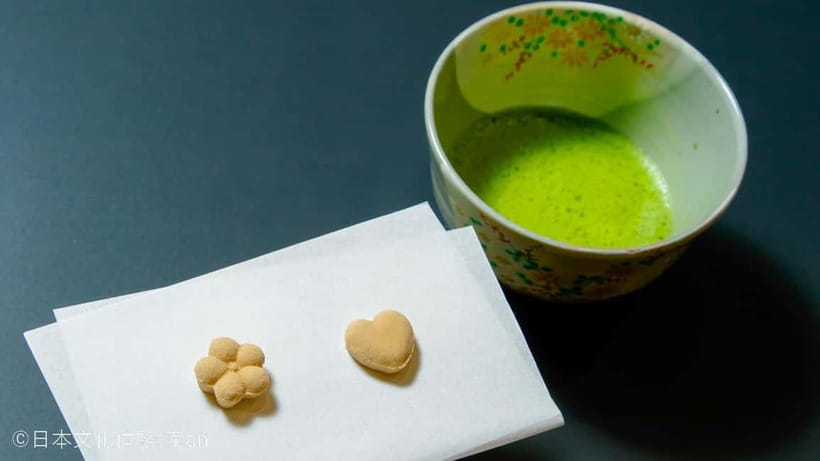
The first making activity is Ohigashi, a dried Japanese sweet made with Wasanbon. This traditional Japanese sugar is prized for its fine texture and is often associated with refined tea service. Here, the process gives you a quick introduction to Japanese sweets before the more delicate Nerikiri work begins.
The schedule allows about 20 minutes for this first section, followed by a break. That shorter time is helpful because Ohigashi is the more straightforward of the two sweet-making tasks. You can get used to the instructor’s method and the basic handling of the ingredients without spending the whole class on one item.
I like this opening because it gives you an immediate result. You are not required to master a complicated shape before you understand what is happening. The dried sweet also provides a useful contrast with Nerikiri, which is softer, more sculptural, and more sensitive to touch.
The listing does not specify the exact Ohigashi shapes you will make. Designs may depend on the season or the day’s teaching plan. What is clear is that the activity focuses on traditional Wasanbon rather than generic candy making.
More Tokyo tea ceremonies:
- Matcha Making Class in Tokyo with Authentic Japanese Sweets Set
★ 5.0 · 744 reviews - Tokyo: Traditional Tea Ceremony with a Tea Master
★ 5.0 · 528 reviews - Dynamic Tokyo: Tokyo Tower, Tea Experience, Bay Cruise Day Tour
★ 4.5 · 521 reviews
Shaping Two Seasonal Nerikiri
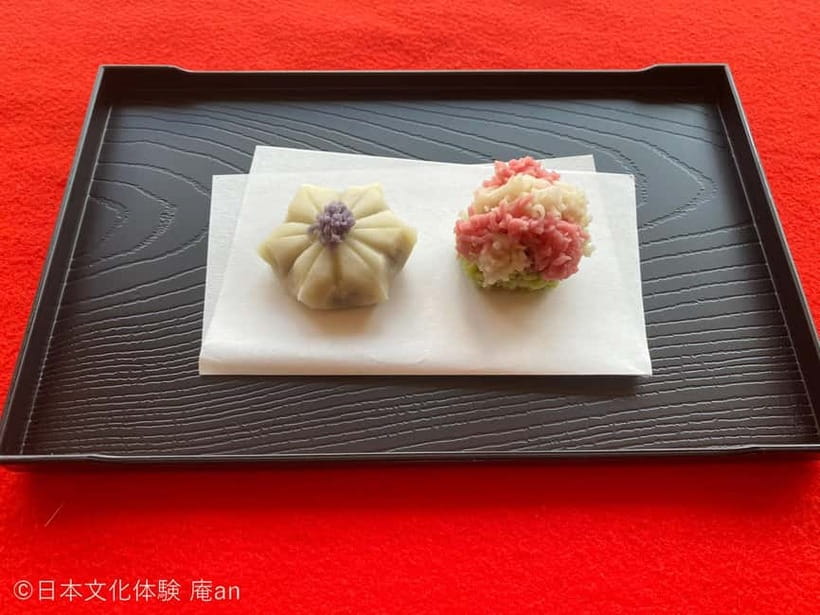
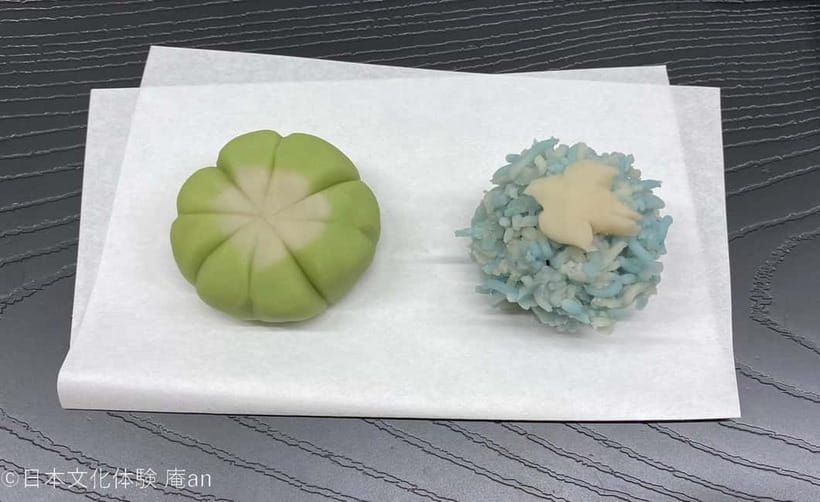
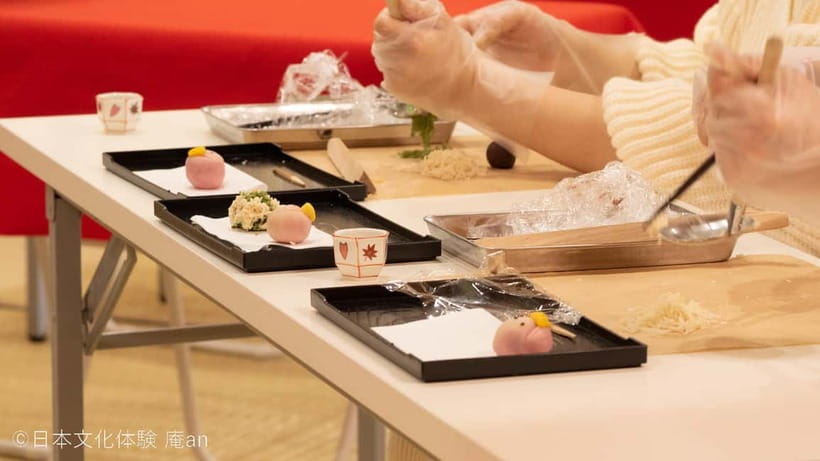
The second part is the heart of the class. You make two seasonal Japanese sweets from white and red bean paste, using ingredients produced by long-established shops in Kyoto. One is a flower-shaped Nerikiri, and the other is a Kinton Nerikiri.
Nerikiri is soft Japanese confectionery often shaped to suggest flowers, leaves, or other seasonal images. The point is not only sweetness. Shape, color, and the feeling of the season all matter. Even a small sweet can carry a visual idea, which is part of what makes this a more thoughtful activity than an ordinary cooking lesson.
The flower-shaped piece comes first. You will need some care as you form the paste, but the design gives you a clear goal. The Kinton Nerikiri follows, and it can be a little more demanding because fine strands and a gentle touch are involved.
This is the portion where patience matters. One participant specifically noted that the Ohigashi was easy, while Nerikiri required more delicacy. That is useful advice. If your first sweet looks a little uneven, you have not failed. The process is meant to show you how much control Japanese confectioners bring to a very small object.
The use of Kyoto bean paste adds value here. You are working with an ingredient linked to established wagashi production, rather than simply using an anonymous filling. The class also uses both white and red bean paste, so you can notice the difference in color and taste as you work.
A break appears after the Nerikiri portion, around the 85-minute mark in the schedule. That pause helps keep the class from feeling rushed. It also gives you time to look at what you have made before the tea section begins.
A Casual Tea Ceremony with Single-Origin Matcha
The final part begins with an explanation of tea and a demonstration of Matcha grinding. The class uses a single-origin special Matcha, which gives the tea section a little more focus than simply mixing green powder with hot water.
You then take part in the tea ceremony and make your own Matcha. The ceremony is described as casual, so this is not presented as a strict, highly formal ritual with a long list of rules. That makes the experience easier to approach if you are curious about tea but unsure about formal etiquette.
The physical task is fairly simple: add the Matcha and whisk it into a froth. One participant found this part easy after the more careful Nerikiri shaping. Still, the demonstration and explanation give the whisking a cultural setting. You learn why Matcha is handled in this particular way instead of treating it as just another hot drink.
The tea also brings the three activities together. Ohigashi and Nerikiri are made to be appreciated with tea, not just eaten as stand-alone desserts. After making the sweets, you can taste them in the setting they are intended to accompany.
A picture time follows the tea ceremony, then the session ends at about 115 minutes. The final ten minutes are set aside for eating and drinking before you leave at the 125-minute mark. That closing window matters. You are not expected to rush out immediately after finishing the last step.
English Help and the Teaching Style
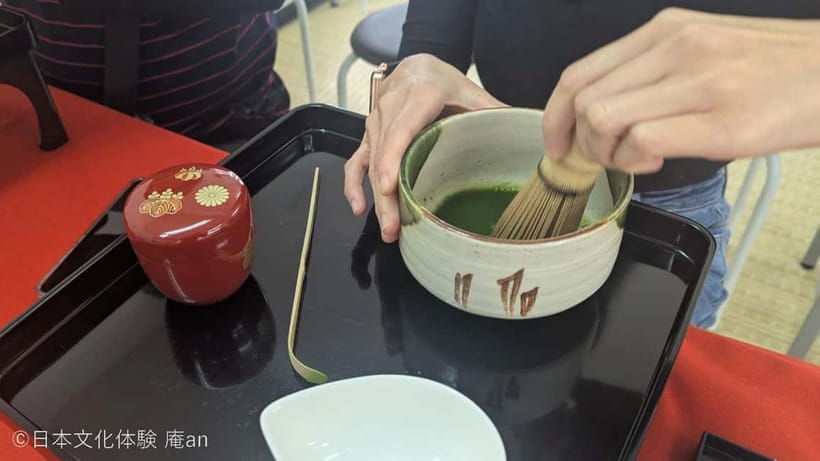
The instructor is Japanese, and English translation is provided as much as possible. That wording is important. You should not expect every explanation to be delivered in fluent English or assume that every small instruction will be translated in full.
At the same time, the class can still work well for English speakers who are comfortable following a demonstration. The instructor explains the types of Ohigashi and Nerikiri and discusses the difference between green tea and Matcha. One participant also praised the effort made to explain the background of the sweets and tea.
The available feedback gives the instructor high marks for kindness and effort. One English-speaking participant specifically appreciated receiving instructions in English, while another noted the care taken to explain the ingredients and tea. The overall rating is 4.6 from 26 ratings, with strong praise for all three activities.
I would still advise you to watch closely, ask for a demonstration to be repeated when needed, and avoid relying on spoken English alone. The class is hands-on, so seeing the motion can be as useful as hearing an explanation.
More Dessert Tours in Tokyo:
- Tokyo: Matcha Making Experience with Mochi Sweets in Asakusa
★ 4.9 · 388 reviews - Make Traditional Nerikiri Sweets & Matcha experience in Shibuya
★ 5.0 · 130 reviews - Private Mochi Sweets Making class near Shibuya area
★ 5.0 · 93 reviews - Japanese Traditional Sweets making and Tea Ceremony
★ 4.7 · 50 reviews
What the $28 Price Really Covers
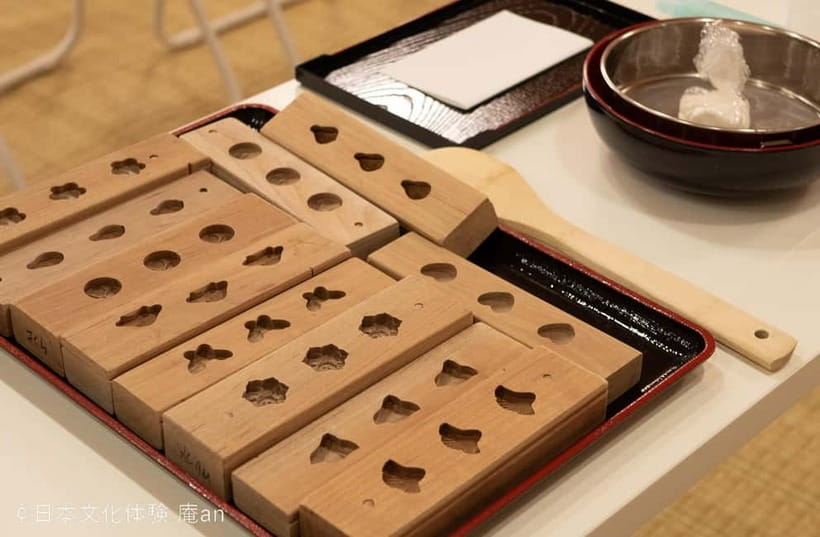
At $28, the experience offers good value if you want a structured cultural activity rather than a simple snack. In a little over two hours, you make three kinds of things: Ohigashi, two Nerikiri sweets, and Matcha. The ingredients include Kyoto bean paste and single-origin Matcha, and the experience includes the instruction and tea activity.
The price does not include extras. If you want to carry your sweets away in a box, add 100 yen. Adding color costs 200 yen, and an experience completion certificate costs 300 yen. These are small charges, but you should know about them before you arrive.
The main value comes from the range. A class devoted only to Matcha might offer more depth on tea, while a dedicated wagashi workshop might give you more time with each sweet. This program trades some depth for variety. You get a compact introduction to several related customs in one visit.
It is also a useful pick for couples, friends, and families with older children who can follow instructions. Children under two who sit on a parent’s lap are free, but anyone who does not take part cannot enter the venue. That rule makes the experience less suitable if one member of your party wants to watch while others participate.
Timing, Booking, and Practical Details
Plan around the full 125 minutes, not just the advertised start time. The program has separate stages, breaks, a tea explanation, a photo period, and time to eat and drink at the end. If you have a train, restaurant booking, or another timed activity afterward, leave extra space.
Reservations received after 17:00 are processed the next day. The listed operation hours are 10:00 to 17:00, so check the available start time when booking rather than assuming a late-evening session is possible.
You can cancel up to 24 hours in advance for a full refund. The reserve-now, pay-later option lets you hold a place without paying at the time of booking, which is useful when your Tokyo plans are still shifting.
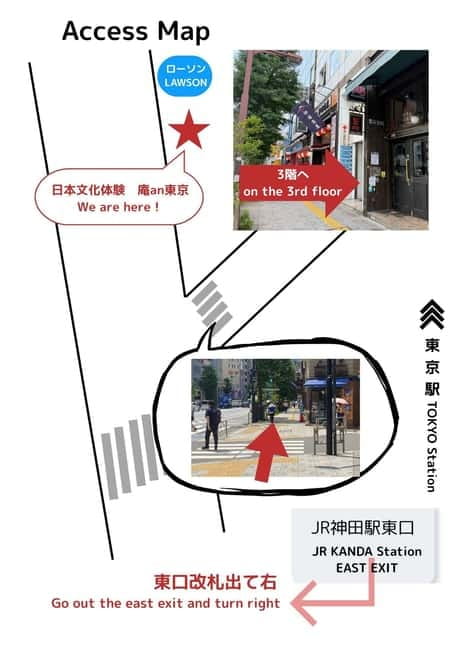
The meeting point is AN TOKYO Japanese Culture Experience. The supplied information does not give a detailed route from a station, so check the venue address and route before leaving. Since late arrivals cannot be accommodated, this is one of those Tokyo activities where a few extra minutes can save the whole booking.
Who Will Like This Experience Most
I would choose this class if you want a manageable introduction to Japanese sweets and tea, especially if this is your first time with Nerikiri or Matcha. You get enough explanation to understand the basics, but the session remains practical and relaxed.
It suits you particularly well if you like:
- Making food with your hands
- Seasonal Japanese design
- Small, refined sweets rather than a large meal
- Tea culture without a highly formal ceremony
- Indoor activities lasting about two hours
- A class that combines several traditions
You may want a different activity if you are looking for advanced confectionery training, a fully formal tea ceremony, or detailed instruction entirely in English. The class offers English help, but Japanese is the instructor’s stated language.
It is also not ideal for anyone who needs to arrive late or plans to attend without participating. The venue does not allow nonparticipants to enter, and the instructor cannot pause the session for delays.
Should You Book the AN TOKYO Sweets and Tea Class?
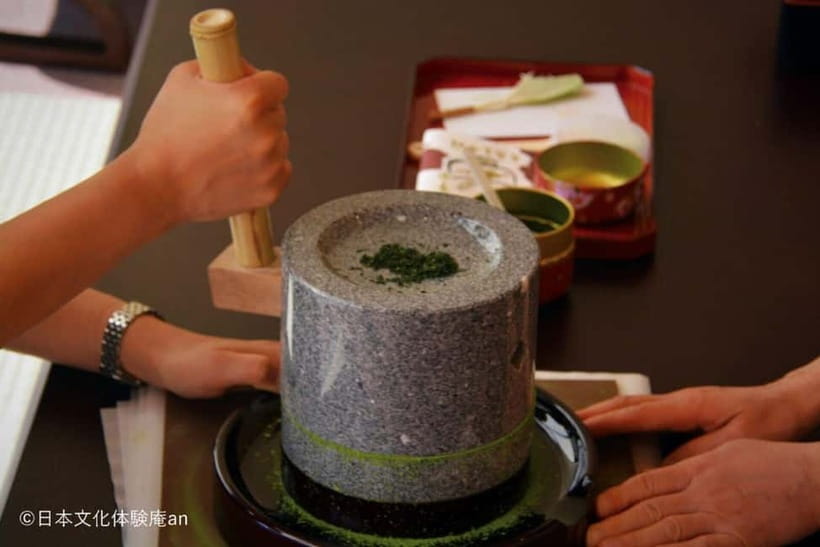
Book it if you want variety, a reasonable price, and a hands-on look at Japanese sweets and tea. The strongest features are the Kyoto bean paste, the seasonal Nerikiri, the traditional Wasanbon work, and the chance to whisk your own single-origin Matcha.
Go in expecting a guided cultural workshop, not a professional pastry course. The Nerikiri may test your fingers, and the English support may be partial. For most people, those limits are balanced by the friendly teaching style, the clear three-part structure, and the satisfaction of eating sweets you shaped yourself.
FAQ
Where does the experience take place?
The experience takes place at AN TOKYO Japanese Culture Experience in Tokyo, on Honshu, Japan.
How long does the activity last?
The full experience lasts 125 minutes, including the making activities, breaks, tea ceremony, picture time, and final eating and drinking time.
What Japanese sweets will I make?
You will make Wasanbon Ohigashi, a flower-shaped Nerikiri, and a Kinton Nerikiri. The two Nerikiri sweets are seasonal.
What ingredients are used for the Nerikiri?
The Nerikiri is made with white and red bean paste produced by long-established shops in Kyoto.
Do I make the Matcha myself?
Yes. The activity includes a Matcha grinding demonstration, followed by a tea ceremony during which you make your own Matcha.
Is the tea ceremony formal?
The tea experience is presented as casual, so you can take part without needing to attend a highly formal ceremony.
What language is used during the experience?
The instructor is Japanese. English translation will be provided as much as possible.
How much does the experience cost?
The listed price is $28 per person.
Are any extras charged separately?
Yes. A sweets take-out box costs 100 yen, adding color costs 200 yen, and an experience completion certificate costs 300 yen.
Can I cancel for a full refund?
You can cancel up to 24 hours in advance for a full refund. Reservations can also be made with the reserve-now, pay-later option.
Newly reviewed around Tokyo
- Tokyo Asakusa:Calligraphy & Make T-shirt Activity★ 5.0 · 62 reviews
- Intercity Shuttle, Tokyo to Haneda /Narita /Yokohama /Makuhari★ 5.0 · 5 reviews
- 1 Hour Travel around Tokyo with a Professional Photographer★ 5.0 · 3 reviews
- Travel Tokyo with Your Own Personal Photographer★ 5.0 · 43 reviews
- Kickboxing & Body Training with EX-Pro Fighter★ 5.0 · 4 reviews
- Train in Samurai Swordsmanship and Defeat the Demon in Tokyo★ 5.0 · 5 reviews
- Shuttle Van 6hr Tokyo Tour to-and-from Tokyo, Yokohama and Narita★ 5.0 · 9 reviews
- Traditional Japanese Knife Sharpening Class★ 5.0 · 18 reviews
Tokyo Tea Ceremony Experiences, compared.
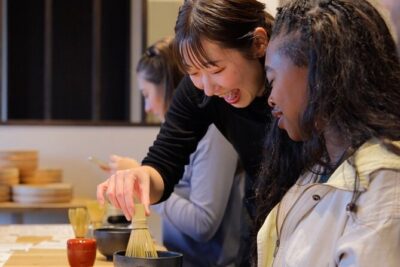
Matcha Making Class in Tokyo with Authentic Japanese Sweets Set
Read our review →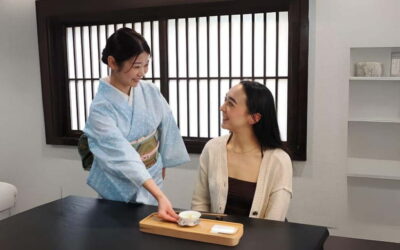
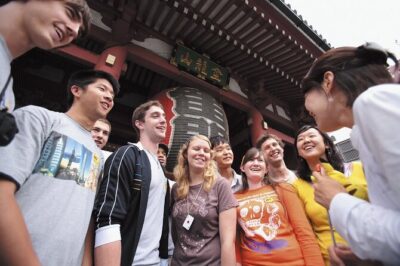
Dynamic Tokyo: Tokyo Tower, Tea Experience, Bay Cruise Day Tour
Read our review →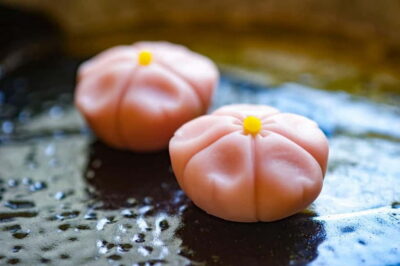
Matcha Making Experience with Mochi Sweets in Asakusa
Read our review →
Tea Ceremony Workshop in Tokyo by the Experienced Instrucor
Read our review →
Browse the lists this tour appears in