
Reviewed · TOKYO TEA CEREMONY EXPERIENCES
【NEW】Matcha Making Experience and Matcha Comparison in Tokyo
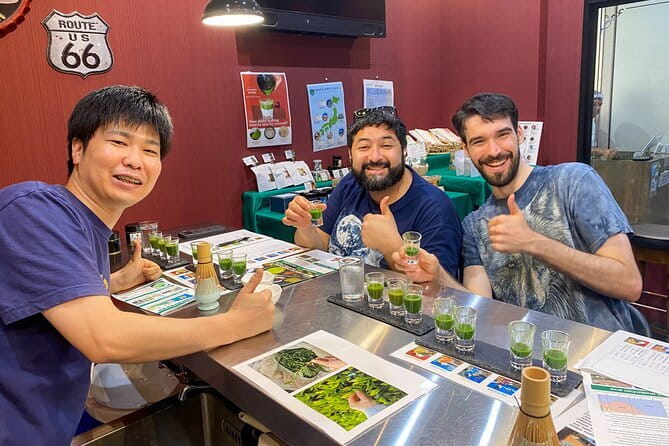
Matcha is not one uniform green drink. At this 90-minute Tokyo experience, you compare matcha from five Japanese tea regions, including Kyoto, Shizuoka, Aichi, Fukuoka, and Kagoshima. The tasting also includes products sold as matcha around the world that do not meet the formal definition.
I like the chance to taste 10 matchas in small portions, since you can compare subtle differences without buying several expensive tins. I also like learning from Chisei, a former Kyoto tea farmer with an agricultural science degree, then making your own cup with a bamboo whisk. The possible drawback is the early 9:30 a.m. start and the narrow group size, which leaves little room for a last-minute schedule change.
Key points to know before booking
- Taste matcha from five Japanese regions: Compare teas from Kyoto, Shizuoka, Aichi, Fukuoka, and Kagoshima.
- Learn from a former tea farmer: Chisei worked with Kyoto tea for six years and can explain cultivation, soil, and processing.
- See what counts as matcha: Eight comparison samples include six ceremonial-grade teas and two products sold internationally as matcha but not formally defined as matcha.
- Make your own usucha: Choose a favorite and whisk it yourself with a bamboo tea whisk.
- Finish with a matcha latte and sweets: The original blend is made to work with milk and sugar.
- Keep the logistics simple: The experience begins and ends at Henn Na Hotel in Taito City, with a maximum of five people.
Why comparing five tea regions changes your view of matcha
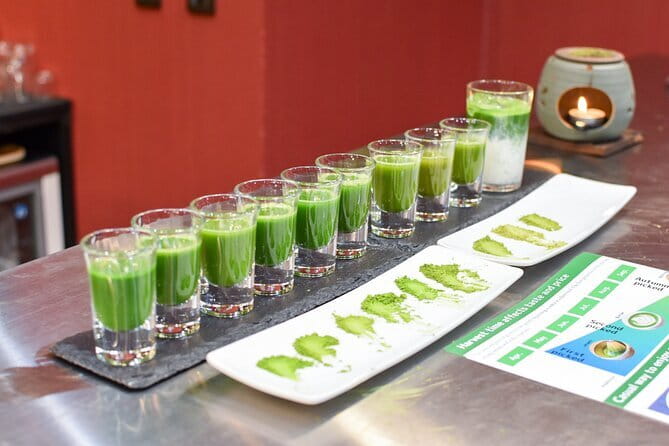
Most people meet matcha as a sweet latte or as a bright green powder in a café. That gives you only a small part of the picture. Here, the central lesson is that matcha has a place of origin, a growing method, a processing method, and a taste shaped by all three.
You taste tea from Kyoto, Shizuoka, Aichi, Fukuoka, and Kagoshima. These are not five decorative labels. The point is to notice how matcha can differ in color, fragrance, and taste from one production area to another.
I like this format because the servings are small. You can focus on comparison rather than filling up on one drink. If you already buy matcha in North America or Europe, this is also a useful way to check what you have been drinking. Some products sold around the world as matcha do not meet the formal definition used here.
The experience does not treat matcha as a simple health product. You get context about its history, cultivation, and production before judging the cup in front of you. That matters because two powders may look similar while producing very different aromas and flavors.
More Tokyo tea ceremonies:
- Matcha Making Class in Tokyo with Authentic Japanese Sweets Set
★ 5.0 · 744 reviews - Tokyo: Traditional Tea Ceremony with a Tea Master
★ 5.0 · 528 reviews - Dynamic Tokyo: Tokyo Tower, Tea Experience, Bay Cruise Day Tour
★ 4.5 · 521 reviews
Meeting Chisei and Rina at the Tokyo tea bar
The meeting point is matcha tripJapan at Henn Na Hotel, 2F Sports Bar Leaf, 3-19-8 Kotobuki, Taito City, Tokyo 111-0042. The activity starts at 9:30 a.m. and ends at the same place.
This is a practical location for a short morning program because you do not need to move between several parts of Tokyo during the session. The activity has a maximum of five participants, so the format is much smaller than a large food tour. You should have a better chance to ask questions directly, though the small capacity also means popular dates may fill well ahead of time.
Chisei is the main tea guide. He has a bachelor’s degree in agricultural science and spent six years as a tea farmer in Kyoto, working from cultivation through processing. His particular interest is soil science, which gives the conversation a useful angle beyond the usual explanation of tea ceremony manners.
Rina assists with the experience and has a bachelor’s degree in pharmacy. The program is conducted in English and Japanese. A past exchange with the hosts also included a discussion about Indian tea, so you can bring your own tea questions rather than treating the session as a one-way lecture.
Starting with a welcome drink and tea background
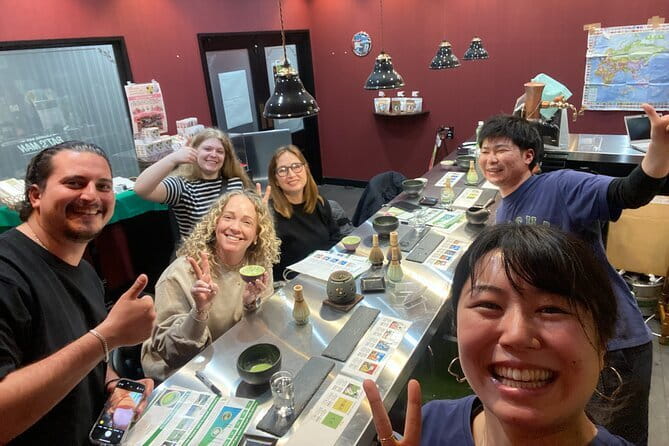
The session begins with a welcome drink. While you have it, the guides explain the history and production of the matcha you will taste.
This opening sets up the comparison that follows. Instead of tasting ten unnamed cups and trying to remember them, you first hear why matcha is different from other green teas and what happens before the powder reaches your bowl.
The agricultural focus is one of the better reasons to choose this experience. Many matcha introductions stop at how to hold a whisk. Here, you also learn about cultivation methods, processing, and the definition of matcha itself.
You should still expect a friendly introduction rather than a university lecture. The session lasts about an hour and a half, so the guide has to balance background information with tasting and hands-on preparation. If you ask many questions, the discussion may use more of the available time. That can be a benefit if you love tea, but people seeking only a quick drink may find the pace more involved than expected.
Comparing eight cups by color, aroma, and taste
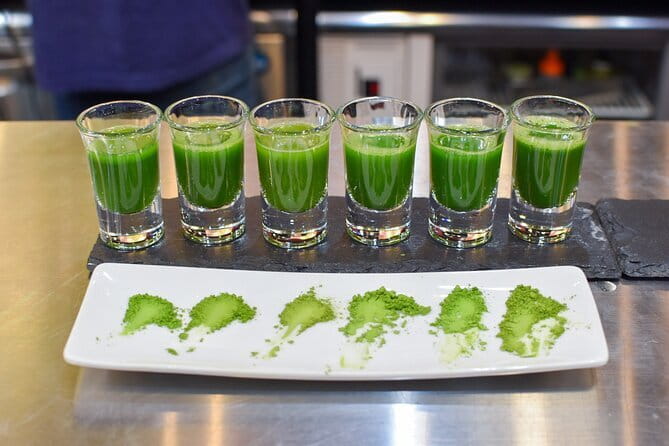
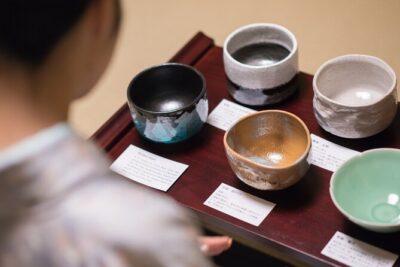
The main tasting serves eight types of matcha. Six are described as ceremonial grade. Two are not formally defined as matcha but are sold as matcha in many parts of the world.
You first look at the color. Then the tea is prepared for you so you can assess the fragrance and flavor. The order encourages you to use more than your tongue. Matcha can be a visual and aromatic experience before you take the first sip.
The teas come from five production areas: Kyoto, Shizuoka, Aichi, Fukuoka, and Kagoshima. The session does not reduce the regions to a simple best-to-worst ranking. Instead, you get a chance to identify which style suits your own palate.
That is important because the most expensive or famous tea may not be your favorite. One cup may appeal to you for its aroma, another for its taste, and another for the way it works with milk or sugar. Small samples let you make that decision for yourself.
The wording around the two non-matcha products is also useful. It points to a common problem in international tea shopping: green powder is not automatically matcha. If you have ever paid a high price for a product labeled matcha, this part may help you read future packaging with more care.
The program says you enjoy 10 kinds of matcha in all, while the formal comparison portion serves eight. The final selections and the original blend used for the latte and sweets account for the broader tasting experience. You should expect the eight-cup comparison to be the most structured part, with other matcha served later in the session.
A completely different kind of day in Tokyo:
- Mt Fuji and Hakone 1-Day Bus Tour Return by Bullet Train
★ 5.0 · 26,383 reviews - 1-Day Tokyo Bus Tour
★ 5.0 · 14,250 reviews - Tokyo: teamLab Planets TOKYO Digital Art Museum Entry Ticket
★ 4.6 · 9,779 reviews - Mt Fuji & Hakone Cruise, Drum Show Bullet Train 1 Day from Tokyo
★ 4.0 · 7,413 reviews
Choosing a favorite and whisking usucha
After the comparison, you choose the matcha you liked best and prepare it yourself. The final tea is usucha, the thinner style of matcha commonly associated with whisked tea.
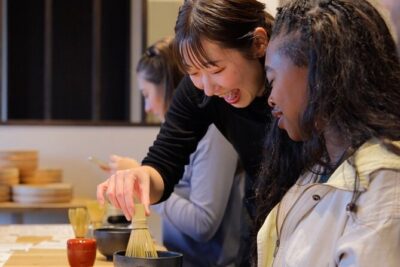
A bamboo tea whisk is provided. You learn the basic preparation process and make your own cup rather than simply watching the guide perform it. This is where the experience becomes practical. You leave with a method you can repeat at home, not only a memory of several tasting samples.
The hands-on section is likely to suit first-time matcha drinkers and people who already own a whisk. Beginners get a guided introduction without needing to buy equipment before they know what they like. Experienced tea drinkers can use the tasting to select a powder and then test how it performs when prepared by their own hand.
Do not expect a full formal tea ceremony. The focus is matcha comparison and preparation, not elaborate ceremony etiquette. That makes the experience more accessible, but it also means you should book something else if your main goal is a highly traditional ceremonial performance.
Your chosen tea may taste different once you prepare it yourself. Water, powder quantity, and whisking affect the finished drink. The lesson gives you a useful starting point, but home results will depend on your own tools and technique.
Matcha latte and sweets with an original blend
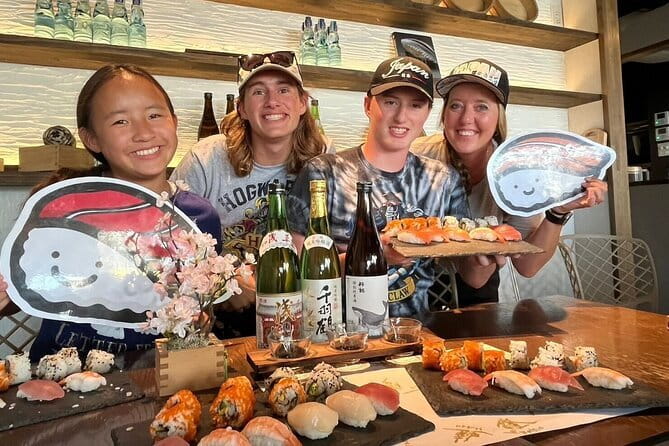
The session finishes with a matcha latte and matcha sweets. The hosts use an original matcha blend designed to work with milk and sugar.
This closing course serves a different purpose from the regional comparison. The earlier teas are for noticing distinctions in the tea itself. The latte and sweets show how matcha can be used in a modern, sweeter setting.
I like that the program does not pretend every matcha should be drunk the same way. A tea that you prefer plain may not be the one that works best in a latte. The final drink gives you another way to think about flavor and balance.
The sweets also make the ending more relaxed. If you prefer unsweetened tea and want only a serious tasting, this portion may feel less important. Still, it rounds out the session and gives you a chance to enjoy matcha in the familiar café style after learning where it comes from.
The value of a $62.12 Tokyo experience
At $62.12 per person, this is not a cheap cup of tea. It is also not priced like a full-day food tour. You are paying for a compact lesson, a multi-region tasting, a guided preparation session, and a latte with sweets.
The value depends on what you would otherwise do. If you buy several matchas in Japan and taste them without guidance, you may spend a similar amount while learning less about their origins and formal definition. If you only want one casual latte, the price is harder to justify.
For me, the strongest value comes from the breadth of the tasting. Ten small samples can teach you more than one premium serving, especially when the guides explain what you are comparing. The five-person limit adds value for anyone who prefers questions and conversation over a large group presentation.
The experience is usually booked about 20 days ahead. That does not guarantee every date will sell out, but it suggests you should not leave it until the night before if the morning fits your plans. Free cancellation is available when you cancel at least 24 hours before the 9:30 a.m. start. Changes or cancellations inside that window are not accepted for a refund.
Who will enjoy this experience most
I would recommend this for you if you want to understand matcha beyond its reputation as a healthy green drink. It suits tea drinkers, curious food lovers, and anyone planning to buy Japanese matcha during a Tokyo visit.
It is especially useful if you:
- Want to compare Japanese tea regions in one sitting
- Prefer a small group with a maximum of five people
- Like learning about farming and processing
- Want to make matcha with a bamboo whisk
- Are curious about the difference between formal matcha and products sold as matcha overseas
- Need an English-language tea activity
The program also works well for a first encounter because you do not need to know how to whisk matcha before arriving. The guides take you through the process after you have tasted several styles.
I would be more cautious if you want a later start, a long cultural tour, or a full tea ceremony. The 9:30 a.m. meeting time is fixed, and the experience stays in one location. It is focused and educational rather than a broad tour of Tokyo or a formal performance.
Practical details for your morning
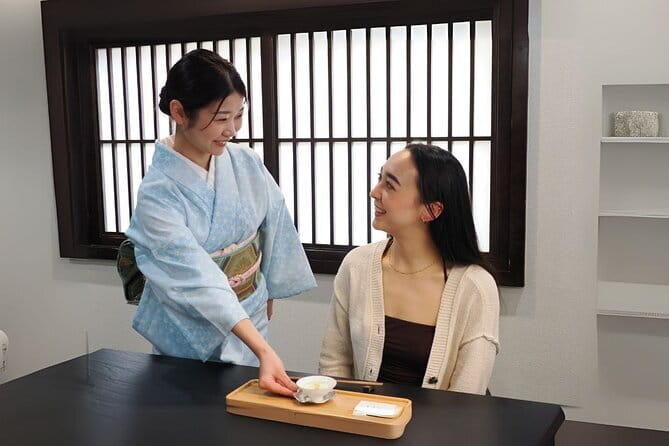
Bring the meeting point details with you: Henn Na Hotel, second floor, Sports Bar Leaf, in Kotobuki, Taito City. The activity ends at the same place, so you can plan another Tokyo stop afterward without arranging a return transfer.
The location is near public transportation, and service animals are allowed. The ticket is mobile, which keeps the morning simple. Confirmation is provided when you book.
Tips are not included. Plan to offer one separately if you feel the guides gave you good service.
Because the tasting includes several teas and the group is small, arrive ready to pay attention. You will get more from the session if you compare color, fragrance, and taste rather than rushing each sample. If you have a favorite tea style or questions about matcha you have bought at home, bring those questions with you.
Should you book the matcha comparison?
Book it if you want a focused, hands-on tea lesson with real regional comparison. The combination of Chisei’s farming background, Rina’s assistance, ten matchas, and a final whisking session gives you more substance than a standard café tasting.
The main tradeoffs are the $62.12 price, the early start, and the narrow focus. You are not getting a broad Tokyo sightseeing program, and you should not expect a formal tea ceremony.
For a tea enthusiast, the chance to compare Kyoto, Shizuoka, Aichi, Fukuoka, and Kagoshima in one morning is the strongest reason to go. For a casual visitor who simply wants a sweet green drink, save your money for a café. For everyone in between, this is a practical way to find the matcha you actually like and learn how to prepare it at home.
FAQ
Where does the matcha experience meet?
It meets at matcha tripJapan, Henn Na Hotel, 2F Sports Bar Leaf, 3-19-8 Kotobuki, Taito City, Tokyo 111-0042.
What time does the experience start?
The experience starts at 9:30 a.m.
How long does the matcha experience last?
It lasts approximately 1 hour and 30 minutes.
How many kinds of matcha are served?
You can enjoy 10 kinds of matcha during the experience. The structured comparison portion serves eight types.
Which Japanese tea regions are included?
The teas come from Kyoto, Shizuoka, Aichi, Fukuoka, and Kagoshima.
Do I get to make matcha myself?
Yes. You choose a matcha you like and make usucha using a bamboo tea whisk.
Is the experience conducted in English?
Yes. A local guide is available in English and Japanese.
What is the cancellation policy?
You can cancel for a full refund up to 24 hours before the experience start time. Cancellations or changes made less than 24 hours before the start are not accepted for a refund.
Newly reviewed around Tokyo
- Tokyo Asakusa:Calligraphy & Make T-shirt Activity★ 5.0 · 62 reviews
- Intercity Shuttle, Tokyo to Haneda /Narita /Yokohama /Makuhari★ 5.0 · 5 reviews
- 1 Hour Travel around Tokyo with a Professional Photographer★ 5.0 · 3 reviews
- Travel Tokyo with Your Own Personal Photographer★ 5.0 · 43 reviews
- Kickboxing & Body Training with EX-Pro Fighter★ 5.0 · 4 reviews
- Train in Samurai Swordsmanship and Defeat the Demon in Tokyo★ 5.0 · 5 reviews
- Shuttle Van 6hr Tokyo Tour to-and-from Tokyo, Yokohama and Narita★ 5.0 · 9 reviews
- Traditional Japanese Knife Sharpening Class★ 5.0 · 18 reviews
Tokyo Tea Ceremony Experiences, compared.
Matcha Making Class in Tokyo with Authentic Japanese Sweets Set
Read our review →
Dynamic Tokyo: Tokyo Tower, Tea Experience, Bay Cruise Day Tour
Read our review →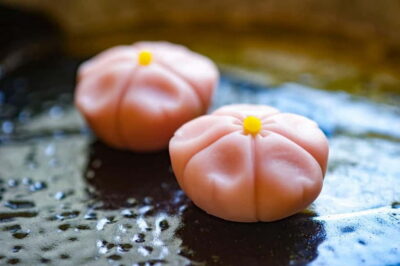
Matcha Making Experience with Mochi Sweets in Asakusa
Read our review →
Tea Ceremony Workshop in Tokyo by the Experienced Instrucor
Read our review →
Browse the lists this tour appears in