
Reviewed · TOKYO SUMO EXPERIENCES
Watch Sumo Morning Practice at Stable in Tokyo
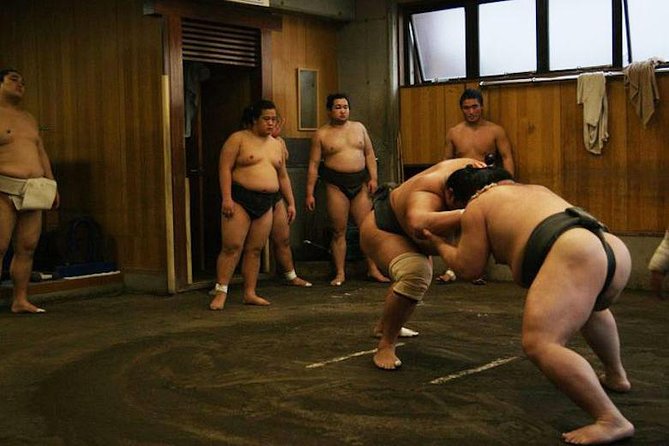
The best part of this Tokyo experience is the proximity. You sit quietly beside the training ring as enormous athletes stretch, slap the floor, brace for impact, and practice the same hard movements again and again. This is real morning training, not a staged show.
I like the close view and the chance to see sumo’s discipline before the public spectacle. I also like the small-group format, with a maximum of 10 people, and the included photo opportunity after practice. The main drawback is simple: you may sit on a hard floor for up to two hours, often with little explanation and no chance to ask questions during training.
A second consideration is timing. Practice length changes from day to day, and the exact stable may only be confirmed about a week before your visit. During Tokyo tournament periods in January, May, and September, the session can shrink to 30 or 40 minutes.
Key points before you book
- Training, not entertainment: You watch wrestlers warm up, drill, spar, and cool down while observing strict silence.
- Close-range view: A small stable can put you only a short distance from the action, but your view depends on where you sit.
- Floor seating matters: You must be able to sit on the floor for an extended period. A stool or chair may be available on request, but supplies are limited.
- Allow extra time: The official visit lasts about 60 to 90 minutes, yet the practice can run longer or end early.
- Tournament months change the experience: January, May, and September sessions in Tokyo may last only 30 to 40 minutes.
- The location is not fixed far in advance: You receive the stable details after booking, with conditions usually confirmed about a week before.
What morning practice is really like
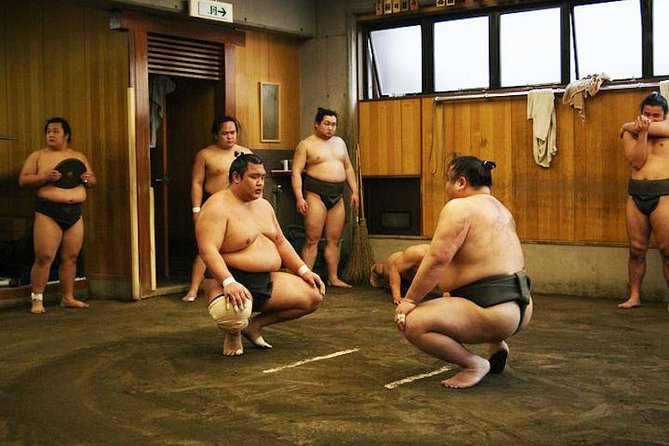
This is not a sumo match with an announcer, music, or formal introductions. You enter a working stable during its daily practice and take a place at the side of the dohyo, the sumo ring.
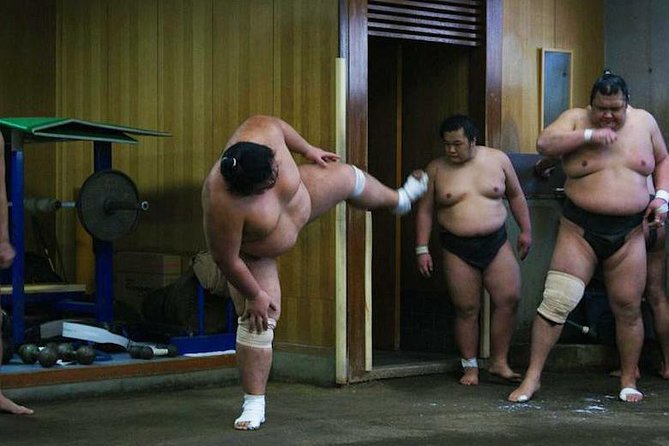
The wrestlers usually begin with stretching and basic movements. You may see repeated footwork, squats, balance drills, and exercises that prepare the body for the violent collisions to come. At first, the routine can seem slow. That is part of the point. Sumo builds power through repetition, posture, timing, and control.
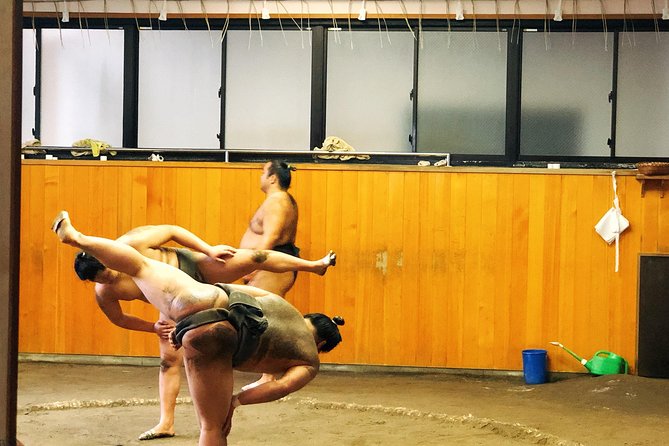
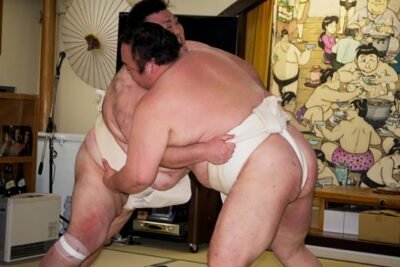
As practice progresses, the work becomes more physical. Wrestlers push, brace, grapple, and drive one another from position. The impact is startling at close range. Even a short burst of sparring shows how much strength is needed to move an opponent who may weigh far more than you do.
You are there to observe, not participate. Keep quiet, do not eat, and avoid bright flash photography or intrusive camera sounds. Do not expect the wrestlers to explain what they are doing while they train. Their attention is on practice, and your attention should be on them.
That quiet is part of the experience. It can feel almost ceremonial, but it is also practical. A stable is a workplace for professional athletes. You are being allowed to watch because you can follow its rules.
More Tokyo sumo experiences:
- Tokyo: Sumo Show and Dining Experience
★ 4.8 · 2,742 reviews - the SUMO show
★ 5.0 · 1,960 reviews - Tokyo Shinjuku Sumo Show & Experience with Photo
★ 5.0 · 1,750 reviews
Entering the stable near Tokyo’s sumo district
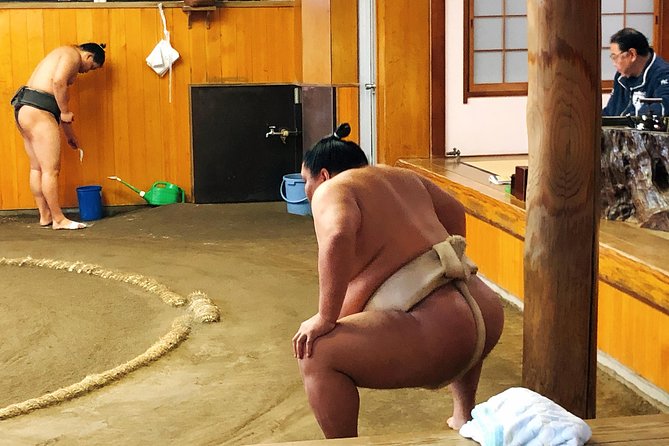
The stated itinerary lists Ryogoku Kokugikan, Tokyo’s major sumo venue, but the practice itself takes place at a sumo stable, and the final location details can vary. You make your own way to the meeting point, meet the guide and group, then continue to the stable.
Do not assume that finding the stable will be effortless. The address may arrive only a few days before the visit, and some locations can be awkward to find. You should keep the address in Japanese if possible. One useful approach is to use a taxi from Asakusa when the stable is difficult to reach on foot. Public transportation and walking can work too, but allow extra time and do not cut it close.
The meeting arrangement is valuable for a practical reason. You are not expected to knock on an unknown stable door or figure out the local etiquette alone. Someone brings the group inside and directs you to the viewing area.
The exact meeting point and stable schedule are not fully settled at the time of booking. Conditions depend on the stable’s own calendar, and the operator may confirm them only about one week before the visit. This is normal for an activity tied to a working sports organization, but it requires flexibility.
Warmups, ritual, and the first contact
The opening part can be the most educational if you know what to watch. Look at how the wrestlers prepare their legs and hips. Notice the controlled movements, the stamping, the broad stances, and the way they repeatedly lower their center of gravity.
Sumo has a visible ritual structure. The wrestlers are not simply lifting weights or running drills. Their practice keeps the sport’s traditional movements in daily use, from the stance to the footwork and the forceful contact exercises.
You may see senior wrestlers working with younger members of the stable. The atmosphere can include teasing, advice, and moments of support, but the work remains serious. The hierarchy within a stable matters, and it shapes who trains with whom and how the session proceeds.
This is where a little preparation helps. Read about the basic hierarchy of sumo before you go, and learn the names of a few common movements. You will understand more of what you are seeing and spend less time wondering why the wrestlers repeat apparently simple actions.
The quality of the explanation can vary. Some groups have a guide who discusses sumo history and customs. Hiroko and Ricko are names associated with especially helpful arrangements in individual visits, including assistance with transport and background information. Other groups may receive little more than an escort into the building. If cultural explanation is your main reason for booking, confirm what language support and guiding are included.
The sparring is the payoff
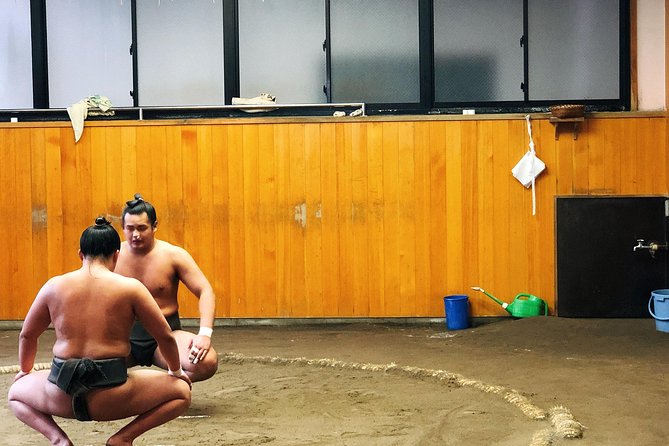
The practice often builds toward contact work. After the stretching and drills, wrestlers may enter more forceful bouts, with shoulder charges, pushes, grips, and attempts to drive one another out of the ring.
The first collision can surprise you. Sumo is not slow simply because the ritual is measured. The impact is sudden and heavy, and the wrestlers must absorb it while staying balanced and alert. From a close seat, you can see how much skill is hidden beneath the sport’s simple objective.
You may also see technique rather than brute force. A lighter or less experienced wrestler can use timing, foot position, and leverage to resist a larger opponent. Training is not always a series of dramatic victories. Some rounds look repetitive, but that repetition shows how athletes refine small movements.
The session may include a cooldown or a return to lighter exercises. It may also end before every hoped-for stage appears, especially during Tokyo tournament season. In January, May, and September, practice can last only 30 to 40 minutes instead of the more typical 60 to 90 minutes.
More early morning tours in Tokyo:
- Tokyo: Sumo Morning Practice Viewing Tour
★ 4.8 · 570 reviews - Tokyo: Sumo Morning Training Visit
★ 4.4 · 370 reviews - Tokyo: Sumo Morning Practice Tour at Sumida City
★ 4.8 · 308 reviews - Tokyo Sumo Morning Practice Tour at Stable
★ 5.0 · 298 reviews
Seating is the biggest practical issue
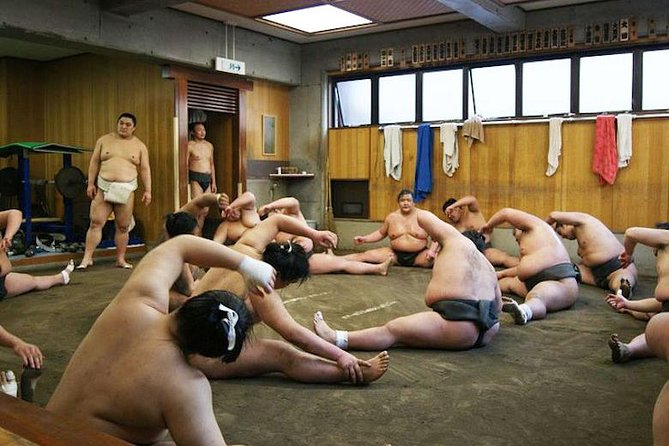
The floor seating deserves serious attention. You may sit on a thin mat over a hard surface, with your legs folded or tucked for a long stretch. Some people find this manageable. Others feel significant discomfort after an hour and leave early.
A limited number of chairs or stools may be available, but you should request one ahead of time if you have back, hip, or knee trouble. A raised seat can help, though it may give you a poorer view. There may not be enough chairs for everyone in a large group.
Your position also affects what you see. Arrive early at the meeting point and follow instructions promptly so you have a better chance of sitting near the front. In a crowded viewing area, people seated behind others may struggle to see the ring. One especially unlucky position can place the stable coach’s cushion directly in your line of sight.
The supplied tour details describe a maximum of 10 travelers, but individual visits have sometimes felt more crowded. That may depend on the stable, the booking arrangement, or other groups present. Either way, do not expect a spacious theater with assigned, elevated seats.
Dress for comfort and modesty, and think about how you will sit before booking. The experience is a poor match for anyone who cannot remain on the floor for an extended period.
Photos come after the work
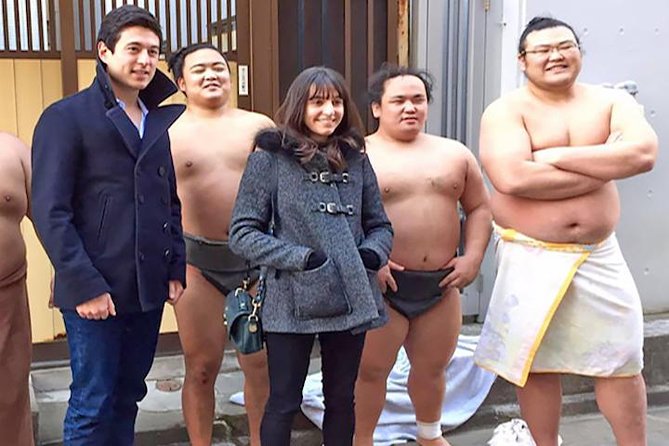
At the end, there is time for photos with sumo wrestlers. This is a pleasant personal touch, especially after spending the session in silence and keeping your camera pointed away from distracting moments.
Do not build your whole booking decision around the photo. The practice may run long, and some participants have missed the photo session when the schedule slipped. The ending time varies every day, so you should avoid arranging a tight appointment immediately afterward.
The photo is best understood as a bonus. The main value is watching professional wrestlers train at close range. If you get the photograph too, it gives you a lasting reminder of an experience that is otherwise deliberately restrained.
How much value do you get for $95.77?
At $95.77 per person, this is not a cheap way to fill an hour in Tokyo. You are paying for access to a restricted setting, a prearranged meeting, the entrance fee, and the chance to watch a working practice that most visitors cannot enter on their own.
The value depends on your interest. If you already enjoy sumo, Japanese customs, or sports training, the close view can justify the price. You get to see the preparation, not just the polished competition held at Ryogoku Kokugikan.
If you want a guided lesson with constant commentary, the value is less certain. Some groups receive a useful introduction, while others have very little explanation. The experience is strongest for people who are happy to observe carefully and do their own reading beforehand.
Group discounts may be available, which could help families or friends booking together. The minimum age is 13, so this is not designed for younger children. Teenagers who can sit quietly may enjoy it, particularly if they have watched sumo before or are interested in athletics.
Timing, calendars, and the risk of a shorter visit
The listed operating periods are Monday through Saturday, from 8:00 to 10:00 in the available February, March, April, and May date ranges. The activity itself is usually shorter than that window, with practice commonly lasting 60 to 90 minutes.
Treat the two-hour window as a planning guide, not a promise of a two-hour show. Practice may finish early, run late, or be shortened by the stable’s schedule. During Tokyo tournaments in January, May, and September, the practice period can be only 30 to 40 minutes, though the price remains unchanged.
Tournaments are held in other months as well, and the stable may be closed during those periods. Exact dates change each year. Before booking flights, meals, or another tour around this experience, leave room for schedule changes.
Confirmation is issued within 48 hours of booking if space is available, but that does not mean every stable detail is final immediately. The exact conditions may be confirmed close to the date.
Who should book this sumo experience?
I would recommend it to you if you enjoy watching a real process unfold. You need patience for the slow warmup, respect for silence, and curiosity about the traditions behind the sport.
It suits adults and teenagers aged 13 or older who can sit on the floor and accept a less polished tourist experience. It also works well for visitors who are not in Tokyo during a full tournament and want to see what happens before the public competition.
I would hesitate to recommend it if you need firm timings, comfortable seating, or detailed commentary throughout. It is also a weak choice for anyone expecting a performance designed around the audience. You are watching athletes train, and some of the work will look repetitive.
Prepare by watching a sumo documentary, reading about wrestler rankings, and learning basic ring etiquette. That small effort can turn a quiet morning into a much clearer experience.
Should you book it?
Book this if you want close access to sumo’s daily discipline rather than a staged cultural show. The power of the collisions, the strict silence, and the sight of younger wrestlers learning from senior athletes can make this one of Tokyo’s most memorable mornings.
Skip it if floor seating will cause pain or if you need a guaranteed end time. Before paying, check the expected tournament calendar, ask about a stool if needed, and leave your schedule open afterward.
The cancellation rules are strict near the date. Cancel at least six full days before the start time for a full refund, two to six days ahead for a 50 percent refund, and less than two full days ahead for no refund. Date changes are not accepted within three days, including for illness or flight delays.
FAQ
How long does the sumo practice last?
The practice usually lasts between 60 and 90 minutes. During Tokyo tournament season in January, May, and September, it may last only 30 to 40 minutes.
Is the experience one or two hours long?
The visit takes place within an 8:00 AM to 10:00 AM window, but the actual practice is generally 60 to 90 minutes. The ending time changes from day to day.
Where does the activity start?
You make your own way to a meeting point in Tokyo. The exact stable location and conditions may be confirmed about one week before the visit.
Does the activity include entrance fees?
Yes. The entrance fee for the sumo practice is included.
Are photos with sumo wrestlers included?
Yes. Photos with the wrestlers are included at the end, although a late-running practice can sometimes affect the photo session.
Is food or drink included?
No. The activity does not include food or beverages.
Do I need to sit on the floor?
Yes. Participants should be able to sit on the floor for an extended period. A chair or stool may be available on request, but supplies are limited.
What is the minimum age?
The minimum age is 13 years.
How many people can join?
The activity has a maximum group size of 10 travelers.
Can I cancel for a full refund?
Yes, if you cancel at least six full days before the experience start time. Canceling two to six full days ahead allows a 50 percent refund, while canceling less than two full days ahead is nonrefundable.
Newly reviewed around Tokyo
- Tokyo Asakusa:Calligraphy & Make T-shirt Activity★ 5.0 · 62 reviews
- Intercity Shuttle, Tokyo to Haneda /Narita /Yokohama /Makuhari★ 5.0 · 5 reviews
- 1 Hour Travel around Tokyo with a Professional Photographer★ 5.0 · 3 reviews
- Travel Tokyo with Your Own Personal Photographer★ 5.0 · 43 reviews
- Train in Samurai Swordsmanship and Defeat the Demon in Tokyo★ 5.0 · 5 reviews
- Shuttle Van 6hr Tokyo Tour to-and-from Tokyo, Yokohama and Narita★ 5.0 · 9 reviews
- Kickboxing & Body Training with EX-Pro Fighter★ 5.0 · 4 reviews
- Traditional Japanese Knife Sharpening Class★ 5.0 · 18 reviews
Tokyo Sumo Experiences, compared.
Tokyo Shinjuku Sumo Show & Experience with Photo
Read our review →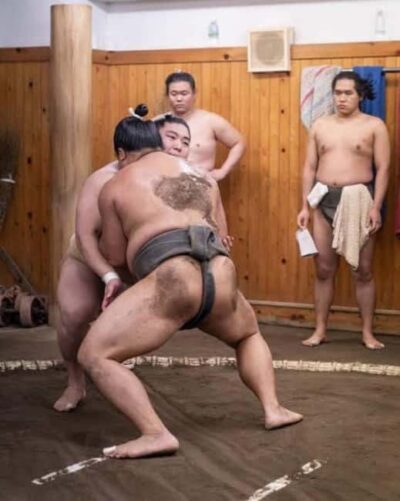

Luxury Sumo Show Experience & Japanese cuisine & Drink
Read our review →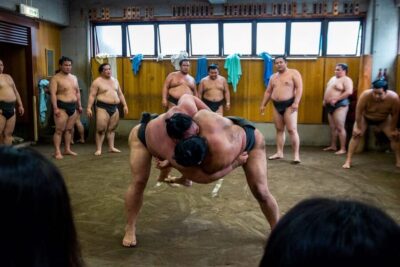
Tokyo Sumo Experience: Chanko & Mochi with a Former Pro
Read our review →
Ultimate Sumo Tournament: Tokyo, Osaka, Nagoya, Fukuoka
Read our review →Browse the lists this tour appears in