
Reviewed · TOKYO SUMO EXPERIENCES
Tokyo: Visit Sumo Morning Practice with English Guide
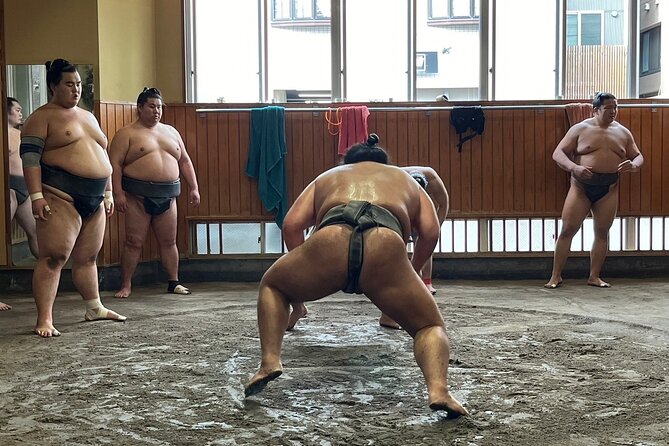
The best part of this morning visit is the close view of serious training at Takasago Stable, a Tokyo stable linked with many champions. You sit near the practice area and watch stretching, warmups, and hard practice bouts, with the sound of bodies hitting the floor much closer than at a formal tournament. I like the rare access and the chance to ask an English-speaking guide what you are seeing.
I also like the guide’s practical help, from finding the stable to explaining sumo terms and traditions. Some guides, including Naomi, have been praised for answering a long list of questions with patience. The main drawback is simple: this is observation, not a show. You may sit on the floor or a small seat for much of the visit, and the room can feel crowded if another group or a Japanese fan club arrives.
Key points to know before booking
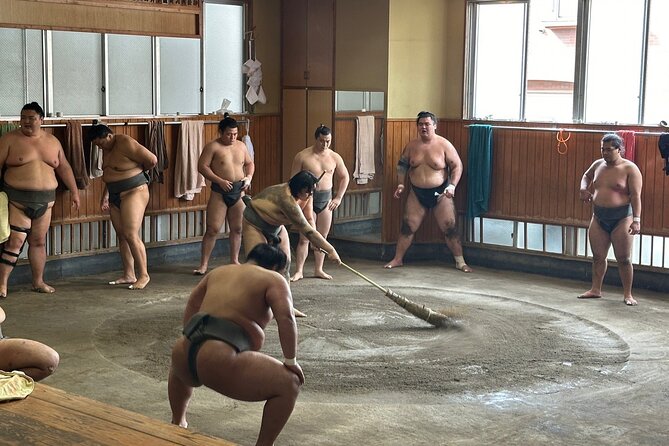
- Real morning practice: Watch wrestlers train rather than attend a staged demonstration or formal tournament.
- Takasago Stable: Visit a Tokyo stable known for producing many champions.
- English guidance: Your guide helps explain the rituals, exercises, terminology, and action.
- Small-room setting: Expect close range viewing, traditional seating, and limited personal space.
- Commemorative photo: The visit includes a photo opportunity with the wrestlers.
- Early Ryogoku start: Meet at about 8:00 a.m., with some instructions requiring you to be ready 15 minutes earlier.
Why a sumo stable beats a formal match for some visitors
A tournament gives you the full spectacle: banners, judges, ceremonial entrances, ranked bouts, and a large crowd. This experience gives you something different. You watch athletes doing the repetitive work that supports those public matches.
The practice begins with preparation. You may see stretching and exercises designed to ready the wrestlers before the harder bouts begin. The session then becomes more forceful, with younger wrestlers challenging one another before more experienced competitors take their turns. The action is not polished for an audience. That is the point.
I like this setting because it shows the discipline behind sumo. You can see the concentration, physical effort, and routines that are easy to miss when you only watch a short bout in a tournament. The stable is also a working place, not a theater, so the experience depends on what the wrestlers are scheduled to do that morning.
That unpredictability is worth understanding before you pay. The guide cannot turn practice into a performance. The wrestlers may spend long stretches repeating exercises, and the guide may ask you to remain quiet and still. If you want constant action, a tournament is a better fit. If you want to see the daily work behind the sport, this visit has more character.
More Tokyo sumo experiences:
- Tokyo: Sumo Show and Dining Experience
★ 4.8 · 2,742 reviews - the SUMO show
★ 5.0 · 1,960 reviews - Tokyo Shinjuku Sumo Show & Experience with Photo
★ 5.0 · 1,750 reviews
Walking from Ryogoku Station to Takasago Stable
The meeting point is near Ryogoku Station at 1-chome 4-29 Yokoami in Sumida City. The group then walks to Takasago Stable, at 2-chome 30-1 Ishiwara. The walk is short enough to be part of the morning plan, but you should allow extra time to find the correct station exit.
This is the detail I would take most seriously. The meeting instructions refer to the A3 exit, and the group may leave at exactly 7:45 a.m. for an 8:00 start. Ryogoku has more than one exit and it is possible to come out on the wrong side of the station. Give yourself an extra 10 minutes to locate A3 and reach the meeting spot.
The guide should be easy to identify, with a large sign. The operator has also said that two staff members may be waiting and that a confirmation message the day before can include a guide’s WhatsApp number. Still, do not treat that as a reason to arrive late. Missing the short walk can create a real problem, especially if you do not speak Japanese.
A taxi directly to the stable may be easier if you are already staying nearby, but the supplied meeting arrangement is designed to lead you there from the station. At the end, you are dismissed at the stable. The guide can show you how to reach your next stop, which is useful if you plan to continue around Asakusa.
What the 90-minute practice actually gives you
The stated duration is about one hour and 30 minutes to two hours. A typical visit includes the walk from the meeting point, seating inside the stable, an extended practice session, explanations from the guide, and the photo opportunity afterward.
Do not expect a quick photo stop. The value comes from watching the full rhythm of practice. Early exercises can last around 30 minutes or a little longer before the stronger bouts begin. That slower beginning may test your patience, but it gives you a better sense of how the wrestlers prepare their bodies.
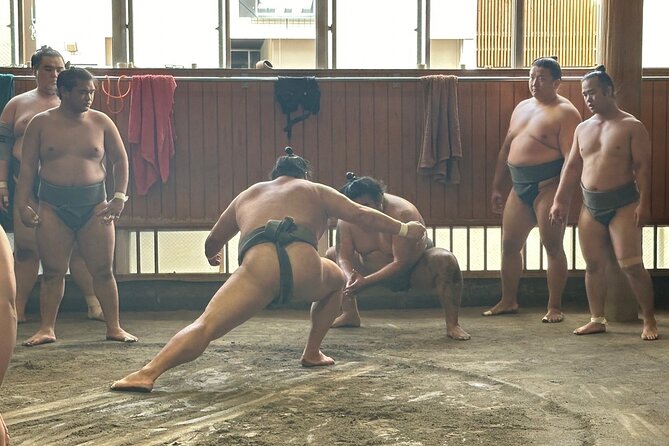
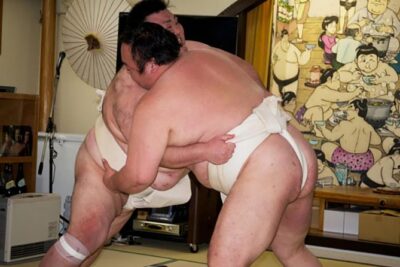
When the bouts start, the atmosphere changes. The wrestlers push, collide, and work for position at very close range. You may notice the physical sound as much as the movement. One useful point from the experience is that you can be close enough to feel how powerful the training is, while still watching from the visitor area.
Your guide helps turn unfamiliar movements into something you can follow. Guides have handed out simple fact sheets covering sumo terms, training details, and background. That matters because the first few minutes can look like a series of rituals and exercises if you do not know what each part means.
The guide can also answer questions before and after the practice. This is where the tour earns its place for a first-time visitor. You do not need a background in sumo to appreciate the athletes, but a little explanation makes the session easier to read.
Sitting close to the action
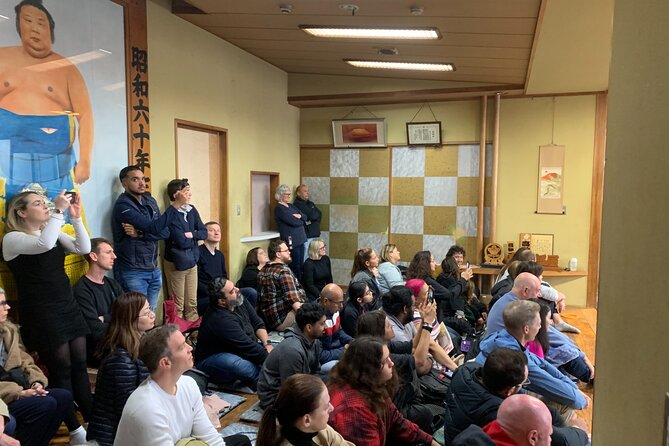
The stable uses traditional Japanese seating. You may sit on the floor or use a small seat, and the practice area is not arranged like a modern auditorium. For some people, this is an important part of the setting. For others, it is the main comfort issue.
Plan for a relatively still visit. You are not walking around or changing viewpoints as the practice continues. If sitting on the floor is difficult, consider your own comfort before booking. The information provided says most people can participate, but it does not promise chair seating or special arrangements.
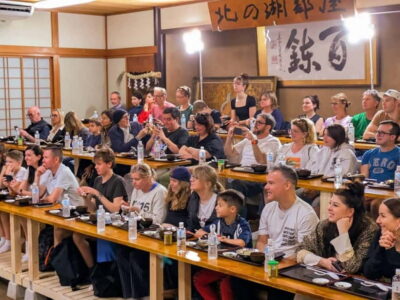
Space can also tighten when another group arrives or when local fan clubs attend unexpectedly. The operator limits this tour to a maximum of 20 people, which helps keep the group manageable, but the stable itself is small. A second group can make the visitor area feel squeezed.
This is one reason I would book for the access rather than the comfort. You are trading space and flexibility for a close look at a working sumo stable. The guide’s job is to help the group sit appropriately and keep the experience orderly, but the room cannot be enlarged for the occasion.
More early morning tours in Tokyo:
- Tokyo: Sumo Morning Practice Viewing Tour
★ 4.8 · 570 reviews - Tokyo: Sumo Morning Training Visit
★ 4.4 · 370 reviews - Tokyo: Sumo Morning Practice Tour at Sumida City
★ 4.8 · 308 reviews - Tokyo Sumo Morning Practice Tour at Stable
★ 5.0 · 298 reviews
The guide is more important than the brochure
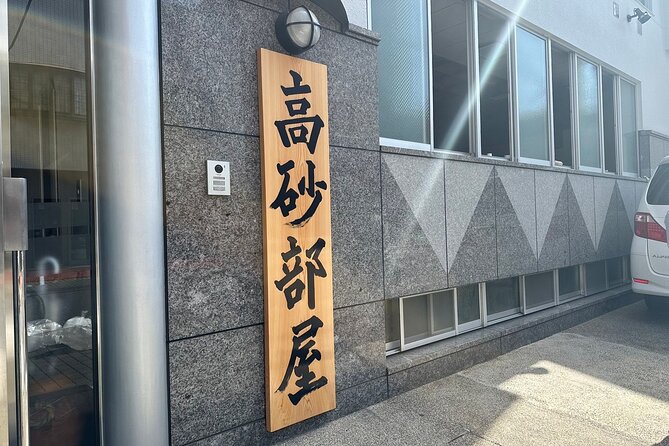
An English guide makes a major difference here. The guide leads you from the station, helps you understand what is happening, and handles the questions that arise during a long practice session. Without that help, you might see impressive athletes but miss the meaning of the routines.
The guide can explain sumo vocabulary and training exercises in plain terms. This is especially useful during the early stretching and preparation, when the action may seem repetitive. It also gives you a better way to understand the difference between a warmup, a practice bout, and the more intense work later in the session.
Naomi is one guide associated with particularly strong service on this experience. She has been described as warm, polite, and willing to answer more than 20 questions. Other guides have also been noted for speaking excellent English, and the operator has indicated that some staff can speak French and Japanese as well.
You should still remember that guides cannot control every part of a stable morning. Their explanations are an important part of the value, but the athletes and stable staff set the pace. A good guide makes the quiet periods useful rather than filling every moment with chatter.
The photo at the end
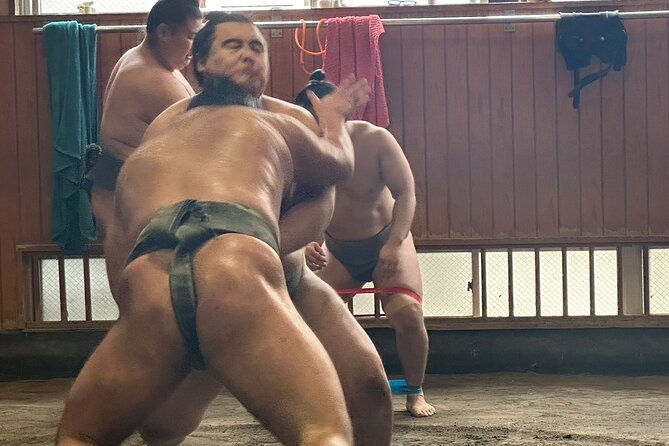
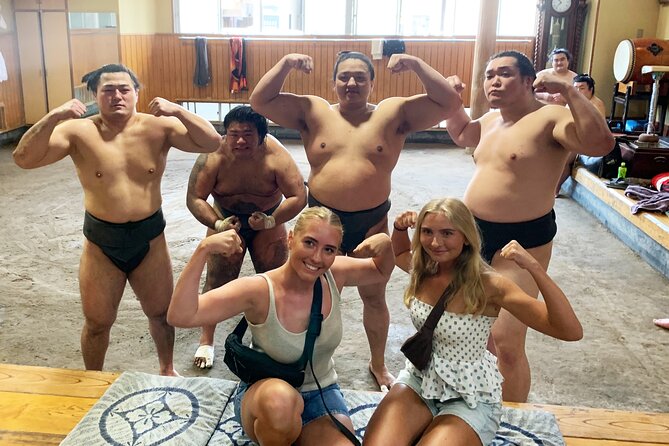
After the training, you can take a commemorative photo with the sumo wrestlers. This gives the morning a clear finish and provides a keepsake that a tournament ticket does not necessarily offer.
Keep your expectations sensible. The photo is an added moment after the practice, not a private meeting with each wrestler. The main experience remains the training itself. Still, the picture makes the visit feel more complete, especially for families and teenagers who may want a physical reminder of the morning.
I like the contrast between the rough intensity of the bouts and the more organized photo at the end. It also gives you a chance to thank the wrestlers and leave without interrupting the working session.
Price and value at $98.53
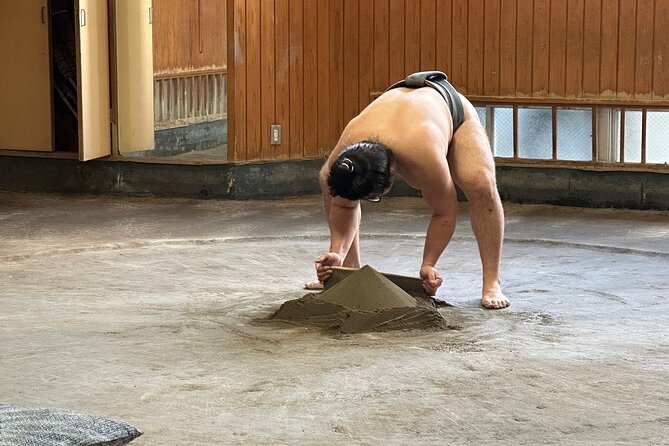
At $98.53 per person, this is not a budget sightseeing stop. The value depends on what you would otherwise do in Tokyo. You are paying for access to a stable that is normally closed to spectators, a guide who bridges the language gap, a small group capped at 20 people, and a commemorative photo.
That price makes more sense if sumo is high on your list or if you are unlikely to attend a tournament. It also works well for a first introduction because you do not need to arrive with technical knowledge. The guide supplies enough context to help you understand the exercises and bouts.
The value is weaker if you expect a polished cultural performance. This is not a staged show, and one disappointed visitor felt that the visit was simply sitting and watching for 90 minutes. That reaction is understandable if the booking is made without realizing what morning practice means.
I would compare this with the cost and schedule of a formal sumo tournament, but I would not treat them as substitutes. A tournament gives you more pageantry and variety. Takasago Stable gives you proximity, quiet observation, and a look at the athletes’ daily work.
Who should book this morning visit
I would recommend it to first-time sumo viewers, sports fans, families with older children and teenagers, and anyone who values access over comfort. It is especially good for people who like seeing how an activity works before watching the finished performance.
You will get the most from it if you can sit quietly, accept a traditional setting, and watch a long practice without needing constant narration. An interest in Japanese culture helps, but you do not need to know the rankings or rules in advance.
I would be cautious if you have trouble sitting on the floor, dislike early starts, or want a guaranteed stream of exciting bouts. The practice may begin slowly, the seating can be tight, and an unexpected local group can affect the available space.
The timing also fits a larger day in eastern Tokyo. After the stable visit, you can continue toward Asakusa, and the guide can explain how to reach your next destination. That makes this a useful morning plan rather than an activity that consumes an entire day.
Booking details worth getting right
The experience starts in the morning, with the listed start time at 8:00 a.m. Because the group may leave the A3 exit at 7:45, arrive early and confirm the exact meeting instructions in your booking message. The meeting and stable addresses are different, so do not navigate directly to the stable unless the operator tells you to do so.
A mobile ticket is provided, and confirmation is received when you book. The activity is near public transportation and is limited to 20 participants. Most people can take part, but the traditional seating deserves attention if you need a chair or have mobility concerns.
Free cancellation is available when you cancel at least 24 hours before the local start time. Cancellations or changes made later are not accepted for a refund. That rule matters because the tour has a fixed morning schedule and limited places.
Should you book the Takasago Stable experience?
Book it if you want real training at close range, an English-speaking guide, and a photo with the wrestlers. The strongest feature is its access to a working stable, not entertainment designed for tourists.
Skip it if you want a formal match, comfortable theater seating, or a tightly scripted two-hour program. For the right visitor, this is one of the more personal ways to meet sumo in Tokyo. For the wrong visitor, the same quiet, traditional format can feel like a long wait.
My practical advice is to arrive early, wear something comfortable for sitting, read the meeting instructions carefully, and treat the practice as an observation session. Do that, and the $98.53 price can be fair for a rare morning behind the scenes.
FAQ
Where does the sumo morning practice take place?
The practice takes place at Takasago Stable in Sumida City, Tokyo. The tour begins near Ryogoku Station and continues to the stable.
What time does the experience start?
The listed start time is 8:00 a.m. The group may leave the A3 station exit at 7:45 a.m., so arrive early.
How long does the experience last?
The stated duration is approximately one hour and 30 minutes to two hours.
Is an English guide included?
Yes. An English-speaking guide leads the group, explains the practice, and answers questions about sumo.
Can I take photos with the wrestlers?
Yes. The experience includes a commemorative photo opportunity with the sumo wrestlers after the practice.
Is this a formal sumo match?
No. You watch a real training session at a sumo stable. It is not a staged show or a tournament match.
How many people can join the tour?
The maximum group size is 20 people.
Do I need to know about sumo before attending?
No. The guide provides explanations, and fact sheets covering sumo terms and training details may be provided.
Is the tour near public transportation?
Yes. The meeting point is near Ryogoku Station, and the guide walks the group to Takasago Stable.
What is the cancellation policy?
You can cancel at least 24 hours before the local start time for a full refund. Cancellations or changes made less than 24 hours before the start are not accepted for a refund.
Newly reviewed around Tokyo
- Tokyo Asakusa:Calligraphy & Make T-shirt Activity★ 5.0 · 62 reviews
- Intercity Shuttle, Tokyo to Haneda /Narita /Yokohama /Makuhari★ 5.0 · 5 reviews
- 1 Hour Travel around Tokyo with a Professional Photographer★ 5.0 · 3 reviews
- Travel Tokyo with Your Own Personal Photographer★ 5.0 · 43 reviews
- Train in Samurai Swordsmanship and Defeat the Demon in Tokyo★ 5.0 · 5 reviews
- Shuttle Van 6hr Tokyo Tour to-and-from Tokyo, Yokohama and Narita★ 5.0 · 9 reviews
- Kickboxing & Body Training with EX-Pro Fighter★ 5.0 · 4 reviews
- Traditional Japanese Knife Sharpening Class★ 5.0 · 18 reviews
Tokyo Sumo Experiences, compared.
Tokyo Shinjuku Sumo Show & Experience with Photo
Read our review →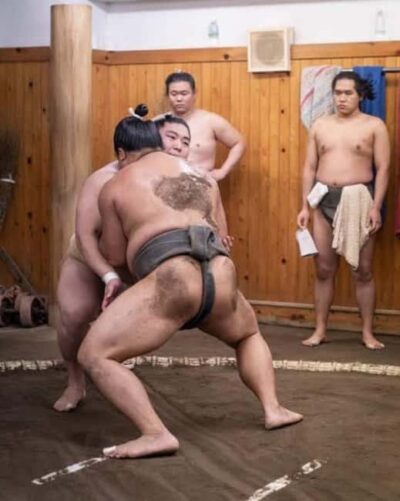

Luxury Sumo Show Experience & Japanese cuisine & Drink
Read our review →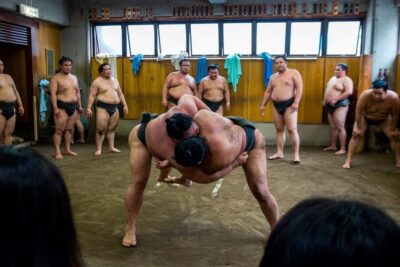
Tokyo Sumo Experience: Chanko & Mochi with a Former Pro
Read our review →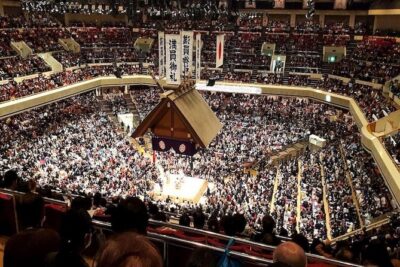
Ultimate Sumo Tournament: Tokyo, Osaka, Nagoya, Fukuoka
Read our review →Browse the lists this tour appears in