
Reviewed · WORKSHOPS
Tokyo: Traditional foot-kneaded Udon noodles class
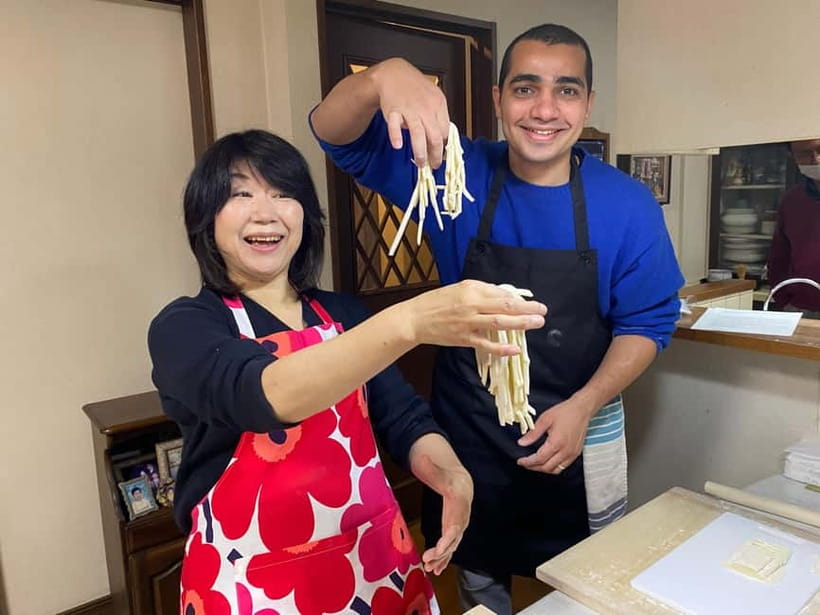
Making Udon with your feet sounds odd until you learn why it works. At Izumi’s home in Musashino, you mix the dough, cover it, and step on it to build a smooth, springy texture. You then roll and cut your own noodles before eating them with hot pork soup.
I like two things here: the small four-person group, which leaves room for hands-on work and questions, and the setting in an ordinary Japanese house rather than a large cooking studio. I also like the full meal arc, from dashi stock to noodles, followed by matcha and wagashi.
The main consideration is location. You need to reach Higashimurayama Station on your own, and the public transportation fare is not included. Izumi provides the ride from the station to the house, so the final transfer is simple, but this is a west Tokyo outing rather than a central Tokyo stop.
Key points at a glance
- Foot-kneaded Musashino Udon: Make your own dough, step on it, roll it, and cut it with a special Udon knife.
- A home kitchen in west Tokyo: Cook in Izumi’s ordinary Japanese house in the green suburb of Musashino.
- Dashi made from scratch: Learn the stock that gives Japanese soups their depth and character.
- Cold noodles, hot pork soup: Eat fresh Udon with a warm dipping broth for a useful lesson in texture and contrast.
- A relaxed tea finish: Prepare and enjoy matcha with wagashi, traditional Japanese sweets.
- Small and flexible: The class lasts 150 minutes, accepts up to four participants, and can offer vegetarian or vegan instruction by arrangement.
Why foot-kneading makes this Udon class special
Musashino Udon is tied to the area around west Tokyo. Wheat farming was once common here, and Udon has been made locally for about four centuries. That gives this class more meaning than a simple noodle-making demonstration. You are learning a local food tradition in the part of Tokyo where it developed.
The foot-kneading is the part you will remember. Udon dough needs firm, repeated pressure to become elastic. Instead of relying only on your hands, you step on the dough as part of the process. It is practical, slightly silly, and very accessible. You do not need prior cooking experience.
The activity is also easy to understand as a group. Each participant makes their own Udon, so you are not standing at the side while one instructor does all the work. The process gives you several clear jobs: mixing, kneading, rolling, cutting, and eating.
That hands-on format matters if you are comparing this with a polished cooking lesson in central Tokyo. Here, the point is not simply to watch a chef produce perfect noodles. You work through the awkward stages yourself, then see how basic ingredients turn into a proper meal.
More hands-on classes and workshops in Tokyo:
- Sushi Making Tokyo Roll and Authentic Japanese Sushi Class
★ 5.0 · 3,971 reviews - Tokyo: Roll and Authentic Sushi Making Class in Asakusa
★ 4.9 · 1,957 reviews - Tokyo Shinjuku Chopsticks Making Class
★ 5.0 · 1,763 reviews
Starting at Izumi’s home in Musashino
The class takes place in Izumi’s own home, in Musashino, a green suburb west of central Tokyo. That setting gives the experience a personal scale. You are cooking in an ordinary Japanese house, not touring a commercial kitchen built for large groups.
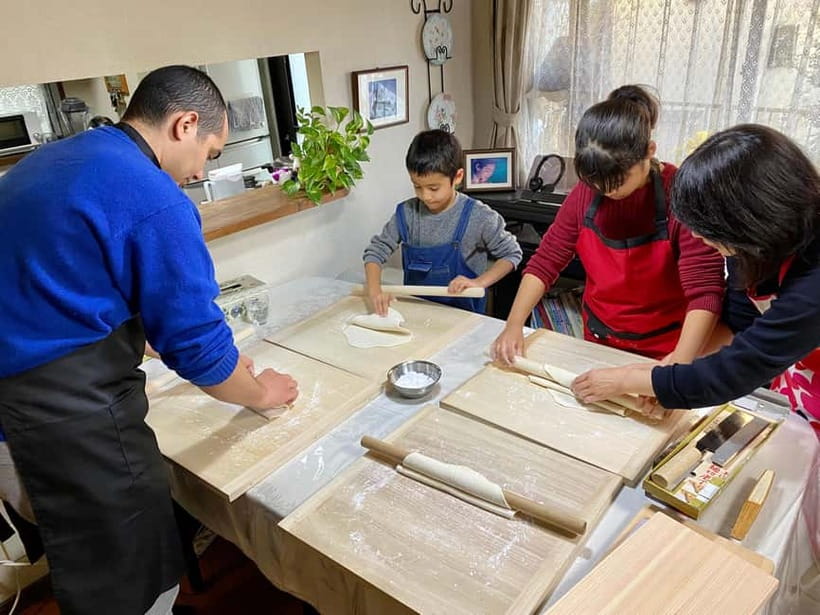
The maximum group size is four people. I consider that a real advantage for a task such as rolling and cutting dough. A crowded class can turn a hands-on activity into a queue, while this format gives you more space to use the board, rolling pin, bowl, and knife.
Izumi teaches in English and Japanese. Her style, based on the class details and participant feedback, includes both instruction and storytelling. She shares information about Udon and connects the food to family and community stories. That makes the lesson feel less like a recipe with measurements and more like an introduction to a local habit.
Music may also be part of the mood. One description of the class mentions a playlist ranging from Queen to Fujii Kaze, which suggests a casual home setting rather than a formal ceremony from the moment you arrive. The tone should suit people who want a social cooking session with some laughs.
You arrange your own transport to Higashimurayama Station. From there, Izumi gives you a ride to the venue. The station pickup is included, but the public transportation cost to the station is not, so allow for that extra fare when you calculate the full cost.
Mixing and stepping the Udon dough
The first practical stage is making the dough. You work with the ingredients and kitchenware provided, using the large wooden kneading board, a large bowl, and a long rolling pin. Each person makes their own portion, so you can follow the change from a rough mixture to a workable dough.
Then comes the foot-kneading. The dough is handled with care and stepped on as part of the traditional method. This is the most unusual feature of the class, but it is not included just for a photo. The pressure helps develop the texture that makes Udon pleasantly chewy.
You may find this section more physical than expected. It is not a strenuous activity, but you are standing and working with dough rather than sitting through a demonstration. Wear something comfortable under the provided apron, and tell Izumi in advance about any concern that affects what you can eat or do.
The process also gives children and first-time cooks an easy way to take part, though the activity is still limited to four people overall. Since each person gets their own dough, the result does not depend on one confident cook doing all the work.
Rolling and cutting with traditional tools
Once the dough is ready, you roll it into a broad sheet. The long rolling pin and large wooden board are not decorative props. They are the tools that let you spread the dough evenly before cutting it into strands.
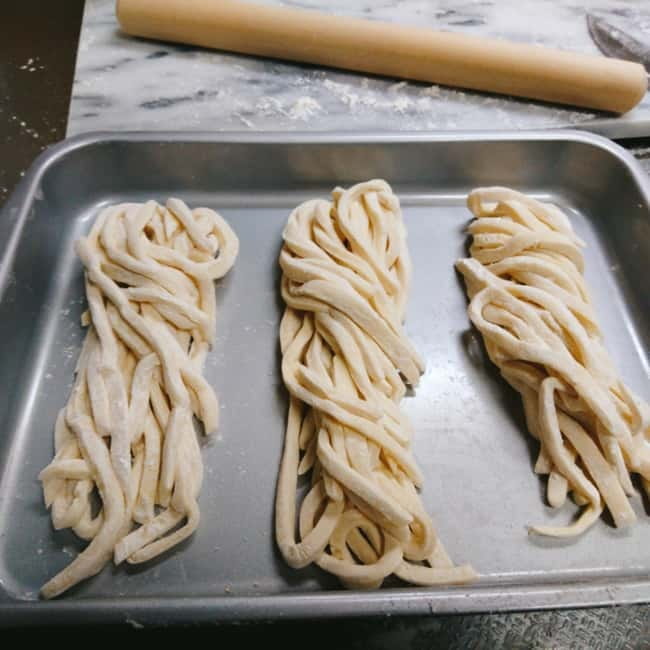
The cutting stage needs attention. Udon noodles should be consistent enough to cook at a similar rate, and a special Udon knife helps create the familiar shape. You will not simply receive a bowl of noodles at the end. You will see the small choices that affect thickness, width, and texture.
This is a useful part of the class for anyone who wants to repeat the recipe at home. You receive recipes, and the lesson shows the order of the work rather than offering only a finished dish. Still, your first batch may not look perfectly uniform. That is part of the value. Handmade noodles have small variations, and you get to taste the result of your own technique.
A completely different kind of day in Tokyo:
- Mt Fuji and Hakone 1-Day Bus Tour Return by Bullet Train
★ 5.0 · 26,383 reviews - 1-Day Tokyo Bus Tour
★ 5.0 · 14,250 reviews - Tokyo: teamLab Planets TOKYO Digital Art Museum Entry Ticket
★ 4.6 · 9,779 reviews - Mt Fuji & Hakone Cruise, Drum Show Bullet Train 1 Day from Tokyo
★ 4.0 · 7,413 reviews
Learning dashi and making the dipping soup
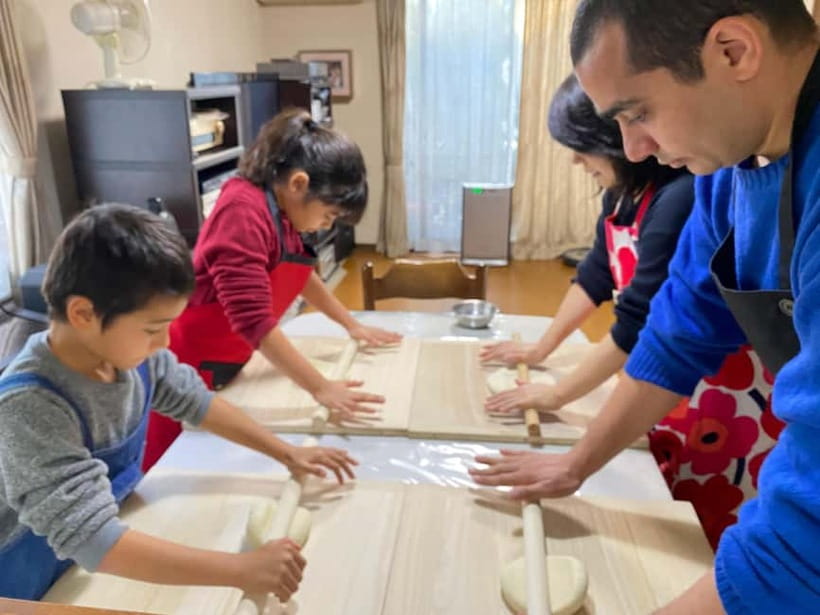
After the dough work, Izumi teaches you how to prepare dashi, a stock used throughout Japanese cooking. This step adds context to the meal because the broth is not an afterthought. Dashi provides the base flavor for the pork soup served with the noodles.
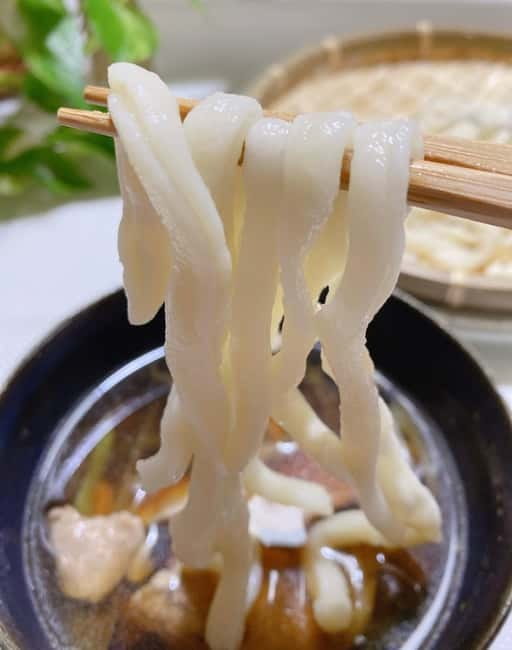
The soup is commonly used as a dipper for Musashino Udon. Instead of placing the cold noodles directly into a large bowl of broth, you dip them into the hot soup as you eat. That gives you two different sensations in one meal: cool, freshly made noodles and warm, savory pork soup.
I like this pairing because it lets you notice the Udon itself. A heavily seasoned sauce can hide the texture of handmade noodles, while a dipping arrangement gives the noodles a clear role. The hot soup also makes the meal feel substantial without turning the Udon into a standard bowl of soup noodles.
The pork soup is part of the regular version of the lesson. If you are vegetarian or vegan, request the alternative in advance. The class offers vegetarian Udon instruction as an option, and the activity information also identifies vegan needs as something that can be accommodated by arrangement. You should still tell Izumi about allergies or ingredients you cannot eat before the class.
Eating the Musashino Udon you made
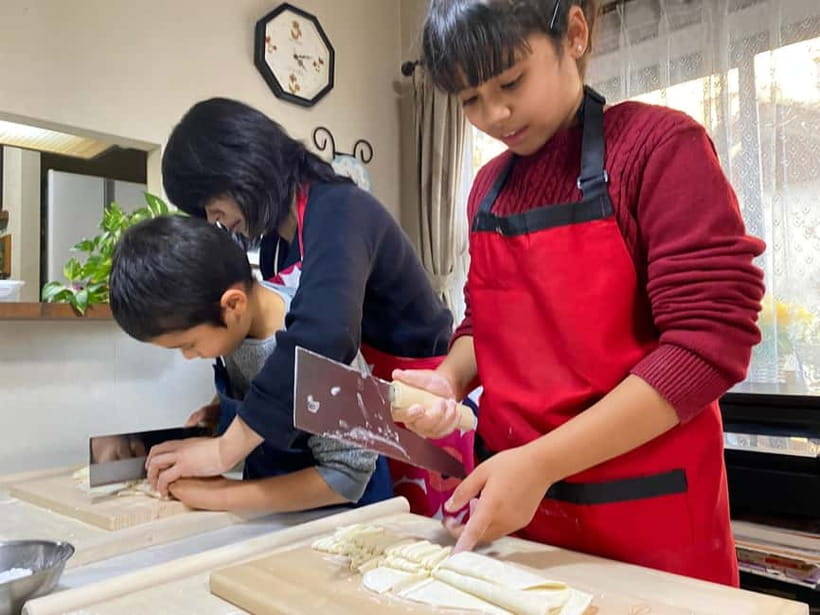
The meal is the payoff for the work. You eat the noodles you prepared with the pork dipping soup, comparing the firm, cold Udon with the hot broth. It is a simple meal, but it carries the whole lesson: local wheat, careful dough work, traditional tools, and dashi-based cooking.
The timing is useful here. At 150 minutes, the class has enough room for the noodles, soup, and tea without feeling like a quick demonstration. You are also unlikely to spend the entire session on one technical stage. The activity moves from preparation to cooking to a finished meal.
The best reason to book is the sense of making something from start to finish. The feedback attached to the class repeatedly praises the flavor of the noodles, the fun of the foot-kneading, and Izumi’s patience. That combination matters. A cooking class can be informative but stiff, or friendly but light on actual instruction. This one aims to provide both.
Do not expect a professional culinary qualification or a broad tour of Japanese cuisine. The focus is narrow: Musashino Udon, dashi, pork dipping soup, matcha, and wagashi. That focus is a strength if you want one food tradition explained properly, but it may feel limited if you want to cook several dishes.
Matcha and wagashi after lunch
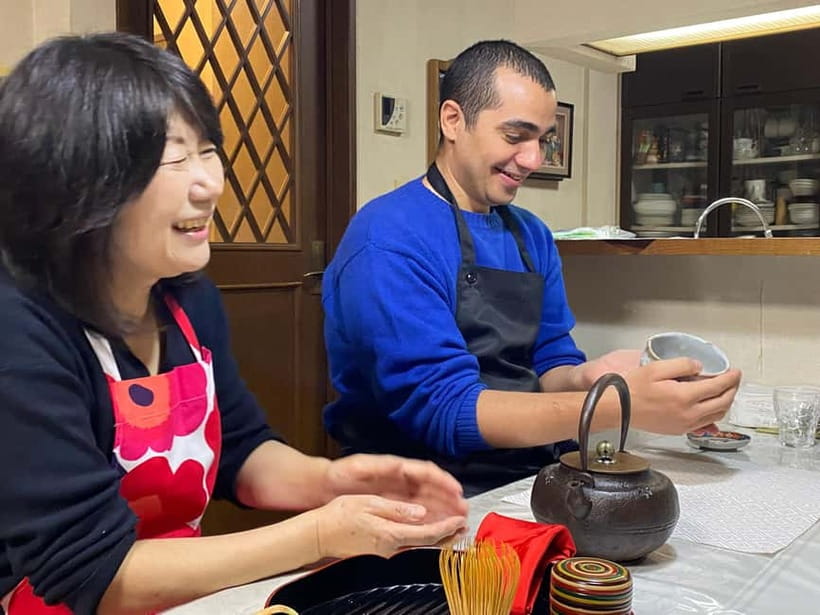
The final section is a casual Japanese tea ceremony. You enjoy matcha with wagashi, the traditional sweets served with tea. This is not presented as a formal ceremony with an elaborate performance. It is a relaxed way to finish the cooking and spend time with a familiar part of Japanese food culture.
The order works well. After the active dough work and the hot soup, the tea gives the class a quieter close. Matcha has a strong, distinct taste, and wagashi supplies sweetness alongside it. You get to consider how Japanese meals often balance texture, temperature, bitterness, and sweetness.
For many people, this may be the most peaceful part of the session. For others, it will be a short cultural add-on after the main attraction, which is clearly the Udon. I would book this class for the noodles first and treat the tea as a welcome extra.
Price, timing, and what the $70 covers
The price is $70 per person for 150 minutes. That is not the cheapest food activity in Tokyo, but the cost includes ingredients, kitchenware, an apron, recipes, the matcha experience, and pickup from Higashimurayama Station to the house.
The value comes from the amount of participation. You are not only watching a teacher cook. You make an individual portion, use the traditional tools, prepare dashi, cook a dipping soup, eat the finished meal, and finish with tea and wagashi. The group limit of four makes the price easier to justify because the lesson can stay personal.
You should add your transport fare to Higashimurayama Station. The class is best treated as a half-day outing to west Tokyo, not as a quick activity between central Tokyo sights. The ride from the station is included, but the journey to the station remains your responsibility.
The booking terms are helpful for uncertain schedules. You can cancel up to 24 hours before the activity for a full refund, and the reserve-now, pay-later option lets you hold a place without paying immediately. Check the available start times before booking because the exact schedule can vary.
Who should book this experience
I would recommend this class to first-time cooks, food-focused visitors, couples, families, and anyone who prefers a small group. You do not need prior Udon-making experience. The work is broken into simple stages, and the unusual foot-kneading keeps the lesson lively.
It is also a good choice if you want to see a quieter side of Tokyo. Musashino offers a change from the dense central districts, and the class takes you into a local home rather than a tourist-facing restaurant.
Vegetarians and vegans should contact Izumi before booking, not wait until arrival. The alternative lesson is available as an option, but ingredient needs must be shared in advance. The same advice applies to allergies or foods you cannot eat.
I would choose another activity if you want a large class, a central Tokyo address, or a wide menu covering sushi, tempura, and several other dishes. This experience is focused and personal, with Udon at the center.
Should you book Izusha’s WASHOKU Kitchen class?
Book it if you want a memorable food activity with real participation. The foot-kneading is unusual without being difficult, the small group keeps you involved, and the meal shows how dashi, texture, and temperature work together. Izumi’s English instruction and personal storytelling add warmth to the lesson.
Skip it if west Tokyo is too far from your plans or if you want a formal tea ceremony rather than a casual one. For everyone else, $70 is fair for a 150-minute home cooking session that includes the meal, recipes, tea, equipment, and station pickup. This is a strong choice for a taste of everyday Japanese food culture with a playful twist.
FAQ
Where does the Udon class take place?
The class takes place in the instructor Izumi’s home in Musashino, a suburb west of Tokyo on Honshu.
How do I reach the cooking venue?
You make your own way to Higashimurayama Station. Izumi provides a ride from the station to the venue. Public transportation to the station is not included.
How long does the experience last?
The experience lasts 150 minutes, or two and a half hours.
How many people can join the class?
The class is limited to four participants.
What languages does the instructor speak?
The instruction is available in English and Japanese.
Do I make my own Udon noodles?
Yes. Each participant makes their own Udon, including the dough, foot-kneading, rolling, and cutting.
What is included in the price?
The price includes all ingredients, kitchenware, an apron, recipes, the matcha tea ceremony experience, and pickup from the meeting point at Higashimurayama Station.
Is vegetarian or vegan Udon available?
Vegetarian Udon instruction is available as an option, and vegan needs can also be arranged. Contact the provider in advance.
What should I do if I have an allergy?
Tell the provider in advance about allergies or ingredients you cannot eat.
Can I cancel the booking?
You can cancel up to 24 hours in advance for a full refund. A reserve-now, pay-later option is also available.
Newly reviewed around Tokyo
- Tokyo Asakusa:Calligraphy & Make T-shirt Activity★ 5.0 · 62 reviews
- Intercity Shuttle, Tokyo to Haneda /Narita /Yokohama /Makuhari★ 5.0 · 5 reviews
- 1 Hour Travel around Tokyo with a Professional Photographer★ 5.0 · 3 reviews
- Travel Tokyo with Your Own Personal Photographer★ 5.0 · 43 reviews
- Train in Samurai Swordsmanship and Defeat the Demon in Tokyo★ 5.0 · 5 reviews
- Shuttle Van 6hr Tokyo Tour to-and-from Tokyo, Yokohama and Narita★ 5.0 · 9 reviews
- Kickboxing & Body Training with EX-Pro Fighter★ 5.0 · 4 reviews
- Traditional Japanese Knife Sharpening Class★ 5.0 · 18 reviews
Workshops, compared.
Sushi Making Tokyo Roll and Authentic Japanese Sushi Class
Read our review →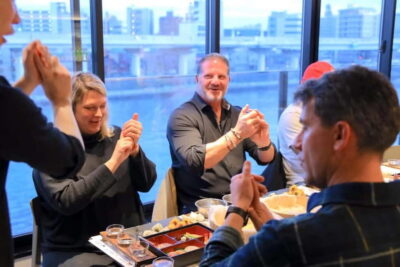
Roll and Authentic Sushi Making Class in Asakusa
Read our review →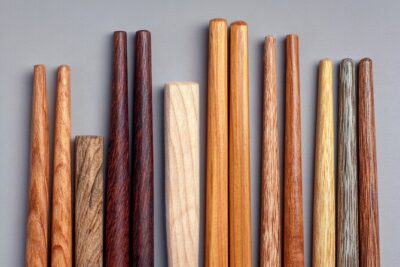
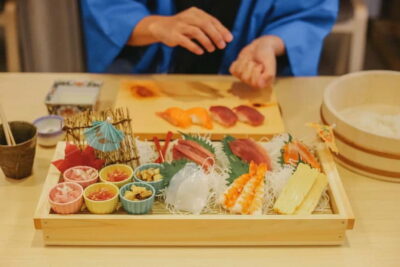
Sushi Making Class in a Happi Coat near a Famous Spot
Read our review →
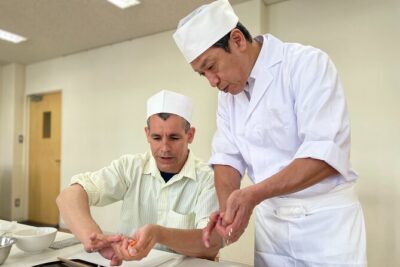
Tokyo Sushi Making Class in Tsukiji with Professional Chef
Read our review →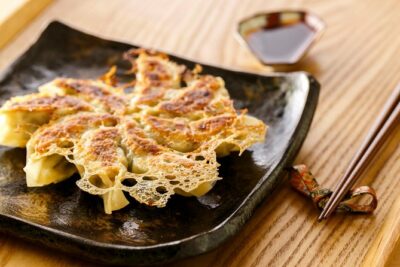
Ramen & Gyoza Cooking Class in Tokyo with Local Supermarket Visit
Read our review →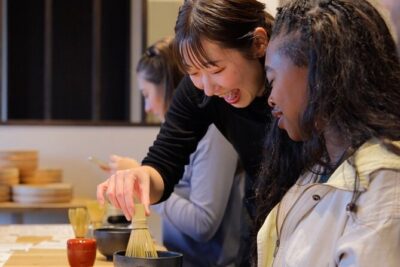
Matcha Making Class in Tokyo with Authentic Japanese Sweets Set
Read our review →Browse the lists this tour appears in