
Reviewed · TOKYO SAMURAI AND NINJA EXPERIENCES
Tokyo: Samurai Experience with Lunch and Guided Tour
Tokyo’s samurai experience combines hands-on sword training with a walk through Kagurazaka, one of the city’s best areas for old lanes and traditional atmosphere. You’ll learn basic movements from professional samurai performers, wear a kimono, and finish with lunch in a former geisha teahouse more than 70 years old.
I like the way the tour connects samurai culture with Shinto and Zen Buddhism, rather than treating the subject as a costume photo stop. I also like the small maximum of nine people, which should make it easier to follow the instructions and ask questions. The main drawback is food flexibility: vegan, gluten-free, and shellfish-free meals cannot be guaranteed.
Key points at a glance
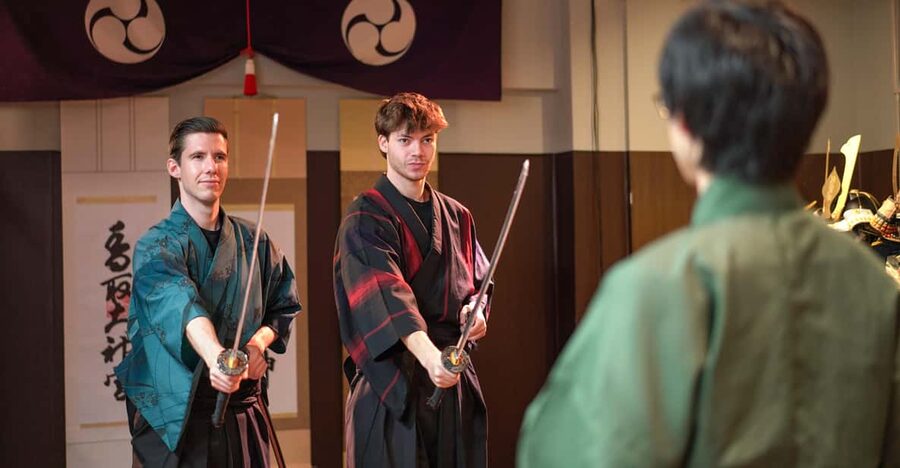
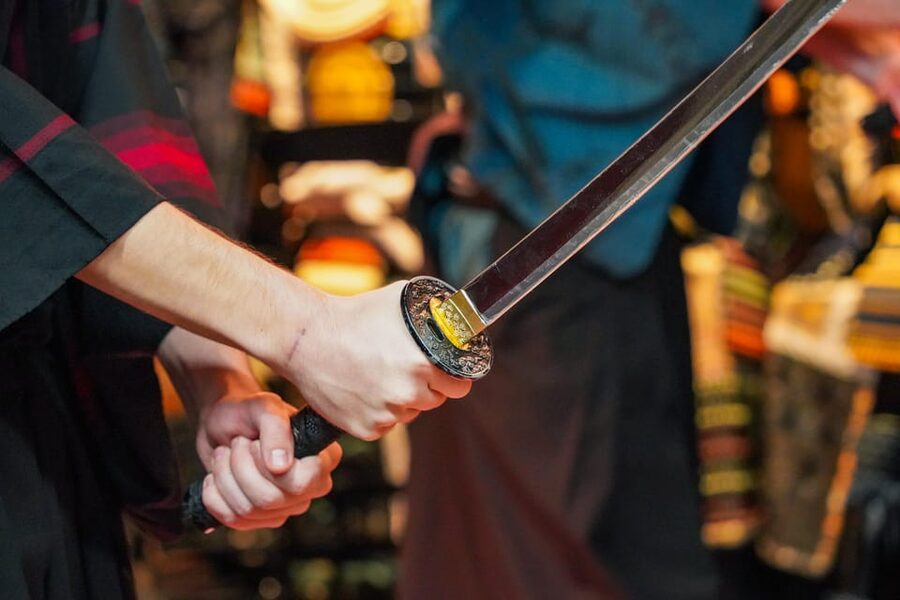
- Practice samurai movements in a kimono: The one-hour session includes rental clothing, instruction, demonstrations, and guided practice.
- Walk old Kagurazaka lanes: Your guide explains how this former samurai area changed into a district known for temples, teahouses, geisha culture, and small local shops.
- Eat in a former teahouse: Lunch takes place in a Japanese house more than 70 years old.
- Keep the group small: A maximum of nine participants gives the four-hour outing a personal feel.
- Try one local snack: You can choose a traditional food or sweet such as chimaki, a steamed bun, or a modern confection.
- Plan carefully for the start: Arriving more than 15 minutes late means you cannot join, reschedule, or receive a refund.
Why Kagurazaka makes a fine samurai setting
Many Tokyo culture activities take place in purpose-built studios. This one begins in Kagurazaka, an old district near Iidabashi where the street pattern still gives you a sense of earlier Tokyo.
Your meeting point is in front of Aoyama Flower Market at the Ecute Edition Iidabashi store, beside the West Exit of JR Iidabashi Station. After leaving the station, the shop is on your right. That is a useful meeting point because it is easy to identify, but give yourself extra time. The tour leaves on schedule, and the late-arrival rule is strict.
The first part of the walk leads toward Zenkokuji, a temple that helps set the tone for the neighborhood. The route takes about 15 minutes, giving your guide time to explain Kagurazaka’s Edo-era connections and the role of samurai households in the area.
The value here is context. Samurai were not simply sword fighters. Their lives were tied to social rank, duty, religion, and codes of conduct. Your guide explains how samurai ideas relate to Shinto shrines, Buddhist practice, and Zen thought. The exact depth will depend on the questions you ask, but the tour is designed to give you a cultural frame before the physical lesson begins.
More Tokyo samurai and ninja experiences:
- Tokyo: Samurai Ninja Museum Guided tour and Experience
★ 4.6 · 1,010 reviews - Tokyo: Samurai Sword & Archery Class from Samurai Descendant
★ 5.0 · 603 reviews - Best Samurai Experience in Tokyo
★ 5.0 · 458 reviews
A short walk through temples, lanes, and old Tokyo
Kagurazaka is best enjoyed on foot. The district’s main slope has shops and restaurants, but the side streets are the real reason to come. You’ll pass narrow lanes and quiet corners that feel far removed from the large crossings and bright signs of central Tokyo.
The route includes guided walks of roughly 10 and 15 minutes, along with a longer Kagurazaka visit that combines sightseeing, the samurai class, lunch, and more walking. This is not a bus tour, so wear comfortable shoes. The supplied information does not list a detailed accessibility plan, and wheelchair users cannot join.
One especially appealing part is the attention to places associated with geisha culture. A small lane connected with geisha life gives you a glimpse of Kagurazaka’s later history, when the district became known for restaurants, entertainers, and traditional hospitality. This helps broaden the picture. You are not only hearing about medieval warriors. You are also seeing how one old neighborhood changed over time.
The guide may be Taka, Naoki, Mark, or another member of the English-speaking team. Taka and Naoki are noted for explaining Tokyo’s cultural and food traditions, while Mark is described as bringing plenty of energy and useful local detail. Since the guide can shape the pace and tone, it is worth asking questions as you walk.
The one-hour samurai lesson
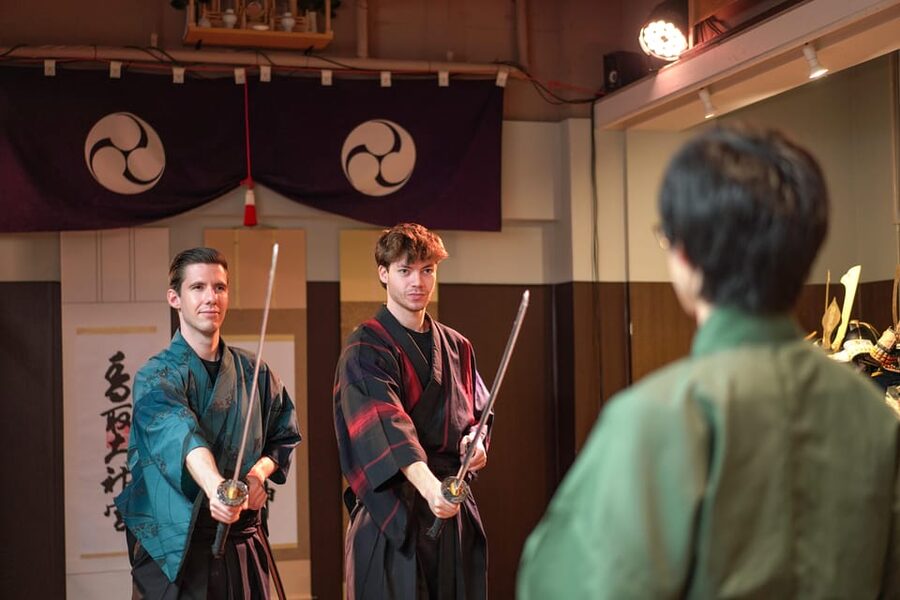
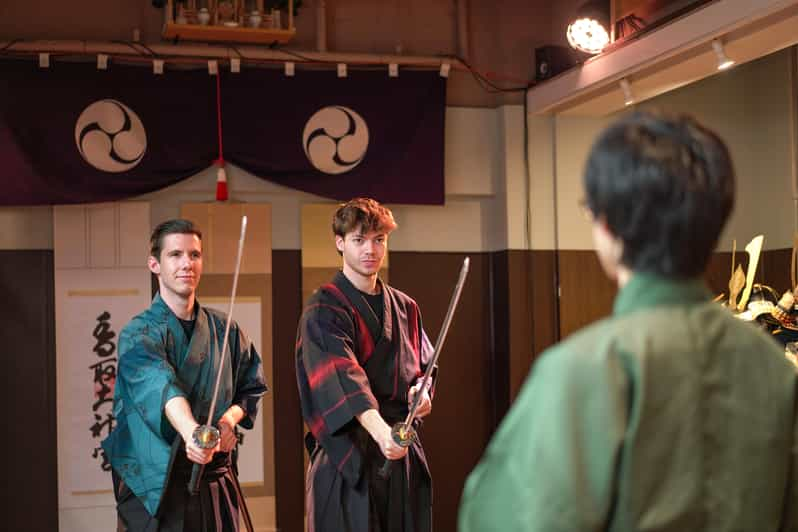
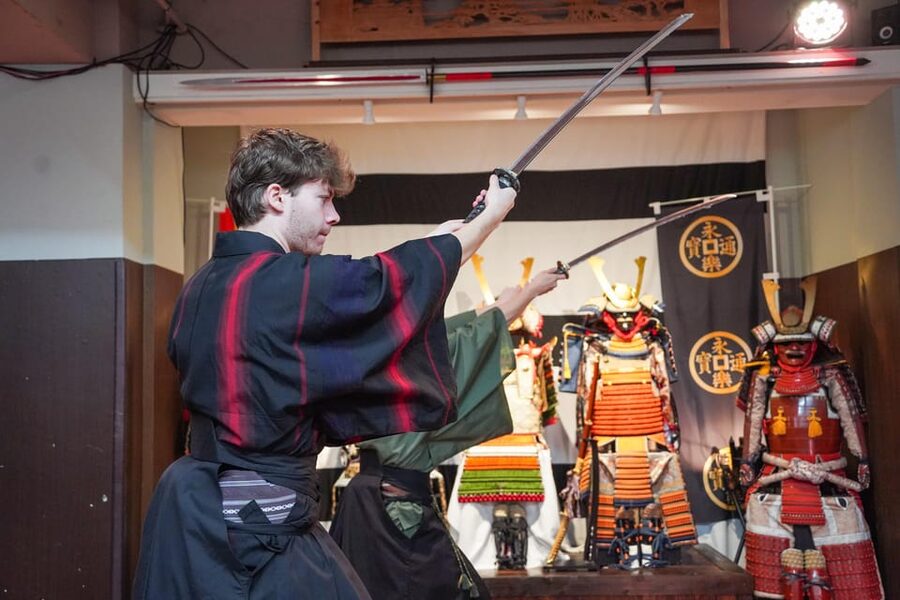
The central activity lasts about an hour and includes samurai training plus kimono rental. Professional samurai actors first demonstrate movements and fighting techniques, then teach you the basic motions in an easy, guided format.
You should not expect a full martial arts course. This is an introductory cultural activity, designed for beginners and families rather than trained fighters. The instruction focuses on movement, presentation, and the feel of samurai performance. You will have a chance to practice what you have seen, which makes the session more engaging than simply watching a staged show.
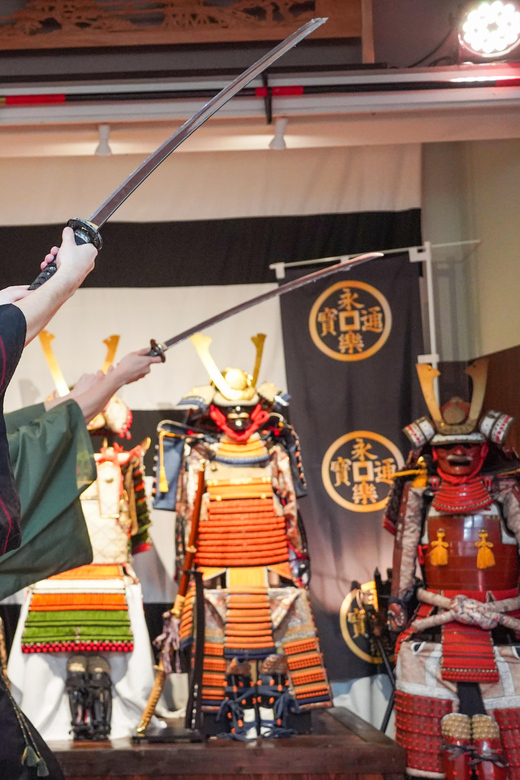
The live performance is an important part of the experience. Professional performers show the control, timing, and drama behind samurai action. Afterward, you try selected movements yourself under supervision. That order matters. You see the polished version first, then learn why even simple actions require attention.
The kimono adds to the experience and makes photographs more memorable. It also changes the way you move. You quickly become aware that posture, footwork, and controlled gestures matter. The activity is suitable for children aged four and older, and the format offers plenty of chances for family photos.
Still, set your expectations sensibly. The tour does not promise a long lesson in historical swordsmanship or the use of a live blade. The provided description refers to basic katana movements and authentic fighting techniques, but the emphasis is on safe, beginner-friendly practice and performance.
Lunch in a 70-year-old former teahouse
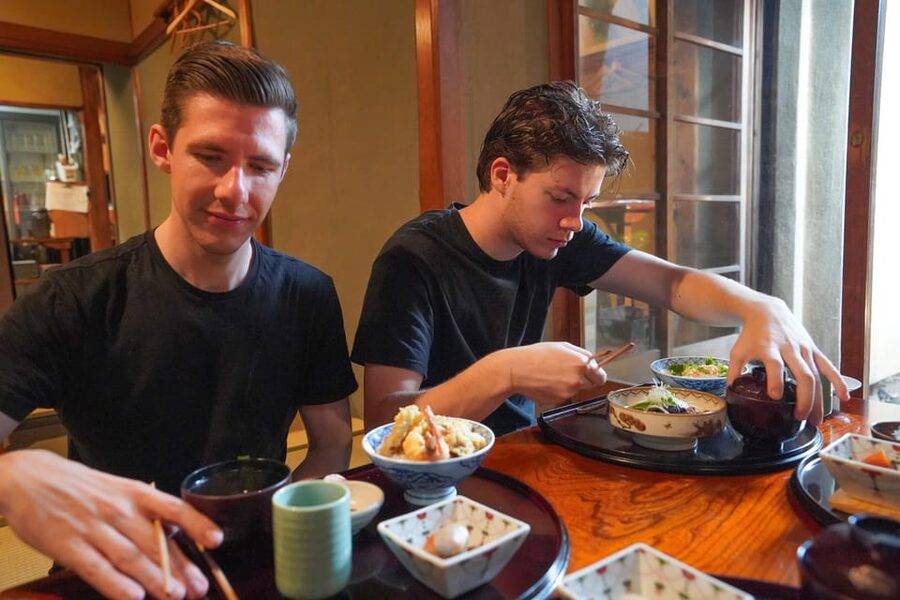
After the training, you walk through Kagurazaka to lunch in a traditional Japanese house more than 70 years old. The building was once a teahouse associated with geisha culture, so the setting gives the meal a sense of place that a modern restaurant cannot match.
This is one of the strongest reasons to choose the tour. Lunch is not an afterthought squeezed between attractions. It takes place in a building tied to the neighborhood’s social history, giving you a quiet pause after the active lesson.
A Japanese lunch is included, and a vegetarian course is available if you request it by the day before. You cannot request a vegetarian meal on the day itself. Vegan and gluten-free options are not available, and shellfish allergies cannot be accommodated. The operator also cannot guarantee an allergy-free meal because food is prepared in kitchens outside its control.
If you have serious dietary needs, read that policy carefully before booking. A simple vegetarian request should be manageable with advance notice, but this is not the right choice for anyone who needs strict avoidance of multiple ingredients.
You do not need to pay for the guide’s food or drinks. Other participants may join the meal, so expect a shared small-group setting rather than a private dining experience.
More Lunch Experiences in Tokyo:
- Tokyo: Mt.Fuji & Lake Kawaguchiko 1-Day Bus Tour w/Optional Lunch
★ 4.5 · 839 reviews - Tokyo: Sumo Experience and Chanko Nabe Lunch
★ 4.8 · 257 reviews - Tokyo: Tsukiji Fish Market Tour with 6 Stops & Seafood Lunch
★ 4.5 · 165 reviews - Tokyo: 1 Day Bus Tour with Meiji-Jingu,Odaiba,lunch&Skytree
★ 4.6 · 156 reviews
A local snack adds a welcome taste of Kagurazaka
The walk includes one traditional food or sweet. Depending on the day and availability, this may be chimaki, a steamed bun, or a modern sweet from the neighborhood.
That small stop helps connect the tour to everyday Kagurazaka. You are not only looking at old buildings. You get to try something from the local food scene, and the guide can explain what you are eating. Because you choose one item rather than receiving a full food crawl, keep your expectations modest. The lunch is the main meal, while the snack is a brief tasting stop.
The final portion includes about 30 minutes for local snacks and shopping. You may have time to browse small shops or pick up a food souvenir, though the exact stops can change. I like this flexible ending because it gives the group room to linger instead of rushing from one fixed sight to another.
What the $162 price really covers
At $162 per person, this is not a cheap walking tour. The price includes four hours, roughly three and a half hours of local guiding, the one-hour samurai experience, kimono rental, Japanese lunch, and one traditional food or sweet.
The value depends on what you want from Tokyo. If you only want a neighborhood walk, you can explore Kagurazaka for far less. If you want a polished stage show, other entertainment options may offer more elaborate production. This tour earns its price by combining several elements that would be difficult to arrange separately: a local history walk, access to professional samurai performers, costume rental, instruction, lunch in an old house, and a food stop.
The small group also matters. With a maximum of nine participants, the guide can explain movements without shouting across a crowd. You should have a better chance to receive help with photos and practice than you would on a large group outing.
The best value comes if you take part fully. Ask questions during the walk, try the movements rather than watching from the edge, and use lunch as a chance to understand the building and neighborhood. If you are mainly interested in samurai history at an academic level, the tour may feel light. If you want an active introduction with food and local context, the package makes more sense.
Who will enjoy this experience most
I would recommend this tour to families with children aged four and older, first-time visitors who want a cultural activity beyond major sights, and anyone curious about martial arts or Japanese history.
It also suits people who prefer a small group and a clear four-hour plan. You see several parts of Kagurazaka without spending an entire day on one activity. The mix of walking, performance, practice, food, and lunch keeps the pace varied.
The tour is a good fit for photographers, too. The kimono, old lanes, temple setting, and traditional house offer more interesting pictures than a standard studio session. The staff can help with photos, although the exact amount of photo time depends on the group.
I would be more cautious if you have mobility limits, need a wheelchair-accessible route, or require strict dietary control. The activity includes several walks, and wheelchair users cannot participate. It is also a poor choice if you dislike starting at a fixed time or want a private tour.
Practical details that can make the day easier
Plan to arrive well before the start time at the West Exit of JR Iidabashi Station. The meeting point is in front of Aoyama Flower Market at the Ecute Edition Iidabashi store. The tour will not wait for late arrivals beyond the stated limit.
Wear shoes you can walk in comfortably. The route includes streets, temple areas, local lanes, and shopping stops, and the experience lasts four hours. You will change into a kimono for the samurai session, so comfortable clothing underneath is sensible.
The tour is conducted in English and is limited to nine participants. Smoking, alcohol, and drugs are not allowed. Hotel pickup and drop-off are not included, so you must make your own way to Iidabashi and return from there.
Free cancellation is available up to 24 hours before the start for a full refund. You can also reserve now and pay later, which is helpful if your Tokyo schedule is still shifting.
Should you book the Kagurazaka samurai experience?
Book it if you want more than a costume photograph. The strongest parts are the setting in old Kagurazaka, the professional samurai demonstration, the chance to practice basic movements, and lunch in a former teahouse.
At $162, it is a specialized experience rather than a bargain. I think the price is reasonable for someone who values a small group, English guidance, a meal, and a hands-on activity in one package. Families should find it especially memorable, while history specialists may want a more detailed museum or lecture as a companion.
Check the food rules before paying, arrive early, and expect an introductory lesson rather than serious martial arts training. If those conditions suit you, this is a lively way to connect Tokyo’s samurai image with the temples, lanes, food, and old houses of a real neighborhood.
FAQ
Where does the tour meet?
Meet in front of Aoyama Flower Market at the Ecute Edition Iidabashi store. It is beside the West Exit of JR Iidabashi Station, on your right after leaving the station.
How long does the experience last?
The experience lasts four hours.
Is the tour conducted in English?
Yes. The tour includes an English-speaking live guide.
How large is the group?
The group is limited to nine participants.
What does the samurai experience include?
It includes one hour of samurai training with professional instructors and kimono rental. You learn basic samurai movements and fighting techniques in a guided practice session.
Is lunch included?
Yes. A Japanese lunch is included, served in a traditional Japanese house more than 70 years old.
Can I request a vegetarian meal?
Yes, but you must request the vegetarian course by the day before the tour. Vegan and gluten-free options are not available, and shellfish allergies cannot be accommodated.
What happens if I arrive late?
The tour starts on time. If you are more than 15 minutes late, you cannot join, reschedule, or receive a refund.
Newly reviewed around Tokyo
- Tokyo Asakusa:Calligraphy & Make T-shirt Activity★ 5.0 · 62 reviews
- Intercity Shuttle, Tokyo to Haneda /Narita /Yokohama /Makuhari★ 5.0 · 5 reviews
- 1 Hour Travel around Tokyo with a Professional Photographer★ 5.0 · 3 reviews
- Travel Tokyo with Your Own Personal Photographer★ 5.0 · 43 reviews
- Train in Samurai Swordsmanship and Defeat the Demon in Tokyo★ 5.0 · 5 reviews
- Shuttle Van 6hr Tokyo Tour to-and-from Tokyo, Yokohama and Narita★ 5.0 · 9 reviews
- Kickboxing & Body Training with EX-Pro Fighter★ 5.0 · 4 reviews
- Traditional Japanese Knife Sharpening Class★ 5.0 · 18 reviews
Tokyo Samurai and Ninja Experiences, compared.
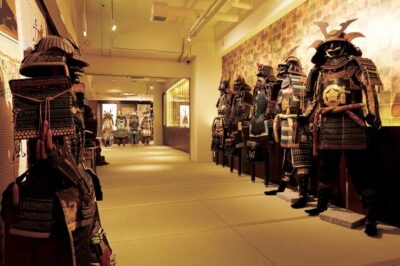
Samurai Ninja Museum Guided tour and Experience
Read our review →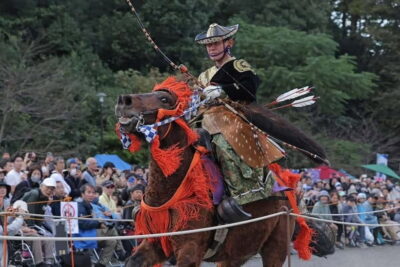
Samurai Sword & Archery Class from Samurai Descendant
Read our review →

Ninja Experience (Family Friendly) at Samurai Ninja Museum TOKYO
Read our review →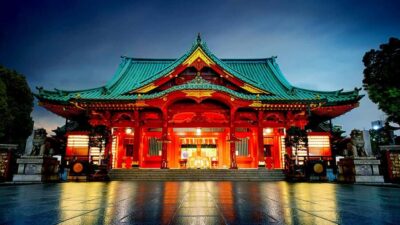
Samurai Entertainment Night Show in Kanda Shrine
Read our review →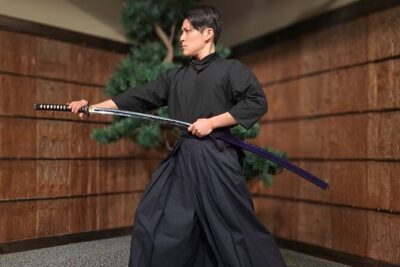
Tokyo Sword Experience – includes Museum Ticket/Ninja Experience
Read our review →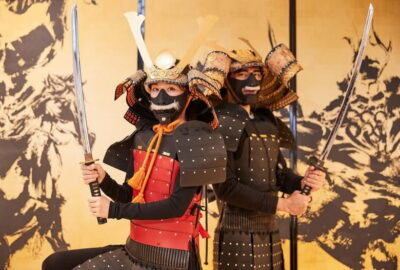
Samurai Ninja Museum Asakusa: Samurai Sword Lesson & Tour
Read our review →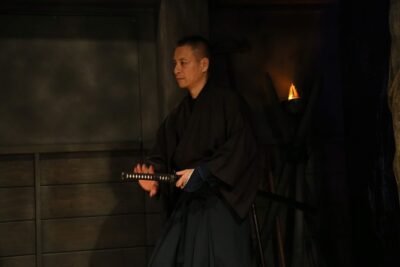
Ninja Samurai 2-hour hands-on lesson by Japanese master in Tokyo
Read our review →Browse the lists this tour appears in