
Reviewed · TOKYO WALKING TOURS
Tokyo: Private Walking Tour with a Local Guide
Tokyo rewards a flexible plan, and this private tour lets you shape the day around what you actually care about. You might spend the morning around Senso-ji and Ueno, then switch to anime in Akihabara, food at Tsukiji, or neon-lit Shinjuku. I like the freedom to choose a 4, 6, or 8-hour format, and I like having a guide beside me for Tokyo’s enormous train stations.
The main consideration is price: at $132.91 per person, this is not a bargain walking tour, especially if you are alone. Travel between districts, train fares, food, and optional attractions cost extra. Still, the private format can be good value on a first Tokyo day, when help with routes, customs, and neighborhood choices saves time.
Key points to know before booking
- Your route is built around your interests: Ask for temples, food, anime, shopping, gardens, history, or a blend.
- Three time choices matter: Four hours suits one or two nearby districts, while six or eight hours allows more cross-city travel.
- Public transport is part of the lesson: The guide helps you handle Tokyo’s large stations, but trains are not included.
- The strongest first-day stops are Asakusa and Ueno: They offer temples, markets, museums, and a useful introduction to old Tokyo.
- You can mix famous sights with local-feeling streets: Ameya Yokocho and Omoide Yokocho add everyday Tokyo flavor beside major landmarks.
- The private setup keeps the pace personal: Only your group takes part, and hotel or accommodation meet-up is offered.
A private Tokyo day with room to change course
The most useful feature here is not a single landmark. It is the ability to adjust the day as you go. Tokyo is a city of separate districts, each with its own mood, and a fixed route can waste time if it sends you across town for one brief stop.
You can request a focus on history and religion, modern pop culture, shopping, food, architecture, or a particular part of the city. The available stops range from the old temple streets of Asakusa to the gaming arcades of Akihabara and the fashion shops of Harajuku. You will not realistically cover every listed area in four hours, so tell the guide your top priorities before setting out.
The tour is private, which means you do not need to match another group’s pace. You can linger at a shrine, shorten a shopping stop, or ask for help with Tokyo’s train system. Guides Saya and Gabriel are among the guides associated with this experience, and specific customer comments praise their flexibility, cultural explanations, and practical help.
The tour can begin at your hotel or accommodation. Pickup is convenient, though airport pickup and drop-off are not part of the standard offer. If you have a late booking, note that Gabriel has accommodated a last-minute request in the past, but you should not count on that every time.
More Tokyo walking tours:
- Tokyo Tsukiji Fish Market Food and Culture Walking Tour
★ 5.0 · 3,184 reviews - Tokyo: Imperial Palace and Shogun Historical Walking Tour
★ 5.0 · 2,251 reviews - Tokyo: Shinjuku Local Bar and Izakaya Guided Walking Tour
★ 4.9 · 1,794 reviews
Asakusa and Senso-ji: the best historical opening
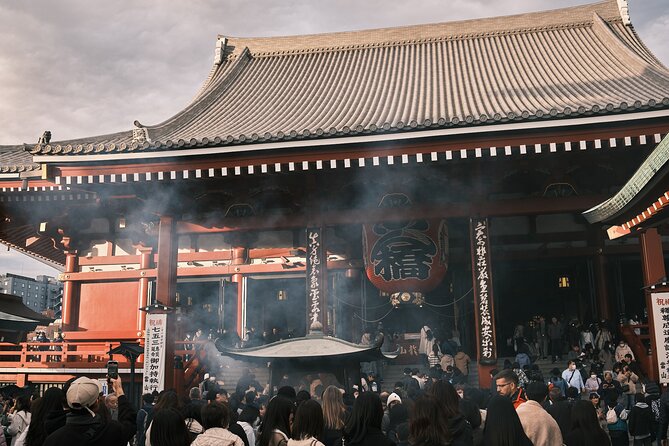
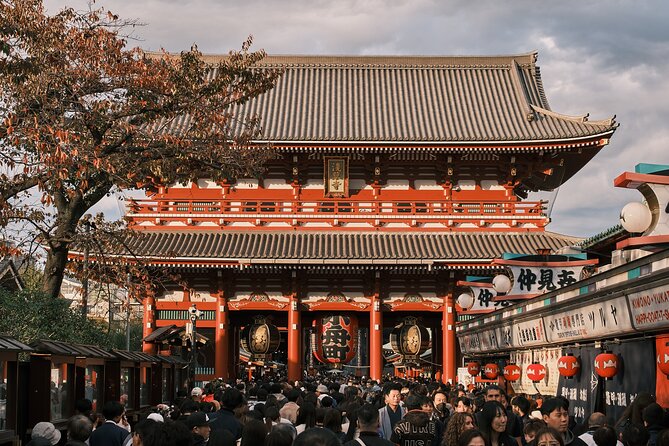
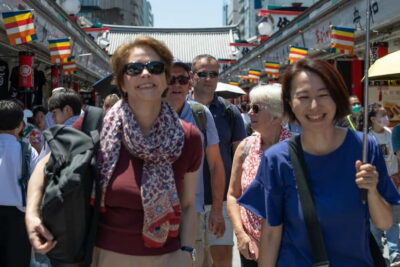
Asakusa is the natural starting point if you want an immediate sense of old Tokyo. Senso-ji, Tokyo’s oldest temple, draws plenty of people, yet it remains a worthwhile introduction to Japanese religious architecture and local custom.
The approach runs along Nakamise-dori, a shopping street lined with traditional snacks, souvenirs, and small gifts. This is a good place to ask your guide how to behave at a temple, what the stalls sell, and which items are useful rather than merely decorative.
Senso-ji can be crowded, particularly around the main approach. A private guide cannot remove the crowds, but can explain what you are seeing and help you spend your limited time well. If you want quiet, ask how long to stay around the temple grounds before moving on.
This stop suits first-time visitors who want a clear cultural introduction without committing to a full museum visit. It also works for families, since the street food and shopping give younger members something immediate to enjoy.
Ueno and Ameya Yokocho: museums beside everyday Tokyo
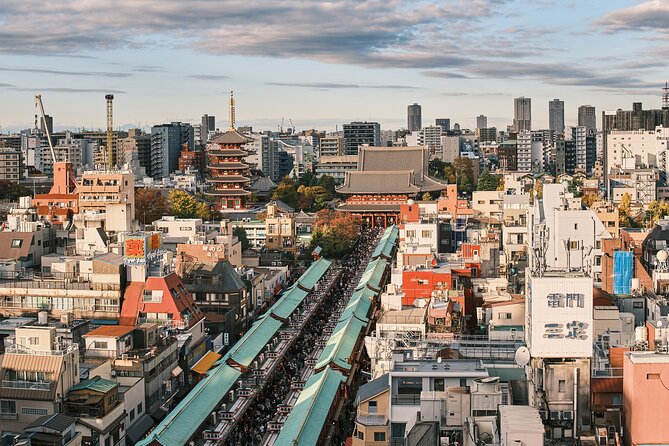
Ueno gives the day more range. The district includes the Tokyo National Museum, the National Museum of Western Art, Ueno Zoo, Ueno Toshogu Shrine, and several historic temples. The tour does not include every attraction ticket, so think of Ueno as a choice point rather than a promise to see it all.
If art or Japanese history matters most to you, ask to focus on one museum and allow enough time for it. A short stop outside several institutions may give you orientation, but it will not replace going inside. Entrance arrangements beyond the included temple and shrine tickets may cost extra.
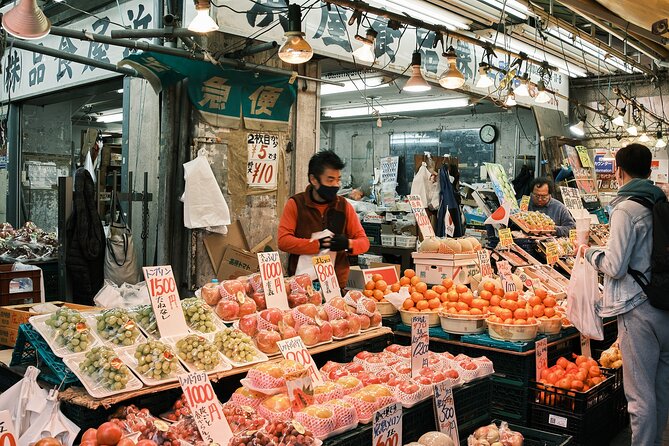
The nearby Ameya Yokocho market offers a different kind of Tokyo. It has an old-fashioned 1980s feel, with open-air stalls, standing bars, and street food. I like this part of the route because it shows a working shopping area rather than a polished sightseeing zone.
Food is not included, so budget separately for anything you taste. The market is also a place where your guide’s local advice matters. You can ask what looks distinctive, how to order, and how much time to reserve before moving to another district.
Akihabara: anime, electronics, and a sharper change of mood
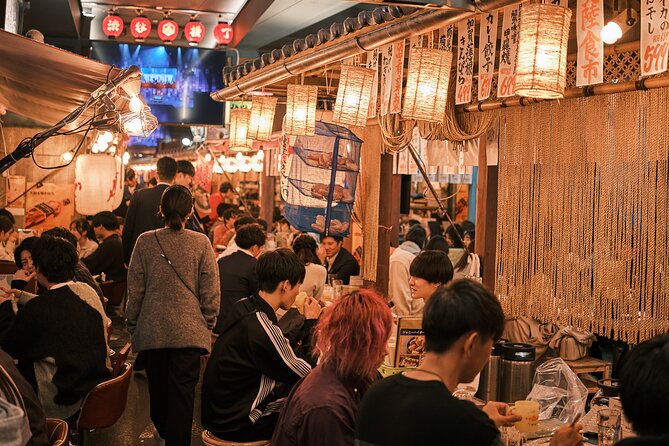
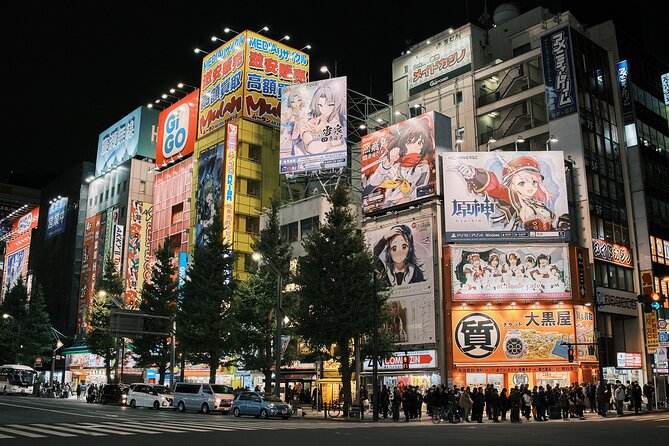
Akihabara is Tokyo’s pop-culture stop. Here you can look through retro and modern game centers, search for anime figures and manga, and browse tax-free electronics. The district is a good match for anyone with a clear interest in gaming, animation, or Japanese consumer technology.
The range can also feel scattered if you arrive without a plan. Tell your guide the kind of item you want, since a short visit can disappear among arcades, shops, and multi-floor stores. Tax-free shopping is mentioned as part of the route, but eligibility and store rules are not explained in the tour details, so check at the shop before buying.
Akihabara is less useful if your priority is temples, gardens, or traditional food. Its value comes from contrast. After Asakusa and Ueno, it shows how quickly Tokyo can shift from sacred spaces and market lanes to bright signs, games, and specialist shopping.
A completely different kind of day in Tokyo:
- Mt Fuji and Hakone 1-Day Bus Tour Return by Bullet Train
★ 5.0 · 26,383 reviews - 1-Day Tokyo Bus Tour
★ 5.0 · 14,250 reviews - Tokyo: teamLab Planets TOKYO Digital Art Museum Entry Ticket
★ 4.6 · 9,779 reviews - Mt Fuji & Hakone Cruise, Drum Show Bullet Train 1 Day from Tokyo
★ 4.0 · 7,413 reviews
Shibuya and Hachiko: Tokyo’s famous crossing
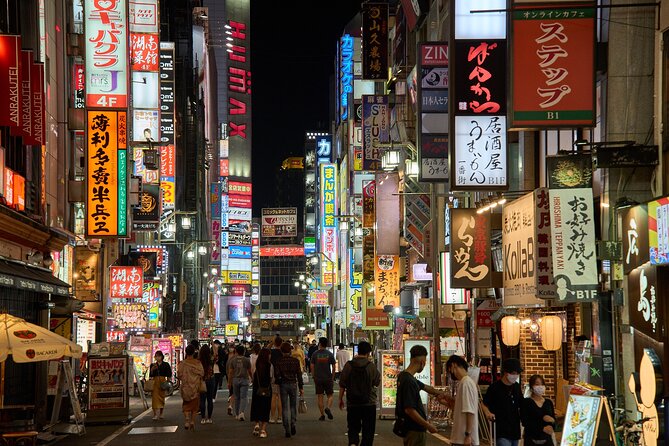
Shibuya gives you one of the city’s most recognizable scenes: Shibuya Crossing. The stop includes the Hachiko statue, dedicated to the Akita dog remembered for his loyalty to his owner.
The statue is small and often surrounded by people, so do not expect a long formal attraction. Its importance comes from the story and from the way it functions as a meeting point in the district. Your guide can provide the cultural context, then help you take in the crossing without treating it as the whole of Shibuya.
This part works best for a first visit or for anyone interested in modern city life. It is less satisfying if you want a quiet walk. Shibuya is busy, heavily commercial, and visually intense, though that energy is exactly why many people want it on their Tokyo list.
Shinjuku and Omoide Yokocho after dark
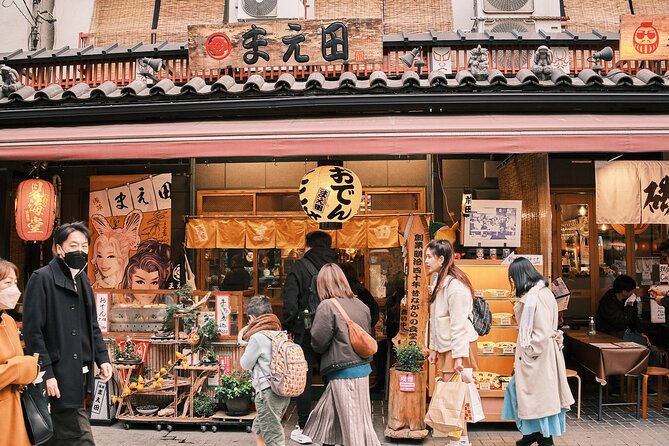
Shinjuku is Tokyo’s entertainment center, with shopping, dining, nightlife, and neon-lit streets. The district is broad and can feel confusing, particularly when you are trying to reach a particular exit or alley.
Omoide Yokocho offers a smaller, older setting within that larger district. Its narrow lanes hold traditional izakayas and street-food spots, creating a strong sense of old Tokyo. Food and drinks are extra, and the tight alleys may not suit anyone who prefers wide, quiet streets.
I would choose this pairing if you want to see the contrast between a major commercial center and a compact drinking alley. Ask for this area later in the day if your schedule allows, since the atmosphere is tied to dining and evening activity. The tour duration and start time will determine how naturally it fits.
Harajuku and Meiji Jingu: fashion next to forest
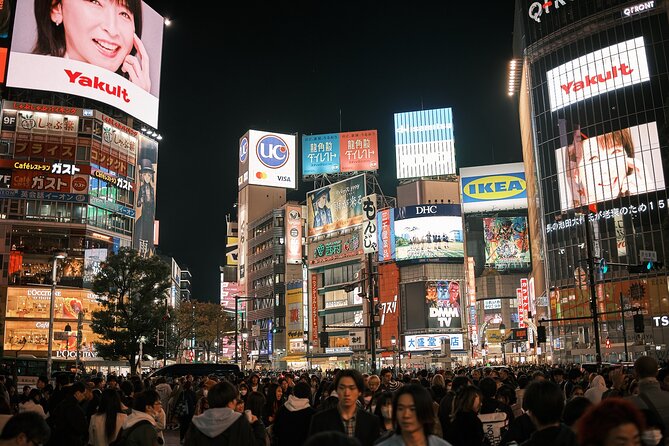
Takeshita Street is the colorful, crowded side of Harajuku. It is known for trendy boutiques, quirky shops, and street food, making it a strong choice for fashion, youth culture, and quick snacks.
Do not expect a calm stroll here. The street is busy and commercial, and it can be tiring if you are not interested in shopping. A private guide helps by letting you decide how much time to spend, rather than forcing you through every shop.
Meiji Jingu provides the counterpoint. Its grounds offer a quiet break, with large torii gates and wooded paths in central Tokyo. The shrine honors Emperor Meiji and Empress Shoken, giving your guide a chance to explain the imperial and religious context.
The two stops work well together because they show two very different sides of Harajuku. You can begin with fashion and food, then move into a more measured shrine visit. Temple and shrine entrance tickets are included, though food, transport, and other paid attractions are not.
Tsukiji Fish Market: a practical food stop
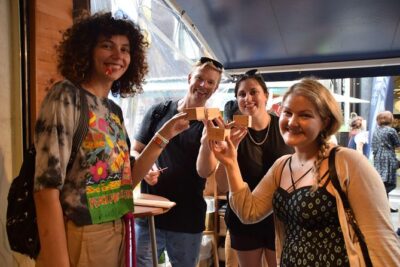
Tsukiji is a good choice if food is central to your Tokyo plans. You can walk through busy aisles filled with seafood, ingredients, and local specialties, then decide what you want to try.
Food is not included in the tour price, which is actually useful here. You can choose your own purchases instead of paying for a fixed tasting package. Ask your guide for help identifying unfamiliar items, but remember that the exact food available can vary.
Tsukiji can become a rushed stop if paired with distant districts in a short tour. I would give it priority on a six or eight-hour outing, especially if you want time to browse and eat. It is less compelling for someone who dislikes markets or is mainly interested in architecture and gardens.
The Imperial Palace East Garden: a quiet finish
The East Garden of the Imperial Palace offers a pause from Tokyo’s commercial districts. You can see landscaped grounds, old stone walls, and historic ruins while learning about the imperial past.
This stop is especially useful after Shibuya, Shinjuku, or Akihabara. It gives the day a calmer rhythm and shows that central Tokyo is not only towers, signs, and shopping streets.
The garden is not the same kind of visit as entering the main palace buildings. The attraction here is the outdoor setting and the surviving structures. If you have a strong interest in imperial history, ask your guide how much time is available and what can realistically be seen during your chosen tour length.
Four, six, or eight hours: choosing the right fit
The four-hour option is best for a focused introduction. Choose one area, or two nearby areas, such as Asakusa and Ueno. Trying to add Shibuya, Tsukiji, and Akihabara would leave you spending too much of the tour on trains.
Six hours gives you more breathing room. You can combine a historical district with a modern one, perhaps Asakusa and Akihabara, or Harajuku and Shibuya. It is also a better choice if you want time for food, shopping, and explanations rather than quick photographs.
The eight-hour option makes the most sense for a first full day in Tokyo or for a group with different interests. You could cover several districts, but travel time still matters. Tokyo’s distances are real, and the guide cannot eliminate train connections, station walks, or delays.
Train fares are not included. Private cars are also not included, and the tour is described as a walking tour using public transportation. Wear comfortable shoes, keep your plan flexible, and do not schedule a distant paid attraction immediately after the tour.
Is $132.91 per person good value?
The price is easiest to justify when several people share the private guide and make active use of the time. A couple or family can spread the cost while receiving a route built around their interests. For a solo visitor, the per-person price is harder to defend unless you place a high value on personal guidance.
The strongest value is practical rather than ticket-based. Your guide can help you navigate huge stations, explain cultural details, suggest useful areas, and adjust the pace. Temple and shrine entrance tickets are included, but trains, food, drinks, airport transfers, private cars, and additional attractions cost extra.
I would compare this with the cost of losing half a day to poor routing. If Tokyo is your first stop in Japan and you feel unsure about public transport or customs, the orientation may pay off throughout the rest of your trip. If you already know Tokyo well, a simpler self-guided day may be better value.
The activity is booked on average 41 days ahead, so it is sensible to reserve early if you want a particular date or guide. Free cancellation is available up to 24 hours before the start time. Changes or cancellations inside that window are not accepted for a refund.
Who should book this private walk?
I would recommend it to first-time Tokyo visitors who want a useful introduction without being locked into a standard group route. It is also a good match for families, couples, and friends with mixed interests, since one person can request temples while another wants markets, anime, or fashion.
It suits you less if you want a full museum day, a food tour with included tastings, or private vehicle transport. It is also not the right pick if you dislike public transport or want every expense covered in one price.
Book the four-hour option for a targeted neighborhood visit. Choose six hours for a balanced first look at Tokyo. Pay for eight hours when you want help across several districts and are willing to accept that some of the day will involve train travel.
FAQ
How long does the Tokyo private walking tour last?
You can choose an experience lasting approximately 4, 6, or 8 hours.
Is the tour private?
Yes. Only your group participates in the activity.
Can the route be customized?
Yes. The route can be shaped around your interests and specific areas. You can request sights connected with history, culture, architecture, food, shopping, anime, or other interests.
Is hotel pickup available?
Yes. Hotel or accommodation meet-up is offered.
Does the tour include airport pickup?
No. Airport pickup and drop-off are not included.
Does the price include train fares?
No. Trains and other public transportation costs are not included in the tour price.
Are food and drinks included?
No. You pay separately for food and drinks.
Are temple and shrine entrance tickets included?
Yes. Entrance tickets for temples and shrines are included. Additional attractions or special requests are not included.
Can most people take part?
Yes. The tour information says most people can participate and that it is near public transportation. Travel time between Tokyo locations can vary.
Newly reviewed around Tokyo
- Tokyo Asakusa:Calligraphy & Make T-shirt Activity★ 5.0 · 62 reviews
- Intercity Shuttle, Tokyo to Haneda /Narita /Yokohama /Makuhari★ 5.0 · 5 reviews
- 1 Hour Travel around Tokyo with a Professional Photographer★ 5.0 · 3 reviews
- Travel Tokyo with Your Own Personal Photographer★ 5.0 · 43 reviews
- Train in Samurai Swordsmanship and Defeat the Demon in Tokyo★ 5.0 · 5 reviews
- Shuttle Van 6hr Tokyo Tour to-and-from Tokyo, Yokohama and Narita★ 5.0 · 9 reviews
- Kickboxing & Body Training with EX-Pro Fighter★ 5.0 · 4 reviews
- Traditional Japanese Knife Sharpening Class★ 5.0 · 18 reviews
Tokyo Walking Tours, compared.
Tokyo Tsukiji Fish Market Food and Culture Walking Tour
Read our review →
Imperial Palace and Shogun Historical Walking Tour
Read our review →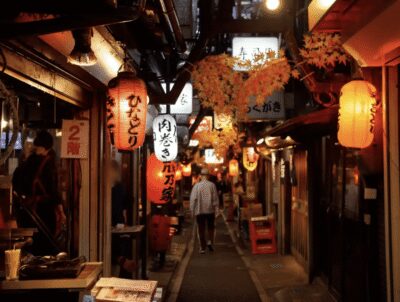
Shinjuku Local Bar and Izakaya Guided Walking Tour
Read our review →
Asakusa Walking Tour with Sensoji Temple Visit
Read our review →
Tokyo Castle & Imperial PalaceーShogun Walking Tour
Read our review →
Browse the lists this tour appears in