
Reviewed · TOKYO TRADITIONAL CRAFT WORKSHOPS
Tokyo Ikebana, Japanese Traditional Flower Arrangement Experience
Ikebana is not simply putting flowers in a vase. It is a lesson in line, space, balance, and restraint, taught through seasonal plant material at the Ichiyō-style Ikebana headquarters in Tokyo. You first learn why an arrangement works, then make one yourself under an instructor’s eye.
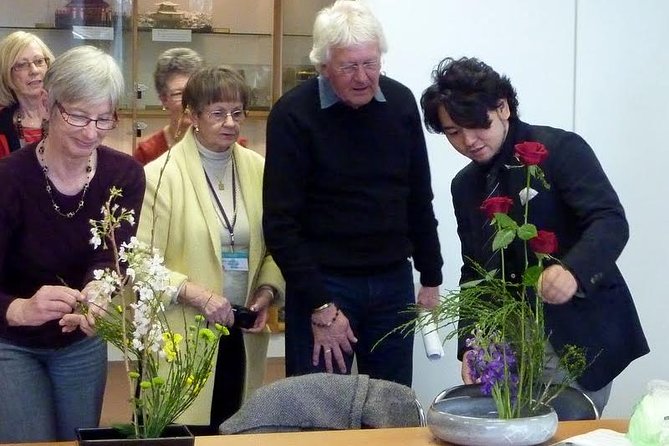
I like the hands-on format and the fact that every tool and flower is supplied. I also like the personal teaching: instructors such as Naohiro Kasuya and Mrs. Shimakawa adjust their guidance to your level, even if you have never held an ikebana tool before.
The main consideration is time. At about 70 minutes, this is a focused introduction rather than a full course. The non-refundable booking policy also means you should be certain of your Tokyo schedule before paying.
Key points to know before booking
- You make your own arrangement: This is a practical class, not a demonstration that leaves you watching from the side.
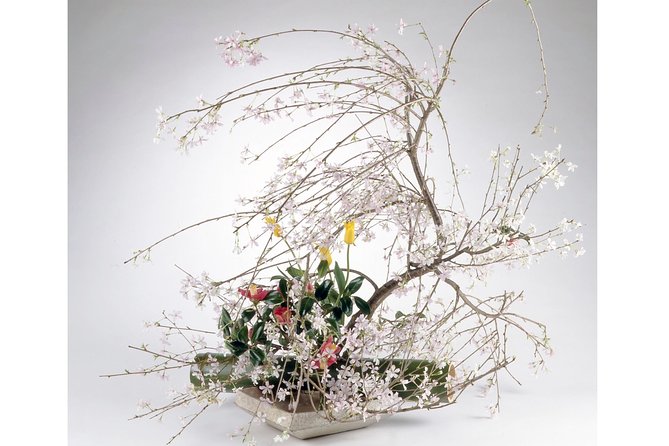
- Seasonal flowers are supplied: The plant material changes with the season, so your arrangement reflects the time of year.
- The teaching covers more than technique: Expect guidance on form, angles, movement, geometric principles, and the philosophy behind ikebana.
- Beginners are welcome: The instructor teaches to your level, and the program is designed for ages 6 and up.
- The class stays small: A maximum of 10 people allows room for individual advice.
- It takes place in Nakano: You meet at 4-chōme-20-5 Nakano, near public transportation, and return to that same point.
Why this short Tokyo class feels different
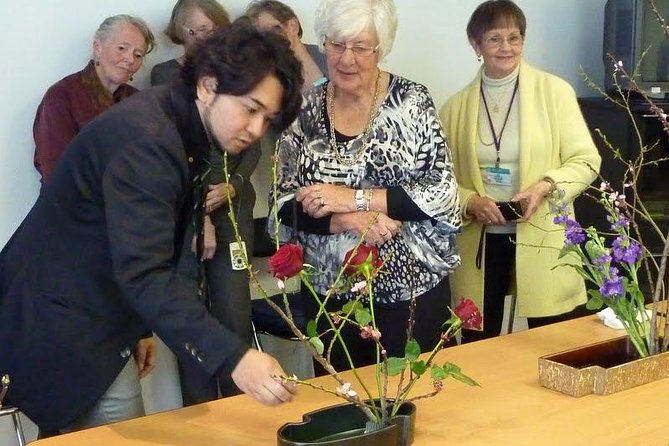
Many cultural activities let you look at an art form from the outside. This one puts scissors, flowers, and a vase in your hands. You learn a few principles, test them immediately, and see how much a small change in angle can alter the whole arrangement.
That practical cycle is the real value. You are not trying to memorize a long lecture. You hear an explanation, apply it, receive advice, and adjust your work. The result is a compact lesson in how Japanese aesthetics use empty space as carefully as the flowers themselves.
The class also gives you a useful way to understand ikebana beyond its appearance. The goal is to bring out the character of the materials, including the plants and vase, rather than simply filling a container with as many blooms as possible. You learn to consider shape, line, position, and the most attractive viewing angle.
That makes this a good choice if you want an activity with some quiet concentration during a busy Tokyo visit. It has a creative side, but it is not presented as a free-for-all craft session. The instructor gives you a framework, then leaves space for your own decisions.
More Tokyo craft workshops:
- Tokyo Shinjuku Chopsticks Making Class
★ 5.0 · 1,763 reviews - Chopstick Making Workshop in Ginza
★ 4.8 · 1,366 reviews - Kintsugi Experience: Art of Golden Joinery in Tokyo
★ 5.0 · 467 reviews
Arriving at the Ichiyō-style Ikebana headquarters
The meeting point is the Ichiyō-style Ikebana headquarters at 4-chōme-20-5 Nakano, Nakano City, Tokyo 164-0001. The location is near public transportation, and the class ends where it begins, so you do not need to plan a separate return transfer.
The school setting matters. You are learning within an established ikebana tradition rather than attending a general craft workshop arranged in an unrelated venue. The teaching introduces the particular approach of the school, including its ideas about form and movement.
Allow yourself enough time to find the address. Your booking confirmation is sent within 48 hours, subject to availability, so check the meeting details before setting out. The activity is capped at 10 people, though the class can sometimes be more intimate. One participant described being the only student in the session, which allowed especially direct instruction.
The provider also says an instructor can be sent to any hotel in Tokyo. That option may be useful for a private arrangement, but a large group can incur a separate venue rental fee. Confirm those details before booking if you are arranging the class for several people.
The first lesson: line, space, and seasonal material
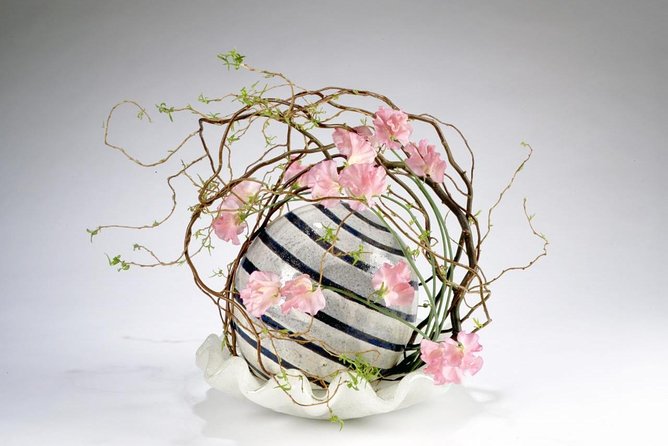
The opening part explains the basic ideas of ikebana. You learn how the arrangement should look from different angles, how plant shapes affect the composition, and how the materials can express their own beauty.
This is where the class moves beyond ordinary flower arranging. You are not simply matching colors or making a rounded bouquet. The instruction considers the relationship between upright lines, curves, gaps, and the vessel. The shape of the plant matters, and so does the empty area around it.
The lesson also introduces the history and philosophy of the art. Ikebana is an ancient Japanese tradition, and the activity explains its connection with Japanese culture, including the fact that Samurai took part in it. That detail gives the practice a broader context without turning the class into a long history talk.
The school uses local flowers that are in season. That is a small but important touch. Your arrangement is not built from a fixed set of imported flowers all year round. The materials change, and you learn to work with what nature offers at that time.
I would pay close attention during this opening explanation, since it gives you the tools to make better choices later. The instructors cover how an angle changes the appearance of a branch, which combinations look balanced, and how to bring movement into a design. You do not need previous knowledge, but the lesson rewards careful observation.
Making your own arrangement
After the introduction, you create your own ikebana arrangement. This is the heart of the activity and the part that makes the class useful for a first visit to Japan.
All materials are provided, including flowers and equipment. You do not need to bring supplies from home, and you do not need to know which tools or plants to select. The instructor explains what to do and watches as your design develops.
Expect to make choices rather than follow a rigid model at every step. The teaching gives you principles, but your finished work can still be individual. The point is to understand how the flowers, vase, and open space work together.
Once you finish, the instructor examines the arrangement and suggests ways to improve it. That feedback is especially useful because ikebana can look simple from a distance. A branch that seems slightly misplaced may change the balance of the whole composition. A small adjustment can make the design feel lighter, taller, or more dynamic.
The teachers have been praised for being patient and encouraging, which is important in a creative class. Naohiro Kasuya is described as passionate about the art, and the instruction includes clear explanations of form, shape, and movement. Mrs. Shimakawa is also noted for taking time to explain the process carefully. English ability can vary by instructor, but one participant found the instruction easy to understand.
The class is designed for people age 6 and older. Children 12 and under must attend with a parent. The activity is open to most people, but you remain responsible for accidents or injuries during the session. Keep your valuables with you, since the school does not accept responsibility for lost or forgotten belongings.
A completely different kind of day in Tokyo:
- Mt Fuji and Hakone 1-Day Bus Tour Return by Bullet Train
★ 5.0 · 26,383 reviews - 1-Day Tokyo Bus Tour
★ 5.0 · 14,250 reviews - Tokyo: teamLab Planets TOKYO Digital Art Museum Entry Ticket
★ 4.6 · 9,779 reviews - Mt Fuji & Hakone Cruise, Drum Show Bullet Train 1 Day from Tokyo
★ 4.0 · 7,413 reviews
Photos, advice, and the finished piece
When your arrangement is complete, you have time to take photographs. This is useful both as a souvenir and as a record of the lesson. Your flowers may not look exactly the same once you return home, but the photographs help you remember the structure and ideas you learned.
The photo opportunity also gives you a chance to study your work from another angle. An arrangement that looks balanced from the front may appear different from the side. Since the class teaches you to consider the viewing angle, taking a few pictures is part of the learning rather than just a final pose.
The seasonal materials make each class somewhat different. You may use flowers and branches that reflect the current season in Tokyo, and the instructor can show you how to work with their natural shape. That is one reason the lesson has value beyond the finished vase. You learn to observe the material rather than force it into a standard bouquet shape.
The teaching can also continue after you leave Japan. The class explains that ikebana can use flowers from many parts of the world. At home, you can apply the same ideas to local plants and flowers. You do not need to recreate the exact arrangement. Instead, you can use the principles of line, balance, form, and open space with whatever is available.
One particularly useful possibility is learning about a local ikebana show during your visit. An instructor has directed a participant to a show taking place the next day. If a similar opportunity is available during your stay, attending one can help you see how the classroom principles work in larger and more formal arrangements.
What the 70-minute schedule really gives you
The session lasts about one hour and 10 minutes. That is enough time for an introduction, instruction, personal arranging, feedback, and photographs, but it is not enough for a long historical survey or advanced training.
I see the short length as a strength for most visitors. Tokyo schedules fill quickly, and you can fit this class between other activities without giving up half a day. It also keeps the lesson focused. You learn the basic ideas and practice them while they are still fresh.
The trade-off is depth. If you already study ikebana, you may want more time for detailed correction or a more advanced arrangement. This class is aimed at beginners, though the instructor can teach to your level, and experienced participants can still gain a clearer sense of the school’s approach.
Because the group maximum is 10, the format should allow for personal help. A private or nearly private class may offer even more time with the teacher. If you are booking for a large group, ask about the separate venue rental charge before confirming.
Is $67.28 a fair price?
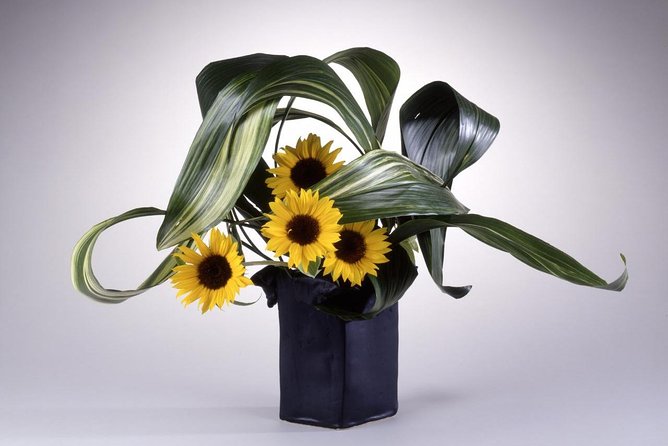
At $67.28 per person, this is not the cheapest creative activity in Tokyo. The price makes more sense when you consider what is included: seasonal flowers, the vase and equipment, instruction, personal feedback, and the chance to take home a finished arrangement in your own memory and photographs.
You are also paying for access to a traditional school and for a teacher who can explain why the arrangement works, not just show you where to place a stem. The value is strongest if you want an authentic cultural lesson with a practical result.
I would compare it with the cost of a museum ticket plus a separate craft activity. Here, your time is spent actively learning, and the class gives you an art form you can continue practicing at home. If you mainly want a quick photo or a decorative souvenir, the price may feel high. If you want context, instruction, and a calm activity, it is easier to justify.
The experience receives a five-star overall rating from 15 posted responses, with 100 percent recommending it. That is a small sample, so I would not treat it as a guarantee. Still, the repeated praise for patience, clarity, kindness, and hands-on teaching points to the areas that matter most here.
Who should book this ikebana lesson?
I would recommend it to first-time visitors who want something beyond temples, shopping, and food. It works well for solo participants, couples, families with older children, and anyone interested in Japanese design.
It is also a good birthday activity or a thoughtful way to mark a special day in Tokyo. One participant chose it as a birthday present to herself, and the personal nature of making an arrangement suits that kind of occasion.
You should book it if you enjoy learning by doing. The class asks you to pay attention, make choices, and accept correction. It is less suited to someone who wants a passive performance or a quick drop-in activity with no instruction.
The pace may suit you if you prefer a quiet creative break. You are working with flowers and form rather than racing through a list of attractions. The class is still structured, though, so you get practical teaching rather than vague encouragement.
Book carefully because the activity is non-refundable and cannot be changed for any reason after payment. Confirmation arrives within 48 hours, subject to availability, and the class is often reserved about 16 days ahead. That booking pattern suggests you should arrange it before your Tokyo calendar becomes crowded.
Should you book it?
Book this class if you want to understand why ikebana looks the way it does, then test those ideas with your own hands. The seasonal flowers, small group limit, personal guidance, and supplied materials make it a convenient introduction to a serious Japanese art.
I would skip it only if your schedule cannot spare 70 minutes, you want advanced training, or you dislike committing to a non-refundable activity. For everyone else, especially beginners, this is a thoughtful way to spend part of a Tokyo day and leave with more than a photograph. You leave with a method you can use again, even with flowers from your own country.
FAQ
Where does the ikebana class take place?
The class takes place at the Ichiyō-style Ikebana headquarters, 4-chōme-20-5 Nakano, Nakano City, Tokyo 164-0001, Japan. The meeting point is near public transportation.
How long does the activity last?
The experience lasts approximately one hour and 10 minutes. It begins and ends at the same meeting point.
Are flowers and equipment provided?
Yes. The class supplies the flowers and equipment needed for the activity. The flowers are local and in season.
Is the class suitable for beginners?
Yes. The instructor teaches the basic principles and adjusts the guidance to your level. No previous ikebana experience is required.
What is the minimum age?
The program is designed for people age 6 and older. Children age 12 and younger must be accompanied by a parent.
How many people can join?
The activity has a maximum of 10 participants. A separate venue rental fee may apply for a large group.
Can I cancel or change my booking?
No. The experience is non-refundable and cannot be changed for any reason after booking. Confirmation is sent within 48 hours, subject to availability.
Newly reviewed around Tokyo
- Tokyo Asakusa:Calligraphy & Make T-shirt Activity★ 5.0 · 62 reviews
- Intercity Shuttle, Tokyo to Haneda /Narita /Yokohama /Makuhari★ 5.0 · 5 reviews
- 1 Hour Travel around Tokyo with a Professional Photographer★ 5.0 · 3 reviews
- Travel Tokyo with Your Own Personal Photographer★ 5.0 · 43 reviews
- Train in Samurai Swordsmanship and Defeat the Demon in Tokyo★ 5.0 · 5 reviews
- Shuttle Van 6hr Tokyo Tour to-and-from Tokyo, Yokohama and Narita★ 5.0 · 9 reviews
- Kickboxing & Body Training with EX-Pro Fighter★ 5.0 · 4 reviews
- Traditional Japanese Knife Sharpening Class★ 5.0 · 18 reviews
Tokyo Traditional Craft Workshops, compared.
Kintsugi Experience: Art of Golden Joinery in Tokyo
Read our review →

Authentic Pure Gold Kintsugi Workshop with Master Taku in Tokyo
Read our review →
Private Handmade Ring Workshop Activity in Tokyo Shibuya
Read our review →
Browse the lists this tour appears in