
Reviewed · WALKING TOURS
Tokyo After 5: Local Eats, Drinks & Culture Walk
Tokyo after work is less about grand sights and more about knowing which alley to turn into. This 210-minute walk takes you from Ginza’s department-store food hall to smoky yakitori counters, Tsukishima’s hotplate cooking, and delicate seasonal sweets. I like the small group of eight and the way the tour connects food with everyday customs. I also like that two subway rides and two drinks are included.
The main catch is food flexibility. Vegetarian, vegan, and gluten-free options are not available, and the route includes walking and subway stairs. The tour is best for visitors aged 12 and older who want a guided introduction to Tokyo’s evening food culture, not a long formal meal.
Key points at a glance
- Depachika first: Learn how Tokyo shoppers use department-store basement food halls to buy prepared dishes and sweets.
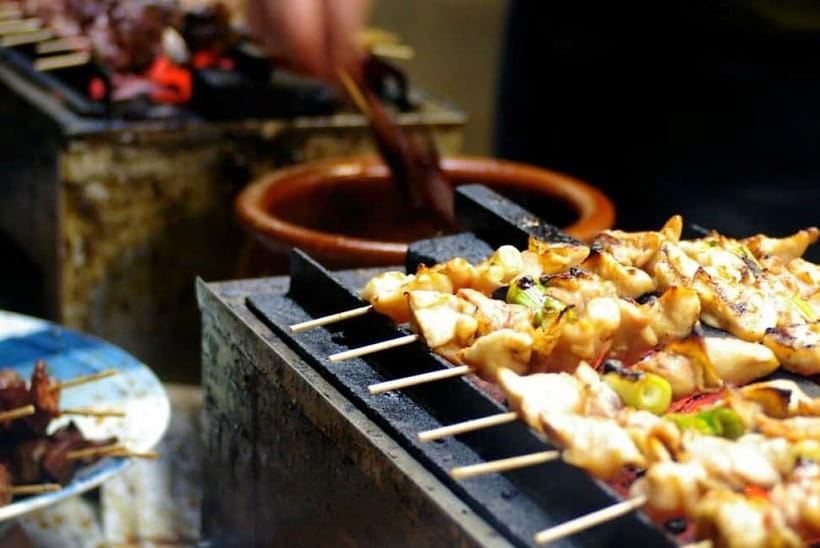
- Yurakucho after work: Eat grilled yakitori in the lantern-lit alleys where office workers gather in the evening.
- Hands-on Tsukishima cooking: Prepare monja-yaki at the hotplate in the district known for this Tokyo specialty.
- Seasonal wagashi: Try Japanese sweets while learning how ingredients, seasons, and presentation shape them.
- Small group format: With no more than eight people, it is easier to ask questions and keep the meal social.
- Good practical value: The $89 price includes three food tastings, two drinks, a guide, and two subway tickets.
A Tokyo evening that starts underground
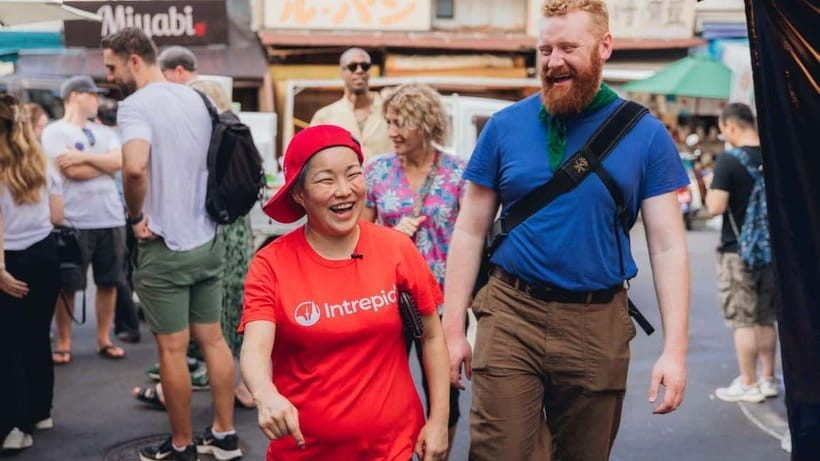
Meet your English-speaking guide outside Mitsukoshi Ginza, beside the life-size seated Lion statue. The meeting point is close to Ginza Station’s A7 exit, served by the Ginza, Hibiya, and Marunouchi subway lines. Give yourself time to find the correct exit, since Ginza Station is large and its underground passages can be confusing.
The first stop is a depachika, the Japanese word for a department-store basement food hall. This is not simply a supermarket. You may find carefully arranged boxed meals, grilled foods, sweets, pickles, and seasonal delicacies presented with the care usually given to gift items.
I like beginning here because it gives you useful food and shopping context before the restaurant stops. Your guide can explain how to read the displays, what certain foods are, and the polite habits connected with buying and receiving Japanese food. It is also a practical way to see what Tokyo residents pick up for dinner or bring as a present.
The depachika visit is more about learning and looking than filling up. Keep some appetite for the later stops, since the tour includes yakitori, monja-yaki, wagashi, and drinks.
More Tokyo walking tours:
- Tokyo Tsukiji Fish Market Food and Culture Walking Tour
★ 5.0 · 3,184 reviews - Tokyo: Imperial Palace and Shogun Historical Walking Tour
★ 5.0 · 2,251 reviews - Tokyo: Shinjuku Local Bar and Izakaya Guided Walking Tour
★ 4.9 · 1,794 reviews
Yakitori in Yurakucho’s after-work alleys
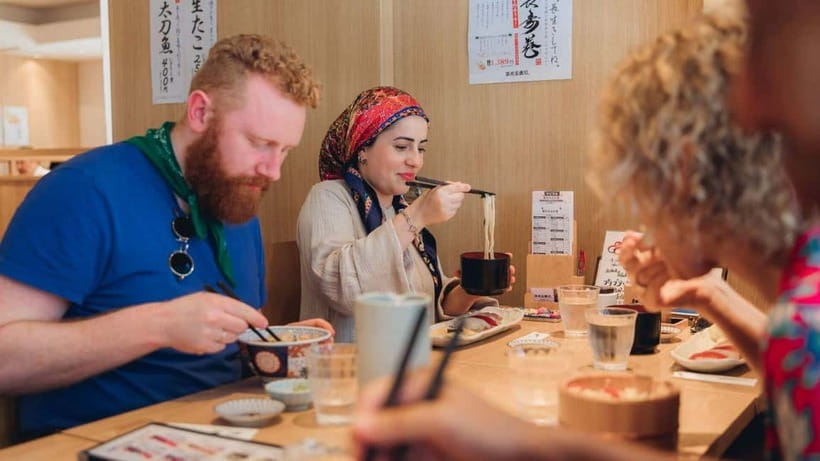
From Ginza, the route heads toward Yurakucho, an area known for its narrow dining alleys and evening energy. Here, yakitori is served as grilled skewers, often prepared quickly over charcoal or another hot grill. The focus is on simple food cooked well and eaten in a relaxed setting.
This is one of the strongest parts of the walk for first-time visitors. Yurakucho’s restaurant lanes show a side of Tokyo that is easy to miss if you stay with major attractions and polished dining rooms. Office workers come here after work, and the atmosphere is informal, close, and sociable.
Your tasting includes yakitori, and you can watch how the skewers are handled and cooked. The tour also describes why these small restaurants matter in Tokyo life. You are not only tasting meat or vegetables on a stick. You are seeing how people use food to mark the end of the workday.
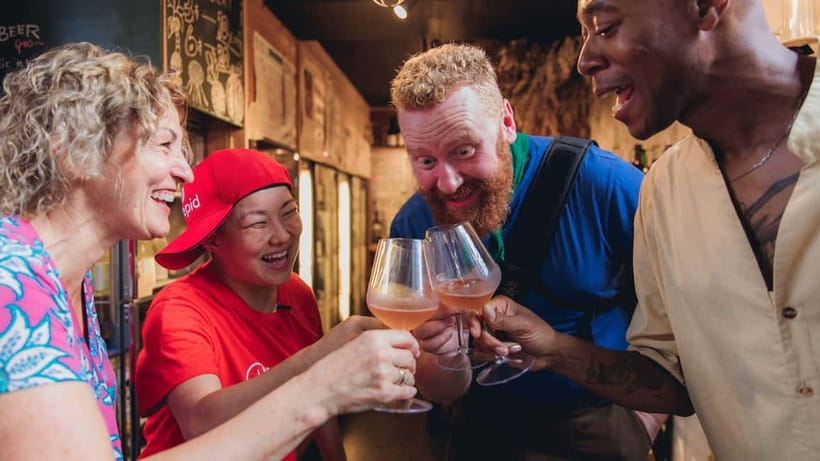
Two local drinks are included during the tour. Depending on age and the arrangement at the stops, these may be sake, beer, or a soft drink. Japan’s legal drinking age is 20, so anyone under 20 receives non-alcoholic drinks. Additional food and drinks cost extra.
The setting may be tight. Small neighborhood eateries are part of the appeal, but they do not always offer much room or the calm of a large restaurant. If you want a quiet, spacious dinner, this is not the right format. If you want a brief look at ordinary evening dining, it works well.
Tsukishima and the hotplate lesson
The route continues by subway to Tsukishima Monja Street, the area associated with monja-yaki. Two subway tickets are included, which is useful because the neighborhoods are not all within one easy walk. The tradeoff is that subway stations can involve stairs and longer passages.
Monja-yaki is a savory batter-based dish cooked on a table hotplate. It is softer and less set than okonomiyaki, and the cooking method is part of the fun. At the restaurant, your food is prepared in front of you, and you get a chance to help cook it yourself.
This hands-on stop gives the tour a welcome change of pace. At the yakitori restaurant, the grill work is mainly handled by the staff. Here, you sit around the hotplate and take part. Your guide can help with the technique, so you do not have to arrive knowing how to use the scraper or manage the mixture.
The tour may also include okonomiyaki at this stop, though the stated core tasting is monja-yaki. The food is casual and filling rather than delicate. Expect a communal cooking experience, not a restaurant where every plate arrives finished and carefully arranged.
I especially like this part for visitors who want to understand how Japanese food can be social. The cooking becomes a shared activity, and the small group makes it easier to follow instructions. It also helps to approach monja-yaki with an open mind. Its soft texture may be unfamiliar if you expect a crisp pancake.
Seasonal wagashi and the meaning behind sweets
The wagashi stop brings a quieter note to the evening. Wagashi are traditional Japanese sweets, often made with ingredients such as red bean paste and mochi. Their shapes, colors, and flavors can reflect the season, making them more than a quick sugar fix.
Your guide explains how Japanese ideas about time of year, ingredients, and appearance influence these treats. This context matters because wagashi can look simple at first glance. The point is not only whether you like the sweetness. It is also how the sweet fits into Japanese customs and visual taste.
This stop may be less immediately popular than yakitori for some people. Red bean paste and mochi have textures that are unfamiliar to many visitors. Still, it earns its place on the route because it adds balance. Without it, the evening would be mostly grilled and hotplate food. With it, you see a more careful and seasonal side of Japanese eating.
The tour includes one wagashi tasting as part of the three food stops. Extra food is not included, so do not assume you can turn the tour into a full dinner by ordering freely at every venue.
A completely different kind of day in Tokyo:
- Mt Fuji and Hakone 1-Day Bus Tour Return by Bullet Train
★ 5.0 · 26,383 reviews - 1-Day Tokyo Bus Tour
★ 5.0 · 14,250 reviews - Tokyo: teamLab Planets TOKYO Digital Art Museum Entry Ticket
★ 4.6 · 9,779 reviews - Mt Fuji & Hakone Cruise, Drum Show Bullet Train 1 Day from Tokyo
★ 4.0 · 7,413 reviews
What the $89 price really covers
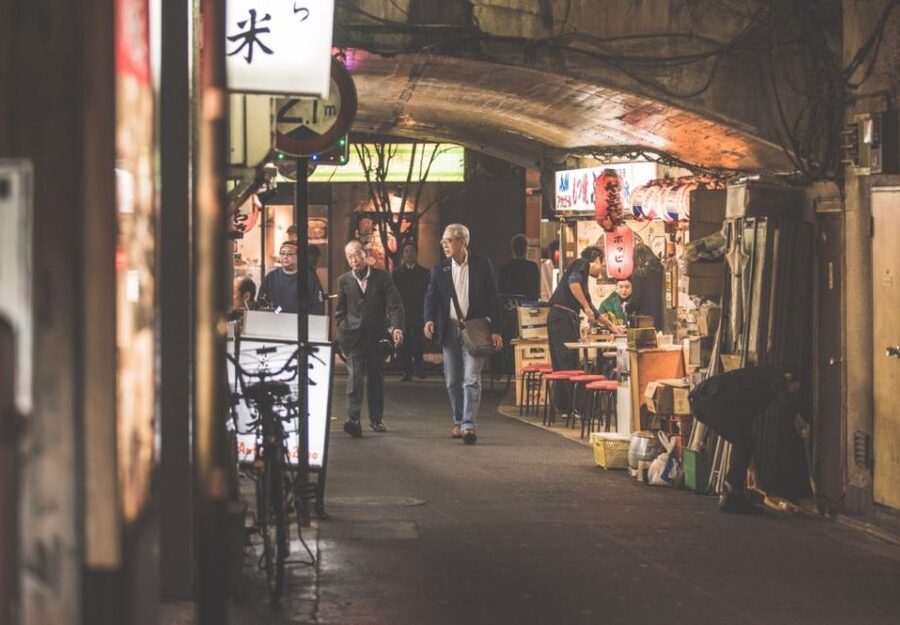
At $89 per person, this is not the cheapest way to eat in Tokyo. You can find yakitori, monja-yaki, and sweets on your own for less, especially if you are comfortable ordering in Japanese and navigating local restaurants.
The value comes from the structure. Your fee includes an English-speaking local guide, two subway tickets, three food tastings, two drinks, and the chance to meet local cooks while moving between several neighborhoods. You are also paying for help with food etiquette and ordering, which can remove much of the guesswork on a first evening.
The maximum group size is eight. That limit matters more here than it would on a sightseeing bus tour. Restaurants may be small, the hotplate activity needs attention, and questions about ingredients or customs are easier to ask when the group is not large.
I would see this as a strong first-night option for someone who wants a guided introduction before exploring Tokyo’s food scene alone. It is less valuable for a confident repeat visitor who already knows how to use the subway, order at small restaurants, and choose local specialties.
Past guides have included Tsunematsu Hidenori, Yuki, Kirir, Meg, and Yoshi, but your guide will depend on the date. The important feature is the live English guidance, not a guaranteed individual guide.
Walking, subway travel, and the pace of the evening
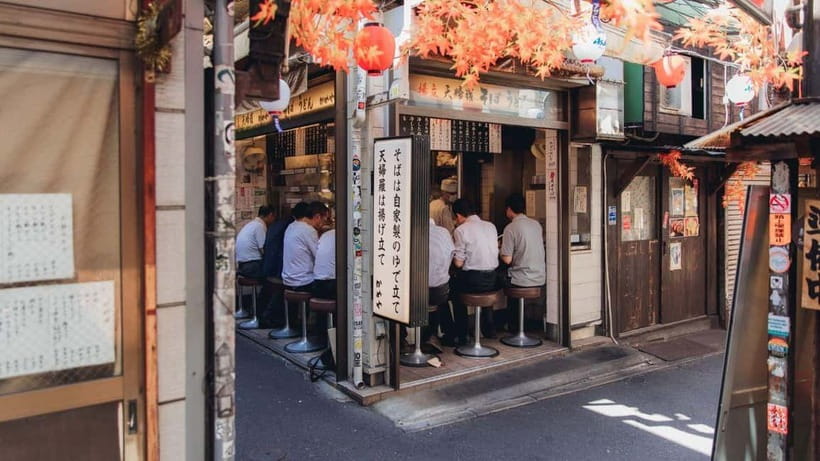
The tour lasts three and a half hours. It combines neighborhood walks, restaurant time, and subway transfers. One previous participant estimated about 9,000 steps, while another found the walking and stairs too demanding for an 83-year-old companion.
That gives you a useful picture of the pace. This is not a strenuous hike, but it is not a sit-down tasting in one building either. Wear comfortable shoes and be ready for station stairs. If you have limited mobility, contact the provider before booking, since the route includes public transportation and establishments that may not be designed for easy access.
The evening begins and ends in Ginza, but the middle takes you through Yurakucho and Tsukishima. That variety is part of the point. You get a sense of how different nearby districts feel after work, rather than spending the entire evening in one restaurant.
The route order may shift to suit restaurant hours or local conditions. The planned experience covers the depachika, Yurakucho, Tsukishima, and wagashi elements described above. Allow the full 210 minutes rather than planning a tightly timed show or dinner immediately afterward.
Food restrictions and age rules
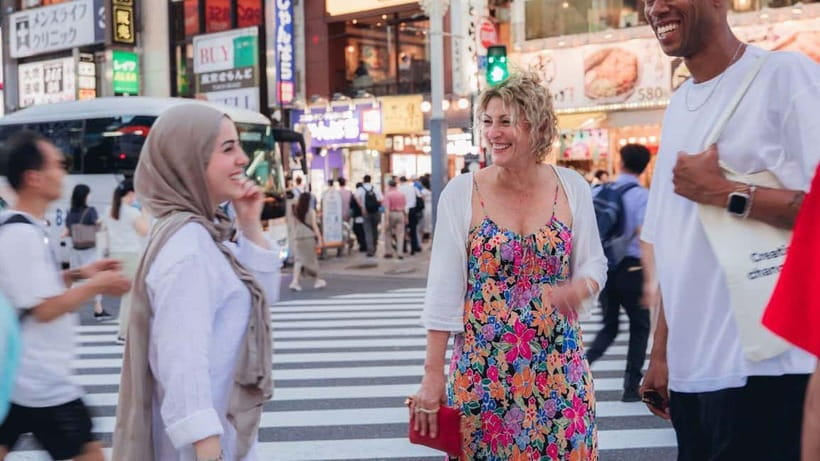
This tour is not suitable for every diet. Vegetarian, vegan, and gluten-free options are not available, and the restaurants cannot accommodate all dietary requirements. If you have a serious allergy or need strict ingredient control, I would choose a different food tour.
The activity accepts participants aged 12 and older. Alcohol is only served to people who are legally allowed to drink in Japan, which means age 20 and over. Younger participants receive soft drinks instead.
The food is approachable for many first-time visitors, but some flavors and textures may be new. Yakitori is usually the easiest entry point. Monja-yaki is more about the hotplate method and texture. Wagashi is the most likely to divide opinions, especially if you are not used to red bean paste or mochi.
You should also tell the guide about food concerns before the tour begins, even though the stated restrictions mean substitutions cannot be promised. The guide can explain what you are being served, but this is not a custom-designed dietary tour.
What past experiences suggest about the guide service
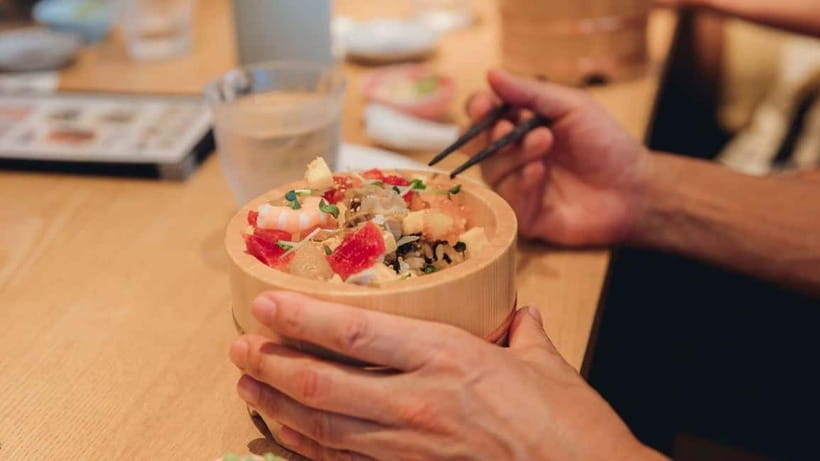
The most consistent strength is the guide. Tsunematsu Hidenori was praised for taking people to places they would not have found alone and for making the conversation enjoyable. Yuki was described as patient and well informed, while other guides were noted for answering questions and keeping the group comfortable.
That matters because the food itself is only half the experience. A dish like wagashi can seem ordinary if nobody explains its seasonal role. A narrow yakitori alley can feel confusing if you do not know how the setting works. A guide gives these places context and helps you take part without worrying about every small custom.
There are a few practical warnings. One person had trouble finding the guide at the meeting point after booking through a third party. Make sure you know the provider name, Intrepid Urban Adventures, and look for the Lion statue outside Mitsukoshi Ginza rather than waiting somewhere inside the station.
A past visit also encountered a noisy child in a small restaurant. That was an isolated venue issue, not a feature of the tour, but it points to a broader truth: local eateries can be cramped, noisy, and unpredictable. You get atmosphere, not polished control.
Who should book this Tokyo food walk?
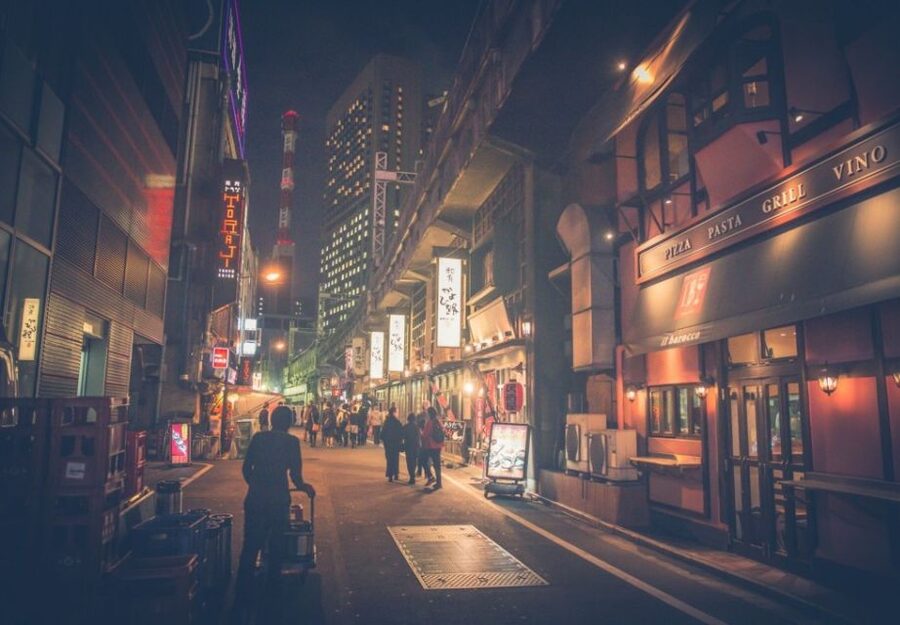
I would recommend it to first-time Tokyo visitors who want an easy introduction to Japanese food customs and evening neighborhoods. It is also a good fit if you enjoy asking questions, trying several small tastings, and meeting other people in a group of eight or fewer.
It suits you particularly well if you:
- Want help with ordering and restaurant etiquette
- Like casual neighborhood food more than formal dining
- Prefer several small tastings to one long meal
- Enjoy hands-on cooking
- Are comfortable with walking and subway stairs
- Eat an unrestricted diet
I would skip it if you need vegetarian, vegan, or gluten-free food, dislike communal hotplate cooking, or want a tour built around large portions. I would also think twice if you have a mobility concern and cannot manage station stairs or several hours on your feet.
Cancellation is flexible up to 24 hours before the start, with a full refund, and you can reserve now and pay later. Those terms help if your Tokyo schedule is still changing, but they do not alter the food restrictions or walking demands.
Should you book Tokyo After 5?
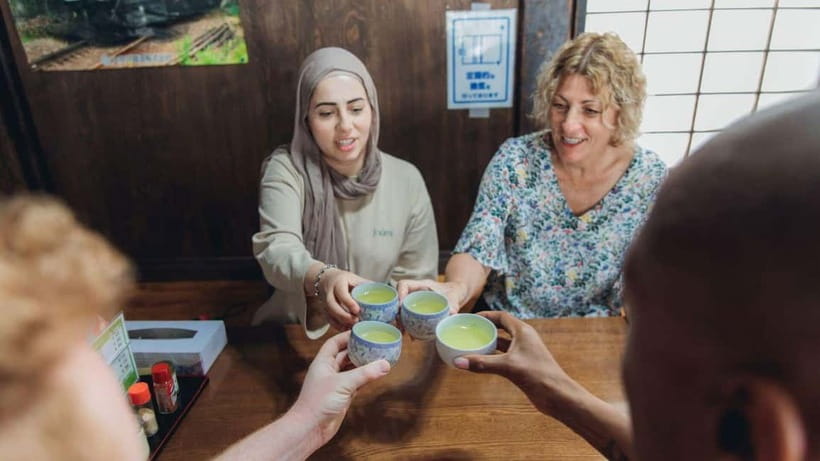
Book this tour if you want to understand how Tokyo eats after work, not just sample famous dishes. The combination of a depachika, Yurakucho yakitori, Tsukishima monja-yaki, and wagashi gives you a broad look at everyday food culture in a manageable evening.
The strongest reasons to go are the small group, the English-speaking guidance, and the chance to cook monja-yaki yourself. The main reasons to hesitate are the lack of dietary alternatives, possible stairs, and the fact that $89 buys a guided introduction rather than a full dinner.
For a first evening in Tokyo, I think the price is reasonable if you value local context and simple logistics. For experienced Tokyo diners, it may feel less necessary. Check your diet, walking ability, and appetite first. If those line up, this is a friendly way to start the night in Ginza and finish with a better sense of how Tokyo locals eat, drink, and relax.
FAQ
Where does the tour meet?
It meets outside Mitsukoshi Ginza, beside the life-size seated Lion statue. The meeting point is near the A7 exit of Ginza Station.
Which subway lines serve the meeting point?
Ginza Station is served by the Tokyo Metro Ginza Line, Hibiya Line, and Marunouchi Line.
How long does the tour last?
The tour lasts 210 minutes, or three and a half hours.
How many people can join?
The group is limited to a maximum of eight participants.
What food tastings are included?
The tour includes yakitori, monja-yaki, and wagashi tastings.
What drinks are included?
Two local drinks are included. They may be sake, beer, or a soft drink.
Are subway tickets included?
Yes. Two public transportation subway tickets are included.
Can vegetarians, vegans, or people avoiding gluten join?
The tour does not offer vegetarian, vegan, or gluten-free options. The participating establishments cannot cater to all dietary requirements.
What is the minimum age and how is alcohol handled?
Participants must be at least 12 years old. The legal drinking age in Japan is 20, and anyone under 20 receives non-alcoholic drinks.
Newly reviewed around Tokyo
- Tokyo Asakusa:Calligraphy & Make T-shirt Activity★ 5.0 · 62 reviews
- Intercity Shuttle, Tokyo to Haneda /Narita /Yokohama /Makuhari★ 5.0 · 5 reviews
- 1 Hour Travel around Tokyo with a Professional Photographer★ 5.0 · 3 reviews
- Travel Tokyo with Your Own Personal Photographer★ 5.0 · 43 reviews
- Train in Samurai Swordsmanship and Defeat the Demon in Tokyo★ 5.0 · 5 reviews
- Shuttle Van 6hr Tokyo Tour to-and-from Tokyo, Yokohama and Narita★ 5.0 · 9 reviews
- Kickboxing & Body Training with EX-Pro Fighter★ 5.0 · 4 reviews
- Traditional Japanese Knife Sharpening Class★ 5.0 · 18 reviews
Walking Tours, compared.
Tokyo Tsukiji Fish Market Food and Culture Walking Tour
Read our review →
Imperial Palace and Shogun Historical Walking Tour
Read our review →
Shinjuku Local Bar and Izakaya Guided Walking Tour
Read our review →
Asakusa Walking Tour with Sensoji Temple Visit
Read our review →
Tokyo Castle & Imperial PalaceーShogun Walking Tour
Read our review →
Browse the lists this tour appears in