
Reviewed · TOKYO SUMO EXPERIENCES
Sumo Wrestlers Morning Practice Tour – Tokyo Sumida District
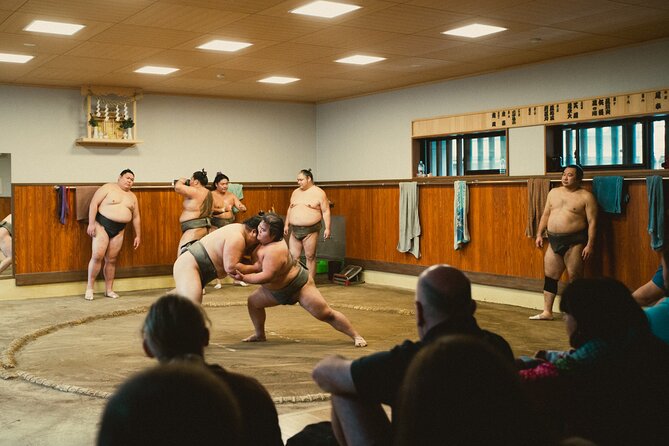
Sumo practice is not a staged show. It is a serious morning workout, held inside a working stable in Tokyo’s Sumida District. You sit close to the ring and watch wrestlers repeat drills, stretch, grapple, and follow the strict routines that shape this ancient Japanese sport.
I like two things here: the close view of training and the guide’s help with Japanese customs. I also like the early start. By the time you finish, you still have most of the day for Tokyo Skytree, Asakusa, or another part of the city.
The main caution is simple: you sit on the floor for about 90 minutes, usually cross-legged, with no chairs. The session is also practice, not a tournament bout, so the action can be quiet or less dramatic than the promotional images suggest.
Key things to know before booking
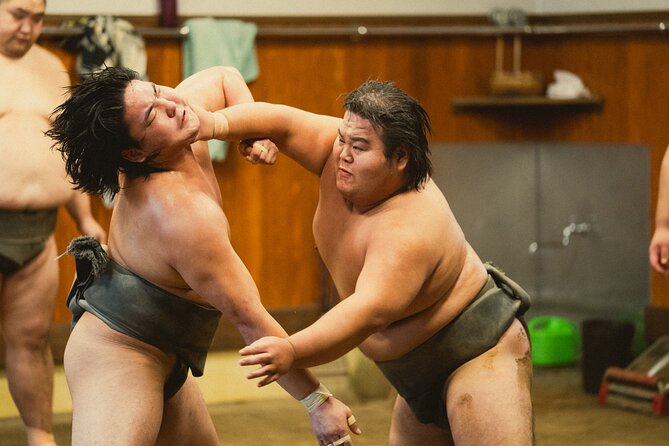
- You watch a real morning practice: The wrestlers train for themselves, not for an audience, so the pace and intensity vary by day.
- The stable is reached on foot: Meet near Oshiage Station and Tokyo Skytree, then walk about 15 minutes to the stable.
- Sitting on the floor is required: Chairs are not available, and you must keep your legs from pointing toward the ring.
- The guide handles cultural details: You receive explanations about sumo rules, Shinto links, training, and proper behavior.
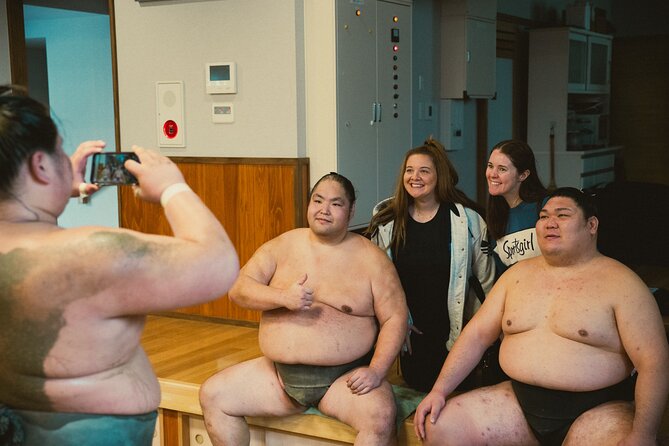
- Photos may be possible afterward: If the practice schedule allows, you can take photos with wrestlers, but no flash, shutter sounds, or social media uploads are allowed.
- The morning timing is useful: The tour begins at 7:30am and usually lasts about two hours, leaving your afternoon open.
What this Sumida sumo experience really offers
A tournament gives you noise, ceremony, rankings, and full bouts. This tour gives you something different: a look at the work behind the spectacle.
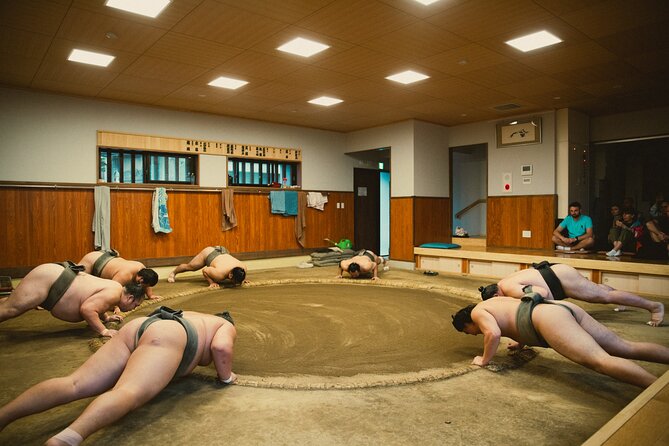
You watch wrestlers train inside their stable, the place where they live and practice. The ring is not just a sports platform. It is a sacred space, and the rules around it are part of what makes the visit meaningful. You remove your shoes, sit quietly, and watch without moving around.
That setting changes your view of sumo. The athletes may be famous for size and power, but the practice also shows flexibility, balance, speed, and repetition. One of the most striking parts of the experience is seeing how agile the wrestlers can be.
The tour is capped at 25 people. That is not a tiny group, but it is manageable for a room where everyone must remain seated and quiet. Depending on where you sit, you may have a clear front-row view or one row of people between you and the ring. The guide helps explain what is happening, though the amount of commentary can vary.
More Tokyo sumo experiences:
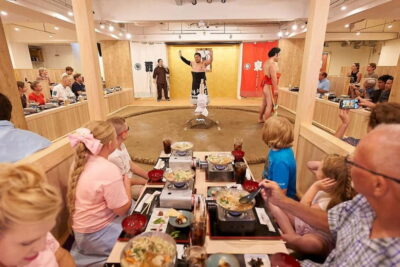
- Tokyo: Sumo Show and Dining Experience
★ 4.8 · 2,742 reviews - the SUMO show
★ 5.0 · 1,960 reviews - Tokyo Shinjuku Sumo Show & Experience with Photo
★ 5.0 · 1,750 reviews
Meeting near Tokyo Skytree at 7:30am
Your morning starts at 1-chōme-8-21 Oshiage, Sumida City, near the foot of Tokyo Skytree. You are asked to arrive by 7:10am because the group leaves at 7:30am sharp.
This is a sensible meeting point. Oshiage is served by public transportation, and Tokyo Skytree gives you an easy landmark for finding the area. Still, do not treat the meeting point as the stable itself. The walk to the stable takes about 15 minutes, and the group returns to the Skytree area after the visit.
If you arrive late, contact the tour provider immediately. You may be told to go to the stable on your own, but you cannot enter unless the provider has contacted the stable. That makes punctuality important, not just polite.
Use the restroom before meeting the group. The tour asks you to remain quiet and seated for a long stretch, and restroom access during practice may be limited.
The walk is easy for most people, but rain changes the small details. You will remove your shoes at the stable, so bring a towel if your feet may get wet on the way there. Comfortable, modest clothing is the right choice.
The 15-minute walk to the stable
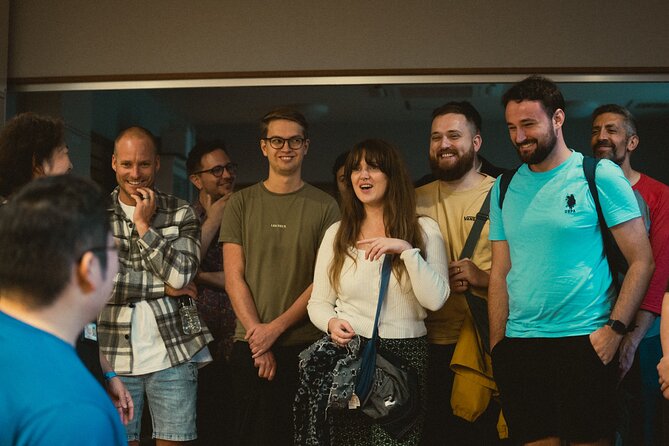
The walk gives your guide time to explain the basics before you enter. You may learn about sumo’s connection with Shinto, its rules, and the etiquette expected inside the stable.
That introduction matters because the visit has many rules that are not obvious to first-time spectators. The guide helps you avoid a careless mistake, such as stepping near the ring, pointing your feet toward it, or making noise during a drill.
The walk also creates a useful transition. You leave the busy tourist setting around Skytree and arrive at a place where the mood is formal and focused. Keep your phone ready for directions, but switch it to silent before entering.
Watching 90 minutes of serious training
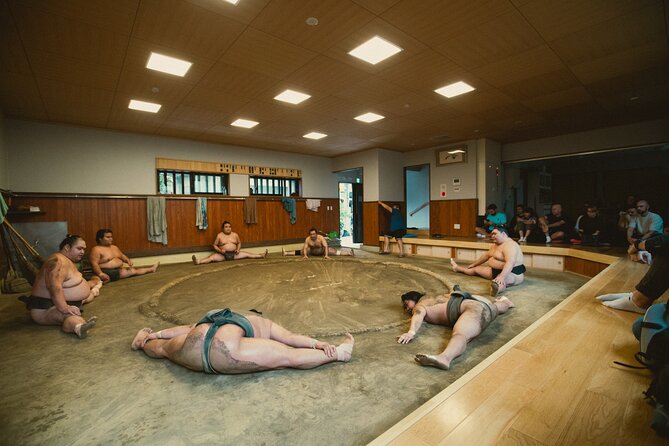
The central part of the tour lasts about an hour and a half. You sit on the floor and watch the wrestlers work through their daily routine.
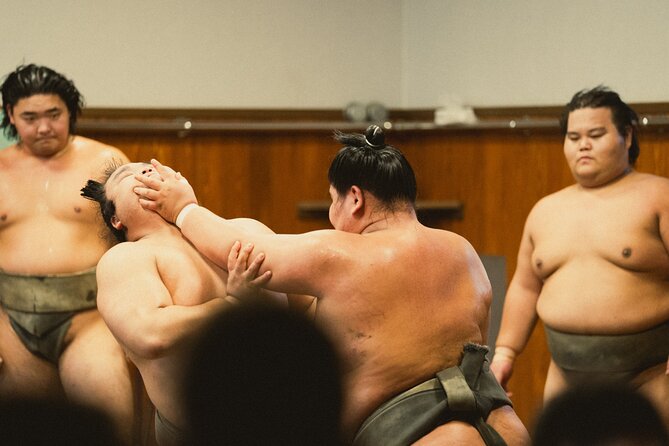
Expect repetition rather than a neatly packaged performance. Some sessions may include hard contact and forceful grappling. Other moments may focus on stretching, footwork, balance, or individual drills. The practice content depends on the day, and the session may finish earlier than planned.
That unpredictability is part of the deal. You are not buying a guaranteed series of dramatic matches. You are being allowed to observe a private training environment, and the wrestlers are there to train whether the group finds every exercise exciting or not.
The best way to watch is with patience. Pay attention to the small physical details: the control needed to maintain balance, the effort behind repeated movements, and the contrast between the wrestlers’ size and their flexibility. You may also gain a better sense of the discipline required to become a professional sumo wrestler.
The guide translates and explains, but do not expect constant narration. At times, the guide may keep quiet so the group can watch without interrupting the room. Some people appreciate that restraint. If you want more explanation about diet, training, or the sport’s rules, save questions for the end.
One especially useful feature is the chance to speak with the stable owner or manager after practice when the schedule permits. This can add practical insight into the wrestlers’ food, daily life, and training. The question-and-answer period may be more valuable than a long lecture during the exercises because you can ask about exactly what you have just seen.
More early morning tours in Tokyo:
- Tokyo: Sumo Morning Practice Viewing Tour
★ 4.8 · 570 reviews - Tokyo: Sumo Morning Training Visit
★ 4.4 · 370 reviews - Tokyo: Sumo Morning Practice Tour at Sumida City
★ 4.8 · 308 reviews - Tokyo Sumo Morning Practice Tour at Stable
★ 5.0 · 298 reviews
Sumo etiquette you must follow
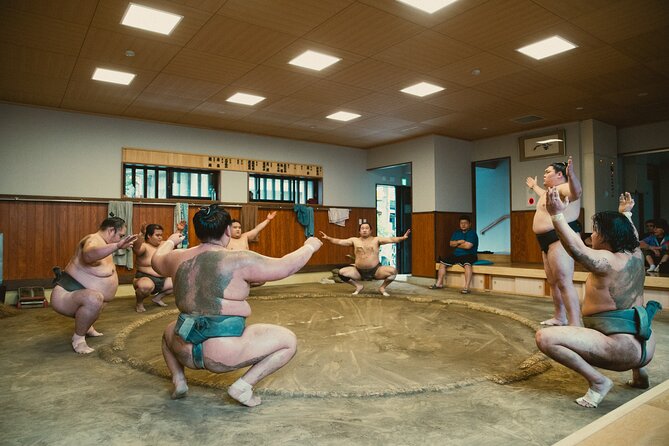
The etiquette is not decoration. It protects the training session and shows respect for the wrestlers.
You take off your shoes as soon as you enter and sit on the raised wooden floor. There are no chairs. Plan to sit cross-legged for roughly 1.5 hours, and do not stretch your legs toward the ring. Showing the soles of your feet to the wrestlers is considered rude.
During practice:
- Keep your phone on silent.
- Take photos only without flash or shutter sounds.
- Do not stand up or move around.
- Do not eat, chew gum, smoke, or bring candy.
- Water is allowed.
- Do not step onto the ring or the sandy ground.
- Remove sunglasses and hats.
- Wear modest clothing.
- Follow the guide’s instructions.
You may record video, but you cannot upload photos or videos to social media. That rule is easy to overlook, so decide in advance whether you can enjoy the visit without posting it.
Children aged six and older may join. They must watch quietly and stay in place. If a child becomes noisy or keeps moving, the group may be asked to leave the stable. This is not the best activity for a child who needs frequent breaks or cannot sit still.
Meeting the wrestlers after practice
If the timing works, the final 15 minutes allow for photos with the wrestlers. This is a pleasant finish, but keep your expectations flexible.
You may not receive a photo with every wrestler. The available athletes depend on the practice schedule, their duties, and the stable’s decision that day. Some people have received photos with a couple of wrestlers, while others hoped for a larger group picture.
The wrestlers can be warm and approachable after the formal practice ends. That contrast is part of the charm: during training, the room is quiet and strict; afterward, there may be a brief chance to meet the athletes and ask questions.
Do not treat the photo as the main reason to book. The real value is watching the practice up close. The photo is a bonus, and it may not happen if the session ends early or the stable needs to return to its normal routine.
What the guide adds
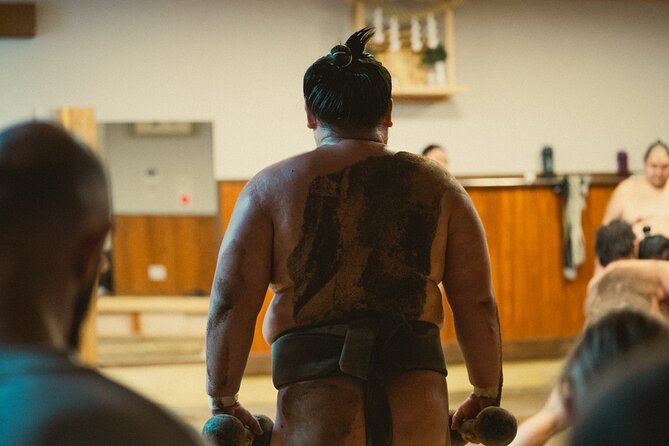
A guide is particularly useful here because the experience depends on quiet observation and local rules. You are not simply looking through a window. You need to understand where to sit, when to take photos, and why certain actions are forbidden.
The guide also translates questions and explains what you are seeing. Yuriko has received especially warm praise for being patient and clear, and the tour’s guides can help bridge the gap between a Japanese-only training environment and an English-speaking group.
The quality of the explanation can vary. Some people find the background on sumo excellent, while others want more detail about the training and the sport. If you already know a lot about sumo, the guide’s main value may be access and etiquette. If you are new to the sport, the explanations can help you understand the rituals and movements.
Ask about the rules, the wrestlers’ diet, and the stable’s daily routine during the question period. You are likely to get more from the visit if you take an active interest rather than waiting for a nonstop commentary.
How the $83.23 price measures up
At $83.23 per person, this is not a cheap sightseeing stop. The price makes more sense if you value access to a real stable, translation, a small-group setting, and the chance to see training from close range.
You are not paying for a guaranteed match. You are paying for entry into a place most visitors cannot casually visit, plus guidance through customs that would be difficult to manage alone. The tour also uses only the morning, so it does not consume a full day of your Tokyo itinerary.
The value drops if you mainly want hard-fought bouts. A tournament is the better choice for formal matches, crowd energy, and a complete competition setting. It may also be a poor fit if sitting on the floor is physically difficult or if you need to move around often.
For someone who already plans to visit Tokyo Skytree and wants a cultural activity nearby, the timing is convenient. You can finish the tour near Skytree and continue sightseeing without crossing the city again.
Timing, seasonal changes, and the early start
The standard meeting time is 7:30am, with arrival requested at 7:10am. That means you need to plan your train journey carefully and allow time to find the meeting point.
The practice normally lasts around 90 minutes, but the tour can be shorter or longer. Training may end earlier than expected, so keep your later plans flexible. The stated duration is about two hours, including the walk and photo period, not a promise that you will spend two full hours inside the stable.
During tournament season, the tour time can change. Check the provider’s direct message for the schedule that applies to your date. This is important if you are building a tight Tokyo itinerary.
The early start is both a cost and a benefit. You must wake up early, but the tour leaves the rest of the day open. If you are trying to fit several major sights into one day, this is more practical than an afternoon activity.
Who should book this tour
I would choose this experience if you want to understand sumo as a discipline and cultural practice, not just as a sport. It suits first-time visitors who want help with etiquette, photographers who can follow strict no-flash rules, and anyone interested in seeing athletes train at close range.
It is also a good match for people who enjoy quiet observation. You need to sit still, stay silent, and accept that the wrestlers are not performing for you.
I would hesitate if you want guaranteed contact bouts, a full group photo, or a highly scripted explanation. I would also think twice if you cannot sit cross-legged on the floor for about 90 minutes.
The tour is rated 4.9 out of 5, with 98 percent recommending it, but those numbers should not replace reading the conditions carefully. The strongest response comes from the access, the athletes’ discipline, the guide’s assistance, and the chance to see sumo up close. The weaker experience comes when someone expects a tournament-style show.
Should you book the Sumida morning practice?
Book it if you want the working side of sumo. You will see the athletes train at close range, learn how much etiquette shapes the visit, and possibly speak with the stable manager or take a photo afterward.
Skip it if you need comfort, constant narration, or guaranteed dramatic wrestling. The floor seating is firm, the room must stay quiet, and the practice may be shorter or less intense than expected.
For the right visitor, this is one of Tokyo’s more unusual morning activities. It gives you a close look at a Japanese tradition while still leaving the afternoon free. Just arrive early, dress modestly, keep your expectations realistic, and treat the stable as a place of work rather than a showground.
FAQ
Where does the sumo morning practice tour begin?
It begins at 1-chōme-8-21 Oshiage, Sumida City, Tokyo, near Tokyo Skytree and the nearby train station. The group meets at 7:30am and returns to the same general meeting point after the tour.
What time should I arrive?
You should arrive by 7:10am. The group leaves at 7:30am sharp.
How long does the tour last?
The tour takes about two hours, including the walk to the stable, roughly 90 minutes of practice, and the closing photo period. The practice may end earlier or later depending on the day.
Is there seating inside the sumo stable?
There are no chairs. You must sit on the floor, generally cross-legged, for approximately 1.5 hours.
Can I take photos during the practice?
Photos are allowed without flash or shutter sounds. Sunglasses and hats are not allowed inside the stable.
Can I post photos or videos on social media?
No. You may take videos, but photos and videos from the tour cannot be uploaded to social media platforms.
Are children allowed to join?
Children aged six and older may join. They must remain quiet and still during practice. If a child is noisy or keeps moving, the group may be asked to leave the stable.
What is the cancellation policy?
You can cancel at least 24 hours before the experience starts for a full refund. Cancellations or changes made less than 24 hours before the start time are not accepted for a refund.
Newly reviewed around Tokyo
- Tokyo Asakusa:Calligraphy & Make T-shirt Activity★ 5.0 · 62 reviews
- Travel Tokyo with Your Own Personal Photographer★ 5.0 · 43 reviews
- Intercity Shuttle, Tokyo to Haneda /Narita /Yokohama /Makuhari★ 5.0 · 5 reviews
- 1 Hour Travel around Tokyo with a Professional Photographer★ 5.0 · 3 reviews
- Train in Samurai Swordsmanship and Defeat the Demon in Tokyo★ 5.0 · 5 reviews
- Shuttle Van 6hr Tokyo Tour to-and-from Tokyo, Yokohama and Narita★ 5.0 · 9 reviews
- Kickboxing & Body Training with EX-Pro Fighter★ 5.0 · 4 reviews
- Traditional Japanese Knife Sharpening Class★ 5.0 · 18 reviews
Tokyo Sumo Experiences, compared.
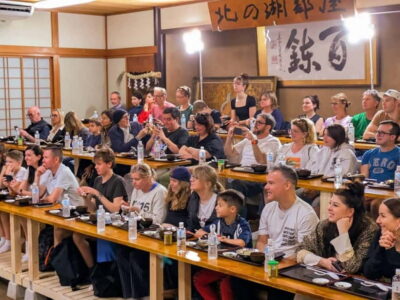
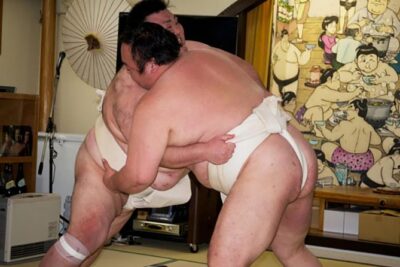
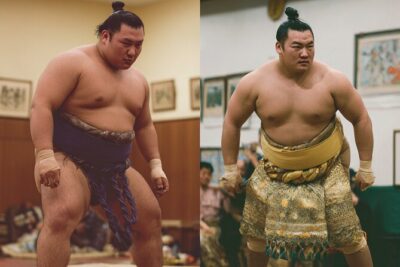
Tokyo Shinjuku Sumo Show & Experience with Photo
Read our review →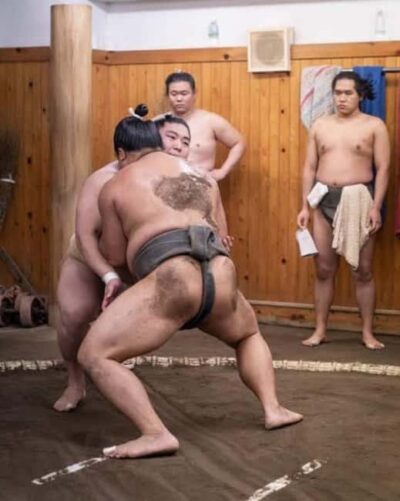

Luxury Sumo Show Experience & Japanese cuisine & Drink
Read our review →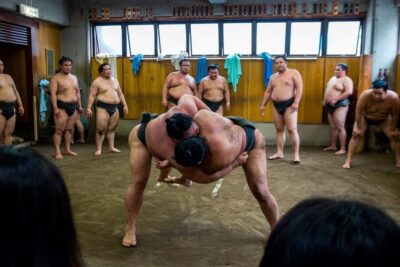
Tokyo Sumo Experience: Chanko & Mochi with a Former Pro
Read our review →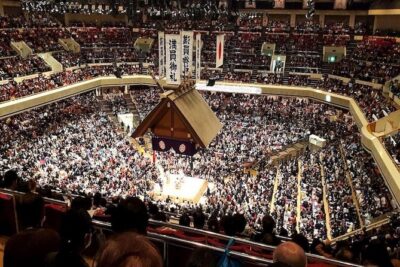
Ultimate Sumo Tournament: Tokyo, Osaka, Nagoya, Fukuoka
Read our review →Browse the lists this tour appears in