
Reviewed · TOKYO SUMO EXPERIENCES
Sumo Practice Viewing Guided Tour and Photo with Sumo Wrestlers
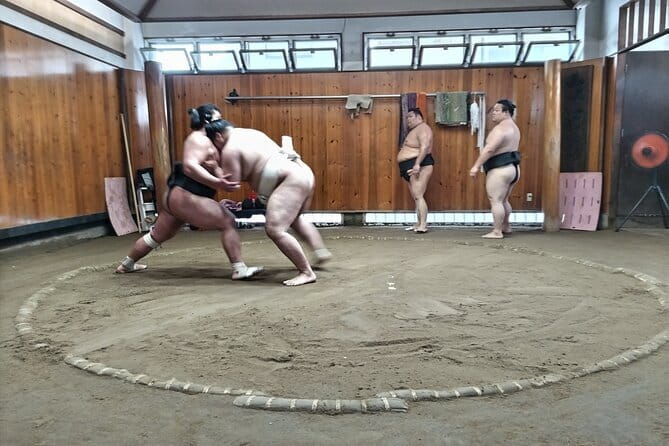
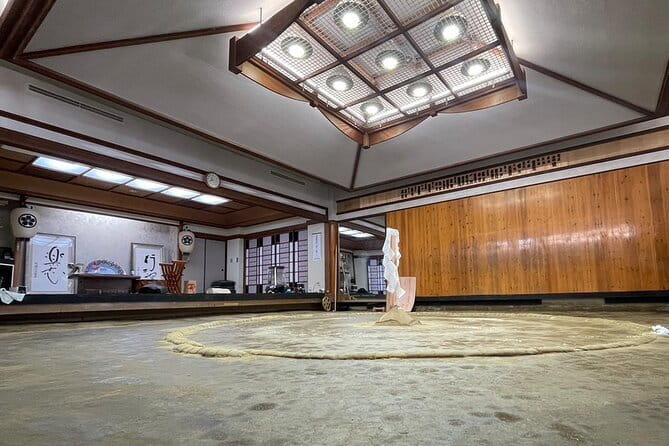
Seeing sumo at Tatsunami-beya means watching the sport where it is built, not from a stadium seat. Wrestlers train in a sacred stable, close enough for you to notice the force of every movement. The room stays silent, so the sound of bodies striking the floor becomes part of the experience.
I like the rare access to a working stable and the chance to take a photo with a wrestler after practice. I also like the English guide and audio service, which give you context without breaking the strict rules of the training hall.
The main caution is simple: this is practice, not a tournament. You may watch only six to eight wrestlers doing repeated exercises, and the active Yokozuna may not appear. If you want matches, noise, and a full arena show, this tour may feel too quiet and spare.
Key details before you book
- Practice takes place at Tatsunami-beya, a working sumo stable where wrestlers live and train.
- The 8:30 am visit lasts about 80 minutes to two hours, depending on the practice schedule.
- Silence is required during training, but an audio guide provides explanations as you watch.
- You sit on a wooden floor with a cushion, though chairs can be requested in advance.
- A photo with the wrestlers is included, along with JTB Sunrise Tours original merchandise.
- The Yokozuna is not guaranteed, even though the stable currently houses an active wrestler at that rank.
Why a sumo stable feels different from a tournament
A professional sumo tournament is a polished public event. You see ceremony, music, crowds, colorful aprons, and bouts that last only seconds. A stable gives you the working side of the sport: repetition, discipline, strength training, and long stretches of concentration.
Tatsunami-beya is not a museum or a theater set. It is a place where wrestlers train every day in pursuit of higher rank. That explains the strict etiquette. The ring is sacred, and your behavior affects people who are working, not performing for an audience.
You should expect a quiet, serious room. Talking and whispering are forbidden during practice. You must stay seated, avoid sudden movement, and keep your phone silent or switched off. Flash photography is not allowed, and you cannot touch a wrestler or step onto the ring without permission.
These rules may sound severe, but they help you understand the setting. Sumo training is not arranged around sightseeing. You are being allowed to observe it on its own terms.
More Tokyo sumo experiences:
- Tokyo: Sumo Show and Dining Experience
★ 4.8 · 2,742 reviews - the SUMO show
★ 5.0 · 1,960 reviews - Tokyo Shinjuku Sumo Show & Experience with Photo
★ 5.0 · 1,750 reviews
The 10-minute introduction at 8:30 am
The visit begins at Tatsunami-beya, at 1-chome-16-5 Hashiba in Taito City. A National Government Licensed English Guide Interpreter explains the basic customs before you enter the viewing period. This short talk matters because a mistake inside the stable can be more than an awkward tourist moment.
You learn how to sit, where to place your feet, and why you must not move around. Do not stretch your legs toward the ring, since showing the soles of your feet to the wrestlers is considered impolite. Hats and sunglasses should come off indoors, and shoes must be removed and placed neatly.
The guide also explains what you are seeing. Sumo exercises can look repetitive if you do not know their purpose. With some background, the squats, footwork, pushing drills, and warmups become easier to follow as parts of a demanding training routine.
The tour information does not name the individual guide, so you should not expect a particular interpreter. One practical point is worth noting: the quality of the explanation may depend on how clearly you hear the guide and use the audio equipment. Bring patience, sit where instructed, and pay attention during the opening talk.
Forty-five minutes of close-up practice
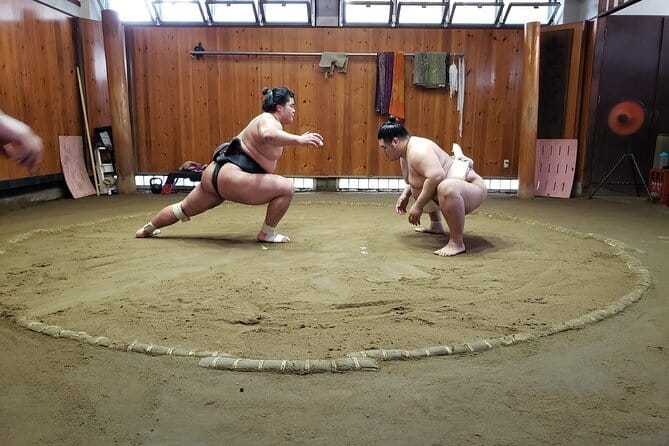
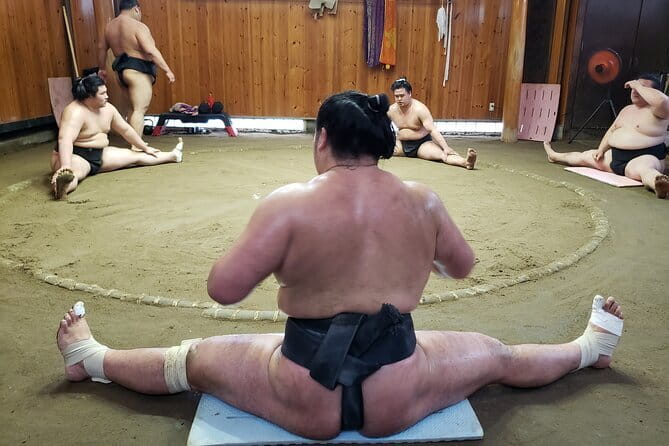
The main portion lasts about 45 minutes, though it can be shorter or longer depending on how many wrestlers are training. You sit on tatami mat flooring with a provided cushion. The wooden floor may be uncomfortable for some people, and chairs are available for those who need them, but you must request a chair in advance in the booking remarks.
This is close viewing. You are not watching from a distant stadium seat. You can see the physical effort in each movement and notice how much of sumo depends on balance, timing, posture, and raw power.
The audio guide is useful here. Since speaking is strictly prohibited, it gives you explanations while the practice continues. This arrangement lets you learn without turning the stable into a tour group conversation.
Still, keep your expectations realistic. Practice can be repetitive. One session may involve only six to eight trainees working through exercises. A visitor expecting dramatic bouts may feel that the tour is simply watching athletes work out. That is an accurate description of part of the experience.
I would book this for someone who values access and observation more than spectacle. If you enjoy seeing how a sport is prepared behind the scenes, the quiet pace is a strength. If you need constant action, the silence and repetition may test your patience.
The timing also depends on the stable. The advertised practice period is an estimate, not a promise. If fewer wrestlers are training, viewing may end early and no refund is offered. If practice runs longer, your visit may continue past the planned end time.
The Yokozuna question
Tatsunami-beya currently houses an active Yokozuna, the highest rank in professional sumo. That detail adds real interest to the booking, but you need to read it correctly. The Yokozuna does not appear at every practice session.
Do not book this tour solely for a guaranteed sighting of the top-ranked wrestler. Consider that appearance a bonus. The stable remains worthwhile because you are watching a functioning training hall, even if the Yokozuna is absent.
This is also a good place to understand the difference between rank and daily work. Sumo wrestlers at every level train hard, and the stable environment shows the routine behind public competition. The tour gives you a closer look at that process than a tournament ticket usually can.
More guided tours in Tokyo:
- Tokyo 6hr Private Tour with Government-Licensed Guide
★ 5.0 · 3,902 reviews - Tokyo: Shinjuku Local Bar and Izakaya Guided Walking Tour
★ 4.9 · 1,794 reviews - Tokyo: Private City Highlights Tour with Local Guide
★ 4.8 · 1,433 reviews - Tokyo: Tsukiji Fish Market Guided Walking Tour
★ 4.9 · 1,397 reviews
Fifteen minutes with the wrestlers
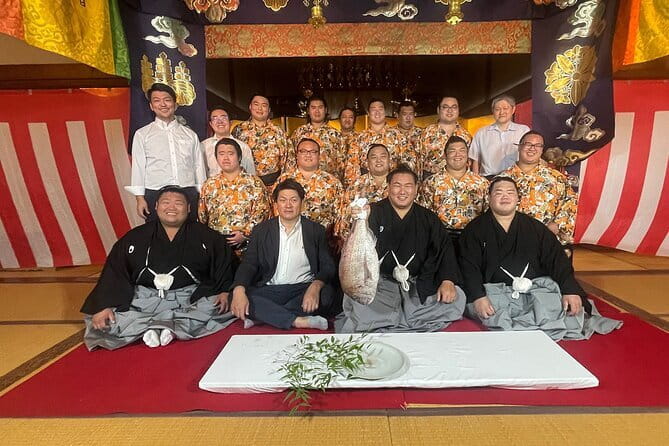
After practice, the mood changes. You can take a commemorative photo with the wrestlers, then view some of their personal belongings and use the short question-and-answer period. This is the part that gives the morning a clear finish and a personal connection.
The photograph is included in the experience, rather than being an optional extra sold afterward. You should still follow the staff’s instructions about where to stand and when contact is allowed. The rules say not to touch wrestlers without permission.
There is also original JTB Sunrise Tours merchandise included. Food and drinks are not part of the visit, and eating or drinking inside the stable is prohibited. Think of the final 15 minutes as a brief cultural exchange, not a long meet-and-greet.
The photo can be especially valuable if you have children or family members who want a tangible reminder of Japan. Keep in mind that children under four cannot join, and anyone under 18 needs written parental permission. Anyone under 15, or not yet enrolled in middle school, must attend with a parent or guardian.
Reaching Tatsunami-beya from Asakusa
The stable is near public transportation, but the entrance is about a 30-minute walk from Asakusa Station on the Toei, Tokyo Metro, and Tobu lines. That walk may be pleasant if you have comfortable shoes and a little extra time, but you should not treat the meeting point as being directly beside the station.
You can also use the Toei Bus East 42-Ko route or the Taito Ward Kita-Megurin loop bus. Plan your route before the morning of the visit, since the start time is fixed at 8:30 am. Arriving late could be difficult because the stable follows its own training schedule and the visit asks you not to leave midway.
Large luggage and suitcases cannot come inside. Strollers are also not allowed. Use the restroom before entry because facilities are limited. These small preparations make a real difference in a quiet setting where you cannot casually step outside whenever you like.
Wear something comfortable and avoid strong perfume or fabric softener scents. Excessive fragrance is prohibited, and the stable is a close indoor space. You will remove your shoes, so clean socks and footwear that comes off easily are sensible choices.
What $118.60 buys you
At $118.60 per person, this is not a cheap way to spend a morning. The price makes more sense if you value access to a working stable, an English-language explanation, the audio guide, the photo, and the included merchandise.
You are not paying for a long attraction visit. The core viewing may be 45 minutes, while the full experience generally lasts from 80 minutes to two hours. You are paying for a controlled opportunity that is difficult to arrange independently, along with the etiquette briefing that lets you enter without disrupting practice.
The value is weaker if you expect a full sumo show. There are no tournament bouts included, and practice time can shrink if fewer wrestlers are present. The Yokozuna is not guaranteed. For a visitor who wants a lively performance, a professional tournament during one of Tokyo’s six annual Grand Sumo Tournament periods may be a better use of money.
For someone with a strong interest in Japanese sport and culture, I think the price is easier to justify. The stable setting is the point. You get access to the everyday work behind a famous national sport, not a packaged stage show.
The experience has a 4.8 out of 5 rating from 28 ratings, with 96 percent recommending it. The most praised features are the genuine training session, the close view, and the guide’s explanations. One clear criticism concerns poor English and audio equipment, so the tour is best for people who can remain interested even if every explanation is not perfectly clear.
Who will enjoy this quiet morning
I would recommend the tour to you if:
- You want to see sumo outside a tournament arena.
- You are comfortable sitting quietly for 45 minutes.
- You care about customs and behind-the-scenes access.
- You are happy to watch training rather than competitive bouts.
- You want a photo with a wrestler.
- You can follow strict rules about movement, clothing, and noise.
I would hesitate if you need flexible timing, have difficulty sitting on the floor, or want an animated group tour. The stable is a serious workplace. It does not offer the freedom to wander, chat, eat, or leave whenever you wish.
The tour can work for families with older children, but the age rules are firm. Babies and toddlers from zero to three cannot join. Older minors need written permission, and younger participants must attend with a parent or guardian.
Booking, cancellation, and practical limits
Confirmation arrives within 48 hours of booking, subject to availability. The group can include up to 45 people, so this is not necessarily a private or tiny viewing party. The room and the stable’s rules matter more than the group size, but a larger group may affect where you sit and how easily you hear.
You can cancel for a full refund up to 24 hours before the start time. Changes or cancellations made within 24 hours are not accepted for a refund. The cut-off uses Tokyo local time.
The tour ends back at the same meeting point. Since practice times can change, avoid scheduling a tight connection or another fixed activity immediately afterward. Give yourself room for a session that runs longer than expected.
Should you book the Tatsunami-beya visit?
Book it if you want the real working side of sumo and can accept silence, repetition, and strict etiquette. The close viewing, English guidance, photo opportunity, and access to a sacred training hall make this a memorable cultural experience for the right person.
Skip it if your ideal sumo experience means full bouts, ceremony, cheering crowds, or a guaranteed Yokozuna appearance. At $118.60, the tour rewards curiosity more than spectacle. Go in expecting disciplined morning practice, not a show, and you will have a much better morning.
FAQ
Where does the sumo practice tour meet?
The meeting point is Tatsunami-beya Sumo Stable at 1-chome-16-5 Hashiba, Taito City, Tokyo 111-0023. The tour ends back at the same location.
What time does the tour start?
The tour starts at 8:30 am.
How long does the experience last?
The estimated duration is about 1 hour 20 minutes to two hours. Practice viewing is listed at about 45 minutes, but the actual length can change depending on how many wrestlers train that day.
Can I talk during sumo practice?
No. Talking and whispering are strictly prohibited while you watch the practice. An audio guide provides explanations during the session.
Is a Yokozuna guaranteed to appear?
No. The stable currently houses an active Yokozuna, but the Yokozuna does not appear at every practice session.
Are children allowed to join?
Children aged zero to three cannot join. Participants under 18 need written parental permission, and anyone under 15 or not yet enrolled in middle school must attend with a parent or guardian.
Newly reviewed around Tokyo
- Tokyo Asakusa:Calligraphy & Make T-shirt Activity★ 5.0 · 62 reviews
- Intercity Shuttle, Tokyo to Haneda /Narita /Yokohama /Makuhari★ 5.0 · 5 reviews
- 1 Hour Travel around Tokyo with a Professional Photographer★ 5.0 · 3 reviews
- Travel Tokyo with Your Own Personal Photographer★ 5.0 · 43 reviews
- Kickboxing & Body Training with EX-Pro Fighter★ 5.0 · 4 reviews
- Train in Samurai Swordsmanship and Defeat the Demon in Tokyo★ 5.0 · 5 reviews
- Shuttle Van 6hr Tokyo Tour to-and-from Tokyo, Yokohama and Narita★ 5.0 · 9 reviews
- Traditional Japanese Knife Sharpening Class★ 5.0 · 18 reviews
Tokyo Sumo Experiences, compared.
Tokyo Shinjuku Sumo Show & Experience with Photo
Read our review →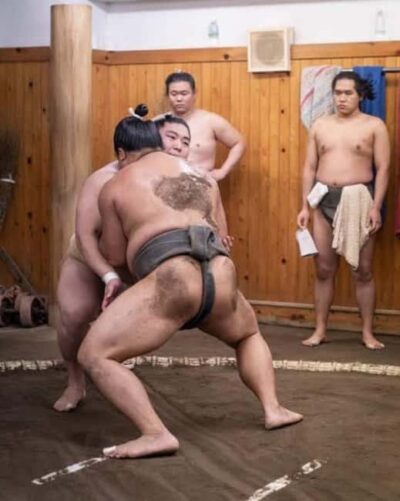

Luxury Sumo Show Experience & Japanese cuisine & Drink
Read our review →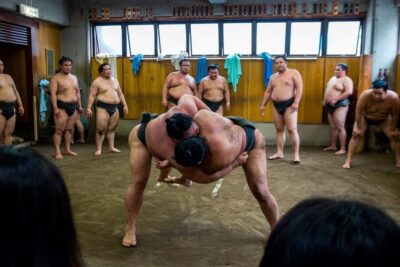
Tokyo Sumo Experience: Chanko & Mochi with a Former Pro
Read our review →
Ultimate Sumo Tournament: Tokyo, Osaka, Nagoya, Fukuoka
Read our review →Browse the lists this tour appears in