
Reviewed · TOKYO COOKING CLASSES
Small-Group Wagyu Beef and 7 Japanese Dishes Tokyo Cooking Class
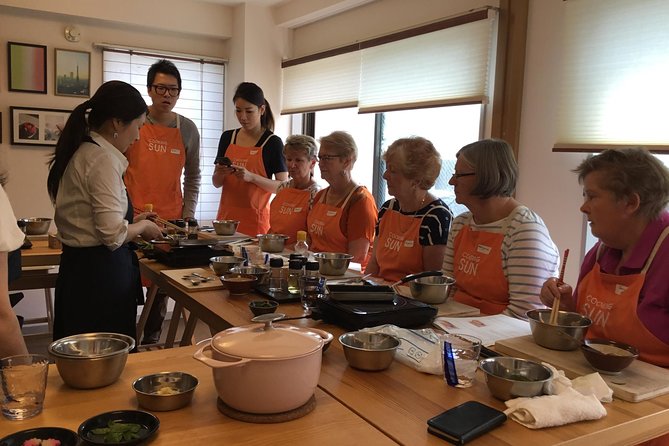
Tokyo’s Cooking Sun class turns a famous Japanese meal into a hands-on lesson. You start with dashi, the basic stock behind much Japanese cooking, then work through appetizers, vegetables, seasonings, presentation, and a tender Wagyu beef main course. It feels more useful than a simple demonstration because you chop, mix, cook, and ask questions as you go.
I like the maximum group size of eight, which keeps you involved, and I like that the recipes come with you afterward. English-speaking instructors such as Aya and Hidemi explain the food in a warm, relaxed way. The main drawback is the studio’s tricky-to-find location, and the quick three-hour schedule means some cooking steps may be prepared in advance.
Key points to know
- Start with dashi: You learn the foundation of Japanese home cooking before using it in other dishes.
- Cook with Wagyu beef: The main course gives you a chance to handle one of Japan’s best-known ingredients.
- Small, active class: No more than eight people means you are not left watching from the side.
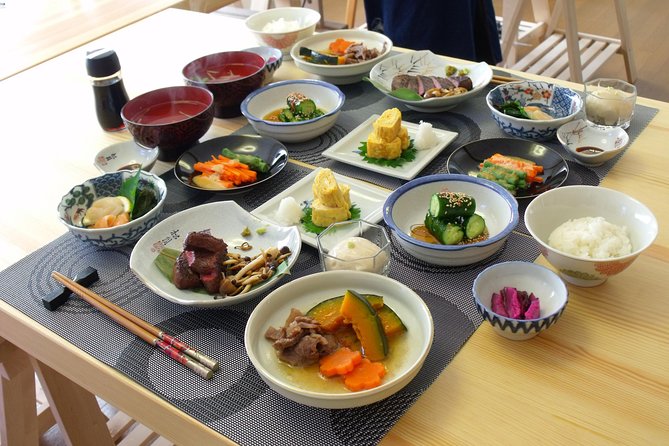
- Seven or eight dishes: The menu covers soup, vegetables, rice, meat, side dishes, and dessert-style elements.
- Recipes to take home: The class is built around techniques and dishes you can try again.
- Central Tokyo setting: The studio is near public transportation, but give yourself extra time to find the entrance.
What this Tokyo cooking class is really about
This is not a class focused only on making one famous dish. It is a compact introduction to how Japanese meals are built, from stock and seasoning to cutting, cooking, and presentation.
The class takes place at Cooking Sun Tokyo in Shinanomachi, Shinjuku City. The address is 18-39 Shinanomachi, Tokyo 160-0016, and the scheduled start is 9:30 a.m. You meet at the cooking studio and finish there after the meal.
The central idea is simple: you prepare a full Japanese lunch, then eat what you made. The meal can include up to eight dishes, with seven main cooking lessons described as the core of the class. The food features Wagyu beef, Japanese vegetables, traditional seasonings, dashi, and other staples.
That range gives you more useful knowledge than a narrow ramen or sushi lesson. You get a sense of how several small dishes fit together, which is how Japanese home meals often work. You also learn that Japanese cooking is not only about ingredients. Cutting, timing, texture, balance, and appearance matter just as much.
More Tokyo cooking classes:
- Tokyo: Roll and Authentic Sushi Making Class in Asakusa
★ 4.9 · 1,957 reviews - Tokyo Shinjuku Chopsticks Making Class
★ 5.0 · 1,763 reviews - Tokyo: Sushi Making Class in a Happi Coat near a Famous Spot
★ 4.9 · 1,377 reviews
Starting with dashi and Japanese seasonings
The first important lesson is dashi, the basic stock used in many Japanese dishes. Starting here makes sense. Instead of treating soup stock as an afterthought, the instructor shows you how it supports the flavor of the dishes that follow.
You also learn about common Japanese seasonings and how they are used. The class includes short explanations about ingredients, cooking methods, and the background of each recipe. These talks are designed to be practical, so you are not sitting through a long lecture before touching the food.
I like this part because it gives you a framework for Japanese cooking at home. Once you understand dashi and the role of familiar seasonings, recipes that once seemed unfamiliar become easier to follow.
The class also covers elaborate cutting and food presentation. Those details may sound small, but they help explain why Japanese food can look so precise. You are not simply putting ingredients into a pan. You are learning how shape, size, and arrangement affect the finished dish.
Seven dishes, one busy morning
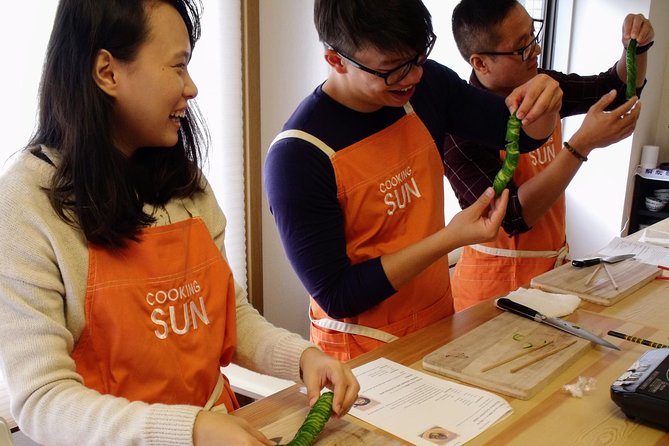
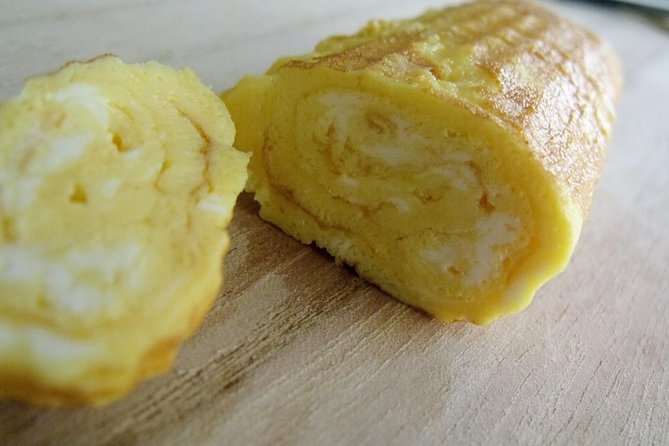
After the dashi lesson, the group prepares a series of dishes using classic and modern recipes. The exact balance of hands-on work can vary. You may chop vegetables, mix dressings, cook an egg, and sear a prepared lotus root filled with minced chicken, while the instructors handle some longer cooking steps.
That point matters if you expect to cook every component from start to finish. This is a practical group class, not a private chef apprenticeship. Some items, such as miso soup, rice, potatoes, or prepared fillings, may be handled partly by the staff so the class can cover a wide menu in roughly three hours.
Even so, there is plenty to learn. The pace is brisk, and the instructors give direct feedback as you work. You can ask about techniques, ingredients, and ways to adapt the food at home. The small class size helps here. With no more than eight people, you are less likely to spend the morning standing behind someone else.
The menu is meant to feel like a Japanese meal rather than a collection of unrelated samples. You might prepare soup, vegetables, side dishes, rice, a meat course, and a sweet finish. The mix gives you a good look at the balance of flavors and textures used in a multi-course meal.
The Wagyu beef centerpiece
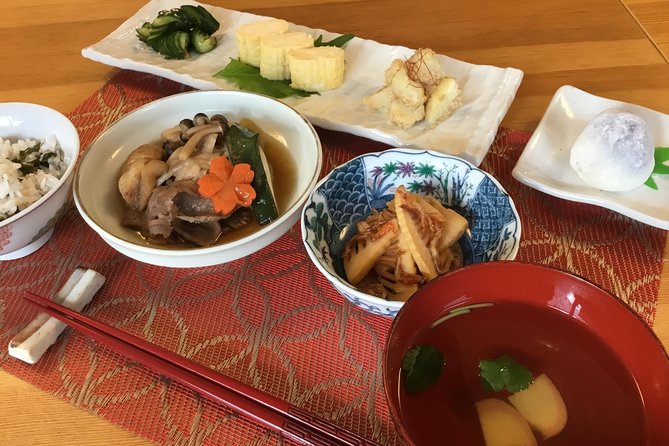
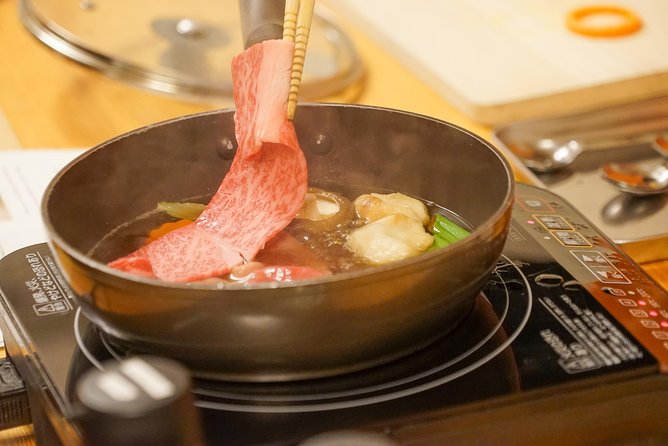
Wagyu is the headline ingredient, and the class explains the word itself. Wa means Japanese, while gyu means beef. That simple language lesson fits the class well: you are learning about food as you prepare it, not just eating it.
The beef is used as the main dish, and sukiyaki is one of the preparations highlighted by the class. This is a smart choice for a short lesson. It lets you experience the tenderness and richness associated with Wagyu without requiring an elaborate restaurant-style kitchen service.
You also get a chance to see how a premium ingredient fits into a wider Japanese meal. The Wagyu is not treated as the whole point of the lunch. It sits alongside vegetables, stock-based dishes, rice, and other small plates.
For many people, this will be the most memorable part of the class. Still, I would not book this activity only for a large serving of beef. The value comes from the full lesson and the number of dishes, not from a steakhouse-style portion.
More Tokyo wagyu and yakiniku dinners:
- Tokyo Night Foodie Tour in Shinjuku – Seasonal Sushi, Wagyu Beef
★ 5.0 · 1,161 reviews - Tokyo: Wagyu and 7 Japanese Dishes Cooking Class
★ 4.9 · 273 reviews - Nagano Snow Monkey 1 Day Tour with Beef Sukiyaki Lunch from Tokyo
★ 4.5 · 123 reviews - Wagyu & Sake Pairing in Shinjuku – Steak, Shabu-Shabu & More
★ 5.0 · 112 reviews
English-speaking instruction from local cooks
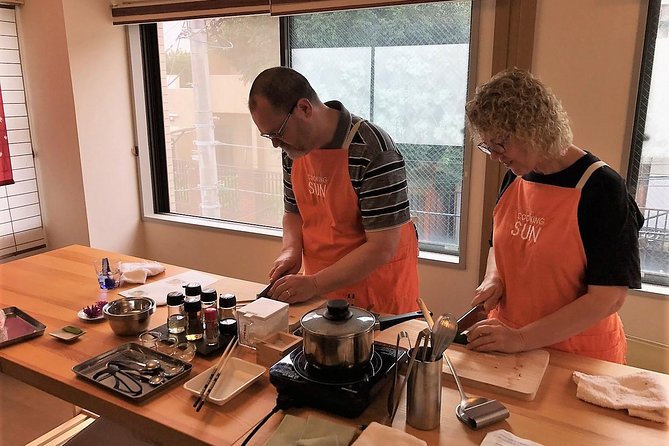
The instructors are English-speaking locals, and names associated with the class include Aya, Hidemi, Kaori, Megumi, and Yoko. Aya and Hidemi are especially noted for giving clear explanations and friendly help, while the teaching style overall is informal and patient.
That matters in a cooking class. Japanese ingredients can be hard to identify, and small differences in technique can be difficult to catch when instructions are rushed. Here, the teachers explain each step, share stories about recipes, and sometimes pass along less obvious techniques.
You do not need advanced cooking ability. The class is built for a range of experience, including people who rarely cook. The instructions are clear enough for beginners, yet there are useful details for confident cooks who want to understand Japanese ingredients and presentation.
The friendly tone also helps if you are cooking with family or friends. The class is social, but the food remains the focus. You work together, talk about cooking and culture, and then share the finished meal.
Eating the meal you prepared
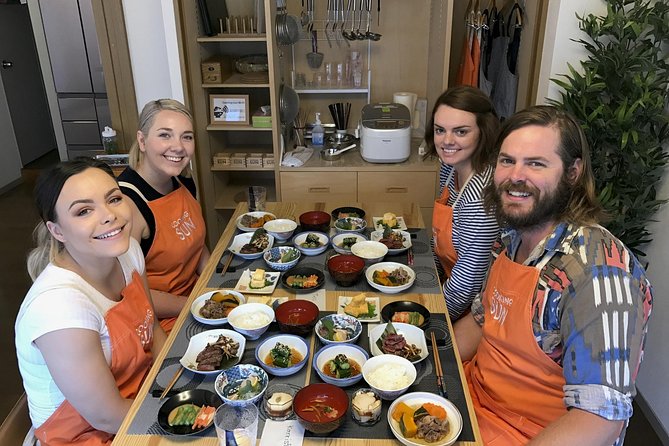
Once the cooking is complete, the class sits down to eat. This is the point when the separate lessons come together. You can see how the dashi, vegetables, seasonings, Wagyu, and presentation work as a single meal.
The experience includes sake and green tea, adding a traditional drink pairing to the lunch. You also get the satisfaction of saying itadakimasu before eating food you helped prepare.
The meal is a full reward after a busy morning. Several dishes can be made in a short period, so expect a steady pace rather than a slow, leisurely workshop. If you prefer a long restaurant lunch with little activity, this may feel energetic. If you want to learn a lot in one morning, the pace works in your favor.
The recipes are included, which adds lasting value. You can try the cucumber salad, sukiyaki, soup, vegetable dishes, and other preparations at home instead of leaving with only a pleasant memory.
Location, timing, and practical planning
The class begins at 9:30 a.m. and lasts about three hours. That makes it a useful morning plan, with time afterward for another Tokyo activity. It also means you should arrive with enough time to locate the studio.
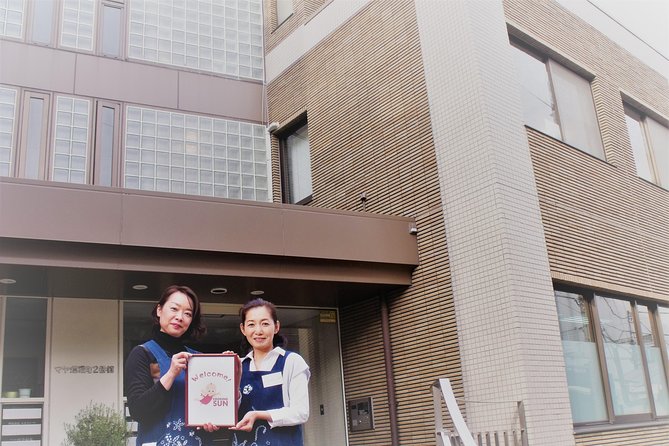
The Shinanomachi building can be difficult to identify, even though the area is near public transportation. Use the provided address carefully and allow extra minutes for the final approach. The setting is in a quieter residential area, and a large park nearby can help you recognize that you are close.
No hotel pickup or drop-off is provided. You make your own way to Cooking Sun Tokyo and return to the same meeting point at the end.
The class supplies the ingredients, cooking equipment, apron, and towel. That keeps your packing simple. You only need to arrive ready to work and eat.
A mobile ticket is accepted, and booking confirmation is provided at the time of reservation. The price is about $72.96 per person. For Tokyo, that is a fair price for a three-hour lesson that includes an English-speaking instructor, ingredients, equipment, recipes, a Wagyu-based meal, sake, and green tea.
The value is strongest if you will actually use the recipes later. If you only want to taste Wagyu, a restaurant meal may be a simpler choice. If you want several techniques and dishes for one fee, this class gives you much more to take home.
Dietary needs and cooking level
A vegetarian option is available, but you need to request it when booking. You should also provide any specific dietary requirements in advance. That is especially important for allergies, since the class uses several traditional seasonings and prepared ingredients.
The class suits beginners particularly well. You receive step-by-step help, and the instructors can adjust their explanations to the group. More experienced cooks may still enjoy the class for the ingredients, presentation, and Japanese methods, though the hands-on work is shared and some tasks are prepared ahead.
Families, couples, solo visitors, and food-focused friends can all fit comfortably into the format. The group limit of eight keeps it intimate without making it feel like a private lesson.
The main limitation: a lot in a short time
The class promises a great deal in three hours: dashi, seven dishes, Wagyu, cutting methods, seasonings, presentation, and a sit-down meal. That is part of its appeal, but it also creates the main tradeoff.
You will not spend a long time perfecting one recipe. Some parts are demonstrations or staff-prepared steps, particularly dishes that require longer cooking. If your goal is to master ramen noodles, sushi shaping, or one complex dish in detail, choose a more specialized class.
The upside is variety. You leave with a broad picture of Japanese cooking and several recipes rather than one narrow skill. I see this as an introduction to home-style and kaiseki-inspired meal planning, not a formal chef-training session.
The building location is the other practical concern. The neighborhood is pleasant and served by public transportation, but the entrance may not be obvious. Plan ahead and do not cut it close for the 9:30 start.
Should you book the Cooking Sun class?
Book this class if you want an active introduction to Japanese food, especially if you care about learning what goes into a meal rather than simply ordering one. The small group, English instruction, recipe handouts, Wagyu main course, and broad menu make the $72.96 price reasonable.
I would choose it for a first visit to Tokyo, a food-focused morning, or a rainy-day plan that gives you something useful to do indoors. It is also a good pick for families and mixed-skill groups because you do not need much cooking experience.
Skip it if you want a slow, highly specialized lesson or if you dislike shared group work. Also check your dietary needs before booking, and allow extra time to find the studio. For most people who want to cook, eat, and understand Japanese food in one compact session, this is an easy activity to recommend.
FAQ
How long is the cooking class?
The class lasts approximately three hours.
What time does the class start?
The scheduled start time is 9:30 a.m.
Where does the class meet?
It meets at Cooking Sun Tokyo, 18-39 Shinanomachi, Shinjuku City, Tokyo 160-0016, Japan.
How many people can join the class?
The class has a maximum of eight people.
Is the class taught in English?
Yes. The instructors are English-speaking local cooks.
What dishes will I prepare?
You will begin by making dashi, then prepare seven dishes using Wagyu beef, Japanese vegetables, traditional seasonings, and other ingredients. The full meal can include up to eight dishes.
Are ingredients and cooking supplies included?
Yes. Ingredients, supplies, an apron, a towel, and recipes are included.
Is a vegetarian option available?
Yes. A vegetarian option is available, but you must request it when booking. Specific dietary requirements should also be provided in advance.
Is hotel pickup included?
No. Hotel pickup and drop-off are not included. You travel to the meeting point yourself, and the activity ends there.
Can I cancel for a full refund?
Yes. You can cancel at least 24 hours before the start time for a full refund. Cancellations or changes made less than 24 hours before the start time are not refunded.
More hands-on classes and workshops in Tokyo
- Sushi Making Tokyo Roll and Authentic Japanese Sushi Class
★ 5.0 · 3,971 reviews - Chopstick Making Workshop in Ginza
★ 4.8 · 1,366 reviews - Tokyo Sushi Making Class in Tsukiji with Professional Chef
★ 5.0 · 1,177 reviews - Ramen & Gyoza Cooking Class in Tokyo with Local Supermarket Visit
★ 5.0 · 823 reviews
Newly reviewed around Tokyo
- Tokyo Asakusa:Calligraphy & Make T-shirt Activity★ 5.0 · 62 reviews
- Intercity Shuttle, Tokyo to Haneda /Narita /Yokohama /Makuhari★ 5.0 · 5 reviews
- 1 Hour Travel around Tokyo with a Professional Photographer★ 5.0 · 3 reviews
- Travel Tokyo with Your Own Personal Photographer★ 5.0 · 43 reviews
- Train in Samurai Swordsmanship and Defeat the Demon in Tokyo★ 5.0 · 5 reviews
- Shuttle Van 6hr Tokyo Tour to-and-from Tokyo, Yokohama and Narita★ 5.0 · 9 reviews
- Kickboxing & Body Training with EX-Pro Fighter★ 5.0 · 4 reviews
- Traditional Japanese Knife Sharpening Class★ 5.0 · 18 reviews
Tokyo Cooking Classes, compared.

Roll and Authentic Sushi Making Class in Asakusa
Read our review →
Sushi Making Class in a Happi Coat near a Famous Spot
Read our review →
Tokyo Sushi Making Class in Tsukiji with Professional Chef
Read our review →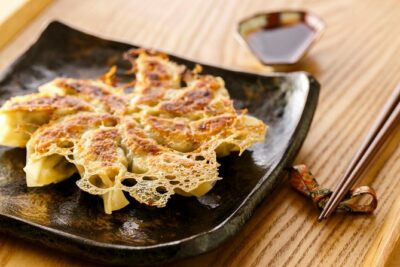
Ramen & Gyoza Cooking Class in Tokyo with Local Supermarket Visit
Read our review →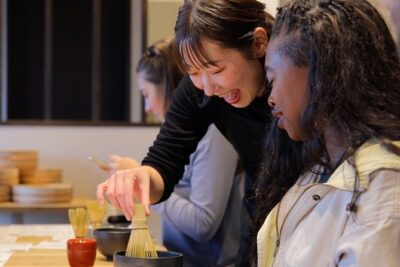
Matcha Making Class in Tokyo with Authentic Japanese Sweets Set
Read our review →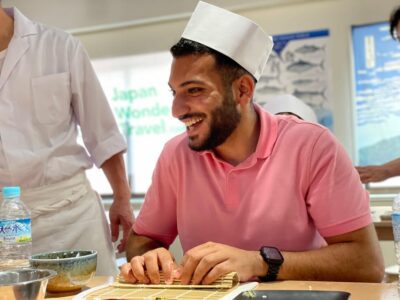
Tsukiji Fish Market Sushi Making Class with Pro Chef
Read our review →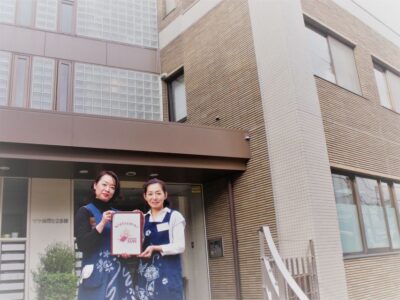
Browse the lists this tour appears in