
Reviewed · TOKYO COOKING CLASSES
Small Group Sushi roll and Tempura Cooking Class in Nakano
The best part of this Tokyo cooking class is that you do not simply sit down to eat sushi and tempura. You learn how the dishes come together in a local home, from preparing sushi rice to cutting rolls neatly and frying tempura until crisp. Eri guides the cooking and shares practical tips along the way.
I like the hands-on format and the freedom to choose ingredients for both the sushi rolls and tempura. I also like that the class ends with a Japanese-style meal and Itadakimasu, rather than a rushed taste at a restaurant. The main consideration is price: at $160 per person for about two and a half hours, this makes the most sense if you want instruction and cultural contact, not just lunch.
Key points to know
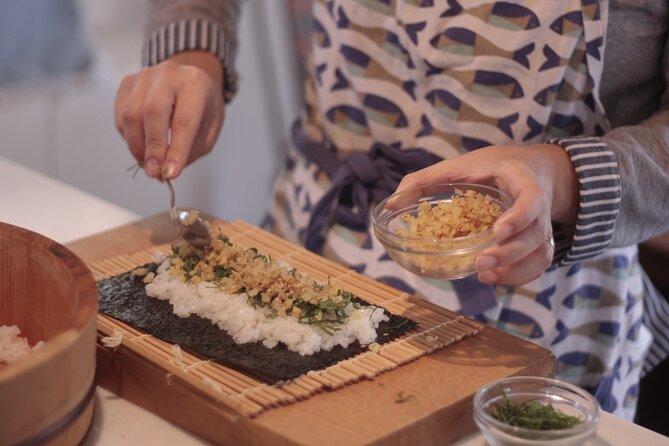
- Three sushi rolls: Learn different rolling methods, filling choices, and neat cutting techniques.
- Tempura made with you: Choose seafood and vegetables, then work with Eri to prepare the crisp coating and frying.
- Held in a private home: You get a look at ordinary Tokyo life rather than a restaurant kitchen.
- Meet at Asagaya Station: The meeting point is NewDaysJapan outside the JR ticket gates on the second floor.
- Dietary adjustments are possible: Vegetarian requests and other restrictions can be accommodated for both parts of the meal.
- Recipes to take home: The class is designed to give you techniques you can repeat in your own kitchen.
Meeting Eri at Asagaya Station
Your class begins at NewDaysJapan, outside the JR ticket gates at Asagaya Station in Suginami City. The listed meeting point is on the second-floor concourse, so keep the station details handy and allow enough time to find the correct exit area.
This arrangement is useful because a station meeting point is easier than trying to locate a private residence on your own. Eri meets you there and takes you onward to the cooking setting. Her communication before the class includes clear directions, and she is expected to be on time. That small bit of planning matters in Tokyo, where large stations can turn a simple meeting into a search mission.
The class is described as being in Tokyo’s Nakano area, while the meeting point is at Asagaya Station. Those neighborhoods are close enough to be part of the same west Tokyo outing, but you should follow the exact meeting instructions supplied after booking rather than assume the station is the cooking location.
The activity finishes back at the meeting point. The total class time is about two hours and thirty minutes, so plan for a focused morning or afternoon rather than a full-day food tour.
More Tokyo cooking classes:
- Tokyo: Roll and Authentic Sushi Making Class in Asakusa
★ 4.9 · 1,957 reviews - Tokyo Shinjuku Chopsticks Making Class
★ 5.0 · 1,763 reviews - Tokyo: Sushi Making Class in a Happi Coat near a Famous Spot
★ 4.9 · 1,377 reviews
A home kitchen instead of a restaurant table
The setting changes the feel of the experience. In a restaurant, you see a finished sushi roll or a plate of tempura. Here, you see the small decisions behind it: how the rice is prepared, how much filling belongs in a roll, how to position the seaweed sheet, and how to cut the finished piece cleanly.
A home class also gives you a chance to ask questions in a relaxed setting. The activity is private, meaning only your own group takes part. That is especially useful if your party has mixed cooking confidence. You can ask for another demonstration, slow down a step, or get more help with rolling without competing for the instructor’s attention.
The setting is not meant to imitate a formal culinary school. You are getting a personal lesson in a real home, with local conversation and a shared meal built into the schedule. If you want a polished professional kitchen or an advanced chef’s certificate, this is not that kind of class. If you want a friendly introduction to Japanese home cooking, the format fits well.
Understanding the ingredients before cooking
The class begins with an explanation of basic Japanese ingredients. Rice, dashi, and nori are specifically covered, giving you useful context before you start handling food.
This opening may sound simple, but it helps explain why Japanese dishes can taste balanced even when they use relatively few ingredients. Sushi rice is not just plain cooked rice. Nori is not merely wrapping paper. Dashi provides a savory base in many Japanese dishes, and learning what these ingredients do makes the cooking more useful once you return home.
The introduction also helps you notice ingredients you might otherwise overlook in a Japanese market or restaurant. Since the class is built around preparing the food yourself, you can connect each ingredient with a technique instead of trying to remember a list of unfamiliar names.
Do not expect a long lecture. The point is to give you enough background to cook with purpose, then move into the practical work.
Making sushi rice and three kinds of rolls
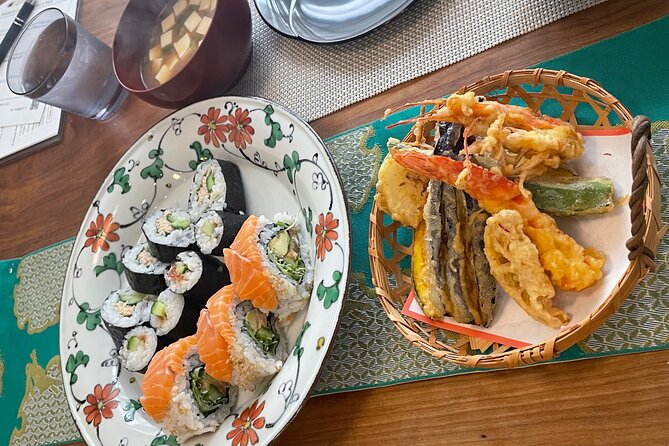
Eri first shows you how to make tasty rice for sushi. This is one of the most valuable parts of the class because the rice carries the whole dish. If it is too wet, too dry, or poorly seasoned, even good fillings will not save the roll.
You then practice rolling three kinds of sushi. The class lets you choose what to use for the fillings and what to roll them in, with Eri offering support as you work. That choice makes the lesson more flexible than a fixed demonstration. You can follow the suggested ingredients or select combinations that suit your tastes and dietary needs.
Rolling takes a little practice. The rice must be spread evenly, the filling needs to stay in place, and the roll has to be firm without being crushed. Eri demonstrates the technique and then helps you correct your grip and placement as you make your own.
Cutting is another practical skill. Eri shows you how to cut the rolls beautifully, which means paying attention to the knife and the shape of each piece. The result is not only better-looking sushi on the table. It is a method you can repeat at home when you want to serve rolls to family or friends.
The class does not promise professional-level sushi artistry in one sitting, and you should not expect that. What you get is a clear introduction to the main steps, plus enough practice to understand where neat rolls come from.
A completely different kind of day in Tokyo:
- Mt Fuji and Hakone 1-Day Bus Tour Return by Bullet Train
★ 5.0 · 26,383 reviews - 1-Day Tokyo Bus Tour
★ 5.0 · 14,250 reviews - Tokyo: teamLab Planets TOKYO Digital Art Museum Entry Ticket
★ 4.6 · 9,779 reviews - Mt Fuji & Hakone Cruise, Drum Show Bullet Train 1 Day from Tokyo
★ 4.0 · 7,413 reviews
Choosing and frying the tempura
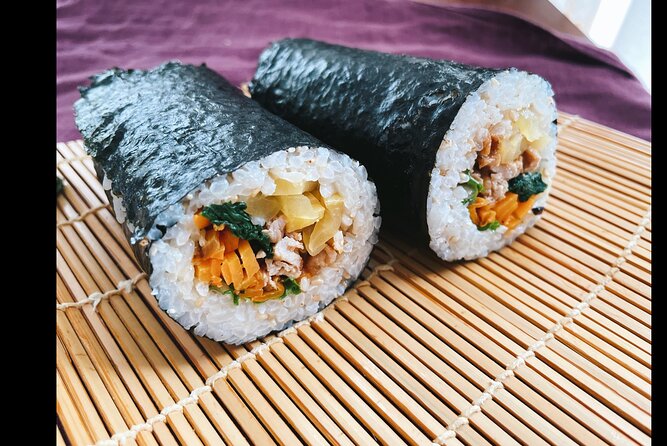
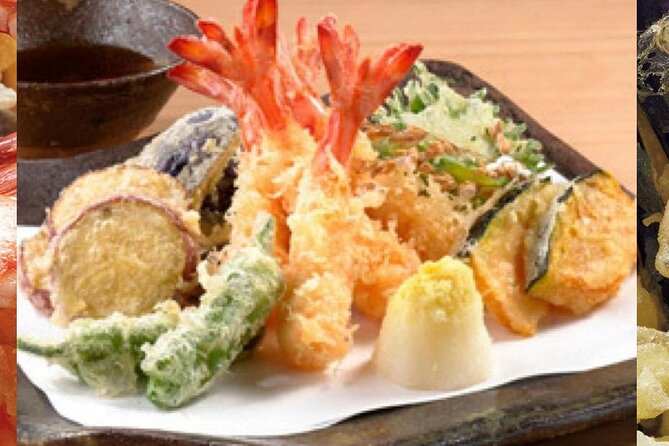
Tempura adds a different set of cooking skills. Instead of handling rice and nori, you work with a light coating and hot oil. The goal is fluffy and crisp tempura, with enough texture to make each piece satisfying without leaving it heavy.
You can choose what to use for the tempura, and Eri prepares it with you. The supplied details mention seafood and vegetables, so the meal can include both, depending on your choices and the arrangements made for the class.
Tempura looks easy until you try to get the texture right. Timing matters, and the ingredients need suitable preparation before they reach the oil. Having Eri beside you means you can see the process and ask for help rather than guess at every step.
This is also where the class feels most useful for home cooking. You are not only tasting a finished plate. You are learning a method that can be adapted to ingredients available in your own kitchen. The class describes the finished tempura as savory, fluffy, and crisp, but remember that your result will depend on your technique and the ingredients you select.
Anyone uncomfortable with frying should consider that the activity involves making tempura rather than simply watching it. The instructions do not provide specific details about the kitchen setup or oil-handling process, so ask Eri any safety questions before you begin.
Sitting down for a Japanese-style meal
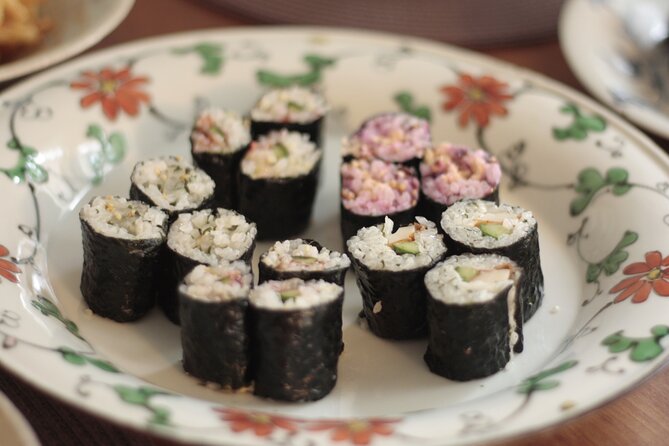
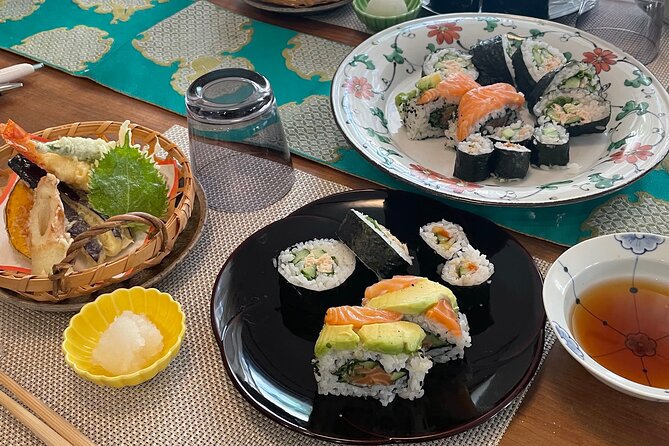
Once the sushi and tempura are ready, you set the table in Japanese style and say Itadakimasu before eating. This gives the class a clear rhythm: learn, cook, arrange, and share the meal.
The final meal is not an extra tacked onto the end. It is the reason the techniques matter. You can see how the rolls look when served, compare the different preparations, and taste the tempura while it is fresh. Eating what you have made also makes the lesson easier to remember.
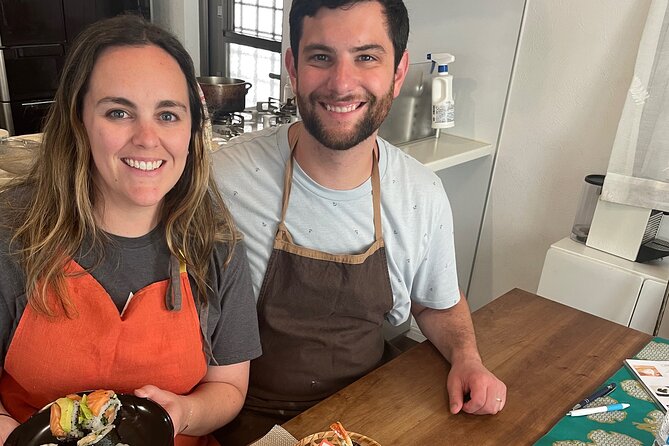
The shared table is likely to be one of the most personal parts of the experience. You are in Eri’s home rather than a commercial dining room, so the class offers a small window into everyday hospitality in Tokyo. It is still a structured activity, but it has more of a home-visit feeling than a standard restaurant meal.
One guest specifically praised Eri’s warm welcome and her communication before the class. That matches the format: the host is not only teaching a recipe but also welcoming you into her own space. Her reply also shows that she encourages active participation and hopes you will cook the dishes later with your family.
Dietary needs and ingredient choices
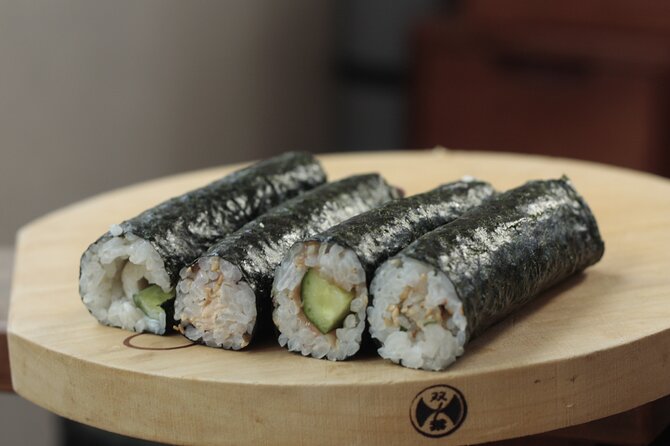
The class can be adjusted for vegetarian guests and for other dietary restrictions, covering both sushi rolls and tempura. This is a major practical advantage, but you should communicate your needs in advance rather than wait until you arrive.
The freedom to choose ingredients gives you another layer of control. You can focus on vegetables, avoid certain seafood, or make choices that suit the people in your group. The information does not specify every possible substitution, so do not assume every restriction can be handled without confirmation.
This flexibility also helps families and private groups with different tastes. One person can explore seafood while another focuses on vegetables. Since only your group participates, the class can be more adaptable than a large workshop with a fixed menu.
Is $160 a fair price?
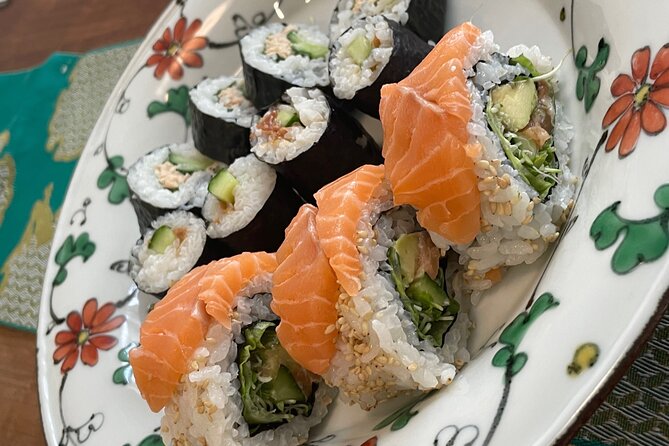
At $160 per person, this is not a bargain meal. You can find less expensive sushi and tempura in Tokyo, often with no advance planning. The price is easier to justify when you count the private instruction, the home setting, the food, the small-group attention, and the recipes and techniques you take away.
The value depends on what you want from the outing. If you simply want to eat sushi and tempura, spend less at a restaurant. If you want to learn how to prepare three types of roll, make tempura, ask questions, and share a meal with a local host, the cost becomes more reasonable.
The private format is important here. You are not paying for a crowded class where the instructor repeats the same demonstration to a large room. Your group gets direct support from Eri, which matters when you are learning rolling and cutting techniques for the first time.
Group discounts are available, although the exact discount is not provided. If you are booking for several people, check the final price before confirming. A private booking may offer better value for a family or group of friends than separate bookings for individuals.
Who will enjoy this class most?
I would choose this activity if you want a practical food experience with a strong local element. It suits first-time cooks, couples, families, and small private groups who like to participate rather than watch.
It is also a good fit if you want to return home with something useful. Sushi rolls and tempura are recognizable dishes, but the class gives you a better chance of recreating them because you learn the basic handling, preparation, and presentation.
People with vegetarian diets or other restrictions should contact Eri ahead of time. The class can make adjustments, but the success of those adjustments depends on clear communication before the session.
I would think twice if your schedule is tight around Asagaya or Nakano, if $160 feels high for a meal, or if you prefer a formal cooking school. The experience is personal and home-based, not a large commercial workshop with a long published menu.
Practical details before you book
The class lasts approximately two hours and thirty minutes. It is near public transportation, begins at the specified Asagaya Station meeting point, and ends back there.
Mobile tickets are accepted, and booking confirmation is normally sent at the time of booking. If you book within nine hours of the start time, confirmation may come later, subject to availability. For peace of mind, book earlier when possible.
Free cancellation is available if you cancel at least 24 hours before the local start time. Cancellations within 24 hours are not refunded, and changes made inside that period are not accepted. This matters if your Tokyo schedule is still shifting.
The activity has a perfect five-star rating from seven submitted reviews, but that is a small sample. I would treat it as encouraging rather than a guarantee that the class will suit every cooking style.
Should you book the Asagaya sushi and tempura class?
Book it if you want to cook with a local host, learn techniques you can use at home, and eat the results in a private setting. Eri’s clear pre-class communication, personal welcome, ingredient choices, and help with both sushi and tempura give the class more substance than a simple food tasting.
Skip it if your main aim is an inexpensive meal or if you want a professionally equipped culinary studio. The $160 price asks you to value the instruction and home setting.
For most people comparing food activities in Tokyo, the decision is simple: choose this class for participation and connection, not convenience alone. You leave with a better understanding of sushi rice, nori, rolling, cutting, tempura, and Japanese table customs, along with recipes and a meal you helped create.
FAQ
Where does the cooking class meet?
The meeting point is NewDaysJapan outside the JR ticket gates on the second-floor concourse at Asagaya Station, in Suginami City, Tokyo.
Where does the cooking class take place?
The class is held in the host’s home in the Nakano area of Tokyo.
How long does the experience last?
The cooking class lasts approximately two hours and thirty minutes.
What will I learn to cook?
You will learn how to prepare three kinds of sushi roll and fluffy, crisp tempura using seafood and vegetables selected for the class.
Can vegetarian diets or other restrictions be accommodated?
Yes. Adjustments can be made for vegetarian diets and other dietary restrictions for both the sushi rolls and tempura. Share your needs before the activity.
Is this a private activity?
Yes. Only your own group participates in the activity.
What is the cancellation policy?
You can cancel at least 24 hours before the local start time for a full refund. Cancellations or changes made within 24 hours are not accepted for a refund.
More hands-on classes and workshops in Tokyo
- Sushi Making Tokyo Roll and Authentic Japanese Sushi Class
★ 5.0 · 3,971 reviews - Chopstick Making Workshop in Ginza
★ 4.8 · 1,366 reviews - Tokyo Sushi Making Class in Tsukiji with Professional Chef
★ 5.0 · 1,177 reviews - Ramen & Gyoza Cooking Class in Tokyo with Local Supermarket Visit
★ 5.0 · 823 reviews
Newly reviewed around Tokyo
- Tokyo Asakusa:Calligraphy & Make T-shirt Activity★ 5.0 · 62 reviews
- Intercity Shuttle, Tokyo to Haneda /Narita /Yokohama /Makuhari★ 5.0 · 5 reviews
- 1 Hour Travel around Tokyo with a Professional Photographer★ 5.0 · 3 reviews
- Travel Tokyo with Your Own Personal Photographer★ 5.0 · 43 reviews
- Train in Samurai Swordsmanship and Defeat the Demon in Tokyo★ 5.0 · 5 reviews
- Shuttle Van 6hr Tokyo Tour to-and-from Tokyo, Yokohama and Narita★ 5.0 · 9 reviews
- Kickboxing & Body Training with EX-Pro Fighter★ 5.0 · 4 reviews
- Traditional Japanese Knife Sharpening Class★ 5.0 · 18 reviews
Tokyo Cooking Classes, compared.
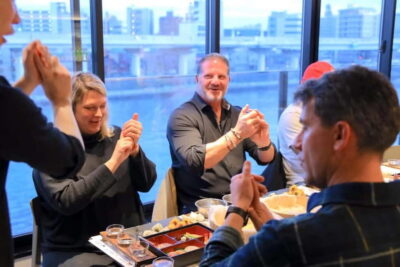
Roll and Authentic Sushi Making Class in Asakusa
Read our review →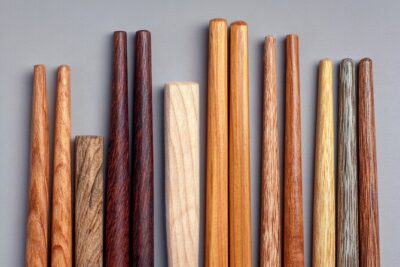
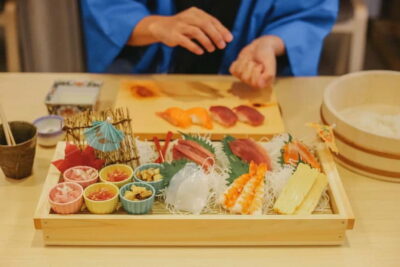
Sushi Making Class in a Happi Coat near a Famous Spot
Read our review →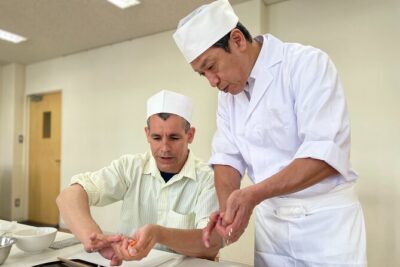
Tokyo Sushi Making Class in Tsukiji with Professional Chef
Read our review →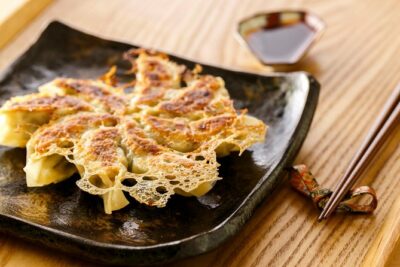
Ramen & Gyoza Cooking Class in Tokyo with Local Supermarket Visit
Read our review →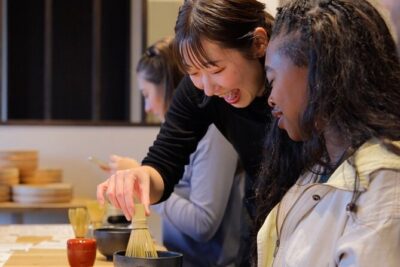
Matcha Making Class in Tokyo with Authentic Japanese Sweets Set
Read our review →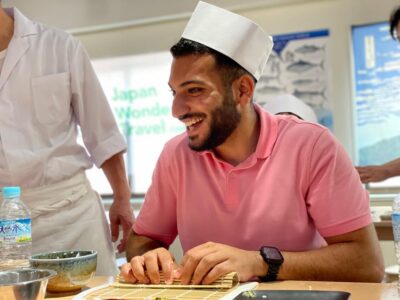
Tsukiji Fish Market Sushi Making Class with Pro Chef
Read our review →
Browse the lists this tour appears in