
Reviewed · TOKYO WALKING TOURS
Shimbashi Hidden Gem Walking Tour
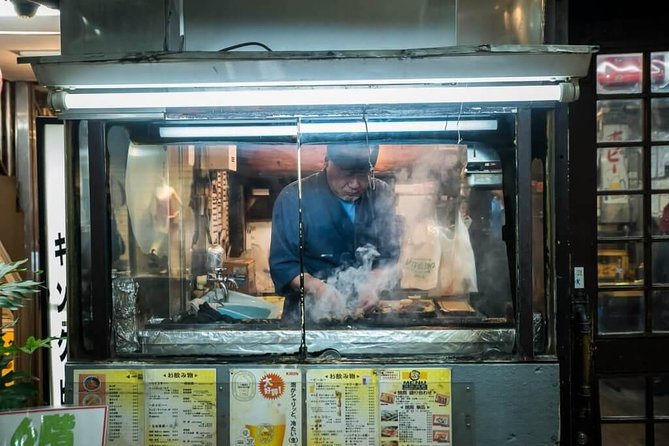
Shimbashi is where Tokyo’s office workers go when the workday ends, and this three-hour walk puts you in the middle of that evening ritual. You’ll visit five food stops, trying dishes such as yakitori, sashimi, gyoza nabe, okonomiyaki, and taiyaki rather than simply ticking off famous sights.
I like the small maximum of 10 people, which suits the narrow eateries and makes it easier to ask questions. I also like the mix of food, drinks, and local manners. Guides such as Asami and Lora have explained how Japanese dining works while keeping the mood lively.
The catch is the price: $217 per person is a serious bill for three hours, especially since only two drinks are included. Food quality can also vary from stop to stop, so this is best for the setting and guidance, not for a guaranteed parade of perfect dishes.
Key points at a glance
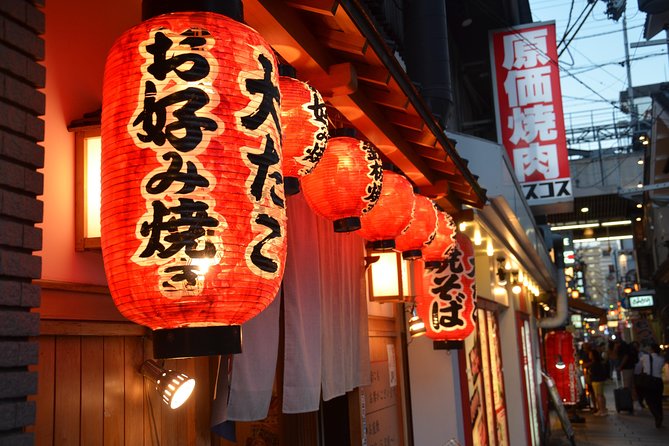
- Five local food stops: Expect Japanese drinking food such as yakitori, sashimi, gyoza nabe, okonomiyaki, and taiyaki.
- A real after-work setting: The route focuses on Shimbashi, a favorite district for Japanese office workers and casual evening meals.
- Small adult group: The maximum is 10 people, and everyone must be at least 20 years old.
- Two drinks included: Additional food and drinks cost extra.
- Useful local guidance: The English-speaking guide explains Japanese dining customs and manners as you eat.
- Dietary limits matter: Pescatarian and vegetarian diets are supported, but the tour is not recommended for vegans or people avoiding gluten.
Shimbashi after 4:30 pm
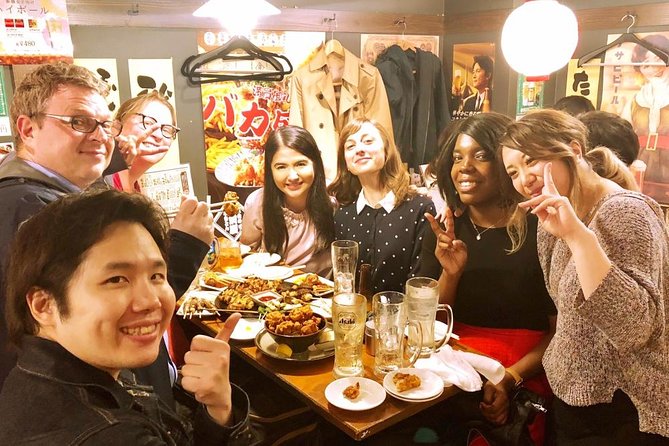
The tour begins at SL Square, outside the west entrance of Shimbashi Station. This is a practical meeting point in a district built around rail lines, office towers, small restaurants, and narrow drinking streets.
The timing is the main point. At 4:30 pm, you are arriving just as Tokyo’s working day gives way to dinner and drinks. Shimbashi is known for this salaryman culture, so the tour is less about grand monuments and more about seeing how people eat, talk, and relax after work.
Your guide leads you through the neighborhood on foot, with Shimbashi as the heart of the route. The walk passes places including Karasumori Jinja, the New Shinbashi Building, the Advertising Museum Tokyo, the Old Shimbashi Station Railway History Exhibition Hall, Hamarikyu Gardens, and the Panasonic Shiodome Museum.
These locations help you get your bearings, but do not expect a full sightseeing tour of each one. The experience is built around food and neighborhood life. Some stops may be seen from outside or used as landmarks between meals, rather than treated as formal museum visits.
The starting point is close to public transportation, and the tour ends at JR Shimbashi Station. You do not need a separate taxi or hotel transfer, but you are responsible for getting to the meeting point and making your own way back afterward.
More Tokyo walking tours:
- Tokyo Tsukiji Fish Market Food and Culture Walking Tour
★ 5.0 · 3,184 reviews - Tokyo: Imperial Palace and Shogun Historical Walking Tour
★ 5.0 · 2,251 reviews - Tokyo: Shinjuku Local Bar and Izakaya Guided Walking Tour
★ 4.9 · 1,794 reviews
Five stops, five chances to eat differently
The main reason to book is the range of food. You are not sitting down for one large meal. Instead, the guide brings you to several casual places, where you sample smaller portions and learn how different foods fit into an evening out.
The exact restaurants and dishes can change because of restaurant schedules, holidays, weather, and other local conditions. That flexibility is worth understanding before you book. You are buying a guided food route, not a fixed menu.
Yakitori and the quick bite
Yakitori, grilled chicken skewers, is a natural fit for Shimbashi. It is easy to eat at a counter or in a compact pub, and it works well with a drink. You might encounter familiar cuts, but the wider lesson is how Japanese diners often order several small items rather than one large plate.
This stop should appeal to you if you enjoy food served hot, simply, and without ceremony. It may be less satisfying if you expect a full portion of grilled chicken or a refined restaurant setting.
Dumplings and gyoza nabe
Gyoza appear in more than one form in Japan. Here, the tour description includes gyoza nabe, a dumpling hot pot, which gives you a different texture and style from the pan-fried dumplings found at many casual restaurants.
A hot pot also suits the social side of the evening. You share food, watch how the dish is served, and pick up small points about Japanese table manners from the guide. The dish may be especially welcome if the evening is cool, though weather and restaurant schedules can affect the route.
A completely different kind of day in Tokyo:
- Mt Fuji and Hakone 1-Day Bus Tour Return by Bullet Train
★ 5.0 · 26,383 reviews - 1-Day Tokyo Bus Tour
★ 5.0 · 14,250 reviews - Tokyo: teamLab Planets TOKYO Digital Art Museum Entry Ticket
★ 4.6 · 9,779 reviews - Mt Fuji & Hakone Cruise, Drum Show Bullet Train 1 Day from Tokyo
★ 4.0 · 7,413 reviews
Sashimi and raw dishes
Sashimi is included among the possible local foods, giving you a taste of Japan’s raw-fish tradition in a casual setting. The tour is not presented as a seafood-only experience, so the selection depends on the stops and the day.
One particularly unusual experience described by a past participant was raw chicken. That is not something you should assume will be served, but it shows that the route can include foods outside the standard first-time Tokyo list. If you have strong food sensitivities or prefer familiar dishes, tell the operator before booking and ask what substitutions are possible.
Okonomiyaki and regional comfort food
Okonomiyaki is a savory Japanese pancake, usually cooked with a mixture of batter and other ingredients. It is filling, casual, and closely tied to the kind of relaxed dining the tour aims to show.
This dish adds welcome variety to the meal. After skewers and sashimi, something warm and substantial helps the five-stop format feel more like dinner rather than a series of tiny samples.
Taiyaki to finish
Taiyaki is a fish-shaped Japanese dessert. It gives the route a sweet ending and provides a simple contrast to the salty food and drinks earlier in the evening.
The food list also refers to seasonal dishes, so the final selection may not always be identical. Think of taiyaki as part of the style of the experience rather than a guaranteed dessert at every departure.
What the neighborhood adds
Shimbashi does not have the postcard appeal of Asakusa or the neon spectacle of Shinjuku. That is exactly why the area works for this tour. You are seeing a Tokyo district tied to work, commuting, and everyday eating.
Karasumori Jinja adds a small shrine pause amid the commercial streets. The New Shinbashi Building offers a glimpse of the dense, practical architecture around the station. The Old Shimbashi Station Railway History Exhibition Hall connects the neighborhood to Tokyo’s early railway story.
Hamarikyu Gardens and the museums around Shiodome are named along the route, but the three-hour schedule is centered on food. You should not book this expecting long visits inside every attraction. Instead, these landmarks break up the walking and give the guide useful points for explaining the area.
I like this approach because food tours can easily become a string of anonymous restaurants. Shimbashi gives the meal a clear setting. You learn why this part of Tokyo feels different from a sightseeing district and how the evening rhythm changes once office workers leave their buildings.
The guide makes the difference
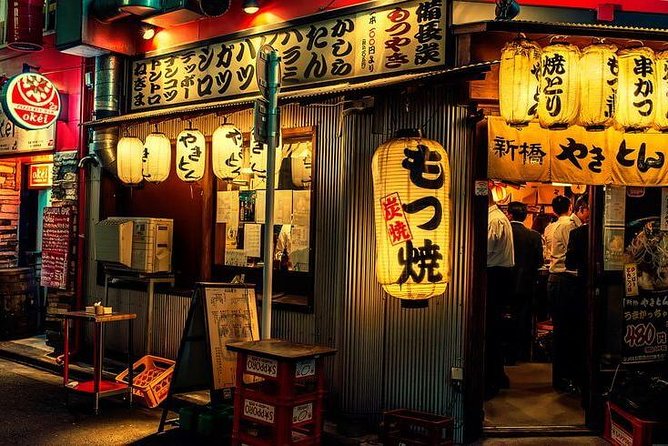
The English-speaking guide is included, and the best part of the role is not simply translating a menu. A good guide explains customs, manners, ordering habits, and the social purpose of the izakaya.
Past guides have included Asami and Lora, who led the evening with a lively, talkative approach and explained Japanese eating customs. You should not assume they will be your guides on a future departure, but their style gives you a useful idea of what this tour aims to provide.
A guide is especially helpful in small Japanese drinking places. Menus may be limited, dishes may arrive in stages, and some restaurants can feel unfamiliar if you have never eaten at an izakaya. Having someone explain what you are trying makes unusual dishes less intimidating.
The guide also helps with social context. The idea is not to copy office workers or intrude on their evening. It is to understand the role of food and drink in unwinding after work, then take part in that setting respectfully.
How much food and drink do you get?
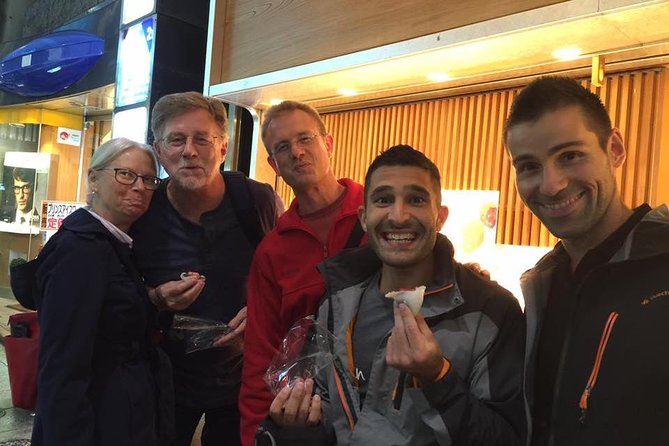
Five food stops sounds generous, but portions are likely to be tasting portions rather than five complete restaurant meals. The experience includes food at each stop and two drinks. Extra drinks and food are not included.
For many people, that will be enough for a light dinner. If you arrive hungry, the range of dishes should keep you interested, but you may want an additional meal later. I would not compare the $217 price with the cost of buying five ordinary plates in Tokyo. Much of the fee covers the guide, planning, interpretation, and access to a small-group route.
The value depends on what you want. If you are comfortable finding restaurants, ordering in Japanese, and choosing dishes on your own, the price may feel high. If you want someone to take you into local-style eateries and explain what is happening, the cost becomes easier to defend.
The food quality is not guaranteed to be even. One account praised the guide but found the second and fourth food stops disappointing. That is a useful warning. A guided route can improve your chances of reaching interesting places, but it cannot make every dish suit your taste.
Group size, pace, and comfort
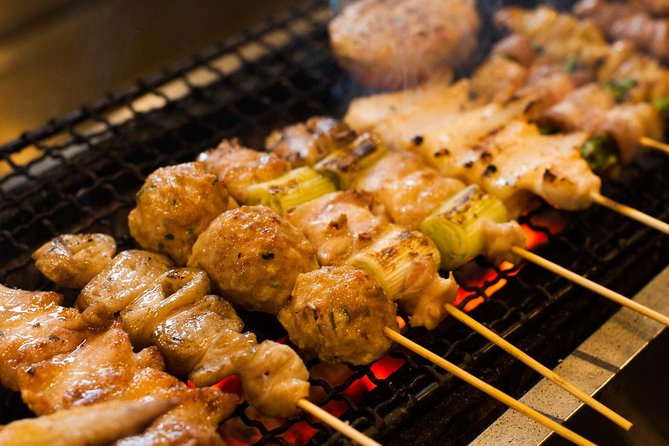
The maximum group size is 10 people. That is small enough for a guide to communicate with everyone and practical for compact izakayas, where space can be tight.
You should expect moderate walking and standing over roughly three hours. The tour requires a moderate level of physical fitness, but no special athletic ability is stated. Wear comfortable shoes, particularly because the route links several stops rather than keeping you in one restaurant.
The experience is for adults aged 20 and above. That fits Japan’s drinking culture and the inclusion of alcohol. Solo visitors are welcome to contact the operator by email, which is useful if you are booking alone and want to confirm how solo arrangements work.
A karaoke after-party is available, but it is not part of the main included tour. Treat it as an optional extension rather than part of the three-hour plan.
Dietary needs and food expectations
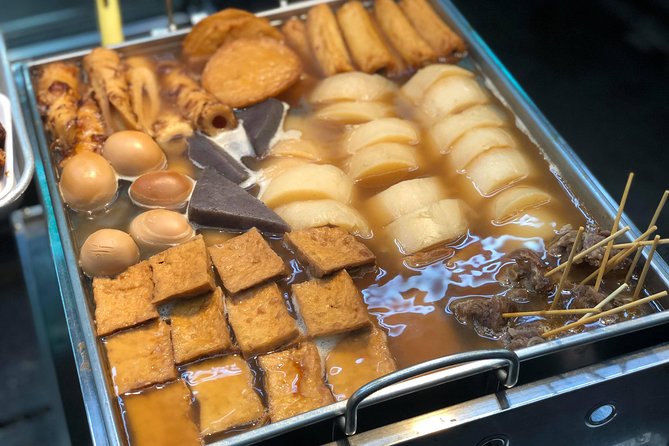
Pescatarians and vegetarians can take part. You should still state your dietary needs when booking, since dishes and restaurants can change.
The tour is not recommended for vegans or people following a gluten-free diet. That is important because the menu may include sauces, noodles, batter, dumplings, seafood, and other ingredients that are difficult to adjust across five casual stops.
If you have allergies, severe intolerances, or a firm restriction, contact Arigato Japan KK before paying. The available information confirms vegetarian and pescatarian suitability, but it does not promise specific allergy controls or a fixed replacement menu.
Is $217 a fair price?
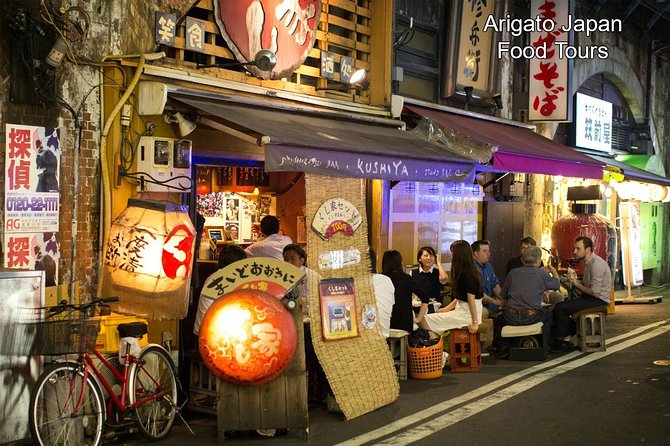
At $217 per person, this is a premium food walk. You are paying more than the cost of a casual dinner, and two included drinks will not by themselves explain the price.
The strongest value comes from the access and interpretation. You get a local English-speaking guide, a small group, five food stops, and a route through a district many first-time visitors skip. You also avoid the uncertainty of picking a restaurant at random when menus and customs are unfamiliar.
The weak point is consistency. The route can change, and the food at one stop may suit you much less than the food at another. If you want a polished tasting menu with guaranteed dishes, this is not the right format.
I would consider it reasonable for a first evening in Tokyo if you care about local dining culture and prefer a planned introduction. I would hesitate if your main goal is quantity, luxury, or the lowest possible food cost.
Booking details that affect your plans
The tour starts at 4:30 pm and lasts about three hours. That makes it easy to fit around daytime sightseeing, but you should leave enough time to reach Shimbashi Station without rushing.
The start point is at 2-chōme-7-1 Shinbashi, Minato City, Tokyo 105-0004. The end is JR Shimbashi Station at 2 Chome-17 Shinbashi, Tokyo. Check the exact meeting instructions on your mobile ticket before setting out.
Free cancellation is available if you cancel at least 24 hours before the local start time. Late cancellations and changes are not accepted for a refund. The experience also depends on good weather and a minimum number of participants. If the operator cancels for either reason, you can choose another date or experience, or receive a full refund.
Who should book this Shimbashi food walk?
I would recommend it to you if you want a guided first taste of Tokyo’s casual drinking culture, enjoy trying several small dishes, and value conversation about manners and local habits. It is also a good fit if you are curious about Japanese office culture but would rather see it through dinner than through a formal city tour.
It suits couples, friends, and solo adults who like a social evening. The small group and optional karaoke after-party add to that appeal.
I would skip it if you need vegan or gluten-free food, dislike raw dishes, want a fixed menu, or are mainly interested in Tokyo’s major sights. The route includes notable places, but food remains the main event.
FAQ
Where does the Shimbashi Hidden Gem Walking Tour begin?
It begins at 2-chōme-7-1 Shinbashi, Minato City, Tokyo 105-0004, near SL Square at the west entrance of Shimbashi Station.
What time does the tour start?
The tour starts at 4:30 pm.
How long does the experience last?
It lasts approximately three hours.
Where does the tour end?
The tour ends at JR Shimbashi Station, at 2 Chome-17 Shinbashi, Tokyo 105-0004.
How many food stops are included?
Five food stops with local and seasonal food are included.
How many drinks are included?
Two drinks are included. Additional drinks and food cost extra.
Can children join the tour?
No. This is an adults-only experience, and participants must be at least 20 years old.
Is the tour suitable for vegetarian or vegan diets?
The tour is suitable for vegetarians and pescatarians. It is not recommended for vegans or people following a gluten-free diet.
Can I cancel for a refund?
You can cancel at least 24 hours before the start time for a full refund. Cancellations or changes made less than 24 hours before the tour are not refunded.
Newly reviewed around Tokyo
- Tokyo Asakusa:Calligraphy & Make T-shirt Activity★ 5.0 · 62 reviews
- Intercity Shuttle, Tokyo to Haneda /Narita /Yokohama /Makuhari★ 5.0 · 5 reviews
- 1 Hour Travel around Tokyo with a Professional Photographer★ 5.0 · 3 reviews
- Travel Tokyo with Your Own Personal Photographer★ 5.0 · 43 reviews
- Train in Samurai Swordsmanship and Defeat the Demon in Tokyo★ 5.0 · 5 reviews
- Shuttle Van 6hr Tokyo Tour to-and-from Tokyo, Yokohama and Narita★ 5.0 · 9 reviews
- Kickboxing & Body Training with EX-Pro Fighter★ 5.0 · 4 reviews
- Traditional Japanese Knife Sharpening Class★ 5.0 · 18 reviews
Tokyo Walking Tours, compared.
Tokyo Tsukiji Fish Market Food and Culture Walking Tour
Read our review →
Imperial Palace and Shogun Historical Walking Tour
Read our review →
Shinjuku Local Bar and Izakaya Guided Walking Tour
Read our review →
Asakusa Walking Tour with Sensoji Temple Visit
Read our review →
Tokyo Castle & Imperial PalaceーShogun Walking Tour
Read our review →
Browse the lists this tour appears in