
Reviewed · TOKYO SAMURAI AND NINJA EXPERIENCES
Samurai Experience – Learn Bushido through Kendo, in Tokyo
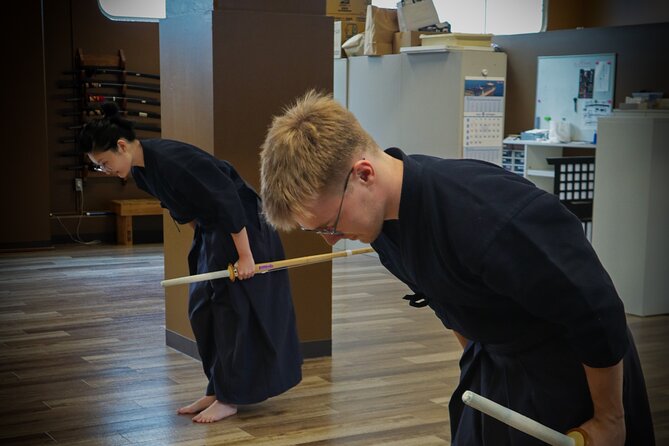
Kendo is not a sword-photo session. You begin with a bow, learn why respect matters, practice grounded footwork, and only then pick up the bamboo sword. Daichi and Makoto guide you through the basics before you put the pieces together in a short match.
I like the thoughtful order of the lesson and the small groups, limited to eight people. I also like that the session includes Kendo clothing, a shinai, drinks, souvenirs, and photos or videos sent afterward. The main consideration is physical effort: the armor and warm dojo can make this a real workout, not a passive cultural stop.
Key points to know
- The lesson begins with etiquette: You bow, learn how to greet properly, and treat the dojo as a place of discipline rather than a stage set.
- Ki, Tai, and Ken come first: You study spirit, body, and sword separately before bringing them together in Ki-Ken-Tai-Itchi.
- You get hands-on practice: The session includes footwork, strikes, protective equipment, and a friendly match with an instructor.
- The final demonstration is serious Kendo: Watch the instructors face each other with speed, control, and focus.
- The group stays small: A maximum of eight participants allows the English-speaking instructors to correct beginners closely.
- The location saves time: The dojo is about 15 minutes from Tokyo Station, making this easy to fit into a busy Tokyo day.
Kendo begins with a bow, not a sword
Many visitors picture samurai training as a quick lesson in swinging a blade. This experience takes a more careful route. You first learn where Kendo comes from and why its movements are tied to Bushido, the code associated with the samurai.
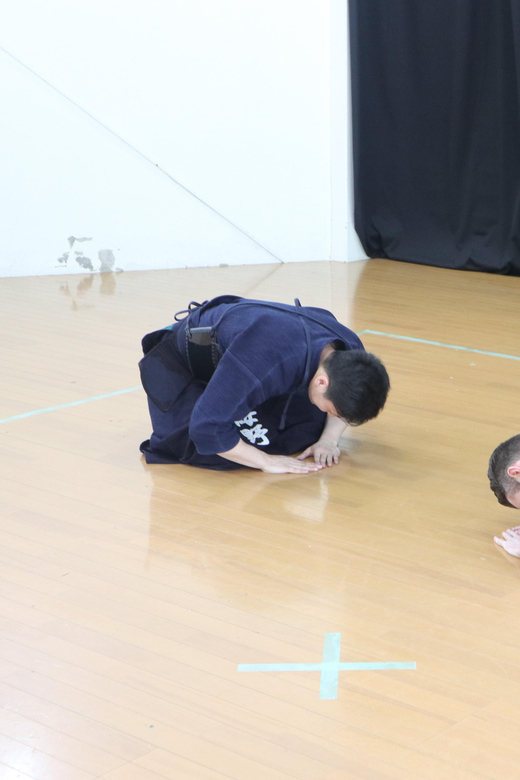
That opening matters. You are not simply handed equipment and asked to copy a pose. You learn how to greet, how to show respect, and how to settle your mind before practice. The bow is part of the training, not a decorative gesture for photographs.
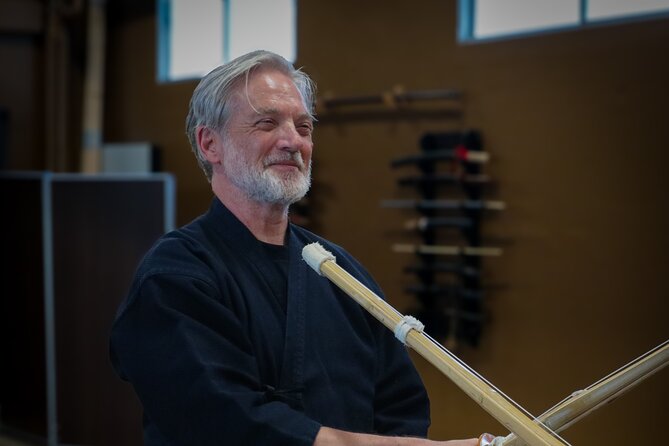
The instructors explain Kendo in English and Japanese. Daichi and Makoto are named as the main teachers, and their instruction is built for people who may never have held a shinai before. You can ask questions during the session, so you do not need to arrive with any Japanese or martial arts vocabulary.
This is the right approach for anyone who wants more than a costume moment. You still get to wear Kendo clothing and protective equipment, but the clothing has a purpose. It changes the way you move, listen, and pay attention.
More Tokyo samurai and ninja experiences:
- Tokyo: Samurai Ninja Museum Guided tour and Experience
★ 4.6 · 1,010 reviews - Tokyo: Samurai Sword & Archery Class from Samurai Descendant
★ 5.0 · 603 reviews - Best Samurai Experience in Tokyo
★ 5.0 · 458 reviews
A two-hour lesson with a clear progression
The session is carefully ordered. You begin with ideas, move into body control, add the sword, and finish with practice against another person. That gradual build keeps the lesson approachable while giving it enough substance to feel like a real introduction.
1. Etiquette and respect
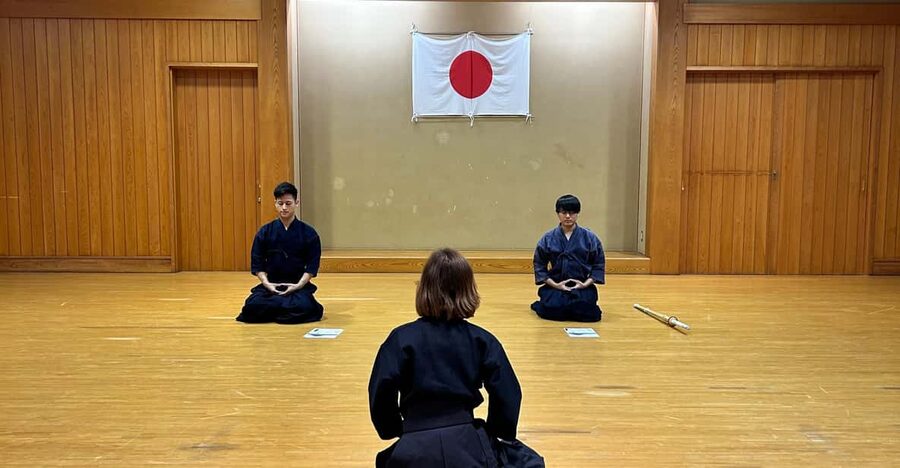
The first stage focuses on Rei, the respectful greeting used in Japanese martial arts. You bow before training and again at the end. The instructors explain that this is not empty ceremony. It sets the tone for how you face the person opposite you.
You also learn basic Kendo words and the proper way to handle the equipment. One useful detail is learning how to draw and fold the shinai correctly. These small actions may seem simple, but they help you understand that Kendo has rules before it has speed.
If you are used to casual activity tours, the formal opening may feel slower than expected. I see that as a strength. It gives the session a calm center before the physical work begins.
2. Ki, or focused spirit
Next comes Ki, the spirit or intent behind the movement. The lesson presents Kendo as more than hitting an opponent. You learn how presence, concentration, and commitment affect the way a strike looks and feels.
The point is not anger. It is controlled intent. You are encouraged to face the action directly and stay focused, even when the instructor is moving toward you with a sword.
This part helps explain why Kendo can feel intense even for a beginner. You may know that the match is controlled, but your body still reacts when a protected instructor points a shinai at you. That pressure is part of the lesson. It shows why calm attention matters.
More Tokyo martial arts classes:
- Tokyo:Samurai sword and archery class from a samurai descendant
★ 5.0 · 121 reviews - Tokyo 2-Hour Genuine Samurai Experience: Kendo in Japan
★ 5.0 · 112 reviews - Tokyo: Samurai Kendo Practice Experience
★ 4.7 · 102 reviews - Samurai Experience – Learn Bushido through Kendo, in Tokyo
★ 5.0 · 88 reviews
3. Tai, or grounded movement
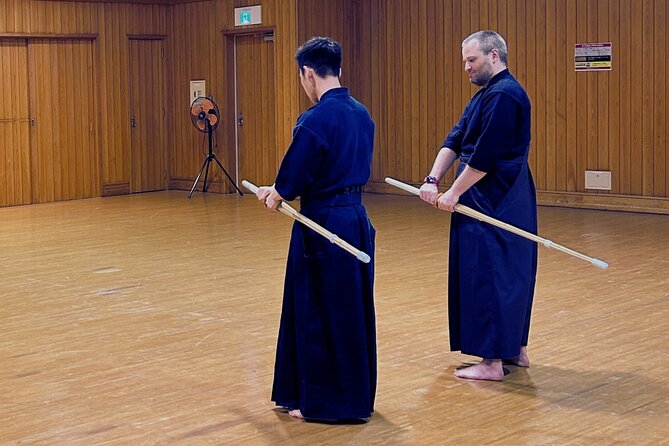
The footwork section may be the least flashy part of the experience, but it is one of the most useful. You practice steps that keep your body balanced and ready. The aim is to move from a stable base rather than lunge or swing wildly.
Beginners often want to focus on the sword at once. Kendo asks you to earn that stage. You first learn where your feet belong, how to shift your weight, and how to keep the body coordinated.
This is also where the activity becomes exercise. Even without a full match, repeated footwork takes concentration and energy. Wear clothing suitable for a run, as one participant sensibly advised. The dojo can feel warm once you add equipment and movement, although cold water and rest periods are provided.
4. Ken, or the bamboo sword
Only after the footwork comes the shinai. This is a bamboo training sword, not a sharpened weapon, and it is supplied for you. The instructors show you how to hold it, swing it, and combine it with the steps you have already practiced.
You work through basic attack points and simple striking technique. The lesson is paced so that you can add one element at a time. That makes it suitable for people with no previous experience, while still giving martial arts fans something more useful than a theatrical pose.
You will not become a Kendo practitioner in two hours. You can, however, understand the basic logic of the art: posture, movement, timing, control, and commitment all matter together.
5. Ki-Ken-Tai-Itchi
The phrase Ki-Ken-Tai-Itchi brings the lesson together. Spirit, sword, and body must arrive as one action. A strike is not just an arm movement. Your intent, footwork, and sword need to agree.
For a first-time participant, this is where the earlier exercises start to make sense. You may find that the movement feels awkward at first. That is normal. The instructors break it into parts, demonstrate it, and let you try again.
This is one of the best reasons to choose this session over a simple samurai costume activity. You are learning a principle through your body. Even a basic strike gives you a clearer idea of the discipline involved.
Wearing Kendo equipment changes the experience
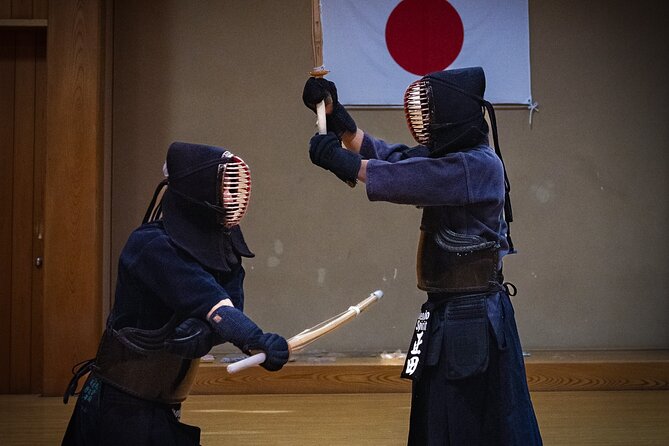
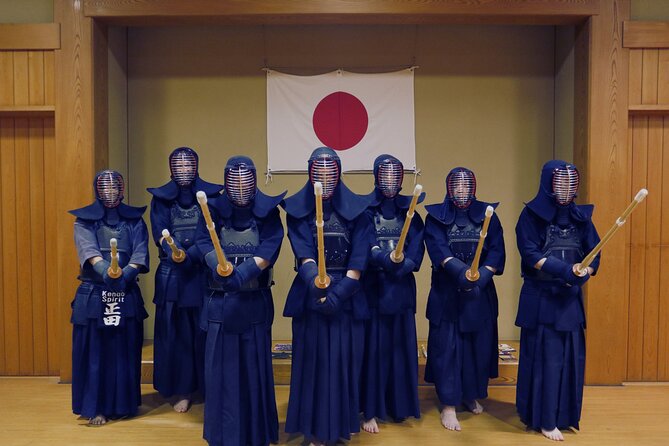
After the basic movement and sword work, you put on protective gear for the more active section. The equipment makes the session feel more serious, but it also adds heat and weight.
Several practical points matter here. You do not need to bring equipment, clothing, or a sword. Kendo attire and the shinai are included. The dojo also has lockers, according to the available information, so you can change and keep your belongings organized during training.
The protective gear does not turn the class into a free-for-all. The instructor controls the pace and adjusts the practice for beginners. You work against a protected teacher, which lets you try the movement without needing to face another inexperienced participant.
That setup is reassuring if you are nervous. You can focus on the instructions instead of worrying about whether your partner knows what to do. The small group, capped at eight people, also gives the teachers room to correct basic mistakes.
The match puts your new skills under pressure
The final practical section is a short Kendo match. You use the footwork, sword position, and striking technique from the earlier exercises. The instructors keep it friendly and controlled, but it still feels like a challenge.
This is the point when the class shifts from learning movements to responding in the moment. You need to watch the other person, keep your balance, and act with confidence. Even a gentle exchange can make you freeze for a second when the sword comes toward you.
Those who feel ready may challenge a veteran instructor. You should not expect the instructor to treat this as a serious contest. The goal is to let you feel the pressure of facing an experienced Kendo practitioner while keeping the encounter safe and encouraging.
That balance is important. The experience gives you the thrill of a match without pretending that a beginner can master Kendo in one afternoon. You get a real taste of the discipline, along with a healthy reminder of how much skill the instructors have built over time.
The final demonstration shows what practice can become
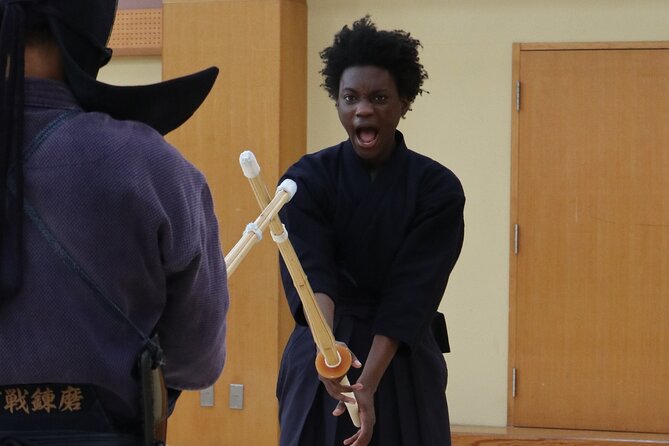
After your match, the instructors perform a demonstration between themselves. This is often the most striking part of the session because you can now recognize the basics.
You have practiced the steps. You have held the shinai. You have tried to combine body, spirit, and sword. Then you watch two trained instructors move with speed and precision.
The demonstration is not presented as a staged samurai show. Its value comes from contrast. Your own beginner movements are fresh in your mind, so you can see the timing, control, and confidence behind the instructors’ actions.
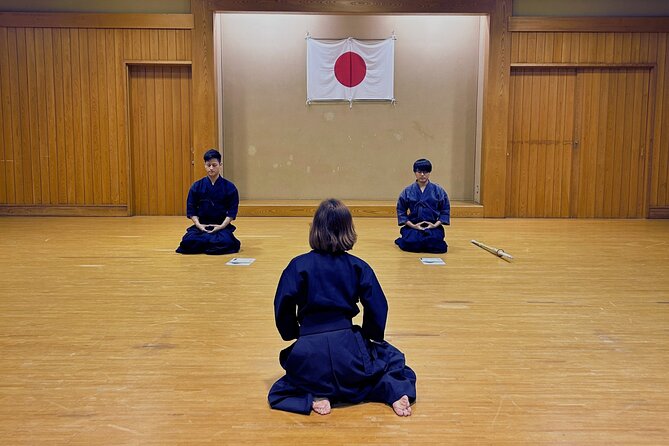
The lesson closes with another bow. That return to etiquette gives the two hours a neat shape. You start by learning how to enter the practice with respect, and you finish by carrying that respect out of the dojo.
What the price includes, and what it is worth
At $103 per person, this is not the cheapest cultural activity in Tokyo. The value depends on what you want from a samurai-themed experience.
You receive a full two-hour lesson rather than a brief demonstration. The price includes Kendo attire, a bamboo sword, drinks, and souvenirs. Photos and videos are taken during the session, with the files sent to you by email afterward. That saves you from trying to hold a phone while learning footwork or wearing protective gear.
The small group also matters. A maximum of eight people is a reasonable limit for an activity that involves instruction, equipment, and one-on-one practice. If the group is especially small, such as three participants with two teachers, you can expect more direct attention.
You can also book a private session by adding Exclusive Private Session before payment. This is available only on dates that still show eight open places, and one private-session add-on applies per group.
I would call the price fair for someone who values instruction and participation. If you only want a quick samurai photograph, this is more than you need. If you want to understand Kendo basics and physically try them, the included gear, teaching, match, and media make the cost easier to justify.
Who should book this Kendo experience
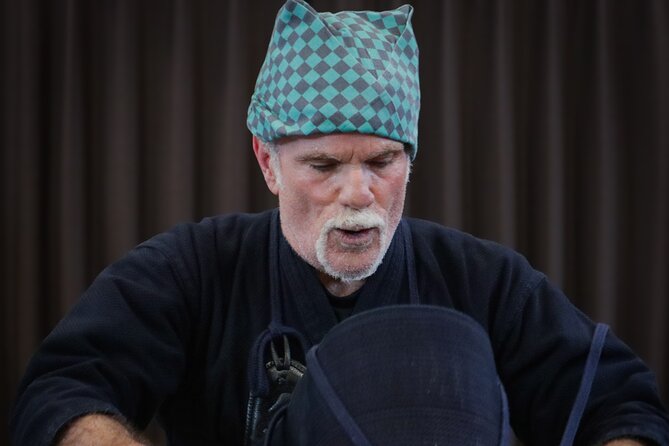
You do not need athletic training or previous martial arts experience. Most participants are beginners, and the lesson is paced so newcomers can take part. The instructors are used to explaining the steps carefully.
I especially recommend it for:
- People curious about Japanese martial arts beyond films and costumes
- Couples, friends, or parent and teenager combinations
- Visitors who want an active cultural activity near central Tokyo
- Anyone interested in discipline, focus, and traditional etiquette
- Martial arts fans who want a short introduction to Kendo in Japan
- Independent-minded visitors who prefer a small class to a large group show
A parent and 15-year-old have taken the class together, and the format can work across age groups. Still, it is physical and uses protective equipment, so you should be comfortable standing, stepping, swinging, and taking part in a short match.
The activity is not suitable for pregnant women, babies under one year, or people over 95. Alcohol and drugs are not allowed. Those rules are straightforward, but they matter because this is an active training session, not a seated talk.
How to fit it into a Tokyo day
The dojo is within about 15 minutes of Tokyo Station. That makes the experience easy to combine with sightseeing in central Tokyo, especially if you do not want to spend an hour crossing the city for a short appointment.
Allow enough time to arrive calmly. The lesson starts with etiquette, and punctuality is part of the tone. You do not want to rush in, change clothes, and miss the explanation of how the class works.
Because the session lasts two hours, it can fit into a morning or afternoon plan. I would avoid placing it immediately before a formal dinner or another activity where you need to look perfectly fresh. The footwork, armor, and sparring can leave you warm and tired.
You can reserve now and pay later, which helps if your Tokyo schedule is still changing. Cancellation is free up to 24 hours in advance for a full refund. If the listed dates do not fit, the provider may be able to arrange another session, and large groups can be accommodated with advance contact.
Final call: should you book it?
Book this if you want to practice a Japanese tradition rather than simply watch one. The best parts are the careful sequence, the personal attention from Daichi and Makoto, the controlled match, and the final instructor demonstration.
Skip it if you dislike physical activities, warm protective gear, or formal instruction. You should also skip it if your main goal is a fast photograph in samurai clothing.
For everyone else, this is a strong two-hour choice near Tokyo Station. You leave with a clearer sense of why Kendo values respect, focus, movement, and self-control. You may even leave looking for a Kendo club back home, which is a useful sign that the lesson has done more than fill an afternoon.
FAQ
How long does the Kendo experience last?
The experience lasts two hours, including the introduction, etiquette, footwork, sword practice, match, instructor demonstration, and closing bow.
Where is the dojo located?
The dojo is located on Honshu, within approximately 15 minutes of Tokyo Station.
Is the experience offered in English?
Yes. The instructors speak English and Japanese, and the experience is conducted in English.
Do I need previous Kendo or martial arts experience?
No. Beginners without martial arts experience can join, and the instruction is paced carefully for first-time participants.
What equipment is included?
Kendo attire and a bamboo sword called a shinai are provided. Drinks and souvenirs are also included.
Can I take part in a match?
Yes. You practice in a friendly Kendo match, and participants who have the courage may challenge a veteran instructor. The instructors also perform a demonstration match.
Can I book a private session?
Yes. Before payment, add Exclusive Private Session, with one add-on per group. Private sessions are available only on dates that still show eight available spots.
Can I cancel for a refund?
Yes. You can cancel up to 24 hours in advance for a full refund.
Newly reviewed around Tokyo
- Tokyo Asakusa:Calligraphy & Make T-shirt Activity★ 5.0 · 62 reviews
- Intercity Shuttle, Tokyo to Haneda /Narita /Yokohama /Makuhari★ 5.0 · 5 reviews
- 1 Hour Travel around Tokyo with a Professional Photographer★ 5.0 · 3 reviews
- Travel Tokyo with Your Own Personal Photographer★ 5.0 · 43 reviews
- Train in Samurai Swordsmanship and Defeat the Demon in Tokyo★ 5.0 · 5 reviews
- Shuttle Van 6hr Tokyo Tour to-and-from Tokyo, Yokohama and Narita★ 5.0 · 9 reviews
- Kickboxing & Body Training with EX-Pro Fighter★ 5.0 · 4 reviews
- Traditional Japanese Knife Sharpening Class★ 5.0 · 18 reviews
Tokyo Samurai and Ninja Experiences, compared.
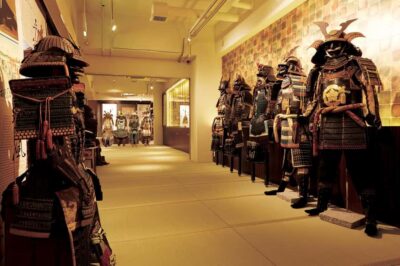
Samurai Ninja Museum Guided tour and Experience
Read our review →
Samurai Sword & Archery Class from Samurai Descendant
Read our review →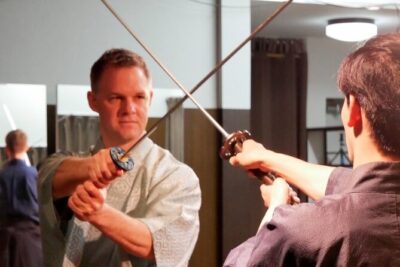
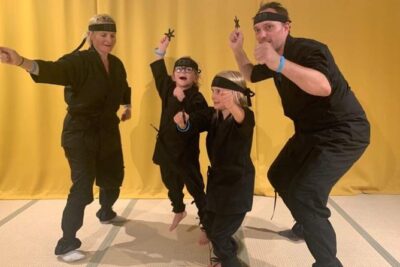
Ninja Experience (Family Friendly) at Samurai Ninja Museum TOKYO
Read our review →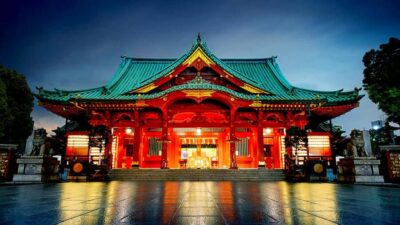
Samurai Entertainment Night Show in Kanda Shrine
Read our review →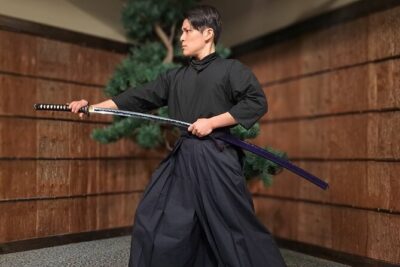
Tokyo Sword Experience – includes Museum Ticket/Ninja Experience
Read our review →
Samurai Ninja Museum Asakusa: Samurai Sword Lesson & Tour
Read our review →
Ninja Samurai 2-hour hands-on lesson by Japanese master in Tokyo
Read our review →Browse the lists this tour appears in