
Reviewed · TOKYO SAKE TASTINGS
Sake Pairing Workshop with Japanese Food in Shinjuku
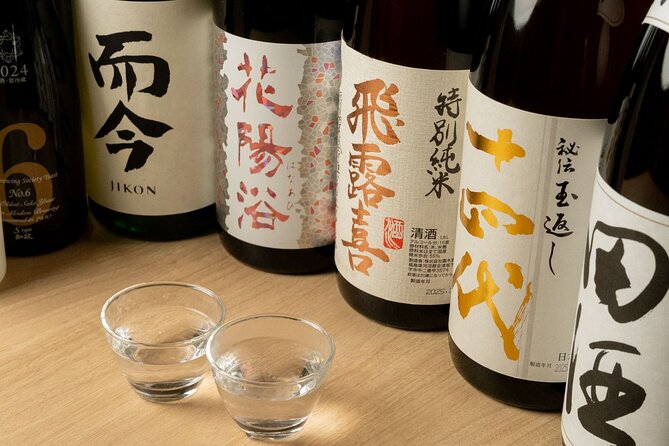
Sake is much more than a drink to knock back with dinner. This hands-on Shinjuku workshop shows you how temperature, aroma, sweetness, and texture change the character of rice wine, then puts those lessons beside Japanese dishes. The four-sake flight gives the evening structure, while the larger all-you-can-drink menu lets you keep exploring.
I like the clear food matches, especially chicken nanban with a crisp sake and sea urchin cream croquettes with soft nigori. I also like the small group size, capped at 12, and the chance to learn label-reading tips from a bilingual guide such as Anika. The main consideration is that two hours can pass quickly if you want to sample many of the 20 sakes carefully, and the full drink plan may not suit people who do not drink much.
Key points at a glance
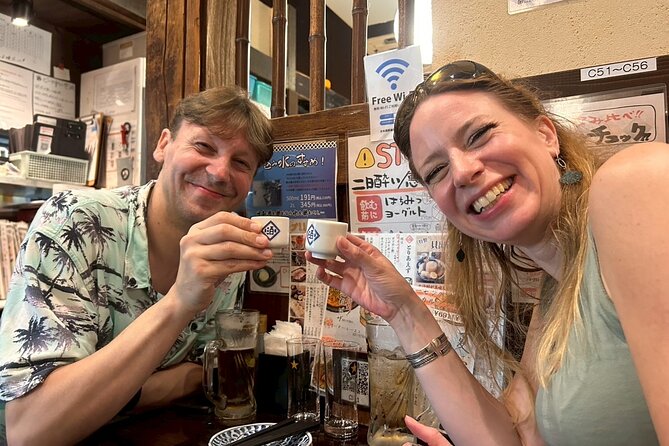
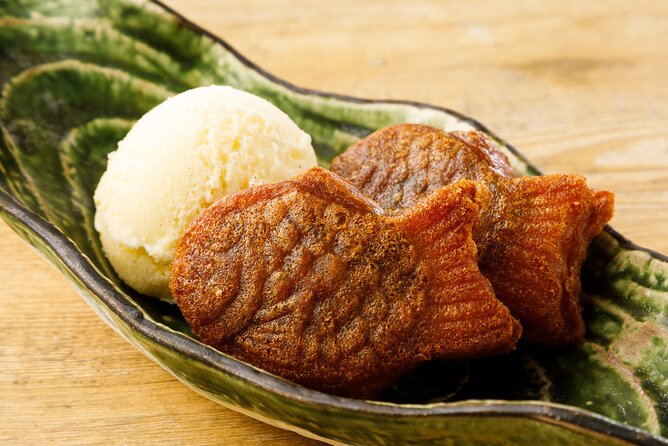
- Four guided pairings: Taste sake with chicken nanban, miso-butter dishes, sea urchin croquettes, and fried vanilla taiyaki.
- Warm versus cold comparison: Learn how serving temperature can change the flavor of the same rice-based drink.
- Twenty sakes available: Continue tasting after the guided flight, with beer, highballs, and soft drinks also offered.
- A bilingual guide leads the session: Anika is specifically associated with the workshop and explains both sake styles and food matches.
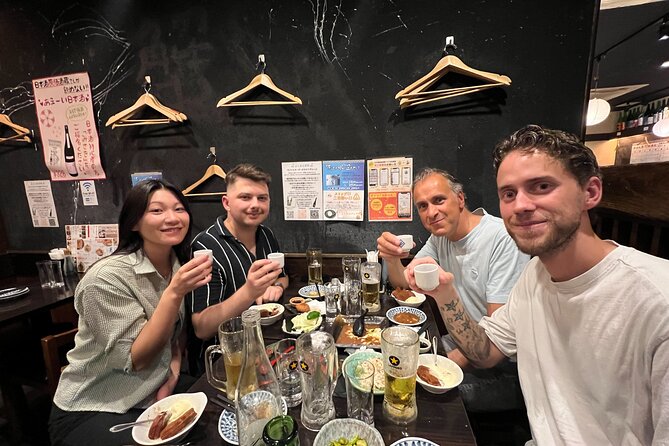
- Small-group format: The activity accepts no more than 12 participants, giving the lesson a more personal feel.
- Shinjuku meeting point: The tour begins and ends at H&M, 3-chōme-5-4 Shinjuku, near public transportation.
Why this Shinjuku sake workshop is different
Many sake tastings hand you a few small glasses and leave you to guess what you are drinking. This one gives you a useful reason for each pour. You taste, eat, compare, and then taste again with a new point of reference.
That matters because sake can seem subtle at first. A chilled pour may feel clean and light, while a warmer serving can bring out fuller rice notes and a softer finish. The workshop uses temperature changes as a teaching tool, not just a technical detail.
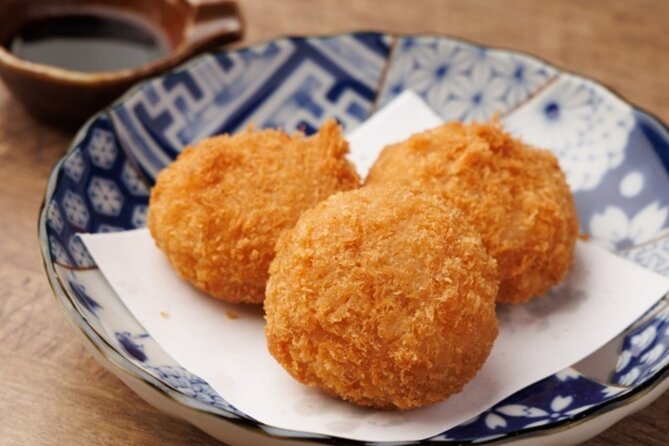
You also get a proper meal rather than a plate of token snacks. Chicken nanban, miso-butter dishes, sea urchin cream croquettes, and fried vanilla taiyaki create very different textures and flavors. That range helps you notice why one sake feels sharp with fried food while another feels better beside something creamy or sweet.
The group limit of 12 is another plus. It does not guarantee a private lesson, but it should make it easier to follow the guide, ask questions, and see the labels being discussed. A bilingual guide is especially helpful if you want to understand Japanese terms without turning the session into a formal lecture.
More things to do in Shinjuku:
- Tokyo: Shinjuku Food Tour (13 Dishes at 4 Local Eateries)
★ 5.0 · 6,603 reviews - Tokyo Bar Hopping Tour in Shinjuku (All-You-Can-Drink + Dinner)
★ 5.0 · 3,587 reviews - Tokyo: Shinjuku Food Tour (15 Dishes and 4 Eateries)
★ 4.9 · 2,033 reviews
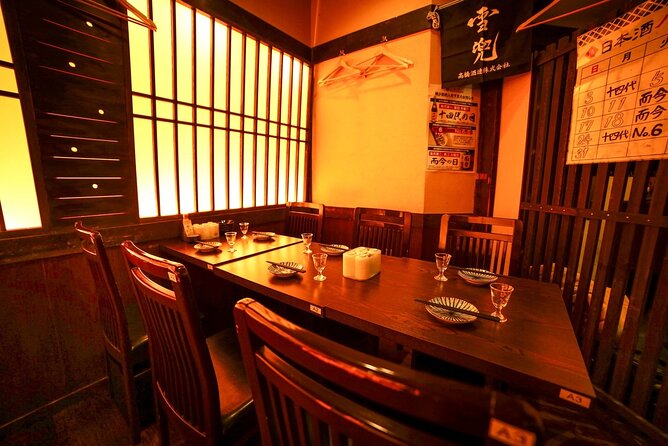
Meeting in Shinjuku and settling in
The meeting point is H&M at 3-chōme-5-4 Shinjuku, Tokyo 160-0022. The activity starts and ends at this location, and it is near public transportation. Give yourself enough time to find the exact meeting spot in Shinjuku, since the area has many large signs, busy streets, and multiple shopping landmarks.
The mobile ticket keeps the arrival process simple. You receive confirmation when you book, so keep the ticket easy to open on your phone. Since the meeting point is a public retail location rather than a famous sightseeing site, check the address carefully before setting out.
The workshop lasts about two hours. That is long enough for a focused tasting and meal, but not so long that it takes over your evening in Tokyo. You can pair it with a later walk through Shinjuku, though the all-you-can-drink plan means you should make sensible plans for the rest of the night.
Starting with sake basics and kanpai etiquette
The opening lesson covers the basics before the food pairings begin. You learn the essential kanpai etiquette and get a framework for tasting sake instead of simply deciding if you like it.
Expect attention to aroma, flavor, and temperature. The point is not to turn you into a sake professional in two hours. It is to give you enough vocabulary and confidence to make better choices later in Japan.
The temperature lesson is likely to be one of the most useful parts. Sake is often served chilled, but some styles can also be enjoyed warm. The change is not merely about comfort. Heat can shift the balance of aroma and flavor, making the drink seem rounder, softer, or more pronounced.
I like this teaching approach because it gives you a direct comparison. Rather than memorizing a list of sake categories, you can notice how serving conditions alter the drink in your own glass.
Chicken nanban with a crisp sake
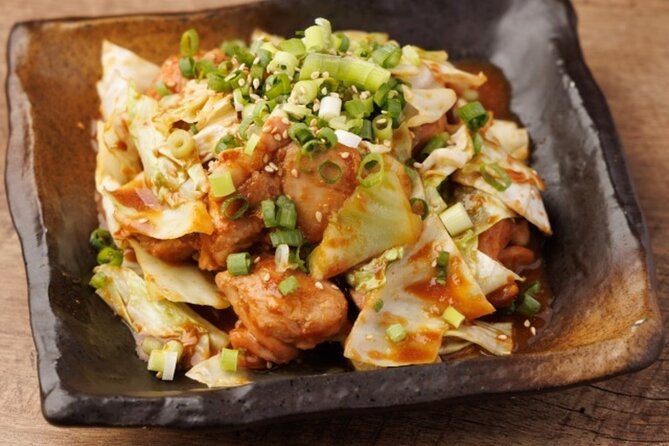
The meal begins with savory pairings, including chicken nanban. This dish is known for its fried chicken and tangy sauce, so it gives the guide a good platform for explaining contrast.
A crisp sake can cut through fried food and refresh your mouth after the sauce. The pairing lesson asks you to pay attention to that interaction. Instead of treating the sake and food as separate courses, you look for what changes when they are tasted together.
This is practical knowledge for future meals. If you order something fried or tangy at an izakaya, you may be better prepared to choose a clean, lively sake instead of a heavy one. You are not just tasting a brand. You are learning a simple way to think about matching drinks and food.
Chicken nanban also gives the meal a familiar anchor. Even if you know little about sake, you can understand the basic idea of pairing a refreshing drink with rich, fried food.
More Tokyo sake tastings:
- Ramen and Sushi Cooking Class with Sake Pairing Set in Tokyo
★ 5.0 · 291 reviews - Sake Tasting Masterclass in Shinjuku (8+ Varieties with a Pro)
★ 5.0 · 271 reviews - Sake Omakase in Tokyo: Guided Tasting by Certified Sommeliers
★ 5.0 · 239 reviews - Tasting All Types of Sake with Sommelier
★ 5.0 · 151 reviews
Miso butter and the move toward fuller flavors
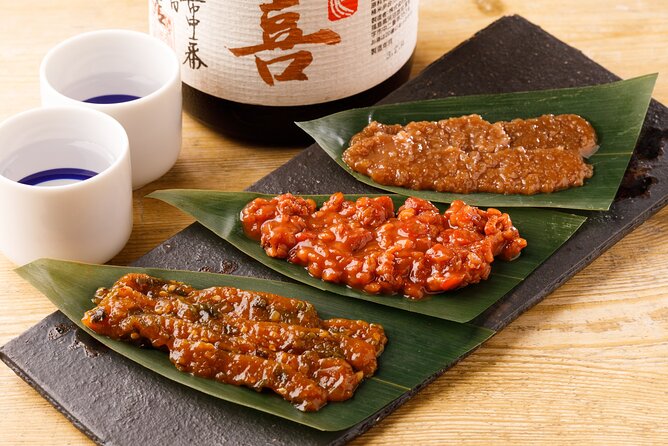
The next pairing uses miso-butter dishes and richer sake. Miso brings salt and fermented depth, while butter adds a smooth, fatty feel. A fuller drink can meet those stronger flavors without disappearing beside them.
This part of the workshop is useful because it shows that more flavor does not always mean a sweeter drink. Body, aroma, acidity, and finish all affect how a sake performs with food.
Pay attention to the aftertaste here. A drink may seem mild on its own but gain more presence after a bite of miso and butter. That simple comparison helps you understand why Japanese restaurants offer several sake styles instead of one standard house pour.
The dishes are served as part of the course dinner, so you are not forced to choose between a serious tasting and a satisfying meal. Still, portions and pacing are not described in detail, so treat this as a tasting dinner rather than a substitute for a long restaurant meal.
Nigori sake and sea urchin cream croquettes
The softer middle section pairs nigori sake with sea urchin cream croquettes. Nigori is cloudy and often has a creamy, slightly sweet texture because some rice solids remain in the drink.
That texture makes sense beside a croquette with a sea urchin cream filling. The combination leans toward richness and softness rather than sharp contrast. If you are curious about a less clear, more textured sake, this is one of the most distinctive stops in the workshop.
Sea urchin can be a bold ingredient for some diners. Its flavor is not as neutral as chicken or rice, and the creamy croquette format may feel more indulgent. If you already enjoy seafood and creamy dishes, this pairing should be a highlight. If you prefer mild flavors, it is still a useful chance to test how a textured sake handles a strong ingredient.
The guide explains the pairing as you eat, so you can focus on the connection between mouthfeel and flavor. That is often easier to grasp here than in a plain glass tasting.
Finishing with fried vanilla taiyaki
The final food pairing changes direction. You finish with crispy fried vanilla taiyaki and a sweet sake.
Taiyaki is a fish-shaped Japanese cake, and the fried version adds a crisp outside to the soft vanilla center. A sweet sake makes the ending feel closer to dessert than to a traditional bar tasting.
This is a smart finish for the structure of the meal. You have already compared dry and fuller styles with savory food, so the sweet pairing gives you a different reference point before the workshop ends. It also reminds you that sake is not limited to salty dishes.
Do not expect every participant to prefer sweet sake. Taste is personal, and some people will find dessert pairings more memorable than others. The value is in seeing how broad the category can be.
The 20-sake menu after the guided flight
The four-sake flight gives you the lesson. The all-you-can-drink menu gives you room to experiment.
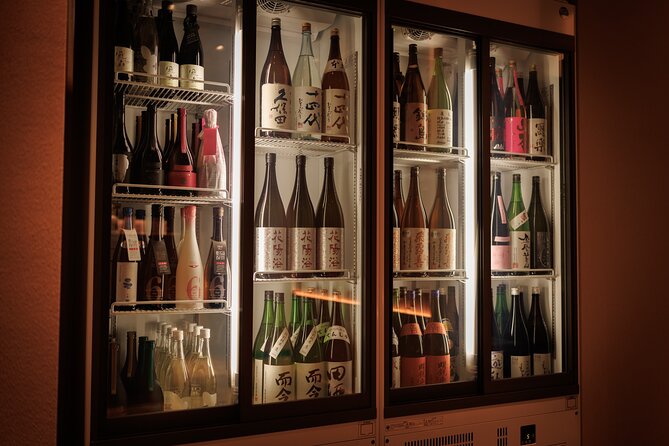
Up to 20 sakes are available, along with beer, highballs, and soft drinks. You can use this time to compare labels, return to a style you liked, or try something that the guided pairings did not cover.
The important phrase is at your own pace. You do not need to work through all 20 options. In fact, trying to do that in two hours would make it harder to taste carefully. I would treat the menu as a chance to select a few additional pours after you understand the basics.
The label-reading lesson is useful beyond this evening. Japanese sake labels can look confusing when you do not know what to scan for. Learning how to approach them gives you a better chance of ordering independently at a restaurant or shop later in your trip.
Beer and highballs make the plan less restrictive for a mixed group. Soft drinks are also available, though this remains a sake-focused activity, so people who want a nonalcoholic food tour may find the format less suitable.
What the $73.17 price includes
At $73.17 per person, the price needs to be judged against both the meal and the drink access. You receive a course dinner, four guided sake pairings, and access to 20 sakes plus beer and highballs. That is a stronger package than paying separately for a small tasting flight and ordering dinner afterward.
The value is best for someone who plans to sample several alcoholic drinks and wants instruction along with the food. The all-you-can-drink plan can add up quickly in Tokyo if you order many individual pours, so the fixed price offers some comfort for an evening built around tasting.
It is less compelling if you drink very little or mainly want one good sake with dinner. In that case, you may not use enough of the beverage plan to justify the cost.
The small group also adds value. A maximum of 12 people allows the guide to explain the pairings in a more direct setting than a large social event. You are paying for guidance, not just access to bottles.
Who will enjoy it most
I would recommend this workshop to first-time sake drinkers who want a clear introduction without committing to a long class. The food gives you familiar points of comparison, while the guide supplies the basic etiquette and tasting method.
It also suits couples and small groups with different levels of sake interest. One person can focus on the lesson, another can explore the food, and the menu includes beer, highballs, and soft drinks for those who do not want only sake.
Food-focused visitors should pay attention to the dish sequence. Chicken nanban, miso butter, sea urchin croquettes, and fried vanilla taiyaki create a broader meal than a standard cheese-and-cracker tasting.
I would be more cautious if you are looking for a quiet, private dinner, a large sightseeing component, or a nonalcoholic activity. The workshop is social and centered on tasting. It also requires good weather according to the booking conditions, even though the session itself includes indoor food and drink.
Timing, group size, and cancellation details
The activity runs for about two hours and returns to the meeting point. Its average booking lead time is 31 days, so reserve ahead if your Tokyo dates are fixed.
The maximum group size is 12, and most people can participate. The activity is near public transportation, but the exact route from your hotel is not provided, so use the Shinjuku address when planning your arrival.
You can cancel for a full refund up to 24 hours before the start time. Changes or cancellations inside that 24-hour window are not accepted and are not refunded. If poor weather or an insufficient minimum group causes cancellation, you are offered another date or experience, or a full refund.
Should you book this Shinjuku sake experience?
Book it if you want a guided introduction that treats sake as part of a Japanese meal rather than as a stand-alone drink. The strongest reasons are the four food pairings, the temperature lesson, the bilingual guidance from Anika, and the chance to keep sampling from 20 sakes afterward.
I would skip it if you do not drink much, want a private dinner, or would rather spend your evening sightseeing than tasting. For everyone else, the combination of instruction, substantial dishes, and broad drink access makes the $73.17 price reasonable, especially early in a Japan trip when you still want help reading the sake menu.
FAQ
How long does the sake workshop last?
The activity lasts approximately two hours.
Where does the workshop begin?
It begins at H&M, 3-chōme-5-4 Shinjuku, Shinjuku City, Tokyo 160-0022, Japan.
Where does the activity end?
The workshop ends back at the meeting point.
How many people can join the group?
The activity has a maximum of 12 participants.
What food is included?
The course dinner includes chicken nanban, miso-butter dishes, sea urchin cream croquettes, fried vanilla taiyaki, and other listed dishes.
How many sakes can I taste?
The experience includes a guided flight of four sakes and access to an all-you-can-drink menu with 20 sakes. Beer and soft drinks are also available.
Can I cancel for a full refund?
Yes. You can cancel at least 24 hours before the start time for a full refund. Cancellations or changes made less than 24 hours before the start time are not refunded or accepted.
More Tokyo food tours
- Tokyo Tsukiji Fish Market Food and Culture Walking Tour
★ 5.0 · 3,184 reviews - Tokyo: Tsukiji Fish Market Food and Walking tour
★ 5.0 · 1,724 reviews - Eat and Drink Like a Local: Tokyo Ueno Food Tour-Taverns&Ramen
★ 5.0 · 957 reviews - Tokyo: Shibuya Food Tour (13 dishes and 4 Eateries)
★ 5.0 · 770 reviews
More Tokyo drink tastings and bars
- Best of Shinjuku: Izakaya Food Tour (4 Stops, 14+ Tastings)
★ 5.0 · 1,863 reviews - Tokyo: Shinjuku Local Bar and Izakaya Guided Walking Tour
★ 4.9 · 1,794 reviews - Shibuya Meltdown Nightlife Tour: All-You-Can-Drink Bar Hopping
★ 5.0 · 1,058 reviews - Tokyo: Pub Crawl and Bar Tour
★ 4.5 · 951 reviews
Newly reviewed around Tokyo
- Tokyo Asakusa:Calligraphy & Make T-shirt Activity★ 5.0 · 62 reviews
- Intercity Shuttle, Tokyo to Haneda /Narita /Yokohama /Makuhari★ 5.0 · 5 reviews
- 1 Hour Travel around Tokyo with a Professional Photographer★ 5.0 · 3 reviews
- Travel Tokyo with Your Own Personal Photographer★ 5.0 · 43 reviews
- Kickboxing & Body Training with EX-Pro Fighter★ 5.0 · 4 reviews
- Train in Samurai Swordsmanship and Defeat the Demon in Tokyo★ 5.0 · 5 reviews
- Shuttle Van 6hr Tokyo Tour to-and-from Tokyo, Yokohama and Narita★ 5.0 · 9 reviews
- Traditional Japanese Knife Sharpening Class★ 5.0 · 18 reviews
Tokyo Sake Tastings, compared.
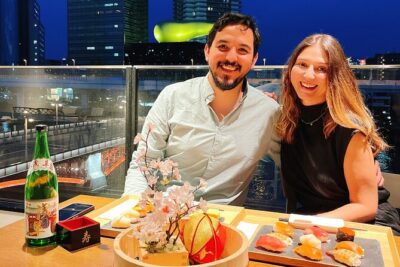
Ramen and Sushi Cooking Class with Sake Pairing Set in Tokyo
Read our review →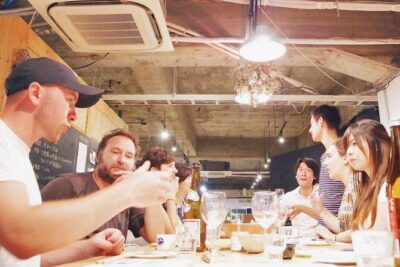
Sake Tasting Masterclass in Shinjuku (8+ Varieties with a Pro)
Read our review →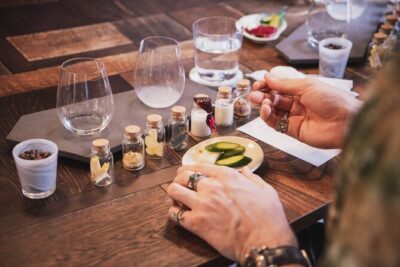
Sake Omakase in Tokyo: Guided Tasting by Certified Sommeliers
Read our review →
Wagyu & Sake Pairing in Shinjuku – Steak, Shabu-Shabu & More
Read our review →
Tokyo Wagyu & Sake Pairing Tasting Experience with Local Flavors
Read our review →
Sushi and Ramen Cooking Class with Sake Pairing Set
Read our review →
Tsukiji: Outer Market Walking Tour & Sake Tasting Experience
Read our review →Browse the lists this tour appears in