
Reviewed · TOKYO WALKING TOURS
Private Customizable Walking Tour of Tokyo
Tokyo is far too large for one fixed sightseeing route, which is why this private customizable walking tour makes sense. You can spend the day on temples and old neighborhoods, focus on food and markets, or mix Shibuya, Harajuku, Asakusa, and Akihabara with the help of one guide.
I especially like the hotel pickup and the chance to learn Tokyo’s subway system as you go. I also like that children 11 and under are free, and that guides such as Paiva, Laura, and Miko have tailored routes around family needs, food stops, tea, and first-day jitters. The catch is simple: public transportation, food, and paid observation decks cost extra, and no guide can show all of Tokyo in one day.
Key points to know before booking
- Your route is built around your interests: Choose from modern districts, temples, markets, gardens, food areas, or anime culture.
- Subway practice is part of the value: Your guide can help you buy a travel pass and show you how to move between districts.
- Hotel pickup does not mean a private car: This remains a walking tour, with subway travel between neighborhoods.
- The best use of time is selective: The 15 suggested stops are spread across Tokyo, so a half-day route needs careful trimming.
- Observation decks cost extra: Tokyo Skytree, Tokyo Tower, and Shibuya Sky can be added, but their admission is not included.
A private Tokyo day instead of a fixed route
At $202.18 per person, this is not the cheapest way to see Tokyo. You are paying for a private guide, hotel pickup and drop-off, a route shaped around your group, and help with a subway system that can feel confusing on your first visit.
The value improves if you are traveling with family, have only one free day, or want a guide to adjust the pace. Group discounts are offered, and children 11 and under are free, so the per-person price may work better for a family than it first appears.
The tour lasts about four to eight hours. You choose a half-day or full-day format, along with a start time. Tell the provider what matters most before the day begins. If you want every major district listed below, you will spend more time transferring than looking around. A shorter, focused route will usually feel more satisfying.
Your guide meets you at your hotel. From there, you walk and use the subway. This is an important detail. Hotel pickup gives you an easy start, but it does not put you in a private vehicle or remove all walking. Wear comfortable shoes and expect station corridors, stairs, sidewalks, and time on your feet.
More Tokyo walking tours:
- Tokyo Tsukiji Fish Market Food and Culture Walking Tour
★ 5.0 · 3,184 reviews - Tokyo: Imperial Palace and Shogun Historical Walking Tour
★ 5.0 · 2,251 reviews - Tokyo: Shinjuku Local Bar and Izakaya Guided Walking Tour
★ 4.9 · 1,794 reviews
Shibuya and Harajuku: Tokyo at full volume
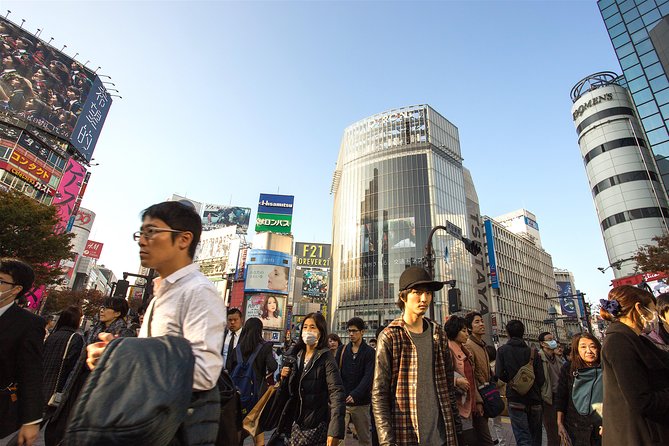
Shibuya is a strong opening if you want to see Tokyo’s modern side immediately. You cross the famous Shibuya Crossing, then visit the bronze statue of Hachikō, the loyal dog remembered at the station.
The crossing takes only a few minutes, but the surrounding district gives your guide plenty to explain: youth fashion, advertising, city design, and the way Tokyo’s crowds move. If you want photos, your guide can help you find a useful viewing spot, though the experience is more about joining the flow than quietly observing it.
Next comes Harajuku, the youth fashion center beside Meiji Jingu. The backstreets offer street art, unusual clothing, animal cafes, and brightly presented food. This is a good match for teenagers and anyone interested in current Japanese pop culture.
Harajuku can also feel noisy and commercial. If your interests lean toward traditional Japan, you may want only a short visit here and save time for Meiji Shrine or Asakusa.
Meiji Jingu: a quiet forest near the city
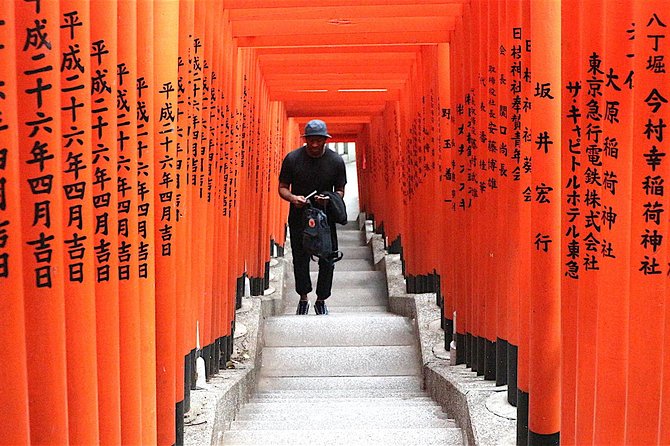
Meiji Jingu gives the tour a sharp change of pace. The shrine sits in a 700,000-square-meter forest in central Tokyo, making it a useful place to learn about Shinto, Japan’s indigenous religion.
The setting matters as much as the shrine buildings. After the signs, crowds, and flashing screens of Shibuya and Harajuku, the tree-lined paths offer breathing room. Your guide can explain basic shrine customs and the difference between Shinto and Buddhism, which helps make later temple visits easier to understand.
Allow enough time to walk through the grounds. The supplied schedule gives roughly 30 minutes to each stop, but Meiji Jingu may deserve more if you want to appreciate the approach and not just take a quick photo at the main area.
Shinjuku and a choice of city views
Shinjuku brings you back to Tokyo’s modern core, with tall buildings, neon, entertainment, and a huge transport hub. The Tokyo Metropolitan Government Building has an observatory on the 45th floor, offering views across the metropolitan area.
This is a practical stop for a first visit because it helps you grasp Tokyo’s size. It also gives you a chance to ask your guide about neighborhoods you may want to visit later in your trip.
The guide can help you understand the district, but the observation experience may depend on opening conditions and timing. If you want a paid view from Tokyo Skytree, Tokyo Tower, or Shibuya Sky, say so before booking. Those tickets are optional and not included in the tour price.
A completely different kind of day in Tokyo:
- Mt Fuji and Hakone 1-Day Bus Tour Return by Bullet Train
★ 5.0 · 26,383 reviews - 1-Day Tokyo Bus Tour
★ 5.0 · 14,250 reviews - Tokyo: teamLab Planets TOKYO Digital Art Museum Entry Ticket
★ 4.6 · 9,779 reviews - Mt Fuji & Hakone Cruise, Drum Show Bullet Train 1 Day from Tokyo
★ 4.0 · 7,413 reviews
Asakusa and Senso-ji: Tokyo’s traditional side
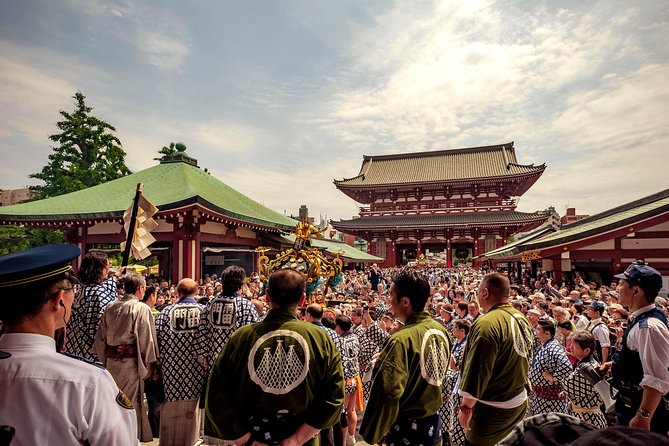
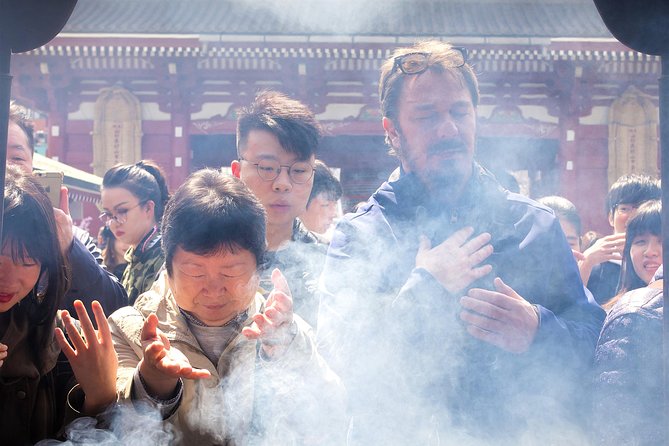
Asakusa is one of the strongest choices for a first-time visitor who wants old Tokyo. Nakamise Shopping Street runs about 250 meters toward Senso-ji, with stalls selling souvenirs, snacks, and traditional crafts.
Senso-ji is Tokyo’s oldest temple, dating to 628. Here your guide can introduce Buddhist customs and point out how the temple district differs from a Shinto shrine such as Meiji Jingu.
Give Asakusa more than a quick photo stop if you want to browse. The shopping street can be crowded, and the most obvious souvenirs are not always the most useful. Ask your guide to help you focus on authentic craft shops and local food rather than rushing through every stall.
Asakusa is also a good place for a family route. The large temple gate, shopping street, snacks, and clear visual differences between shrine and temple make the area easy for children to follow.
Akihabara: anime, games, and electronics
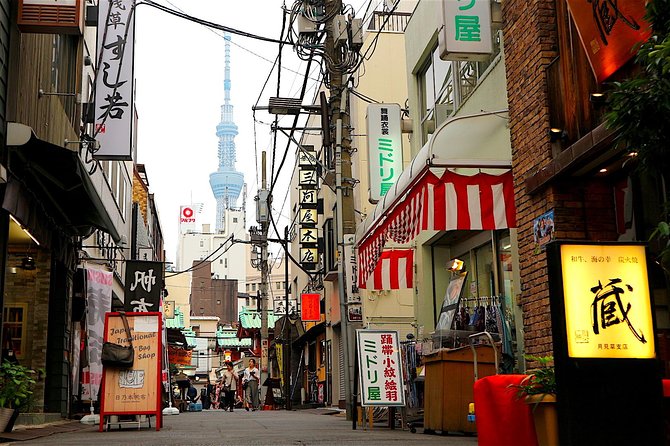
Akihabara is a compact dose of Tokyo’s anime, manga, video game, and electronics culture. The tour schedule allows about 20 minutes here, which is enough for an introduction but not enough for serious shopping.
Choose this district if you already know you want pop culture. It gives you a very different picture of Tokyo from Asakusa or the Imperial Palace area. You can stroll, take in the signs, and ask your guide where to return if you want more time later.
For a family, the guide may need to judge the balance carefully. Some visitors will be fascinated, while others may prefer gardens, food, or temples. The private format helps you make that call without holding up a larger group.
Marunouchi, Nihonbashi, and the Imperial Palace gardens
Marunouchi surrounds the Imperial Palace and offers sleek offices, impressive architecture, Tokyo Station, the Tokyo International Forum, and the KITTE building. It is a useful stop if you like design, city planning, and polished central Tokyo.
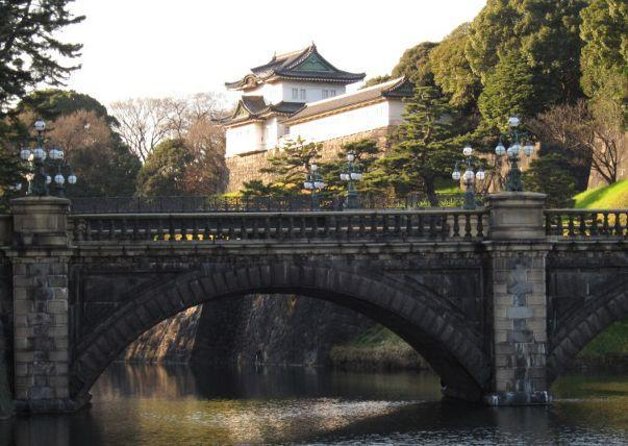
The nearby East Gardens of the Imperial Palace offer a different view. You can see remnants of Edo Castle, including moat walls, while learning how Tokyo grew from the Edo period capital into today’s city.
A practical warning comes from the flexibility of the route: make sure you specifically ask for the gardens if they matter to you. Starting near the palace does not automatically mean that every garden area is included. This is one of the clearest reasons to discuss your priorities before the tour begins.
Nihonbashi adds a food and trade connection. It was the original center of commerce during the Edo period, from 1603 to 1868, and remains associated with traditional food and craft shops. If you care about Japanese cooking, this is a better choice than simply collecting another skyline photo.
Tsukiji: food around the former fish market
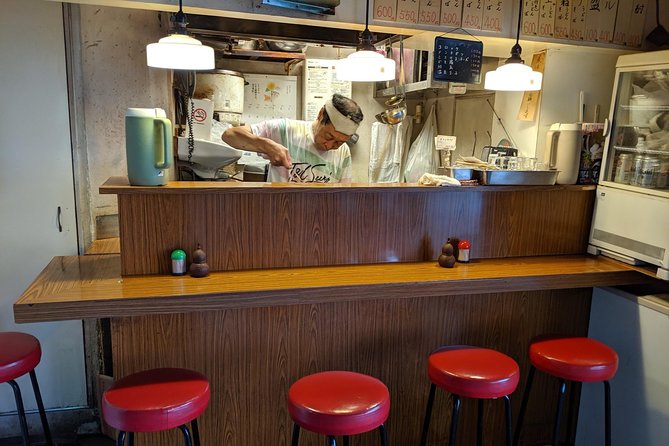
Tsukiji is still a useful food stop, but you need to understand what you are seeing. The inner market and tuna auction moved to Toyosu. The outer market remains, with seafood and other food businesses.
Your guide can help you navigate the stalls and explain the market’s role in Tokyo’s food culture. This is a good place to build in a meal or snack, though food and drinks are not included in the tour price.
Do not book this route expecting to visit the former inner market or its old auction site. Choose Tsukiji for the outer market, fresh food, and atmosphere. If the auction is your main goal, this tour description does not promise it.
Yanaka: a slower, older neighborhood
Yanaka offers a less polished and more personal-feeling side of Tokyo. The district has many temples, sweets shops, a cemetery, and a traditional tea house where you can experience a tea ceremony.
This is one of the best alternatives to the standard central Tokyo circuit. You lose some of the big-city spectacle, but you gain a slower look at neighborhood customs and older streets. Ask for Yanaka if you have already seen the major crossings and want something quieter.
The tea service can be added to a customized day, and one rainy-day route included both a boat ride and tea service. That flexibility matters when the weather changes your plans. Just confirm which extras are included and which carry an additional charge.
Skytree, Tokyo Tower, and Shibuya Sky
The tour can include three major observation choices: Tokyo Skytree, Tokyo Tower, and Shibuya Sky.
Tokyo Skytree reaches 634 meters and is the tallest tower in the world. Tokyo Tower recalls Japan’s postwar economic rise and was the country’s tallest structure from its completion in 1958 until Skytree surpassed it in 2012.
Shibuya Sky offers a 360-degree observation area over Tokyo. It is a natural add-on if you want your day to finish above the city, especially after visiting Shibuya itself.
Admission tickets for all three are extra. Adding one can make sense, but fitting a tower into a route that already includes several districts may force you to cut another stop. I would choose one viewing deck, not attempt all three.
What the guiding style adds
The strongest part of this experience is not the number of stops. It is the guide’s ability to adjust the day while helping you function in Tokyo.
Paiva has handled a six-hour route in rainy conditions that included a boat ride and tea service, while also teaching subway basics. Laura helped a first-time couple find places to eat and drink while introducing them to Japan. Miko guided a first visit that included the fish market, a tea house, and temples, with close help on transportation.
These examples point to the tour’s best use: your first or second day in Tokyo. You can learn how the subway works, understand the city’s main districts, and get ideas for the rest of your trip. Families can also explain food needs and attention spans in advance, allowing the route to stay engaging.
The guide is not simply there to recite dates. The useful service is making decisions with you: which district fits your interests, when to stop for food, how much walking is sensible, and what to skip.
Practical details, timing, and weather
The experience is private, so only your group participates. Most people can take part, and service animals are allowed. The tour is near public transportation, but you still need to pay for subway travel yourself. Your guide can help you purchase a travel pass for the day.
Children 11 and under are free, but tell the provider they are coming. Food and drinks are also separate.
The cancellation terms supplied for this experience are not perfectly consistent. One set of terms says a full refund is available more than 168 hours ahead, a 50 percent refund between 48 and 167 hours, and no refund inside 48 hours, excluding service charges. Another note says the experience is non-refundable and cannot be changed. I would confirm the current rule before paying.
The tour requires good weather. If poor weather causes cancellation, you are offered another date or a full refund. Rain does not always ruin Tokyo, but it can make a long walking route tiring, so keep the itinerary flexible.
Who should book this Tokyo tour?
Book it if you want a private introduction to Tokyo, especially on your first day. It suits families, couples, and small groups with different interests. It is also a good fit if subway travel makes you nervous or if you want help turning a long wish list into a workable day.
It is less suitable if you want a cheap hop-on, hop-off overview, a coach tour, or guaranteed entry to several attractions. It is also not the right pick if you expect to see every listed district in four hours.
I would get the most value by choosing three or four priorities before booking. For example, select Meiji Jingu, Shibuya, and Harajuku for a modern first day, or choose Asakusa, Senso-ji, Tsukiji, and Yanaka for a more traditional and food-focused route. Add one paid observation deck only if the view matters more to you than another neighborhood.
FAQ
How long does the private Tokyo tour last?
You can choose a half-day or full-day experience lasting about four to eight hours.
Does the tour include hotel pickup?
Yes. Your guide meets you at your hotel and provides drop-off as part of the experience.
Is transportation included in the price?
No. This is a walking tour, and travel between districts is by subway. Public transportation costs are separate, though your guide can help you buy a travel pass.
Are Tokyo Skytree, Tokyo Tower, and Shibuya Sky tickets included?
No. Admission tickets for these observation decks are not included, but they can be added to the tour.
Are children allowed to join for free?
Children aged 11 and under are free of charge. You need to tell the provider they will be joining.
What happens if bad weather cancels the tour?
If the experience is canceled because of poor weather, you are offered a different date or a full refund.
Newly reviewed around Tokyo
- Tokyo Asakusa:Calligraphy & Make T-shirt Activity★ 5.0 · 62 reviews
- Intercity Shuttle, Tokyo to Haneda /Narita /Yokohama /Makuhari★ 5.0 · 5 reviews
- 1 Hour Travel around Tokyo with a Professional Photographer★ 5.0 · 3 reviews
- Travel Tokyo with Your Own Personal Photographer★ 5.0 · 43 reviews
- Train in Samurai Swordsmanship and Defeat the Demon in Tokyo★ 5.0 · 5 reviews
- Shuttle Van 6hr Tokyo Tour to-and-from Tokyo, Yokohama and Narita★ 5.0 · 9 reviews
- Kickboxing & Body Training with EX-Pro Fighter★ 5.0 · 4 reviews
- Traditional Japanese Knife Sharpening Class★ 5.0 · 18 reviews
Tokyo Walking Tours, compared.
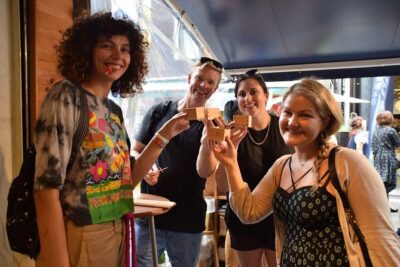
Tokyo Tsukiji Fish Market Food and Culture Walking Tour
Read our review →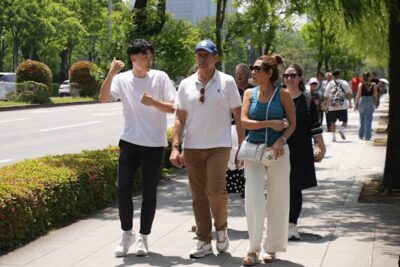
Imperial Palace and Shogun Historical Walking Tour
Read our review →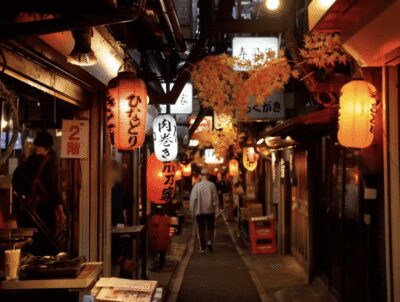
Shinjuku Local Bar and Izakaya Guided Walking Tour
Read our review →
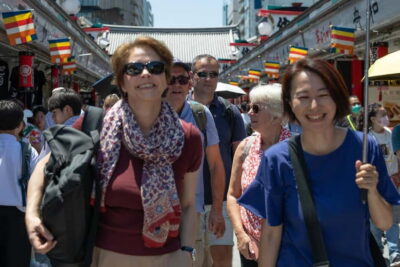
Asakusa Walking Tour with Sensoji Temple Visit
Read our review →
Tokyo Castle & Imperial PalaceーShogun Walking Tour
Read our review →
Browse the lists this tour appears in