
Reviewed · TOKYO SUMO EXPERIENCES
Morning Sumo Practice Viewing in Tokyo
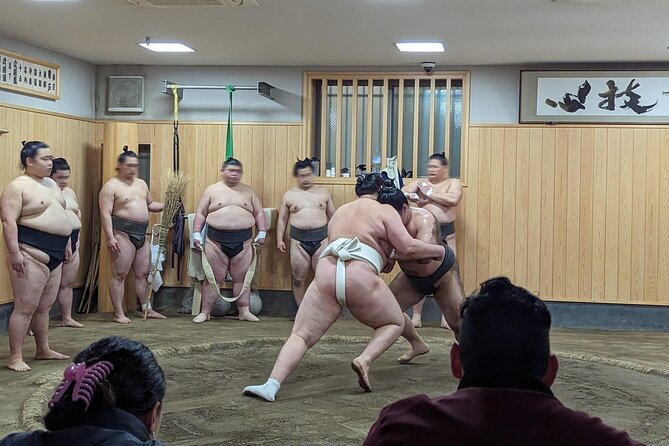
The best part of this early Tokyo outing is the access. You enter a working sumo stable, sit close to the practice area, and watch wrestlers train before the city fully wakes up. This is not a staged show. It is a quiet, disciplined morning built around practice, ritual, and concentration.
I like the short lesson at Tokyo Skytree, which gives you enough rules and background to follow the bouts. I also like that your fee includes a donation to the stable, and that the small group, capped at 10 people, allows guides such as Joji, Dawn, Jeff, or Aki to give clear explanations and answer questions.
The main drawback is physical rather than cultural: you sit on a cushion on a flat floor for about two hours, with no chairs available. The 7:30 am start also means an early morning, and the tour ends at the stable rather than returning you to your hotel.
Key points before you book
- Watch practice from inside Naruto-beya: You sit in the stable and see warmups and practice bouts at close range.
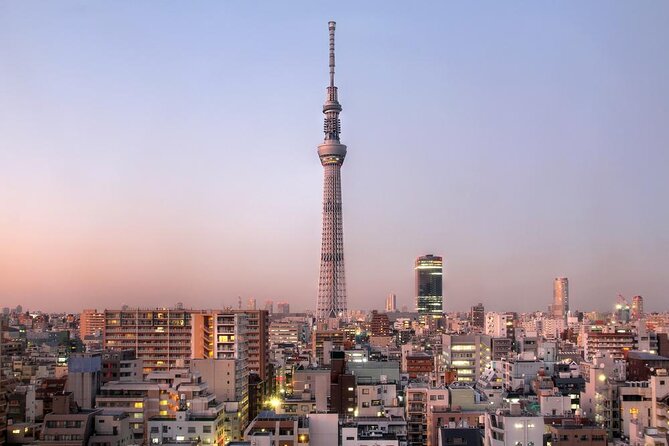
- Start at Tokyo Skytree at 7:30 am: The first 30 minutes cover sumo rules, etiquette, and what to watch for.
- Expect floor seating: All participants sit on cushions, and chairs are not provided.
- A small group keeps the visit personal: The maximum group size is 10 people, with English guiding by a local certified guide.
- Photos may be possible afterward: A photo session with the wrestlers is most likely, but it is not presented as a firm guarantee.
- The fee supports the stable: Donations to the sumo stable are included in the ticket price.
Why morning practice feels different from a sumo tournament
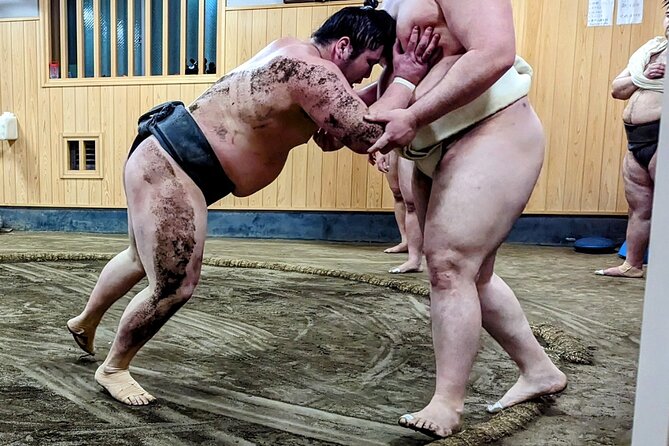
A tournament gives you bright lights, a formal schedule, and a packed arena. This visit gives you the working side of sumo. You watch wrestlers warm up, repeat techniques, and test one another in practice bouts. The mood is serious and focused, not designed for tourists.
That difference matters. At a tournament, you may see only a few seconds of each bout from a distant seat. Here, the session can last roughly two hours, giving you time to notice the repeated movements and the way each wrestler prepares before stepping onto the practice area.
You also learn about sumo’s Shinto roots. The sport is tied to ceremony, discipline, and respect, and your guide explains the basic rules before you enter the stable. That briefing helps you understand what you are seeing instead of treating every clash as a simple pushing match.
I would not book this expecting a theatrical performance. The wrestlers are there to train, and the schedule or exact practice activity can vary. The appeal is seeing an ordinary working morning inside a place that is difficult to access on your own.
More Tokyo sumo experiences:
- Tokyo: Sumo Show and Dining Experience
★ 4.8 · 2,742 reviews - the SUMO show
★ 5.0 · 1,960 reviews - Tokyo Shinjuku Sumo Show & Experience with Photo
★ 5.0 · 1,750 reviews
Meeting at Tokyo Skytree at 7:30 am
The tour begins at Tokyo Skytree Station, at 1-chome-1-4 Oshiage in Sumida City. The early start is practical because morning practice begins early, but it requires planning. Give yourself enough time to reach the station, especially if you are staying far from eastern Tokyo.
The first stop lasts about 30 minutes. Your guide explains how to watch sumo and covers the simple rules you need to follow inside the stable. You also learn basic points about the sport and its traditions before the main visit.
This short session is one of the most useful parts of the morning. Without it, a practice bout can look like two large athletes colliding until one moves backward. With a little preparation, you can pay attention to footwork, balance, grips, warmups, and the rhythm of repeated bouts.
The guide also explains the stable rules. That matters because this is an active training space, not a normal sightseeing attraction. You need to listen carefully, keep quiet when required, and follow directions about where to sit and when photography is allowed.
The meeting point near Tokyo Skytree is easy to identify, and public transportation is nearby. The tour does not include hotel pickup, so you are responsible for getting to the station on time.
Inside Naruto-beya in Sumida
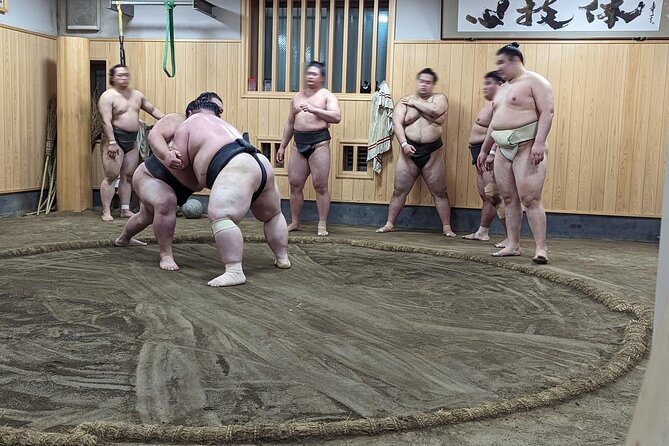
After the briefing, you visit Naruto-beya, located at 1-chome-22-16 Mukojima in Sumida City. The practice viewing portion lasts about two hours, and you sit inside the stable on a cushion placed on the flat floor.
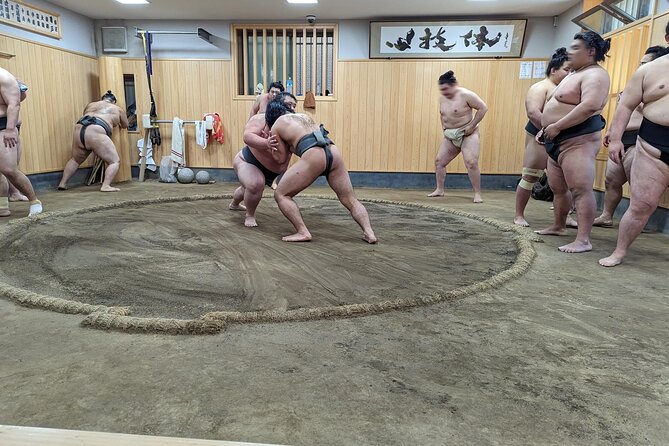
This close seating is the heart of the experience. You are not watching from a large arena with a broad gap between you and the action. You may see wrestlers warming up, stretching, and taking part in practice bouts only a short distance away.
The setting also changes how you behave. Sumo practice calls for quiet attention, and your guide prepares you for the customs of the stable. You are not there to interrupt the wrestlers or turn every moment into a photo opportunity. The value comes from observing their routine with respect.
A local certified guide leads the visit in English. Guides named in past sessions include Joji, Dawn, Jeff, and Aki, though you should not assume a particular guide will lead your date. The strongest guiding moments come from the explanations before practice, when the rules, moves, stable customs, and background make the action easier to follow.
The group limit is 10 people. That is small enough for the guide to keep track of the group and respond to questions. It also reduces the chance that your view will be blocked by a large crowd, though your exact seat is not specified.
What you can watch during the two-hour session
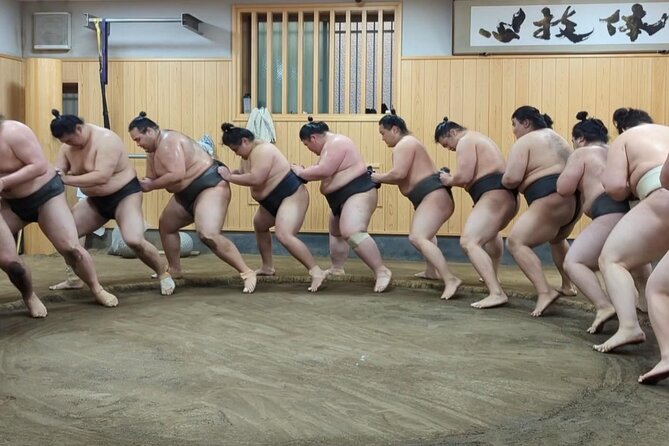
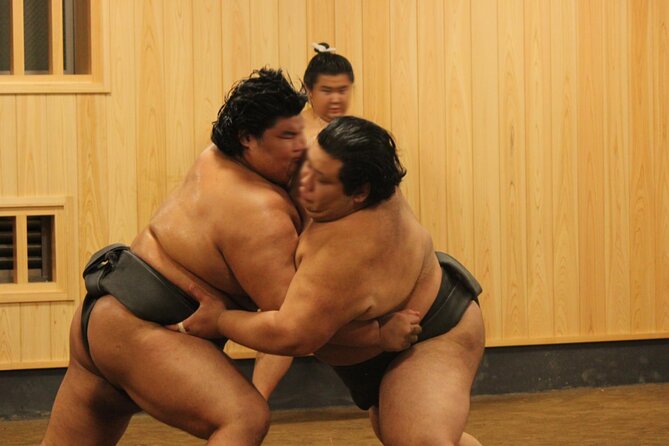
The training session includes warmups and practice bouts. You might see wrestlers work through repeated movements rather than compete in a formal tournament setting. The purpose is preparation, so the pace and intensity can change throughout the morning.
Pay attention to the moments before each bout. The preparation is part of the sport, not filler. The stance, the footwork, the physical checks, and the short bursts of action all make more sense after the guide’s explanation.
The long viewing time is useful. You get more than a quick glimpse, and you can settle into the rhythm of the stable. The tradeoff is that two hours on the floor is demanding, especially if you have stiff knees, back problems, or trouble rising from a low position.
There are no chairs. Every participant must sit on a cushion on the flat floor, and the experience information notes that there are no toilets available. That makes the pre-visit routine important. Use facilities before entering and wear clothing that allows you to sit comfortably.
You should also prepare for a quiet setting. This is not the place for constant conversation or spontaneous movement. The best approach is to follow your guide, watch closely, and let the practice unfold.
More early morning tours in Tokyo:
- Tokyo: Sumo Morning Practice Viewing Tour
★ 4.8 · 570 reviews - Tokyo: Sumo Morning Training Visit
★ 4.4 · 370 reviews - Tokyo: Sumo Morning Practice Tour at Sumida City
★ 4.8 · 308 reviews - Tokyo Sumo Morning Practice Tour at Stable
★ 5.0 · 298 reviews
Photos, lunch, and what is actually included
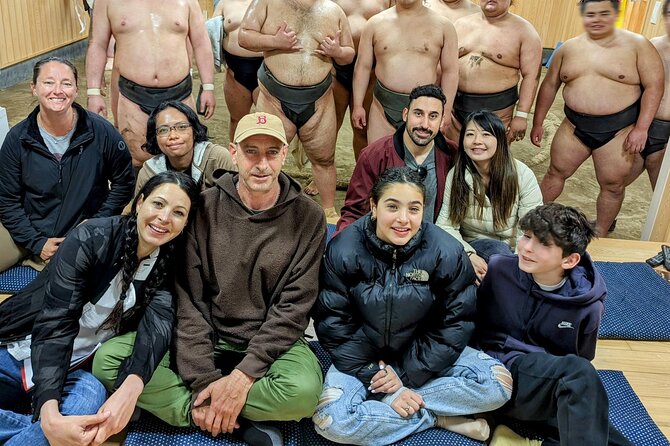
A photo session with the wrestlers is most likely after practice. It can be a memorable finish, particularly for families or anyone who wants a personal memento of the visit. Still, the wording makes clear that it is not guaranteed, so you should treat it as a possible extra rather than the main reason to book.
The ticket includes donations to the stable. That gives the fee a useful purpose beyond admission. You are helping support access to the working stable and acknowledging that this is a private training environment.
The tour overview also refers to the chance to refuel with chanko nabe, the traditional food associated with sumo wrestlers. However, the stated inclusions list does not clearly include lunch. I would confirm this before booking rather than assume a meal is part of the $99.08 price.
That distinction matters when judging value. If lunch is not included, you should budget separately and plan your next meal after the stable visit. The tour itself is primarily a guided practice-viewing experience, not a food tour.
Is $99.08 a fair price?
At $99.08 per person, this is not a cheap way to fill three hours. The value rests on access. Entering a sumo stable is difficult to arrange independently, and the fee includes a stable donation, an English-speaking local guide, the rules briefing, and the practice viewing.
For someone already interested in sumo or Japanese culture, the price can make sense. You are paying for a rare setting and an organized introduction, not simply for a seat at a public event. The maximum group size of 10 also gives the visit a more personal feel than a large bus tour.
The value is weaker if you want a guaranteed photo, a guaranteed meal, or a formal match. Neither the photo session nor the lunch is stated as certain in the included features. You are paying for access to practice, and practice may not have the same polished structure as a tournament.
I would also factor in the early start and the ending point. The tour begins at Tokyo Skytree Station and ends at Naruto-beya, so you do not receive hotel transport. That is easy enough to manage by train or taxi, but it adds time and planning to your morning.
Who will enjoy this sumo stable visit most?
This tour fits you well if you want a close look at a traditional sport and enjoy learning the meaning behind what you see. It is especially suitable for first-time sumo viewers because the briefing covers simple rules and viewing etiquette before the practice begins.
Families can enjoy it too, provided everyone can sit quietly on the floor for about two hours. The experience can be memorable for children who are interested in sport, though younger children may find the quiet setting and long seated period difficult.
It also suits visitors who prefer small, focused activities over large attractions. You spend the morning in one training space, with a guide helping you understand the customs and movements. The experience is less suitable if you need accessible seating, dislike early mornings, or want a fast-paced activity.
Most people can participate, according to the practical information provided, but the floor seating remains the key physical concern. If you cannot comfortably sit on a cushion on a flat floor, contact the operator before booking.
Practical advice for a smoother morning
Plan to arrive at Tokyo Skytree Station before 7:30 am. The meeting point is specific, and the tour cannot wait indefinitely for late arrivals without disrupting the stable visit.
Wear comfortable clothes for sitting on the floor. You may also want to limit what you carry, since the stable is a working space and you will want to remain settled once practice begins.
Use a restroom before entering. No toilets are available during the stable visit, and the viewing period can last around two hours.
Listen closely during the opening briefing. The guide’s explanation of the rules and movements turns the practice from a series of powerful collisions into something you can read and understand.
Keep your expectations flexible about photos and food. A photo session will most likely be offered, but it is not guaranteed, and the lunch details should be confirmed before you count on chanko nabe.
Free cancellation is available if you cancel at least 24 hours before the local start time. Changes or cancellations made within 24 hours are not refunded, and the operator may offer a new date or a full refund if poor weather causes a cancellation.
Should you book this morning sumo experience?
Book it if you want access to a real sumo stable, value an informed English briefing, and can manage two hours seated on the floor. The small group, stable donation, and close view of practice make this a strong choice for anyone who wants more than a quick photo outside a tournament venue.
Skip it if you need chairs, a restroom during the session, hotel transport, or a guaranteed lunch and photo opportunity. For the right visitor, though, the early alarm is worth it: you get to see sumo as a daily discipline, not just as a public spectacle.
FAQ
Where does the sumo tour begin?
The tour begins at Tokyo Skytree Station at 1-chome-1-4 Oshiage, Sumida City, Tokyo 131-0045, Japan.
What time does the tour start?
The start time is 7:30 am.
Where does the tour end?
The tour ends at Naruto-beya Sumo Stable at 1-chome-22-16 Mukojima, Sumida City, Tokyo 131-0033, Japan. Hotel pickup and drop-off are not included.
How long does the experience last?
The full experience lasts approximately three hours. The briefing at Tokyo Skytree takes about 30 minutes, followed by roughly two hours watching practice inside the stable.
Do I sit on a chair during the practice?
No. All participants sit on a cushion on a flat floor, and chairs are not available.
Is a photo with the wrestlers guaranteed?
No. A photo session with the wrestlers will most probably take place, but it is not guaranteed.
What happens if I need to cancel?
You can receive a full refund if you cancel at least 24 hours before the experience starts. Cancellations or changes made less than 24 hours before the local start time are not accepted for a refund.
Newly reviewed around Tokyo
- Tokyo Asakusa:Calligraphy & Make T-shirt Activity★ 5.0 · 62 reviews
- 1 Hour Travel around Tokyo with a Professional Photographer★ 5.0 · 3 reviews
- Travel Tokyo with Your Own Personal Photographer★ 5.0 · 43 reviews
- Intercity Shuttle, Tokyo to Haneda /Narita /Yokohama /Makuhari★ 5.0 · 5 reviews
- Train in Samurai Swordsmanship and Defeat the Demon in Tokyo★ 5.0 · 5 reviews
- Shuttle Van 6hr Tokyo Tour to-and-from Tokyo, Yokohama and Narita★ 5.0 · 9 reviews
- Kickboxing & Body Training with EX-Pro Fighter★ 5.0 · 4 reviews
- Traditional Japanese Knife Sharpening Class★ 5.0 · 18 reviews
Tokyo Sumo Experiences, compared.
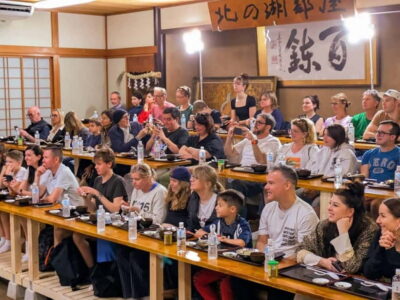

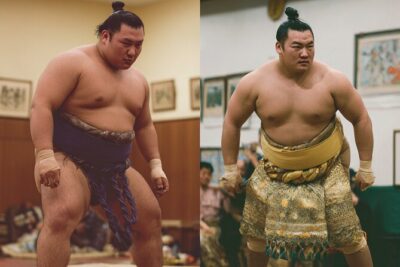
Tokyo Shinjuku Sumo Show & Experience with Photo
Read our review →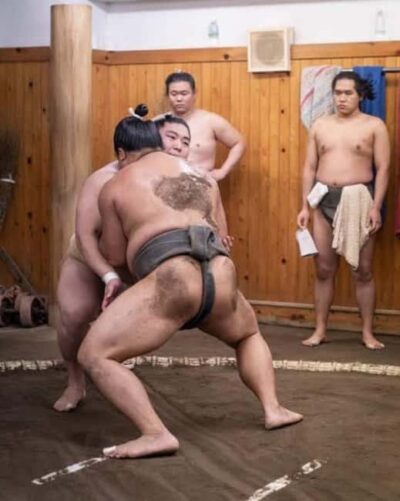

Luxury Sumo Show Experience & Japanese cuisine & Drink
Read our review →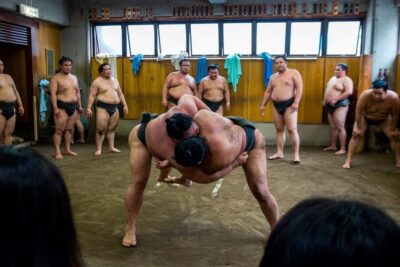
Tokyo Sumo Experience: Chanko & Mochi with a Former Pro
Read our review →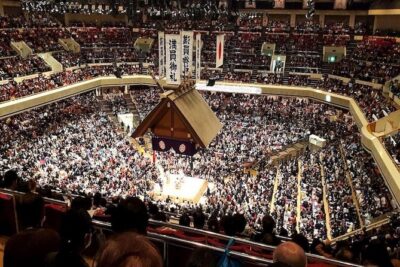
Ultimate Sumo Tournament: Tokyo, Osaka, Nagoya, Fukuoka
Read our review →Browse the lists this tour appears in