
Reviewed · TOKYO COOKING CLASSES
Mochi Sweets Making Class in Tokyo
Making mochi in Satoko’s Tokyo home turns a familiar Japanese sweet into a hands-on cultural lesson. You’ll work with glutinous rice flour, shape several treats, and learn why mochi matters at celebrations and in everyday life. Satoko teaches in clear English and keeps the pace friendly for first-timers and children.
I like the small, personal setting and the fact that you leave with recipes you can make at home. I also like the practical extras: an apron, tools, a special takeaway box, tea, and photos or videos from the class. The main consideration is location. You’ll need to reach a residential neighborhood in Ota City, rather than a central Tokyo sightseeing district, and anyone with a strong cat allergy should take note.
What makes this mochi class worth your time
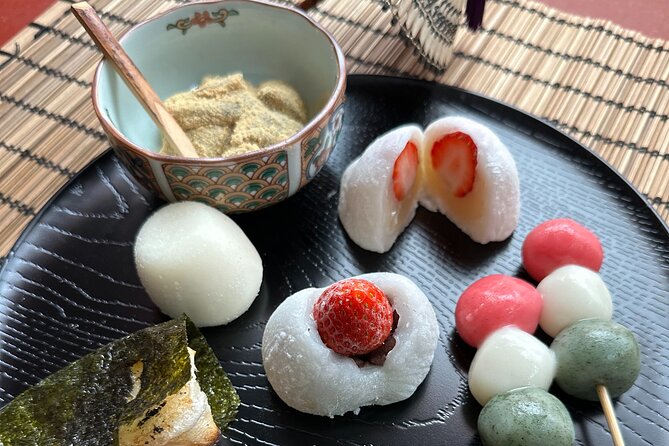
- Several sweets in one 90-minute lesson: Make strawberry daifuku when fruit is in season, along with dango, warabi-mochi, and isobe-mochi.
- Satoko’s personal teaching style: She explains the food, its traditions, and the techniques step by step in English.
- A Tokyo home setting: The class takes place in a quiet residential area, with local shops, cafes, a supermarket, a shrine, and a public bath nearby.
- Useful recipes for home: The ingredients are plant-based and generally easy to find outside Japan.
- Good for families and vegetarians: The lesson is hands-on, welcoming to children, and vegan options are available.
- A complete little package: Equipment, apron, drinks, takeaway packaging, and a Japanese souvenir are included.
A quiet Tokyo neighborhood instead of another major attraction
The class begins at 20-15 Kitaminemachi, Ota City, Tokyo 145-0073. It is about 15 minutes by train or car from central Tokyo, according to the provider, so this is not a long cross-city expedition. Still, allow enough time to find the residential meeting point and arrive ready to start.
I like this change of pace. Tokyo can fill a day with stations, department stores, temples, and crowds. Here, you spend time in a lived-in neighborhood and see a calmer side of the city. Before or after class, you can browse local shops and supermarkets, stop at a cafe, visit a shrine, or use a famous public bath in the area.
Those nearby options are not part of the paid lesson, so treat them as add-ons rather than scheduled stops. The real activity takes place inside the home. If you want a polished sightseeing circuit with several major landmarks, this will not fit that plan. If you want to pair a food activity with ordinary neighborhood life, the location works well.
More Tokyo cooking classes:
- Tokyo: Roll and Authentic Sushi Making Class in Asakusa
★ 4.9 · 1,957 reviews - Tokyo Shinjuku Chopsticks Making Class
★ 5.0 · 1,763 reviews - Tokyo: Sushi Making Class in a Happi Coat near a Famous Spot
★ 4.9 · 1,377 reviews
Meeting Satoko and getting started
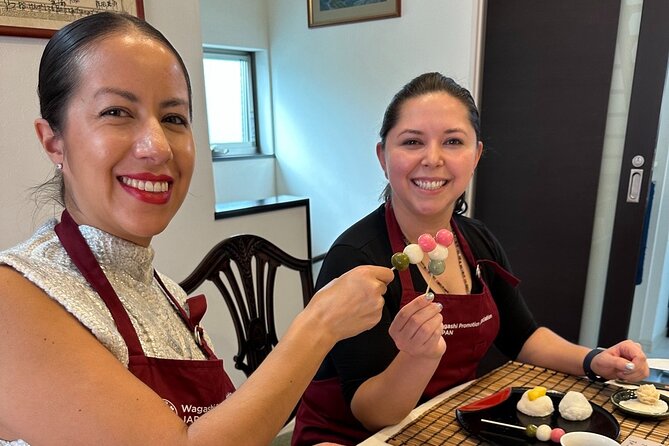
Satoko welcomes you into her home and sets out the ingredients and tools. You do not need to bring cooking equipment or special supplies. An apron, hand towel, wagashi-making tools, drinking water, and a box for your sweets are provided.
The teaching begins with an introduction to mochi and its place in Japanese tradition. This matters because the lesson is not just about producing a soft, chewy dough. Satoko explains different kinds of mochi, how people eat them, and how they connect with Japanese celebrations.
The personal setting helps here. You can ask questions as you work, rather than trying to keep up with a large demonstration group. The class is designed for beginners, and the step-by-step format suits anyone who has never handled glutinous rice flour before.
English communication is another practical strength. Satoko is described as speaking excellent English, and the detailed explanations make it easier to understand both the cooking method and the cultural background. That is especially useful when you want to ask about ingredients, substitutions, or ways to repeat the recipes at home.
Working with glutinous rice flour
The main lesson uses glutinous rice flour rather than requiring traditional pounding equipment. That makes the process more realistic for your own kitchen after returning home. You learn a straightforward method with ingredients that are easy to find in many countries.
The texture is the part that needs attention. Mochi should be soft and stretchy, but handling it takes some care. Satoko demonstrates the process, then lets you try it yourself. You can expect a few uneven shapes at first. That is part of the fun, and the class is set up for learning rather than producing bakery-perfect sweets.
You will make several styles, so the lesson gives you a good sense of mochi’s range. Some are filled, some are formed into balls, and others are served with different flavors or toppings. This variety helps you understand why mochi is more than one single dessert.
Strawberry daifuku and seasonal fruit
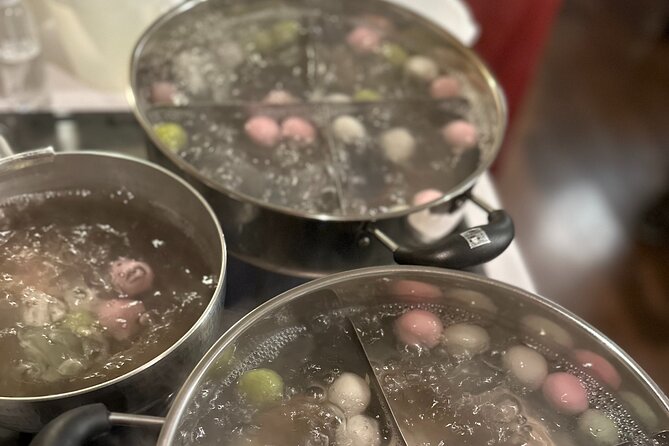
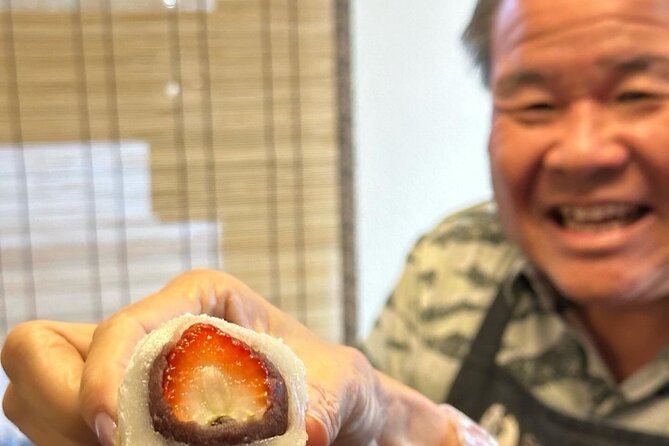
Strawberry daifuku is one of the best-known treats in this type of class. You wrap soft mochi around fruit and filling, creating the familiar contrast of chewy dough and fresh fruit.
The menu changes outside strawberry season. Pineapple, kiwi, or other fruit may be used instead. That seasonal adjustment is worth knowing before you book, especially if strawberry daifuku is the main reason you are interested. You will still make a fruit daifuku, but the exact fruit depends on availability.
This is also a useful lesson in Japanese sweets. The appeal comes from balance, not from piling on heavy ingredients. The soft exterior, fruit, and filling create different textures in one bite. You get to make the item yourself and then taste it fresh.
More Dessert Tours in Tokyo:
- Matcha Making Class in Tokyo with Authentic Japanese Sweets Set
★ 5.0 · 744 reviews - Tokyo: Matcha Making Experience with Mochi Sweets in Asakusa
★ 4.9 · 388 reviews - Make Traditional Nerikiri Sweets & Matcha experience in Shibuya
★ 5.0 · 130 reviews - Private Mochi Sweets Making class near Shibuya area
★ 5.0 · 93 reviews
Dango, warabi-mochi, and isobe-mochi
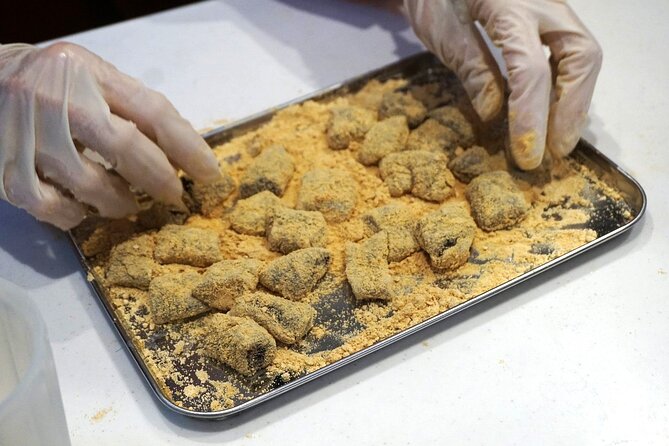
Several flavors of dango are included. These are mochi balls arranged on skewers, and they give you practice making evenly sized pieces. The skewer format also makes dango easy to recognize as a festival and street-food style sweet.
Warabi-mochi offers a different texture. It is soft and slippery rather than springy in the same way as standard mochi. Making more than one kind lets you compare how ingredients and preparation change the final result.
Isobe-mochi provides a savory turn. Not every item is a sweet dessert, and this gives the class more range. You learn different ways to eat mochi instead of leaving with only one recipe for a filled sweet.
You can also download a mochi ice cream recipe. The information provided does not say that you prepare mochi ice cream during the full hands-on portion, so think of it as an extra recipe to take home. You may still taste mochi ice cream after the lesson, along with the other creations.
Tasting your work with Japanese tea
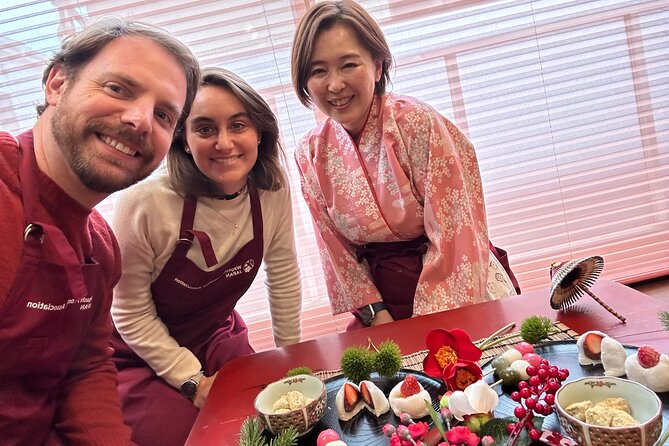
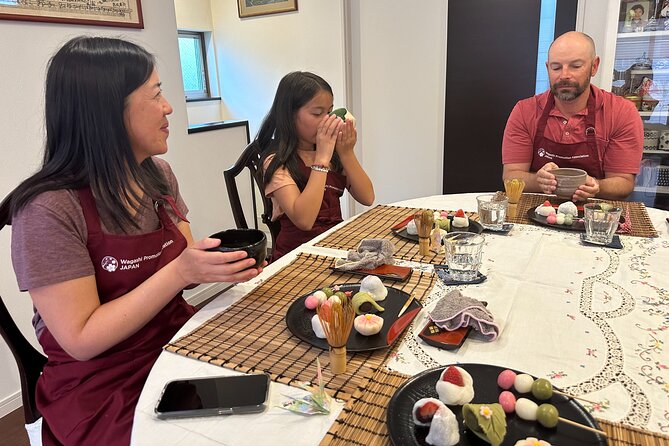
After the cooking, you sit down to taste what you have made. Green tea or hojicha, which is roasted green tea, is served with the sweets. The tea gives you a simple way to notice how Japanese sweets are often enjoyed with a less sugary drink.
You can eat your creations during the class or pack them in the special box provided. The takeaway option is useful if you are full, need to return to your hotel, or want to share the sweets with someone else. Keep in mind that mochi is best treated as a fresh food, and the activity information does not promise long-term storage.
Photos and videos taken during the class are also provided, according to the description. That adds value for families and couples who want a record of the activity without having one person spend the whole lesson behind a phone.
A small Japanese gift is included as a souvenir. The exact item is not specified, so consider it a pleasant extra rather than something to choose the class around.
Group size, privacy, and family appeal
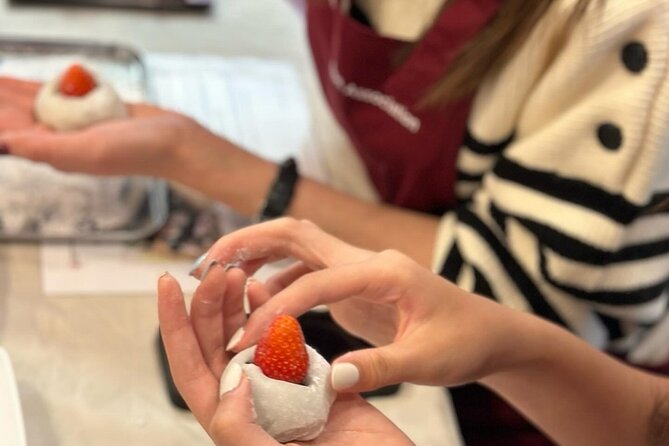
The activity is listed as private for your group, so you are not placed with unrelated participants. During the off-peak season, groups of more than three can receive a private lesson at no extra cost. This is particularly useful for families or friends who want to learn together.
The class is described as suitable for solo participants and families. Children can take part in the shaping and decorating, although an adult should stay attentive around food preparation and hot ingredients. The experience is hands-on, but it is still a lesson in a private home rather than a large commercial cooking studio.
A smaller group also makes it easier to work at your own pace. You can ask for another demonstration, pause to take photos, or spend more time on a technique. That personal attention is one of the clearest reasons to consider this class instead of a cheaper group workshop.
Plant-based ingredients and dietary notes
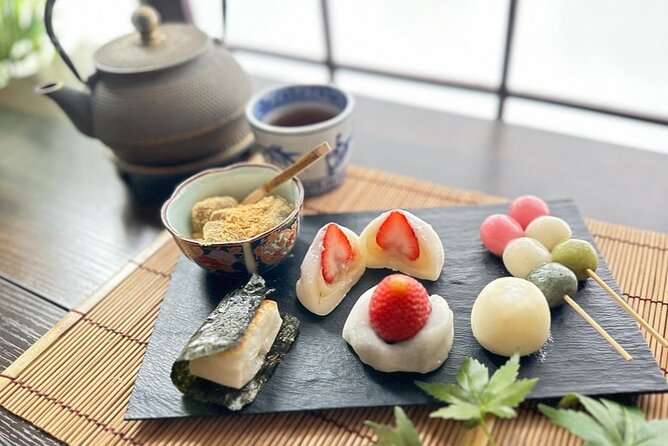
The menu uses plant-based products, and vegan options are available. That makes this a practical choice for vegetarians and many vegans, though you should confirm the exact options when booking if you have strict dietary requirements or allergies.
The ingredients are selected so you can recreate the dishes in your own country. This is important value. You are not just paying for something to eat in Tokyo. You are learning a set of recipes and methods that can become a family activity at home.
The activity provides all required equipment and supplies, so you do not need to pack an apron or special tools. Wear comfortable clothes that you do not mind working in, but the provided apron should help protect them.
There are two short-haired cats in the home. They stay in the bedroom during the lesson, but this class is not recommended for anyone with a strong cat allergy. That is a firm practical point, not a minor footnote.
Is $75.12 a fair price?
At about $75.12 per person, this is not the cheapest snack stop in Tokyo. You are paying for roughly 90 minutes of instruction, ingredients, equipment, drinks, takeaway packaging, cultural explanation, and the chance to work in a private home.
The price makes more sense if you value teaching and personal attention. A large workshop may cost less, but it may also give you less time to ask questions and less control over the pace. Here, the recipes, photos, videos, souvenir, and takeaway sweets add to the package.
For a solo visitor, the price is a personal cooking lesson with food included. For a family or group, the private format can make the experience feel more worthwhile, especially during off-peak periods when larger groups can receive private instruction without an extra charge.
I would compare it with the cost of a standard Tokyo meal and a separate cultural activity. This class combines both, though the meal is made by you and the cultural element comes through the explanation of mochi traditions. It is good value for someone who wants participation, not just a tasting.
The activity is often booked about 42 days ahead on average. That suggests planning early, especially if you have a fixed Tokyo schedule or want a particular date. Free cancellation is available until 24 hours before the start time. Changes or cancellations inside that window are not accepted for a refund.
Who should book this class?
I would recommend it to first-time visitors who want an easy introduction to Japanese food culture. It also suits families, couples, solo visitors, vegetarians, and anyone who enjoys learning a recipe they can repeat at home.
It is a strong choice if you have already seen several major Tokyo sights and want a quieter afternoon. The nearby neighborhood gives you room to add a cafe, shrine, supermarket, or public bath without turning the day into another packed sightseeing mission.
You should think twice if you have a strong cat allergy, want a class in central Tokyo, or prefer a highly polished professional kitchen. This is a home-based lesson, and that is both its appeal and its limitation.
FAQ
How long does the mochi-making class last?
The class lasts approximately 1 hour and 30 minutes.
Where does the activity begin?
It begins at 20-15 Kitaminemachi, Ota City, Tokyo 145-0073, Japan, and ends back at the same meeting point.
What kinds of mochi can I make?
The lesson includes strawberry daifuku when strawberries are in season, fruit daifuku with alternatives such as pineapple or kiwi, several flavors of dango, warabi-mochi, and isobe-mochi. A mochi ice cream recipe can also be downloaded.
Is the class suitable for vegetarians or vegans?
The recipes use plant-based products, and vegan options are available. Vegetarian participants can take part.
What is included in the price?
An apron, hand towel, special wagashi-making tools, drinking water, a takeaway box, and a guide are included. You can also taste your creations with green tea or hojicha, and a Japanese gift is provided.
Are there any allergy concerns?
Two short-haired cats live in the home and stay in the bedroom during the class. The activity is not recommended for anyone with a strong cat allergy.
Should you book the Tokyo mochi class?
Book it if you want a personal, practical food experience rather than a quick dessert tasting. Satoko’s lesson combines several mochi styles, Japanese food customs, tea, recipes, photos, and a quiet residential setting close to central Tokyo.
The best reason to go is the chance to carry the experience home. You will not just remember the sweets. You can make them again for family and friends, using ingredients that are generally available outside Japan. Skip it only if the cat issue affects you, or if your schedule demands a central Tokyo activity with no neighborhood travel.
More hands-on classes and workshops in Tokyo
- Sushi Making Tokyo Roll and Authentic Japanese Sushi Class
★ 5.0 · 3,971 reviews - Chopstick Making Workshop in Ginza
★ 4.8 · 1,366 reviews - Tokyo Sushi Making Class in Tsukiji with Professional Chef
★ 5.0 · 1,177 reviews - Ramen & Gyoza Cooking Class in Tokyo with Local Supermarket Visit
★ 5.0 · 823 reviews
Newly reviewed around Tokyo
- Tokyo Asakusa:Calligraphy & Make T-shirt Activity★ 5.0 · 62 reviews
- Intercity Shuttle, Tokyo to Haneda /Narita /Yokohama /Makuhari★ 5.0 · 5 reviews
- 1 Hour Travel around Tokyo with a Professional Photographer★ 5.0 · 3 reviews
- Travel Tokyo with Your Own Personal Photographer★ 5.0 · 43 reviews
- Train in Samurai Swordsmanship and Defeat the Demon in Tokyo★ 5.0 · 5 reviews
- Shuttle Van 6hr Tokyo Tour to-and-from Tokyo, Yokohama and Narita★ 5.0 · 9 reviews
- Kickboxing & Body Training with EX-Pro Fighter★ 5.0 · 4 reviews
- Tokyo History: Sensoji Temple & Asakusa District Private Tour★ 5.0 · 28 reviews
Tokyo Cooking Classes, compared.

Roll and Authentic Sushi Making Class in Asakusa
Read our review →
Sushi Making Class in a Happi Coat near a Famous Spot
Read our review →
Tokyo Sushi Making Class in Tsukiji with Professional Chef
Read our review →
Ramen & Gyoza Cooking Class in Tokyo with Local Supermarket Visit
Read our review →
Matcha Making Class in Tokyo with Authentic Japanese Sweets Set
Read our review →
Tsukiji Fish Market Sushi Making Class with Pro Chef
Read our review →
Browse the lists this tour appears in