
Reviewed · TOKYO TRADITIONAL CRAFT WORKSHOPS
Make a temple stamp book with artist
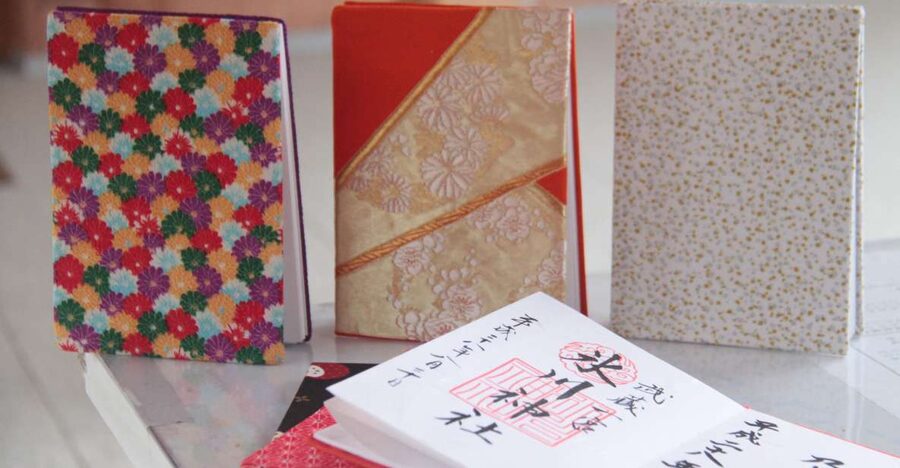
The best part of this experience is that you do not simply buy a souvenir. You make a goshuin book with your own hands, choosing from more than 100 kimono fabrics before learning how to fold and glue the pages. Then Chikako Oshiro takes you to a local shrine, where you learn the proper way to visit and collect your first stamp.
I like the personal choice here, since your book can reflect your taste instead of looking like a standard shop purchase. I also like the gentle mix of craft and custom: you leave with a useful object, a first goshuin, and a better idea of how shrine visits work in Japan. The main consideration is practical: the workshop and shrine involve about 10 steps, so it is not suitable for people with mobility impairments.
Key points to know before you book
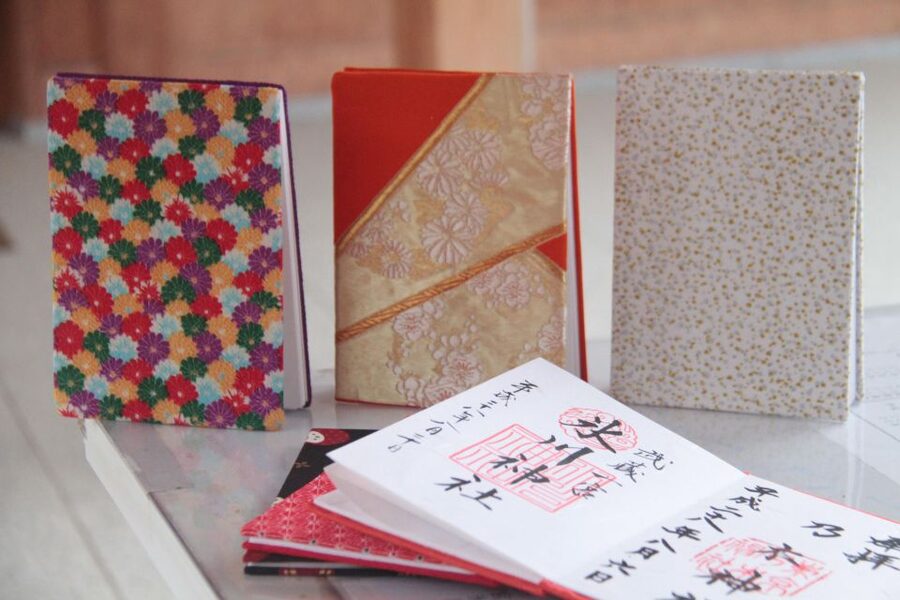
- More than 100 kimono fabrics: Choose the covers for a goshuin book that is truly your own.
- A hands-on Japanese craft: You fold and glue the pages rather than simply receiving a finished souvenir.
- Your first shrine stamp: The workshop ends with a visit to a local shrine and a first goshuin.
- English instruction from Chikako Oshiro: The activity is taught in English and limited to eight people.
- A convenient Shibuya-area location: It fits well beside sightseeing in one of Tokyo’s most popular districts.
- Two hours for $38: Materials and instruction are included, but the shrine stamp fee is extra.
Why a goshuin book makes a better souvenir
A goshuin is a handwritten temple or shrine inscription and stamp collected in a dedicated book. Each place has its own design and inscription, so the book becomes a record of places you have visited rather than a generic item picked up at an airport shop.
This workshop gives that idea a useful starting point. You make the book first, then use it immediately at a local shrine. That first stamp gives the craft a clear purpose, and you can continue collecting later during your time in Japan.
I especially like that the activity explains the proper use of the book. You are not just sticking stamps into an empty notebook or treating it as a decoration. The workshop shows you how to fold and glue the papers together, creating a book designed for goshuin.
The handmade quality also matters. More than 100 kimono fabrics are available, so the cover becomes a small expression of your taste. You may prefer a bold pattern, a quieter design, or something that reminds you of your trip. The information does not specify each fabric design, so you should think of the choice as a browsing and selection moment rather than expect a particular pattern in advance.
More Tokyo craft workshops:
- Tokyo Shinjuku Chopsticks Making Class
★ 5.0 · 1,763 reviews - Chopstick Making Workshop in Ginza
★ 4.8 · 1,366 reviews - Kintsugi Experience: Art of Golden Joinery in Tokyo
★ 5.0 · 467 reviews
Choosing your kimono fabric
The workshop begins with the fabric selection. This is a smart opening because it lets you make the biggest personal decision before the practical construction starts.
Traditional kimono fabric connects the notebook to Japanese clothing and textile craft. You are not merely choosing a color from a short set of options. With more than 100 fabrics available, you have room to choose a cover that feels personal.
That wide selection can also make the choice take a little thought. If you are visiting with a friend or family member, you may want to decide whether you prefer a matching pair or completely different designs. The small group size, limited to eight people, should make the process more manageable than a large class, though the exact classroom layout is not provided.
Chikako Oshiro also explains the significance of the fabrics during the process. That gives your choice more meaning than simply selecting the prettiest cover. You can ask questions in English and hear context while working on the book.
There is no need to arrive with prior craft experience. The activity is designed around clear instruction, and all materials needed for the workshop are provided. Still, this is a hands-on class, so you should be comfortable handling paper and glue and following a few careful steps.
Folding and gluing your original book
After selecting the fabric, you learn how to make the goshuin notebook itself. The basic method involves folding and gluing papers together, but simple does not mean automatic. A tidy result depends on careful folding and putting the pages together properly.
This is where the workshop earns much of its $38 price. You are paying for instruction, materials, and a finished object you can continue to use. If you bought a ready-made book, you might save time, but you would lose the small satisfaction of knowing how it was assembled.
The pace is set for a two-hour cultural activity, not a rushed craft demonstration. You have time to follow the steps and ask for help. One useful detail from the experience is that extra glue was available when needed, so you are not left stuck if your project requires a little more adhesive.
The finished notebook is practical. You can use it for future goshuin collected at temples and shrines across Japan. It also serves as a physical reminder of this workshop, since the first page or early section will connect directly to your visit near Shibuya.
I would not book this expecting a long museum-style lesson about bookbinding. The focus is on making one attractive goshuin book and understanding how to use it. That balance suits you if you want a cultural activity with a finished result, not an advanced arts course.
Learning how to visit a shrine
Once the notebook is complete, you visit a local Shinto shrine. This second part keeps the activity from being only an indoor craft class.
Chikako teaches you how to visit the shrine formally. That matters because shrine etiquette can feel unclear when you are visiting Japan for the first time. Knowing the proper steps helps you approach the site with more confidence and respect.
The exact shrine name is not provided, so you should not book this expecting a famous landmark or a major tourist attraction. The value is the local setting and the chance to practice what you have learned. Since the location is near popular Shibuya sights, it can fit naturally into a day already spent in the area.
The shrine visit also gives the goshuin notebook an immediate purpose. You make the book, bring it to the shrine, and collect your first stamp. That sequence makes the experience feel complete instead of splitting the craft and cultural lesson into unrelated parts.
The stamp fee is not included in the $38 price. Bring a little extra money for that separate charge, though the exact amount is not provided. You should also remember that the activity runs rain or shine, so outdoor clothing and footwear suited to the forecast are sensible.
A completely different kind of day in Tokyo:
- Mt Fuji and Hakone 1-Day Bus Tour Return by Bullet Train
★ 5.0 · 26,383 reviews - 1-Day Tokyo Bus Tour
★ 5.0 · 14,250 reviews - Tokyo: teamLab Planets TOKYO Digital Art Museum Entry Ticket
★ 4.6 · 9,779 reviews - Mt Fuji & Hakone Cruise, Drum Show Bullet Train 1 Day from Tokyo
★ 4.0 · 7,413 reviews
What the $38 price includes
At $38 per person, this is priced as a short workshop rather than a full sightseeing tour. You receive the workshop fee, instruction in English, the materials for making your book, and the visit to a local shrine with guidance on formal shrine manners.
That is fair value if you care about the activity itself. The book is not just a souvenir handed to you at the end. You select its fabric and take part in making it, then begin using it with your first stamp.
The price is less compelling if you only want a quick introduction to shrine customs and do not care about crafts. In that case, the notebook-making portion may feel like more time and expense than you need. But if you like useful souvenirs and small creative projects, the combination gives you more than a basic shrine walk.
Budget for the separate shrine stamp fee. Since that cost is not included and no amount is stated, you should not assume the advertised price covers every payment connected with the activity.
The reserve-now-and-pay-later option can help if your Tokyo plans are still shifting. You can book the spot without paying immediately, and free cancellation is available up to 24 hours before the activity for a full refund.
A small group makes the craft easier
The group is limited to eight people. That is a good size for a craft lesson, where you may need to see a folding technique closely or ask for help with glue and paper.
A small class also keeps the shrine visit more personal than a large group procession. You will be learning formal visiting customs while carrying the book you just made, so having room to pay attention is useful.
The available information does not promise private instruction. You should expect a shared workshop with other people rather than a one-on-one class. Still, eight participants is small enough that the English-speaking instructor can explain the steps and respond to questions.
The activity is not suitable for children under three. The stairs are the more important concern for many adults: there are about 10 steps to reach the classroom and shrine, and the experience is not suitable for people with mobility impairments.
Fitting the workshop into a Shibuya day
The meeting point is in front of an entrance between a drug store and Cozy Corner, the cake shop. That is a useful landmark, but read the meeting instructions carefully before setting out because the activity does not begin at a famous temple gate or an obvious sightseeing entrance.
The nearby Shibuya location is one of the strongest practical features. You can pair the two-hour workshop with other plans in the district rather than spending much of the day traveling to a distant cultural site.
The activity has set starting times, and availability needs to be checked for the date you want. Allow enough time to find the meeting point before the start. A craft class is not an ideal place to arrive late, since the opening fabric selection and construction instructions set up everything that follows.
Because the tour lasts two hours, it can work well in the morning or as a focused break between other Tokyo activities. The exact start times are not listed, so check the schedule before building a tight itinerary around lunch, shopping, or another reservation.
What the strongest parts of the experience offer
The most praised elements are the friendly instruction, clear help with making the book, the large fabric choice, and the way the workshop connects directly to a local shrine visit.
That combination gives the activity a warm, personal feel without asking you to commit to a full day. The instructor is described as generous with materials and helpful during the construction process. Extra glue was provided when needed, which is a small but welcome sign that the class is prepared for real hands-on work rather than only a polished demonstration.
The cultural explanation also adds value. You learn about goshuin stamps and shrine customs while making the object that will hold them. The fabric choices are explained rather than presented as decoration with no context.
The result is especially good for first-time visitors to Japan who want a simple way to engage with a tradition. You do not need to know how shrine visits work before arriving. You only need curiosity and enough time to follow the craft instructions.
Who should book this activity
I would recommend it to you if you enjoy making things, prefer meaningful souvenirs to mass-produced gifts, or want a manageable cultural activity near Shibuya. It also suits couples, friends, and families with older children who can take part in folding and gluing.
It is a good choice for a first goshuin experience because you learn the purpose of the book before collecting your first stamp. The English instruction is another advantage if you want the cultural details explained as you work.
You may want to skip it if your schedule is extremely tight, you dislike craft projects, or you are looking for a tour of major shrines rather than a local visit. The shrine is part of the workshop, not the whole focus.
Think carefully about the steps as well. The activity takes place rain or shine and includes about 10 steps, so it is not a good match for people with mobility impairments. Children under three cannot take part.
Should you book the goshuin workshop?
Book this if you want a two-hour activity that leaves you with something personal and useful. For $38, you get the materials, English instruction from Chikako Oshiro, a handmade goshuin book covered in your chosen kimono fabric, and guidance at a local shrine.
The best reason to choose it is the complete sequence: choose, make, learn, and collect your first stamp. Bring extra money for the shrine stamp fee, check the meeting point carefully, and allow for the steps and all-weather format.
If that sounds better than another standard sightseeing stop, this is a thoughtful addition to a Shibuya day. If you only want a quick photo at a shrine, spend your time elsewhere.
FAQ
Where does the activity take place?
It takes place in Honshu, Japan, near popular tourist spots in Shibuya. The meeting point is in front of the entrance located between a drug store and Cozy Corner, a cake shop.
How long does the workshop last?
The activity lasts two hours. Starting times vary, so you need to check availability for your chosen date.
How much does the experience cost?
The price is $38 per person.
What does the price include?
The workshop fee is included. Materials and instruction for making the goshuin book are provided as part of the workshop.
Is the shrine stamp included?
No. The stamp fee at the shrine is not included in the activity price.
Is the activity taught in English?
Yes. The instructor teaches the activity in English. The experience provider is Chikako Oshiro.
How many people can join the group?
The group is limited to eight participants.
Do I need craft experience?
No previous craft experience is stated as a requirement. You are taught how to make the book by folding and gluing papers together.
Does the activity run in bad weather?
Yes. The activity takes place rain or shine.
Is the workshop accessible for people with mobility impairments?
No. There are about 10 steps to reach the classroom and shrine, and the activity is not suitable for people with mobility impairments. Children under three are also not suitable for the activity.
Newly reviewed around Tokyo
- Tokyo Asakusa:Calligraphy & Make T-shirt Activity★ 5.0 · 62 reviews
- Intercity Shuttle, Tokyo to Haneda /Narita /Yokohama /Makuhari★ 5.0 · 5 reviews
- 1 Hour Travel around Tokyo with a Professional Photographer★ 5.0 · 3 reviews
- Travel Tokyo with Your Own Personal Photographer★ 5.0 · 43 reviews
- Train in Samurai Swordsmanship and Defeat the Demon in Tokyo★ 5.0 · 5 reviews
- Shuttle Van 6hr Tokyo Tour to-and-from Tokyo, Yokohama and Narita★ 5.0 · 9 reviews
- Kickboxing & Body Training with EX-Pro Fighter★ 5.0 · 4 reviews
- Traditional Japanese Knife Sharpening Class★ 5.0 · 18 reviews
Tokyo Traditional Craft Workshops, compared.
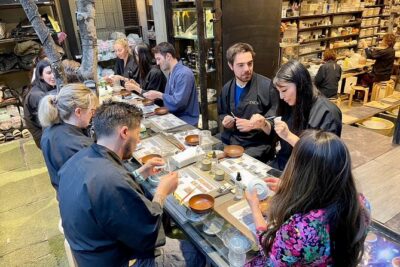
Kintsugi Experience: Art of Golden Joinery in Tokyo
Read our review →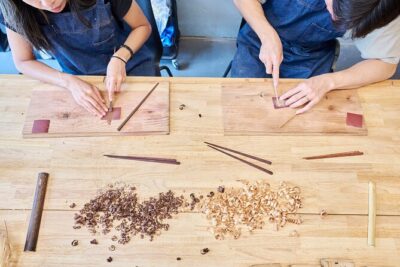

Authentic Pure Gold Kintsugi Workshop with Master Taku in Tokyo
Read our review →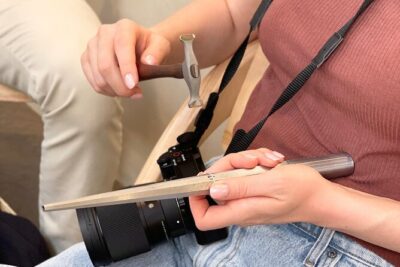
Private Handmade Ring Workshop Activity in Tokyo Shibuya
Read our review →
Browse the lists this tour appears in