
Reviewed · TOKYO TRADITIONAL MUSIC AND DANCE SHOWS
Japanese Traditional Entertainment Experience in Tokyo
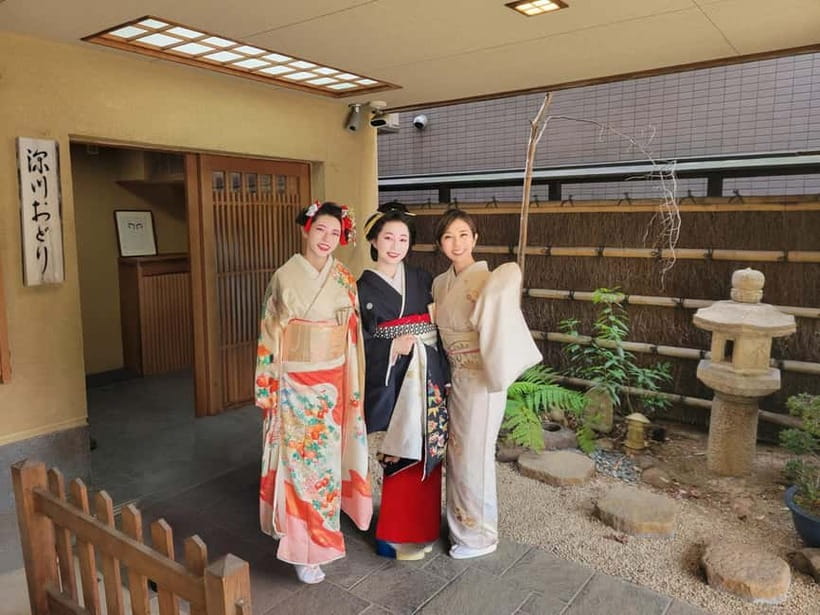
Tokyo’s modern skyline fades quickly at this Edo-style ozashiki party, where you put on a kimono, walk around temple grounds at night, and join a traditional parlor gathering with geisha entertainment. I especially like the combination of the short night-time walk and the seated show with dancing and shamisen. I also like that three price levels let you choose between a light cultural visit and a proper Japanese meal.
The main consideration is timing. The experience is listed as 30 minutes, yet the Take and Matsu options include substantial food and entertainment. Check the exact starting time and course details before booking so your plans match the pace of the evening.
Key points at a glance
- Kimono and Edo townsman setting: Dress for the part before walking through the temple grounds at night.
- Geisha parlor entertainment: Take or Matsu includes an ozashiki experience with traditional performance.
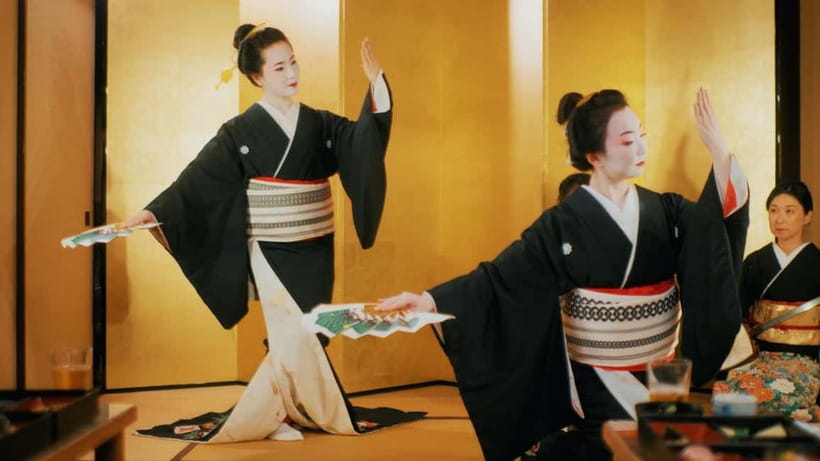
- Dance and shamisen: The show includes Japanese dance and shamisen music, with cultural explanation.
- Three meal levels: Ume includes sweets and matcha, Take adds a Fukagawa meal set, and Matsu includes kaiseki cuisine with Fukagawa Meshi and a drink.
- Small time commitment: The stated duration is 30 minutes, useful if you have a packed Tokyo schedule.
- Optional period-film add-on: A professional cameraman can shoot a short movie in period-drama style for an additional cost.
A quick trip from modern Tokyo to Edo
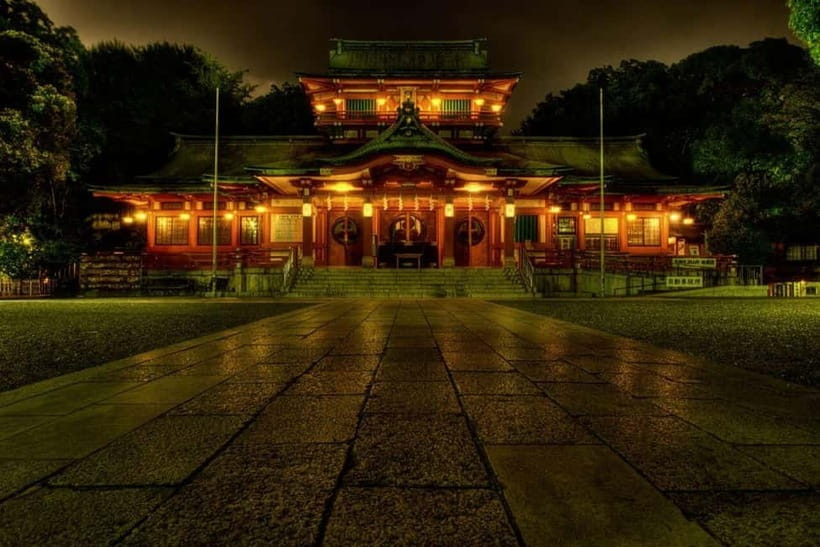
The experience takes place at Fukagawa Odori Hachiman Zashiki, at 1-22-8 Tomioka in Koto-ku. The Japanese address is 東京都江東区富岡1-22-8 深川おどり八幡座敷.
That setting matters. You are not simply watching a stage show in a modern theater. The evening begins with a change of costume and a walk-through attraction around temple grounds at night. You are invited to look and act like an Edo townsman, at least for the length of the visit.
I like this approach because it gives the entertainment a setting and a bit of play. A kimono changes the mood quickly. It also makes the event more suitable for visitors who want a visual introduction to old Tokyo without signing up for a long museum tour or a full day outside the city center.
The event is hosted in Japanese and English. Individual host names are not provided, but the English support matters during the tea ceremony explanation, the performance, and the social parts of the ozashiki gathering.
More Tokyo traditional music and dance shows:
- Tokyo: Japanese Dance Cabaret Theater Asakusa-Kaguwa Ticket
★ 4.8 · 2,270 reviews - Tokyo: KABUKI Show at Kabukiza Theatre Admission Ticket
★ 4.8 · 152 reviews - Tokyo: KABUKI, BUNRAKU, etc. presented by National Theatre
★ 4.6 · 135 reviews
Putting on a kimono before the night begins
The first notable feature is the costume transformation. You are dressed in a kimono before walking around the grounds. The supplied information does not state how many garments are available, how long dressing takes, or if sizes are limited, so I would confirm those points if they matter to you.
Still, the costume is more than a photo prop. It sets up the Edo theme and helps connect the walk, the parlor setting, and the traditional arts that follow. You are not only sitting down for a show. You are taking part in a simple role-play that gives the evening a clear sense of place.
The walk around the temple grounds is described as a night attraction. That means you should expect atmosphere rather than a long guided sightseeing route. It is a short, themed introduction, not a replacement for a full temple visit or a historical walking tour.
If you are comparing this with a standard kimono rental, the difference is the program around it. Here, the costume leads into the ozashiki party, geisha entertainment, dance, music, and food. If you mainly want an independent photo session, another arrangement may suit you better.
The ozashiki party and its social side
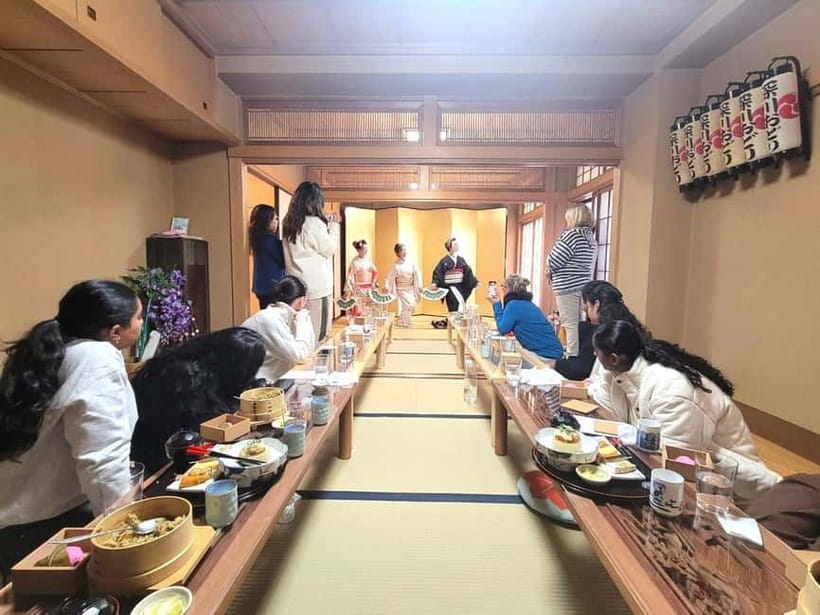
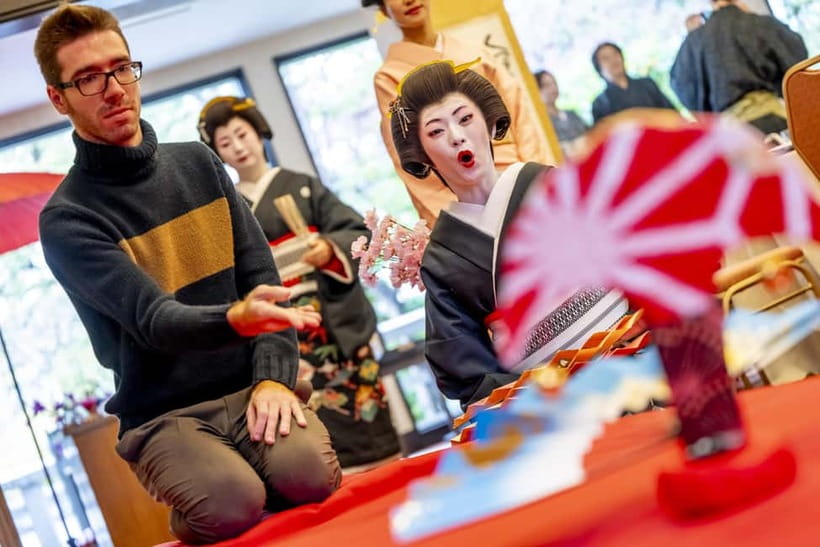
The heart of the activity is the ozashiki experience, a traditional parlor gathering where strangers come together for food, conversation, and entertainment. The idea is communal rather than private. You should expect to share the atmosphere with other participants instead of receiving a one-to-one geisha performance.
That social format is part of the point. A formal show can keep you at arm’s length. An ozashiki party feels more like a hosted cultural gathering, with the hosts helping explain what is happening and encouraging people to enjoy the occasion together.
The strongest praise focuses on the hosts’ hospitality, elegance, and professionalism. That is important here because traditional entertainment can feel difficult to understand if nobody explains the customs. English and Japanese are available, and one detailed account describes explanations of the traditional tea ceremony as part of the experience.
You may also have the chance to talk about cultural differences. The activity is not presented as a lecture, and the information does not promise a long question-and-answer session. Still, the social setting gives you more contact with the hosts than you would get from watching a recorded performance.
Dance, shamisen, and the performance
Traditional Japanese dance and shamisen music form the main entertainment. The shamisen is a three-stringed Japanese instrument with a crisp, striking sound. In this setting, it adds a strong sense of occasion to the meal and the parlor gathering.
The dance comes at the end of the session according to the supplied details. That gives the evening a neat shape: costume, night walk, food or sweets, cultural interaction, and a closing performance.
I would not book this expecting a long theater production. The listed duration is only 30 minutes, so the show is likely compact. That is a benefit if you want a concentrated introduction, but a drawback if you are hoping for an extended evening of multiple acts.
The program is also valuable because it puts traditional arts beside everyday social customs. You see dance and music, but you also encounter the manners and setting of a Japanese parlor gathering. That combination gives you more context than a performance alone.
A completely different kind of day in Tokyo:
- Mt Fuji and Hakone 1-Day Bus Tour Return by Bullet Train
★ 5.0 · 26,383 reviews - 1-Day Tokyo Bus Tour
★ 5.0 · 14,250 reviews - Tokyo: teamLab Planets TOKYO Digital Art Museum Entry Ticket
★ 4.6 · 9,779 reviews - Mt Fuji & Hakone Cruise, Drum Show Bullet Train 1 Day from Tokyo
★ 4.0 · 7,413 reviews
Choosing between Ume, Take, and Matsu
The three courses are the most important booking decision. The price is listed at $74 per person, but the exact value depends on which course you select and what is included in that price.
Ume is the lightest option. It includes Japanese sweets and matcha, as well as admission, the performance, and a souvenir. This is the sensible choice if you want the kimono, atmosphere, traditional arts, tea, and a small taste of Japanese hospitality without committing to a full meal.
Take adds an ozashiki geisha entertainment experience and a Fukagawa Meal Set. It offers a stronger food component and more direct contact with the parlor tradition. If you want the cultural program with a proper local meal, Take is likely the middle-ground choice.
Matsu is the fullest option. It includes the ozashiki geisha entertainment experience, kaiseki cuisine with Fukagawa Meshi, and a drink. Kaiseki is a carefully presented Japanese meal, while Fukagawa Meshi is a local specialty associated with Fukagawa. The menu itself is not provided, so do not book Matsu expecting a specific list of dishes.
All three courses include admission, the performance, and a souvenir. Transportation to the venue is not included. The description also does not say that all food courses are served for the same length of time, so check the selected option and starting time carefully.
Is the $74 price good value?
At $74 per person, this makes the most sense as a compact cultural package rather than a simple 30-minute show. You are paying for the setting, costume experience, performance, and course-specific food or refreshments.
Ume offers the clearest value for a visitor who wants a brief cultural stop. Matcha and sweets keep the commitment light, and you still receive the performance and souvenir. It is a good fit before dinner elsewhere.
Take may be the best balance if you want food and geisha entertainment without choosing the most elaborate meal. The Fukagawa Meal Set gives the experience more substance, especially if you are planning your evening around it.
Matsu costs more in practical terms because it includes the most complete meal and a drink. It suits someone who wants the event to function as dinner as well as entertainment. If you are on a tight budget or already have dinner plans, the added meal may not justify the higher course price.
One odd point deserves attention: the listed duration is 30 minutes, while the meal descriptions sound more substantial. I would treat the duration as an advertised minimum or standard visit length until the host confirms how each course works. This is the one detail most likely to affect your expectations.
Food, matcha, and Fukagawa Meshi
Food is not just an extra here. It helps explain why the three courses are separated. Ume gives you Japanese sweets and matcha, providing a simple introduction to tea culture. The tea component is especially useful if you have never attended a traditional tea ceremony and want basic explanations rather than a long formal lesson.
Take includes a Fukagawa Meal Set. The name links the food to the local area, which gives the meal more meaning than a generic boxed lunch. The available information does not describe the portions or ingredients, so anyone with dietary needs should ask before booking.
Matsu includes kaiseki cuisine with Fukagawa Meshi and a drink. This is the choice for someone who wants presentation and a fuller dinner setting. The food is described as delicious and organic in one account, but no precise menu or dietary information is supplied. I would not assume that vegetarian, vegan, allergy-friendly, or gluten-free substitutions are available.
If food is your main reason for booking, ask the provider what the selected course contains. If culture is your priority, Ume may be enough.
What the souvenir adds
Each course includes a souvenir. No details are given about its type, size, or cultural meaning, so it should be viewed as a pleasant extra rather than a reason to select one course over another.
The more useful keepsake may be the experience itself: the kimono, temple-ground setting, dance, shamisen, and shared party atmosphere. If you choose the optional period-drama-style short movie, a professional cameraman can film you in costume. That filming is not included in the base experience, and its price is not provided.
The movie option could appeal to families, couples, and anyone who wants a polished visual memory instead of ordinary phone photos. It could also add time or expense, so ask about both before agreeing to it.
Who will enjoy this most?
I would recommend this to you if you want a short, organized introduction to traditional Japanese entertainment. It works particularly well for first-time visitors who want to see a geisha performance, hear shamisen music, try matcha, and sample a local meal without arranging several separate activities.
It also suits couples and families who enjoy costumes and theatrical settings. The Edo townsman theme gives children and adults something active to do, though the supplied information does not specify age limits or child pricing.
Food-focused visitors should compare the three courses closely. Choose Ume for sweets and tea, Take for a meal set and geisha entertainment, and Matsu for kaiseki with Fukagawa Meshi and a drink.
You may want a different activity if you are seeking a long, highly detailed historical tour, an independent kimono rental, or a private geisha appointment. The event is short, social, and staged. That is its strength, but it also limits how much historical detail and personal time you can expect.
Practical planning for the evening
The venue is in Tomioka, Koto-ku, and transportation is not included. Plan your route before setting out, especially if you are trying to connect this with dinner, a night view, or another timed booking.
The host or greeter can communicate in Japanese and English. That should make the basic flow easier to follow, but the available information does not promise full interpretation of every performance or conversation.
Free cancellation is available up to seven days in advance for a full refund. After that point, the terms may differ, so do not leave this booking until the last minute if your Tokyo schedule is uncertain.
Starting times vary. Check availability for the date you want, then allow enough time to reach 1-22-8 Tomioka. Since the advertised visit is brief, arriving late could take away a large part of the program.
Should you book the Fukagawa ozashiki experience?
Book it if you want a compact evening of costume, traditional entertainment, tea or food, and friendly cultural contact. The strongest reasons are the gracious hosts, the clear mix of dance and shamisen, and the choice of three courses.
Choose Ume for the lightest visit, Take for a balanced meal-and-entertainment option, and Matsu if you want the full kaiseki and Fukagawa Meshi experience. Before paying, confirm the exact course, meal details, start time, and what the 30-minute duration means.
I would skip it only if you need a long historical tour, a private setting, or a clearly specified menu. For everyone else, this is a neat way to add an old-Tokyo performance and social ritual to a modern Tokyo itinerary without giving up an entire evening.
FAQ
Where does the Japanese traditional entertainment experience take place?
It takes place at Fukagawa Odori Hachiman Zashiki, 1-22-8 Tomioka, Koto-ku, Tokyo. The Japanese address is 東京都江東区富岡1-22-8 深川おどり八幡座敷.
How long does the experience last?
The listed duration is 30 minutes. Starting times vary, so check availability for your chosen date.
How much does the experience cost?
The listed price is $74 per person. The available information presents three courses, so check which option is selected when booking.
What languages are available?
The host or greeter can communicate in Japanese and English.
What does the Ume course include?
Ume includes admission, the performance, a souvenir, Japanese sweets, and matcha.
What does the Take course include?
Take includes admission, the performance, a souvenir, an ozashiki geisha entertainment experience, and a Fukagawa Meal Set.
What does the Matsu course include?
Matsu includes admission, the performance, a souvenir, an ozashiki geisha entertainment experience, kaiseki cuisine with Fukagawa Meshi, and a drink.
Can I cancel for a full refund?
You can cancel up to seven days in advance for a full refund. Transportation to the venue and the optional period-drama-style short movie are not included.
Newly reviewed around Tokyo
- Tokyo Asakusa:Calligraphy & Make T-shirt Activity★ 5.0 · 62 reviews
- Intercity Shuttle, Tokyo to Haneda /Narita /Yokohama /Makuhari★ 5.0 · 5 reviews
- 1 Hour Travel around Tokyo with a Professional Photographer★ 5.0 · 3 reviews
- Travel Tokyo with Your Own Personal Photographer★ 5.0 · 43 reviews
- Train in Samurai Swordsmanship and Defeat the Demon in Tokyo★ 5.0 · 5 reviews
- Shuttle Van 6hr Tokyo Tour to-and-from Tokyo, Yokohama and Narita★ 5.0 · 9 reviews
- Kickboxing & Body Training with EX-Pro Fighter★ 5.0 · 4 reviews
- Traditional Japanese Knife Sharpening Class★ 5.0 · 18 reviews
Tokyo Traditional Music and Dance Shows, compared.
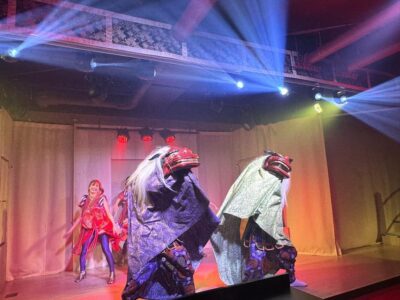
Japanese Dance Cabaret Theater Asakusa-Kaguwa Ticket
Read our review →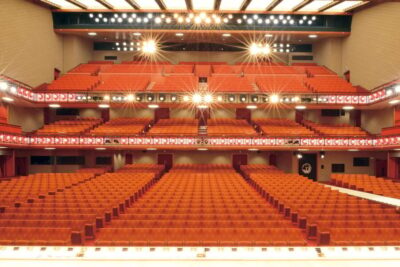
KABUKI Show at Kabukiza Theatre Admission Ticket
Read our review →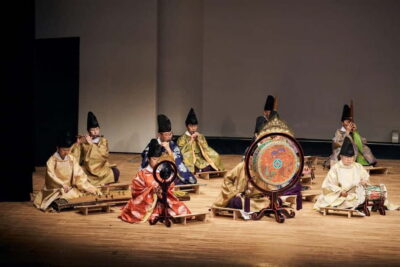
KABUKI, BUNRAKU, etc. presented by National Theatre
Read our review →
Tokyo’s Authentic and Finest Taiko Drumming Experience
Read our review →
Tokyo’s Authentic and Finest Taiko Drumming Workshop
Read our review →
Authentic Japanese Dance Show ticket by professionals
Read our review →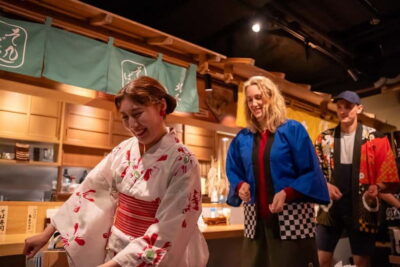
Browse the lists this tour appears in