
Reviewed · TOKYO COOKING CLASSES
Japanese Cooking and Udon Making Class in Tokyo with Masako
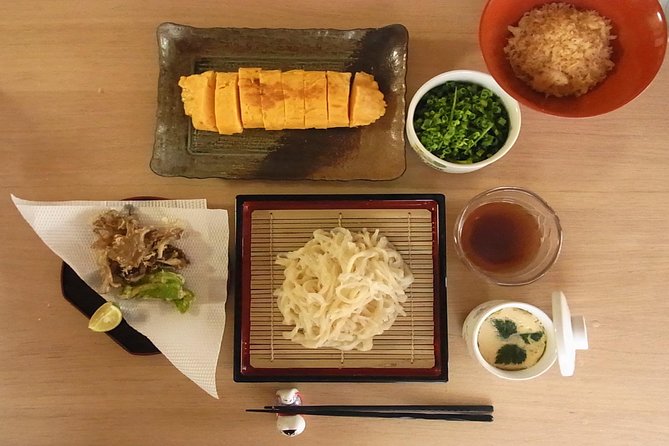
Making udon from flour, water, and patient kneading is the heart of this experience. In Masako’s home in Senju, you’ll also prepare tamagoyaki, tempura, and soup, then sit down to eat what you made. I like the private, hands-on format and the chance to see how a Japanese home kitchen works. I also like the personal finish: Masako writes your name in Kanji calligraphy and may turn it into a fan or another small keepsake.
The main thing to consider is location. The class meets in Adachi City, north of central Tokyo, so it takes planning and travel time. Masako speaks limited English, and a translator is scheduled to help, though the cooking itself is practical and easy to follow. Children are not accepted for safety reasons.
Key points to know before booking
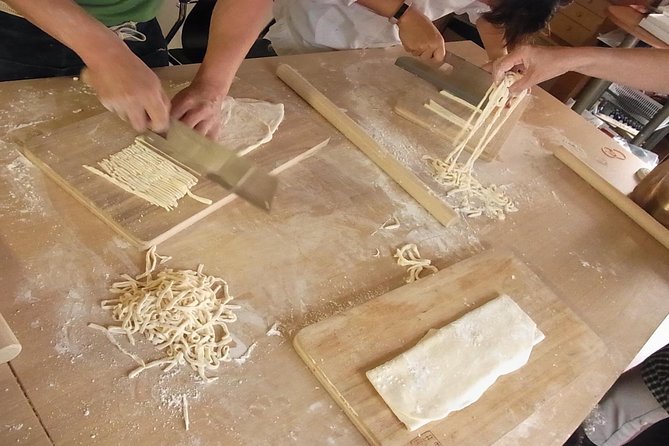
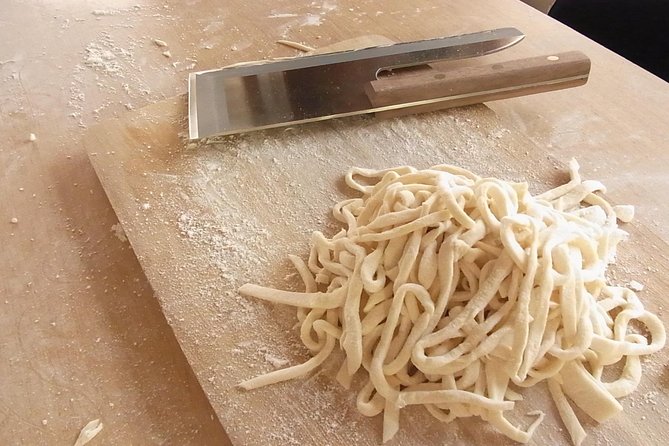
- Knead udon dough from scratch: You’ll learn about flour, water ratios, resting, flattening, and cutting the noodles.
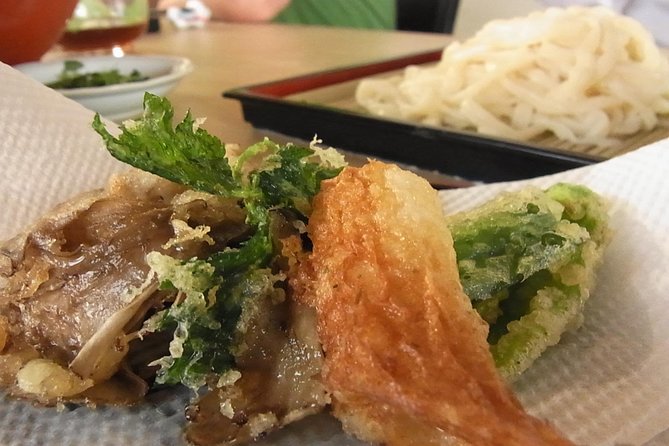
- Cook several Japanese dishes: The meal may include udon soup, tamagoyaki, vegetable and shrimp tempura, and other traditional dishes.
- Enjoy a private class: Only your group takes part, so Masako can adjust the pace and explain each step closely.
- Choose your menu in advance: Masako offers four meal choices, so send your preferred option after booking.
- Take home Japanese calligraphy: Masako writes your name in Kanji and may create a fan or another personalized souvenir.
- Plan for a northern Tokyo address: The meeting point is at Chōenji Temple in Senju, Adachi City, and the class ends there.
Turning flour into fresh udon in Senju
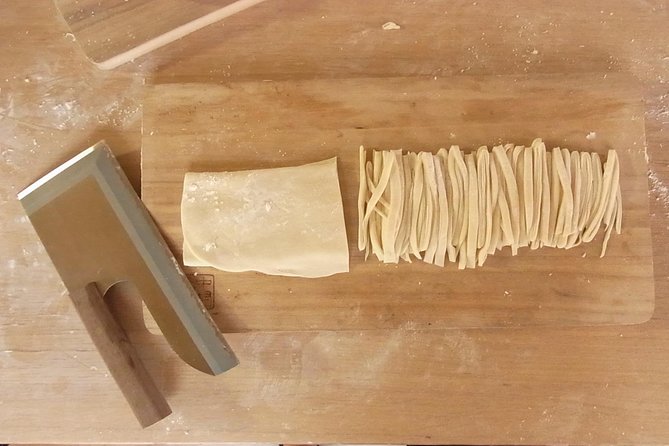
This is not a demonstration where you watch someone else do the work. You make the food yourself, with Masako guiding your hands and correcting your technique along the way.
The class begins with green tea and a welcome in Masako’s home. That first cup helps set the tone: this is a personal home visit with food at the center, not a formal cooking school with rows of workstations.
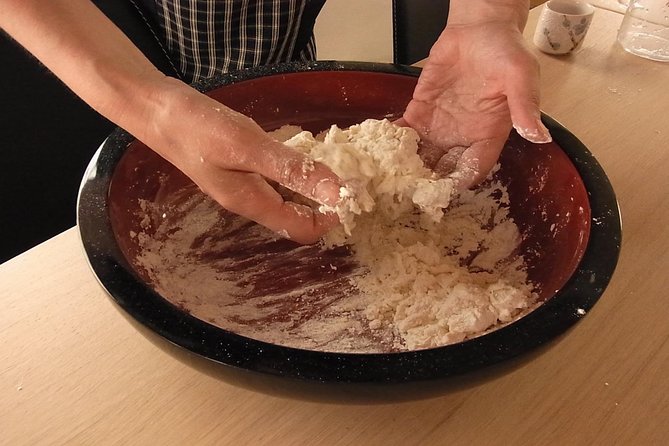
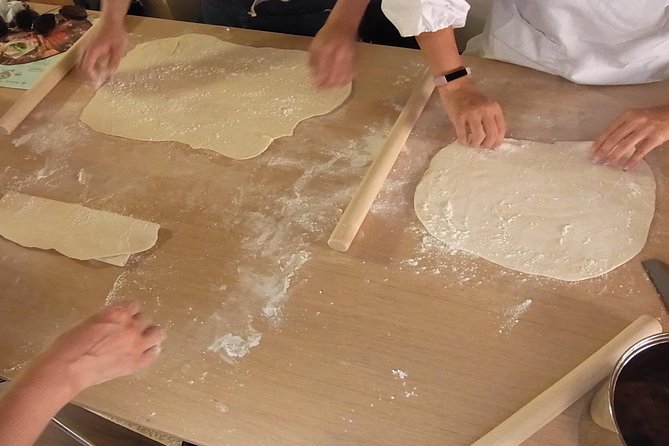
The udon process is the main event. You’ll see which flour to use, how much water to add, and how dough changes as you work it. The kneading takes effort and patience. You may also learn why resting matters before the dough is flattened and cut into noodles.
That hands-on sequence gives you something useful to take home beyond a recipe. Udon dough can look simple, but texture depends on small details. Water ratios, kneading, resting, and cutting all affect the final bowl. Masako’s method is designed for an ordinary home kitchen, so you are learning something you can attempt again rather than watching a complicated restaurant technique.
The noodles are then cooked and served as part of the meal. Fresh udon has a different feel from packaged noodles, and making it yourself gives the dish more meaning. Still, you should not book this only for the final bowl. The work is part of the experience, and kneading dough may be tiring for some people.
More Tokyo cooking classes:
- Tokyo: Roll and Authentic Sushi Making Class in Asakusa
★ 4.9 · 1,957 reviews - Tokyo Shinjuku Chopsticks Making Class
★ 5.0 · 1,763 reviews - Tokyo: Sushi Making Class in a Happi Coat near a Famous Spot
★ 4.9 · 1,377 reviews
Tamagoyaki, tempura, and the rest of the meal
The class usually includes more than udon. Common dishes described for this experience include tamagoyaki, Japanese rolled omelet, and tempura made with vegetables and shrimp. You may also prepare dashi, the savory stock used in Japanese cooking, depending on the menu you choose.
Tamagoyaki is especially good for a private class because each person can try making one. Rolling the egg into layers takes some control, and Masako can show you when to fold, how to use the pan, and how to shape the omelet. Some versions include sugar and miso, giving the dish a sweet-savory taste.
Tempura brings a different lesson. You’ll prepare ingredients, work with batter, and learn small tricks for frying. The exact menu can vary, which is why you should tell Masako your preferred meal before the class. Four menu choices are available, and dietary restrictions can be discussed in advance.
I like this spread of dishes because it gives you several useful skills in one sitting. Udon teaches dough. Tamagoyaki teaches control and rolling. Tempura teaches preparation and frying. You also get a proper meal at the end rather than a few tasting portions.
Come hungry. The class combines cooking and eating, and the menu can be generous. Alcoholic drinks are included, along with green tea and the prepared dishes. If you do not drink alcohol, clarify your preference ahead of time, but the listed inclusions do cover alcoholic beverages.
A private class that feels personal
Only your group participates, which changes the pace. You are not trying to see over someone else’s shoulder or waiting for a large group to finish the same step. Masako can spend more time explaining dough, eggs, or frying technique to your party.
Private does not mean silent or formal. The class takes place in Masako’s home, and the cooking is tied to her everyday approach to food. She prepares simple, nutritious dishes for her own family and aims to teach food that you can make again at home.
That focus matters. You are not just collecting a recipe card. You are seeing how ingredients are handled in a Japanese household and hearing practical ideas about cooking. The class also creates room for conversation about Japanese food and daily life.
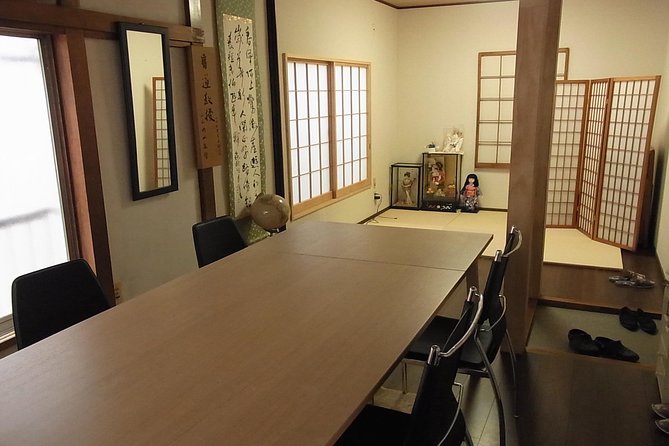
The setting may appeal to you if you want a break from Tokyo’s major sights. You’ll leave the usual tourist routes and spend time in a real residential part of the city. The tradeoff is that the home setting is not built for a large production. Space and movement are likely more limited than in a studio kitchen, though the private format helps offset that.
What the language support means
The experience information says Masako speaks limited English and that a translator will be present. You should expect language assistance rather than assume every explanation will be delivered directly in English.
That said, cooking provides its own visual language. Masako can show you how to knead, roll, cut, fold, and fry. The class also uses repeated actions, ingredients, and demonstrations, which make the work approachable even when a translator is helping with longer explanations.
If you have food allergies or dietary restrictions, contact Masako before the class. One of the useful strengths of a private booking is the chance to discuss your needs before ingredients are prepared. Do not wait until the meal is on the table.
The menu choice is also important. Masako offers four options, and you are asked to send her your preferred meal. This is a small step, but it prevents confusion and helps her prepare the right ingredients.
A completely different kind of day in Tokyo:
- Mt Fuji and Hakone 1-Day Bus Tour Return by Bullet Train
★ 5.0 · 26,383 reviews - 1-Day Tokyo Bus Tour
★ 5.0 · 14,250 reviews - Tokyo: teamLab Planets TOKYO Digital Art Museum Entry Ticket
★ 4.6 · 9,779 reviews - Mt Fuji & Hakone Cruise, Drum Show Bullet Train 1 Day from Tokyo
★ 4.0 · 7,413 reviews
The calligraphy keepsake at the end
The calligraphy is more than a quick photo opportunity. Masako is a qualified calligraphy professional, and she writes your name in Kanji after welcoming you. Depending on the session, she may also create a fan with your name or symbols chosen for you.
That gives the class a memorable final chapter. You cook, eat, and then receive something made specifically for you. Some people have also received origami gifts or another small present, though you should treat those extras as personal touches rather than guaranteed inclusions.
The calligraphy is particularly useful if you want a souvenir with a story. A shop-bought charm may be easy to pack, but a name written by your host connects directly to the afternoon or evening you spent in her home.
Do not expect a formal calligraphy lesson unless Masako offers one during your visit. The confirmed feature is the personalized writing and take-home souvenir, not a full separate calligraphy course.
Getting to the class in northern Tokyo
The meeting point is listed at Chōenji Temple, 4-chōme-27-5 Senju, Adachi City, Tokyo 120-0034. The activity ends back at the same meeting point.
The address is near public transportation, but it is not in the center of the city. Allow extra time to reach Senju, especially if you are staying around Shinjuku, Shibuya, Ginza, or Tokyo Station. The class lasts about two and a half hours, but your outing will take longer once you add the journey in both directions.
Clear directions are important here. Check the route before your class and keep the meeting address available on your phone. Since this is a home-based experience, arriving at the correct location matters more than simply reaching the general neighborhood.
The location can be a positive if you want to see a less tourist-focused side of Tokyo. It can be inconvenient if you have a packed sightseeing schedule or only one short day in the city. I would place the class on a day with breathing room rather than squeezing it between major attractions.
Is the $142 price fair?
At $142 per person, this is not a cheap meal or a basic group workshop. The price includes the private cooking class, ingredients, alcoholic beverages, and all fees and taxes. You also receive a multi-course meal and a personalized calligraphy souvenir.
The value depends on what you want from a cooking class. If your goal is simply to eat udon, a restaurant will cost far less. If you want a short, polished cooking lesson in a central studio, you may find other options with easier transport.
I think the price makes more sense for couples, families with adult children, and small groups who value personal attention. You are paying for the home setting, private instruction, several dishes, drinks, and time with Masako rather than for food alone.
Group discounts are available, so check the final price for your party. The private format can also make the cost easier to justify when several people book together. You avoid the impersonal feel of a large class and share the experience with people you already know.
The strongest value is the combination of skills and hospitality. You learn techniques you can repeat, eat a full meal, and take home calligraphy. That package is more substantial than a quick market tasting, though it still requires a commitment of roughly half a day once transport is counted.
Who will enjoy this class most?
I would recommend it to you if you enjoy learning by doing. You do not need advanced cooking ability. The recipes are approachable, and the class is structured so beginners can follow the steps.
It suits couples especially well, since you can work together without being separated into a large group. It also works for families with adult children. Children are not accepted, so do not book this as a class for younger family members.
You will also enjoy it if you want food culture in a home setting rather than a restaurant meal. The experience gives you a look at everyday Japanese cooking, not just a polished dish arriving at your table.
It may not suit you if you dislike hands-on work, have limited time in Tokyo, or want a class taught entirely in English without translation. It is also not the best choice for someone seeking a professional culinary qualification. This is a friendly home lesson centered on useful techniques and shared food.
Booking details worth handling early
The activity is often booked about 52 days in advance, so reserve early if your Tokyo dates are fixed. Confirmation is sent within 48 hours, subject to availability.
Send your menu preference after booking, and contact Masako about dietary restrictions as soon as possible. That gives her a fair chance to prepare ingredients and adjust the meal.
Free cancellation is available up to 24 hours before the start time for a full refund. Cancellations or changes made less than 24 hours before the class are not accepted for a refund, and the cut-off follows local Tokyo time.
The class includes mobile ticketing, which is useful when you are moving around the city. Hotel pickup and drop-off are not included, so plan your own route to Senju.
Should you book Japanese Cooking and Udon Making with Masako?
Book it if you want a personal food experience with real participation, not just a meal. The strongest reasons are the scratch-made udon, the range of dishes, the private teaching, and Masako’s calligraphy at the end.
I would skip it if your schedule is too tight for the trip to northern Tokyo or if $142 feels high for a cooking activity. The location and language support require a little planning, and children cannot take part.
For couples, adult families, and small groups who want to carry a Japanese recipe home, this is a strong choice. You leave with a full meal in you, practical techniques in your hands, and a personalized souvenir that recalls the time spent in Masako’s kitchen.
FAQ
Where does the cooking class take place?
The class takes place at Masako’s home in Senju, Adachi City, Tokyo. The listed meeting point is Chōenji Temple, 4-chōme-27-5 Senju, Tokyo 120-0034.
How long does the experience last?
The cooking class lasts approximately two hours and 30 minutes.
Is this a private activity?
Yes. Only your group participates in the activity, allowing for personal instruction and one-to-one teaching assistance within your party.
What food will I make?
The class centers on udon noodles made from scratch. Depending on the menu you choose, you may also make tamagoyaki, vegetable and shrimp tempura, soup, and other Japanese dishes.
Can I choose the menu?
Yes. Masako offers four meal choices. You should send her a message with your preferred menu after booking.
Is a translator provided?
Yes. The experience information says Masako speaks limited English and that a translator will be present.
Are children allowed to join?
No. Masako does not accept children for the cooking class because of safety concerns.
What is included in the price?
The price includes the cooking class with Masako, all ingredients and fees, taxes, alcoholic beverages, and the meal you prepare. Hotel pickup and drop-off are not included.
More hands-on classes and workshops in Tokyo
- Sushi Making Tokyo Roll and Authentic Japanese Sushi Class
★ 5.0 · 3,971 reviews - Chopstick Making Workshop in Ginza
★ 4.8 · 1,366 reviews - Tokyo Sushi Making Class in Tsukiji with Professional Chef
★ 5.0 · 1,177 reviews - Ramen & Gyoza Cooking Class in Tokyo with Local Supermarket Visit
★ 5.0 · 823 reviews
Newly reviewed around Tokyo
- Tokyo Asakusa:Calligraphy & Make T-shirt Activity★ 5.0 · 62 reviews
- Intercity Shuttle, Tokyo to Haneda /Narita /Yokohama /Makuhari★ 5.0 · 5 reviews
- 1 Hour Travel around Tokyo with a Professional Photographer★ 5.0 · 3 reviews
- Travel Tokyo with Your Own Personal Photographer★ 5.0 · 43 reviews
- Train in Samurai Swordsmanship and Defeat the Demon in Tokyo★ 5.0 · 5 reviews
- Shuttle Van 6hr Tokyo Tour to-and-from Tokyo, Yokohama and Narita★ 5.0 · 9 reviews
- Kickboxing & Body Training with EX-Pro Fighter★ 5.0 · 4 reviews
- Traditional Japanese Knife Sharpening Class★ 5.0 · 18 reviews
Tokyo Cooking Classes, compared.
Roll and Authentic Sushi Making Class in Asakusa
Read our review →
Sushi Making Class in a Happi Coat near a Famous Spot
Read our review →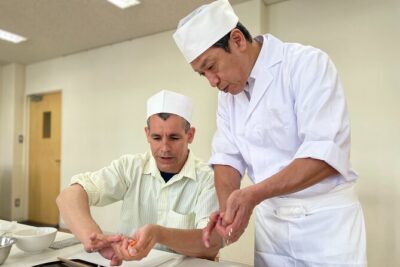
Tokyo Sushi Making Class in Tsukiji with Professional Chef
Read our review →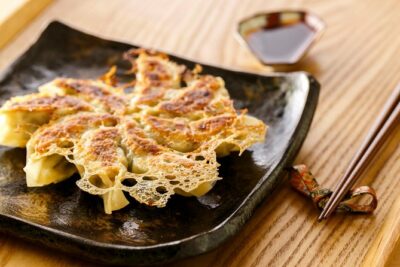
Ramen & Gyoza Cooking Class in Tokyo with Local Supermarket Visit
Read our review →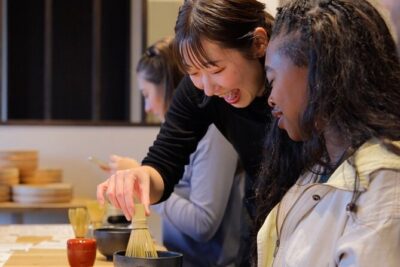
Matcha Making Class in Tokyo with Authentic Japanese Sweets Set
Read our review →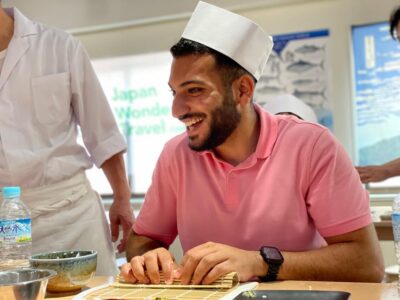
Tsukiji Fish Market Sushi Making Class with Pro Chef
Read our review →
Browse the lists this tour appears in