
Reviewed · TOKYO SUSHI MAKING CLASSES
Hands On Wagyu Sushi Making Experience
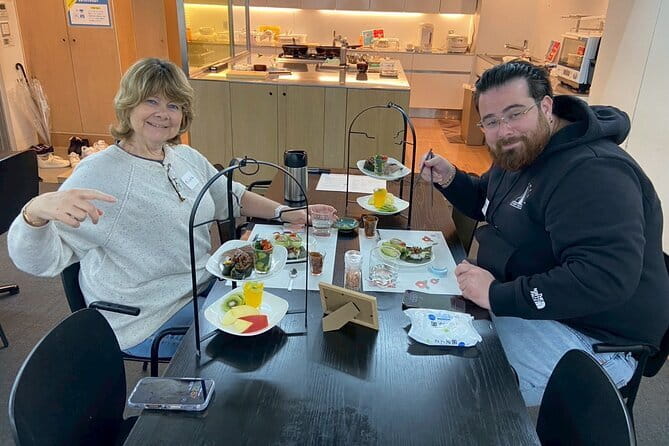
Premium beef takes the place of raw fish in this hands-on Tokyo class. You’ll learn to make Wagyu nigiri, gunkan maki, and temaki, then arrange your food for the table. I like the small six-person limit and the fact that lunch, ingredients, tools, and a cooking lesson are all included. The main drawback is simple: this is not a choice for vegans or vegetarians.
I also like that the class covers more than rolling sushi. You’ll learn about the rice, how to cook the meat, and how to plate the finished dishes. Instructors including Hiroko and Saori are English-speaking, which helps when you are handling several unfamiliar techniques at once. At $104.51 per person, it is a fairly costly lunch, but the instruction and meal make it more than a restaurant visit.
Key points at a glance
- Three Wagyu sushi styles: Make nigiri, gunkan maki, and temaki rather than learning only one basic roll.
- A six-person maximum: The small class size should give you room to follow each step and ask for help.
- English-speaking instruction: Hiroko, Saori, and the other instructors guide you through the recipes and preparation.
- Lunch is included: You eat the sushi and other food you make during the class.
- A 90-minute Tokyo activity: The noon start fits neatly into a day of sightseeing.
- No fish required: This is a useful option for people who prefer meat, though vegan and vegetarian versions are not available.
Wagyu instead of fish makes this sushi class different
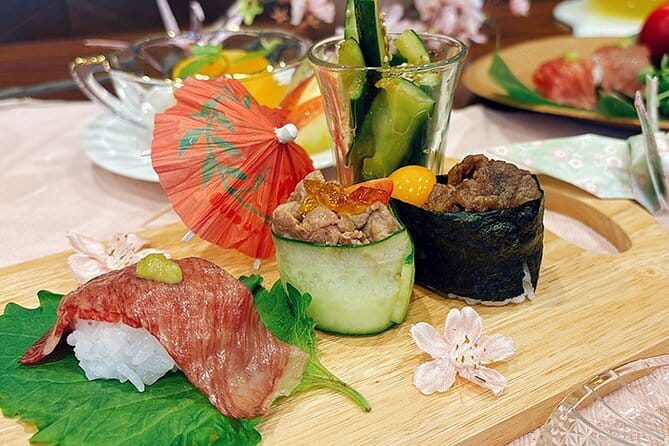
Most sushi lessons focus on seafood. This one takes a different route, pairing sushi rice and Japanese presentation with premium Wagyu beef. That makes the class especially appealing if you like sushi technique but are less interested in raw fish.
You’ll work with several formats rather than repeating one recipe. Nigiri gives you the classic hand-shaped sushi form. Gunkan maki uses a seaweed wrapper around the rice, with the ingredients held inside. Temaki is the hand roll, shaped into a cone and designed for a more casual finish.
The variety matters. You get to compare how Wagyu works in different shapes, textures, and presentations. You also leave with a better feel for the fact that sushi is not only about the topping. The rice, the shape, the amount of filling, and the final arrangement all affect the meal.
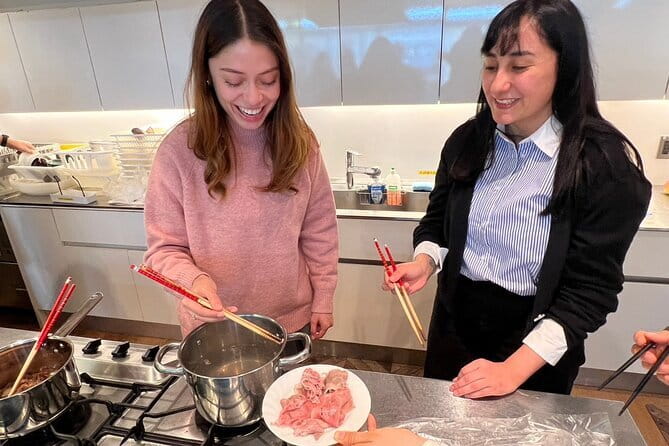
The class also includes Wagyu shabu shabu, according to the activity details shared by the instructors in one account of the session. That gives the lesson another way to handle the beef and adds more food to the lunch portion. Since the exact class menu can vary, I would treat the three named sushi styles as the firm expectation and shabu shabu as a possible extra.
More Tokyo sushi making classes:
- Sushi Making Tokyo Roll and Authentic Japanese Sushi Class
★ 5.0 · 3,971 reviews - Tokyo: Roll and Authentic Sushi Making Class in Asakusa
★ 4.9 · 1,957 reviews - Make Sushi and Create Unforgettable Memories in Tokyo
★ 5.0 · 1,413 reviews
What the 90-minute class includes
The experience starts at noon in Tokyo and lasts about an hour and a half. You meet at the designated point, and the activity ends back there rather than continuing to another restaurant or sightseeing stop.
The first part is preparation. The instructors show you the ingredients and equipment, then explain how to build the dishes. You will learn how to prepare the sushi rice, known as shari, and how to cook the beef. Those are useful lessons because the finished sushi depends on more than simply placing meat on rice.
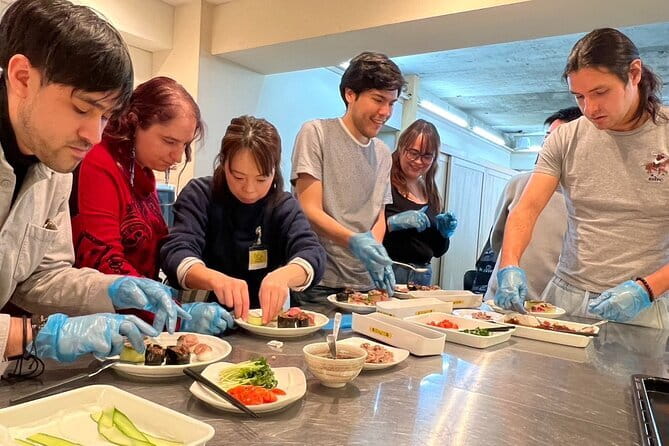
Next comes the hands-on work. You make the different Wagyu sushi styles with guidance at each stage. The class is not a demonstration where you sit and watch someone else do everything. You take part in shaping, filling, and arranging the food.
The final stage is plating and eating. The class teaches you to make the dishes look good on the plate, then you relax and eat what you prepared. That turns the lesson into a complete lunch, not just a short cooking activity followed by an extra meal you must arrange yourself.
At 90 minutes, the timing is manageable. You will not lose half a day, and the noon start gives you a clear block in your Tokyo schedule. Still, the class is fairly focused. If you want a long lesson covering many Japanese dishes, this is not that kind of program. Its strength is a short session built around one unusual ingredient.
The small group changes how the lesson feels
The class accepts no more than six people. That limit is one of the strongest practical features because sushi shaping can be hard to follow from across a large room.
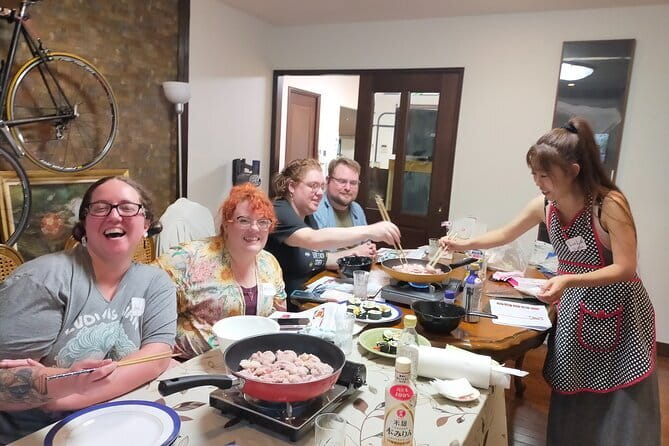
With a small group, you have a better chance of seeing the instructor’s hands and getting help with the details. That matters when you are learning how much rice to use, how to shape nigiri, or how to hold a hand roll together. You should still expect to do your own work. Small does not mean private, but it does make the lesson more personal than a large group demonstration.
A minimum of two people is required for a booking. Solo visitors should keep that rule in mind before planning around this class. If the minimum number is not met, the provider may offer another date or activity, or a full refund.
The class is also a good fit for couples, friends, and families with an interest in food. The compact format keeps everyone working on the same dishes. It may be less suitable if someone in your group does not eat beef or wants a plant-based meal.
Learning from English-speaking instructors
Language can make or break a cooking lesson. Here, the instructors speak English, and the practical teaching style is meant to guide you through each step.
Hiroko and Saori are among the instructors connected with the class. The teaching includes sushi preparation, beef cooking, and plating, so you are not left to guess what comes next. You can expect the lesson to explain the process and then give you a chance to repeat it yourself.
The most useful part may be the attention to small technique points. The class covers shari, the sushi rice, rather than treating it as an afterthought. It also shows you how to cook the Wagyu before using it in the sushi. That is valuable because beef behaves differently from the raw fish used in many standard sushi lessons.
The instructors also help throughout the activity. If you are worried that your first piece will look uneven, this is the kind of setting where you can ask for a correction and keep going. Do not expect every piece to look like a chef’s. The point is to learn the method, then enjoy the results.
More Tokyo wagyu and yakiniku dinners:
- Tokyo Night Foodie Tour in Shinjuku – Seasonal Sushi, Wagyu Beef
★ 5.0 · 1,161 reviews - Tokyo: Wagyu and 7 Japanese Dishes Cooking Class
★ 4.9 · 273 reviews - Small-Group Wagyu Beef and 7 Japanese Dishes Tokyo Cooking Class
★ 5.0 · 190 reviews - Nagano Snow Monkey 1 Day Tour with Beef Sukiyaki Lunch from Tokyo
★ 4.5 · 123 reviews
Why plating is part of the lesson
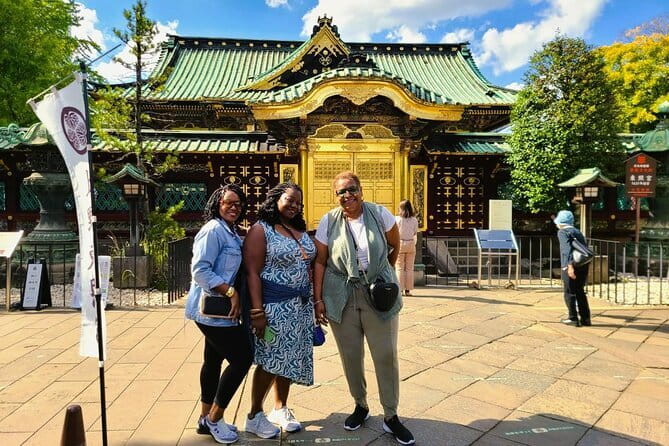
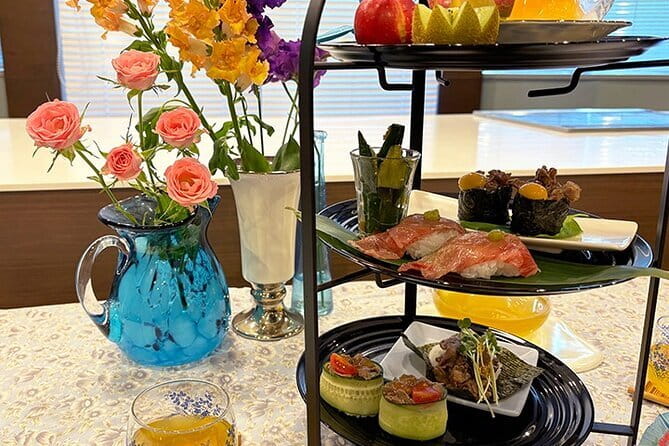
Making sushi is only half the job here. You also learn how to plate the food so the finished meal looks considered and appealing.
That may sound minor, but it changes the way you think about Japanese cooking. Shape, spacing, color, and portion all affect how the food reaches the table. You can use the plating lesson when you cook at home, even if you later make a simpler version with ingredients available outside Japan.
The activity includes downloadable photographs taken during the experience. That gives you a way to keep a visual record of the class and the food you made. The images are available later for download, so you do not have to rely only on quick phone photos while your hands are busy cooking.
If you care about presentation, this is a strong reason to choose the class over a basic sushi lunch. You are not simply eating Wagyu. You are learning how to turn it into a composed dish.
Is $104.51 good value for a Tokyo lunch?
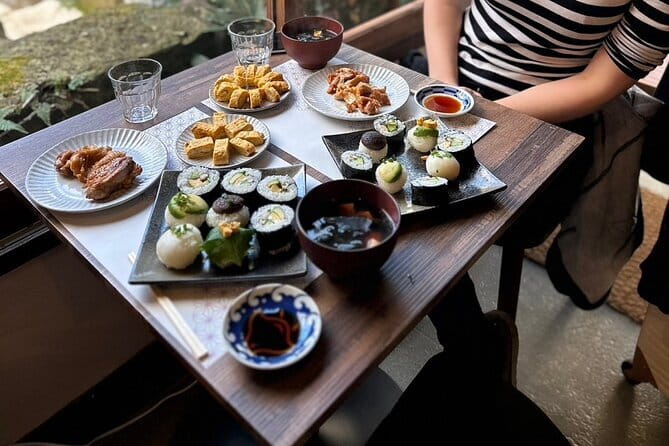
At $104.51 per person, this is not a cheap meal. You could certainly find less expensive food in Tokyo, including excellent sushi. The price makes more sense if you value the activity as much as the lunch.
Your fee covers the cooking experience, food, equipment, and lunch. You also get instruction in several sushi styles, beef preparation, sushi rice, and plating. The small group helps justify the cost because you are paying for a more direct lesson rather than a seat in a large class.
The value depends on your priorities. If your main goal is to taste Wagyu, a restaurant may offer a wider menu or a more polished dish. If you want to learn a skill and make your own meal, this class gives you more to take away than a single plate of sushi.
The price is easier to accept for a special occasion or a first visit to Tokyo. It is also useful for someone who wants a food activity that does not require a full day. I would compare it with other cooking classes in the city, but the Wagyu focus makes it unusual enough to command a premium.
Who should book this class?
I would choose this experience if you meet most of these conditions:
- You like beef and want a change from seafood sushi.
- You enjoy hands-on cooking rather than watching a demonstration.
- You want a compact activity that lasts about 90 minutes.
- You are comfortable paying for instruction as well as lunch.
- You want to learn several sushi forms in one session.
- You appreciate food presentation and want photos of the finished experience.
It is also a practical pick for people who already plan to see Tokyo at noon and want a scheduled meal with a clear start and end point. The meeting point is in Tokyo and near public transportation, which makes it easier to fit into a sightseeing day.
I would skip it if anyone in your party is vegan or vegetarian. No vegan or vegetarian options are available. I would also reconsider if you want a traditional seafood-focused sushi lesson, since the main feature here is the Wagyu twist.
Booking details worth checking before you go
You receive confirmation when you book, and the activity uses a mobile ticket. Keep the booking details available on your phone when you head to the meeting point.
The class begins at 12:00 pm. Give yourself enough time to reach the location because hotel pickup and drop-off are not included. The activity ends at the original meeting point, so you can plan your next stop from there.
The class is often booked well ahead, with an average lead time of about 36 days. If your Tokyo dates are fixed, booking early is sensible, especially because the group limit is six people.
Free cancellation is available if you cancel at least 24 hours before the local start time. Cancellations or changes made within 24 hours are not refunded or accepted. If poor weather or an insufficient number of bookings causes the activity to be canceled, you can receive a different date or activity, or a full refund.
My call: book it for the hands-on meal
I recommend this class for you if Wagyu sounds more appealing than raw fish and you want to do more than sit at a sushi counter. The combination of three sushi styles, beef preparation, plating, and lunch gives the 90-minute session a clear purpose.
The price is the main question. At $104.51, you are paying for a lesson and a meal, not simply lunch. The small group, English-speaking instruction, supplied equipment, and included food make the cost reasonable for a special Tokyo activity, though not a bargain.
Book it for the cooking experience, not just the Wagyu. You will get the most from it if you enjoy learning by doing, do not need vegetarian food, and can reserve well ahead for the noon start.
FAQ
Where does the Wagyu sushi class take place?
The experience takes place in Tokyo, Japan. You meet at the designated meeting point in Tokyo, and the activity ends back at that meeting point.
What time does the class start?
The class starts at 12:00 pm.
How long does the experience last?
The activity lasts approximately 1 hour and 30 minutes.
How many people can join the class?
The class has a maximum of six people. A minimum of two people is required per booking.
What types of sushi will I make?
You will learn to make Wagyu nigiri, gunkan maki, and temaki. The lesson also covers sushi rice, called shari, and how to cook the beef.
Is lunch included?
Yes. Lunch and the cooking experience are included, and you can eat the food you make during the class.
Are ingredients and cooking equipment provided?
Yes. The experience provides the ingredients and equipment needed for the class.
Are vegetarian or vegan options available?
No. Vegan and vegetarian options are not available.
Is hotel pickup included?
No. Hotel pickup and drop-off are not included. You make your own way to the meeting point.
Can I cancel for a full refund?
Yes, if you cancel at least 24 hours before the local start time. Cancellations made less than 24 hours before the start are not refunded, and changes within that period are not accepted.
Newly reviewed around Tokyo
- Tokyo Asakusa:Calligraphy & Make T-shirt Activity★ 5.0 · 62 reviews
- Intercity Shuttle, Tokyo to Haneda /Narita /Yokohama /Makuhari★ 5.0 · 5 reviews
- 1 Hour Travel around Tokyo with a Professional Photographer★ 5.0 · 3 reviews
- Travel Tokyo with Your Own Personal Photographer★ 5.0 · 43 reviews
- Train in Samurai Swordsmanship and Defeat the Demon in Tokyo★ 5.0 · 5 reviews
- Shuttle Van 6hr Tokyo Tour to-and-from Tokyo, Yokohama and Narita★ 5.0 · 9 reviews
- Kickboxing & Body Training with EX-Pro Fighter★ 5.0 · 4 reviews
- Traditional Japanese Knife Sharpening Class★ 5.0 · 18 reviews
Tokyo Sushi Making Classes, compared.
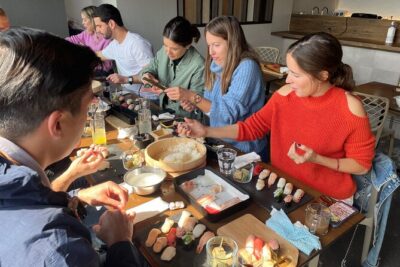
Sushi Making Tokyo Roll and Authentic Japanese Sushi Class
Read our review →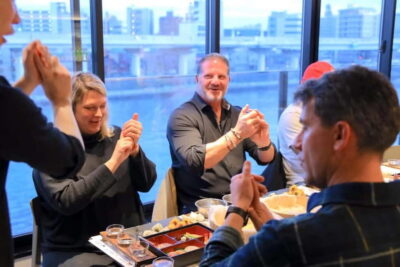
Roll and Authentic Sushi Making Class in Asakusa
Read our review →
Make Sushi and Create Unforgettable Memories in Tokyo
Read our review →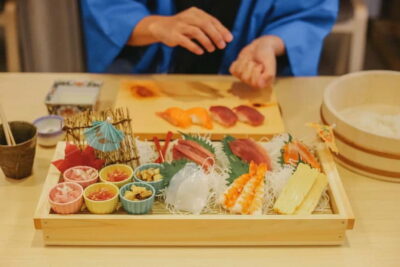
Sushi Making Class in a Happi Coat near a Famous Spot
Read our review →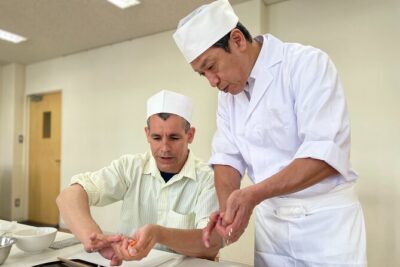
Tokyo Sushi Making Class in Tsukiji with Professional Chef
Read our review →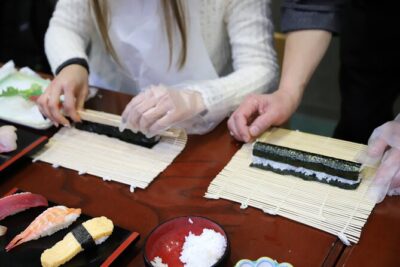
Tsukiji Fish Market Guided Tour and Sushi Making with Pro Chef
Read our review →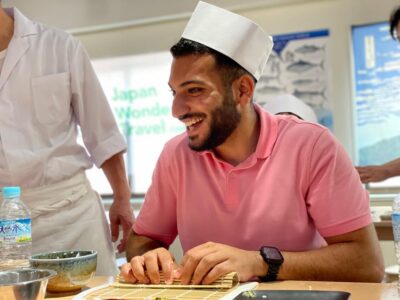
Tsukiji Fish Market Sushi Making Class with Pro Chef
Read our review →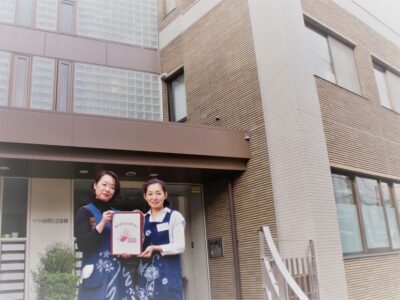
Browse the lists this tour appears in