
Reviewed · TOKYO SUMO EXPERIENCES
Grand Sumo Tournament Tour w/an English Guide ,Tokyo January 2026
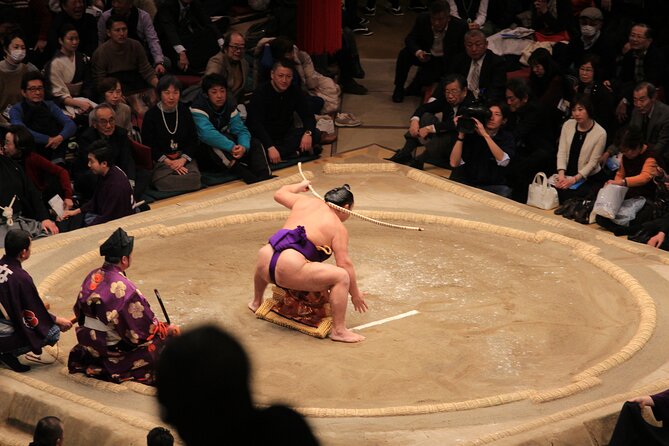
Tokyo sumo is not just a sports match. It is a compact lesson in Japanese ritual, rank, clothing, ceremony, and controlled force, all unfolding inside Ryogoku’s Kokugikan arena. I like that your guide takes you to your reserved seat and explains what you are seeing as the tournament develops, rather than leaving you to decode the action alone.
I also like the small group of up to 10 and the chance to see the Sumo Museum and arena details along with the bouts. The main drawback is value: at $124.26 per person, you pay a sizable premium over the ticket alone, and the experience lasts about three hours and 45 minutes.
- Best available chair seating: The S Seat option offers the top chair seating listed for this tour.
- English guidance during the tournament: Learn the rules, ranks, rituals, and winning techniques while the action is happening.
- Kokugikan and Sumo Museum visit: Look beyond the matches at traditional clothing, architecture, and sumo objects.
- Small group format: The maximum group size is 10, giving the guide room to answer questions.
- January dates: B Seat dates listed are January 11, 13, 15, 21, 22, and 23, 2026. S and A Seat dates are to be released.
- Ryogoku meeting point: Meet at Ryogoku Station at 2:15 pm and return to the same meeting point.
Why a Grand Sumo Tournament Works Best With a Guide
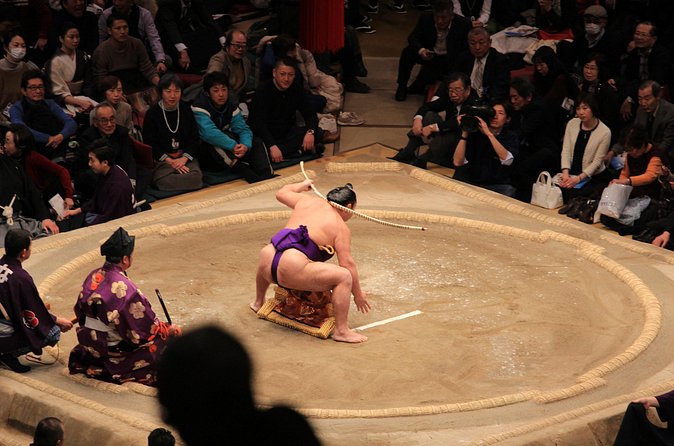
Professional sumo can look simple at first. Two wrestlers crouch, slap hands, push, pull, and try to force one another out of the ring. In reality, each bout sits inside a formal system of ranks, rituals, officials, clothing, and named techniques.
That is where this tour earns its keep. Your guide explains the different divisions, including the early matches and the higher-ranking makuuchi competitors. You also learn where the top ranks fit, from yokozuna and ozeki to the broader sanyaku group.
Without context, a match may end in a few seconds and leave you wondering what happened. With an explanation of the winning technique, or kimarite, you can understand whether the bout ended with a push-out, a throw, a belt maneuver, or another recognized move. The clash becomes easier to follow, and the small decisions before the final shove start to matter.
Earlier guides have included Jeff and Yuki. Jeff was praised for explaining both the rules and the history in a friendly way, while Yuki prepared an additional sheet about the wrestlers for one group. Your assigned guide may differ, so treat those names as examples rather than a promise. The important point is that this is designed as a guided sporting experience, not simply a ticket handoff.
Meeting at Ryogoku Station at 2:15 pm
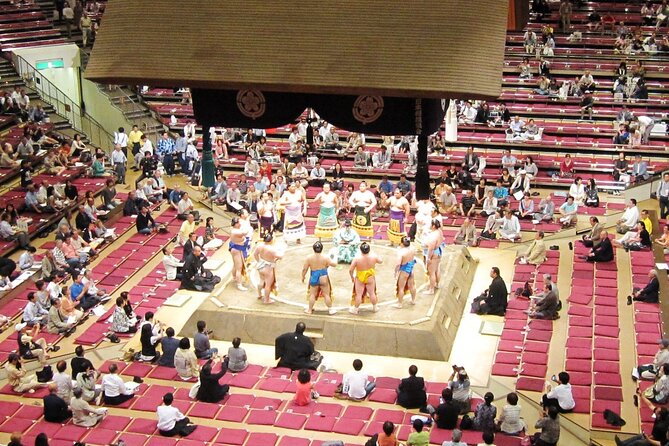
The tour begins at Ryogoku Station, 1-chome-3-20 Yokoami, Sumida City. The location is near public transportation, which makes the meeting point practical for a Tokyo day built around the tournament.
The start time matters. Sumo tournament days are long, and the program includes several divisions before the highest-profile bouts. You are not simply arriving for one headline match. A 2:15 pm start gives the tour a defined afternoon meeting time and allows your guide to escort you into the venue, explain the setting, and help you get oriented.
Your guide accompanies you to your reserved seat. That sounds basic, but it removes one of the common stresses of arena visits: finding the correct entrance, section, and row in a large venue where signs may not be in your preferred language.
You should plan to arrive at the meeting point on time. The tour has a fixed start, and the group is capped at 10 people. A small group is useful once the explanations begin, but it also means the guide cannot simply wait indefinitely for a late arrival.
More Tokyo sumo experiences:
- Tokyo: Sumo Show and Dining Experience
★ 4.8 · 2,742 reviews - the SUMO show
★ 5.0 · 1,960 reviews - Tokyo Shinjuku Sumo Show & Experience with Photo
★ 5.0 · 1,750 reviews
Inside the Kokugikan Arena
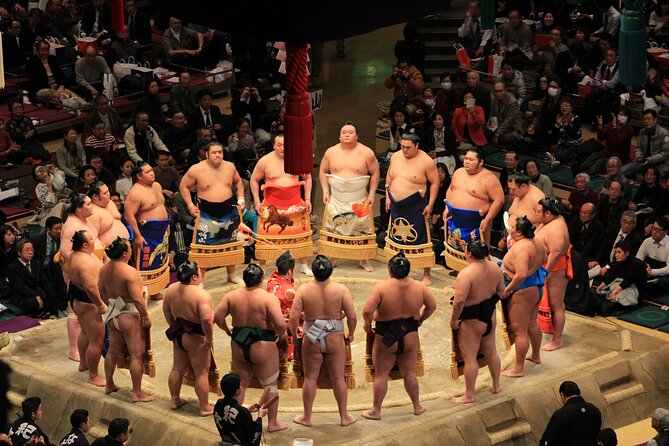
The Kokugikan is part of the experience, not just a container for the ring. The tour points out the arena’s Japanese design, ceremonial clothing, and symbolic decorations, helping you notice details that would otherwise blend into the background.
Sumo’s setting is deliberately formal. The wrestlers’ movements, the officials’ dress, the calls from the announcer, and the repeated rituals all carry meaning. A guide can explain why the pre-bout routine takes time, and why the event feels closer to a ceremony with athletic contests than to a modern sports game.
The tour also introduces the two officials whose roles are easy to miss. The gyoji, or referee, does more than declare a winner. The yobidashi, or announcer, has a distinct place in the proceedings and traditional clothing of his own. Your guide explains how their duties fit into the tournament and what their attire tells you about their position.
This is especially useful during the early matches. The opening bouts may not involve the sport’s most famous names, but they show you the tournament structure and give you a chance to learn the rhythm of the event before the most powerful wrestlers appear.
Sumo Ranks, Divisions, and Match Tactics
The ranking system is one of the best reasons to choose guided seating. Sumo does not use a simple division between amateur and professional competitors. Rank shapes the structure of the tournament and helps explain why some wrestlers receive more attention than others.
You will hear about yokozuna and ozeki, as well as sanyaku and makuuchi competitors. These terms can sound like a blur when you first encounter them. A guide turns them into a working map, so you can understand the significance of a wrestler’s position and recognize the highest-level matchups.
The tour also covers kimarite, the official winning techniques. This gives you something specific to watch for. Instead of seeing two large bodies collide and separate, you can follow the wrestler’s balance, footwork, grip, and use of force.
Sumo is often described as raw power, but the explanations reveal its technical side. A wrestler may win by controlling the opponent’s belt, redirecting momentum, forcing a foot outside the ring, or using a well-timed throw. The bout may be short, yet the result can turn on a small shift in balance.
The guide’s commentary is most useful when it stays connected to the match in front of you. The experience is not a lecture delivered apart from the action. It is meant to help you understand match highlights as they happen.
The Sumo Museum and Cultural Details
The visit includes the Sumo Museum, adding historical and cultural context to the afternoon. The available information does not list each exhibit, so you should not expect a detailed object-by-object tour description before booking. You can expect the museum visit to broaden the experience beyond the live bouts.
The tour also covers traditional clothing and etiquette. These details help explain why sumo feels distinct from many other professional sports. The clothing is not decoration alone, and the rules of conduct are part of the public presentation of the sport.
I like this part because it gives you something to remember after the final match. A tournament visit can otherwise become a sequence of dramatic collisions. The museum and architecture connect the event to the wider traditions of Japan.
The Kokugikan itself provides the setting for that connection. The arena’s symbolic details, the officials’ clothing, and the wrestlers’ formal presentation reinforce the idea that sumo is both competition and ceremony.
More guided tours in Tokyo:
- Tokyo 6hr Private Tour with Government-Licensed Guide
★ 5.0 · 3,902 reviews - Tokyo: Shinjuku Local Bar and Izakaya Guided Walking Tour
★ 4.9 · 1,794 reviews - Tokyo: Private City Highlights Tour with Local Guide
★ 4.8 · 1,433 reviews - Tokyo: Tsukiji Fish Market Guided Walking Tour
★ 4.9 · 1,397 reviews
S Seat Value at $124.26
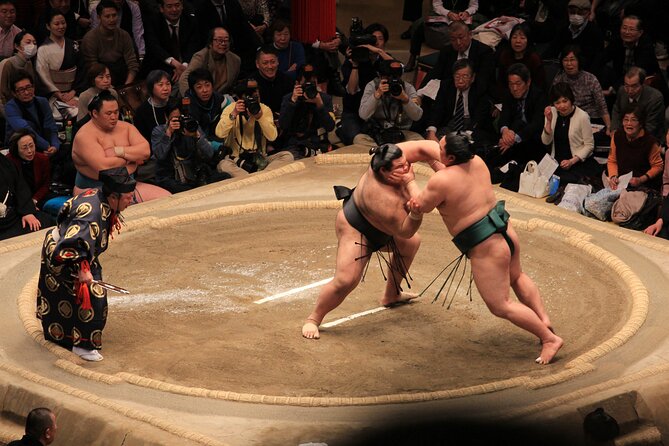
The listed price is $124.26 per person. That is not a cheap arena ticket, so your decision should depend on how much help you want with the sport and how difficult it would be for you to arrange a suitable ticket on your own.
The S Seat is described as the best available chair seating. That is important if comfort and a clear view matter to you. You are not choosing the cheapest possible place and then adding a guide. You are paying for a better chair category, an escorted entry, and explanations of the competition and setting.
Still, the price includes a service premium. One person who had attended a similar experience felt it was expensive compared with the cost of a regular tournament ticket, even while considering the guided experience worthwhile. That is a fair way to judge it. If you already understand sumo and can obtain a regular ticket easily, the added cost may not appeal to you.
If you are new to sumo, the calculation changes. The guide explains the divisions, ranks, officials, traditional dress, and kimarite in one visit. That can save you from spending part of the tournament trying to work out what is happening.
The tour has a maximum of 10 people, which supports a more personal format than a large bus excursion. The group size does not guarantee constant one-to-one attention, but it should make questions more practical, especially when the guide is moving the group through the venue and museum.
January 2026 Dates and Seat Choices
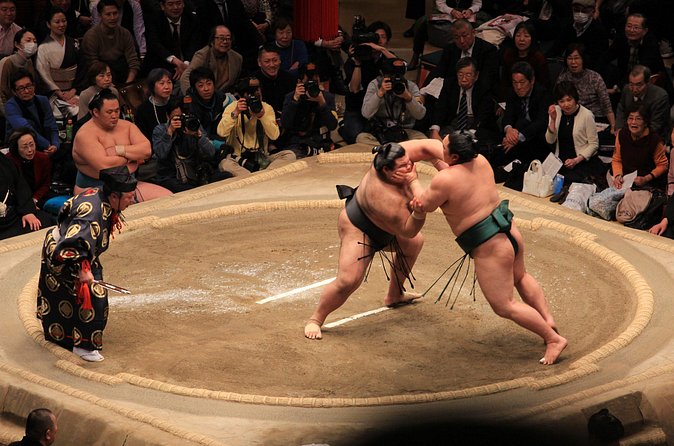
The January 2026 Grand Sumo Tournament is the focus of this experience. The B Seat dates currently listed are January 11, 13, 15, 21, 22, and 23.
The January 2026 dates for S Seat and A Seat are to be released. That creates an important booking consideration. If you want the best available chair seating, you may need to wait for the S Seat date information rather than assuming every date is already open.
The price shown is for the experience as offered, but seat-specific availability can affect your choice. Confirmation is sent within 48 hours of booking, subject to availability. That wording means your reservation is not fully settled until the provider confirms it.
For a fixed Tokyo itinerary, check the tournament date carefully before committing other plans. The tour begins at 2:15 pm and lasts approximately three hours and 45 minutes, ending back at the meeting point. The finish time is therefore approximate, not a guaranteed minute-by-minute departure.
What the Small Group Adds
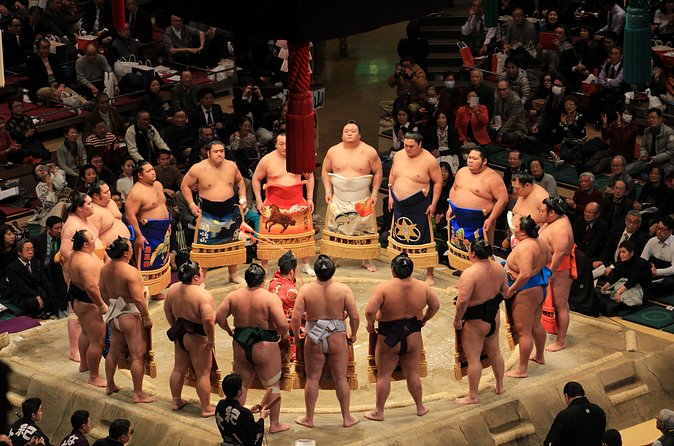
A group limit of 10 is one of the stronger features here. Sumo has many details that invite questions: why a certain bout belongs to one division, how a rank is determined, what the referee is doing, or why a match ended with a particular technique.
In a large group, those questions can be difficult to ask. A small group gives the guide more room to respond and lets you stay close during the venue and museum portions.
The previous guide examples also suggest a personal touch. Jeff was described as friendly and clear, and Yuki prepared extra information about the wrestlers for one group. That kind of preparation can make the tournament easier to follow, especially if you have never watched professional sumo before.
There is one limit to keep in mind: a small group does not change the nature of the event. You are still attending a live tournament with a set program. The guide can interpret what happens, but cannot control how long a particular bout lasts or which wrestlers appear in the most exciting matches.
Food, Facilities, and What Is Not Listed
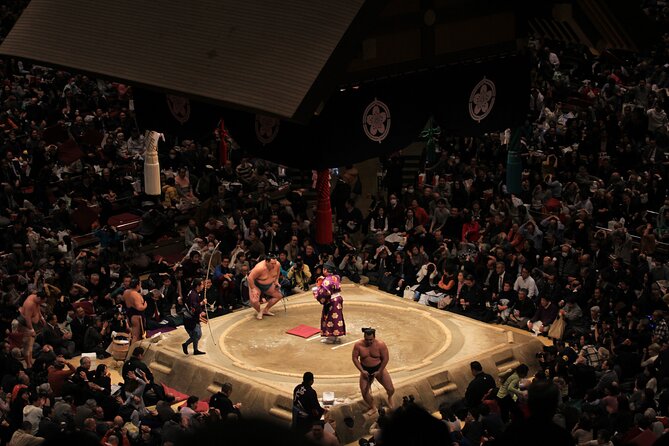
A chanko meal was enjoyed during an earlier version of the experience. Chanko is closely linked with sumo culture, and it can add another layer to the day. However, the January 2026 tour details provided here do not list a meal as an included feature.
You should therefore avoid booking this tour on the assumption that chanko is part of the $124.26 price. If food is important to your plan, confirm the current inclusions before paying.
The listed features focus on the reserved seat, guide, Kokugikan, Sumo Museum, and explanations of the sport. That is the clearest way to judge the experience: it is a guided tournament visit with cultural interpretation, not a food tour or a broad sightseeing circuit around Tokyo.
Who Will Get the Most From This Tour
I would recommend this experience most strongly if you fit one of these descriptions:
- You are attending sumo for the first time and want the rules explained as the matches unfold.
- You enjoy Japanese culture and want to understand the clothing, etiquette, architecture, and ceremony around the sport.
- You value a reserved seat and prefer not to manage the venue on your own.
- You are visiting Tokyo with limited time and want one focused afternoon activity.
- You want the best available chair seating rather than a lower-priced option.
- You like small groups and the chance to ask a guide direct questions.
It may be less suitable if you already follow professional sumo closely and only want the lowest possible ticket price. In that case, the guide’s interpretation may add less value, and the premium could feel high.
It is also not ideal if your schedule cannot handle a fixed 2:15 pm meeting time. The activity begins at Ryogoku Station and ends there, so you need to build the rest of your day around an afternoon commitment of nearly four hours.
Booking, Cancellation, and Practical Details
Admission applies to anyone aged 4 and above. The tour is near public transportation, and most people can participate according to the stated conditions.
Free cancellation is available if you cancel at least 24 hours before the local start time. Changes or cancellations made within 24 hours are not accepted for a refund. The experience may also be canceled if minimum participation is not met or if poor weather affects the operation, in which case you are offered another date or a full refund.
Confirmation arrives within 48 hours, subject to availability. Because S Seat and A Seat dates are still to be released, check the confirmed seat type and date before you finalize your Tokyo plans.
Should You Book the January 2026 Sumo Tour?
Book it if you want more than a seat. The real benefit is the guide’s explanation of ranks, officials, etiquette, clothing, divisions, and winning techniques while you watch the tournament from a strong chair position.
At $124.26, this is a premium experience, and that price deserves an honest comparison with a regular ticket. For a first sumo visit, the added structure can be worth paying for, especially in a small group of no more than 10. For an experienced sumo follower on a tight budget, buying a regular ticket may make more sense.
If you choose this tour, confirm the January date, seat category, and current inclusions before booking. For a first-time visitor who wants the drama of the Kokugikan without spending the afternoon guessing at the rules, it is a sensible and well-focused choice.
FAQ
Where does the tour meet?
The meeting point is Ryogoku Station at 1-chome-3-20 Yokoami, Sumida City, Tokyo 130-0015, Japan.
What time does the tour start?
The tour starts at 2:15 pm.
How long does the experience last?
The approximate duration is 3 hours and 45 minutes.
Where does the tour finish?
The activity ends back at the meeting point at Ryogoku Station.
What seat is included?
The S Seat option provides the best available chair seating. The listed B Seat dates are January 11, 13, 15, 21, 22, and 23, 2026. S Seat and A Seat dates are to be released.
How many people can join the tour?
The maximum group size is 10 people.
Is admission required for children?
An admission fee applies to anyone aged 4 and above.
When will my booking be confirmed?
Confirmation is sent within 48 hours of booking, subject to availability.
Can I cancel for a refund?
Yes. You can cancel for a full refund up to 24 hours before the experience start time. Cancellations or changes made less than 24 hours before the start time are not refunded or accepted.
Newly reviewed around Tokyo
- Tokyo Asakusa:Calligraphy & Make T-shirt Activity★ 5.0 · 62 reviews
- Intercity Shuttle, Tokyo to Haneda /Narita /Yokohama /Makuhari★ 5.0 · 5 reviews
- 1 Hour Travel around Tokyo with a Professional Photographer★ 5.0 · 3 reviews
- Travel Tokyo with Your Own Personal Photographer★ 5.0 · 43 reviews
- Train in Samurai Swordsmanship and Defeat the Demon in Tokyo★ 5.0 · 5 reviews
- Shuttle Van 6hr Tokyo Tour to-and-from Tokyo, Yokohama and Narita★ 5.0 · 9 reviews
- Kickboxing & Body Training with EX-Pro Fighter★ 5.0 · 4 reviews
- Traditional Japanese Knife Sharpening Class★ 5.0 · 18 reviews
Tokyo Sumo Experiences, compared.
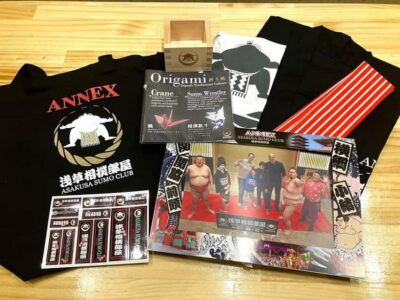
Tokyo Shinjuku Sumo Show & Experience with Photo
Read our review →
Luxury Sumo Show Experience & Japanese cuisine & Drink
Read our review →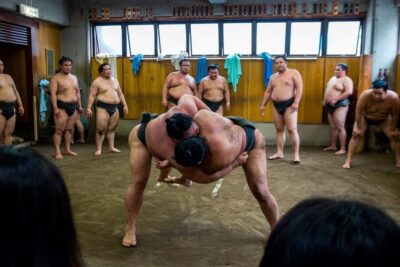
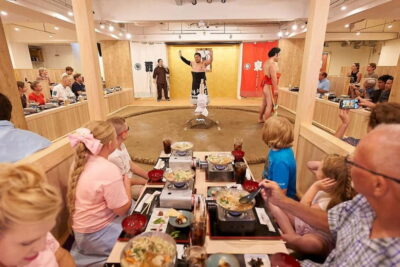
Tokyo Sumo Experience: Chanko & Mochi with a Former Pro
Read our review →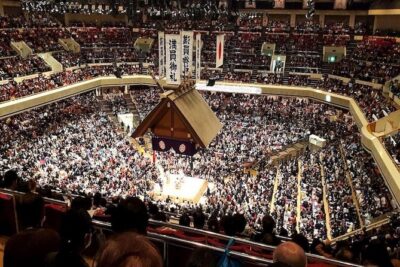
Ultimate Sumo Tournament: Tokyo, Osaka, Nagoya, Fukuoka
Read our review →Browse the lists this tour appears in