
Reviewed · TOKYO WALKING TOURS
Gotokuji and Setagaya Walking Tour: Home of the Lucky Cat Statue
Gotokuji Temple is famous for its rows of white lucky cat statues, but this private walk shows you the neighborhood behind the photo stop. You’ll visit Setagaya Hachimangu, Shoin Shrine, castle ruins, and a local shopping street, with guides such as Mitsuko, Yumi, Emiko, and Yoshimi bringing the area to life.
I like the personal format and the useful local touch: your guide explains shrine manners, helps you navigate the Setagaya Line, and points out places to eat after the tour. I also like the included drink, worth up to ¥800, which gives the walk a relaxed pause. The main drawback is pace: mountain paths and nearly three and a half hours on foot call for comfortable shoes and moderate fitness.
Key points to know before you book
- Hundreds of lucky cats at Gotokuji Temple: Learn how the familiar beckoning cat became linked with this Setagaya temple.
- A private half-day walk: Only your group joins, so you can ask questions and spend more time on subjects that interest you.
- Four different sides of Setagaya: The route combines shrines, temple grounds, castle remains, a shopping street, and a local train line.
- A drink break is included: Stop at Shoin Jinja Shopping Street for coffee or tea worth up to ¥800.
- Expect hills and walking: The route includes mountain paths, so easy walking shoes are essential.
- Good for repeat visitors to Tokyo: This is a quieter neighborhood outing rather than a greatest-hits tour of central Tokyo.
Why the lucky cats are only the beginning
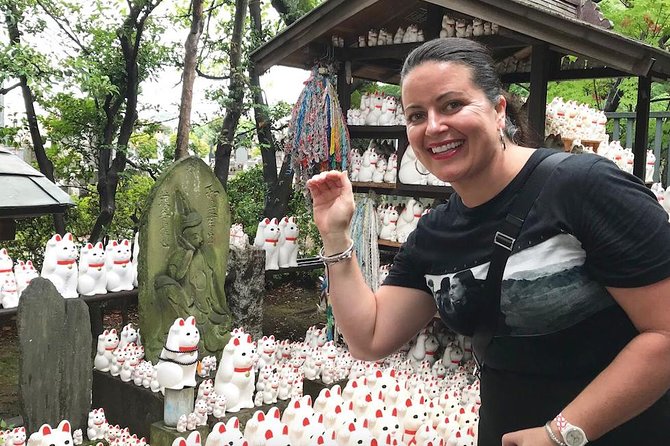
The familiar Japanese lucky cat, with one paw raised in greeting, is often called a maneki-neko. Gotokuji Temple is closely tied to the story behind this figure, and the temple grounds display hundreds of the small white statues together.
That sight is the tour’s main draw, but it works better when you understand the setting. Your guide explains the temple’s connection to the lucky cat tradition instead of leaving you with a quick photograph and a name to remember. You also get a broader look at Setagaya, a part of Tokyo that feels more residential and local than the city’s packed central districts.
I like this balance. You get a memorable symbol of Japan, but you also see how shrines, neighborhood shops, old political sites, and local transport fit into daily life. This is not a bus tour where you watch Setagaya pass behind glass. You walk from place to place and have time to notice the small changes between temple grounds, streets, and station areas.
The format is private, which matters here. With only your own group, you can ask why a shrine uses a certain ritual, pause for photographs, or request food and sightseeing suggestions for later. The experience is still structured, but it does not have the fixed feel of a large group moving on a timer.
More Tokyo walking tours:
- Tokyo Tsukiji Fish Market Food and Culture Walking Tour
★ 5.0 · 3,184 reviews - Tokyo: Imperial Palace and Shogun Historical Walking Tour
★ 5.0 · 2,251 reviews - Tokyo: Shinjuku Local Bar and Izakaya Guided Walking Tour
★ 4.9 · 1,794 reviews
Meeting at Gotokuji Station at 10:00
The tour starts at Gotokuji Station at 10:00 in the morning. You make your own way there, so allow time to navigate Tokyo’s rail system and find the correct station exit. The listed meeting address is 1 Chome-43 Gotokuji, Setagaya City.
Starting at the station makes practical sense. You meet the guide in the neighborhood you are about to explore, rather than spending the first part of the tour on a long transfer from a hotel. It also gives the guide a clear point from which to explain the local area.
The walk ends at Shoin-jinja-mae Station, not back at Gotokuji Station. That one-way design saves you from retracing your steps and leaves you near the Tokyu Setagaya Line. You can continue by train after the tour, or use the end point as a base for more exploring.
Hotel pickup is available for an extra ¥5,000 per group for hotels in the Tokyo and Yokohama area. It is not part of the standard price, and transportation to and from the attractions is also excluded. For most independent visitors, meeting at the station is the better value.
Setagaya Hachimangu and its unusual sumo ring
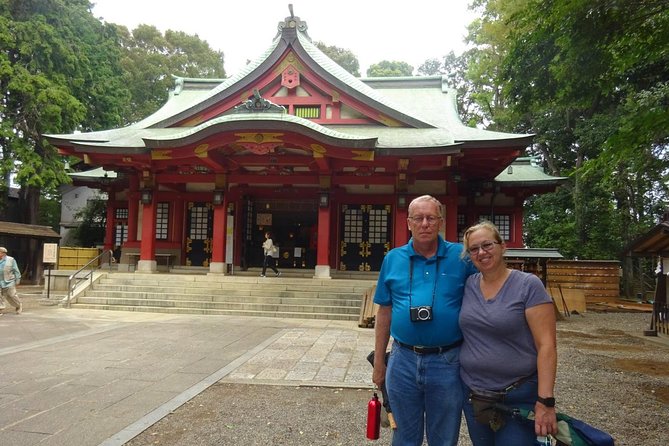
The first formal stop is Setagaya Hachimangu, one of the larger shrines in Setagaya Ward. The visit lasts about 20 minutes and admission is free.
The striking detail here is the dohyo, or sumo ring, set up within the shrine grounds. During the autumn matsuri, the shrine hosts honosumo, a sumo event offered at the shrine. Even if your visit does not coincide with the festival, the ring gives the site a strong local character and offers a useful reminder that shrines are not only quiet places for individual prayer.
Your guide can also show you how to approach a shrine, purify yourself, and pray properly. This practical instruction is one of the tour’s best features. Japanese shrine customs can seem simple until you are standing in front of the water basin or prayer hall wondering what to do next. A short explanation helps you participate respectfully rather than copy the person ahead of you.
Twenty minutes is enough for an introduction, but not for a long, unhurried visit. If you like taking many photographs or reading every sign, you may want to keep moving efficiently. The stop works best as part of the larger route, not as a stand-alone shrine visit.
Gotokuji Temple and the rows of white cats
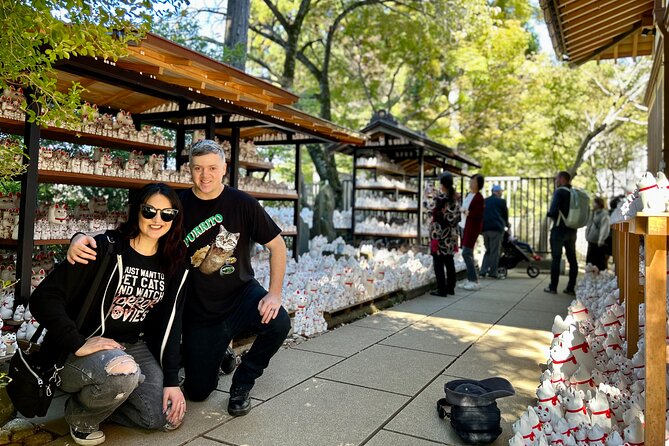
Gotokuji Temple receives about 35 minutes, with no admission charge. It began as the Kotokuin hermitage, built by Kira Masatada, who built Setagaya Castle in 1480. The site was first connected with the Rinzai school and became a Soto school temple in 1584.
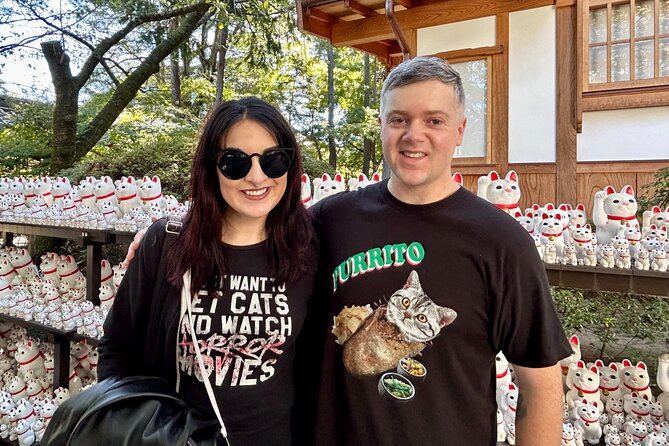
Those dates give the temple a real sense of age, but the lucky cats are what most people remember. You will see numerous small statues gathered together, creating one of the most distinctive temple scenes in Tokyo. The cats are not scattered randomly. Their concentration in one place makes the connection between the temple and the good-fortune figure easy to understand at a glance.
The guide’s explanation is important because the temple can otherwise become a quick photo stop. Yumi, one of the guides associated with this experience, is specifically praised for explaining the origin of the lucky cat and the proper rituals at shrines. Guides such as Mitsuko, Emiko, and Yoshimi have also been described as friendly, attentive, and helpful with local navigation.
The 35-minute visit is fairly brisk. It should allow time to view the statues, hear the main story, and look around the grounds, but it is not designed for extended quiet contemplation. If the cats are your sole reason for booking, you may wish the stop were longer. If you want the cats within a wider neighborhood tour, the timing feels more sensible.
Be respectful with your camera. The statues are the visual center of the temple, but this remains a religious site. Your guide can help you understand the difference between taking a photograph and treating the grounds like a backdrop.
A completely different kind of day in Tokyo:
- Mt Fuji and Hakone 1-Day Bus Tour Return by Bullet Train
★ 5.0 · 26,383 reviews - 1-Day Tokyo Bus Tour
★ 5.0 · 14,250 reviews - Tokyo: teamLab Planets TOKYO Digital Art Museum Entry Ticket
★ 4.6 · 9,779 reviews - Mt Fuji & Hakone Cruise, Drum Show Bullet Train 1 Day from Tokyo
★ 4.0 · 7,413 reviews
Shoin Shrine and the story of Yoshida Shoin
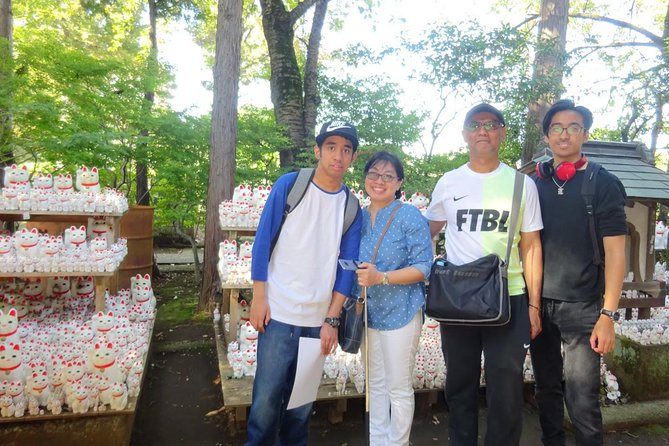
Shoin Shrine, or Shoinjinja, receives about 25 minutes. It was founded in 1882 with Yoshida Shoin at its center. The precinct includes tombs connected with the children of the Shoka Village school, including Yoshida Shoin, along with a reproduced building connected to that school.
This stop shifts the focus from folk tradition to modern Japanese history. Your guide can place Yoshida Shoin and the school in context, helping you see why the shrine was founded and what its memorials represent. For you, that makes the walk more than a sequence of attractive religious sites.
The shrine also gives the tour a useful rhythm. Gotokuji is visually dominated by the lucky cats. Shoin Shrine asks you to pay closer attention to people, education, and political memory. Moving between the two keeps the morning from becoming repetitive.
Again, 25 minutes is an introduction rather than a full study visit. If you already have a strong interest in Yoshida Shoin, you may want to ask your guide for extra detail or return later. Because this is a private tour, you have a better chance of shaping the conversation around your interests than you would on a large shared walk.
Setagaya Castle Ruins Park and the local streets
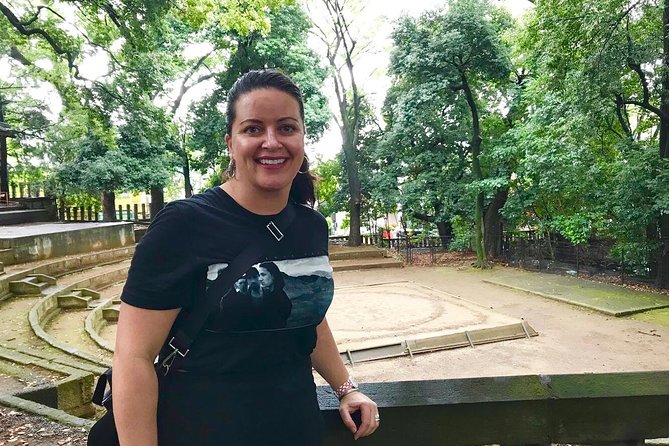
The route also includes Setagaya Castle Ruins Park, linked to the castle built by Kira Masatada. The remains do not offer the grand stone walls or towering gates you might expect from Japan’s famous castles. Their value is quieter: they help you picture the older Setagaya settlement and connect the local history to Gotokuji Temple.
You will also pass the landmark of Sangenjaya in Setagaya. The supplied schedule gives no fixed duration for this part of the walk, so expect the guide to treat it as a route feature rather than a long formal stop. This is one reason the tour is best for people who like moving through a neighborhood, not only checking off major monuments.
I like this part because it adds scale. You see how a temple and shrine sit within an ordinary Tokyo district, with shopping streets and commuter trains nearby. The area is not presented as a sealed historic park. It remains part of the city people use every day.
The route includes mountain paths, and the activity notes ask you to wear shoes that are easy to walk in. Take that seriously. You do not need specialist hiking equipment, but sandals or stiff fashion shoes could make the morning less pleasant. Moderate physical fitness is recommended.
A drink at Shoin Jinja Shopping Street
The included drink is a small feature, but it improves the experience. At Shoin Jinja Shopping Street, you receive one coffee or tea worth up to ¥800.
This is not a meal, so plan lunch separately. The break gives you a chance to sit or pause, collect your thoughts, and ask the guide what to eat or see after the tour. Guides also provide suggestions for the neighborhood beyond the official route, which is useful if you want to turn a three-and-a-half-hour visit into a longer Setagaya day.
I especially like that the drink is tied to a local shopping street rather than a generic stop near a major tourist attraction. You get a glimpse of where residents gather and shop. The street is part of the neighborhood’s everyday life, and that makes the break more meaningful than a packaged snack handed out on a coach.
The allowance is capped at ¥800, so anything beyond that is your responsibility. Lunch is not included, and you should not book this expecting a food tour.
Riding the Tokyu Setagaya Line after the walk
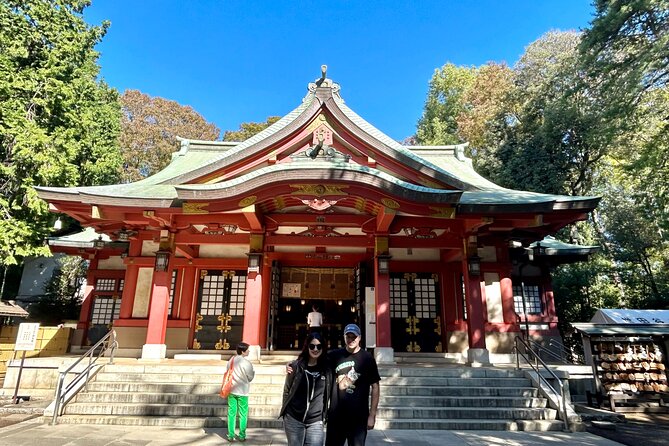
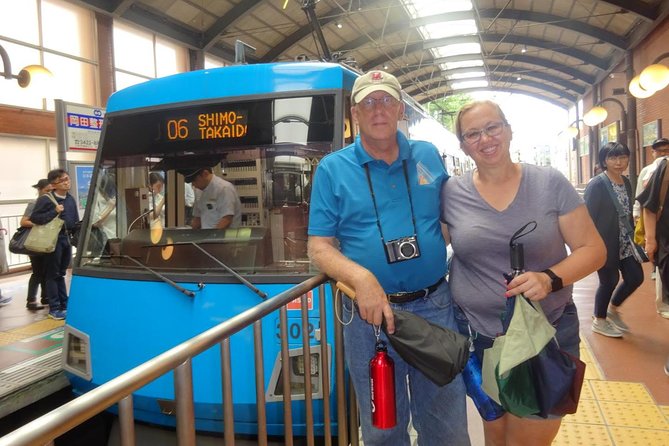
The tour includes a short introduction to the Tokyu Setagaya Line, with about 10 minutes listed for the stop. You can take this local line after the tour, surrounded by people using it for ordinary city journeys.
Transportation during the tour is not included, so the train ride itself is not part of the paid package. Think of this stop as orientation and practical advice. Your guide can help you understand how the local line fits into the neighborhood and where to go next from Shoin-jinja-mae Station.
This is particularly useful if you are less confident with Tokyo’s smaller rail lines. The end point is not a major central station, so having a clear sense of your next move will save time. Ask your guide for help before the tour ends, especially if you want to continue shopping, find lunch, or return to another part of Tokyo.
What the ¥84.70 price really buys you
At $84.70 per person, the tour is not the cheapest way to visit Gotokuji Temple. You can reach the area on your own and enter the temple and shrines without paying admission. The price makes more sense if you value explanation, navigation, and a private guide for your group.
You are paying for about three and a half hours of guided walking, a local drink worth up to ¥800, and help connecting several places that would otherwise require your own research. The private format is the key value. A guide can explain shrine etiquette, answer questions about the lucky cat, suggest food, and adjust the discussion to your interests.
Group discounts may improve the per-person cost for a larger party. Hotel pickup adds ¥5,000 per group, and tour extensions cost ¥5,000 per group, per hour, payable in cash. Since the standard route already lasts a good part of the morning, I would only add time if you have a specific interest or need a slower pace.
The tour is booked an average of seven days ahead, so I would not leave it until the last minute if the date matters to you. Confirmation is sent within 48 hours, subject to availability.
Who will get the most from this walk
I would choose this experience if you have already seen Tokyo’s main districts and want a quieter outing with a clear local focus. It also suits first-time visitors who want an introduction to shrine behavior and neighborhood transport without tackling the city alone.
It is a good match for:
- Couples, families, or friends who want a private guide
- People interested in Japanese religious customs
- Anyone curious about the origin of lucky cat statues
- Repeat visitors looking beyond central Tokyo
- Visitors who appreciate local shopping streets and ordinary train lines
- Small groups that can share the hotel pickup or extension fee
I would think twice if you dislike walking, want a full food experience, or expect large castle ruins and lengthy temple visits. The route has several stops, but most are brief. The tour gives you context and variety rather than hours at one monument.
Service animals are allowed, and the route is near public transportation. Still, the mountain paths and extended walking mean you should judge the physical demands honestly.
Should you book the Gotokuji walk?
Book it if you want the lucky cats with a fuller understanding of Setagaya. The temple is the headline, but the best value comes from the combination of Gotokuji, Setagaya Hachimangu, Shoin Shrine, castle remains, the shopping street, and the local train line.
The strongest reason to choose this tour is the guide. Names associated with the experience include Mitsuko, Yumi, Emiko, and Yoshimi, and the guiding style centers on clear explanations, shrine customs, friendly conversation, and practical help getting around. You cannot select a particular guide from the information provided, so treat those names as examples rather than a guarantee.
Skip it if you only want a quick photograph of the cat statues. You can visit Gotokuji independently for less money. But if you want to understand the symbol, walk through a residential part of Tokyo, and finish with useful ideas for the rest of your day, the private half-day format earns its price.
Free cancellation is available when you cancel at least 24 hours before the 10:00 start time. Changes or cancellations inside that window are not refunded.
FAQ
Where does the tour start?
The tour starts at Gotokuji Station in Setagaya at 10:00. The listed meeting address is 1 Chome-43 Gotokuji, Setagaya City, Tokyo 154-0021, Japan.
Where does the tour end?
The tour ends at Shoin-jinja-mae Station, at 4-chōme-21-16 Wakabayashi, Setagaya City, Tokyo 154-0023, Japan.
How long does the walking tour last?
The tour lasts approximately three hours and 30 minutes.
Is the tour private?
Yes. Only your group participates in the activity.
Is a drink included?
Yes. One coffee or tea is included at Shoin Jinja Shopping Street, up to a value of ¥800.
Are temple and shrine admission fees included?
The listed stops have no admission fee. The tour price includes a professional guide, but transportation to and from the attractions is not included.
What should I wear?
Wear shoes that are easy to walk in. The route includes mountain paths, and a moderate level of physical fitness is recommended.
Newly reviewed around Tokyo
- Tokyo Asakusa:Calligraphy & Make T-shirt Activity★ 5.0 · 62 reviews
- Intercity Shuttle, Tokyo to Haneda /Narita /Yokohama /Makuhari★ 5.0 · 5 reviews
- 1 Hour Travel around Tokyo with a Professional Photographer★ 5.0 · 3 reviews
- Travel Tokyo with Your Own Personal Photographer★ 5.0 · 43 reviews
- Train in Samurai Swordsmanship and Defeat the Demon in Tokyo★ 5.0 · 5 reviews
- Shuttle Van 6hr Tokyo Tour to-and-from Tokyo, Yokohama and Narita★ 5.0 · 9 reviews
- Kickboxing & Body Training with EX-Pro Fighter★ 5.0 · 4 reviews
- Traditional Japanese Knife Sharpening Class★ 5.0 · 18 reviews
Tokyo Walking Tours, compared.
Tokyo Tsukiji Fish Market Food and Culture Walking Tour
Read our review →
Imperial Palace and Shogun Historical Walking Tour
Read our review →
Shinjuku Local Bar and Izakaya Guided Walking Tour
Read our review →
Asakusa Walking Tour with Sensoji Temple Visit
Read our review →
Tokyo Castle & Imperial PalaceーShogun Walking Tour
Read our review →
Browse the lists this tour appears in