
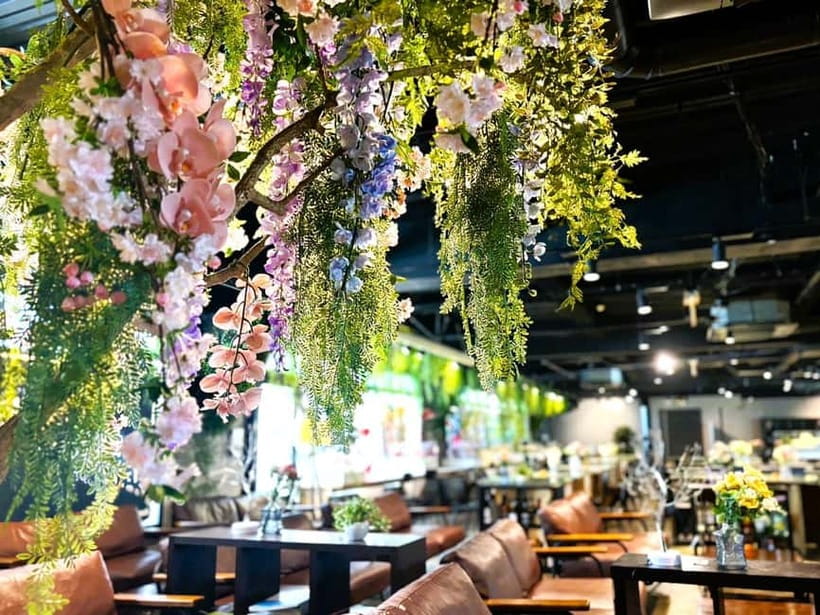
Reviewed · TOKYO TRADITIONAL CRAFT WORKSHOPS
Experience Crafting a Flower-Adorned Mini Japanese Garden
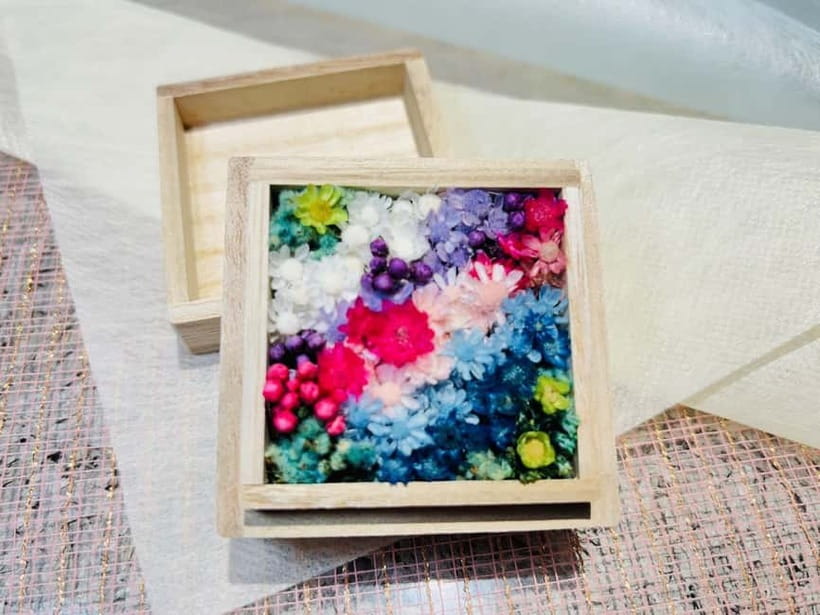
The best part of this experience is that you make a tiny Japanese garden rather than simply buying a souvenir. You arrange preserved and dried flowers inside a small box, creating a diorama-like scene that can later sit on a shelf or desk. I like the calm pace and the freedom to shape the garden your own way.
I also like the small group of up to 10 people, which keeps the activity personal without making it feel overly formal. The English-speaking instructor offers ideas and help, and the included soft drink gives you a pleasant cafe break. The main consideration is that lunch, dinner, extra drinks, and transport are not included, so this works best as a focused 90-minute activity rather than a full afternoon outing.
Key points at a glance
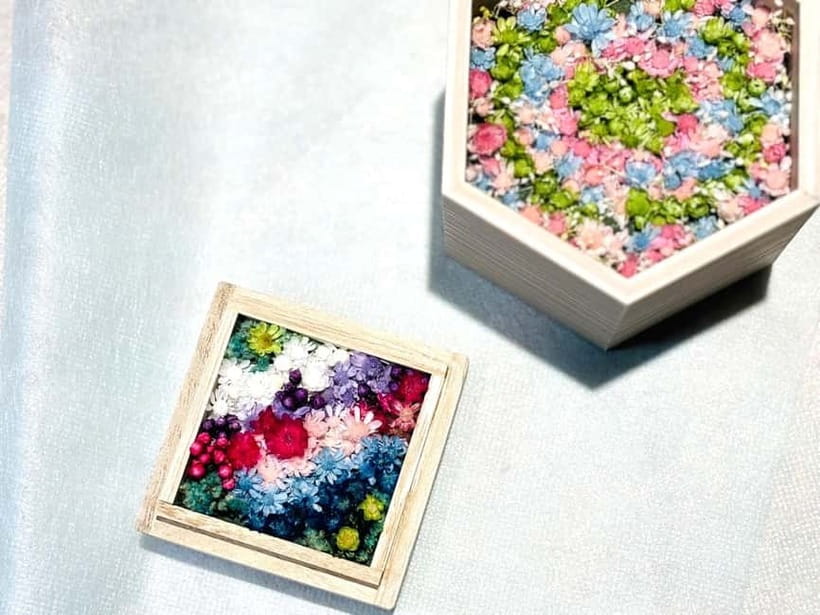
- Make a Japanese garden in a small box: Arrange preserved and dried flowers into a miniature scene with a diorama feel.
- A calm cafe setting: You have plenty of time to work slowly, with one soft drink included in the $45 price.
- Good for beginners: The instructor explains the materials and method before you start, so no previous craft experience is needed.
- A personal souvenir: Since you choose the flower arrangement yourself, your finished piece will be different from every other one.
- Easy Shinjuku access: Sumika is a one-minute walk from Tokyo Metro Shinjuku Sanchome Station, Exit E3.
- Optional parfait treat: A past participant specifically enjoyed upgrading for parfaits, so ask about that option if it is available on your date.
Turning flowers into a miniature Japanese garden
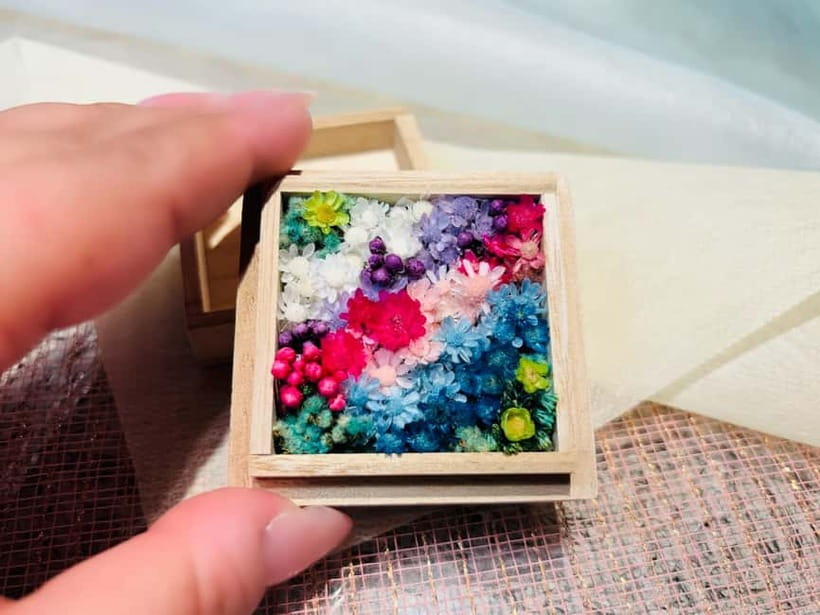
This is a hands-on craft session built around a simple idea: use small colorful flowers to create a Japanese-style garden inside a compact container. The result is meant to look like a tiny diorama, with the flowers arranged as a small scene rather than placed randomly in a vase.
That difference matters. You are not just filling a box with pretty materials. You are making decisions about color, shape, spacing, and balance. A small piece can feel surprisingly personal because every flower ends up where you place it.
The flowers are preserved and dried, so the finished garden is designed to last as an interior decoration. You can display it at home as a reminder of Japan without needing a large suitcase or special storage. It is a practical souvenir for anyone who prefers something handmade to a mass-produced trinket.
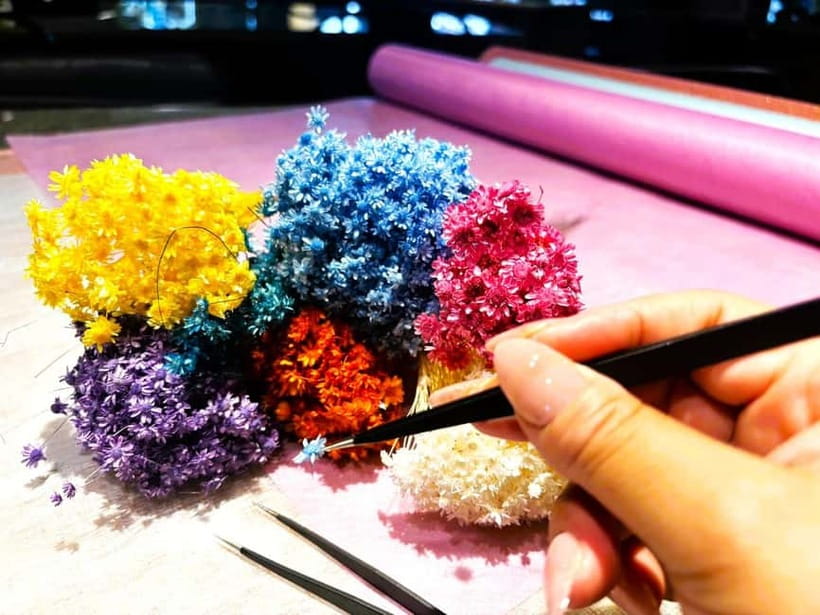
The activity begins with an explanation of how to make the garden and an introduction to the available ingredients. Once you have the materials, you start arranging them in the container. The instructions are aimed at first-time makers, and you can ask the English-speaking instructor for ideas while you work.
I like that the format leaves room for personal taste. You might favor a neat, restrained arrangement, while someone else in your group may prefer a fuller burst of color. There is no single correct result. The goal is to make a garden that feels like yours.
More Tokyo craft workshops:
- Tokyo Shinjuku Chopsticks Making Class
★ 5.0 · 1,763 reviews - Chopstick Making Workshop in Ginza
★ 4.8 · 1,366 reviews - Kintsugi Experience: Art of Golden Joinery in Tokyo
★ 5.0 · 467 reviews
A relaxed 90 minutes at Sumika cafe
The experience takes place at Sumika, a spacious cafe in the Shinjuku area. The setting gives the craft a softer rhythm than a quick workshop squeezed between major sightseeing stops. You sit down, receive your materials, and have time to think before committing to the final arrangement.
The full session lasts 90 minutes. That is enough time to listen to the introduction, arrange the flowers, make adjustments, and finish the piece without needing to rush. If you enjoy careful work, the generous timing is a real benefit. You can pause, compare possible arrangements, and ask for help rather than trying to finish in a frantic last few minutes.
One soft drink is included. Lunch, dinner, bottled drinks, and additional food or beverages are not included, so plan this as a light cafe activity. A past participant praised the parfait option and recommended upgrading for it. That treat is not part of the standard package, but it may be worth asking about when you arrive.
The atmosphere is one of the strongest reasons to book this rather than a faster souvenir-making activity. The people who have praised it most often focus on the kind staff, welcoming instruction, and relaxing feel. Those points line up with the structure of the session: a small group, a seated craft, and enough time to work at leisure.
What the instructor does before you start
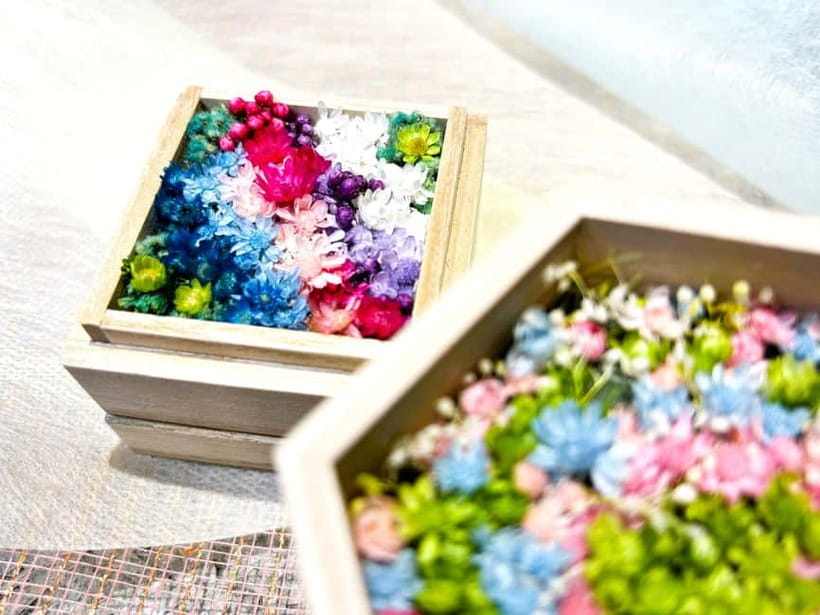
You do not need to arrive knowing anything about flower arranging. The instructor first explains the process, shows you the ingredients, and gives you a basic sense of how to build the garden inside the box.
That introduction is important because miniature work can seem fiddly at first. Small flowers can look very different once they are placed together, and the instructor can suggest ways to create a balanced arrangement. If you are unsure where to begin, ask for a few ideas before you make your first placement.
The instruction is offered in English. The available information does not provide the instructor’s name, so you should not expect to select a particular teacher when booking. What is clear is that the teaching style is friendly and helpful, with guidance available throughout the activity.
I would treat the instructor as a source of suggestions, not someone who dictates the final design. You still make the creative choices. That works well for couples, families, and friends who want to compare their finished gardens at the end.
Choosing flowers, colors, and the shape of your scene
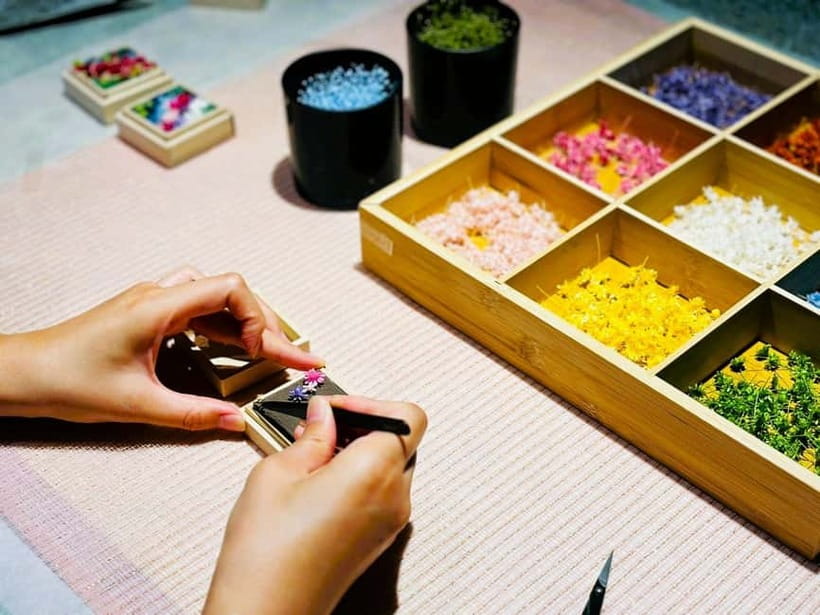
Once the materials are ready, the central part of the experience begins. You arrange small preserved and dried flowers in the container, building a Japanese-style garden with a miniature, display-friendly look.
The small scale is both the charm and the main challenge. You need to think about how the flowers work together in a limited space. A few strong colors may create a cleaner result than trying to use everything at once. The instructor can help if your arrangement feels crowded or unbalanced.
You might also find that your first idea changes as you work. That is normal in a craft session. A flower that looks ordinary on the table may become the main feature once it is placed beside smaller blooms. The 90-minute schedule gives you time to move pieces around and test different layouts.
This is also where the souvenir becomes personal. A shop-bought item can remind you of Japan, but it does not show your own choices. Here, the final box reflects your color preferences, patience, and sense of composition. Even people working from the same selection of materials should end with noticeably different gardens.
For families, the activity offers a quiet change of pace from crowded city sightseeing. For couples or friends, it gives you something to do side by side without needing to talk constantly. Solo visitors can enjoy the same relaxed focus and leave with a finished object.
A completely different kind of day in Tokyo:
- Mt Fuji and Hakone 1-Day Bus Tour Return by Bullet Train
★ 5.0 · 26,383 reviews - 1-Day Tokyo Bus Tour
★ 5.0 · 14,250 reviews - Tokyo: teamLab Planets TOKYO Digital Art Museum Entry Ticket
★ 4.6 · 9,779 reviews - Mt Fuji & Hakone Cruise, Drum Show Bullet Train 1 Day from Tokyo
★ 4.0 · 7,413 reviews
Why the finished box works as a souvenir

Many Japanese souvenirs are easy to pack but quickly disappear into a drawer. This one is meant to be displayed. The small flower garden can work as interior decoration on a desk, shelf, or another small surface.
Its compact format makes it practical for a city trip. You are not carrying home a large framed piece or a fragile full-size floral arrangement. The exact size and packing method are not specified, so if you are concerned about luggage space, ask the staff how the finished box is protected for the journey.
The flowers are preserved or dried, which means the finished garden is made for longer use than a bouquet of fresh flowers. Still, you should handle the piece with care. The materials are delicate by nature, and the activity information does not promise unlimited durability or special travel packaging.
I see the strongest value in the combination of memory and function. You spend part of your Japan trip making the item, then use it at home. That gives the souvenir a story as well as a decorative purpose.
Is $45 a fair price?
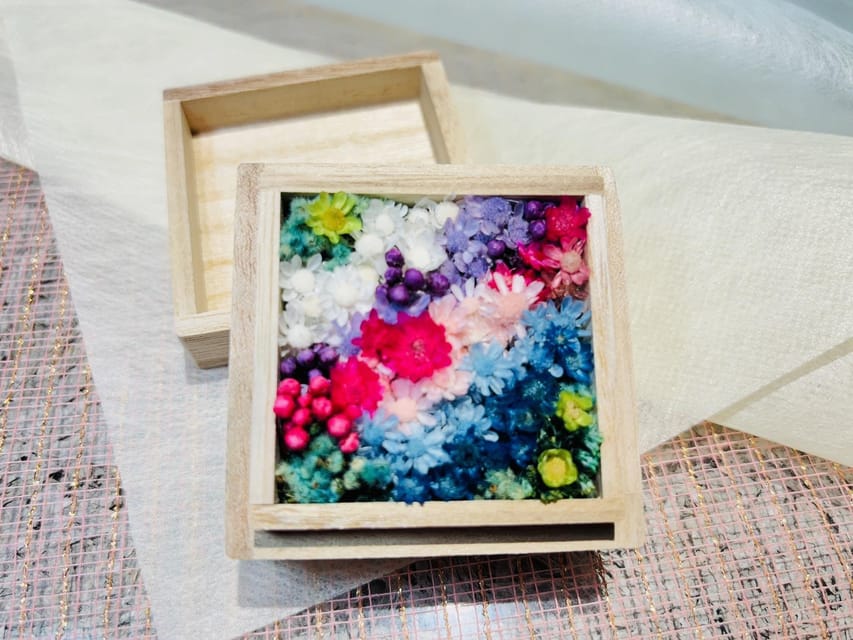
At $45 per person, the price includes the 90-minute activity, the flower materials, all fees and taxes, and one soft drink. It does not include transportation to the meeting point, meals, extra drinks, or the optional parfait upgrade.
I consider that a reasonable price if you want a guided creative activity in central Tokyo. You are paying for more than the materials. The cost also covers the cafe setting, English instruction, a small group limited to 10 people, and enough time to make a finished keepsake.
The value is less convincing if you only want a cheap souvenir or if you dislike seated craft activities. In that case, the same $45 could go toward food, an attraction, or several small purchases. This experience earns its price through the time spent making something yourself.
The included drink is a pleasant extra, but it should not be the reason you book. The main value is the completed flower garden and the calm hour and a half spent creating it. If parfaits are available as an upgrade, they may make the cafe visit feel more special, but budget for that separately.
Finding Sumika near Shinjuku Sanchome
The meeting point is convenient for a Tokyo day in Shinjuku. Sumika is a one-minute walk from Tokyo Metro Shinjuku Sanchome Station, Exit E3.
The building can be easy to miss because the first floor is a pachinko parlor. Look for the outside elevator near the pachinko parlor entrance, then go to the fourth floor. The shop is called Sumika.
This is the sort of arrival detail worth saving before you leave your hotel. A pachinko parlor entrance may not look like the cafe you expect, and the outside elevator is the key landmark. The Google Plus Code provided for the location is MPR4+J9 Shinjuku City, Tokyo.
Transportation to the meeting point is not included. You handle your own train or other transport costs, but the short walk from the station keeps the final approach simple. Check the start time when booking because the activity runs for 90 minutes and available starting times can vary.
Who will enjoy this activity most
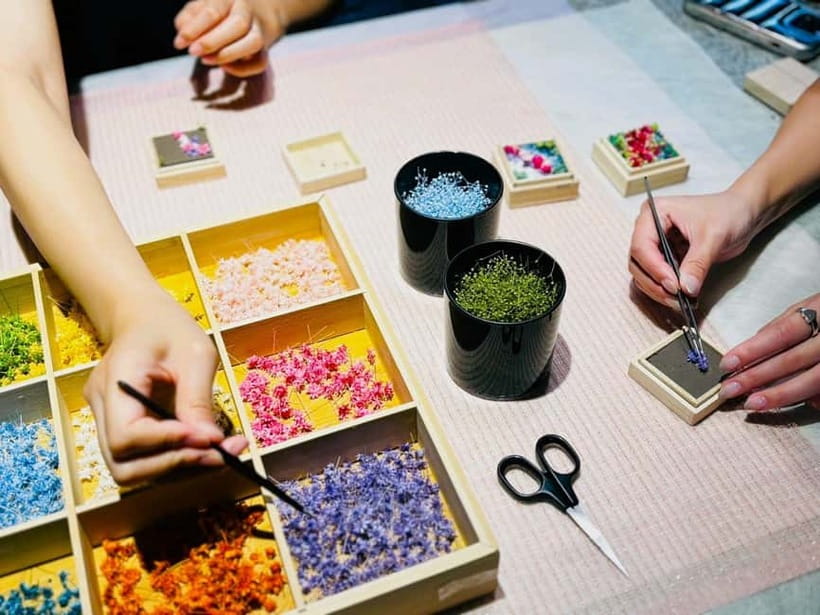
I would recommend this for anyone who wants a slower, creative break during a Tokyo visit. It suits first-time crafters because the process is explained from the beginning, and the instructor can offer ideas as you work.
It is also a good choice for families and friends. The small group limit keeps the session manageable, while the shared table setup gives everyone room to create a different design. Parents should decide for themselves whether the children in their party will enjoy careful flower arranging, since no specific age guidance is provided.
Couples may like the experience because you can make matching or contrasting gardens. One person might choose a simple arrangement while the other makes something more colorful. The finished boxes become a paired souvenir without being identical.
Solo visitors can also fit in comfortably. The activity does not depend on having a partner, and the relaxed pace gives you something absorbing to do in the middle of a busy city schedule.
I would be less likely to suggest it to someone seeking a traditional cultural performance, a formal lesson in Japanese gardening, or a long sightseeing tour. This is a small-scale craft experience in a cafe. Its appeal comes from making and relaxing, not from seeing a famous site or receiving an extensive cultural lecture.
Practical details before you book
The activity is available in English, which makes the instructions accessible if you do not speak Japanese. The group is limited to 10 participants, giving you a better chance to receive help than you would in a large class.
You can cancel up to 24 hours in advance for a full refund. The reserve-now, pay-later option also lets you keep your plans flexible and pay nothing at the time of booking. Check the current availability for starting times before finalizing your day.
Bring your booking details and allow enough time to find the correct elevator. Since the meeting point is inside a building with a pachinko parlor on the first floor, arriving a little early can save confusion.
There is no need to plan a meal around the session based on what is included. The package provides one soft drink, while lunch, dinner, bottled drinks, and other food are separate. If you want the parfait mentioned by a past participant, ask about the upgrade rather than assuming it comes with the standard price.
Should you book the flower garden experience?
Book it if you want a personal souvenir, a calm cafe setting, and a simple creative activity near Shinjuku. The kind instruction, English guidance, small group size, and unhurried 90-minute format make it approachable for beginners.
Skip it if your priority is sightseeing, a formal Japanese gardening lesson, or a food-focused cafe visit. The $45 price is fair for a guided craft with materials and a drink, but it only pays off if you value the making process as much as the finished item.
For most people who enjoy hands-on activities, this is a thoughtful way to spend part of a Tokyo day. You leave with a small flower garden that can decorate your home, and you made it yourself in Japan.
FAQ
Where does the flower garden activity take place?
It takes place at Sumika in Shinjuku City, Tokyo. The meeting point is a one-minute walk from Tokyo Metro Shinjuku Sanchome Station, Exit E3.
How do I find Sumika in the building?
The first floor of the building is a pachinko parlor. Use the outside elevator near the pachinko parlor entrance and go to the fourth floor, where the shop is called Sumika.
How long does the experience last?
The activity lasts 90 minutes. Starting times depend on availability.
What do I make during the activity?
You make a small Japanese-style flower garden that looks like a diorama. You arrange preserved and dried flowers inside a small box.
Is the activity suitable for beginners?
Yes. The instructor explains how to make the garden and introduces the materials before you begin, so previous experience is not required.
Is instruction available in English?
Yes. The instructor and activity language are English.
What is included in the price?
The $45 price includes one soft drink, all fees and taxes, and the flower garden-making activity.
Are food and transportation included?
Transportation to the meeting point is not included. Lunch, dinner, bottled drinks, additional meals, and additional drinks are also not included.
Can I cancel the booking?
You can cancel up to 24 hours in advance for a full refund. The reserve-now, pay-later option allows you to book without paying immediately.
Newly reviewed around Tokyo
- Tokyo Asakusa:Calligraphy & Make T-shirt Activity★ 5.0 · 62 reviews
- Intercity Shuttle, Tokyo to Haneda /Narita /Yokohama /Makuhari★ 5.0 · 5 reviews
- 1 Hour Travel around Tokyo with a Professional Photographer★ 5.0 · 3 reviews
- Travel Tokyo with Your Own Personal Photographer★ 5.0 · 43 reviews
- Train in Samurai Swordsmanship and Defeat the Demon in Tokyo★ 5.0 · 5 reviews
- Shuttle Van 6hr Tokyo Tour to-and-from Tokyo, Yokohama and Narita★ 5.0 · 9 reviews
- Kickboxing & Body Training with EX-Pro Fighter★ 5.0 · 4 reviews
- Traditional Japanese Knife Sharpening Class★ 5.0 · 18 reviews
Tokyo Traditional Craft Workshops, compared.
Kintsugi Experience: Art of Golden Joinery in Tokyo
Read our review →

Authentic Pure Gold Kintsugi Workshop with Master Taku in Tokyo
Read our review →
Private Handmade Ring Workshop Activity in Tokyo Shibuya
Read our review →
Browse the lists this tour appears in