
Reviewed · TOKYO COOKING CLASSES
Ebisu Food Tasting Experience with Japanese Cooking Class
The best part of this Ebisu experience starts before you reach the kitchen. Mari and Ayumi take you through a local Japanese supermarket, explain the ingredients, and then bring those everyday foods into a small home kitchen. You are not just following a recipe. You are seeing how familiar Japanese meals come together.
I like the tiny group size, capped at four people, and the fact that Mari teaches the cooking while Ayumi provides bilingual help. I also like the choice between temaki sushi and a full hambāgu set meal, with a vegetarian option available for the sushi course.
The main consideration is time. Three hours gives you enough room to cook and eat, but not enough for a long neighborhood tour or a broad cooking curriculum. The hambāgu course also has no vegetarian version, so choose carefully when booking.
Key points to know before booking
- A real home-kitchen setting: You cook and eat with a mother-daughter team rather than in a large demonstration classroom.
- Two distinct menus: Choose hand-rolled temaki sushi or Japanese-style hambāgu with potato salad and miso soup.
- English from start to finish: Mari leads the food preparation, while her bilingual daughter Ayumi helps with interpretation and practical guidance.
- The supermarket visit matters: You learn about Japanese ingredients before using them, which makes the cooking feel tied to daily life.
- A maximum of four people: This is a personal experience suited to solo visitors, couples, families, and small groups.
- Local advice comes with the meal: Mari and Ayumi can share Tokyo tips and help with trip planning while you eat together.
Starting near Ebisu Station and Ebisu Garden Place
You meet at the Ebisu Station Police Box, at 1-chōme-5-5 Ebisuminami, Shibuya. The stated itinerary includes Ebisu Garden Place, and the activity returns to the same meeting point at the end.
That meeting point is useful in practical terms. Ebisu is a well-connected Tokyo neighborhood, so you can fit this class into a day of city sightseeing without traveling far outside central Tokyo. Still, allow enough time to find the police box and arrive ready to start. The experience is short, and a late arrival could cut into the supermarket visit or cooking time.
The location also sets the right tone. Ebisu is known as one of Tokyo’s more polished districts, yet this activity shifts your attention away from restaurants and department-store food halls. You get a look at ordinary ingredients and a family kitchen. That contrast is part of the appeal.
More Tokyo cooking classes:
- Tokyo: Roll and Authentic Sushi Making Class in Asakusa
★ 4.9 · 1,957 reviews - Tokyo Shinjuku Chopsticks Making Class
★ 5.0 · 1,763 reviews - Tokyo: Sushi Making Class in a Happi Coat near a Famous Spot
★ 4.9 · 1,377 reviews
The supermarket visit gives the meal a local context
The class begins with a visit to a Japanese supermarket. This is more useful than it may sound. Japanese cooking often depends on ingredients that are familiar in appearance but less obvious in use, and the supermarket is where you can ask about them before standing at the chopping board.
Mari explains essential ingredients, while Ayumi helps in English. You might learn how certain products fit into a home meal, what to look for on packaging, or which items belong in the dishes you will prepare. The details are not listed as a fixed script, so the conversation can respond to your interests.
That flexibility is one of the stronger features here. If you want to know more about a product, you can ask. One account of the experience describes extra help finding particular items in additional stores, which suggests that Ayumi and Mari may take an interest in your food questions beyond the basic route. I would not treat that as a guaranteed extra stop, but it shows the personal nature of the outing.
The supermarket portion also helps you understand the price of the class. You are paying for more than time at a stove. You are getting an introduction to ingredients, food customs, and the practical decisions behind a Japanese meal.
Choose between temaki sushi and Japanese hambāgu
The two course options feel quite different, so your choice should depend on what you want to learn and eat.
Temaki sushi course
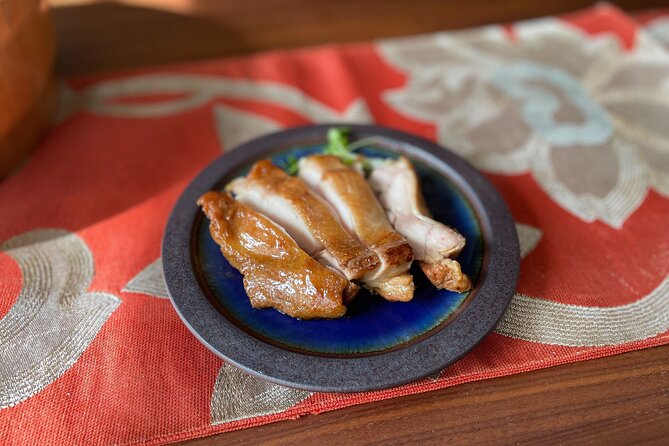
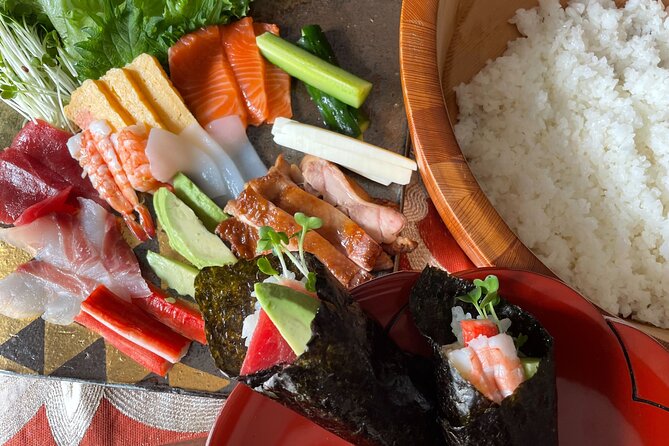
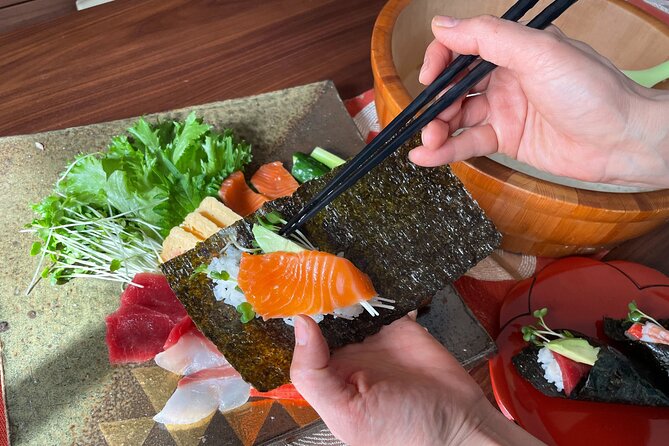
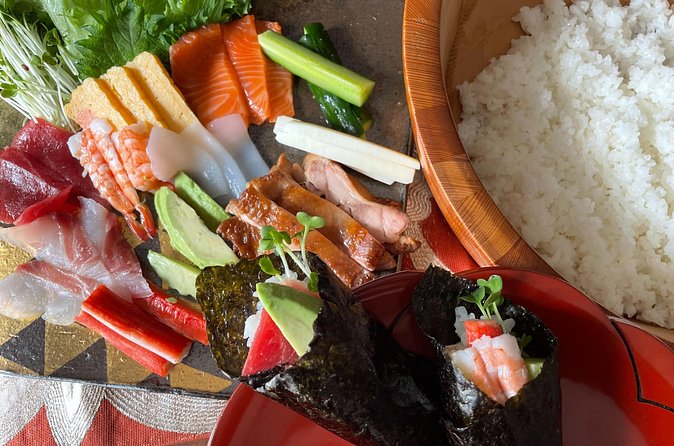
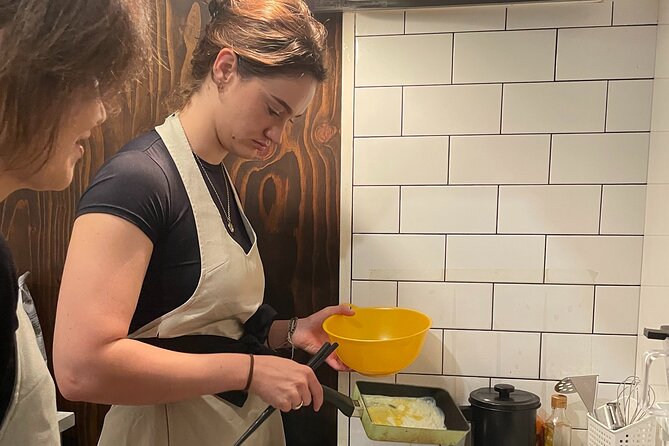
The temaki sushi course includes sushi rice, tamagoyaki, teriyaki chicken, and hand-rolled sushi. You prepare the rice, make Japanese omelet, cook the chicken, and then roll sushi with fresh fish, vegetables, or tofu.
This is the more interactive menu. Hand-rolled sushi lets you assemble your meal at the table, and the filling choices give you room to shape it around your tastes. The inclusion of tofu and vegetables also makes this the right choice if you need a vegetarian option.
Do not expect a formal sushi-chef apprenticeship. The class is about home cooking, not knife mastery or restaurant technique. That is good news for beginners. You can focus on putting together a meal you might reasonably make at home, rather than trying to copy a specialist counter.
The temaki course may also suit families and mixed groups because each person can build rolls with different fillings. The meal has several parts, so it offers a wider look at everyday Japanese food than a single-dish lesson.
A completely different kind of day in Tokyo:
- Mt Fuji and Hakone 1-Day Bus Tour Return by Bullet Train
★ 5.0 · 26,383 reviews - 1-Day Tokyo Bus Tour
★ 5.0 · 14,250 reviews - Tokyo: teamLab Planets TOKYO Digital Art Museum Entry Ticket
★ 4.6 · 9,779 reviews - Mt Fuji & Hakone Cruise, Drum Show Bullet Train 1 Day from Tokyo
★ 4.0 · 7,413 reviews
Japanese hamburger steak course
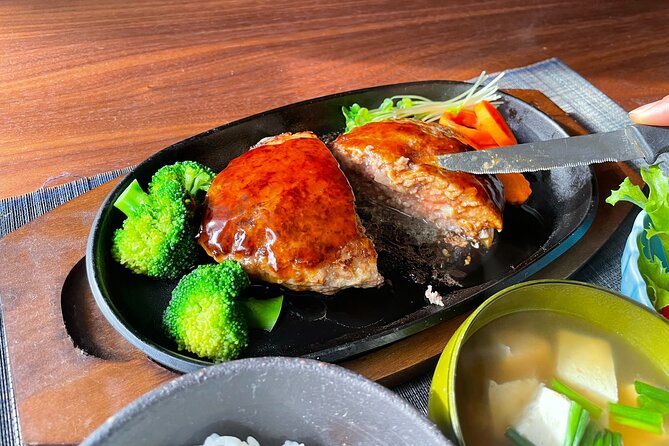
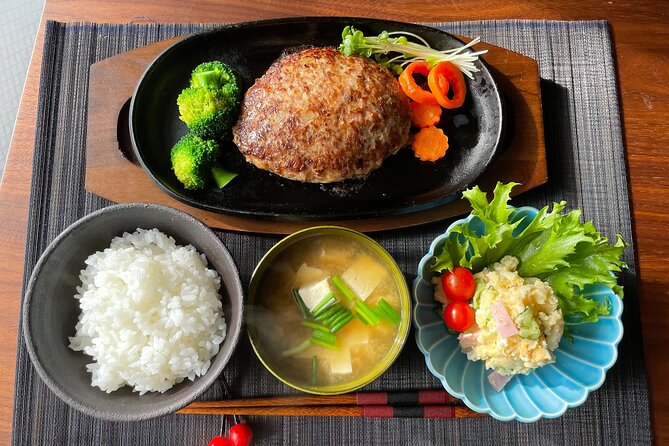
The hambāgu course prepares a Japanese-style hamburger steak with potato salad and miso soup. It is a full set meal, not simply a patty served on its own.
Japanese hambāgu is different from the standard American burger. The emphasis is on a cooked meal with sides and soup, eaten with the rest of the table setting. That makes this menu a good pick if you want to see how a familiar Western idea has been adapted into Japanese home cooking.
This course has one clear limitation: no vegetarian option is available. If you do not eat meat, choose temaki sushi instead. If you are happy with meat and want a hearty meal with several components, hambāgu provides a satisfying introduction to Japanese family-style cooking.
Mari and Ayumi keep the class personal
Mari is a professional culinary expert who has appeared on television programs and in magazines. Her daughter Ayumi is bilingual and serves as interpreter and assistant. The class is taught entirely in English, which removes a major worry for anyone who wants to cook but does not speak Japanese.
The mother-daughter format gives the activity a natural rhythm. Mari can focus on technique and food preparation, while Ayumi helps with language and keeps the experience easy to follow. You are not left guessing at a Japanese instruction or trying to translate a recipe from a phone.
The group limit is four people. That number matters. In a larger class, a beginner can end up watching from the back while someone else handles the interesting steps. Here, the setup is intended to keep the cooking close and participatory.
You should still keep your expectations realistic. A small class does not mean every minute will be one-on-one instruction. You will be preparing several dishes, moving between stages, and sharing the kitchen. The benefit is a warm, direct setting rather than a private chef lesson.
Cooking at home makes the cultural exchange worthwhile
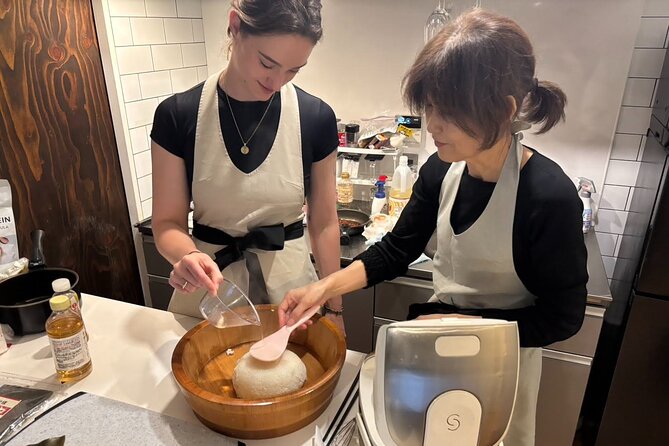
After the supermarket, you return to the home kitchen and prepare the selected meal together. No prior cooking experience is required. Mari and Ayumi guide you through each stage, so the class works for beginners as well as people who already enjoy cooking.
The strongest cultural element comes from the setting. You are learning dishes in the place where home cooking happens, then sitting down to eat with the people who taught you. That is different from watching a chef perform for a room full of strangers.
The meal also gives the conversation time to unfold. Mari and Ayumi have lived in Tokyo for more than 15 years and are happy to share local suggestions or help with trip planning. You might use this time to ask about areas to visit, food to try, or how to arrange the rest of your Tokyo days.
One especially appealing detail is the family feeling. The experience is designed as a warm exchange, not a quick class where you cook, take a photo, and leave. The available feedback describes feeling like part of the family, and that matches the structure: a mother, daughter, small kitchen, shared meal, and open conversation.
What the three hours really include
The activity lasts about three hours. That includes the meeting, supermarket visit, cooking lesson, and meal.
You should think of the schedule as a compact cultural activity rather than a full-day food tour. There is enough time to cover the ingredients and prepare a complete meal, but the class cannot explore every Japanese cooking method or take you through a long food market circuit.
The pace should suit people who want one focused Tokyo experience. You get an outing, a lesson, and lunch or dinner in one block. If your sightseeing plan is packed, the fixed three-hour length is helpful. If you want a slow, highly detailed cooking workshop, the time limit may feel brief.
Come hungry. The purpose is to cook and eat, and the meal is a central part of the experience rather than a small sample at the end.
Is $78.04 a fair price?
At $78.04 per person, this is not the cheapest way to eat in Tokyo. You could buy a supermarket meal or an inexpensive restaurant dinner for much less.
The value is in the combined experience. Your fee covers about three hours, supermarket guidance, an English-language cooking class, the ingredients for a complete meal, and time with a local mother-daughter team. The group is also limited to four people, which helps explain the price.
I would consider it a good value if you care about personal contact and want to understand Japanese home food. It is less compelling if your only goal is a large meal or a quick sushi-making activity. The real payoff is the connection between shopping, preparation, and eating.
Optional sake and craft beer are available, but they are not presented as part of the base price. Plan to pay extra if you want one. Since the class already includes food, drinks are a pleasant addition rather than a necessary part of the experience.
Who will get the most from this Ebisu class?
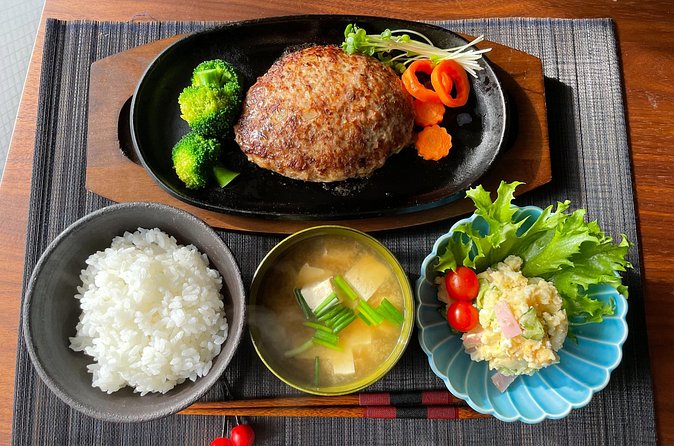
This experience fits several types of visitors:
- First-time Tokyo visitors who want a local activity that also leaves room for sightseeing.
- Solo visitors who prefer a small social setting instead of a large group tour.
- Couples looking for a shared activity with a meal at the end.
- Families and small groups who want a hands-on lesson and several menu choices.
- Vegetarians who select the temaki sushi course.
- Beginning cooks who want clear English instruction without needing previous skill.
- Food-focused visitors who enjoy learning what ingredients look like before they reach the plate.
It may not suit someone seeking advanced culinary training, a long market tour, or a restaurant-style sushi lesson. The focus is home cooking and conversation.
Practical details that affect your decision
Confirmation is provided when you book, and a mobile ticket is available. The meeting point is near public transportation, and the activity ends back there, so you do not need to arrange a separate return transfer.
The experience accepts up to four people. That small cap is worth checking if you are traveling with a larger party, since the stated format is not built for a big group.
Free cancellation is available if you cancel at least 24 hours before the start time. A cancellation made inside that window is not refunded, and changes made inside 24 hours are not accepted. The cut-off uses Tokyo local time, so keep that in mind if you are booking from another time zone.
Should you book the HomeTaste cooking experience?
Book it if you want to see how Japanese food works in a home setting, especially if you value conversation as much as the meal. The supermarket visit, English guidance, four-person limit, and shared table make this more personal than a standard cooking demonstration.
Choose the temaki sushi course for vegetarian needs or a more hands-on meal with several fillings. Choose hambāgu if you want a hearty Japanese set meal and eat meat.
I would skip it only if you want advanced technique, a longer food tour, or the lowest-cost meal in Ebisu. For everyone else, this is a well-focused three-hour introduction to Japanese home cooking, with Mari and Ayumi giving the experience its human touch.
FAQ
Where does the experience begin?
It begins at the Ebisu Station Police Box, located at 1-chōme-5-5 Ebisuminami, Shibuya, Tokyo 150-0022, Japan.
Where does the activity end?
The activity ends back at the meeting point.
How long does the cooking experience last?
The experience lasts approximately three hours.
How many people can join?
The activity has a maximum of four travelers.
Is the class taught in English?
Yes. Mari and her bilingual daughter Ayumi teach and assist throughout the experience in English.
Do I need cooking experience?
No. Previous cooking experience is not required, and the instructors guide you through each step.
What food options are available?
You can choose a temaki sushi course with sushi rice, tamagoyaki, teriyaki chicken, and sushi fillings such as fresh fish, vegetables, or tofu. The other option is Japanese hambāgu with potato salad and miso soup.
Is there a vegetarian option?
Yes. Vegetarian options are available with the temaki sushi course. The Japanese hambāgu course does not have a vegetarian option.
Can I cancel for a full refund?
Yes, if you cancel at least 24 hours before the experience starts. Cancellations made less than 24 hours before the start time are not refunded.
More hands-on classes and workshops in Tokyo
- Sushi Making Tokyo Roll and Authentic Japanese Sushi Class
★ 5.0 · 3,971 reviews - Chopstick Making Workshop in Ginza
★ 4.8 · 1,366 reviews - Tokyo Sushi Making Class in Tsukiji with Professional Chef
★ 5.0 · 1,177 reviews - Ramen & Gyoza Cooking Class in Tokyo with Local Supermarket Visit
★ 5.0 · 823 reviews
More Tokyo food tours
- Tokyo: Shinjuku Food Tour (13 Dishes at 4 Local Eateries)
★ 5.0 · 6,603 reviews - Tokyo Tsukiji Fish Market Food and Culture Walking Tour
★ 5.0 · 3,184 reviews - Tokyo: Shinjuku Food Tour (15 Dishes and 4 Eateries)
★ 4.9 · 2,033 reviews - Best of Shinjuku: Izakaya Food Tour (4 Stops, 14+ Tastings)
★ 5.0 · 1,863 reviews
Newly reviewed around Tokyo
- Tokyo Asakusa:Calligraphy & Make T-shirt Activity★ 5.0 · 62 reviews
- 1 Hour Travel around Tokyo with a Professional Photographer★ 5.0 · 3 reviews
- Travel Tokyo with Your Own Personal Photographer★ 5.0 · 43 reviews
- Intercity Shuttle, Tokyo to Haneda /Narita /Yokohama /Makuhari★ 5.0 · 5 reviews
- Train in Samurai Swordsmanship and Defeat the Demon in Tokyo★ 5.0 · 5 reviews
- Shuttle Van 6hr Tokyo Tour to-and-from Tokyo, Yokohama and Narita★ 5.0 · 9 reviews
- Kickboxing & Body Training with EX-Pro Fighter★ 5.0 · 4 reviews
- Traditional Japanese Knife Sharpening Class★ 5.0 · 18 reviews
Tokyo Cooking Classes, compared.
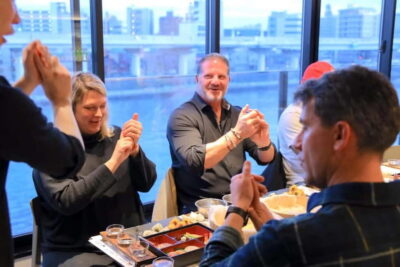
Roll and Authentic Sushi Making Class in Asakusa
Read our review →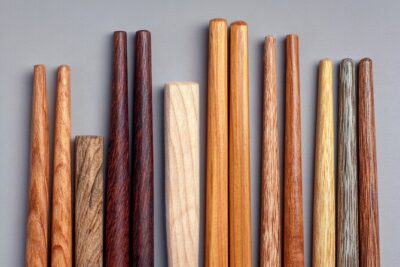
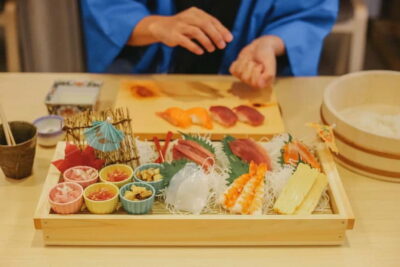
Sushi Making Class in a Happi Coat near a Famous Spot
Read our review →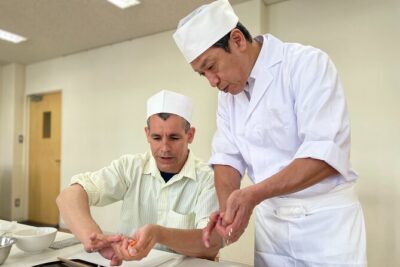
Tokyo Sushi Making Class in Tsukiji with Professional Chef
Read our review →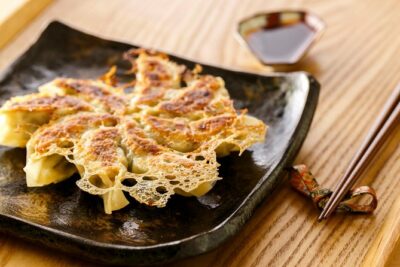
Ramen & Gyoza Cooking Class in Tokyo with Local Supermarket Visit
Read our review →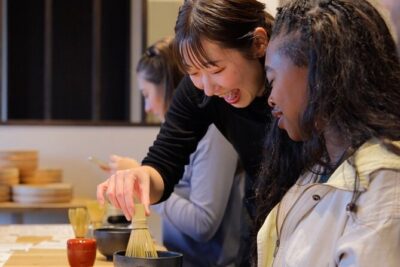
Matcha Making Class in Tokyo with Authentic Japanese Sweets Set
Read our review →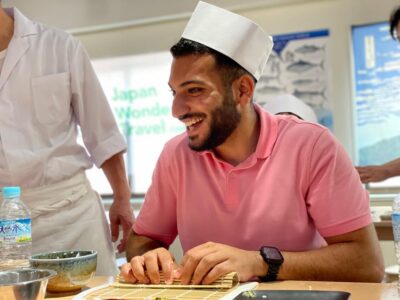
Tsukiji Fish Market Sushi Making Class with Pro Chef
Read our review →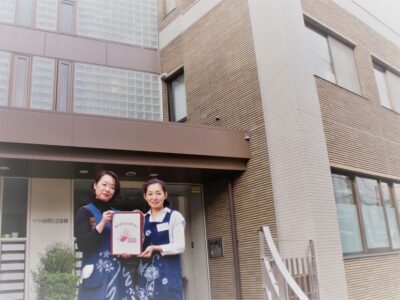
Browse the lists this tour appears in